
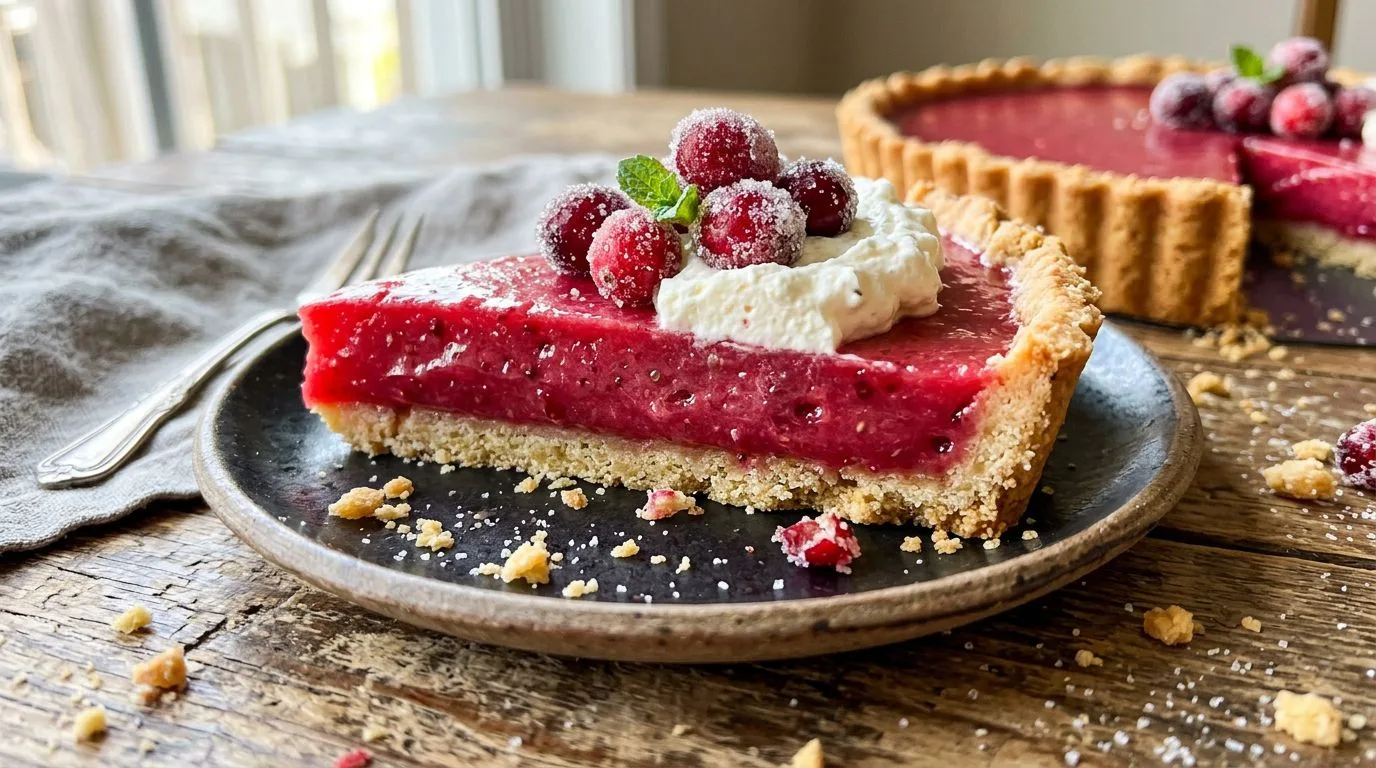
When the holidays arrive, I find myself craving desserts that balance tart and sweet flavors with beautiful presentation. This cranberry curd tart with shortbread crust delivers exactly that—a vibrant, ruby-red filling nestled in a buttery, crumbly base that melts in your mouth. The tangy cranberry curd, brightened with orange juice and zest, creates a sophisticated dessert that’s both visually stunning and absolutely delicious.
I love how this tart combines the best of both worlds: the rich, cookie-like texture of a shortbread crust and the silky smoothness of homemade curd. Unlike traditional fruit tarts that rely on pastry cream or fresh fruit, this recipe showcases cranberries in a way that highlights their natural tartness while balancing it with just enough sweetness. The result is a dessert that feels elegant enough for Thanksgiving or Christmas dinner, yet straightforward enough to make any weekend special.
What makes this cranberry curd tart truly special is its make-ahead convenience. You can prepare it a day or two before serving, allowing the flavors to meld beautifully in the refrigerator. The shortbread crust stays wonderfully crisp, and the curd sets to a perfect sliceable consistency that holds its shape when you cut into it. Whether you’re looking for a showstopping holiday dessert or simply want to celebrate cranberry season, this tart is guaranteed to impress.
Why You’ll Love This Cranberry Curd Tart
This cranberry curd tart stands out from typical holiday desserts for several compelling reasons. First, the flavor profile is refreshingly different from the usual pumpkin and pecan pies. The tartness of cranberries combined with bright citrus notes creates a palate-cleansing dessert that doesn’t feel heavy after a big meal.
I appreciate how forgiving the shortbread crust is—there’s no rolling, chilling, or worrying about shrinkage. You simply press the dough into the pan, and it bakes up beautifully golden and crisp. The crust holds together perfectly when sliced, making this tart easy to serve without any crumbling disasters.
The cranberry curd itself is a revelation if you’ve never made it before. It has the same luxurious texture as lemon curd but with a gorgeous color and complex flavor that feels festive and seasonal. The addition of orange juice and zest complements the cranberries perfectly, adding depth without overwhelming their natural character.
Another reason I recommend this recipe is its versatility. While it’s perfect for Thanksgiving and Christmas, it works beautifully for any fall or winter gathering. The tart slices cleanly, making it ideal for buffet-style serving, and it looks absolutely stunning on a dessert table.
Ingredients and Substitutions
The ingredient list for this cranberry curd tart is straightforward, with most items you likely already have in your pantry. Let me walk you through what you’ll need and offer some helpful substitutions.
For the shortbread crust, you’ll need all-purpose flour, powdered sugar, salt, melted unsalted butter, and vanilla extract. The powdered sugar creates a more tender, cookie-like texture than granulated sugar would. If you only have granulated sugar, you can pulse it in a food processor until fine, though the texture may be slightly different. I recommend sticking with unsalted butter so you can control the salt level, but if you only have salted butter, simply omit the added salt.
The cranberry curd requires fresh or frozen cranberries, granulated sugar, orange juice, orange zest, whole eggs, egg yolks, cubed unsalted butter, and lemon juice. Fresh cranberries work beautifully, but frozen cranberries are equally good—no need to thaw them first. The orange juice and zest add essential brightness; if you don’t have fresh oranges, you can use store-bought orange juice, though I find fresh tastes better. The lemon juice at the end balances the sweetness and enhances the cranberry flavor.
The combination of whole eggs and additional egg yolks creates the perfect creamy texture in the curd. Don’t skip the extra yolks—they’re what give the curd its luxurious richness and help it set properly. If you’re wondering what to do with leftover egg whites, they freeze beautifully for future meringues or cranberry orange shortbread cookies.
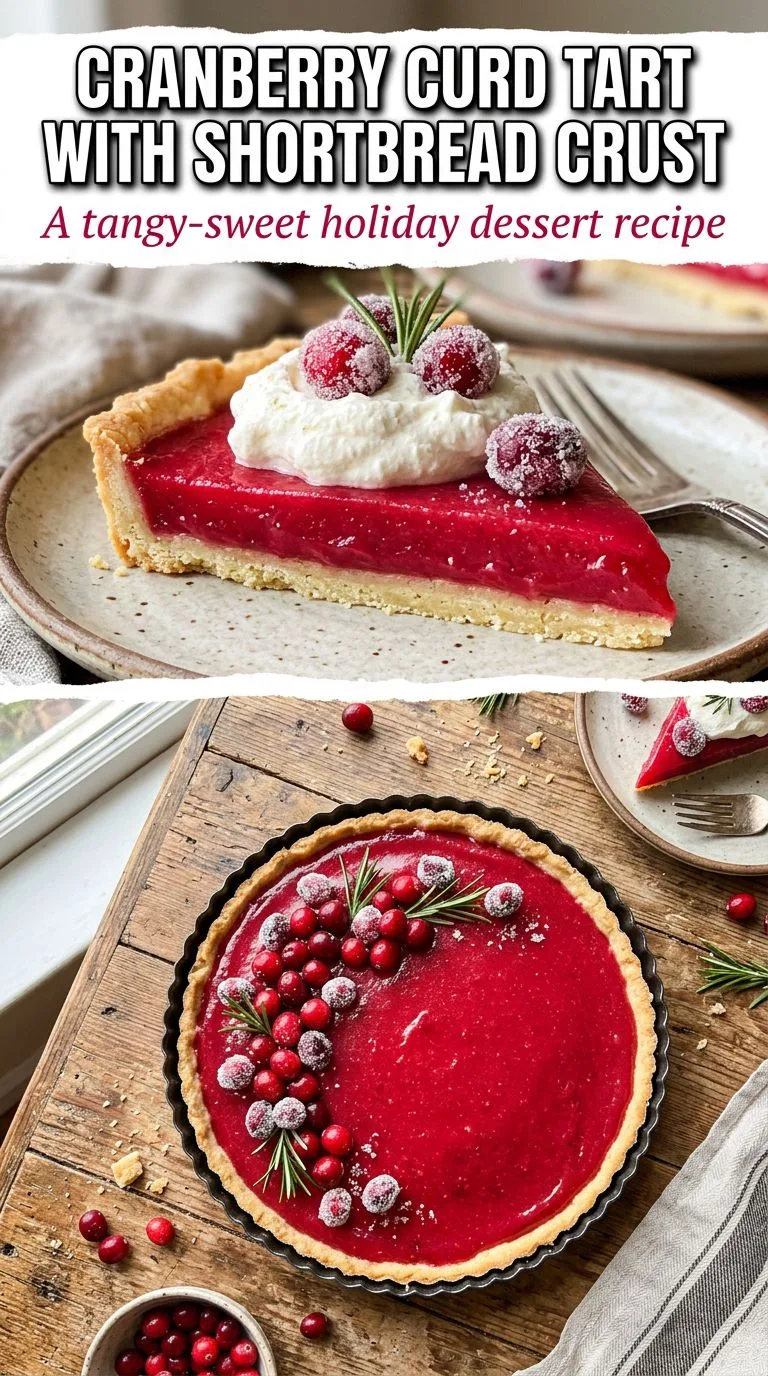
How to Make This Recipe
Making this cranberry curd tart involves two main components: the shortbread crust and the cranberry curd filling. I’ll walk you through each step to ensure perfect results.
Preparing the Shortbread Crust: Start by preheating your oven to 350°F and greasing a 9-inch tart pan with a removable bottom. This removable bottom is key for easy serving later. In a mixing bowl, combine the flour, powdered sugar, and salt. Pour in the melted butter and vanilla extract, then stir until the mixture forms a crumbly dough that holds together when pressed.
Press this dough firmly and evenly across the bottom and up the sides of your prepared tart pan. I like to use the bottom of a measuring cup to press the base flat and my fingers to work the dough up the sides. Make sure there are no thin spots, as these can crack during baking. Prick the bottom all over with a fork to prevent puffing, then bake for 18 to 22 minutes until the crust is lightly golden. Let it cool completely while you prepare the filling.
Making the Cranberry Curd: In a medium saucepan, combine the cranberries, sugar, orange juice, and orange zest. Bring to a simmer over medium heat and cook for 10 to 12 minutes, stirring occasionally, until the cranberries burst and soften completely. The mixture will look quite thick and jammy.
Carefully transfer the hot cranberry mixture to a blender and blend until completely smooth. This step is important for achieving that silky curd texture. Press the blended mixture through a fine-mesh sieve to remove any remaining skins or pulp. Let it cool until just warm—not hot—before proceeding.
In a separate bowl, whisk together the whole eggs and egg yolks. This is where tempering becomes important. Slowly whisk about half a cup of the warm cranberry mixture into the eggs to gradually raise their temperature without scrambling them. Then pour this egg mixture back into the saucepan with the remaining cranberry puree.
Cook over low heat, stirring constantly with a whisk or wooden spoon, until the curd thickens noticeably and reaches 170 to 175°F on an instant-read thermometer. This usually takes 5 to 8 minutes. The curd should coat the back of a spoon and hold a line when you run your finger through it. Do not let it boil, or the eggs may curdle.
Remove from heat immediately and whisk in the cubed butter and lemon juice until the butter melts completely and the curd is smooth and glossy. If you notice any lumps, strain the curd once more through a fine-mesh sieve.
Assembling and Baking: Pour the warm cranberry curd into your cooled shortbread crust. Gently tap the pan on the counter to release any air bubbles. Bake for 10 to 15 minutes, just until the edges are set but the center still jiggles slightly when you gently shake the pan. The curd will continue to set as it cools.
Let the tart cool to room temperature on a wire rack, then refrigerate for at least 4 hours or overnight before serving. This chilling time is essential for the curd to fully set and for the flavors to develop.
Expert Tips for Best Results
I’ve learned several tricks over the years that make this cranberry curd tart turn out perfectly every time. First, when pressing the shortbread crust into the pan, make sure it’s evenly thick throughout. Pay special attention to the corners where the bottom meets the sides—these spots tend to be thicker and can remain undercooked if not pressed thin enough.
When making the cranberry curd, patience is key during the cooking process. Keep the heat low and stir constantly to prevent the eggs from scrambling. I recommend using a heavy-bottomed saucepan, which distributes heat more evenly and reduces the risk of hot spots that could curdle the eggs.
An instant-read thermometer is your best friend when making curd. Taking the mixture to exactly 170 to 175°F ensures it’s thick enough to set properly without overcooking. If you don’t have a thermometer, watch for visual cues: the curd should thickly coat the back of a spoon and steam should be rising from the surface, but you shouldn’t see any bubbles breaking the surface.
Don’t skip the straining steps. Pressing the cooked cranberries through a sieve removes skins and seeds that would otherwise create an unpleasant texture in the finished curd. Straining the finished curd ensures absolute smoothness.
When removing the tart from the pan, place it on a sturdy can or bowl smaller than the tart ring, then gently let the ring drop down. This method is much easier than trying to lift the tart out. For the cleanest slices, wipe your knife clean between each cut and use a sharp, thin-bladed knife.
Serving Suggestions
This cranberry curd tart is stunning on its own, but there are several ways to elevate the presentation and complement its flavors. I love serving it with a dollop of lightly sweetened whipped cream, which provides a creamy contrast to the tart filling. You can also use crème fraîche or mascarpone for a slightly tangy accompaniment.
For added texture and visual appeal, consider garnishing with sugared cranberries. Simply roll fresh cranberries in simple syrup, then in granulated sugar, and let them dry before arranging them on top of the tart. Fresh orange zest curls or candied orange peel also make beautiful garnishes that echo the citrus flavors in the curd.
This tart pairs wonderfully with coffee or tea for an afternoon dessert, but it’s also elegant enough to serve after a formal holiday dinner. I find it works particularly well following rich, savory meals because its bright, tart flavor cleanses the palate without feeling heavy.
If you’re serving this for Thanksgiving, it makes a refreshing alternative to traditional pies. The vibrant red color looks beautiful on a dessert table alongside other treats like cranberry orange bundt cake. For a complete cranberry-themed dessert spread, these recipes complement each other beautifully.
Variations and Substitutions
While this recipe is delicious as written, there are several variations you can try to make it your own. For a different citrus profile, substitute the orange juice and zest with Meyer lemon or blood orange. Both create beautiful color variations and unique flavor profiles.
If you want to add texture to the tart, consider folding some finely chopped candied ginger into the curd just before pouring it into the crust. The spicy-sweet ginger complements cranberries beautifully. You could also add a pinch of ground cardamom or cinnamon to the curd for warm spice notes.
For a nut-enhanced crust, replace up to 1/4 cup of the flour with finely ground almonds or hazelnuts. This adds a subtle nutty flavor and creates an even more tender crust. You can also press finely chopped toasted pecans or pistachios around the edge of the tart before baking for added crunch and visual interest.
If you don’t have a tart pan, this recipe works in a 9-inch pie pan, though you won’t get the same elegant presentation when serving. You can also make individual tartlets using a muffin tin—just adjust the baking time for the crust to about 12 to 15 minutes.
For a dairy-free version, substitute the butter in both the crust and curd with coconut oil or a plant-based butter alternative. The texture will be slightly different, but the tart will still be delicious.
Storage, Freezing, and Reheating
One of the best features of this cranberry curd tart is how well it stores, making it perfect for advance preparation. Once fully chilled and set, cover the tart loosely with plastic wrap or aluminum foil and refrigerate for up to 4 days. The crust stays remarkably crisp, and the flavors actually improve after a day or two as they meld together.
I recommend storing the tart in its pan until you’re ready to serve it, as this protects the delicate crust. If you’ve already removed it from the pan, place it on a flat plate or cake stand and cover it carefully without letting the covering touch the surface of the curd.
This tart freezes beautifully for up to 2 months. To freeze, let it chill completely in the refrigerator first, then wrap it tightly in plastic wrap followed by aluminum foil. Freeze it in the tart pan for best results. When you’re ready to serve, thaw it overnight in the refrigerator. The texture remains excellent, though the crust may soften very slightly after freezing.
You can also freeze the components separately. The baked shortbread crust freezes well wrapped tightly for up to 3 months. The cranberry curd can be frozen in an airtight container for up to 3 months as well. Thaw both in the refrigerator, then assemble and bake as directed.
This tart is best served chilled or at cool room temperature. There’s no need to reheat it—in fact, I recommend against it, as warming would soften the curd and make it difficult to slice cleanly.
Frequently Asked Questions
Can I use a different type of crust? Yes, you can substitute a graham cracker crust or a traditional pastry crust if you prefer. However, the shortbread crust is particularly complementary to the tart cranberry filling because of its buttery sweetness and tender texture.
Why is my cranberry curd grainy? Graininess usually occurs if the eggs cook too quickly or at too high a temperature, causing them to curdle slightly. Make sure to cook the curd over low heat and stir constantly. Using a thermometer helps ensure you don’t exceed 175°F. Straining the finished curd will remove any small bits of cooked egg.
Can I make this tart ahead of time? Absolutely! This is an excellent make-ahead dessert. You can prepare it up to 2 days in advance and store it covered in the refrigerator. The flavors actually improve with time, and the curd sets more firmly, making it easier to slice.
What if I don’t have a tart pan with a removable bottom? You can use a regular pie pan or even a springform pan. The presentation won’t be quite as elegant, but the tart will taste just as delicious. If using a springform pan, make sure to press the crust up the sides to create a proper tart shell.
Can I reduce the sugar in the cranberry curd? Cranberries are quite tart, so the sugar is necessary to balance their natural acidity. You can reduce the sugar by up to 1/4 cup if you prefer a more tart dessert, but I wouldn’t recommend reducing it further or the curd may be too sour for most palates.
Why didn’t my curd set properly? If your curd remains too loose after chilling, it likely wasn’t cooked to a high enough temperature. The eggs need to reach at least 170°F to thicken properly. If this happens, you can return the curd to a saucepan and gently cook it a bit longer until it thickens, then pour it back into the crust.
Cranberry Curd Tart with Shortbread Crust
This elegant cranberry curd tart features a buttery shortbread crust filled with smooth, tangy cranberry-orange curd. The vibrant ruby-red filling is balanced perfectly with citrus notes, creating a sophisticated dessert that’s ideal for holiday entertaining or any special occasion.
- Prep Time: 30 minutes
- Cook Time: 40 minutes
- Chilling Time: 4 hours
- Total Time: 5 hours 10 minutes
- Servings: 10 slices
- Difficulty: Medium
- Cuisine: American
- Course: Dessert
Ingredients
For the Shortbread Crust:
- 1 1/2 cups all-purpose flour
- 1/2 cup powdered sugar
- 1/4 teaspoon salt
- 1/2 cup unsalted butter, melted
- 1 teaspoon vanilla extract
For the Cranberry Curd:
- 12 oz fresh or frozen cranberries
- 1 cup granulated sugar
- 1/2 cup orange juice
- 1 teaspoon orange zest
- 2 large eggs
- 2 large egg yolks
- 1/2 cup unsalted butter, cubed
- 1 tablespoon lemon juice
Instructions
- Preheat the oven to 350°F (175°C). Grease a 9-inch tart pan with a removable bottom.
- In a mixing bowl, combine the flour, powdered sugar, and salt. Stir in the melted butter and vanilla extract until a crumbly dough forms that holds together when pressed.
- Press the dough firmly and evenly across the bottom and up the sides of the prepared tart pan. Prick the base all over with a fork to prevent puffing.
- Bake the crust for 18 to 22 minutes, until lightly golden. Remove from the oven and let cool completely on a wire rack.
- While the crust cools, prepare the cranberry curd. In a medium saucepan, combine the cranberries, granulated sugar, orange juice, and orange zest. Bring to a simmer over medium heat.
- Cook for 10 to 12 minutes, stirring occasionally, until the cranberries burst and soften completely.
- Carefully transfer the hot cranberry mixture to a blender and blend until completely smooth. Press the blended mixture through a fine-mesh sieve into a clean bowl to remove skins and pulp. Let cool until warm but not hot.
- In a separate bowl, whisk together the whole eggs and egg yolks. Slowly whisk about 1/2 cup of the warm cranberry mixture into the eggs to temper them.
- Pour the egg mixture back into the saucepan with the remaining cranberry puree. Cook over low heat, stirring constantly, until the curd thickens and reaches 170 to 175°F (77 to 79°C) on an instant-read thermometer, about 5 to 8 minutes. Do not let it boil.
- Remove from heat immediately. Whisk in the cubed butter and lemon juice until the butter melts completely and the curd is smooth and glossy. Strain again through a fine-mesh sieve if needed.
- Pour the warm cranberry curd into the cooled shortbread crust. Gently tap the pan on the counter to release air bubbles.
- Bake for 10 to 15 minutes, until the edges are set but the center still jiggles slightly when gently shaken.
- Cool the tart to room temperature on a wire rack, then refrigerate for at least 4 hours or overnight before serving.
- To serve, carefully remove the tart from the pan by placing it on a can or bowl and letting the ring drop down. Slice with a sharp knife, wiping clean between cuts.
Recipe Notes
- Fresh or frozen cranberries work equally well—no need to thaw frozen berries before using.
- An instant-read thermometer is highly recommended for perfect curd consistency.
- The tart can be made up to 2 days ahead and stored covered in the refrigerator.
- For cleanest slices, use a sharp, thin-bladed knife and wipe it clean between each cut.
- Save leftover egg whites for meringues or other baking projects—they freeze beautifully.
- The curd should coat the back of a spoon and hold a line when you run your finger through it.
Nutrition Information (Per Serving, Estimated)
- Calories: 365
- Carbohydrates: 44g
- Protein: 4g
- Fat: 20g
- Saturated Fat: 12g
- Fiber: 2g
- Sugar: 28g
- Sodium: 95mg
Nutrition information is estimated based on standard ingredient values and is provided as a courtesy. For the most accurate nutritional data, please calculate based on the specific brands and measurements you use.
