
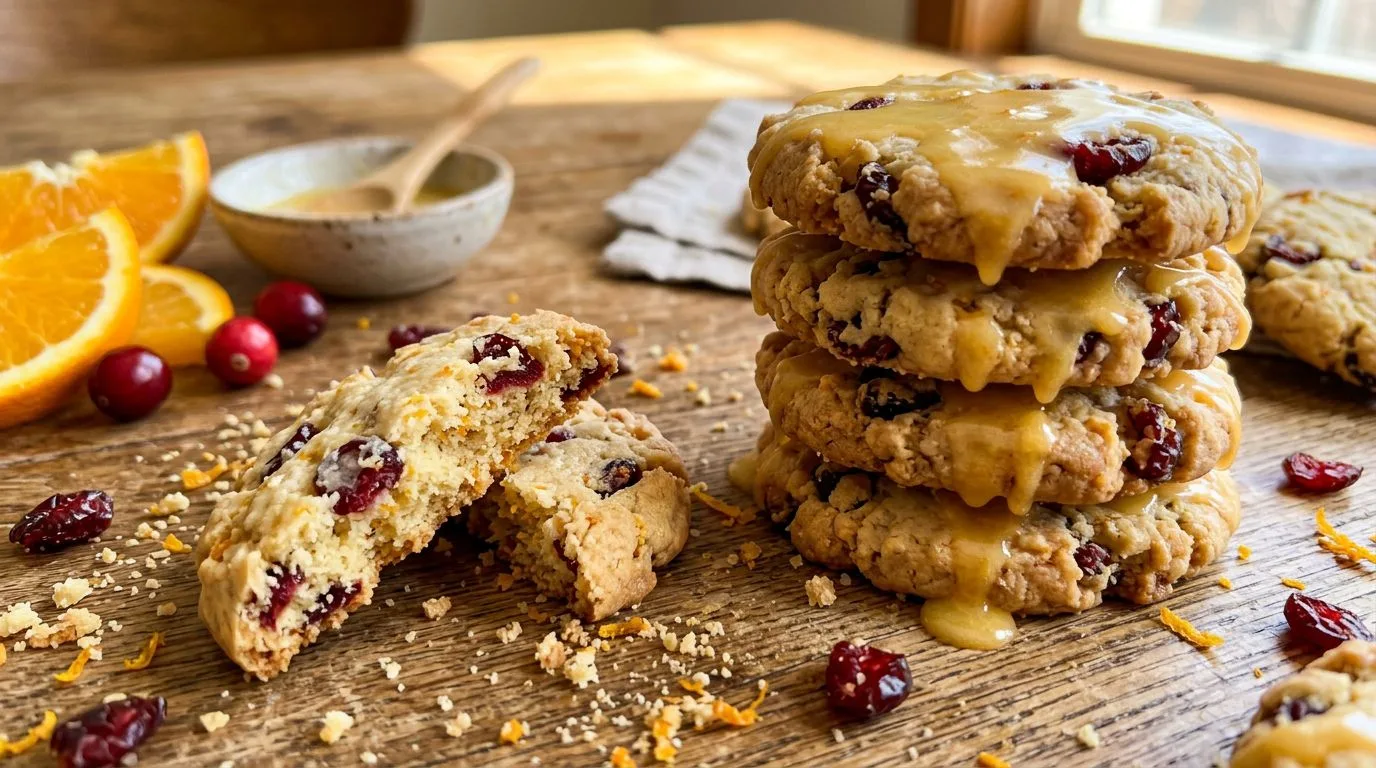
There’s something truly magical about the combination of tart cranberries and bright orange zest in a buttery shortbread cookie. These cranberry orange shortbread cookies have become one of my favorite holiday treats to make, and I love how they bring together classic shortbread texture with festive flavors. The tender, melt-in-your-mouth cookies are studded with finely chopped dried cranberries and finished with a sweet orange glaze that adds the perfect touch of citrus brightness.
What I find especially appealing about this recipe is how elegant these cookies look on a holiday cookie tray, yet they’re surprisingly simple to make. The slice-and-bake method means you can prepare the dough ahead of time and bake fresh cookies whenever you need them. Whether you’re planning your Thanksgiving dessert spread or assembling a Christmas cookie platter, these cranberry orange shortbread cookies deliver both beautiful presentation and incredible flavor.
The buttery richness of traditional shortbread provides the perfect canvas for the tangy cranberries and aromatic orange zest. I recommend making a double batch because these cookies tend to disappear quickly once family and friends get their first taste of that tender, citrus-scented shortbread with its glossy orange glaze.
Why You’ll Love This Recipe
These cranberry orange shortbread cookies check all the boxes for an outstanding holiday cookie. I love how the recipe combines the classic appeal of buttery shortbread with seasonal flavors that feel festive without being overly complicated. The texture is what really sets shortbread apart—that tender, almost sandy crumb that literally melts on your tongue.
The make-ahead convenience is another major advantage. You can shape the dough into logs and refrigerate them for up to three days or freeze them for up to three months. This means you can do the prep work when you have time, then slice and bake fresh cookies right before guests arrive or when you need a quick homemade gift.
I find that the orange glaze not only adds a beautiful finishing touch but also intensifies the citrus flavor throughout the cookie. The combination of orange zest in both the dough and the glaze creates layers of bright, fresh flavor that complement the tart cranberries perfectly. These cookies are sophisticated enough for adult palates but still approachable and delicious for everyone.
The visual appeal is undeniable too. The flecks of red cranberry against the pale golden cookie, topped with a glossy white glaze, create a stunning presentation that looks bakery-quality. They’re perfect for cookie exchanges, holiday parties, or simply enjoying with your afternoon coffee.
Ingredients and Substitutions
The beauty of shortbread lies in its simplicity, and this recipe stays true to that tradition while adding festive flair. Let me walk you through the key ingredients and what makes them work so well together.
All-Purpose Flour: This forms the structure of your shortbread. I recommend using standard all-purpose flour rather than bread flour or cake flour. The moderate protein content gives you the perfect tender texture without being too crumbly or too tough.
Unsalted Butter: This is the star ingredient in any shortbread recipe. The butter must be softened to room temperature for proper creaming. I always use unsalted butter so I can control the salt level precisely. European-style butter with higher fat content will give you an even richer flavor, though standard unsalted butter works beautifully.
Powdered Sugar: Also called confectioners’ sugar, this dissolves easily into the butter and creates that signature tender shortbread texture. Granulated sugar would give you a different, less delicate crumb.
Orange Zest: Fresh orange zest is essential here. I recommend using organic oranges when possible since you’re using the peel. The zest contains aromatic oils that infuse the entire cookie with bright citrus flavor. Don’t skip the zest in the glaze either—it reinforces that orange essence.
Dried Cranberries: Finely chopping the cranberries is important so they distribute evenly throughout the dough and don’t create large chunks that make slicing difficult. You can substitute dried cherries or chopped dried strawberries if you prefer, though cranberries give that classic holiday flavor.
Vanilla Extract: Pure vanilla extract adds depth and rounds out the flavors. I always use pure extract rather than imitation for the best taste.
Fresh Orange Juice: For the glaze, fresh-squeezed orange juice gives the brightest flavor. Bottled juice will work in a pinch, but fresh really makes a difference.

How to Make Cranberry Orange Shortbread Cookies
Making these cookies is straightforward, but I’ll share some details that help ensure perfect results every time. The process follows the classic shortbread method with a few special touches for the cranberry orange variation.
Cream the Butter and Sugar: Start by beating the softened butter, powdered sugar, and orange zest together until the mixture is light and fluffy. This usually takes about 3-4 minutes with an electric mixer. The mixture should look pale and airy. This creaming process incorporates air and ensures your cookies have that tender, melt-in-your-mouth texture.
Add Vanilla and Dry Ingredients: Mix in the vanilla extract first, then add the flour and salt. Mix just until a soft dough forms. I recommend using a low speed on your mixer to avoid overworking the dough, which can make the cookies tough. The dough should come together and pull away from the sides of the bowl.
Fold in Cranberries: Gently fold the finely chopped dried cranberries into the dough. Make sure they’re distributed evenly throughout. If the cranberries are very sticky, you can toss them with a tiny bit of flour first to help them incorporate more easily.
Shape and Chill: Turn the dough out onto a piece of plastic wrap or parchment paper. Shape it into a log about 2 inches in diameter. I find it helpful to roll the dough in the plastic wrap, then gently roll it on the counter to create an even cylinder. Twist the ends of the wrap to seal and refrigerate for at least 1 hour. The dough needs to be firm enough to slice cleanly.
Slice and Bake: Preheat your oven to 350°F and line baking sheets with parchment paper. Using a sharp knife, slice the chilled log into 1/4-inch rounds. If the dough starts to soften and becomes difficult to slice, return it to the refrigerator for 15 minutes. Place the rounds on the prepared baking sheets, spacing them about 1 inch apart. Shortbread doesn’t spread much during baking.
Bake to Perfection: Bake for 10-12 minutes, just until the edges are lightly golden. The centers may still look slightly pale, and that’s perfect. I recommend checking at 10 minutes since ovens vary. Overbaking will make the cookies dry and hard rather than tender.
Cool and Glaze: Let the cookies cool on the baking sheet for 5 minutes, then transfer them to a wire rack to cool completely. For the glaze, whisk together the powdered sugar, fresh orange juice, and orange zest until smooth. The consistency should be thick but pourable. Drizzle the glaze over the cooled cookies using a spoon or transfer it to a small zip-top bag with a corner snipped off for more control. Let the glaze set for about 30 minutes before serving or storing.
Expert Tips for Best Results
After making these cookies many times, I’ve learned a few tricks that make a real difference in the final result.
Room Temperature Butter is Critical: The butter should be soft enough to leave an indent when pressed but not greasy or melted. If it’s too cold, it won’t cream properly. If it’s too warm, your dough will be too soft to shape. I like to leave my butter on the counter for about 45 minutes before starting.
Chop Cranberries Finely: Large pieces of cranberry can make the dough difficult to slice and can cause cookies to break. I use a sharp knife and chop them into pieces about the size of a pea or smaller. You can also pulse them briefly in a food processor, but be careful not to turn them into a paste.
Use Fresh Orange Zest: A microplane grater gives you the finest zest with the most flavor. Only zest the orange part of the peel—the white pith underneath is bitter. One medium orange usually yields about 1 tablespoon of zest.
Don’t Overwork the Dough: Shortbread should be tender, and overworking develops gluten, which makes cookies tough. Mix just until the ingredients come together.
Chill Thoroughly: Don’t rush the chilling time. If the dough is too soft, the cookies will lose their shape during baking. If you’re in a hurry, you can freeze the log for 30 minutes instead of refrigerating for an hour.
Slice with a Sharp Knife: A sharp knife gives you clean cuts. Wipe the blade between slices if dough starts to stick. For perfectly round cookies, rotate the log a quarter turn between each slice to prevent flattening on one side.
Watch the Baking Time: These cookies can go from perfectly baked to overbaked quickly. Set a timer and check them at 10 minutes. They should be just barely golden at the edges.
Serving Suggestions
These cranberry orange shortbread cookies are incredibly versatile and work beautifully in many different serving situations. I love arranging them on a decorative platter for holiday gatherings, where their elegant appearance and festive colors make them a standout addition to any dessert table.
For a special afternoon tea or coffee service, these cookies pair wonderfully with hot beverages. The buttery richness complements coffee, while the citrus notes are lovely with black tea or Earl Grey. I like to serve them alongside chewy maple brown sugar cookies for a nice variety of flavors and textures on a cookie platter.
They make excellent homemade gifts when packaged in clear cellophane bags tied with festive ribbon or arranged in decorative tins. The glaze needs to be fully set before packaging to prevent smudging. I recommend layering them between sheets of parchment paper to keep them looking pristine.
For a more elaborate dessert presentation, you can serve these cookies alongside vanilla ice cream or lemon sorbet. The contrast between the cold, creamy dessert and the buttery cookie is delightful. They’re also wonderful crumbled over yogurt parfaits or used as a garnish for pumpkin mousse.
During the holidays, I include these on cookie trays alongside pumpkin snickerdoodle cookies and other seasonal favorites. The variety of colors, flavors, and textures makes for an impressive spread that appeals to different tastes.
Variations and Substitutions
While this recipe is delicious as written, there are several ways you can customize these cookies to suit your preferences or work with what you have on hand.
Different Dried Fruits: Swap the dried cranberries for dried cherries, chopped dried apricots, or golden raisins. Each brings a different flavor profile while maintaining that chewy fruit element throughout the cookie.
Lemon Instead of Orange: For a different citrus variation, use lemon zest and lemon juice instead of orange. The flavor will be brighter and more tart, which some people prefer.
Add Nuts: Fold in 1/2 cup of finely chopped pecans, walnuts, or pistachios along with the cranberries for added texture and flavor. Toast the nuts first for deeper flavor.
White Chocolate Drizzle: Instead of the orange glaze, drizzle melted white chocolate over the cooled cookies. You can even add a tiny bit of orange extract to the melted chocolate for a subtle citrus note.
Spiced Version: Add 1/2 teaspoon of ground cinnamon or 1/4 teaspoon of ground cardamom to the dough for a warmly spiced variation.
Gluten-Free Option: Replace the all-purpose flour with a 1-to-1 gluten-free baking flour blend. The texture will be slightly different but still delicious.
Salted Butter Substitution: If you only have salted butter, you can use it but omit the added salt in the recipe. The cookies will have a slightly more pronounced salty-sweet flavor.
Skip the Glaze: The cookies are delicious on their own without the glaze if you prefer a less sweet version or want to save time. You can dust them lightly with powdered sugar instead.
Storage, Freezing, and Reheating
Proper storage keeps these cookies fresh and maintains their wonderful texture. I’ve found that shortbread cookies store exceptionally well, making them perfect for advance preparation.
Room Temperature Storage: Once the glaze has fully set, store the cookies in an airtight container at room temperature for up to 1 week. Layer them between sheets of parchment paper to prevent the glaze from sticking. Keep them away from humidity, which can make shortbread soft.
Refrigerator Storage: While not necessary, you can refrigerate the cookies in an airtight container for up to 2 weeks. Bring them to room temperature before serving for the best flavor and texture.
Freezing Baked Cookies: These cookies freeze beautifully. I recommend freezing them before glazing for best results. Place cooled, unglazed cookies in a single layer on a baking sheet and freeze until solid, then transfer to a freezer-safe container or bag. They’ll keep for up to 3 months. Thaw at room temperature and add the glaze just before serving.
Freezing Cookie Dough: The shaped dough logs freeze exceptionally well. Wrap them tightly in plastic wrap, then in aluminum foil, and freeze for up to 3 months. When you’re ready to bake, you can slice the frozen log directly (it may take a bit more effort) or let it thaw in the refrigerator for a few hours until it’s easy to slice.
Freezing Glaze: I don’t recommend freezing the glaze itself, as it can separate when thawed. It’s quick and easy to make fresh glaze when you need it.
Reheating: Shortbread is typically served at room temperature and doesn’t need reheating. However, if you prefer them slightly warm, you can place them in a 300°F oven for 3-5 minutes. Be careful not to overheat, as this can dry them out.
Frequently Asked Questions
Why is my shortbread dough crumbly? Shortbread dough is naturally more crumbly than other cookie doughs because of its high butter content and lack of eggs. If it’s too crumbly to hold together, you may need to mix it a bit more or press it together with your hands. The dough should hold together when squeezed.
Can I use fresh cranberries instead of dried? I don’t recommend using fresh cranberries in this recipe. They contain too much moisture and would make the dough wet and difficult to work with. Dried cranberries provide the right texture and concentrated flavor.
Why are my cookies spreading during baking? Shortbread shouldn’t spread much. If yours are spreading, the dough may not have been chilled long enough, or your butter may have been too soft when you mixed the dough. Make sure the dough is thoroughly chilled before slicing and baking.
Can I make these cookies without a mixer? Absolutely. You can cream the butter and sugar by hand using a wooden spoon or spatula. It will take more effort and time, but it’s completely doable. Make sure your butter is properly softened to make the job easier.
How do I know when the cookies are done? Shortbread should be just barely golden at the edges with pale centers. They’ll firm up as they cool. If they’re browning all over, they’re overbaked. Remember that they continue cooking slightly on the hot baking sheet even after you remove them from the oven.
Can I make these into different shapes? Yes! Instead of slicing rounds, you can roll the dough out to 1/4-inch thickness and use cookie cutters. You can also press the dough into a square or rectangular pan, chill it, then cut it into bars or squares before baking.
Why is my glaze too thick or too thin? The consistency of the glaze depends on the exact amount of liquid. If it’s too thick, add orange juice a few drops at a time. If it’s too thin, add more powdered sugar a tablespoon at a time. The glaze should be thick enough to coat the back of a spoon but thin enough to drizzle.
Can I double this recipe? Yes, this recipe doubles easily. You can make multiple logs of dough and freeze what you don’t plan to bake immediately. This is a great strategy for holiday baking when you need large quantities of cookies.
Cranberry Orange Shortbread Cookies with Sweet Orange Glaze
These buttery cranberry orange shortbread cookies combine sweet dried cranberries with fresh orange zest in a tender, melt-in-your-mouth cookie. Finished with a bright orange glaze, they make a beautiful addition to Thanksgiving and Christmas cookie trays.
- Prep Time: 20 minutes
- Chilling Time: 1 hour
- Cook Time: 12 minutes
- Total Time: 1 hour 32 minutes
- Yield: 24 cookies
- Difficulty: Easy
- Cuisine: American
- Course: Dessert
Ingredients
For the Cookies:
- 2 cups all-purpose flour
- 1/2 cup powdered sugar
- 1 cup unsalted butter, softened
- 1 tablespoon orange zest
- 1 teaspoon vanilla extract
- 1/4 teaspoon salt
- 3/4 cup dried cranberries, finely chopped
For the Glaze:
- 1 cup powdered sugar
- 2 tablespoons fresh orange juice
- 1/2 teaspoon orange zest
Instructions
- In a large mixing bowl, beat the softened butter, powdered sugar, and orange zest together until light and fluffy, about 3-4 minutes.
- Mix in the vanilla extract until combined.
- Add the flour and salt to the butter mixture and mix on low speed just until a soft dough forms. Do not overmix.
- Gently fold in the finely chopped dried cranberries until evenly distributed throughout the dough.
- Turn the dough out onto a piece of plastic wrap or parchment paper. Shape it into a log about 2 inches in diameter. Wrap tightly and refrigerate for at least 1 hour, or until firm.
- Preheat the oven to 350°F (175°C). Line baking sheets with parchment paper.
- Using a sharp knife, slice the chilled dough log into 1/4-inch thick rounds. Place the rounds on the prepared baking sheets, spacing them about 1 inch apart.
- Bake for 10 to 12 minutes, until the edges are just lightly golden. The centers may still look pale.
- Allow the cookies to cool on the baking sheet for 5 minutes, then transfer to a wire rack to cool completely.
- To make the glaze, whisk together the powdered sugar, fresh orange juice, and orange zest in a small bowl until smooth and well combined.
- Drizzle the glaze over the cooled cookies using a spoon or a small zip-top bag with the corner snipped off.
- Let the glaze set for about 30 minutes before serving or storing.
Recipe Notes
- Make sure the butter is properly softened to room temperature for the best texture. It should be soft enough to leave an indent when pressed but not greasy.
- Finely chopping the cranberries is important for easy slicing and even distribution throughout the cookies.
- If the dough becomes too soft to slice, return it to the refrigerator for 15 minutes.
- The dough logs can be frozen for up to 3 months. Slice and bake directly from frozen, adding 1-2 minutes to the baking time.
- For perfectly round cookies, rotate the dough log a quarter turn between each slice.
- Store glazed cookies in an airtight container at room temperature for up to 1 week, layering between parchment paper.
Estimated Nutrition Per Serving (1 cookie)
- Calories: 145
- Carbohydrates: 18g
- Protein: 1g
- Fat: 8g
- Saturated Fat: 5g
- Fiber: 0.5g
- Sugar: 10g
- Sodium: 35mg
Nutrition information is estimated and will vary based on exact ingredients and portion sizes.
