
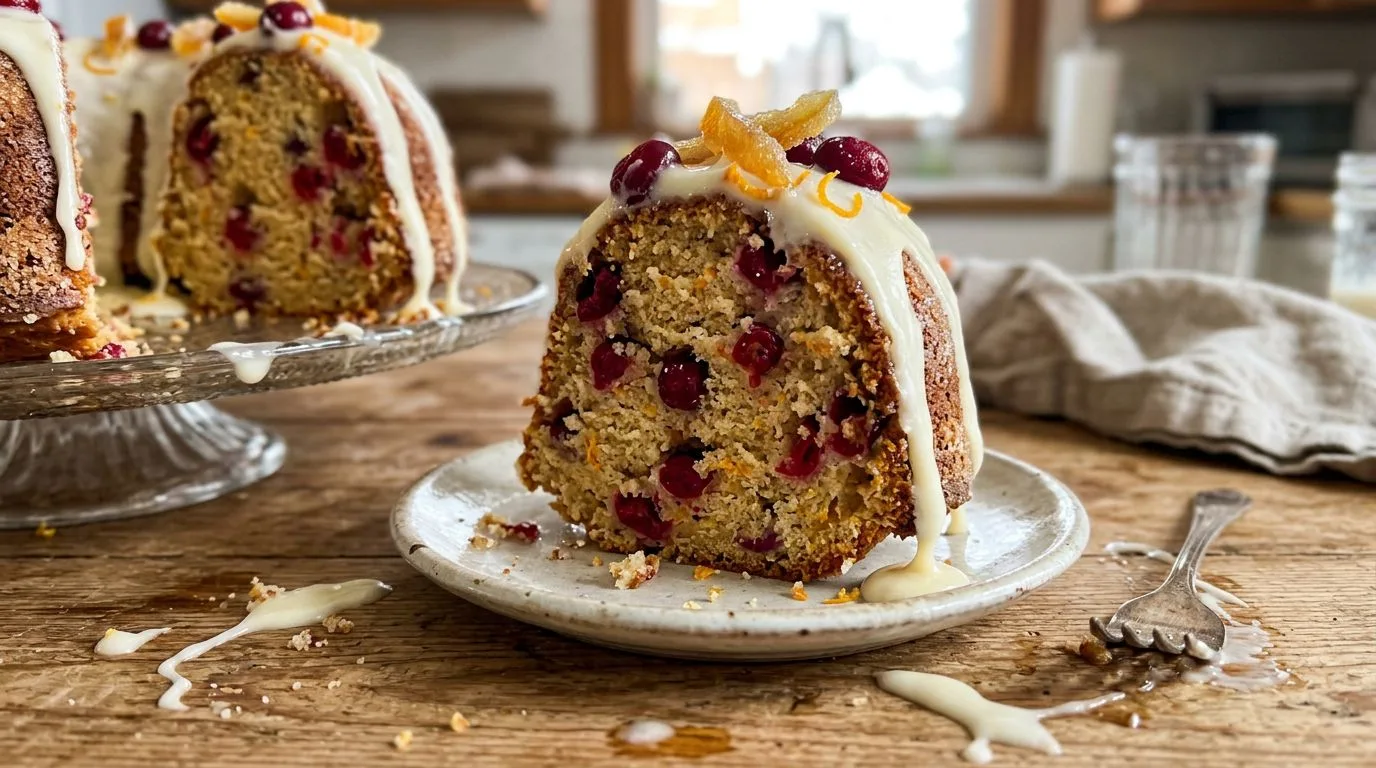
There’s something magical about the combination of tart cranberries and bright orange zest in a cake. This cranberry orange bundt cake delivers that perfect balance of sweet and tangy flavors wrapped in a tender, buttery crumb. I love how the fresh cranberries burst throughout the cake, creating little pockets of tartness that contrast beautifully with the sweet cream cheese glaze drizzled over the top.
Whether you’re planning your Thanksgiving dessert table or looking for a show-stopping Christmas cake, this bundt cake checks all the boxes. The festive red cranberries peek through golden slices, the orange zest adds aromatic brightness, and the cream cheese glaze provides just the right amount of sweetness. I find that bundt cakes are also wonderfully forgiving for home bakers—the beautiful pan does most of the decorating work for you.
This recipe creates a moist, flavorful cake that stays fresh for days and actually tastes even better the next day as the flavors meld together. It’s become one of my go-to recipes when I need an impressive dessert that doesn’t require fussy decorating or complicated techniques.
Why You’ll Love This Cranberry Orange Bundt Cake
This cake delivers on multiple fronts, making it a recipe you’ll return to season after season. The texture is incredibly moist thanks to the combination of butter and sour cream, while the fresh cranberries add bursts of tartness that keep each bite interesting. I love how the orange zest brightens the entire cake without overwhelming the cranberry flavor.
The cream cheese glaze is another highlight—it’s tangy, slightly sweet, and provides a beautiful contrast to the golden cake. Unlike traditional buttercream or fondant, this glaze is light and doesn’t overpower the delicate flavors in the cake itself.
From a practical standpoint, bundt cakes are fantastic for entertaining. They look impressive, serve a crowd, and can be made a day ahead. The cake actually improves after sitting overnight as the moisture distributes evenly and the flavors develop. I recommend making this the day before your gathering for the best results.
The festive appearance makes it perfect for holiday tables, but the flavors are wonderful any time you can find fresh cranberries. It’s elegant enough for a dinner party yet simple enough for a weekend family dessert.
Ingredients and Substitutions
Let me walk you through the key ingredients that make this cranberry orange bundt cake so special, along with some helpful substitutions if needed.
All-Purpose Flour: This provides the structure for the cake. I don’t recommend substituting with cake flour as it may make the crumb too delicate to support the cranberries. Stick with all-purpose for the best texture.
Butter: Unsalted butter gives you control over the salt level and contributes to the rich, tender crumb. Make sure it’s properly softened to room temperature for easy creaming. I find that butter at about 65-68°F works best.
Granulated Sugar: This sweetens the cake and helps create a light, fluffy texture when creamed with the butter. Don’t reduce the sugar too much, as the cranberries are quite tart.
Eggs: Four large eggs provide structure and richness. Bring them to room temperature before using for better incorporation into the batter.
Sour Cream: This is the secret to an incredibly moist cake. If you don’t have sour cream, you can substitute with full-fat Greek yogurt, though the flavor will be slightly different.
Fresh Orange Juice and Zest: The zest provides aromatic oils that perfume the entire cake, while the juice adds moisture and bright citrus flavor. I recommend using fresh oranges rather than bottled juice for the best flavor. You’ll need about 2 medium oranges for both the juice and zest.
Fresh or Frozen Cranberries: Either works well in this recipe. If using frozen, don’t thaw them first—toss them frozen with the flour coating to prevent them from bleeding too much color into the batter.
Cream Cheese: For the glaze, make sure your cream cheese is fully softened to room temperature. This ensures a smooth, lump-free glaze that drizzles beautifully.
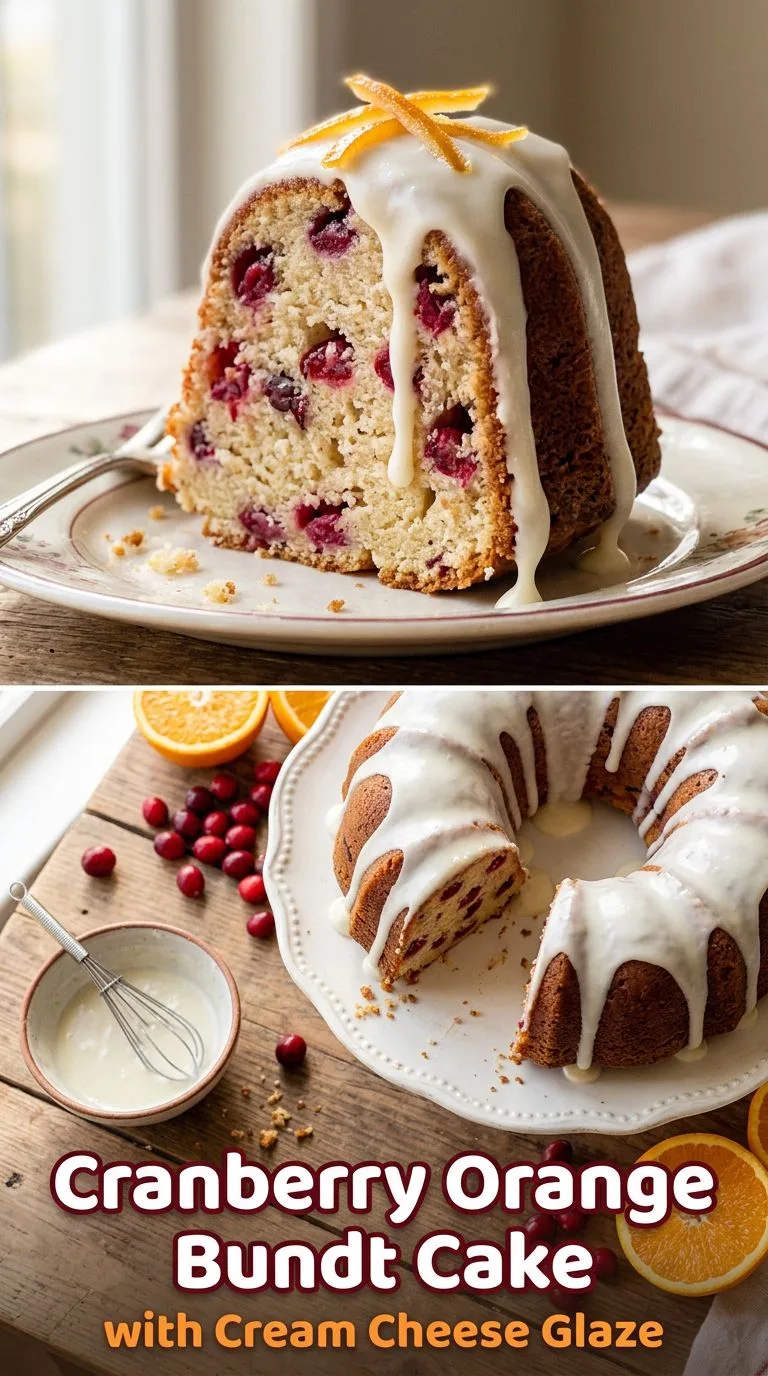
How to Make This Recipe
Making this cranberry orange bundt cake is straightforward, but a few key techniques will ensure perfect results every time.
Start by preparing your bundt pan properly. This step is crucial—I cannot stress enough how important it is to generously grease and flour every nook and cranny of your bundt pan. I like to use softened butter applied with a pastry brush to get into all the detailed crevices, then dust thoroughly with flour. Tap out any excess flour. This preparation prevents the heartbreak of a cake that sticks to the pan.
When mixing the batter, cream the butter, sugar, and orange zest together until the mixture is light and fluffy—this takes about 3 minutes with an electric mixer. This step incorporates air into the batter, which helps create a tender crumb. The mixture should look pale and increased in volume.
Add the eggs one at a time, beating well after each addition. This gradual incorporation prevents the batter from curdling and ensures even distribution.
When adding the dry ingredients, use the alternating method: add one-third of the flour mixture, then half of the combined sour cream and orange juice, then another third of the flour, the remaining sour cream mixture, and finally the last third of the flour. Mix just until combined after each addition. Overmixing develops gluten and can result in a tough cake.
The flour coating on the cranberries is essential—it helps suspend them in the batter so they don’t all sink to the bottom. Toss them gently but thoroughly in the tablespoon of flour before folding them into the batter with a spatula.
Spoon the batter into your prepared pan and smooth the top. Tap the pan gently on the counter a few times to release any air bubbles.
Bake until a long skewer or cake tester inserted into the center comes out clean or with just a few moist crumbs. The baking time can vary depending on your oven and pan, so start checking around 50 minutes.
Expert Tips for Best Results
After making this cake numerous times, I’ve learned several tricks that guarantee success.
Room Temperature Ingredients: This is critical for proper mixing. Cold eggs and sour cream won’t incorporate smoothly into the batter, which can result in a dense cake. Set your eggs, butter, and sour cream out about an hour before baking.
Don’t Overbake: Bundt cakes can dry out quickly if overbaked. Start checking at 50 minutes, and remember that the cake will continue cooking slightly from residual heat after you remove it from the oven. A few moist crumbs on your tester are perfect.
Cooling Time Matters: Let the cake cool in the pan for exactly 15 minutes. If you try to remove it too soon, it may break apart. If you wait too long, it may stick to the pan. Set a timer to get this right.
Inverting the Cake: Place a wire rack over the top of the bundt pan, then flip both together in one confident motion. Lift the pan straight up—don’t twist or wiggle it. If any pieces stick, gently press them back into place while the cake is still warm.
Glaze Consistency: The glaze should be pourable but not too thin. If it’s too thick, add orange juice a teaspoon at a time. If it’s too thin, add more powdered sugar. I find that letting the glaze sit for a minute or two helps it thicken slightly.
Glaze Application: Make sure the cake is completely cool before glazing, or the glaze will melt and soak into the cake rather than creating a beautiful coating. Pour the glaze over the center of the cake and let it drip down the sides naturally.
Serving Suggestions
This cranberry orange bundt cake is beautiful enough to serve on its own, but there are several ways to make it even more special.
I love serving it as the centerpiece of a holiday dessert table. The red cranberries visible in each slice make it naturally festive. A simple dusting of powdered sugar over the cream cheese glaze adds an elegant, snowy finish that’s perfect for Christmas.
For a more indulgent presentation, serve slices with a dollop of freshly whipped cream or vanilla ice cream. The cold cream contrasts wonderfully with the moist cake and complements the tart cranberries.
This cake pairs beautifully with coffee or tea for an afternoon gathering. I find that the orange and cranberry flavors are particularly nice with a robust dark roast coffee or Earl Grey tea.
For a brunch setting, serve it alongside other seasonal cakes and fresh fruit. The cake is substantial enough to feel satisfying but not so heavy that it weighs you down in the morning.
If you’re looking for complementary desserts, consider pairing it with warm fruit desserts that share the same cozy, seasonal appeal.
Variations and Substitutions
While this recipe is delicious as written, there are several ways to customize it to your preferences or dietary needs.
Dried Cranberries: If fresh cranberries aren’t available, you can use dried cranberries, though the texture and tartness will be different. Soak them in warm orange juice for 15 minutes first to plump them up, then drain and toss with flour before adding to the batter.
Mixed Berries: Try a combination of cranberries and blueberries for a different flavor profile. Use about 3/4 cup of each.
Lemon Instead of Orange: For a cranberry lemon version, substitute lemon zest and juice for the orange. The flavor will be brighter and more tart.
Gluten-Free Option: Use a 1:1 gluten-free baking flour blend. The texture may be slightly different, but I’ve had good results with this substitution.
Reduced Sugar: You can reduce the sugar in the cake by up to 1/4 cup if you prefer a less sweet cake, though keep in mind this will affect the texture slightly and the cranberries will taste more tart.
Buttermilk Substitution: While the recipe calls for sour cream, you can use buttermilk for a tangier flavor. The cake will be slightly less rich but still delicious.
Glaze Variations: Try a simple orange glaze (powdered sugar and orange juice) for a lighter option, or add a tablespoon of Grand Marnier or other orange liqueur to the cream cheese glaze for an adult version.
Storage, Freezing, and Reheating
One of the best things about this bundt cake is how well it keeps, making it perfect for advance preparation.
Room Temperature Storage: Store the glazed cake under a cake dome or covered with plastic wrap at room temperature for up to 3 days. I find that the cake actually tastes better on day two as the flavors meld and the moisture distributes evenly throughout.
Refrigerator Storage: Because of the cream cheese in the glaze, you can refrigerate the cake if your kitchen is very warm or if you want to keep it longer. It will stay fresh for up to 5 days in the refrigerator. Bring slices to room temperature before serving for the best flavor and texture.
Freezing the Cake: This cake freezes beautifully. I recommend freezing it without the glaze for best results. Wrap the completely cooled cake tightly in plastic wrap, then in aluminum foil. Freeze for up to 3 months. Thaw overnight in the refrigerator, then bring to room temperature and add the fresh glaze before serving.
Freezing Individual Slices: For easy single servings, slice the cake and wrap individual pieces in plastic wrap, then store in a freezer bag. This way you can thaw just what you need.
Make-Ahead Tips: I love making this cake the day before serving. Bake and cool the cake completely, wrap it well, and store at room temperature. Make the glaze and store it separately in the refrigerator. About an hour before serving, bring the glaze to room temperature, stir it smooth, and drizzle over the cake.
Frequently Asked Questions
Can I use a different size bundt pan?
This recipe is designed for a 10-inch bundt pan with a 12-cup capacity. If you use a smaller pan, you’ll need to reduce the recipe or the batter may overflow. A larger pan will work, but the cake will be shorter and may bake faster, so watch the timing carefully.
Why did my cranberries sink to the bottom?
This usually happens when the batter is too thin or the cranberries weren’t coated in flour. Make sure to toss them thoroughly in the tablespoon of flour before folding them in. Also, don’t overmix the batter, as this can thin it out.
My cake stuck to the pan. What went wrong?
The most common cause is inadequate greasing of the pan. Bundt pans have intricate designs that need thorough coating. Use softened butter and a pastry brush to get into every crevice, then flour generously. Also, make sure you let the cake cool for 15 minutes before inverting—not more, not less.
Can I make this as a layer cake instead?
Yes, you can divide the batter between two 9-inch round cake pans. Reduce the baking time to about 30-35 minutes. You may want to double the glaze recipe to use as filling and topping.
The glaze is too thick/thin. How do I fix it?
If the glaze is too thick, add orange juice one teaspoon at a time until it reaches a pourable consistency. If it’s too thin, add more powdered sugar a tablespoon at a time. The glaze should slowly drip off a spoon.
Can I make this dairy-free?
You can substitute the butter with a plant-based butter alternative and use dairy-free sour cream. For the glaze, use dairy-free cream cheese. The flavor and texture will be slightly different but still delicious.
How do I know when the cake is done?
Insert a long skewer or cake tester into the thickest part of the cake. It should come out clean or with just a few moist crumbs. The top should spring back when lightly pressed, and the cake should be pulling away slightly from the sides of the pan.
Cranberry Orange Bundt Cake with Cream Cheese Glaze
This moist cranberry orange bundt cake combines tart fresh cranberries, bright orange zest, and a tender buttery crumb. Finished with a smooth cream cheese glaze, this festive cake makes a beautiful Thanksgiving or Christmas dessert.
Ingredients
For the Cake:
- 2 1/2 cups all-purpose flour
- 2 teaspoons baking powder
- 1/2 teaspoon baking soda
- 1/2 teaspoon salt
- 1 cup unsalted butter, softened
- 1 3/4 cups granulated sugar
- 4 large eggs
- 1 cup sour cream
- 1/3 cup fresh orange juice
- 2 tablespoons orange zest
- 1 teaspoon vanilla extract
- 1 1/2 cups fresh or frozen cranberries
- 1 tablespoon flour for coating cranberries
For the Cream Cheese Glaze:
- 4 oz cream cheese, softened
- 1 cup powdered sugar
- 2 tablespoons orange juice
- 1/2 teaspoon vanilla extract
Instructions
- Preheat the oven to 350°F (175°C). Generously grease and flour a 10-inch bundt pan, making sure to coat all the detailed crevices thoroughly.
- In a medium bowl, whisk together the 2 1/2 cups flour, baking powder, baking soda, and salt. Set aside.
- In a large bowl, beat the softened butter, granulated sugar, and orange zest together with an electric mixer on medium-high speed until light and fluffy, about 3 minutes.
- Add the eggs one at a time, beating well after each addition. Mix in the vanilla extract.
- In a small bowl or measuring cup, combine the sour cream and orange juice.
- Add the dry ingredients to the butter mixture in three parts, alternating with the sour cream mixture, beginning and ending with the dry ingredients. Mix on low speed just until combined after each addition. Do not overmix.
- In a small bowl, toss the cranberries with 1 tablespoon of flour until evenly coated. Gently fold the coated cranberries into the batter using a spatula.
- Spoon the batter into the prepared bundt pan and smooth the top. Tap the pan gently on the counter 2-3 times to release air bubbles.
- Bake for 50 to 60 minutes, until a long skewer inserted into the center comes out clean or with just a few moist crumbs.
- Remove from the oven and let the cake cool in the pan on a wire rack for exactly 15 minutes.
- Place a wire rack over the top of the bundt pan and carefully invert both together. Lift the pan straight up to release the cake. Let the cake cool completely on the rack, about 1 hour.
- While the cake cools, prepare the glaze. In a medium bowl, beat the softened cream cheese until smooth. Add the powdered sugar, orange juice, and vanilla extract. Beat until smooth and pourable, adding more orange juice if needed for desired consistency.
- Once the cake is completely cool, drizzle the cream cheese glaze over the top, allowing it to drip down the sides naturally.
- Let the glaze set for about 15 minutes before slicing and serving.
Recipe Notes
- Make sure all ingredients are at room temperature for best results, especially the butter, eggs, and sour cream.
- If using frozen cranberries, do not thaw them before coating with flour and adding to the batter.
- The cake can be made a day ahead and stored at room temperature. Add the glaze just before serving for the freshest appearance.
- For easier removal from the pan, you can use a baking spray that contains flour, or thoroughly brush softened butter into every crevice and dust with flour.
- The cake is done when a skewer comes out clean, but a few moist crumbs are fine. Overbaking will result in a dry cake.
- Fresh orange juice and zest provide the best flavor, but bottled juice can be used in a pinch.
Estimated Nutrition Per Serving (1 slice)
- Calories: 445
- Carbohydrates: 58g
- Protein: 5g
- Fat: 22g
- Saturated Fat: 13g
- Fiber: 1g
- Sugar: 38g
- Sodium: 245mg
Nutrition information is estimated and will vary based on exact ingredients and portion sizes.
