
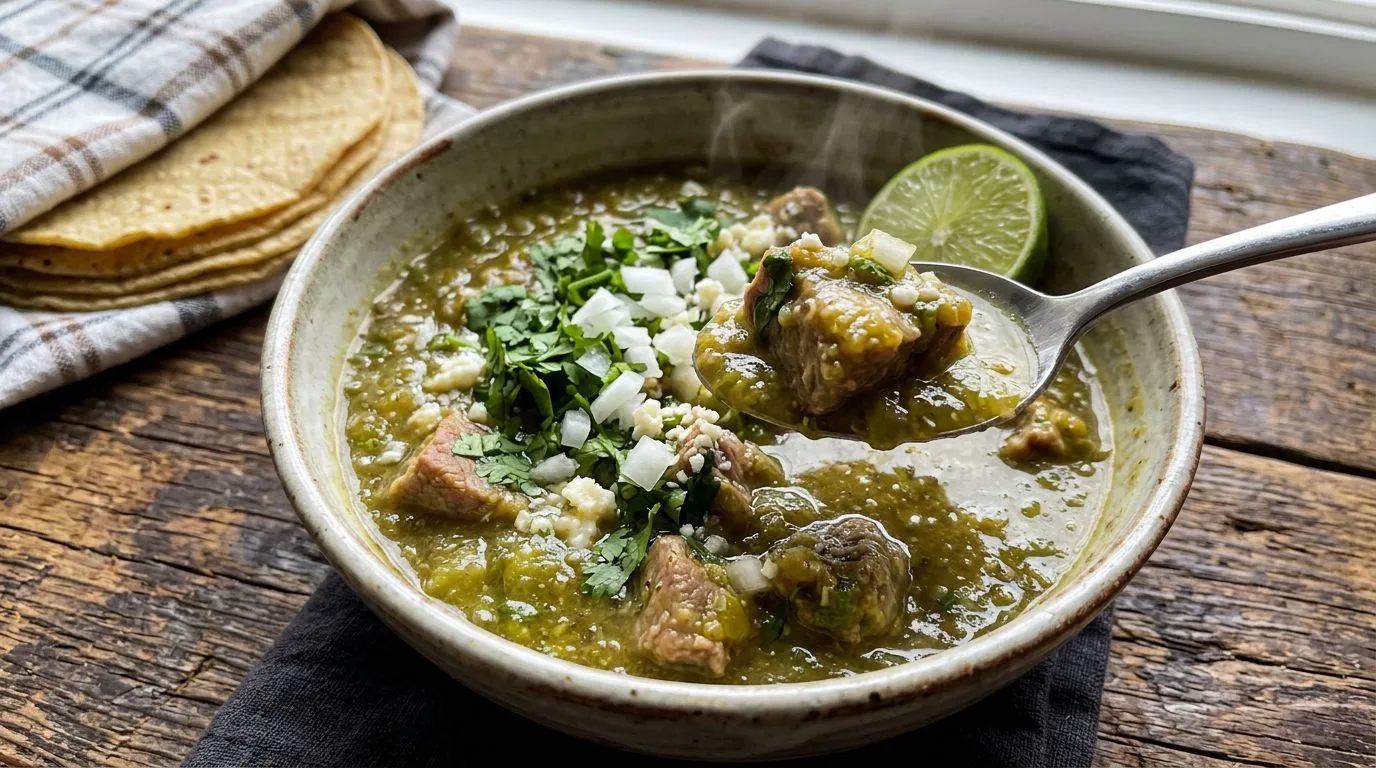
There’s something incredibly satisfying about a pot of Chili Verde simmering on the stove, filling the kitchen with the bright, tangy aroma of roasted tomatillos and green chilies. This authentic Mexican-inspired dish features tender chunks of pork shoulder bathed in a vibrant green sauce that’s both comforting and bold. Unlike traditional red chili, Chili Verde brings a fresh, slightly tart flavor profile that I find absolutely irresistible.
I love how this recipe transforms simple ingredients into something truly special. The roasted tomatillos and peppers create a complex base that’s tangy, mildly spicy, and deeply flavorful. As the pork slowly simmers in this gorgeous green sauce, it becomes fork-tender and absorbs all those wonderful flavors. Whether you’re looking for a hearty weeknight dinner or planning a weekend feast, this Chili Verde Recipe delivers restaurant-quality results right in your own kitchen.
What makes this dish even better is its versatility. Serve it over rice, wrap it in warm tortillas, or enjoy it as a hearty stew with your favorite toppings. It’s the kind of meal that brings everyone to the table and keeps them coming back for seconds.
Why You’ll Love This Chili Verde Recipe
This Chili Verde stands out for so many reasons. First, the flavor is absolutely incredible—the combination of roasted tomatillos, poblano peppers, and jalapeños creates a sauce that’s tangy, savory, and just the right amount of spicy. I find that roasting the vegetables before blending them adds a depth of flavor you simply can’t achieve with raw ingredients.
The pork shoulder becomes incredibly tender after its long simmer, practically falling apart with just a gentle nudge from your fork. This slow cooking method allows the meat to absorb the green sauce, making every bite juicy and flavorful. I also appreciate how forgiving this recipe is—it’s hard to overcook, and the longer it simmers, the better it gets.
Another reason I love this dish is that it makes fantastic leftovers. The flavors actually improve overnight as everything melds together. Plus, it’s a one-pot meal that feeds a crowd without requiring constant attention. Once everything is in the pot, you can let it do its thing while you take care of other tasks.
Ingredients and Substitutions
Let me walk you through the key ingredients that make this Chili Verde so delicious. The star of the show is pork shoulder, also called pork butt. This cut has the perfect amount of marbling to stay moist and tender during the long cooking time. If you can’t find pork shoulder, pork loin can work in a pinch, though it’s leaner and may dry out slightly if overcooked.
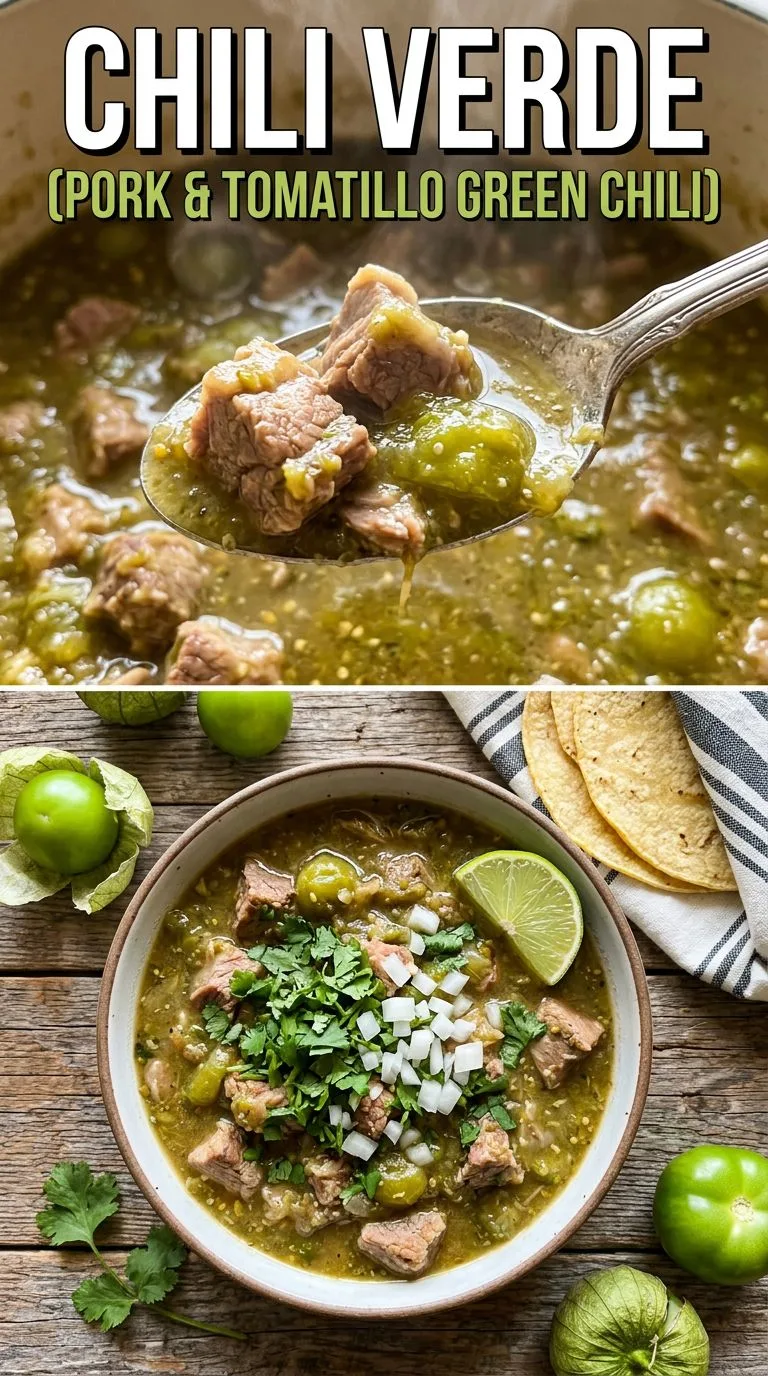
Tomatillos are essential for that authentic tangy flavor. These small green fruits look like green tomatoes wrapped in papery husks. I recommend choosing firm tomatillos that fill out their husks. If fresh tomatillos aren’t available, you can substitute with canned tomatillos, though the flavor won’t be quite as bright.
The poblano peppers provide mild heat and a wonderful earthy flavor, while the jalapeños add a bit more kick. I like using two jalapeños for moderate heat, but you can adjust based on your preference. For a milder version, remove the seeds and membranes from the jalapeños, or use just one pepper instead of two.
Fresh cilantro adds brightness to the sauce, and the lime juice provides that essential acidic punch that balances the richness of the pork. If you’re not a cilantro fan, you can reduce the amount or substitute with fresh parsley, though the flavor will be different.
The chicken broth helps create the right consistency for the sauce. I prefer low-sodium broth so I can control the salt level myself. Vegetable broth works as a substitute, or you can even use water if needed, though broth adds more depth.
For the spices, cumin and oregano are traditional in Mexican cooking and add warmth and complexity. Mexican oregano is ideal if you can find it, as it has a slightly different flavor profile than Mediterranean oregano, but either works well.
How to Make This Recipe
Making Chili Verde is a straightforward process that yields impressive results. The key is taking your time with each step to build layers of flavor.
Start by roasting the vegetables. Position your oven rack about 6 inches from the broiler and preheat the broiler to high. Place the husked tomatillos, poblano peppers, and jalapeños on a baking sheet. I like to line the sheet with foil for easier cleanup. Broil for 8-10 minutes, turning the vegetables halfway through, until they’re nicely charred and blistered. The charring adds a wonderful smoky depth to the sauce.
Once the vegetables are roasted and cool enough to handle, remove the stems and seeds from the peppers. You can leave some seeds in the jalapeños if you want extra heat. Transfer everything to a blender along with the cilantro, garlic, and lime juice. Blend until smooth—I recommend pulsing first, then blending on high for about 30 seconds until you have a vibrant green sauce.
Next, brown the pork. Heat the olive oil in a large, heavy-bottomed pot or Dutch oven over medium-high heat. Pat the pork cubes dry with paper towels—this helps them brown better. Working in batches if necessary to avoid crowding, brown the pork on all sides. This step takes about 6-8 minutes total and creates a flavorful fond on the bottom of the pot.
Add the chopped onion to the pot and cook for about 4 minutes until it softens and becomes translucent. Stir in the cumin, oregano, salt, and black pepper, cooking for another minute until fragrant. This blooms the spices and releases their essential oils.
Pour in the blended green sauce and chicken broth, stirring well to combine and scrape up any browned bits from the bottom of the pot. Bring everything to a gentle boil, then reduce the heat to low. Cover the pot and let it simmer for 1½ to 2 hours, stirring occasionally. The pork is ready when it’s fork-tender and the sauce has thickened slightly.
Before serving, taste and adjust the seasoning. I often add a bit more salt or a squeeze of fresh lime juice to brighten the flavors.
Expert Tips for Best Results
I’ve learned a few tricks over the years that really elevate this dish. First, don’t skip the charring step. Roasting the tomatillos and peppers under the broiler creates a depth of flavor that you simply can’t replicate with raw vegetables. The slight bitterness from the char balances beautifully with the natural tartness of the tomatillos.
When browning the pork, resist the urge to move it around too much. Let each side develop a nice golden-brown crust before flipping. This caramelization adds incredible flavor to the final dish. If your pot isn’t large enough to brown all the pork at once without crowding, work in batches. Crowded meat steams instead of browns.
For the most tender results, use pork shoulder with some visible fat marbling. The fat renders during cooking, keeping the meat moist and adding richness to the sauce. I recommend cutting the pork into 1½ to 2-inch cubes—larger pieces stay juicier during the long simmer.
If your sauce seems too thick during cooking, add a bit more chicken broth. Conversely, if it’s too thin at the end, remove the lid for the last 20-30 minutes of cooking to allow some liquid to evaporate. I find that the perfect consistency is somewhere between a stew and a sauce—thick enough to coat the pork but still spoonable.
Finally, this dish benefits from resting. If you have time, let it sit for 15-20 minutes after cooking before serving. This allows the flavors to settle and the sauce to thicken slightly. Even better, make it a day ahead—the flavors develop beautifully overnight in the refrigerator.
Serving Suggestions
Chili Verde is wonderfully versatile when it comes to serving options. My favorite way to serve it is over a bed of fluffy white rice or cilantro-lime rice, which soaks up all that delicious green sauce. The rice provides a neutral base that lets the bold flavors of the chili shine.
For a more traditional approach, serve it with warm corn or flour tortillas. You can use the Chili Verde as a filling for tacos or burritos, or simply serve the tortillas on the side for scooping. I love adding fresh toppings like diced white onion, chopped cilantro, sliced radishes, crumbled queso fresco, and a dollop of sour cream or Mexican crema.
This dish also pairs beautifully with Mexican-style beans. Refried beans, black beans, or pinto beans all work wonderfully. For a complete meal, add a simple side salad with a lime vinaigrette or some Mexican street corn (elote).
If you’re looking for other hearty pork dishes, you might enjoy this Apple Cider Pulled Pork or this comforting Posole Soup with Pork and Hominy.
For beverages, I recommend a cold Mexican beer, a refreshing agua fresca, or a simple lime agua. The acidity in these drinks complements the tangy green sauce perfectly.
Variations and Substitutions
While this recipe is delicious as written, there are several ways to customize it to your preferences. For a spicier version, add one or two serrano peppers along with the jalapeños, or include some of the jalapeño seeds in the sauce. You can also stir in some diced fresh jalapeños during the last 30 minutes of cooking for extra heat and texture.
If you prefer a milder chili, use only poblano peppers and omit the jalapeños entirely. Poblanos provide great flavor with minimal heat, making the dish family-friendly.
For a chicken version, substitute boneless, skinless chicken thighs for the pork shoulder. Reduce the cooking time to about 45 minutes to 1 hour, as chicken cooks faster than pork. The chicken should be tender and easily shredded with a fork when done.
You can also make this in a slow cooker. After browning the pork and sautéing the onions, transfer everything to a slow cooker along with the sauce and broth. Cook on low for 6-8 hours or on high for 3-4 hours until the pork is tender.
For an Instant Pot version, use the sauté function to brown the pork and cook the onions, then add the sauce and broth. Cook on high pressure for 35-40 minutes with a natural release. This method significantly reduces the cooking time while still producing tender, flavorful pork.
Some cooks like to add diced potatoes or hominy during the last 30-45 minutes of cooking for a heartier stew. Both additions are traditional in various regional versions of green chili.
Storage, Freezing, and Reheating
One of the best things about Chili Verde is how well it keeps and reheats. Store leftovers in an airtight container in the refrigerator for up to 4 days. I actually think it tastes even better the next day after the flavors have had time to meld together overnight.
To reheat, warm it gently on the stovetop over medium-low heat, stirring occasionally. You may need to add a splash of chicken broth or water to loosen the sauce, as it tends to thicken when refrigerated. You can also reheat individual portions in the microwave, covered, stirring halfway through.
Chili Verde freezes exceptionally well, making it perfect for meal prep. Let it cool completely, then transfer to freezer-safe containers or heavy-duty freezer bags. I recommend freezing in portion sizes that work for your household—individual servings or family-sized portions. It will keep in the freezer for up to 3 months.
To thaw, transfer the container to the refrigerator and let it thaw overnight. Reheat on the stovetop as described above. You can also reheat from frozen—just place the frozen block in a pot with a splash of liquid, cover, and heat over low heat, stirring occasionally as it thaws and warms through. This method takes longer but works in a pinch.
If you’re planning to freeze the chili, I recommend slightly undercooking the pork. It will finish cooking when you reheat it, ensuring it doesn’t become overcooked and dry.
Frequently Asked Questions
Can I use a different cut of pork?
While pork shoulder is ideal for this recipe because of its marbling and ability to stay tender during long cooking, you can use pork loin if that’s what you have available. Keep in mind that pork loin is much leaner, so it may dry out if overcooked. If using pork loin, reduce the cooking time to about 1 hour and check for tenderness frequently.
What if I can’t find fresh tomatillos?
Canned tomatillos are a perfectly acceptable substitute. You’ll need about two 11-ounce cans, drained. The flavor won’t be quite as bright and fresh, but the dish will still be delicious. Skip the roasting step for canned tomatillos and blend them directly with the other sauce ingredients.
How can I make this less spicy?
To reduce the heat, use only poblano peppers and omit the jalapeños entirely. You can also remove all the seeds and membranes from the peppers before blending, as that’s where most of the capsaicin (the compound that makes peppers spicy) is concentrated. Adding a dollop of sour cream when serving also helps cool down the heat.
Can I make this in advance?
Absolutely! Chili Verde is an excellent make-ahead dish. In fact, I recommend making it a day ahead if possible. The flavors develop and deepen as it sits, making it even more delicious. Simply cool it completely, refrigerate, and reheat gently before serving.
Why is my sauce watery?
If your sauce is too thin, remove the lid during the last 30-45 minutes of cooking to allow excess liquid to evaporate. The sauce should be thick enough to coat the back of a spoon but still pourable. Remember that it will thicken slightly as it cools.
Can I add vegetables to this recipe?
Yes! While traditional Chili Verde focuses on pork and the green sauce, you can add vegetables like diced potatoes, zucchini, or bell peppers during the last 30-45 minutes of cooking. Just keep in mind that additional vegetables will change the texture and may require adjusting the amount of liquid.
Chili Verde (Pork and Tomatillo Green Chili)
This authentic Chili Verde features tender pork shoulder simmered in a vibrant green sauce made with roasted tomatillos, poblano peppers, jalapeños, and fresh cilantro. The result is a hearty, flavorful Mexican-inspired dish that’s perfect served over rice, wrapped in tortillas, or enjoyed as a comforting stew.
- Prep Time: 20 minutes
- Cook Time: 2 hours
- Total Time: 2 hours 20 minutes
- Servings: 6
- Difficulty: Medium
- Cuisine: Mexican
- Course: Dinner
Ingredients
- 2 lbs pork shoulder, cubed
- 1½ lbs tomatillos, husked
- 2 poblano peppers
- 2 jalapeños
- 1 onion, chopped
- 4 garlic cloves, minced
- 2 cups chicken broth
- 1 tsp ground cumin
- 1 tsp dried oregano
- 2 tbsp olive oil
- ½ cup fresh cilantro
- 1 tbsp lime juice
- Salt and black pepper to taste
Instructions
- Position oven rack 6 inches from broiler and preheat broiler to high. Place husked tomatillos, poblano peppers, and jalapeños on a baking sheet. Broil for 8-10 minutes, turning halfway through, until charred and blistered.
- Remove stems and seeds from the roasted peppers. Transfer roasted vegetables to a blender along with cilantro, garlic, and lime juice. Blend until smooth.
- Heat olive oil in a large pot or Dutch oven over medium-high heat. Pat pork cubes dry and brown on all sides, about 6-8 minutes total. Work in batches if needed to avoid crowding.
- Add chopped onion to the pot and cook for 4 minutes until softened and translucent.
- Stir in cumin, oregano, salt, and black pepper. Cook for 1 minute until fragrant.
- Pour in the blended green sauce and chicken broth, stirring well to combine and scrape up any browned bits from the bottom of the pot.
- Bring to a gentle boil, then reduce heat to low. Cover and simmer for 1½ to 2 hours, stirring occasionally, until pork is fork-tender and sauce has thickened.
- Taste and adjust seasoning as needed. Serve warm with rice, tortillas, or your favorite toppings such as diced onion, cilantro, sour cream, and lime wedges.
Recipe Notes
- For a spicier version, leave some jalapeño seeds in the sauce or add serrano peppers.
- The pork is done when it easily shreds with a fork. If it’s still tough, continue simmering for another 15-30 minutes.
- If the sauce is too thick, add more chicken broth. If too thin, simmer uncovered for the last 30 minutes.
- This dish tastes even better the next day after the flavors have melded together.
- Can be made in a slow cooker (6-8 hours on low) or Instant Pot (35-40 minutes on high pressure with natural release).
Estimated Nutrition (Per Serving)
- Calories: 385
- Carbohydrates: 12g
- Protein: 34g
- Fat: 22g
- Saturated Fat: 6g
- Fiber: 3g
- Sugar: 6g
- Sodium: 520mg
Nutrition information is estimated based on standard ingredient values and may vary based on specific products used, portion sizes, and individual preparation methods.
