
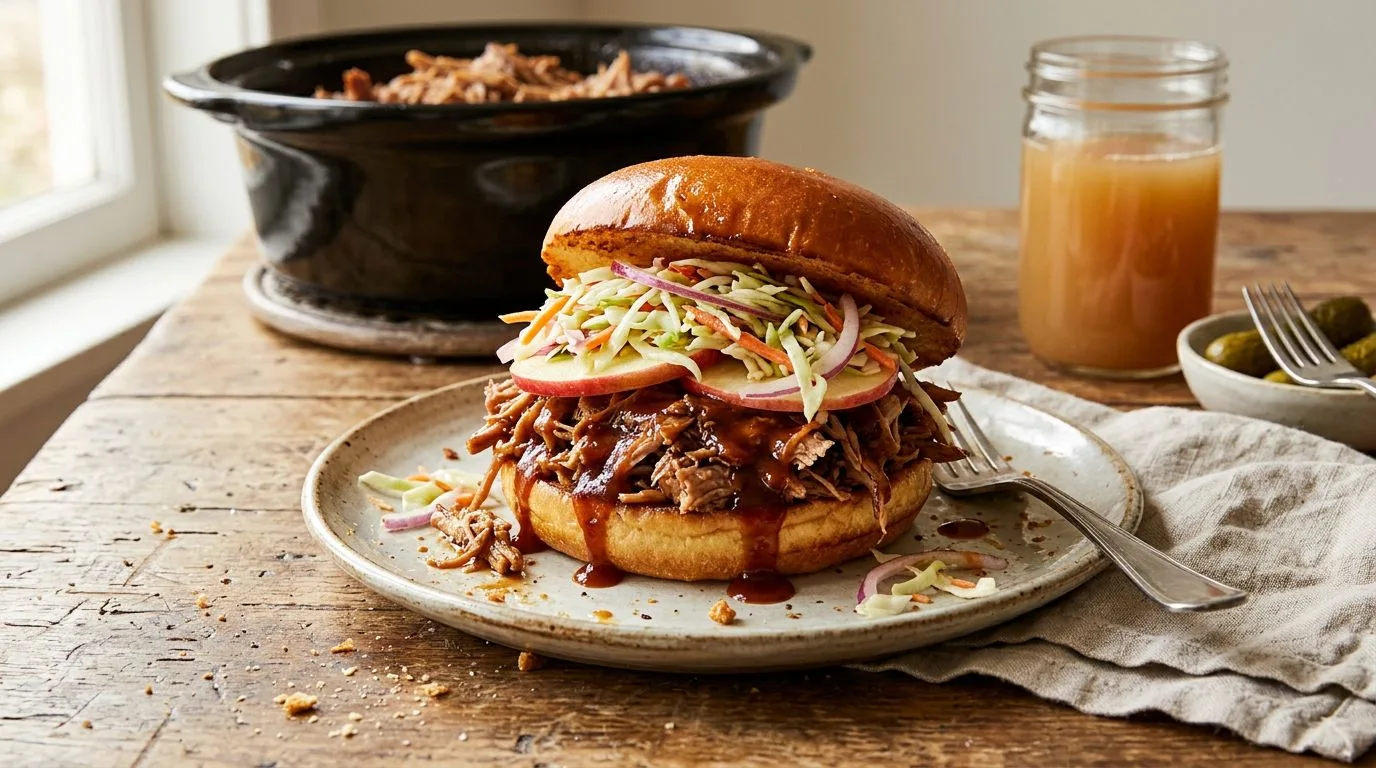
There’s something magical about the combination of tender, slow-cooked pork and the sweet-tart flavor of apple cider. This apple cider pulled pork recipe transforms a simple pork shoulder into an incredibly flavorful, fall-inspired meal that’s perfect for busy weeknights, weekend gatherings, or game day celebrations. I love how the apple cider infuses the meat with a subtle sweetness while the savory seasonings and tangy vinegar create the perfect balance of flavors.
What makes this recipe truly special is how effortless it is. The slow cooker does all the heavy lifting while you go about your day, and you’re rewarded with fork-tender, juicy pulled pork that practically falls apart. Whether you’re serving it on soft buns for sandwiches, piling it over creamy mashed potatoes, or enjoying it alongside roasted vegetables, this dish delivers comfort and satisfaction in every bite. I find that the aroma alone—apple cider mingling with warm spices and caramelized onions—makes the house smell absolutely incredible.
This recipe has become one of my go-to dinners when I want something impressive but low-maintenance. The combination of apple cider, brown sugar, and smoked paprika creates a sauce that’s both complex and crowd-pleasing, making it ideal for feeding a hungry family or entertaining guests without spending hours in the kitchen.
Why You’ll Love This Apple Cider Pulled Pork
This slow cooker apple cider pulled pork checks all the boxes for an outstanding dinner recipe. First and foremost, it’s incredibly easy to prepare. After a quick sear and a few minutes of prep work, the slow cooker takes over and does the rest. There’s no need to babysit the stove or worry about complicated techniques—just set it and forget it.
The flavor profile is absolutely outstanding. The apple cider adds a natural sweetness and fruity depth that complements the rich, savory pork beautifully. Combined with the smokiness from the paprika, the tang from the vinegar and mustard, and the warmth from the cumin, every bite is packed with layers of flavor. I love how the onions and garlic melt into the sauce, adding even more complexity.
This recipe is also incredibly versatile. You can serve it in so many different ways—on sandwich buns with coleslaw, over rice or mashed potatoes, in tacos, or even on a salad. It’s perfect for meal prep since it reheats beautifully and actually tastes even better the next day as the flavors continue to meld together.
Finally, this dish is a real crowd-pleaser. Whether you’re feeding picky eaters, hosting a casual gathering, or bringing a dish to a potluck, this apple cider pulled pork always gets rave reviews. The tender, juicy texture and balanced sweet-savory flavor appeal to just about everyone.
Ingredients and Substitutions
Let me walk you through the key ingredients that make this recipe so delicious and offer some helpful substitutions if you need to adapt it to what you have on hand.
Boneless pork shoulder is the star of this dish. This cut, also called pork butt, has the perfect amount of marbling and connective tissue that breaks down during slow cooking, resulting in incredibly tender, juicy meat. I recommend sticking with pork shoulder for the best results, but if you must substitute, pork loin can work—though it will be leaner and slightly less tender.
Apple cider provides the signature flavor of this recipe. Make sure to use fresh apple cider, not apple cider vinegar or apple juice. The natural sweetness and apple flavor of real cider is what makes this dish special. If you can’t find apple cider, unsweetened apple juice can work in a pinch, though the flavor won’t be quite as rich.
Apple cider vinegar adds essential tanginess and helps tenderize the meat. You can substitute with white wine vinegar or red wine vinegar if needed, though I prefer the apple cider vinegar for its complementary apple notes.
Brown sugar balances the acidity and adds caramelized sweetness to the sauce. Light or dark brown sugar both work well. You can substitute with maple syrup, honey, or coconut sugar if you prefer.
Smoked paprika is one of my favorite ingredients in this recipe because it adds a wonderful smoky depth without any actual smoking. Regular paprika can be used, but you’ll lose that smoky dimension. For extra smokiness, you could add a tiny bit of liquid smoke.
Barbecue sauce gets stirred in at the end to add richness and help bind the sauce. Use your favorite brand or homemade sauce. I like a slightly sweet, tomato-based sauce, but feel free to use whatever style you prefer.
The onion and garlic create an aromatic base that flavors both the meat and the cooking liquid. Yellow onions work beautifully, but white or sweet onions are fine substitutes. Fresh garlic is best, but you can use 1 teaspoon of garlic powder if necessary.

How to Make Apple Cider Pulled Pork
Making this slow cooker pulled pork is straightforward, but there are a few key steps that ensure the best results. Let me walk you through the process.
Start by patting the pork shoulder completely dry with paper towels. This is an important step because moisture on the surface prevents proper browning. Season the pork generously on all sides with salt, black pepper, smoked paprika, and ground cumin. Don’t be shy with the seasoning—this is a large piece of meat that needs bold flavoring.
Next, heat the olive oil in a large skillet over medium-high heat. Once the oil is shimmering and hot, carefully place the seasoned pork shoulder in the pan. Sear it for 2-3 minutes per side until you achieve a nice golden-brown crust. This step isn’t just about color—it develops deep, caramelized flavors that enhance the entire dish. I recommend searing at least three or four sides of the pork.
While the pork is searing, prepare your slow cooker by arranging the sliced onion and minced garlic across the bottom. This creates a flavorful bed for the pork to rest on and prevents it from sitting directly on the bottom of the cooker, which helps with even cooking.
Transfer the browned pork shoulder to the slow cooker, placing it on top of the onions and garlic. In a mixing bowl, whisk together the apple cider, apple cider vinegar, brown sugar, tomato paste, Dijon mustard, and Worcestershire sauce until well combined and the brown sugar has dissolved. Pour this mixture evenly over the pork.
Cover the slow cooker and set it to LOW for 8-10 hours or HIGH for 5-6 hours. I prefer the LOW setting when I have time because it results in slightly more tender meat, but the HIGH setting works perfectly well when you’re short on time. The pork is done when it’s so tender that it easily shreds with a fork.
Once the pork is cooked, carefully transfer it to a cutting board. Use two forks to shred the meat, discarding any large pieces of fat as you go. Meanwhile, skim any excess fat from the surface of the cooking liquid in the slow cooker using a spoon or ladle.
Stir the barbecue sauce into the cooking liquid, then return the shredded pork to the slow cooker. Toss everything together thoroughly so the meat is well coated with the sauce. Cook on HIGH for an additional 15-20 minutes to allow the flavors to meld and the sauce to thicken slightly.
Expert Tips for Best Results
After making this recipe many times, I’ve learned a few tricks that take it from good to absolutely outstanding.
First, don’t skip the searing step. I know it’s tempting to save time by skipping this, but those few minutes of browning create a depth of flavor that you simply can’t achieve otherwise. The caramelization that happens during searing adds complexity to the final dish.
When it comes to choosing your pork shoulder, look for a piece with good marbling. Those white streaks of fat throughout the meat are what keep it moist and flavorful during the long cooking time. A leaner cut will result in drier pulled pork.
I recommend checking the pork after the minimum cooking time. Every slow cooker runs a bit differently, and the size and shape of your pork shoulder can affect cooking time. The meat should be fall-apart tender—if it still feels firm or doesn’t shred easily, give it another hour.
For the best texture, shred the pork while it’s still warm. Cold pork is much harder to shred and tends to come apart in chunks rather than tender strands. I like to use two forks, pulling them in opposite directions to create those perfect pulled pork shreds.
Don’t throw away all the cooking liquid! It’s packed with flavor. After skimming the fat, you’ll have a delicious, concentrated sauce that’s perfect for tossing with the shredded meat. If the sauce seems too thin, you can simmer it on the stovetop for a few minutes to reduce and thicken it.
Finally, taste and adjust the seasoning before serving. Depending on your barbecue sauce and personal preferences, you might want to add a bit more salt, a splash of vinegar for brightness, or even a pinch of brown sugar for extra sweetness.
Serving Suggestions
One of my favorite things about this apple cider pulled pork is how versatile it is. The classic way to serve it is on soft hamburger buns or brioche rolls as pulled pork sandwiches. I love topping the sandwiches with a tangy coleslaw for crunch and freshness—the creamy, crisp slaw is the perfect contrast to the rich, tender pork.
For a heartier meal, serve the pulled pork over creamy mashed potatoes or buttery egg noodles. The sauce soaks into the potatoes beautifully, creating an incredibly comforting dinner. Roasted sweet potatoes are another excellent base that complements the apple cider flavors.
This pulled pork also makes fantastic tacos. Warm some corn or flour tortillas, pile on the pork, and top with diced red onion, fresh cilantro, sliced jalapeños, and a squeeze of lime. The combination of the sweet-savory pork with bright, fresh toppings is absolutely delicious.
For a lighter option, I like to serve the pulled pork over a bed of mixed greens with roasted vegetables, creating a warm pulled pork salad. Add some crispy fried onions or toasted pepitas for extra texture.
As for side dishes, this pulled pork pairs wonderfully with classic comfort foods. Try it alongside mac and cheese, baked beans, cornbread, roasted Brussels sprouts, or a simple green salad. For a fall-themed meal, consider serving it with this apple cider donut cake for dessert to continue the apple cider theme.
Variations and Substitutions
This recipe is wonderfully adaptable. Here are some variations I’ve tried and loved.
For a spicier version, add 1-2 teaspoons of chipotle chili powder to the spice rub, or stir in some diced chipotle peppers in adobo sauce along with the barbecue sauce. The smoky heat pairs beautifully with the sweet apple cider.
To make it more traditional barbecue-style, increase the barbecue sauce to 1 cup and reduce the apple cider to 3/4 cup. This creates a thicker, more intensely barbecue-flavored sauce.
For an Asian-inspired twist, replace the barbecue sauce with hoisin sauce, add a tablespoon of fresh grated ginger, and use rice vinegar instead of apple cider vinegar. Serve in steamed buns with pickled vegetables.
If you want to make this in an Instant Pot, sear the pork using the sauté function, then add all the ingredients and cook on high pressure for 60-75 minutes with a natural release. Shred the pork, then use the sauté function again to reduce the sauce before mixing everything together.
For a lower-sugar version, reduce or omit the brown sugar and use a sugar-free barbecue sauce. The apple cider provides natural sweetness, so the dish will still have good flavor.
You can also add fresh apples to the slow cooker for even more apple flavor. Peel and slice 1-2 tart apples (like Granny Smith) and add them along with the onions. They’ll break down during cooking and add extra sweetness and texture to the sauce.
Storage, Freezing, and Reheating
This pulled pork stores exceptionally well, making it perfect for meal prep or making ahead for gatherings.
To store leftovers, let the pulled pork cool to room temperature, then transfer it to an airtight container along with plenty of the sauce to keep the meat moist. It will keep in the refrigerator for 4-5 days. I actually think it tastes even better the next day after the flavors have had time to meld together.
For freezing, portion the cooled pulled pork and sauce into freezer-safe containers or heavy-duty freezer bags. Remove as much air as possible to prevent freezer burn. The pulled pork will keep in the freezer for up to 3 months. I like to freeze it in meal-sized portions so I can thaw just what I need.
To thaw frozen pulled pork, transfer it to the refrigerator and let it thaw overnight. For quicker thawing, you can place the sealed container in a bowl of cold water, changing the water every 30 minutes.
When reheating, I recommend doing so gently to prevent the meat from drying out. For refrigerated leftovers, reheat in a covered pot on the stovetop over medium-low heat, stirring occasionally, until heated through. You can also microwave individual portions in a covered microwave-safe dish, stirring halfway through.
For frozen pulled pork, you can reheat it directly from frozen in a covered pot on the stovetop over low heat, stirring occasionally and adding a splash of water or broth if needed. Alternatively, thaw it first and then reheat using your preferred method.
If the reheated pork seems dry, stir in a little extra barbecue sauce, apple cider, or even chicken broth to restore moisture and flavor.
Frequently Asked Questions
Can I make this recipe without a slow cooker?
Yes, you can make this in a Dutch oven in the oven. After searing the pork and preparing the sauce, transfer everything to a Dutch oven, cover tightly with a lid, and cook at 300°F for 3-4 hours until the pork is tender and easily shreds.
Why is my pulled pork dry?
Dry pulled pork usually results from overcooking or using too lean a cut. Make sure you’re using pork shoulder with good marbling, and don’t cook it longer than necessary. Also, be sure to toss the shredded meat with plenty of the cooking liquid to keep it moist.
Can I use pork tenderloin instead of pork shoulder?
I don’t recommend it. Pork tenderloin is very lean and will become dry and tough with long cooking times. Pork shoulder has the fat and connective tissue needed for tender, juicy pulled pork.
How do I know when the pork is done?
The pork is done when it reaches an internal temperature of at least 190-205°F and shreds easily with a fork. It should be so tender that it practically falls apart when you touch it.
Can I double this recipe?
Yes, but make sure your slow cooker is large enough. A 6-quart slow cooker can typically handle up to 6 pounds of pork shoulder. You may need to increase the cooking time slightly for a larger piece of meat.
What’s the difference between apple cider and apple juice?
Apple cider is fresh-pressed apple juice that’s unfiltered and often unpasteurized, giving it a richer, more complex apple flavor. Apple juice is filtered and pasteurized, resulting in a clearer, sweeter product. For this recipe, apple cider provides better flavor, but apple juice can work in a pinch.
Can I make this recipe ahead?
Absolutely! This is a great make-ahead dish. You can cook it 1-2 days in advance, store it in the refrigerator, and reheat it before serving. The flavors actually improve with time. If you’re looking for other make-ahead comfort food recipes, this crockpot beef stew is another excellent option.
How can I thicken the sauce?
If your sauce is too thin, you can simmer it on the stovetop to reduce it, or mix 1 tablespoon of cornstarch with 2 tablespoons of cold water and stir it into the sauce, then cook on HIGH for 10-15 minutes until thickened.
Apple Cider Pulled Pork
Tender and juicy apple cider pulled pork slow-cooked with fresh apple cider, onions, garlic, and savory seasonings. This flavorful fall-inspired pork recipe is perfect for sandwiches, family dinners, game days, and cozy weekend meals.
- Prep Time: 15 minutes
- Cook Time: 8 hours
- Total Time: 8 hours 15 minutes
- Servings: 8
- Difficulty: Easy
- Cuisine: American
- Course: Dinner
Ingredients
- 3 lbs boneless pork shoulder
- 1 cup apple cider
- 1 medium yellow onion, sliced
- 3 cloves garlic, minced
- 1/4 cup apple cider vinegar
- 1/4 cup brown sugar
- 2 tablespoons tomato paste
- 1 tablespoon Dijon mustard
- 1 tablespoon Worcestershire sauce
- 2 teaspoons smoked paprika
- 1 teaspoon ground cumin
- 1 teaspoon salt
- 1/2 teaspoon black pepper
- 1 tablespoon olive oil
- 1/2 cup barbecue sauce
Instructions
- Pat the pork shoulder dry with paper towels and season it with salt, black pepper, smoked paprika, and ground cumin.
- Heat olive oil in a large skillet over medium-high heat and sear the pork for 2-3 minutes per side until lightly browned.
- Arrange the sliced onion and minced garlic in the bottom of a 6-quart slow cooker. Place the browned pork shoulder on top.
- In a mixing bowl, whisk together the apple cider, apple cider vinegar, brown sugar, tomato paste, Dijon mustard, and Worcestershire sauce.
- Pour the apple cider mixture evenly over the pork.
- Cover and cook on LOW for 8-10 hours or HIGH for 5-6 hours, until the pork is very tender and easily shreds with a fork.
- Transfer the pork to a cutting board, discard excess fat, and shred the meat using two forks.
- Skim excess fat from the slow cooker liquid and stir in the barbecue sauce.
- Return the shredded pork to the slow cooker and toss thoroughly with the sauce.
- Cook on HIGH for another 15-20 minutes to combine the flavors. Serve warm in sandwiches, over mashed potatoes, or alongside roasted vegetables.
Recipe Notes
- Don’t skip the searing step—it adds essential depth of flavor to the final dish.
- For best results, use pork shoulder with good marbling. The fat keeps the meat moist and tender during the long cooking time.
- The pork is done when it reaches an internal temperature of 190-205°F and shreds easily with a fork.
- Save the cooking liquid! After skimming the fat, it makes a flavorful sauce for tossing with the shredded pork.
- This recipe tastes even better the next day as the flavors continue to develop.
- Adjust the sweetness by adding more or less brown sugar according to your preference.
Nutrition Information (Per Serving, Estimated)
- Calories: 385
- Carbohydrates: 16g
- Protein: 35g
- Fat: 19g
- Saturated Fat: 6g
- Fiber: 1g
- Sugar: 12g
- Sodium: 620mg
Nutrition information is estimated and may vary based on specific ingredients used.
