
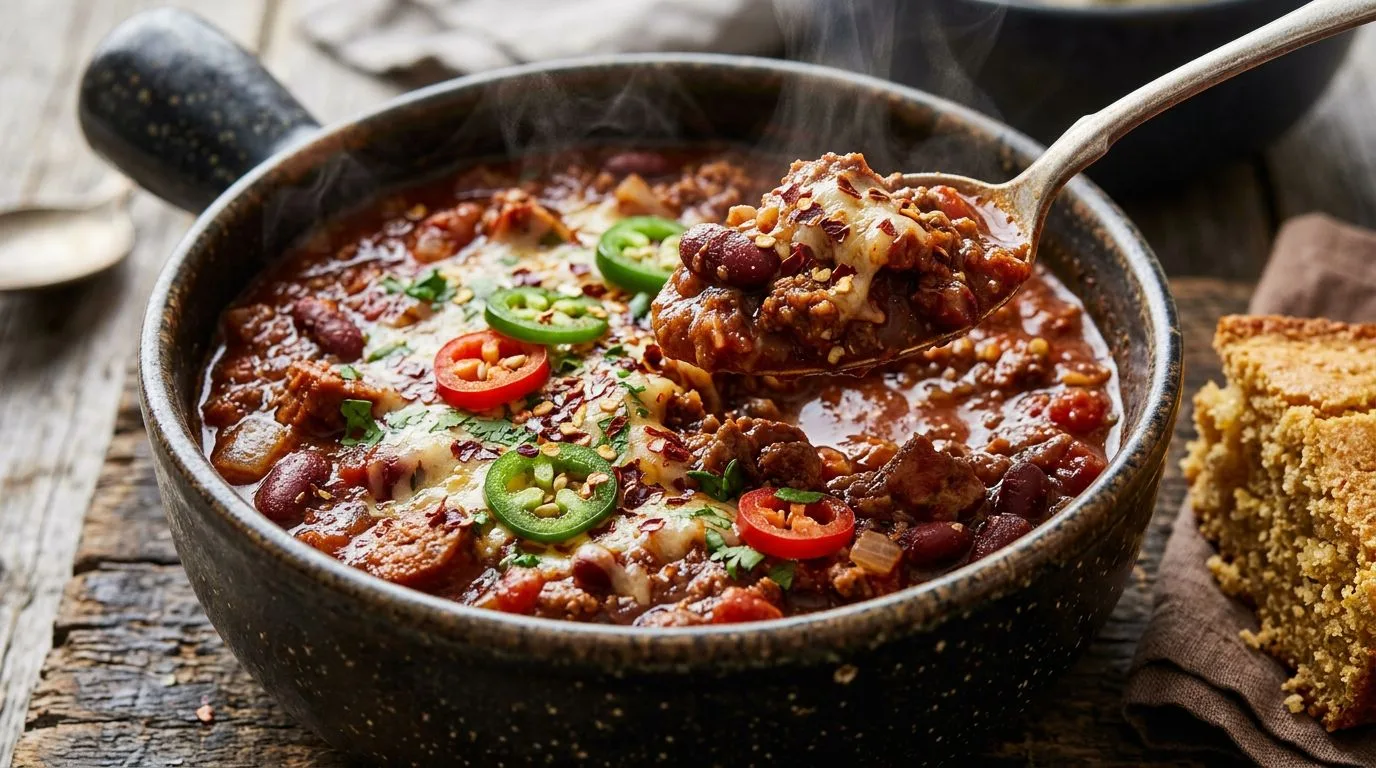
When I want a chili that truly brings the heat, I turn to Firehouse Spicy Chili. This isn’t your average weeknight chili—it’s a bold, fiery bowl packed with seasoned ground beef, smoky spices, and a serious kick from jalapeños and habanero peppers. I love how this recipe balances intense heat with deep, savory flavors from cumin, smoked paprika, and a rich tomato base. It’s the kind of chili that warms you from the inside out and satisfies even the most dedicated spice lovers.
What makes this Firehouse Spicy Chili special is its layered approach to heat. Instead of relying on just one source of spice, I combine multiple peppers and spices to create a complex, smoky burn that builds with each bite. The habanero brings fruity heat, the jalapeños add a fresh kick, and the cayenne pepper rounds out the spice profile beautifully. Whether you’re feeding a hungry crew after a long day or hosting a game day gathering, this hearty chili delivers bold flavor and serious satisfaction.
Why You’ll Love This Firehouse Spicy Chili
I find that this recipe hits all the right notes for anyone who genuinely enjoys spicy food. The heat level is adjustable, but as written, it’s definitely designed for those who can handle serious spice. I love that it doesn’t sacrifice flavor for heat—the combination of smoked paprika, cumin, and chili powder creates a deeply savory base that complements the peppers perfectly.
This chili is also incredibly practical. It comes together in one pot, making cleanup easy, and it actually tastes better the next day as the flavors meld together. I recommend making a big batch because it freezes beautifully and reheats without losing any of its bold character. The texture is hearty and satisfying, with tender ground beef, creamy kidney beans, and chunks of peppers and onions throughout.
Another reason I love this recipe is its versatility. While it’s fantastic on its own, it also works wonderfully as a topping for hot dogs, nachos, or baked potatoes. The bold flavors stand up well to toppings like sour cream and cheese, which also help tame the heat for anyone who finds it a bit too spicy straight up.
Ingredients and Substitutions
The ingredient list for Firehouse Spicy Chili is straightforward, but each component plays an important role in building flavor and heat. I like to use 80/20 ground beef for the best balance of flavor and texture—it has enough fat to keep the chili rich without being greasy. If you prefer leaner meat, 90/10 works fine, though you might want to add a touch more olive oil.
The pepper combination is where this recipe really shines. The jalapeños provide a bright, fresh heat that most people are familiar with, while the habanero brings intense, fruity spiciness. I recommend wearing gloves when handling the habanero and removing the seeds if you want to dial back the heat slightly. The red bell pepper adds sweetness and body without contributing to the spice level, creating a nice balance.
For the beans, I use kidney beans because they hold their shape well during the long simmer and have a creamy texture that complements the beef. You can substitute black beans or pinto beans if that’s what you have on hand. If you prefer a thicker chili similar to Texas no-bean chili, you can reduce or omit the beans entirely and add an extra pound of ground beef.
The spice blend is essential to this recipe’s character. Chili powder forms the base, cumin adds earthiness, smoked paprika contributes a subtle smokiness, and cayenne pepper boosts the overall heat level. I find that using quality spices makes a noticeable difference—fresh spices have more vibrant flavor than ones that have been sitting in your pantry for years.
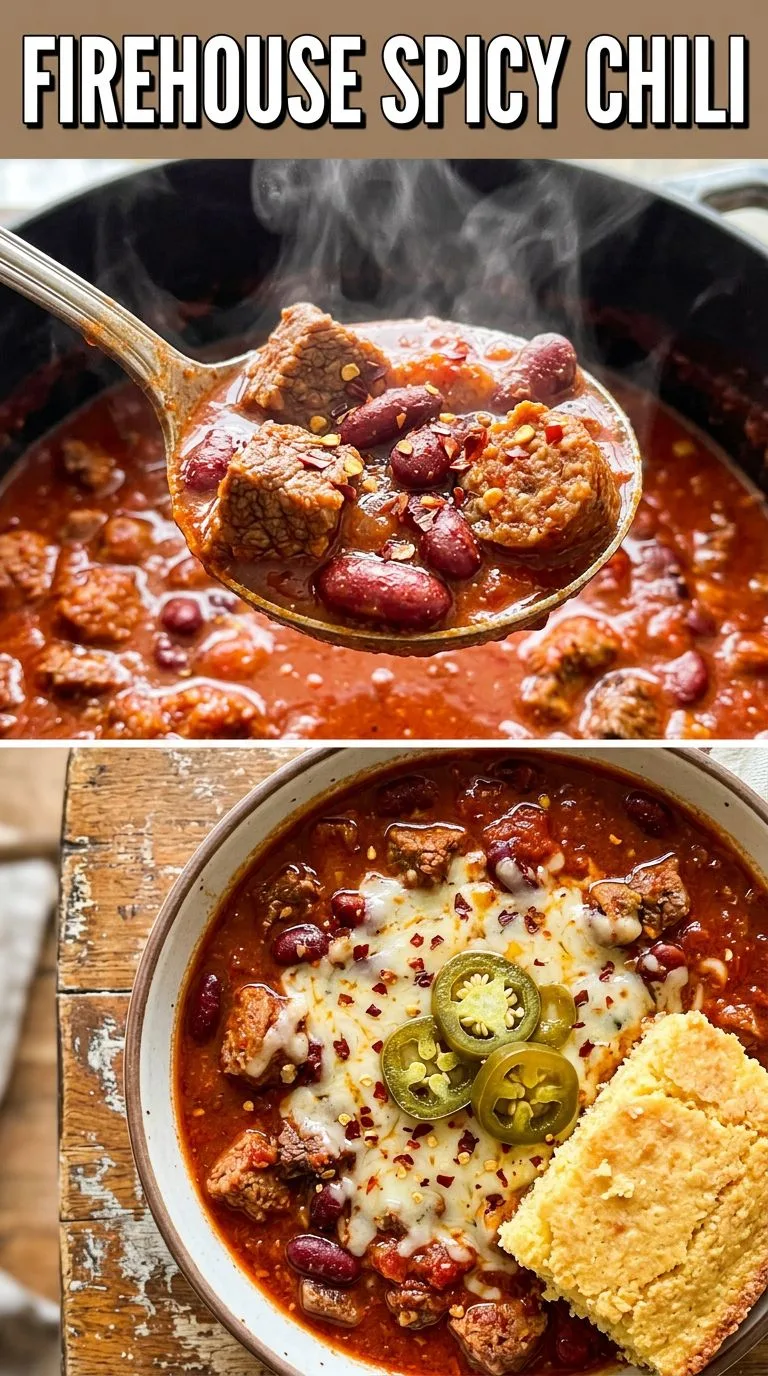
How to Make Firehouse Spicy Chili
Making this chili is a straightforward process that builds flavor in layers. I start by heating olive oil in a large, heavy-bottomed pot or Dutch oven over medium-high heat. A heavy pot distributes heat evenly and prevents scorching during the long simmer. Once the oil is shimmering, I add the ground beef and let it brown properly—this takes about 6 to 8 minutes. I like to break it into crumbles as it cooks but avoid stirring too frequently, which allows the meat to develop a nice brown crust that adds depth to the final dish.
After draining excess fat, I add the diced onion, red bell pepper, jalapeños, and finely minced habanero. This is where the kitchen starts to smell amazing. I cook these vegetables for about 5 minutes until they soften and the onions become translucent. Then I stir in the minced garlic and cook for just one minute—garlic burns easily, so I add it toward the end of the vegetable cooking stage.
The next step is crucial for developing deep flavor. I add the chili powder, cumin, smoked paprika, cayenne pepper, and tomato paste directly to the pot and stir everything together. Cooking the spices and tomato paste for a minute or two before adding liquids helps bloom their flavors and removes any raw taste from the tomato paste. The mixture will become very fragrant and slightly darker in color.
Then I pour in the crushed tomatoes and beef broth, followed by the drained kidney beans. I bring everything to a gentle boil, then reduce the heat to maintain a low simmer. The chili needs to cook uncovered for 45 to 60 minutes, stirring occasionally to prevent sticking. During this time, the flavors meld together, the liquid reduces slightly, and the chili thickens to a perfect consistency. I recommend tasting carefully toward the end of cooking and adjusting the salt, black pepper, and heat level as needed.
Expert Tips for Best Results
I’ve made this Firehouse Spicy Chili many times, and I’ve learned a few tricks that consistently improve the results. First, don’t rush the browning process. Properly browned beef develops a rich, caramelized flavor that forms the foundation of great chili. If your pot is crowded, the meat will steam instead of brown, so consider browning it in batches if necessary.
When it comes to heat level, I recommend starting with the recipe as written if you’re confident with spicy food. However, if you’re unsure about your tolerance or cooking for a mixed crowd, you can easily adjust. Remove the seeds and membranes from the jalapeños and habanero to reduce heat, or start with just one jalapeño and skip the habanero entirely. You can always add hot sauce at the table for those who want extra kick.
I find that letting the chili simmer for the full hour makes a significant difference in flavor development. The longer cooking time allows the spices to fully integrate and the flavors to deepen. If you have time, let it simmer even longer on very low heat—just keep an eye on the liquid level and add a splash of broth or water if it gets too thick.
For the best texture, I recommend stirring the chili occasionally but not constantly. Stirring prevents sticking and ensures even cooking, but too much stirring can break down the beans and make the chili mushy. A gentle stir every 10 to 15 minutes is perfect.
Serving Suggestions
My favorite way to serve Firehouse Spicy Chili is in deep bowls with a variety of toppings that let everyone customize their heat level. I always offer shredded sharp cheddar cheese, sour cream, diced red onions, sliced jalapeños, fresh cilantro, and lime wedges. The sour cream and cheese help cool the heat while adding richness, and the fresh toppings provide bright contrast to the deep, smoky flavors.
For sides, I love serving this chili with warm cornbread or corn muffins—the slight sweetness pairs beautifully with the spicy chili. Saltine crackers, tortilla chips, or crusty bread are also excellent choices for scooping up every last bit. A simple side salad with a tangy vinaigrette provides a refreshing contrast to the rich, hearty chili.
This chili also works wonderfully as a topping. I’ve used it on hot dogs for spicy chili dogs, spooned it over baked potatoes, and layered it with tortilla chips and cheese for loaded nachos. It’s substantial enough to be a complete meal on its own, but versatile enough to enhance other dishes. If you enjoy hearty chili recipes, you might also appreciate this award-winning chili recipe for a different flavor profile.
Variations and Substitutions
While I love this recipe as written, there are several ways to adapt it to your preferences or what you have available. For a different protein, ground turkey or chicken works well, though I recommend using dark meat or a blend to maintain moisture and flavor. You can also use a combination of ground beef and Italian sausage for added depth—just remove the casings and brown the sausage with the beef.
If you want to increase the heat even further, consider adding a diced serrano pepper or a teaspoon of ghost pepper flakes. For a smokier flavor without additional heat, add a teaspoon of chipotle powder or a diced chipotle pepper in adobo sauce. These additions create a different but equally delicious flavor profile.
For a vegetarian version, omit the ground beef and double the beans, or substitute with plant-based ground meat. You’ll want to use vegetable broth instead of beef broth and consider adding diced mushrooms or sweet potatoes for additional texture and substance. The spice blend works beautifully with plant-based proteins.
You can also adjust the bean variety to your preference. Black beans, pinto beans, or a combination of different beans all work well. Some people prefer a chunkier chili with larger pieces of vegetables—if that’s your style, dice the onions and peppers into larger pieces rather than finely chopping them.
Storage, Freezing, and Reheating
One of the best things about this Firehouse Spicy Chili is how well it stores and reheats. I actually think it tastes even better the next day after the flavors have had time to meld together overnight. Store leftover chili in an airtight container in the refrigerator for up to 4 days. The chili will thicken as it cools, so you may need to add a splash of broth or water when reheating.
For freezing, I recommend letting the chili cool completely before transferring it to freezer-safe containers or heavy-duty freezer bags. Leave about an inch of headspace to allow for expansion. Properly stored, the chili will maintain its quality for up to 3 months in the freezer. I like to freeze it in portion-sized containers for easy single-serving meals.
To reheat refrigerated chili, simply warm it in a pot over medium heat, stirring occasionally, until heated through. You can also microwave individual portions in a microwave-safe bowl, stirring every minute or so to ensure even heating. For frozen chili, I recommend thawing it overnight in the refrigerator before reheating, though you can also reheat it directly from frozen over low heat—just add a bit of extra liquid and allow more time for it to heat through completely.
Frequently Asked Questions
Can I make this chili less spicy?
Absolutely. To reduce the heat level, start by omitting the habanero pepper entirely and using only one jalapeño with the seeds removed. You can also reduce the cayenne pepper to 1/4 teaspoon or omit it completely. The chili will still have great flavor from the other spices even with less heat.
Do I have to use fresh peppers?
Fresh peppers provide the best flavor and texture, but you can substitute with dried peppers or hot sauce if needed. If using dried peppers, rehydrate them in hot water first, then chop and add them with the other vegetables. Start with small amounts of hot sauce and add more to taste, as it’s easier to add heat than to remove it.
Can I make this in a slow cooker?
Yes, this recipe adapts well to a slow cooker. Brown the beef and sauté the vegetables in a skillet first, then transfer everything to the slow cooker with the remaining ingredients. Cook on low for 6 to 8 hours or on high for 3 to 4 hours. The flavors will be slightly different but still delicious.
Why is my chili too thin?
If your chili is thinner than you’d like, continue simmering it uncovered to allow more liquid to evaporate. You can also mash some of the beans against the side of the pot to release their starches, which will naturally thicken the chili. Adding a tablespoon of masa harina or cornmeal also works well as a thickener.
Can I double this recipe?
Yes, this recipe doubles easily. Just make sure you’re using a pot large enough to accommodate the increased volume. You may need to extend the simmering time slightly to ensure all the flavors develop properly, and you’ll want to stir more frequently to prevent sticking with the larger quantity.
Firehouse Spicy Chili
This bold, fiery chili is packed with seasoned ground beef, hot peppers, beans, and smoky spices, delivering serious heat and deep, savory flavor for spice lovers. Perfect for game day or any time you crave a hearty, warming meal with a kick.
Prep Time: 15 minutes
Cook Time: 60 minutes
Total Time: 1 hour 15 minutes
Servings: 8
Difficulty: Easy
Cuisine: American
Course: Dinner
Ingredients
- 2 lbs ground beef
- 1 large onion, diced
- 4 garlic cloves, minced
- 2 jalapeños, chopped
- 1 habanero pepper, finely minced
- 1 red bell pepper, diced
- 2 cans kidney beans (15 oz each), drained
- 1 can crushed tomatoes (28 oz)
- 2 tbsp tomato paste
- 1½ cups beef broth
- 3 tbsp chili powder
- 2 tsp ground cumin
- 1 tsp smoked paprika
- ½ tsp cayenne pepper
- 1 tbsp olive oil
- Salt and black pepper to taste
Instructions
- Heat olive oil in a large heavy-bottomed pot over medium-high heat.
- Add ground beef and brown for 6 to 8 minutes, breaking it into crumbles.
- Drain excess fat, then add diced onion, red bell pepper, jalapeños, and finely minced habanero.
- Cook for 5 minutes until the vegetables soften, then stir in minced garlic for 1 minute.
- Add chili powder, cumin, smoked paprika, cayenne pepper, and tomato paste, stirring until fragrant.
- Pour in crushed tomatoes and beef broth, then add the drained kidney beans.
- Bring to a gentle boil, reduce heat, and simmer uncovered for 45 to 60 minutes, stirring occasionally.
- Taste carefully and adjust salt, black pepper, and heat level as desired.
- Serve hot with shredded cheddar, sour cream, and cornbread.
Recipe Notes
- Wear gloves when handling habanero peppers and wash your hands thoroughly afterward.
- To reduce heat, remove seeds and membranes from the peppers or omit the habanero entirely.
- The chili thickens as it cools. Add a splash of broth when reheating if needed.
- For deeper flavor, let the chili simmer for up to 90 minutes on low heat.
- This chili tastes even better the next day after the flavors have melded together.
Nutrition Information (Per Serving, Estimated)
Calories: 385
Carbohydrates: 28g
Protein: 32g
Fat: 16g
Saturated Fat: 6g
Fiber: 8g
Sugar: 6g
Sodium: 680mg
Nutrition values are estimates only. Actual values may vary based on specific ingredients and portion sizes.
