
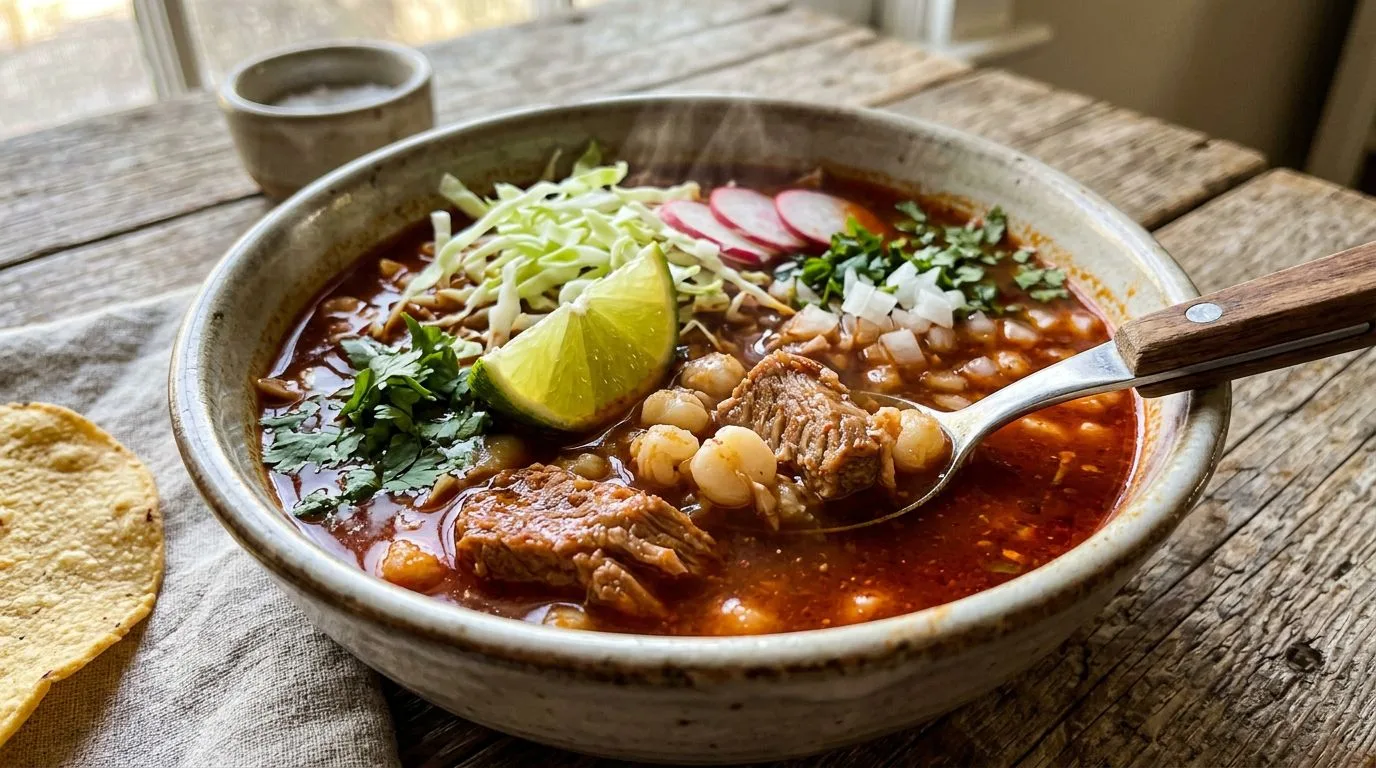
There’s something deeply satisfying about a steaming bowl of posole soup on a chilly evening. This traditional Mexican soup brings together tender chunks of pork shoulder, plump hominy kernels, and a rich, chile-infused broth that’s both comforting and complex. I love how the deep red color from the guajillo and ancho chiles creates such a beautiful presentation, while the array of fresh toppings adds brightness and crunch to every spoonful.
What makes posole soup truly special is the way it balances hearty, slow-cooked flavors with fresh, vibrant garnishes. The pork becomes melt-in-your-mouth tender after simmering in that aromatic broth, while the hominy adds a wonderful chewy texture that’s unlike anything else. I find that this dish is perfect for feeding a crowd or meal prepping for the week ahead, as the flavors only get better with time.
Whether you’re looking to explore authentic Mexican cuisine or simply want a warming soup that goes beyond the ordinary, this posole recipe delivers on all fronts. The combination of dried chiles, aromatic spices, and fresh toppings creates layers of flavor that make each bowl memorable.
Why You’ll Love This Posole Soup
This recipe stands out for several compelling reasons. First, the depth of flavor you achieve from toasting and blending dried chiles creates a broth that’s far more complex than anything you’d get from a jar or can. I recommend taking the time to properly toast those chiles—it only takes a few minutes but makes a noticeable difference in the final dish.
The slow-simmered pork shoulder becomes incredibly tender, practically falling apart with just a gentle nudge from your spoon. Unlike quick-cooking soups, this one rewards patience with meat that’s rich, flavorful, and perfectly textured. The hominy adds a satisfying chewiness that contrasts beautifully with the tender pork.
I also love how customizable this soup is at the table. Each person can add their preferred amount of cabbage, radishes, cilantro, and lime, making it interactive and fun for family dinners or gatherings. The fresh toppings aren’t just garnishes—they’re essential components that brighten the rich broth and add textural contrast.
Finally, this is an excellent make-ahead meal. The soup actually tastes better the next day after the flavors have had time to meld together. It’s perfect for weekend cooking when you want something special that will carry you through the busy week ahead.
Ingredients and Substitutions
The foundation of great posole soup starts with quality ingredients, though there’s room for flexibility based on what’s available in your area.
Pork shoulder is my preferred cut for this recipe because it has enough fat to stay moist during the long cooking time while becoming incredibly tender. You can substitute pork butt, which is essentially the same cut, or use chicken thighs if you prefer poultry. I don’t recommend lean cuts like pork loin, as they’ll dry out during the extended simmering.
White hominy is traditional and widely available in canned form. You can use yellow hominy if that’s what you find, though white is more authentic for this style of posole. If you’re feeling ambitious, dried hominy can be used, but it requires overnight soaking and significantly longer cooking time.
Dried guajillo and ancho chiles create the signature red broth and complex flavor profile. Guajillos provide fruity, tangy notes while anchos add sweetness and mild heat. If you can’t find these specific chiles, you can substitute with other dried red chiles, though the flavor will differ. In a pinch, chili powder can work, but I find the depth of flavor isn’t quite the same.
Mexican oregano has a different flavor profile than Mediterranean oregano—it’s more citrusy and less minty. If you can’t find it, regular oregano works, or you can use a combination of regular oregano with a pinch of marjoram.
The fresh toppings—cabbage, radishes, cilantro, and lime—are essential to the complete posole experience. Green cabbage is traditional, though red cabbage adds beautiful color. The radishes provide a peppery crunch that I find absolutely essential. If someone in your family doesn’t enjoy cilantro, they can simply omit it from their bowl.

How to Make Posole Soup
Making authentic posole soup involves several steps, but none are particularly difficult. The process is mostly about building layers of flavor and allowing time for the pork to become tender.
Preparing the Chile Sauce
Start by removing the stems and seeds from your dried guajillo and ancho chiles. I like to wear gloves for this step to avoid any irritation. Toast the chiles in a dry skillet over medium heat for about 30-60 seconds per side—just until they become fragrant. Be careful not to burn them, as this will make the sauce bitter.
Transfer the toasted chiles to a bowl and cover them with hot water. Let them soak for 15-20 minutes until they’re soft and pliable. Once softened, drain the chiles and add them to a blender along with the garlic cloves, half of your onion (roughly chopped), and about a cup of chicken broth. Blend until completely smooth. This chile sauce is the heart of your posole’s flavor.
Browning the Pork
Heat the vegetable oil in a large Dutch oven over medium-high heat. Pat the cubed pork shoulder dry with paper towels—this helps achieve better browning. Working in batches to avoid crowding, sear the pork cubes until they’re lightly browned on most sides. I find that good browning adds depth to the final soup, though you don’t need to cook the pork through at this stage.
Remove the browned pork to a plate and add the remaining chopped onion to the pot. Sauté for about 3 minutes until it begins to soften, scraping up any browned bits from the bottom of the pot.
Simmering the Soup
Return the pork to the pot and pour in your prepared chile sauce. Add the ground cumin, Mexican oregano, bay leaves, remaining chicken broth, salt, and black pepper. Stir everything together and bring the mixture to a boil.
Once boiling, reduce the heat to low, cover the pot, and let it simmer gently for 1.5 to 2 hours. I recommend checking occasionally to ensure it’s maintaining a gentle simmer rather than a rolling boil. The pork is ready when it’s fork-tender and easily pulls apart.
Adding the Hominy
After the pork is tender, drain your canned hominy and add it to the pot. Simmer for an additional 20-30 minutes to heat the hominy through and allow all the flavors to meld together. Taste the broth and adjust the seasoning with additional salt if needed. Remove the bay leaves before serving.
Expert Tips for Best Results
I’ve learned several tricks over the years that help ensure perfect posole soup every time.
Don’t skip toasting the chiles. This brief step awakens the oils and deepens the flavor significantly. Just watch them carefully—they can go from perfectly toasted to burnt in seconds.
Cut the pork into uniform pieces. I aim for roughly 1.5-inch cubes so they cook evenly. Pieces that are too small will fall apart completely, while oversized chunks may not become tender enough.
Skim the surface occasionally. As the pork simmers, some fat and foam will rise to the surface. I like to skim this off periodically for a cleaner-tasting broth, though it’s not absolutely necessary.
Adjust the consistency to your preference. If your posole seems too thick after adding the hominy, add a bit more chicken broth. If it’s too thin, let it simmer uncovered for a while to reduce and concentrate the flavors.
Prepare toppings in advance. Having all your garnishes ready before serving makes the meal feel more special and ensures everyone can customize their bowl while it’s still hot.
Use a splatter screen. When simmering the soup, a splatter screen allows steam to escape while keeping your stovetop clean. I find this particularly helpful during the long cooking time.
Serving Suggestions
Posole soup is traditionally served as a complete meal, but the right accompaniments elevate the experience. I always set out all the toppings in small bowls so everyone can build their perfect bowl.
The classic toppings—shredded cabbage, sliced radishes, fresh cilantro, and lime wedges—are essential. I like to add the cabbage first for crunch, then the radishes for their peppery bite. A generous squeeze of lime brightens everything, and the cilantro adds freshness. Some people also enjoy adding diced avocado, which provides creamy richness.
For a more substantial meal, serve the posole with warm corn tortillas or crispy birria tacos on the side. Tostadas are another traditional accompaniment—their crunch pairs wonderfully with the soup.
I recommend serving this with Mexican crema or sour cream on the side for those who enjoy a creamy element. Dried oregano and crushed red pepper flakes at the table allow guests to adjust the seasoning to their taste.
For beverages, Mexican beer, agua fresca, or even a simple lime water complement the rich, spicy flavors beautifully. If you’re serving this for a special occasion, margaritas are always a crowd-pleaser.
Variations and Substitutions
While this recipe is delicious as written, there are several ways to adapt it to your preferences or dietary needs.
Chicken posole: Replace the pork shoulder with bone-in chicken thighs. Reduce the initial simmering time to about 45 minutes, then remove the chicken, shred the meat, discard the bones, and return the meat to the pot with the hominy.
Vegetarian posole: Omit the pork entirely and use vegetable broth instead of chicken broth. Add extra vegetables like zucchini, mushrooms, or poblano peppers for substance. The chile broth is flavorful enough to carry the dish even without meat.
Green posole (pozole verde): Instead of red chiles, make a green sauce with tomatillos, jalapeños, poblano peppers, and cilantro. This creates a completely different but equally delicious version.
Spicier version: Add dried arbol chiles to your chile blend, or include fresh jalapeños or serranos when serving. I like to offer hot sauce at the table for those who want extra heat.
Slow cooker adaptation: After browning the pork and preparing the chile sauce, transfer everything to a slow cooker. Cook on low for 6-8 hours or high for 4-5 hours, then add the hominy for the last 30 minutes. This method works wonderfully if you want to prepare dinner while you’re at work, similar to how you might make apple cider pulled pork in a slow cooker.
Instant Pot version: Brown the pork using the sauté function, add all ingredients except hominy, and pressure cook on high for 35 minutes with natural release. Add hominy and simmer on sauté mode for 10 minutes.
Storage, Freezing, and Reheating
One of the best things about posole soup is how well it keeps, making it perfect for meal prep or batch cooking.
Refrigerator Storage
Store leftover posole in an airtight container in the refrigerator for up to 4-5 days. I find that the flavors actually improve after a day or two as everything melds together. Keep the fresh toppings separate and add them when serving—they’ll stay crisp and fresh this way.
Freezing Instructions
Posole freezes beautifully for up to 3 months. Let the soup cool completely, then transfer to freezer-safe containers, leaving about an inch of headspace for expansion. I like to freeze it in portion-sized containers for easy reheating. The hominy texture holds up well to freezing, though it may become slightly softer.
Don’t freeze the fresh toppings—they won’t maintain their texture. Always prepare fresh cabbage, radishes, cilantro, and lime when serving frozen and reheated posole.
Reheating
Reheat refrigerated posole in a pot over medium heat, stirring occasionally, until heated through. You may need to add a splash of chicken broth or water, as the soup tends to thicken as it sits. For frozen posole, I recommend thawing it overnight in the refrigerator before reheating, though you can also reheat it directly from frozen over low heat, stirring frequently.
Microwave reheating works for individual portions—heat in 2-minute intervals, stirring between each, until hot throughout. The soup may separate slightly when reheated, but a good stir will bring it back together.
Frequently Asked Questions
Can I use fresh chiles instead of dried?
While dried chiles provide the traditional deep, complex flavor for posole soup, you can use fresh chiles in a pinch. You’ll need to adjust quantities and won’t achieve quite the same depth, but poblanos and New Mexico chiles can work. The flavor profile will be different—brighter and less earthy.
What’s the difference between posole and pozole?
These are simply two different spellings of the same dish. “Pozole” is the Spanish spelling, while “posole” is an Anglicized version commonly used in the American Southwest. Both refer to the traditional Mexican soup made with hominy.
Can I make this in advance?
Absolutely! In fact, I recommend making posole soup a day ahead if possible. The flavors develop and deepen overnight. Prepare the soup completely, let it cool, and refrigerate. Reheat gently before serving and prepare fresh toppings.
Why is my posole broth not red enough?
The color comes from the dried chiles. If your broth isn’t as red as you’d like, you may need more chiles or your chiles might be old and have lost some color. Make sure you’re using enough guajillo chiles, as they provide most of the red color. Ancho chiles are darker and add depth but less vibrant red color.
Is hominy the same as corn?
Hominy is made from corn, but it’s been treated with an alkali solution (usually lime) in a process called nixtamalization. This removes the hull and germ, causing the kernels to puff up and develop a unique flavor and chewy texture that’s quite different from regular corn.
Can I use pork loin instead of pork shoulder?
I don’t recommend it. Pork loin is very lean and will become dry and tough during the long cooking time required for posole. Pork shoulder has the fat and connective tissue needed to stay moist and become tender through slow simmering.
How spicy is this soup?
As written, this posole has mild to moderate heat. Guajillo and ancho chiles provide more flavor than heat. If you’re sensitive to spice, you can reduce the number of chiles. If you want it spicier, add arbol chiles to the chile sauce or serve with hot sauce on the side.
What can I serve with posole for a complete meal?
Posole is quite hearty on its own, but traditional accompaniments include tostadas, warm tortillas, Mexican rice, or a simple green salad. The soup is filling enough that you don’t need much else, especially when loaded with all the fresh toppings.
Posole (Mexican Pork and Hominy Soup)
A traditional Mexican soup featuring tender slow-cooked pork, hominy, and a rich chile-infused broth. Served with crunchy cabbage, radishes, lime, and fresh cilantro for a complete and satisfying meal.
Cook Time: 2 hours 30 minutes
Total Time: 3 hours
Servings: 8 servings
Difficulty: Medium
Cuisine: Mexican
Course: Dinner
Ingredients
- 2 lbs pork shoulder, cubed
- 2 cans white hominy (25 oz each), drained
- 4 dried guajillo chiles
- 2 dried ancho chiles
- 1 medium onion
- 4 cloves garlic
- 1 tsp ground cumin
- 1 tsp dried Mexican oregano
- 2 bay leaves
- 8 cups chicken broth
- 1 tbsp vegetable oil
- 1 tsp salt
- 1/2 tsp black pepper
For Serving:
- 2 cups shredded cabbage
- 4 radishes, sliced
- 2 limes, cut into wedges
- 1/2 cup fresh cilantro, chopped
Instructions
- Remove stems and seeds from dried guajillo and ancho chiles. Toast chiles briefly in a dry skillet over medium heat for 30-60 seconds per side until fragrant. Transfer to a bowl and cover with hot water. Soak for 15-20 minutes until softened.
- Drain the softened chiles and add to a blender along with garlic cloves, half the onion (roughly chopped), and 1 cup of chicken broth. Blend until completely smooth to create the chile sauce.
- Heat vegetable oil in a large Dutch oven over medium-high heat. Pat the cubed pork shoulder dry with paper towels. Working in batches, sear the pork cubes until lightly browned on most sides, about 3-4 minutes per batch. Remove to a plate.
- Chop the remaining half onion and add to the Dutch oven. Sauté for 3 minutes until beginning to soften, scraping up any browned bits from the bottom.
- Return the browned pork to the pot. Add the prepared chile sauce, ground cumin, Mexican oregano, bay leaves, remaining 7 cups of chicken broth, salt, and black pepper. Stir to combine.
- Bring the mixture to a boil, then reduce heat to low. Cover and simmer gently for 1.5 to 2 hours, stirring occasionally, until the pork is fork-tender and easily pulls apart.
- Add the drained hominy to the pot and stir to combine. Simmer uncovered for an additional 20-30 minutes until the hominy is heated through and the flavors have melded together.
- Taste and adjust seasoning with additional salt if needed. Remove and discard the bay leaves.
- Serve hot in bowls, allowing each person to top their posole with shredded cabbage, sliced radishes, fresh cilantro, and a squeeze of lime juice.
Recipe Notes
- The soup tastes even better the next day after the flavors have had time to develop. Consider making it a day ahead.
- If you can’t find Mexican oregano, substitute regular oregano, though the flavor will be slightly different.
- For a spicier version, add 2-3 dried arbol chiles to the chile sauce.
- The soup will thicken as it sits. Add more chicken broth when reheating if needed.
- Fresh toppings are essential to the dish—don’t skip them! They provide important textural contrast and brightness.
- Leftover posole can be frozen for up to 3 months. Freeze without the fresh toppings.
Nutrition Information (Per Serving, Estimated)
Calories: 385 kcal
Carbohydrates: 28g
Protein: 28g
Fat: 18g
Saturated Fat: 5g
Fiber: 6g
Sugar: 4g
Sodium: 890mg
Nutrition information is estimated and does not include optional toppings. Actual values may vary based on specific ingredients used.
