
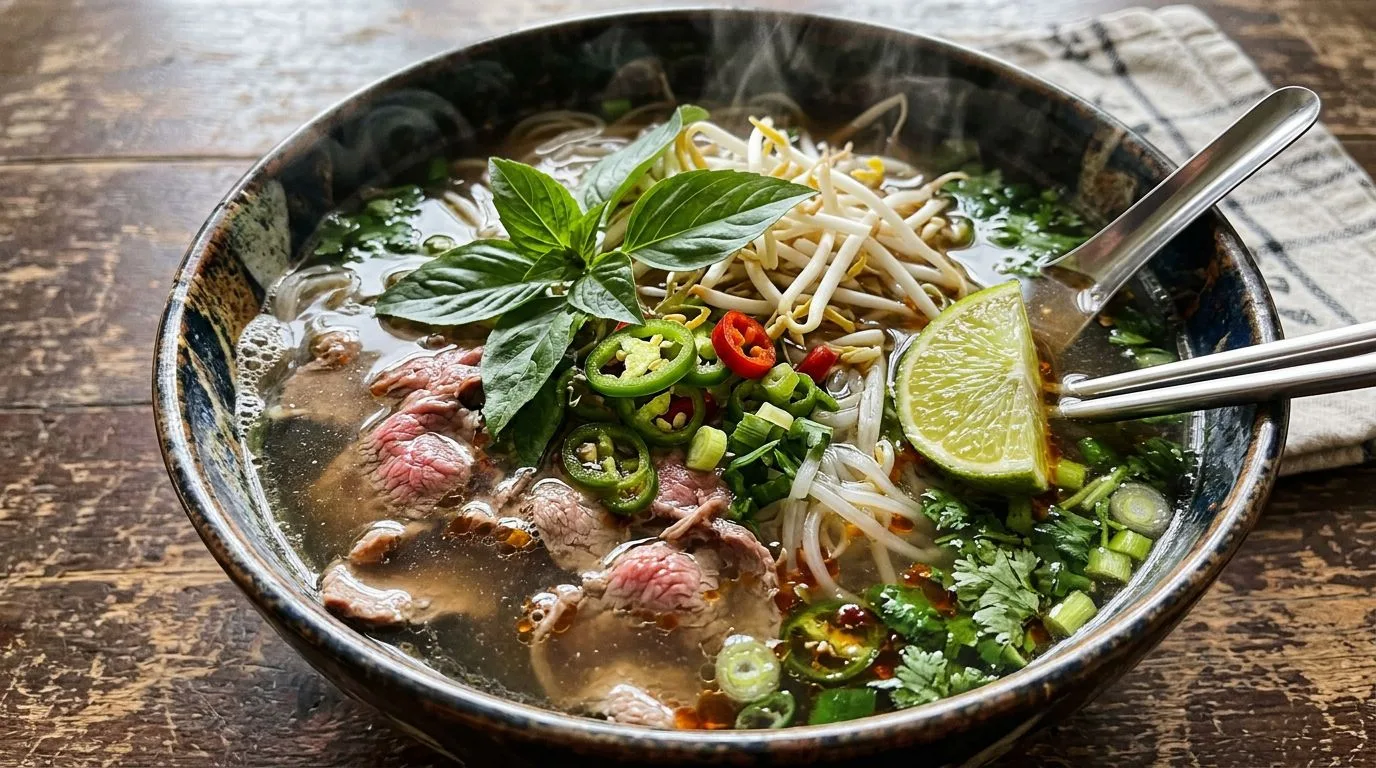
There’s something truly magical about a steaming bowl of beef pho on a cool evening. The aromatic broth, fragrant with star anise and cinnamon, the tender slices of beef, and those silky rice noodles all come together to create one of Vietnam’s most beloved dishes. I love how this soup manages to be both comforting and refreshing at the same time, with its complex layers of flavor balanced by bright herbs and tangy lime.
Making authentic beef pho at home might seem intimidating at first, but I promise it’s more approachable than you think. Yes, it requires some time for the broth to develop its deep, rich flavor, but the actual hands-on work is minimal. The key is patience and letting those aromatic spices work their magic. Once you’ve made your first batch of homemade pho, you’ll understand why it’s worth every minute of simmering time.
This recipe walks you through every step of creating restaurant-quality beef pho in your own kitchen. From charring the aromatics to achieving that crystal-clear, deeply flavorful broth, I’ll share all the techniques that make this dish truly special. Whether you’re a pho enthusiast or trying it for the first time, this recipe will help you master this iconic Vietnamese noodle soup.
Why You’ll Love This Beef Pho Recipe
This homemade beef pho delivers authentic Vietnamese flavors without requiring a trip to a specialty market. I find that the combination of readily available ingredients creates a broth that rivals what you’d find in the best pho restaurants. The long, gentle simmer extracts every bit of flavor from the beef bones and aromatics, resulting in a broth that’s both rich and remarkably clean-tasting.
What I really appreciate about this recipe is its flexibility. While the broth simmers away, you can go about your day, checking in occasionally to skim and adjust. The actual active cooking time is quite reasonable, making this an excellent weekend project. Plus, the recipe yields generous portions, so you can enjoy multiple bowls or freeze some broth for future quick meals.
The fresh herb garnishes are what truly elevate this dish. I love how each person can customize their bowl with bean sprouts, Thai basil, cilantro, jalapeños, and lime juice. This interactive element makes serving pho feel like a special occasion, and everyone gets to adjust the flavors to their personal preference.
Ingredients and Substitutions
The foundation of great beef pho starts with quality bones and beef. I recommend using beef knuckle bones or marrow bones for the richest broth. The brisket adds both flavor to the broth and provides tender, sliced meat for serving. The thinly sliced raw sirloin cooks instantly when the hot broth is poured over it, creating that signature tender texture.
For the aromatics, charring the onion and ginger is essential. This step adds a subtle smokiness and depth that you simply can’t achieve otherwise. I find that using a gas burner or broiler works perfectly for this. The whole spices—star anise, cinnamon stick, cloves, and coriander seeds—are what give pho its distinctive fragrance. While you could use ground spices in a pinch, whole spices provide a cleaner, more refined flavor.
Fish sauce is non-negotiable for authentic flavor, providing that essential umami depth. If you’re avoiding fish sauce, you could try a combination of soy sauce and a bit of anchovy paste, though the flavor won’t be quite the same. The sugar balances the savory elements, while salt adjusts the overall seasoning.
Rice noodles are traditional for pho, and I recommend the flat, medium-width variety labeled “banh pho.” If you can’t find them, rice vermicelli works as a substitute, though the texture will be slightly different. For the fresh garnishes, Thai basil has a distinct anise-like flavor that regular basil can’t replicate, but regular basil is better than none. Bean sprouts add crucial crunch, while cilantro, green onions, jalapeños, and lime provide brightness and heat.
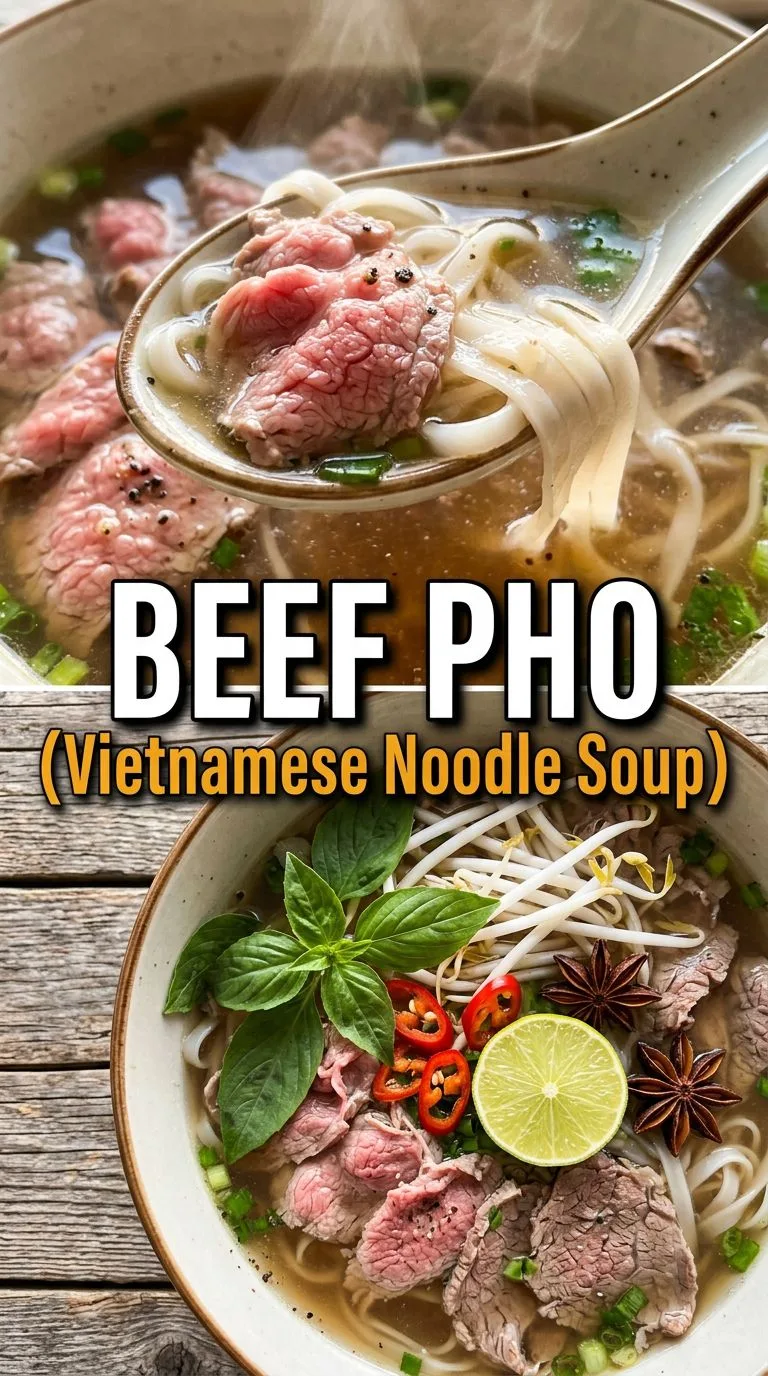
How to Make Beef Pho
The first step in creating exceptional beef pho is charring your aromatics. I like to place the onion halves and ginger directly over a gas flame or under a hot broiler until they’re lightly blackened in spots. This takes about 5-7 minutes and fills your kitchen with an amazing aroma. Don’t skip this step—it adds incredible depth to the final broth.
Next comes the crucial step of parboiling the bones. Place your beef bones in a large pot, cover with water, and bring to a vigorous boil for 5 minutes. You’ll notice a lot of foam and impurities rising to the surface. Drain the bones, rinse them thoroughly under cold water, and clean out your pot completely. This process removes the proteins and impurities that would otherwise cloud your broth, ensuring that crystal-clear appearance that’s the hallmark of great pho.
Return the cleaned bones to your pot along with the brisket, charred onion and ginger, all your whole spices, salt, sugar, fish sauce, and 10 cups of fresh water. Bring everything to a gentle simmer—not a rolling boil. I find that maintaining a gentle simmer with just a few bubbles breaking the surface is key to a clear broth. Skim any foam that rises during the first 30 minutes of cooking.
Let the broth simmer uncovered for 3-4 hours, checking occasionally to skim foam and add water if the level drops too much. The brisket will be tender after about 1.5-2 hours. Remove it when it’s fork-tender, let it cool slightly, then slice it thinly against the grain. The bones should continue simmering to extract maximum flavor.
When your broth has developed a rich, deep flavor, strain it through a fine-mesh strainer or cheesecloth. Taste and adjust the seasoning with additional fish sauce, salt, or sugar as needed. The broth should be well-balanced—savory, slightly sweet, and deeply aromatic.
To assemble your pho, cook the rice noodles according to package directions, usually just a few minutes in boiling water. Drain and divide them among your serving bowls. Top with sliced cooked brisket and the thinly sliced raw sirloin. Bring your broth to a vigorous boil and ladle it over the beef and noodles. The boiling broth will cook the raw sirloin instantly. If you prefer, you can briefly cook the sirloin slices in the broth before serving for extra safety.
Expert Tips for Best Results
The quality of your broth depends heavily on maintaining the right temperature. I recommend keeping the heat low enough that you see only gentle bubbling. A rapid boil will create a cloudy, greasy broth instead of the clear, clean broth you’re aiming for. If you notice the broth getting too vigorous, simply reduce the heat.
Skimming is your friend. During the first hour of simmering, check every 15-20 minutes to remove any foam or impurities that float to the surface. This extra attention pays off with a beautifully clear broth. I like to keep a small bowl and ladle nearby specifically for this purpose.
Don’t rush the charring process. Those blackened spots on the onion and ginger aren’t just for show—they add a subtle smokiness and complexity that’s essential to authentic pho. If you’re using a broiler, watch carefully to prevent burning, but do aim for some good charring.
For the thinly sliced raw sirloin, I find it’s much easier to slice if you freeze the meat for about 30 minutes first. This firms it up just enough to get paper-thin slices. You want the beef thin enough that the hot broth will cook it through instantly.
Taste your broth before serving and don’t be afraid to adjust. Pho broth should have a good balance of savory (from the fish sauce), sweet (from the sugar), and aromatic (from the spices). If it tastes flat, add a bit more fish sauce. If it’s too salty, add a touch of sugar to balance it out.
Serving Suggestions
I love serving beef pho with a generous platter of fresh garnishes so everyone can customize their bowl. Arrange bean sprouts, Thai basil leaves, cilantro sprigs, sliced jalapeños, and lime wedges on a large plate. Some people also enjoy adding hoisin sauce and sriracha at the table, though purists often skip these condiments.
The traditional way to eat pho is to add your desired garnishes, squeeze in lime juice, and mix everything together before eating. I recommend starting with a taste of the plain broth to appreciate its complexity, then adding garnishes gradually to find your perfect balance.
While pho is a complete meal on its own, you might enjoy serving it alongside Vietnamese spring rolls or crispy fried wontons for a more elaborate spread. A simple cucumber salad with rice vinegar dressing also makes a refreshing accompaniment.
For beverages, I find that Vietnamese iced coffee or hot jasmine tea pairs beautifully with pho. The coffee’s sweetness and richness complement the savory broth, while tea provides a lighter, more refreshing option.
Variations and Substitutions
If you’re short on time, you can make a quicker version using store-bought beef stock as a base, though the flavor won’t be quite as deep. Simmer the stock with the charred aromatics and spices for at least an hour to infuse the flavors, then proceed with the recipe.
For a different protein option, you can make chicken pho by substituting chicken bones and chicken breast for the beef. The cooking time is shorter—about 1.5-2 hours total. You might also enjoy this beef barley soup for another hearty, warming option.
Some people prefer adding meatballs to their pho. You can make simple beef meatballs seasoned with fish sauce and garlic, then poach them directly in the broth during the last 10 minutes of cooking.
For a richer broth, some cooks add oxtail along with the beef bones. This increases both the cooking time and the richness of the final broth. If you’re looking for another impressive beef dish, this garlic rosemary prime rib roast makes an excellent special occasion meal.
You can also make a vegetarian version using vegetable stock, mushrooms for umami, and tofu for protein. While it won’t be traditional pho, it can still be delicious with the right aromatics and garnishes.
Storage, Freezing, and Reheating
Leftover pho components store best when kept separate. I recommend storing the broth, cooked noodles, sliced beef, and garnishes in individual containers. The broth will keep in the refrigerator for up to 5 days. You’ll notice a layer of fat solidifying on top when it’s cold—you can remove this if desired, though it adds flavor when reheated.
Cooked rice noodles can become mushy when stored in liquid, so I always keep them separate and store them in an airtight container for up to 3 days. When you’re ready to eat, simply rinse them with hot water to separate and warm them slightly before adding to your bowl.
The broth freezes exceptionally well for up to 3 months. I like to freeze it in quart-sized containers or freezer bags, which makes it easy to thaw just what you need. Lay the bags flat in the freezer for efficient storage. To thaw, transfer to the refrigerator overnight or use the defrost setting on your microwave.
To reheat, bring the broth to a full boil on the stovetop. This is important both for food safety and for ensuring it’s hot enough to cook the raw beef slices. You can reheat the cooked brisket gently in the broth or serve it at room temperature.
I don’t recommend freezing the assembled pho bowls, as the noodles and garnishes don’t freeze well. However, having frozen broth on hand means you can have fresh pho ready in just the time it takes to cook noodles and slice some beef—usually about 15 minutes.
Frequently Asked Questions
Can I make beef pho in a slow cooker or Instant Pot?
Yes, both methods work well. For a slow cooker, char your aromatics first, then add all ingredients and cook on low for 8-10 hours. For an Instant Pot, use the sauté function to char aromatics if possible, then pressure cook on high for 90 minutes with natural release. The traditional stovetop method gives you more control over clarity, but these alternatives are convenient.
Why is my pho broth cloudy?
Cloudy broth usually results from boiling too vigorously or skipping the parboiling step. The key is maintaining a gentle simmer and removing impurities through parboiling and regular skimming. If your broth is already cloudy, you can clarify it by straining through cheesecloth and simmering gently with a beaten egg white, which will attract particles, then straining again.
How thin should I slice the raw beef?
Aim for slices about 1/8 inch thick or thinner. The beef should be thin enough that you can almost see through it. This ensures it cooks through instantly when the boiling broth is poured over it. Partially freezing the beef for 30 minutes makes slicing much easier.
Can I use beef stock instead of making broth from bones?
While homemade bone broth provides the most authentic flavor and body, you can use high-quality beef stock in a pinch. Simmer it with the charred aromatics and spices for at least an hour to develop flavor. You might want to add a packet of unflavored gelatin to mimic the body that bones provide.
What’s the difference between pho and ramen?
Pho is Vietnamese and uses rice noodles in a clear, aromatic broth flavored with star anise and cinnamon. Ramen is Japanese and uses wheat noodles in a broth that can be clear or cloudy, often flavored with miso, soy sauce, or pork. The garnishes and overall flavor profiles are quite different.
Do I have to use fish sauce?
Fish sauce is essential for authentic pho flavor, providing the characteristic umami depth. While you could substitute soy sauce, the flavor won’t be the same. If you’re vegetarian, there are vegetarian fish sauce alternatives made from fermented soybeans that work reasonably well.
How do I know when the broth is done?
The broth is ready when it has a rich, deep flavor and aromatic complexity. It should taste well-balanced with savory, sweet, and spice notes. The color should be a rich amber, and the broth should have good body. This typically takes 3-4 hours of gentle simmering.
Can I make pho ahead for a party?
Absolutely! Make the broth up to 2 days ahead and refrigerate. Slice the cooked brisket and store it separately. Prepare all your garnishes and store them in the refrigerator. When guests arrive, cook fresh noodles, reheat the broth to boiling, and let everyone assemble their own bowls. This actually makes entertaining easier.
Beef Pho (Vietnamese Noodle Soup)
This authentic beef pho features a deeply aromatic broth infused with star anise, cinnamon, and ginger, served with tender beef slices, silky rice noodles, and fresh herbs. A comforting and flavorful Vietnamese classic that’s perfect for any occasion.
- Prep Time: 30 minutes
- Cook Time: 3 hours 30 minutes
- Total Time: 4 hours
- Servings: 6
- Difficulty: Medium
- Cuisine: Vietnamese
- Course: Dinner
Ingredients
- 2 lbs beef bones
- 1 lb beef brisket
- 8 oz thinly sliced raw beef sirloin
- 8 oz dried rice noodles
- 1 large onion, halved
- 3-inch piece fresh ginger, halved
- 3 star anise pods
- 1 cinnamon stick
- 4 whole cloves
- 1 tsp coriander seeds
- 2 tbsp fish sauce
- 1 tbsp sugar
- 1 tsp salt
- 10 cups water
- 2 cups bean sprouts
- 1/2 cup Thai basil
- 1/2 cup fresh cilantro
- 2 limes, cut into wedges
- 2 green onions, sliced
- Sliced jalapeños, to taste
Instructions
- Preheat your oven broiler or heat a dry skillet over high heat. Char the onion halves and ginger until lightly blackened on the cut sides, about 5-7 minutes. Set aside.
- Place the beef bones in a large pot and cover with water. Bring to a vigorous boil and cook for 5 minutes. Drain the bones, rinse them thoroughly under cold water, and clean the pot completely to remove all impurities.
- Return the cleaned bones to the pot along with the brisket, charred onion, charred ginger, star anise, cinnamon stick, cloves, coriander seeds, salt, sugar, fish sauce, and 10 cups of fresh water.
- Bring the mixture to a boil, then immediately reduce heat to maintain a gentle simmer. Skim any foam that rises to the surface during the first 30 minutes.
- Simmer uncovered for 3-4 hours, adding water as needed to maintain the liquid level. After 1.5-2 hours, check the brisket for tenderness. When it’s fork-tender, remove it from the broth, let it cool slightly, and slice thinly against the grain. Set aside.
- Continue simmering the broth until it’s deeply flavorful and aromatic. Strain the broth through a fine-mesh strainer or cheesecloth into a clean pot. Taste and adjust seasoning with additional fish sauce, salt, or sugar as needed.
- Cook the rice noodles according to package instructions, usually 3-5 minutes in boiling water. Drain well and divide among 6 serving bowls.
- Top each bowl of noodles with sliced cooked brisket and several slices of raw sirloin.
- Bring the strained broth to a vigorous boil. Ladle the boiling broth over the beef and noodles in each bowl, ensuring the raw sirloin is completely submerged and cooks through from the heat of the broth. Alternatively, briefly cook the sirloin slices in the boiling broth before ladling into bowls.
- Serve immediately with bean sprouts, Thai basil, cilantro, green onions, jalapeños, and lime wedges on the side for each person to customize their bowl.
Recipe Notes
- For the clearest broth, maintain a gentle simmer rather than a rolling boil throughout the cooking process.
- Freeze the raw sirloin for 30 minutes before slicing to achieve paper-thin slices.
- The broth can be made up to 2 days ahead and refrigerated, or frozen for up to 3 months.
- Store noodles, broth, and garnishes separately for best results when saving leftovers.
- If you prefer fully cooked beef, you can briefly poach the sirloin slices in the broth before serving rather than relying on the hot broth to cook them in the bowl.
- Adjust the amount of fish sauce, salt, and sugar to your taste preference—pho broth should be well-balanced between savory, sweet, and aromatic.
Estimated Nutrition (Per Serving)
- Calories: 420
- Carbohydrates: 38g
- Protein: 35g
- Fat: 14g
- Saturated Fat: 5g
- Fiber: 2g
- Sugar: 4g
- Sodium: 890mg
Nutrition information is estimated and will vary based on specific ingredients used and portion sizes.
