
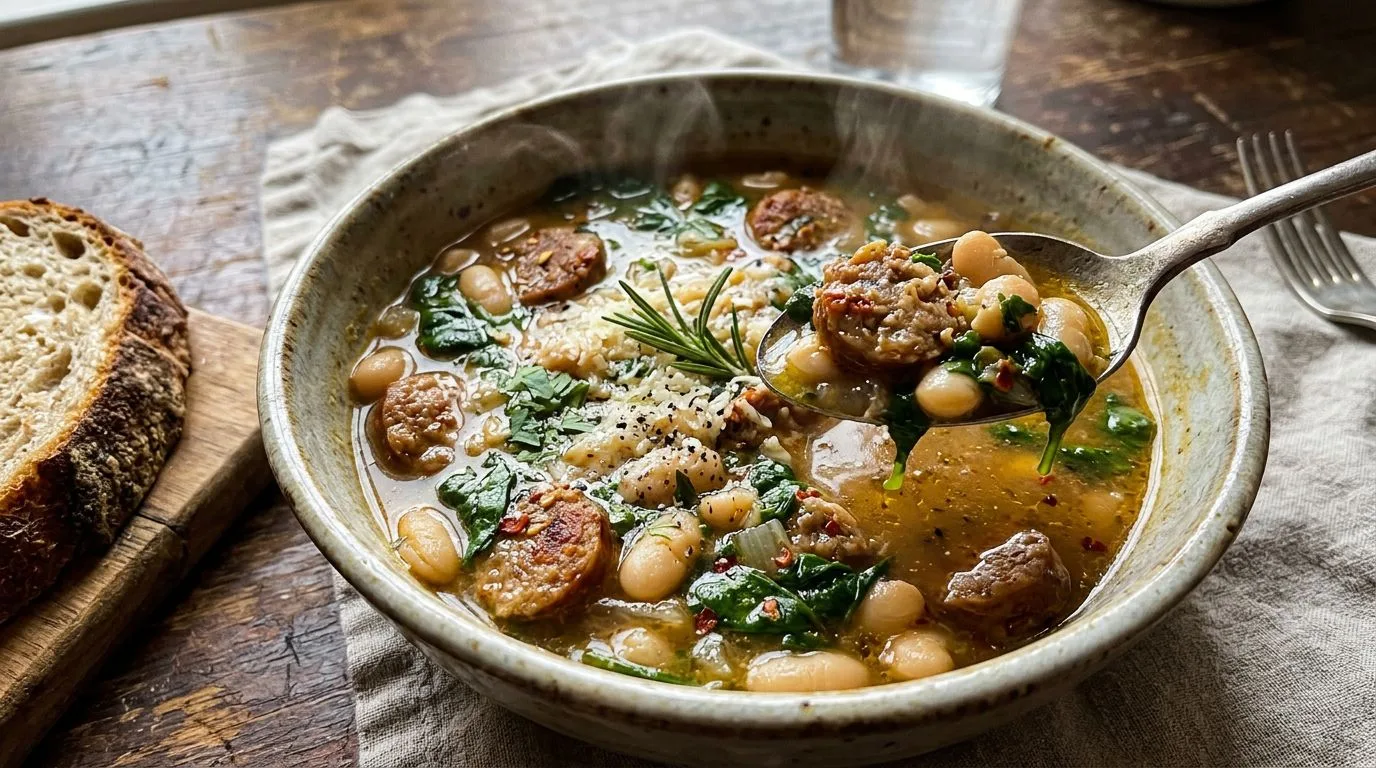
There’s something incredibly comforting about a bowl of sausage and white bean soup on a chilly evening. I love how this rustic Italian-inspired soup combines savory Italian sausage with creamy cannellini beans, tender vegetables, and aromatic herbs to create a meal that’s both hearty and satisfying. The rich broth, infused with garlic and tomatoes, brings everything together beautifully, while fresh spinach adds a pop of color and nutrition right at the end.
This sausage and white bean soup is one of those recipes that feels like it’s been simmering all day, but it actually comes together in under an hour. I find that it’s perfect for busy weeknights when you want something wholesome and filling without spending hours in the kitchen. The Italian sausage provides incredible flavor and protein, while the cannellini beans add a wonderful creamy texture that makes every spoonful feel indulgent. Whether you’re feeding a hungry family or meal prepping for the week ahead, this soup delivers on both flavor and convenience.
What I really appreciate about this recipe is how it transforms simple, accessible ingredients into something that tastes like it came from a cozy Italian trattoria. The combination of aromatic vegetables, herbs, and that touch of red pepper flakes creates layers of flavor that develop beautifully as the soup simmers. Topped with freshly grated Parmesan cheese, this soup becomes a complete meal that everyone will love.
Why You’ll Love This Sausage and White Bean Soup
This soup checks all the boxes for what makes a great weeknight dinner. First, it’s incredibly flavorful without requiring any complicated techniques or hard-to-find ingredients. The Italian sausage does most of the heavy lifting when it comes to seasoning, bringing its blend of fennel, garlic, and spices to the broth. I love how the rendered fat from the sausage adds richness to the soup base, creating a foundation of flavor that permeates every ingredient.
The texture of this soup is another reason it’s become such a favorite. The cannellini beans break down slightly during cooking, naturally thickening the broth and creating a creamy consistency without any cream or flour. This makes the soup feel indulgent while remaining relatively light and healthy. The vegetables add pleasant bite and freshness, while the spinach wilts into silky ribbons that blend seamlessly with the other ingredients.
I also appreciate how versatile this recipe is. You can easily adjust the spice level by choosing mild or spicy Italian sausage, and you can add more red pepper flakes if you like extra heat. The soup is naturally gluten-free (just check your sausage and broth labels), and it’s packed with protein and fiber, making it a nutritious choice that will keep you satisfied for hours. Plus, it reheats beautifully, which means leftovers taste just as good as the first serving.
Ingredients and Substitutions
The beauty of this sausage and white bean soup lies in its straightforward ingredient list. Italian sausage is the star of the show, and I recommend using fresh sausage with the casings removed rather than pre-cooked links. You can choose between mild or spicy depending on your heat preference—I like to use mild sausage and control the heat level with red pepper flakes. If you can’t find Italian sausage, you could substitute with ground pork seasoned with fennel seeds, garlic powder, and Italian herbs, though the flavor won’t be quite as robust.
Cannellini beans are traditional in this type of soup, and their creamy texture is perfect for the dish. If you can’t find cannellini beans, Great Northern beans or navy beans make excellent substitutes. I prefer using canned beans for convenience, but if you want to use dried beans, cook them separately until tender before adding them to the soup. Just remember that dried beans will need to be soaked overnight and cooked for 1-2 hours before they’re ready.
For the vegetables, I use a classic mirepoix base of onions, carrots, and celery, which provides aromatic depth and sweetness to the broth. These vegetables are pretty essential to the soup’s flavor profile, but you could add diced bell peppers or zucchini if you want extra vegetables. The garlic is non-negotiable in my opinion—it adds so much flavor that I wouldn’t skip it. Fresh garlic is always better than jarred, but in a pinch, you could use 1 teaspoon of garlic powder.
The diced tomatoes add acidity and brightness to balance the richness of the sausage. I use canned diced tomatoes for convenience, but you could substitute with crushed tomatoes or even fresh tomatoes when they’re in season. For the broth, chicken broth is my go-to because it adds savory depth, but vegetable broth works well if you want to keep things lighter. The baby spinach at the end adds color and nutrition—you could substitute with kale, Swiss chard, or escarole if you prefer heartier greens.
How to Make Sausage and White Bean Soup
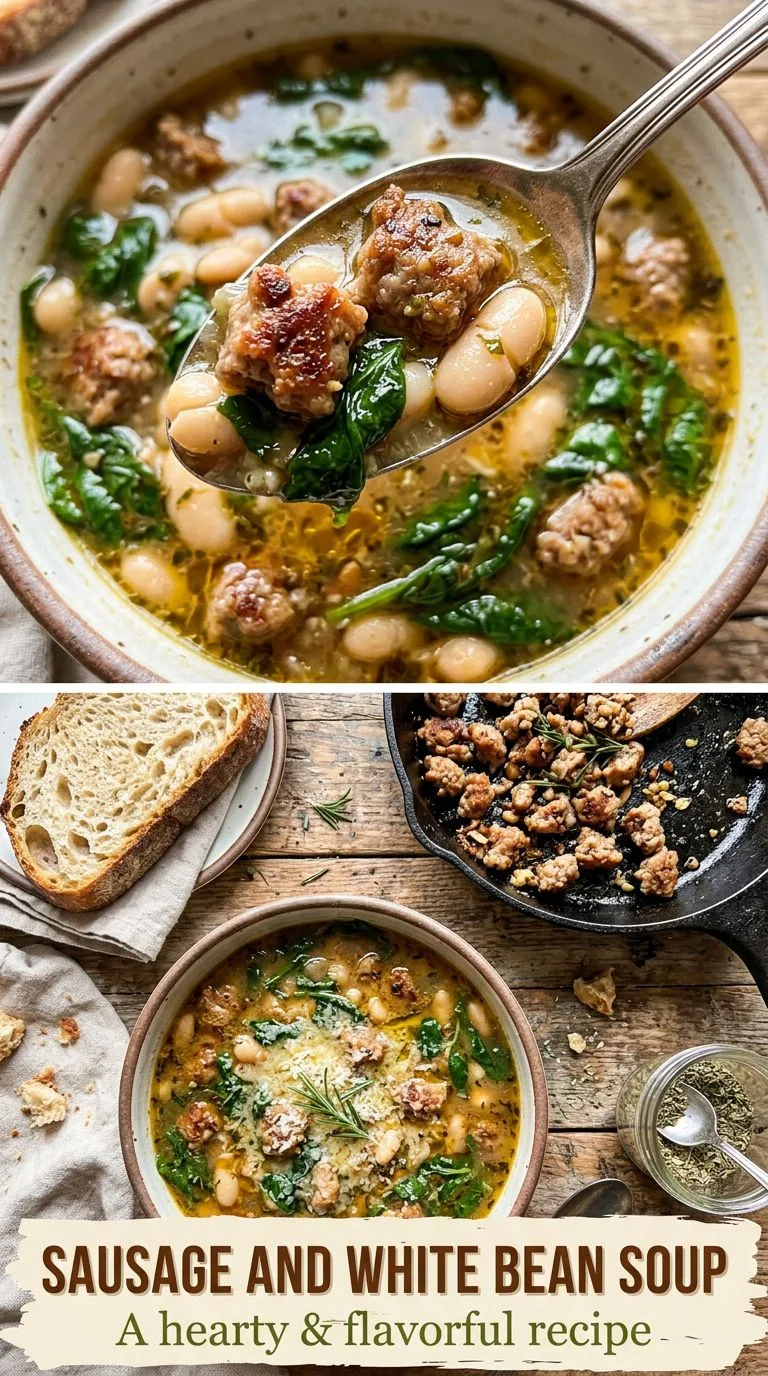
Making this soup is straightforward and follows a classic soup-building technique. I start by heating olive oil in a large soup pot or Dutch oven over medium-high heat. Once the oil is shimmering, I add the Italian sausage, breaking it into small, bite-sized pieces with a wooden spoon or spatula. The key here is to let the sausage brown properly—this takes about 6-8 minutes. I resist the urge to stir it constantly, allowing the meat to develop a nice caramelized crust that adds depth to the soup’s flavor.
Once the sausage is fully cooked and browned, I check for excess grease. Depending on the fat content of your sausage, you might want to drain off some of the rendered fat, leaving just a couple tablespoons in the pot for flavor. Then I add the chopped onion, diced carrots, and diced celery directly to the pot with the sausage. I sauté these vegetables for about 5 minutes, stirring occasionally, until they begin to soften and the onions become translucent. This step builds the aromatic foundation of the soup.
Next comes the garlic and dried herbs. I stir in the minced garlic, oregano, thyme, and red pepper flakes, cooking for just about 1 minute until fragrant. This brief cooking time is important—you want the garlic to release its aroma without burning, which would make it bitter. The dried herbs bloom in the hot oil, releasing their essential oils and infusing the soup base with wonderful Italian flavors.
Now it’s time to add the liquids and beans. I pour in the diced tomatoes with their juices, the drained cannellini beans, and the chicken broth. I give everything a good stir to combine, then bring the soup to a boil over high heat. Once it’s boiling, I reduce the heat to medium-low and let it simmer uncovered for 15-20 minutes. This simmering time allows the flavors to meld together and the vegetables to become perfectly tender. Some of the beans will break down slightly, which naturally thickens the broth.
In the final minutes of cooking, I stir in the baby spinach and let it wilt for 2-3 minutes. The spinach cooks down significantly, so don’t worry if it seems like a lot at first. I finish by seasoning the soup with salt and black pepper to taste. Remember that the sausage and broth already contain salt, so I recommend tasting before adding more. When I’m ready to serve, I ladle the soup into bowls and top each serving with freshly grated Parmesan cheese, which adds a salty, nutty finish that ties everything together beautifully.
Expert Tips for Best Results
To get the most flavor from this soup, I recommend taking the time to properly brown the sausage. Don’t rush this step—letting the meat develop a good crust creates fond (those browned bits on the bottom of the pot) that adds incredible depth to the broth. If you notice the fond starting to build up, you can deglaze the pot with a splash of the chicken broth before adding the rest of the liquid.
I find that using good-quality Italian sausage makes a noticeable difference in the final dish. Look for sausage from a butcher or the fresh meat counter rather than pre-packaged links when possible. The seasoning blend in quality sausage is typically more robust and balanced. If you’re using spicy sausage, you might want to reduce or omit the red pepper flakes to avoid making the soup too hot.
When it comes to the beans, I always drain and rinse canned beans before using them. This removes excess sodium and the slightly metallic liquid they’re packed in, resulting in a cleaner-tasting soup. If you want an even creamier texture, you can mash about half a cup of the beans with a fork before adding them to the pot. They’ll break down during cooking and create an even thicker, more velvety broth.
Don’t add the spinach too early—it only needs 2-3 minutes to wilt, and overcooking it will make it lose its vibrant color and fresh flavor. I like to add it right before serving, especially if I’m making the soup ahead of time. If you’re using heartier greens like kale, you’ll want to add them earlier in the cooking process since they take longer to become tender.
Serving Suggestions
This sausage and white bean soup is hearty enough to serve as a complete meal, but I love pairing it with crusty bread for dipping into the flavorful broth. A warm baguette, ciabatta, or garlic bread are all excellent choices. The bread is perfect for soaking up every last drop of the delicious broth and makes the meal feel even more satisfying.
For a lighter accompaniment, I recommend a simple green salad with a bright vinaigrette. The acidity and freshness of the salad provide a nice contrast to the rich, savory soup. A Caesar salad or arugula salad with lemon dressing would both work beautifully. If you want to make it a more substantial spread, you could also serve the soup alongside a creamy Italian sausage and kale soup for variety at a soup party or potluck.
I like to set out extra Parmesan cheese, red pepper flakes, and good olive oil at the table so everyone can customize their bowl. A drizzle of high-quality extra virgin olive oil on top adds a luxurious finish and enhances the Italian flavors. Fresh herbs like basil or parsley also make wonderful garnishes that add color and freshness to each serving.
This soup also works wonderfully as part of a larger Italian-themed dinner. Serve it as a first course before a main dish of pasta, chicken, or fish. It’s substantial enough to be satisfying but not so heavy that it will overwhelm the rest of the meal. My favorite way to serve it for a casual dinner party is in wide, shallow bowls with plenty of Parmesan and a glass of Italian red wine on the side.
Variations and Substitutions
One of the things I love about this soup is how adaptable it is to different tastes and dietary needs. If you want to make it lighter, you can use turkey Italian sausage instead of pork sausage. The flavor will be slightly milder, but it still works beautifully in the recipe. You could also use chicken sausage with Italian seasonings for an even leaner option.
For a vegetarian version, omit the sausage entirely and use vegetable broth instead of chicken broth. To replace the savory depth that the sausage provides, I recommend adding an extra tablespoon of olive oil, some fennel seeds, and additional garlic. You could also add mushrooms for umami flavor or use plant-based Italian sausage if you can find it at your grocery store.
If you want to add more vegetables, this soup is very forgiving. Diced potatoes, zucchini, bell peppers, or butternut squash would all be delicious additions. Just keep in mind that harder vegetables like potatoes will need to be added earlier in the cooking process so they have time to become tender. Leafy greens beyond spinach—such as kale, Swiss chard, or escarole—also work wonderfully and add different textures and flavors.
For a creamier soup, you can stir in a splash of heavy cream or half-and-half at the end of cooking. This creates a richer, more indulgent version that’s perfect for special occasions. Alternatively, you can blend a portion of the soup (about 2 cups) and stir it back in to create a thicker, creamier consistency without adding dairy. This technique is similar to what you might find in a slow cooker chicken and white bean soup, where blending part of the soup creates wonderful body.
Storage, Freezing, and Reheating
This soup stores exceptionally well, making it perfect for meal prep or enjoying leftovers throughout the week. I let the soup cool to room temperature, then transfer it to airtight containers and refrigerate for up to 4-5 days. The flavors actually develop and deepen overnight, so I find that the soup often tastes even better the next day. When storing, keep in mind that the soup will thicken as it sits—the beans continue to absorb liquid and break down slightly.
To reheat refrigerated soup, I simply transfer it to a pot and warm it over medium heat, stirring occasionally. You may need to add a splash of chicken broth or water to thin it out to your desired consistency. I prefer reheating on the stovetop rather than in the microwave because it heats more evenly and allows you to adjust the consistency more easily. If you’re reheating individual portions in the microwave, use 50% power and stir every minute or so to ensure even heating.
This soup freezes beautifully for up to 3 months. I recommend freezing it in portion-sized containers so you can thaw only what you need. Let the soup cool completely before freezing, and leave about an inch of headspace in the container to allow for expansion. I like to label the containers with the date and contents so I can keep track of what’s in my freezer.
To thaw frozen soup, transfer it to the refrigerator the night before you plan to serve it. Once thawed, reheat it on the stovetop over medium heat until warmed through. You can also reheat it directly from frozen—just place the frozen soup in a pot over low heat and let it thaw and warm gradually, stirring occasionally. This will take longer but works in a pinch. As with refrigerated leftovers, you may need to add a bit of liquid to achieve your preferred consistency after freezing and reheating.
Frequently Asked Questions
Can I use dried beans instead of canned?
Yes, you can absolutely use dried cannellini beans instead of canned. You’ll need about 1 cup of dried beans to replace the two 15-ounce cans. Soak the beans overnight in plenty of water, then drain and cook them in fresh water until tender, which typically takes 1-2 hours. Once the beans are cooked, drain them and add them to the soup as directed in the recipe. Keep in mind that using dried beans requires advance planning, but many people prefer the texture and flavor of beans cooked from scratch.
How can I make this soup spicier?
There are several ways to increase the heat level in this soup. The easiest method is to use spicy Italian sausage instead of mild. You can also increase the amount of red pepper flakes—try doubling it to 1 teaspoon or even more if you like serious heat. Adding fresh jalapeños or a dash of hot sauce at the end of cooking will also kick up the spice. I recommend tasting as you go and adding heat gradually so you don’t overdo it.
Can I make this soup in a slow cooker?
Yes, this soup adapts well to slow cooker preparation. Brown the sausage and sauté the vegetables in a skillet first, then transfer everything to your slow cooker along with the beans, tomatoes, broth, and seasonings. Cook on low for 6-8 hours or on high for 3-4 hours. Add the spinach during the last 15 minutes of cooking. The slow cooker method is great for hands-off cooking, though the stovetop version is faster if you’re short on time.
What can I substitute for spinach?
Several leafy greens work well in place of spinach. Kale is a popular choice—just remove the tough stems and chop the leaves before adding them to the soup. Kale is heartier than spinach, so add it about 10 minutes before the soup is done to give it time to become tender. Swiss chard, escarole, and arugula are also excellent options. Each green brings a slightly different flavor and texture, so feel free to experiment based on what you have available or prefer.
Is this soup gluten-free?
The soup itself is naturally gluten-free, but you’ll need to check the labels on your Italian sausage and chicken broth to be sure. Some sausages contain breadcrumbs or other gluten-containing fillers, and some broths may have additives that contain gluten. Look for products specifically labeled gluten-free if this is a concern. All the other ingredients—beans, vegetables, tomatoes, and spices—are naturally gluten-free.
How do I prevent the soup from being too thick?
The thickness of the soup depends on how much the beans break down during cooking and how much liquid evaporates. If your soup becomes thicker than you like, simply add more chicken broth or water until you reach your desired consistency. I recommend adding liquid in small increments (about 1/2 cup at a time) and stirring well before adding more. You can always thin it out, but it’s harder to thicken it back up if you add too much liquid at once.
Sausage and White Bean Soup
A rustic, hearty soup featuring savory Italian sausage, creamy white beans, tender vegetables, garlic, and fresh herbs simmered in a rich, flavorful broth. This comforting one-pot meal comes together in under an hour and is perfect for weeknight dinners or meal prep.
- Prep Time: 15 minutes
- Cook Time: 35 minutes
- Total Time: 50 minutes
- Servings: 6 servings
- Difficulty: Easy
- Cuisine: Italian-American
- Course: Dinner, Main Course
Ingredients
- 1 lb Italian sausage (mild or spicy, casings removed)
- 2 cans cannellini beans (15 oz each, drained and rinsed)
- 2 carrots (diced)
- 2 celery stalks (diced)
- 1 medium onion (chopped)
- 3 cloves garlic (minced)
- 1 can diced tomatoes (14.5 oz)
- 5 cups chicken broth
- 2 tbsp olive oil
- 1 tsp dried oregano
- 1 tsp dried thyme
- 1/2 tsp red pepper flakes
- 2 cups baby spinach
- 1/2 tsp salt
- 1/4 tsp black pepper
- Grated Parmesan cheese for serving
Instructions
- Heat olive oil in a large soup pot or Dutch oven over medium-high heat.
- Add Italian sausage, breaking it into small pieces with a wooden spoon. Cook for 6-8 minutes until browned and fully cooked through.
- If there is excess grease, drain most of it from the pot, leaving about 2 tablespoons for flavor.
- Add chopped onion, diced carrots, and diced celery to the pot with the sausage. Sauté for 5 minutes, stirring occasionally, until vegetables are softened and onions are translucent.
- Stir in minced garlic, dried oregano, dried thyme, and red pepper flakes. Cook for 1 minute until fragrant, stirring constantly to prevent the garlic from burning.
- Add diced tomatoes with their juices, drained cannellini beans, and chicken broth. Stir well to combine all ingredients.
- Bring the soup to a boil over high heat, then reduce heat to medium-low.
- Simmer uncovered for 15-20 minutes, stirring occasionally, until vegetables are tender and flavors have melded together.
- Stir in baby spinach and cook for 2-3 minutes until wilted.
- Season with salt and black pepper to taste, keeping in mind that the sausage and broth already contain salt.
- Ladle soup into bowls and top each serving with freshly grated Parmesan cheese.
Recipe Notes
- The soup will thicken as it sits. Add additional chicken broth or water when reheating to reach desired consistency.
- For a creamier soup, mash about 1/2 cup of the beans before adding them to the pot, or blend 2 cups of the finished soup and stir it back in.
- Adjust the spice level by choosing mild or spicy sausage and varying the amount of red pepper flakes.
- If using heartier greens like kale instead of spinach, add them earlier in the cooking process (about 10 minutes before the soup is done) to allow time for them to become tender.
- This soup freezes well for up to 3 months. Store in airtight containers and thaw in the refrigerator before reheating.
Nutrition Information (Per Serving, Estimated)
- Calories: 385
- Carbohydrates: 32g
- Protein: 22g
- Fat: 19g
- Saturated Fat: 6g
- Fiber: 8g
- Sugar: 5g
- Sodium: 1240mg
Nutrition information is estimated based on standard ingredient values and does not include optional toppings or variations. Actual values may vary depending on specific ingredients and portion sizes used.
