
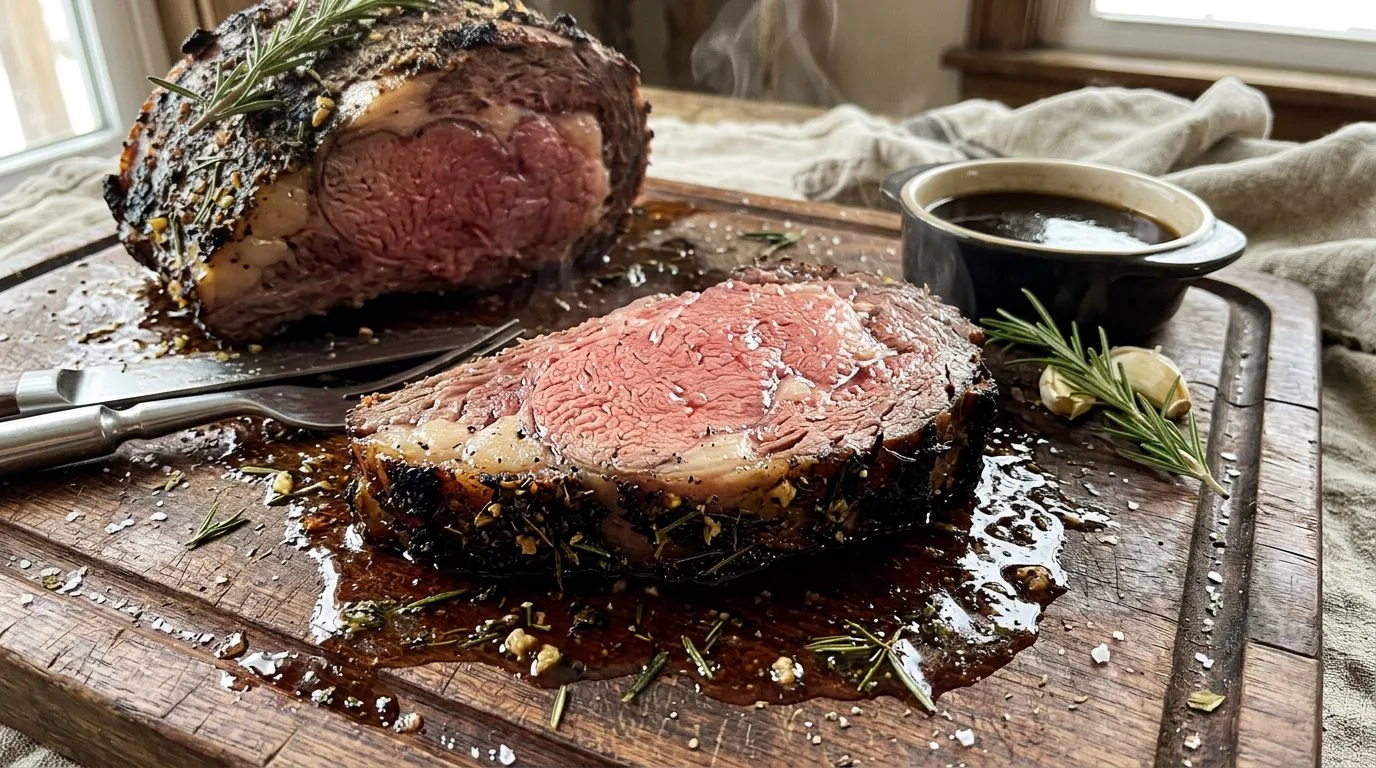
There’s something truly magnificent about a perfectly roasted prime rib. The garlic rosemary prime rib roast is one of those show-stopping centerpieces that transforms any dinner into a special occasion. I love how the aromatic blend of fresh rosemary, garlic, and herbs creates an irresistible crust on the tender, juicy beef. Whether you’re planning a holiday feast, celebrating a milestone, or simply treating your family to an unforgettable meal, this recipe delivers restaurant-quality results right in your home kitchen.
What makes this garlic rosemary prime rib roast particularly special is the homemade au jus that accompanies it. The rich, savory sauce captures all those beautiful browned bits from the roasting pan, creating a deeply flavorful complement to each slice of beef. I find that the combination of red wine, beef broth, and Worcestershire sauce adds layers of complexity that elevate this dish from simply delicious to truly extraordinary. The best part? While it looks and tastes impressive, the actual preparation is surprisingly straightforward.
Why You’ll Love This Garlic Rosemary Prime Rib Roast
This recipe has become my go-to for special occasions, and for good reason. The herb crust creates a beautifully seasoned exterior while keeping the interior incredibly tender and juicy. I love that you can prepare much of the work ahead of time—seasoning the roast the night before actually improves the flavor and helps achieve that perfect crust.
The high-heat sear followed by gentle roasting ensures you get that gorgeous caramelized exterior without overcooking the center. I recommend using a meat thermometer to take the guesswork out of doneness, which means you can confidently serve perfectly cooked prime rib every single time. The au jus is another highlight—it’s incredibly simple to make using the drippings from the roast, yet it adds so much depth and richness to every bite.
Another reason I love this recipe is its versatility. While it’s elegant enough for Christmas dinner or Thanksgiving, it’s also straightforward enough for a Sunday family meal when you want something special. The leftovers (if you’re lucky enough to have any) are absolutely fantastic in sandwiches, salads, or reheated for another meal.
Ingredients and Substitutions
Let me walk you through what you’ll need for this garlic rosemary prime rib roast and some helpful alternatives if needed.
Prime Rib Roast: I recommend choosing a bone-in roast for maximum flavor and presentation. The bones act as a natural roasting rack and add richness to the au jus. A 5-6 pound roast typically serves 8-10 people. If you can only find boneless, it will still work beautifully—just reduce the cooking time slightly and use a roasting rack.
Fresh Herbs: Fresh rosemary and thyme are essential for that aromatic herb crust. I find that fresh herbs provide so much more flavor than dried in this application. If you absolutely must substitute, use one-third the amount of dried herbs, but the flavor won’t be quite as vibrant.
Garlic: Fresh minced garlic is key. I like to mince it finely so it distributes evenly throughout the herb paste. Avoid using pre-minced garlic from a jar for this recipe—fresh makes a noticeable difference.
Fats: The combination of olive oil and butter creates a rich, flavorful coating. The butter adds a luxurious taste while the olive oil helps the herbs adhere to the meat. You can use all olive oil if needed, though you’ll miss some of that buttery richness.
Wine: A dry red wine like Cabernet Sauvignon, Merlot, or Pinot Noir works beautifully in the au jus. If you prefer not to use wine, substitute with additional beef broth plus a tablespoon of red wine vinegar for acidity.
Beef Broth: Low-sodium beef broth gives you better control over the final seasoning. I recommend low-sodium so the au jus doesn’t become too salty as it reduces.
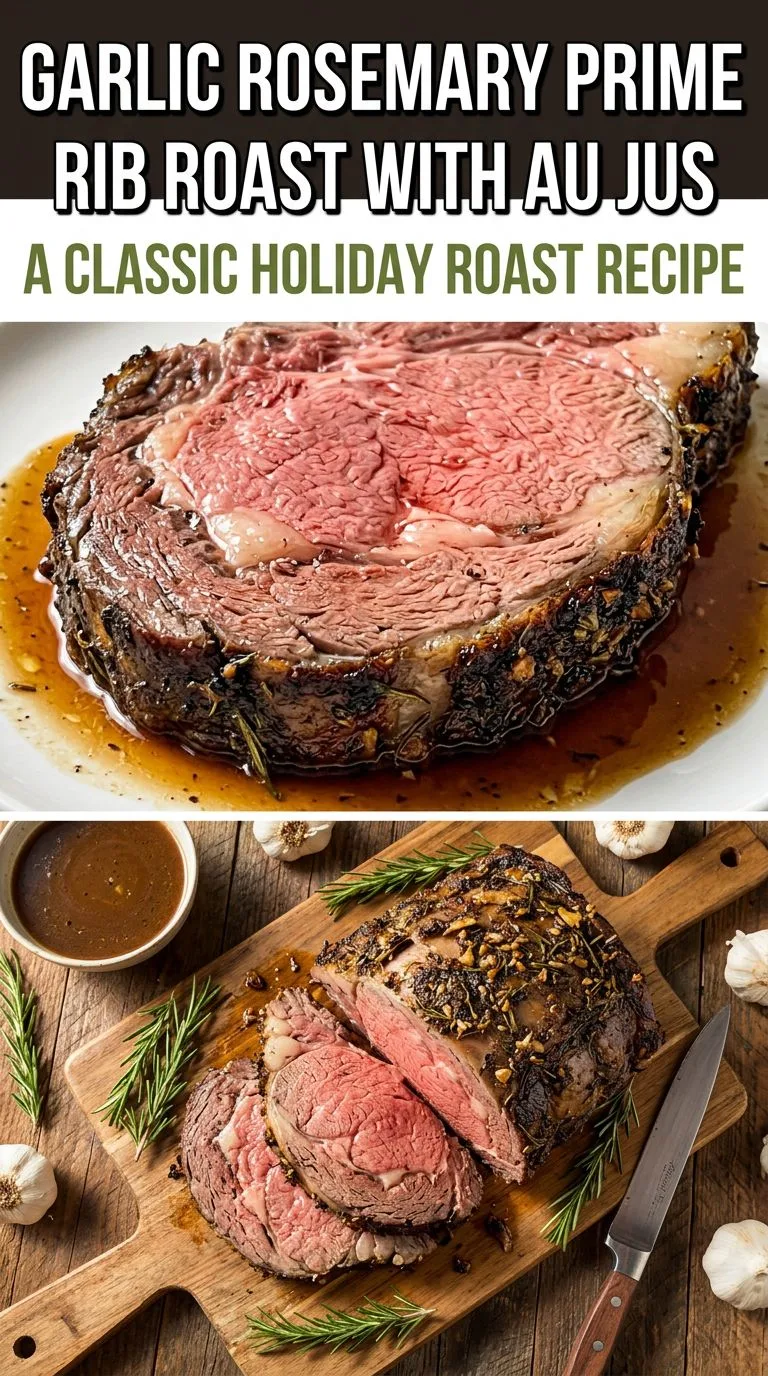
How to Make Garlic Rosemary Prime Rib Roast
The process of making this prime rib is more about timing and temperature control than complicated techniques. Here’s how I approach it for the best results.
Preparing the Roast
Start by removing your prime rib from the refrigerator and patting it completely dry with paper towels. This step is crucial—moisture on the surface prevents proper browning. Season it generously with kosher salt and black pepper. I like to do this the night before and leave it uncovered in the refrigerator. This dry-brining process seasons the meat deeply and helps create an even better crust.
About an hour before cooking, remove the roast from the refrigerator to take the chill off. This helps it cook more evenly.
Creating the Herb Crust
While the oven preheats to 450°F, prepare your garlic herb paste. In a small bowl, combine the minced garlic, chopped rosemary, thyme, olive oil, softened butter, and Dijon mustard. Mix it into a thick, spreadable paste. The Dijon adds a subtle tang and helps the mixture adhere to the meat.
Rub this aromatic mixture all over the roast—top, sides, and ends. Don’t be shy; you want a generous coating. The herbs will form a flavorful crust as the roast cooks.
Roasting to Perfection
Place the prime rib bone-side down in your roasting pan with the fat cap facing up. The bones create a natural rack, and the fat will baste the meat as it renders. Roast at 450°F for 15-20 minutes. This initial high heat creates that beautiful browned exterior.
After the initial sear, reduce the oven temperature to 325°F. Continue roasting, checking the internal temperature after about 60 minutes. I recommend inserting the thermometer into the thickest part of the roast, avoiding the bone. For USDA-recommended safety, the internal temperature should reach 145°F, followed by a 3-minute rest. Many people prefer medium-rare at 130-135°F (with proper resting), but always follow food safety guidelines.
Cooking time varies based on your roast’s size and shape, so a meat thermometer is essential. I find it’s the only reliable way to achieve your desired doneness.
Making the Au Jus
Once your roast reaches the target temperature, transfer it to a cutting board and tent it loosely with foil. Let it rest for 20-30 minutes—this allows the juices to redistribute throughout the meat.
While the roast rests, make the au jus. Pour off most of the fat from the roasting pan, leaving about a tablespoon and all those beautiful browned bits. Place the pan over medium heat on your stovetop. Add the red wine, beef broth, and Worcestershire sauce. Scrape up all the caramelized bits from the bottom of the pan—this is where the flavor lives.
Let the mixture simmer for 8-10 minutes until it reduces slightly and the flavors concentrate. You can strain it through a fine-mesh sieve if you prefer a smoother au jus, or leave it rustic. I like to taste and adjust the seasoning at this point.
Expert Tips for Best Results
After making this recipe many times, I’ve learned a few tricks that make a real difference in the final result.
Invest in a reliable meat thermometer: This is the single most important tool for perfect prime rib. I recommend a probe thermometer that you can leave in the roast while it cooks, allowing you to monitor the temperature without opening the oven.
Don’t skip the resting period: I know it’s tempting to slice into that beautiful roast immediately, but resting is crucial. It allows the juices to redistribute, ensuring every slice is moist and tender. Cutting too soon results in all those precious juices running out onto the cutting board.
Room temperature matters: Taking the chill off the roast before cooking helps it cook more evenly. A cold roast straight from the refrigerator will have an overcooked exterior by the time the center reaches temperature.
Save the bones: If you have your butcher remove the bones for easier carving, tie them back onto the roast during cooking for flavor, then remove them before serving. You can also save the bones to make incredible beef stock later.
Use the drippings wisely: That fat you pour off before making au jus? Don’t throw it away! It’s incredible for roasting potatoes or vegetables. I like to save it in the refrigerator for up to a week.
Serving Suggestions
This garlic rosemary prime rib roast deserves equally impressive side dishes. I love pairing it with classic steakhouse-style accompaniments that complement the rich, savory beef.
My favorite way to serve this is with creamy mashed potatoes that soak up the delicious au jus. The smooth, buttery potatoes provide a perfect contrast to the herb-crusted beef. Roasted Brussels sprouts add a nice vegetable component with a bit of caramelized sweetness.
Other excellent sides include:
- Creamed spinach or sautéed green beans
- Yorkshire pudding for a traditional British touch
- Roasted root vegetables like carrots and parsnips
- A crisp Caesar salad or wedge salad
- Horseradish cream sauce for those who enjoy a spicy kick
- Dinner rolls or crusty bread to soak up the au jus
I recommend serving the au jus in a gravy boat so guests can add as much as they like. Some people prefer just a drizzle while others love to really soak their beef and potatoes.
Variations and Substitutions
While this recipe is fantastic as written, there are several ways you can customize it to your preferences.
Herb Variations: Try adding fresh sage or oregano to the herb paste. A teaspoon of fresh chopped parsley adds brightness. Some people enjoy a hint of lavender with the rosemary for a Provençal twist.
Spice It Up: Add a teaspoon of smoked paprika or a pinch of cayenne to the herb rub for a subtle heat and smokiness.
Coffee Crust: For a unique flavor, add a tablespoon of finely ground coffee to the herb mixture. It adds depth without tasting like coffee.
Mustard Options: Swap the Dijon for whole grain mustard, horseradish mustard, or even a thin layer of prepared horseradish for extra punch.
Au Jus Variations: Add a sprig of fresh thyme or rosemary while the au jus simmers. A splash of balsamic vinegar adds complexity. For a richer sauce, whisk in a tablespoon of cold butter at the end.
Boneless Adaptation: If using a boneless roast, reduce cooking time by about 15-20% and use a roasting rack to promote even air circulation.
Storage, Freezing, and Reheating
Proper storage ensures you can enjoy any leftovers safely and deliciously.
Refrigerator Storage: Let the prime rib cool to room temperature, then wrap it tightly in plastic wrap or aluminum foil. Store in the refrigerator for up to 4 days. I like to slice only what I need and keep the rest of the roast intact to prevent it from drying out.
Freezing: Prime rib freezes reasonably well for up to 3 months. Wrap individual portions tightly in plastic wrap, then in aluminum foil, and place in a freezer bag. Label with the date. The texture will be slightly different after freezing, but it’s still quite good.
Reheating: The key to reheating prime rib is low and slow to avoid overcooking. I recommend placing slices in a baking dish with a few tablespoons of au jus or beef broth, covering tightly with foil, and warming at 250°F for about 20-30 minutes until heated through. You can also reheat individual slices in a skillet over medium-low heat with a bit of butter.
Au Jus Storage: Store au jus separately in an airtight container in the refrigerator for up to 4 days or freeze for up to 3 months. Reheat gently on the stovetop, adding a splash of broth if it’s too thick.
Frequently Asked Questions
What’s the difference between prime rib and ribeye?
Prime rib is a large roast cut from the rib section, while ribeye is an individual steak cut from the same area. Prime rib is roasted whole, then sliced to serve, while ribeye steaks are cooked individually.
How much prime rib do I need per person?
I recommend about 1 pound per person for bone-in roasts, or 8-10 ounces per person for boneless. This accounts for the bone weight and ensures generous portions with some leftovers.
Should I sear prime rib before roasting?
This recipe uses a reverse method—starting with high heat for browning, then reducing to finish cooking. Both methods work; I find this approach easier and more reliable for even cooking.
Can I cook prime rib at a lower temperature the entire time?
Yes, you can roast at 250°F for the entire cooking time for an even more tender result, though you’ll miss some of the caramelized crust. If you choose this method, increase cooking time significantly and finish with a high-heat sear.
Why is my prime rib tough?
Prime rib is naturally tender, so toughness usually results from overcooking. Use a meat thermometer and don’t cook past your desired doneness. Also ensure you’re slicing against the grain.
Do I need to tie the roast?
If your roast came with the bones removed and tied back on, leave the ties in place. For boneless roasts, tying helps maintain an even shape for more uniform cooking, though it’s not absolutely necessary.
Can I make this recipe with a smaller roast?
Absolutely! Adjust the cooking time based on weight. A 3-4 pound roast will cook faster—start checking temperature after 45 minutes at 325°F.
Garlic Rosemary Prime Rib Roast with Au Jus
This tender, juicy prime rib roast is coated with fresh rosemary, garlic, and aromatic herbs, then roasted to perfection. Served with rich homemade au jus, it’s an elegant beef centerpiece ideal for holiday dinners and special occasions.
Prep Time: 15 minutes
Cook Time: 2 hours
Resting Time: 25 minutes
Total Time: 2 hours 40 minutes
Servings: 8-10
Difficulty: Medium
Cuisine: American
Course: Dinner
Ingredients
- 1 bone-in prime rib roast (5-6 lb)
- 6 garlic cloves, minced
- 3 tablespoons fresh rosemary, chopped
- 2 tablespoons fresh thyme, chopped
- 3 tablespoons olive oil
- 4 tablespoons unsalted butter, softened
- 2 tablespoons kosher salt
- 1 tablespoon freshly ground black pepper
- 1 teaspoon Dijon mustard
- 2 cups low-sodium beef broth
- 1/2 cup dry red wine
- 1 tablespoon Worcestershire sauce
Instructions
- Remove the prime rib roast from its packaging and pat thoroughly dry with paper towels. Season generously with kosher salt and freshly ground black pepper. For best results, refrigerate uncovered overnight. Remove from refrigerator 1 hour before cooking.
- Preheat the oven to 450°F (230°C). In a small bowl, mix together minced garlic, chopped rosemary, thyme, olive oil, softened butter, and Dijon mustard into a thick herb paste.
- Rub the garlic herb mixture evenly over the entire roast, including the sides and top, creating a generous coating.
- Position the prime rib bone-side down in a roasting pan with the fat cap facing upward.
- Roast at 450°F for 15-20 minutes to develop a browned exterior, then reduce the oven temperature to 325°F (165°C).
- Continue roasting, checking with a meat thermometer after approximately 60 minutes. Cooking time varies with the thickness and shape of the roast. For USDA-recommended safety, the internal temperature should reach 145°F (63°C) followed by at least 3 minutes of rest. Insert thermometer into the thickest part, avoiding bone.
- Transfer the roast to a cutting board and tent loosely with aluminum foil. Let rest for 20-30 minutes before carving.
- Meanwhile, pour excess fat from the roasting pan, leaving about 1 tablespoon and all the browned bits. Place the pan over medium heat on the stovetop. Add red wine, beef broth, and Worcestershire sauce, scraping up all the browned bits from the bottom of the pan.
- Simmer the au jus for 8-10 minutes until slightly reduced. Strain through a fine-mesh sieve if desired. Taste and adjust seasoning as needed.
- Slice the prime rib against the grain and serve with warm au jus.
Recipe Notes
- Cooking times are estimates. Always use a meat thermometer for accuracy. A 5-6 pound roast typically takes 1.5-2 hours total at 325°F after the initial sear.
- For medium-rare, many cooks prefer an internal temperature of 130-135°F before resting. The temperature will rise 5-10 degrees during resting. Follow USDA guidelines for food safety.
- Let the roast rest the full 20-30 minutes for maximum juiciness.
- Save the rendered fat for roasting vegetables or potatoes.
- If your roast has the bones removed, you can tie them back on during cooking for added flavor, then remove before carving.
- For easier carving, remove the bones entirely after cooking by running a knife along the bone line.
Nutrition Information (Per Serving, Estimated)
Based on 10 servings. Values are approximate.
- Calories: 520
- Carbohydrates: 2g
- Protein: 48g
- Fat: 35g
- Saturated Fat: 14g
- Fiber: 0g
- Sugar: 0g
- Sodium: 780mg
