
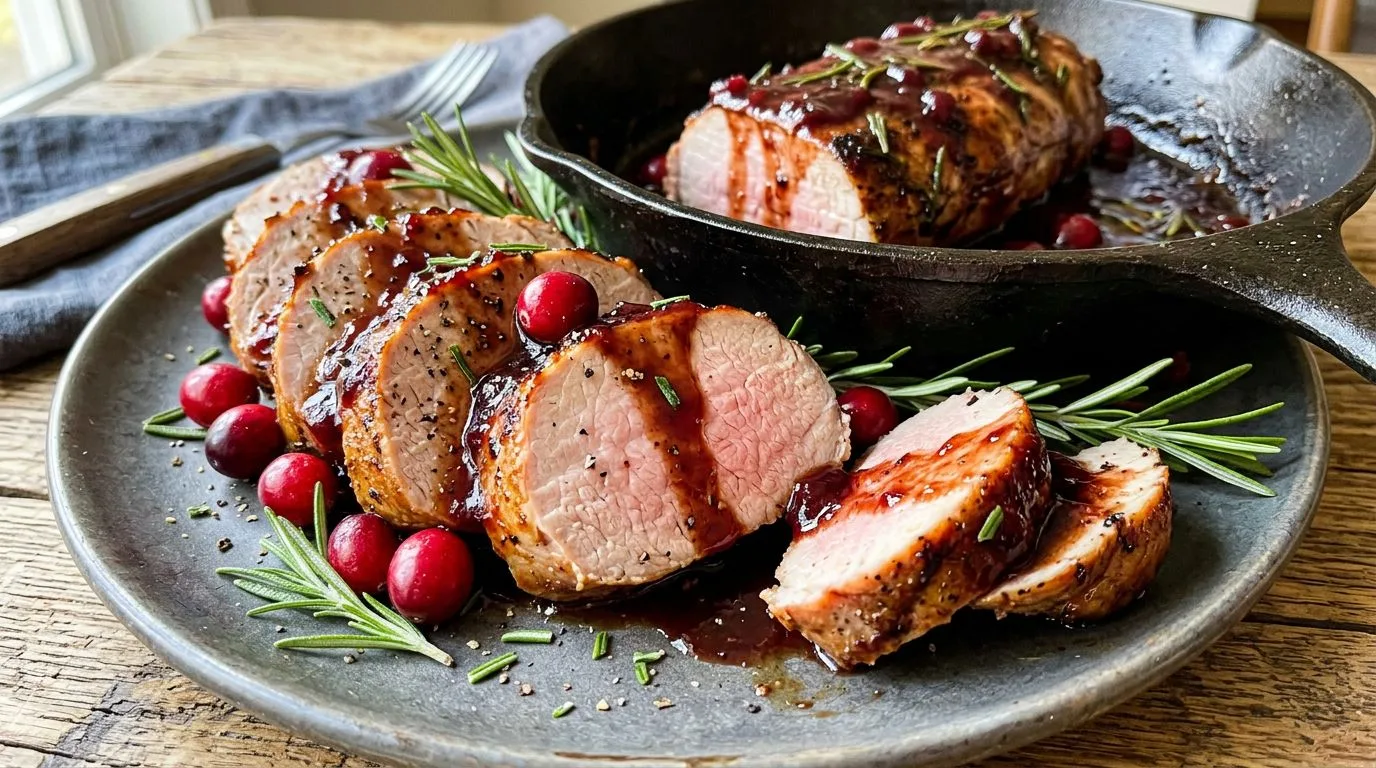
When I want to create an impressive yet surprisingly simple main dish for special occasions, I turn to this Cranberry Balsamic Pork Tenderloin with Rosemary. The combination of sweet cranberries, tangy balsamic vinegar, and aromatic fresh rosemary creates a glaze that’s both elegant and bursting with flavor. This recipe transforms ordinary pork tenderloin into a stunning centerpiece that looks like it came from a high-end restaurant.
What I love most about this dish is how the vibrant cranberry glaze caramelizes beautifully on the tender pork, creating layers of sweet, savory, and slightly tart flavors in every bite. The fresh rosemary adds an earthy, aromatic note that perfectly complements the richness of the pork and the brightness of the cranberries. Whether you’re planning a Thanksgiving feast, a Christmas dinner, or simply want to elevate your weeknight meal, this recipe delivers restaurant-quality results with minimal effort.
The best part? While this dish looks and tastes fancy, it comes together in under an hour from start to finish. The pork tenderloin cooks quickly and stays incredibly juicy, while the cranberry balsamic glaze simmers away on the stovetop, filling your kitchen with the most wonderful holiday aromas.
Why You’ll Love This Cranberry Balsamic Pork Tenderloin
This recipe checks all the boxes for what I consider the perfect special occasion main dish. First, it’s visually stunning—the deep ruby-red cranberry glaze against the golden-brown seared pork creates a presentation that immediately impresses your guests. The colors alone scream holiday celebration.
I find that pork tenderloin is one of the most forgiving cuts of meat to work with. It’s naturally lean and tender, and when cooked properly, it stays incredibly juicy and flavorful. Unlike larger roasts that require hours of cooking, tenderloin is ready in about 20-25 minutes in the oven, making this an ideal choice when you want something impressive without spending all day in the kitchen.
The flavor profile is absolutely divine. The balsamic vinegar provides a sophisticated tanginess that balances the natural sweetness of the honey and cranberries. Fresh rosemary adds an herbaceous depth that ties everything together, while the hint of orange zest brightens the entire dish. Each component plays an important role in creating a complex, layered flavor that keeps you coming back for another bite.
I also appreciate how versatile this recipe is. While it’s perfect for Thanksgiving or Christmas dinner, it’s equally suitable for a romantic date night, Sunday family dinner, or even meal prep for the week ahead. The leftovers are fantastic, making it a practical choice beyond just special occasions.
Ingredients and Substitutions
Let me walk you through the key ingredients that make this Cranberry Balsamic Pork Tenderloin so special, along with some helpful substitutions if you need to adapt the recipe.
Pork Tenderloins: I recommend using two tenderloins totaling about 2 to 2½ pounds. This cut is incredibly tender and cooks evenly. If you can only find one large tenderloin, that works too—just adjust the cooking time slightly based on thickness. Look for tenderloins with a nice pink color and minimal silver skin (the thin membrane on the surface).
Fresh or Frozen Cranberries: Both work beautifully in this recipe. Fresh cranberries are typically available from October through December, while frozen cranberries can be found year-round. I don’t bother thawing frozen cranberries—they go straight into the saucepan. If cranberries aren’t available, you could substitute with fresh or frozen cherries, though the flavor will be different.
Balsamic Vinegar: Use a good-quality balsamic vinegar for the best flavor. You don’t need an expensive aged balsamic, but avoid the very cheap varieties that taste more like harsh vinegar. If you don’t have balsamic, red wine vinegar or apple cider vinegar can work in a pinch, though you’ll lose some of that characteristic sweetness and depth.
Honey and Brown Sugar: These two sweeteners work together to balance the tartness of the cranberries and vinegar. I like using both because honey adds floral notes while brown sugar contributes a subtle molasses flavor. You could use all honey or all brown sugar if needed, or substitute with maple syrup for a different flavor profile.
Fresh Rosemary: Fresh rosemary is really important here—dried rosemary doesn’t provide the same bright, aromatic quality. If you absolutely must substitute, use about 2 teaspoons of dried rosemary, but add it earlier in the cooking process to allow it to rehydrate. Fresh thyme could also work as an alternative herb.
Dijon Mustard: This adds a subtle tang and helps emulsify the glaze. Whole grain mustard or even yellow mustard can substitute, though Dijon provides the most sophisticated flavor.
Orange Zest: The citrus brightness from orange zest really elevates this dish. Lemon zest could substitute, though it will be more tart and less sweet. In a pinch, you could add a tablespoon of orange juice instead, though zest provides more concentrated flavor without adding extra liquid.
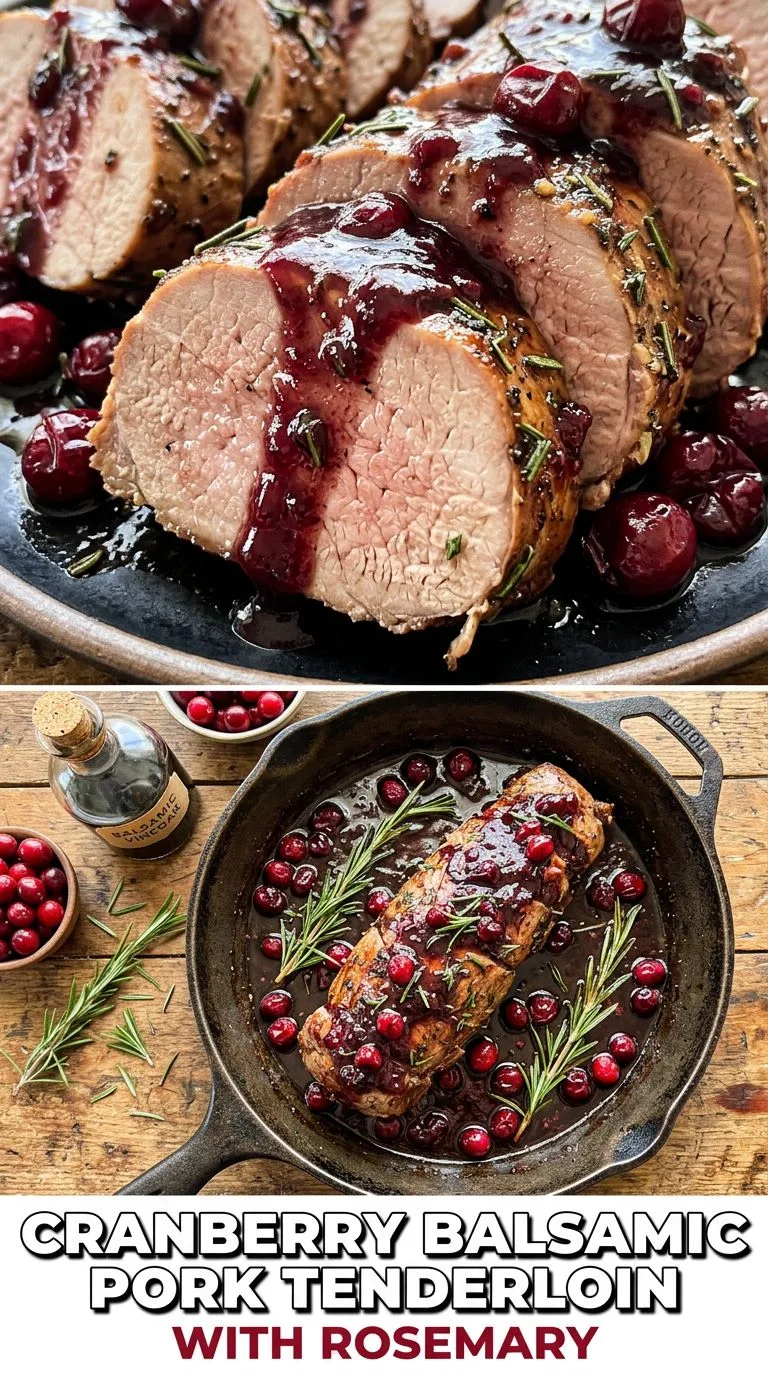
How to Make Cranberry Balsamic Pork Tenderloin
Making this impressive dish is easier than you might think. I’ll break down the process into manageable steps that ensure perfect results every time.
Preparing the Pork: Start by preheating your oven to 400°F. While it heats, pat your pork tenderloins completely dry with paper towels—this is crucial for achieving a good sear. Season generously with salt and black pepper on all sides. I like to let the seasoned pork sit at room temperature for about 15-20 minutes while I prepare other components, as this helps it cook more evenly.
Searing for Flavor: Heat your olive oil in a large oven-safe skillet over medium-high heat until it’s shimmering but not smoking. Carefully place the pork tenderloins in the skillet and sear for 2-3 minutes per side. I recommend searing all sides—not just top and bottom—to create a beautiful golden-brown crust all around. This step locks in juices and develops incredible flavor through the Maillard reaction.
Roasting to Perfection: Once seared, transfer the entire skillet directly to your preheated oven. Roast for 15-25 minutes depending on the thickness of your tenderloins. The key is to cook until the internal temperature reaches 145°F in the thickest part. I strongly recommend using an instant-read thermometer—it’s the only reliable way to ensure perfectly cooked pork that’s juicy and safe to eat.
Creating the Glaze: While the pork roasts, make your cranberry balsamic glaze. Combine the cranberries, balsamic vinegar, honey, brown sugar, minced garlic, chopped rosemary, Dijon mustard, chicken broth, and orange zest in a medium saucepan. Bring to a simmer over medium heat, then reduce the heat slightly and let it bubble gently for 10-12 minutes. You’ll hear the cranberries pop and see the mixture thicken into a glossy, gorgeous glaze. I like to mash some of the cranberries with the back of a spoon to help thicken the sauce.
Glazing the Pork: During the final 5-8 minutes of roasting, brush a generous amount of the cranberry glaze over the pork tenderloins. This creates a beautiful caramelized coating and infuses the meat with even more flavor. Reserve the remaining glaze for serving.
Resting and Slicing: This step is critical and I can’t stress it enough—let the pork rest for at least 3 minutes, but preferably 5-10 minutes, after removing it from the oven. This allows the juices to redistribute throughout the meat, ensuring every slice is moist and tender. Slice the tenderloin into medallions about ½ to ¾ inch thick, arrange them on a serving platter, and spoon the warm cranberry rosemary glaze generously over the top.
Expert Tips for Best Results
After making this recipe many times, I’ve learned a few tricks that guarantee success every time.
Don’t Skip the Searing: That initial sear in the hot skillet is what creates the flavorful crust and beautiful color. Make sure your pan is hot enough—the oil should shimmer—and don’t move the pork around too much. Let it develop that golden crust before flipping.
Use a Meat Thermometer: I cannot emphasize this enough. Pork tenderloin can go from perfectly juicy to dry and overcooked in just a few minutes. An instant-read thermometer takes the guesswork out completely. Remove the pork when it reaches 145°F—it will continue cooking slightly as it rests.
Remove the Silver Skin: If your tenderloin has silver skin (a thin, silvery membrane), remove it before cooking. It doesn’t break down during cooking and can make the meat tough. Simply slide a sharp knife under it and carefully cut it away.
Make Extra Glaze: The cranberry balsamic glaze is so delicious that I often make a double batch. It’s wonderful drizzled over roasted vegetables, spooned over mashed potatoes, or even used as a sauce for other proteins. It keeps well in the refrigerator for up to a week.
Let It Rest: I know I mentioned this earlier, but it bears repeating. Resting the meat is not optional if you want juicy pork. Cover it loosely with foil and be patient—those few minutes make all the difference.
Adjust Sweetness to Taste: Cranberries can vary in tartness, so taste your glaze before serving. If it’s too tart, add a bit more honey. If it’s too sweet, a splash more balsamic vinegar balances it out perfectly.
Serving Suggestions
This Cranberry Balsamic Pork Tenderloin pairs beautifully with a variety of side dishes. My favorite way to serve it is with creamy mashed potatoes or garlic mashed cauliflower—the glaze pools wonderfully around them. Maple roasted butternut squash makes an excellent seasonal side that complements the sweet and savory flavors of the pork.
For a complete holiday meal, I like to include roasted Brussels sprouts, green beans almondine, or a simple arugula salad with a light vinaigrette to cut through the richness. Wild rice pilaf or herb-roasted fingerling potatoes also work wonderfully.
Don’t forget about homemade cranberry sauce as an additional condiment—it doubles down on the cranberry flavor and adds another layer of festive color to your plate.
For beverages, I recommend a medium-bodied red wine like Pinot Noir or a fruity Zinfandel. The wine’s berry notes echo the cranberries while standing up to the richness of the pork. If you prefer white wine, a slightly sweet Riesling or Gewürztraminer works beautifully with the sweet-tart glaze.
Variations and Substitutions
One of the things I love about this recipe is how adaptable it is to different tastes and dietary needs.
Protein Swaps: While pork tenderloin is my first choice, this cranberry balsamic glaze is equally delicious on chicken breasts, turkey tenderloin, or even duck breast. Adjust cooking times accordingly based on the protein you choose.
Herb Variations: Fresh thyme can replace or complement the rosemary for a different herbal note. A combination of rosemary and sage is particularly nice for Thanksgiving. Fresh oregano adds a Mediterranean twist.
Fruit Alternatives: When cranberries aren’t in season, try this with fresh or frozen cherries, pomegranate arils, or even blackberries. Each fruit brings its own unique flavor while maintaining that beautiful jewel-toned appearance.
Sweetener Options: Maple syrup instead of honey creates a more autumnal flavor profile. Agave nectar works for those avoiding honey. You could even use a touch of balsamic glaze (the thick, syrupy kind) for extra depth.
Add Some Heat: For those who enjoy a bit of spice, add a pinch of red pepper flakes or a dash of cayenne to the glaze. The heat plays beautifully against the sweetness.
Make It Smoky: A teaspoon of smoked paprika rubbed on the pork before searing adds a wonderful smoky dimension that complements the sweet glaze.
Storage, Freezing, and Reheating
This recipe stores beautifully, making it great for meal prep or planned leftovers.
Refrigerator Storage: Store leftover sliced pork and glaze separately in airtight containers in the refrigerator for up to 4 days. I find that keeping them separate prevents the pork from becoming too saturated with the glaze, maintaining better texture.
Freezing: The cooked pork tenderloin freezes well for up to 3 months. I recommend slicing it first, then arranging the slices in a single layer on a parchment-lined baking sheet to freeze individually. Once frozen solid, transfer to a freezer bag. This prevents the slices from sticking together and allows you to thaw only what you need. The glaze also freezes well in a separate container for up to 3 months.
Reheating: For best results, I recommend reheating gently to avoid drying out the pork. Place sliced pork in a covered baking dish with a splash of chicken broth or water, cover with foil, and warm in a 300°F oven for about 10-15 minutes. Alternatively, reheat individual portions in the microwave at 50% power in 30-second intervals. Warm the glaze separately on the stovetop or in the microwave, then spoon it over the reheated pork just before serving.
Make-Ahead Tips: You can prepare the cranberry balsamic glaze up to 3 days in advance and store it in the refrigerator. Reheat gently before using. The pork is best cooked the day you plan to serve it, but you can sear it a few hours ahead and finish roasting it just before dinner.
Frequently Asked Questions
Can I use pork loin instead of tenderloin? While you can, I don’t recommend it for this recipe. Pork loin is a larger, fattier cut that requires longer cooking time and doesn’t have the same tender texture as tenderloin. If you do use loin, you’ll need to significantly increase the roasting time.
How do I know when the pork is done? The most reliable method is using an instant-read thermometer. Insert it into the thickest part of the tenderloin—it should read 145°F. The pork may still look slightly pink in the center, which is perfectly safe and actually ideal for juiciness.
Can I make this in a slow cooker? I don’t recommend it. Pork tenderloin is such a lean, quick-cooking cut that slow cooking tends to dry it out. This recipe is designed for high-heat roasting to maintain moisture and develop flavor through searing.
What if my glaze is too thin? If your glaze hasn’t thickened enough after simmering, continue cooking it for a few more minutes. You can also mix 1 teaspoon of cornstarch with 1 tablespoon of cold water and stir it into the simmering glaze to thicken it quickly.
Can I double this recipe? Absolutely! The glaze doubles easily. For the pork, you may need to use two skillets or work in batches for searing, then arrange all the tenderloins on a large baking sheet for roasting. Just make sure not to crowd them—they need space for even cooking.
Is this recipe gluten-free? Yes, as long as you use gluten-free Dijon mustard and chicken broth. Most are naturally gluten-free, but always check labels to be sure.
Can I use dried cranberries? Fresh or frozen cranberries work best because they burst and release their juices to create the glaze. Dried cranberries won’t provide the same texture or moisture, though you could rehydrate them in warm water first if that’s all you have available.
Cranberry Balsamic Pork Tenderloin with Rosemary
Juicy roasted pork tenderloin coated in a sweet and tangy cranberry balsamic glaze with fresh rosemary. This festive pork dinner combines beautiful holiday colors with rich, savory flavors that make it perfect for special occasions or elegant weeknight meals.
- Prep Time: 15 minutes
- Cook Time: 30 minutes
- Resting Time: 5 minutes
- Total Time: 50 minutes
- Servings: 6
- Difficulty: Medium
- Cuisine: American
- Course: Main Course
Ingredients
- 2 pork tenderloins (about 2–2½ lb total)
- 1 cup fresh or frozen cranberries
- ⅓ cup balsamic vinegar
- ¼ cup honey
- 2 tbsp brown sugar
- 3 garlic cloves, minced
- 2 tbsp fresh rosemary, chopped
- 2 tbsp olive oil
- 1 tbsp Dijon mustard
- ½ cup chicken broth
- 1 tsp salt
- ½ tsp black pepper
- 1 tbsp orange zest
Instructions
- Preheat the oven to 400°F (200°C). Pat the pork tenderloins dry with paper towels and season generously with salt and black pepper on all sides.
- Heat olive oil in a large oven-safe skillet over medium-high heat until shimmering. Add the pork tenderloins and sear for approximately 2–3 minutes per side, turning to brown all sides, until golden brown all over.
- Transfer the skillet directly to the preheated oven and roast for approximately 15–25 minutes, depending on thickness, until the internal temperature reaches 145°F (63°C) in the thickest part.
- Meanwhile, combine cranberries, balsamic vinegar, honey, brown sugar, minced garlic, chopped rosemary, Dijon mustard, chicken broth, and orange zest in a medium saucepan over medium heat.
- Bring the mixture to a simmer and cook for 10–12 minutes, stirring occasionally, until the cranberries burst and the glaze becomes glossy and slightly thickened. Use the back of a spoon to gently mash some cranberries to help thicken the sauce.
- During the final 5–8 minutes of roasting, brush the pork generously with a portion of the cranberry balsamic glaze, reserving the rest for serving.
- Remove the pork from the oven when the thickest part reaches 145°F (63°C). Transfer to a cutting board, tent loosely with foil, and rest for at least 3 minutes, preferably 5–10 minutes for easier slicing and maximum juiciness.
- Slice the pork into medallions about ½ to ¾ inch thick, arrange on a serving platter, and spoon the remaining warm cranberry rosemary glaze generously over the top. Serve immediately.
Recipe Notes
- Don’t skip the resting time—it’s essential for juicy, tender pork.
- If your tenderloin has silver skin (thin silvery membrane), remove it before cooking for the most tender results.
- The glaze can be made up to 3 days in advance and reheated before serving.
- For even cooking, let the pork sit at room temperature for 15-20 minutes before searing.
- Leftover glaze is delicious on roasted vegetables, mashed potatoes, or other proteins.
- Use an instant-read thermometer for the most accurate doneness—it’s the best way to ensure perfectly cooked pork.
Nutrition Information (Per Serving, Estimated)
- Calories: 320
- Carbohydrates: 22g
- Protein: 34g
- Fat: 10g
- Saturated Fat: 2g
- Fiber: 1g
- Sugar: 18g
- Sodium: 520mg
Nutrition information is estimated based on standard ingredient measurements and may vary based on specific products used and portion sizes.
