
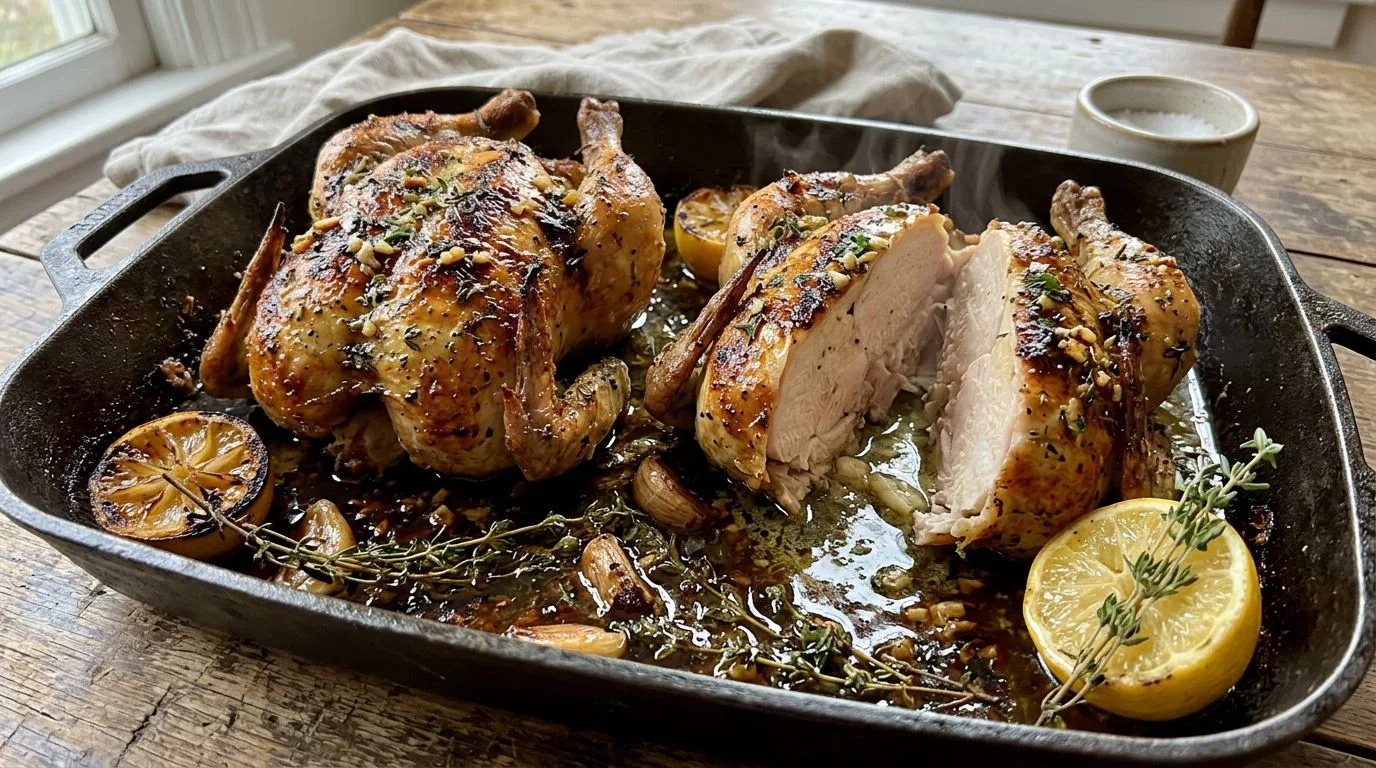
There’s something undeniably elegant about serving individual Cornish hens at the dinner table. These petite birds roast to golden perfection, with crispy skin and tender, juicy meat that’s infused with garlic butter, fresh lemon, and aromatic herbs. I love how Garlic Butter Roasted Cornish Hens with Lemon and Thyme transform an ordinary dinner into something special, whether you’re hosting Thanksgiving, celebrating a holiday, or simply treating your family to an impressive meal that’s surprisingly easy to prepare.
What makes this recipe particularly appealing is that each guest receives their own beautifully roasted bird—no carving required at the table. The garlic herb butter gets tucked under the skin, basting the meat from the inside as it roasts, while the lemon slices and fresh herbs infuse every bite with bright, savory flavor. I find that Cornish hens cook much faster than a whole turkey, making them an ideal choice when you want an elegant presentation without spending all day in the kitchen.
Whether you’re looking for a Thanksgiving alternative or planning a special dinner party, these garlic butter roasted Cornish hens deliver restaurant-quality results right from your home oven. The combination of butter, garlic, lemon zest, and fresh thyme creates an irresistible aroma that fills your kitchen and leaves everyone eagerly anticipating dinner.
Why You’ll Love This Garlic Butter Roasted Cornish Hens Recipe
This recipe checks all the boxes for an impressive yet manageable dinner. I love that Cornish hens look so elegant on the plate, giving each person their own perfectly portioned bird. The garlic butter mixture creates incredibly flavorful, moist meat while the high roasting temperature ensures beautifully crispy, golden-brown skin.
The cooking time is significantly shorter than roasting a whole turkey—usually just 50 to 75 minutes depending on the size of your hens. This makes them perfect for weeknight celebrations or when you want something special without the lengthy commitment. I also appreciate how forgiving this recipe is; the butter keeps the meat tender and juicy, even if you’re slightly off on timing.
Another reason I recommend this dish is its versatility. While it’s fancy enough for Thanksgiving or Christmas dinner, it’s also simple enough to prepare on a regular Sunday evening. The fresh herbs, lemon, and garlic create a classic flavor profile that pairs beautifully with nearly any side dish, from roasted vegetables to creamy mashed potatoes.
Ingredients and Substitutions
Let me walk you through what you’ll need for these delicious roasted Cornish hens and offer some helpful substitutions if you need to adapt the recipe.
Cornish Hens: Look for hens weighing between 1 and 1½ pounds each. They’re typically found in the frozen poultry section, though some butchers carry fresh ones. If using frozen, allow 24 hours in the refrigerator to thaw completely.
Unsalted Butter: Softened butter is essential for creating the garlic herb mixture. I prefer unsalted so I can control the salt level, but if you only have salted butter, reduce the added kosher salt by about half.
Fresh Garlic: Six cloves of minced garlic provide robust flavor without being overwhelming. Avoid garlic powder here—fresh garlic makes a noticeable difference in the butter mixture.
Lemons: You’ll need two lemons for both zest and slices. The zest goes into the butter mixture, while the slices are tucked inside the cavities to infuse the meat with bright citrus flavor. Meyer lemons work beautifully if you can find them.
Fresh Herbs: Thyme, rosemary, and parsley create a classic herb blend. I find that fresh herbs are worth seeking out for this recipe, as they provide much more vibrant flavor than dried. If you must substitute dried herbs, use about one-third the amount.
Olive Oil: A light drizzle helps promote even browning. You can substitute with melted butter if preferred.
Seasonings: Kosher salt, black pepper, and paprika season the butter mixture. The paprika adds a subtle warmth and helps with color. Smoked paprika is a nice variation if you enjoy a hint of smokiness.
Chicken Broth: This keeps the pan moist and creates flavorful drippings for basting. You can substitute with white wine, vegetable broth, or even water in a pinch.
Onion: Quartered onion pieces go inside the cavities along with the lemon, adding aromatic depth. Shallots work nicely as an alternative.
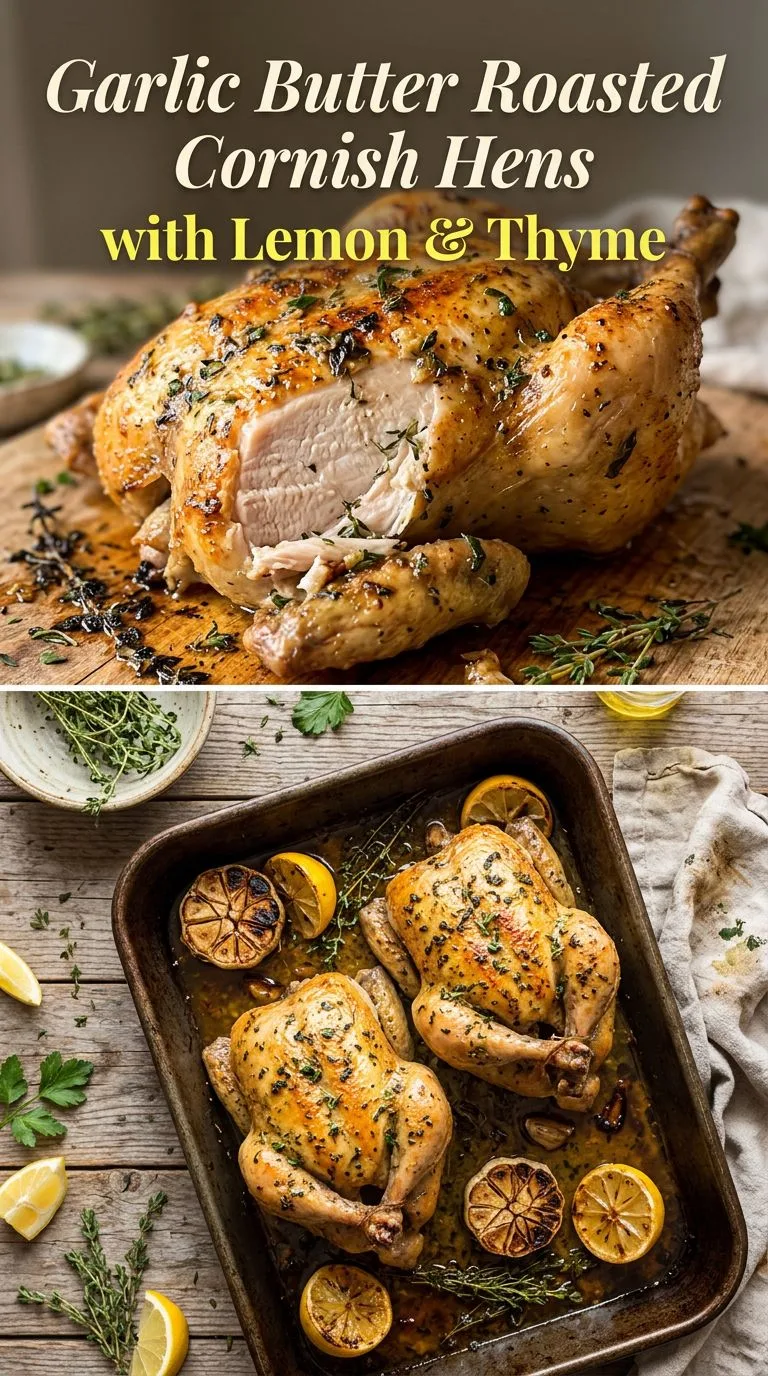
How to Make Garlic Butter Roasted Cornish Hens
Making these beautiful roasted hens is straightforward, but I’ll share some details that ensure perfect results every time.
Prepare the Hens: Start by preheating your oven to 400°F. Remove any giblets from the cavity of each hen—these are usually packaged in a small bag inside. Pat the hens completely dry with paper towels, inside and out. This step is crucial for achieving crispy skin, so don’t skip it. Moisture is the enemy of crispiness.
Make the Garlic Herb Butter: In a small bowl, combine the softened butter with minced garlic, lemon zest, chopped fresh thyme, rosemary, parsley, kosher salt, black pepper, and paprika. Mix thoroughly until everything is evenly distributed. This aromatic butter is the flavor foundation of the entire dish.
Apply the Butter: Here’s where the magic happens. Carefully slide your fingers under the skin of each hen’s breast, starting at the cavity opening and working gently toward the top. Be careful not to tear the skin. Once you’ve created a pocket, spread some of the garlic herb butter directly onto the breast meat under the skin. This technique ensures the meat stays incredibly moist and flavorful. Then spread the remaining butter all over the outside of each bird, coating them generously.
Stuff the Cavities: Divide the lemon slices and quartered onion pieces among the four hens, placing them inside each cavity. These aromatics steam from the inside, infusing the meat with wonderful flavor.
Arrange and Roast: Place the hens breast-side up in a roasting pan, leaving a bit of space between them for air circulation. Drizzle lightly with olive oil and pour the chicken broth into the bottom of the pan—not over the birds, but around them. This creates steam and prevents the drippings from burning.
Monitor the Roasting: Roast uncovered for 50 to 75 minutes, depending on the size of your hens. Every 20 minutes or so, I like to spoon some of the pan juices over the birds to keep them moist and help develop that gorgeous golden color. If the skin starts browning too quickly, loosely tent the hens with aluminum foil.
Check for Doneness: Use an instant-read thermometer to check the internal temperature. Insert it into the thickest part of the breast and the inner thigh—both should reach 165°F. This is the safe temperature for poultry and ensures the meat is cooked through while remaining juicy.
Rest Before Serving: Remove the hens from the oven and let them rest for 10 minutes before serving. This allows the juices to redistribute throughout the meat, ensuring every bite is moist and flavorful.
Expert Tips for Best Results
I’ve learned a few tricks over the years that make a real difference when roasting Cornish hens.
Dry the Skin Thoroughly: I cannot stress this enough—pat the hens completely dry before applying the butter. Any surface moisture will steam rather than crisp, leaving you with rubbery skin instead of that desirable golden crunch.
Bring to Room Temperature: If time allows, let the hens sit at room temperature for about 30 minutes before roasting. This promotes more even cooking and helps the skin crisp up beautifully.
Don’t Overcrowd the Pan: Make sure there’s space between each hen in the roasting pan. Crowding traps steam and prevents proper browning. If your pan is too small, use two pans or roast in batches.
Baste Regularly: Spooning the pan juices over the hens every 20 minutes keeps them moist and helps build layers of flavor. The butter and herbs in those drippings are liquid gold.
Use a Meat Thermometer: Guessing doneness by time alone is risky. Hens vary in size, and ovens vary in accuracy. An instant-read thermometer takes the guesswork out and ensures perfectly cooked meat every time.
Let Them Rest: Resist the urge to cut into the hens immediately. That 10-minute rest period is essential for juicy meat. Cover them loosely with foil to keep them warm while they rest.
Serving Suggestions
These garlic butter roasted Cornish hens pair beautifully with a variety of side dishes. I love serving them with classic holiday accompaniments like green bean casserole and garlic parmesan roasted potatoes, which complement the rich, herby flavors perfectly.
For a lighter approach, consider roasted Brussels sprouts, glazed carrots, or a simple arugula salad with lemon vinaigrette. The bright, fresh flavors balance the richness of the buttery hens nicely. Creamy mashed potatoes or wild rice pilaf also make excellent choices for soaking up those delicious pan juices.
I recommend serving each person their own whole hen for an impressive presentation, or you can halve them if you prefer. Spoon some of the pan drippings over each serving and garnish with fresh thyme sprigs and lemon wedges for a restaurant-quality finish.
Don’t forget crusty bread for mopping up every last bit of those garlicky, lemony pan juices—they’re far too good to waste.
Variations and Substitutions
This recipe is wonderfully adaptable to different flavor profiles and dietary needs.
Herb Variations: While thyme and rosemary are classic, you can experiment with other fresh herbs. Sage and oregano work beautifully, as does tarragon for a French-inspired twist. Fresh basil added at the end provides a summery variation.
Citrus Options: Try oranges or limes instead of lemons for a different citrus note. Orange zest with rosemary is particularly delicious, while lime with cilantro creates a more Latin-inspired flavor.
Spice It Up: Add red pepper flakes to the butter mixture for a subtle kick, or brush the hens with honey during the last 10 minutes of roasting for a sweet and savory glaze.
Wine Addition: Replace half the chicken broth with dry white wine for added depth and acidity in the pan sauce.
Butter Alternatives: For a dairy-free version, substitute the butter with olive oil or ghee. The flavor will be slightly different but still delicious.
Stuffing Variations: Instead of just lemon and onion, try stuffing the cavities with fresh herbs, garlic cloves, and apple slices for an autumnal twist.
Storage, Freezing, and Reheating
Properly stored, these roasted Cornish hens keep well for enjoying as leftovers.
Refrigerator Storage: Allow the hens to cool to room temperature, then store them in an airtight container in the refrigerator for up to 3 days. I like to separate the meat from the bones if I know I’ll be using it in other dishes, as it takes up less space and is easier to reheat.
Freezing: You can freeze cooked Cornish hens for up to 2 months. Wrap them tightly in plastic wrap, then in aluminum foil, or place in freezer-safe containers. For best results, remove the meat from the bones before freezing. Thaw overnight in the refrigerator before reheating.
Reheating: To reheat whole or halved hens, place them in a baking dish with a splash of chicken broth, cover with foil, and warm in a 325°F oven for about 20 minutes or until heated through. For individual portions of meat, reheat gently in a covered skillet with a bit of butter or broth to prevent drying out. You can also use the microwave in 30-second intervals, though this won’t preserve the crispy skin.
Using Leftovers: Leftover Cornish hen meat is wonderful in salads, sandwiches, pasta dishes, or soup. The flavorful meat adds a gourmet touch to simple preparations like chicken salad or quesadillas.
Frequently Asked Questions
What’s the difference between a Cornish hen and a regular chicken?
Cornish hens are actually young chickens, typically harvested at about 5 weeks old. They’re smaller and more tender than mature chickens, with a milder flavor. Despite the name, they’re not a separate species—just younger birds bred for their small size and tender meat.
How many people does one Cornish hen serve?
One Cornish hen typically serves one person as a main course. However, if you’re serving a lot of side dishes or have lighter appetites, you could halve the hens and serve half per person.
Do I need to truss the hens?
Trussing isn’t necessary for this recipe, though you can if you prefer a neater presentation. I find that simply tucking the wing tips under and leaving the legs as they are works perfectly fine and saves time.
Can I prepare these ahead of time?
You can prepare the garlic herb butter mixture a day ahead and store it covered in the refrigerator. You can also prep the hens by applying the butter and stuffing them up to 4 hours before roasting—just keep them covered and refrigerated until you’re ready to cook.
Why is my skin not crispy?
The most common culprit is moisture. Make sure you pat the hens completely dry before applying the butter. Also ensure your oven is fully preheated and that you’re not covering the hens during roasting (unless they’re browning too quickly).
Can I cook these at a different temperature?
You can roast at 375°F for slightly longer (about 60-85 minutes) for more gentle cooking, or at 425°F for faster cooking with crispier skin (about 45-60 minutes). Just always verify doneness with a thermometer rather than relying solely on time.
What should I do with the pan drippings?
The pan drippings are incredibly flavorful! Spoon them directly over the hens when serving, or strain them and use as a light sauce. You can also use them as a base for gravy by whisking in a bit of flour and additional broth.
Can I use this recipe for a whole chicken?
Absolutely! The same technique works beautifully for a whole chicken. You’ll need to increase the roasting time significantly—plan for about 20 minutes per pound, or until the internal temperature reaches 165°F.
Garlic Butter Roasted Cornish Hens with Lemon and Thyme
Golden roasted Cornish hens brushed with garlic butter and seasoned with fresh lemon and thyme. These tender individual birds make an elegant Thanksgiving alternative to a traditional whole turkey, delivering restaurant-quality results with surprisingly simple preparation.
Prep Time: 20 minutes
Cook Time: 60 minutes
Resting Time: 10 minutes
Total Time: 1 hour 30 minutes
Servings: 4
Difficulty: Medium
Cuisine: American
Course: Dinner
Ingredients
- 4 Cornish hens (1–1½ lb each)
- ½ cup unsalted butter, softened
- 6 garlic cloves, minced
- 2 lemons (sliced and zested)
- 2 tablespoons fresh thyme, chopped
- 1 tablespoon fresh rosemary, chopped
- 1 tablespoon fresh parsley, chopped
- 2 tablespoons olive oil
- 1½ teaspoons kosher salt
- 1 teaspoon black pepper
- 1 teaspoon paprika
- 1 cup chicken broth
- 1 small onion, quartered
Instructions
- Preheat the oven to 400°F (200°C). Remove giblets from the Cornish hens and pat the birds thoroughly dry with paper towels, inside and out.
- In a small bowl, combine softened butter, minced garlic, lemon zest, chopped thyme, rosemary, parsley, kosher salt, black pepper, and paprika. Mix until well combined.
- Carefully loosen the skin over the breast of each hen by sliding your fingers underneath, starting at the cavity opening. Rub some of the garlic herb butter underneath the skin directly onto the breast meat. Spread the remaining butter all over the outside of the birds, coating them evenly.
- Place lemon slices and small pieces of quartered onion inside the cavities, dividing them evenly among the four hens.
- Arrange the hens breast-side up in a roasting pan, leaving space between them. Drizzle lightly with olive oil. Pour chicken broth into the bottom of the pan around the hens, not over them.
- Roast uncovered for approximately 50–75 minutes, depending on hen size. Every 20 minutes, spoon pan juices over the birds. If browning too rapidly, cover loosely with aluminum foil.
- Check for doneness by inserting an instant-read thermometer into the thickest parts of the breast and inner thigh. Both should reach 165°F (74°C).
- Remove the hens from the oven and let rest for 10 minutes before serving. Serve whole or halved, spooning the lemon herb pan juices over each portion.
Recipe Notes
- Hen sizes vary, so always use a meat thermometer to verify doneness rather than relying solely on time.
- Patting the hens completely dry is essential for achieving crispy, golden skin.
- If your hens are on the larger side (closer to 1½ pounds), plan for the longer end of the cooking time range.
- The garlic herb butter can be prepared up to 24 hours in advance and stored covered in the refrigerator.
- For extra crispy skin, you can increase the oven temperature to 425°F for the last 10 minutes of roasting.
- Save the pan drippings—they make an excellent light sauce or gravy base.
Estimated Nutrition Per Serving
Calories: 685 kcal
Carbohydrates: 6g
Protein: 52g
Fat: 50g
Saturated Fat: 20g
Fiber: 1g
Sugar: 2g
Sodium: 780mg
Nutrition information is estimated and will vary based on specific ingredients used and portion sizes.
