
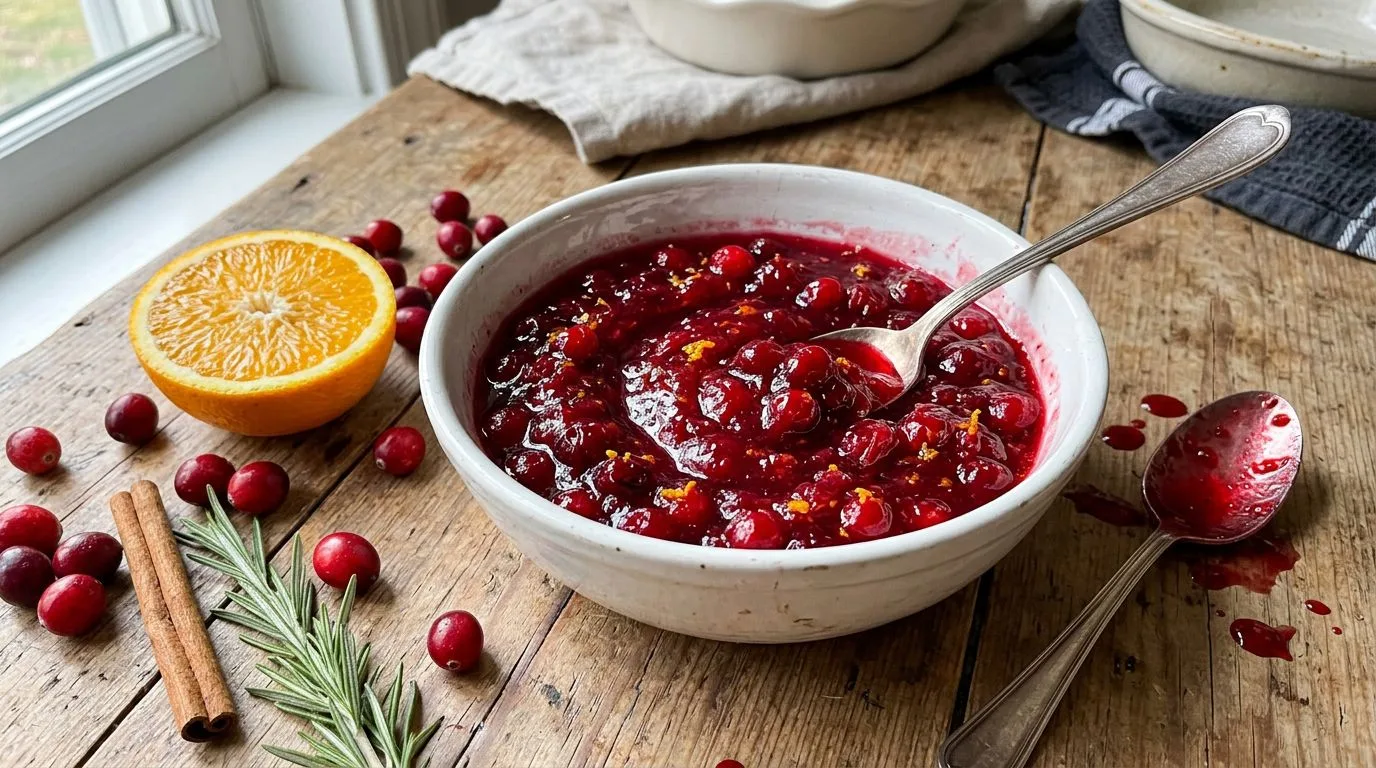
There’s something truly special about homemade cranberry sauce that transforms an ordinary holiday meal into something memorable. I love how this vibrant, ruby-red condiment brings a perfect balance of sweet and tart flavors to the Thanksgiving table, cutting through the richness of turkey and gravy with its bright citrus notes. Unlike the canned version, this fresh cranberry sauce with orange juice offers a texture and flavor that’s simply incomparable—and it’s surprisingly easy to make from scratch.
I find that making cranberry sauce at home gives you complete control over the sweetness level and allows you to customize the flavors to your family’s preferences. The combination of fresh cranberries, orange juice, and warm cinnamon creates a sauce that’s both traditional and refreshing. Plus, this is one of those wonderful make-ahead dishes that actually tastes better after a day or two in the refrigerator, making your holiday meal preparation so much easier.
Whether you’re hosting Thanksgiving dinner for the first time or you’re a seasoned holiday cook looking to elevate your side dishes, this homemade cranberry sauce recipe will become your go-to. The beautiful color, the perfect texture, and the burst of flavor make it worth the minimal effort required.
Why You’ll Love This Homemade Cranberry Sauce
This recipe has become my favorite way to prepare cranberry sauce for several compelling reasons. First, it requires only eight simple ingredients that you probably already have in your pantry, plus a bag of fresh cranberries. The entire cooking process takes less than 30 minutes from start to finish, yet the results taste like you spent hours in the kitchen.
I love that this cranberry sauce strikes the perfect balance between chunky and smooth. The cranberries burst naturally during cooking, creating a sauce with wonderful texture—some whole berries remain intact while others break down to create a thick, glossy base. If you prefer a smoother consistency, you can easily adjust it by mashing more berries with the back of your spoon.
The orange juice and zest add a bright, citrusy dimension that complements the tartness of the cranberries beautifully. I find that this combination creates a more complex flavor profile than cranberry sauce made with just water and sugar. The hint of cinnamon adds warmth without overwhelming the fruit, making this sauce taste festive and inviting.
Another reason I recommend this recipe is its versatility. While it’s a classic Thanksgiving side dish, I like to use it throughout the holiday season on turkey sandwiches, with roasted pork, or even as a topping for baked brie with cranberries and pecans. It also makes a wonderful homemade gift when packaged in pretty jars.
Ingredients and Substitutions
The beauty of this homemade cranberry sauce lies in its simplicity. Here’s what you’ll need and some helpful substitutions if you want to customize the recipe:
Fresh Cranberries: I always use fresh cranberries for the best flavor and texture. Look for firm, bright red berries without soft spots. Fresh cranberries are typically available from October through December. If you can’t find fresh, frozen cranberries work well—just don’t thaw them before cooking, as they’ll release too much liquid.
Granulated Sugar: This provides the sweetness that balances the tart cranberries. I find that 3/4 cup creates a pleasantly sweet-tart sauce, but you can adjust to taste. If you prefer less sweetness, start with 1/2 cup and add more as needed. For substitutions, you can use honey or maple syrup, though these will slightly alter the flavor and color.
Orange Juice: Freshly squeezed orange juice makes a noticeable difference in flavor compared to store-bought juice. I recommend using fresh oranges when possible. If you only have bottled juice, choose one without added sugar. In a pinch, you could substitute apple juice or cranberry juice, though the citrus flavor will be less pronounced.
Water: This helps create the right consistency for the sauce. You can replace some or all of the water with additional orange juice for a more intense citrus flavor.
Orange Zest: The zest adds aromatic oils that enhance the orange flavor throughout the sauce. I like to use organic oranges when zesting to avoid pesticide residues. If you don’t have fresh oranges, you can omit the zest, though the sauce will have less depth.
Cinnamon Stick and Ground Cinnamon: The combination of whole and ground cinnamon provides warm, spicy notes. The cinnamon stick infuses subtle flavor during cooking, while the ground cinnamon distributes more evenly. You can use just ground cinnamon (increase to 1/2 teaspoon) if you don’t have a cinnamon stick.
Salt: Just a pinch enhances all the other flavors and balances the sweetness. Don’t skip it—it makes a difference!
How to Make Homemade Cranberry Sauce
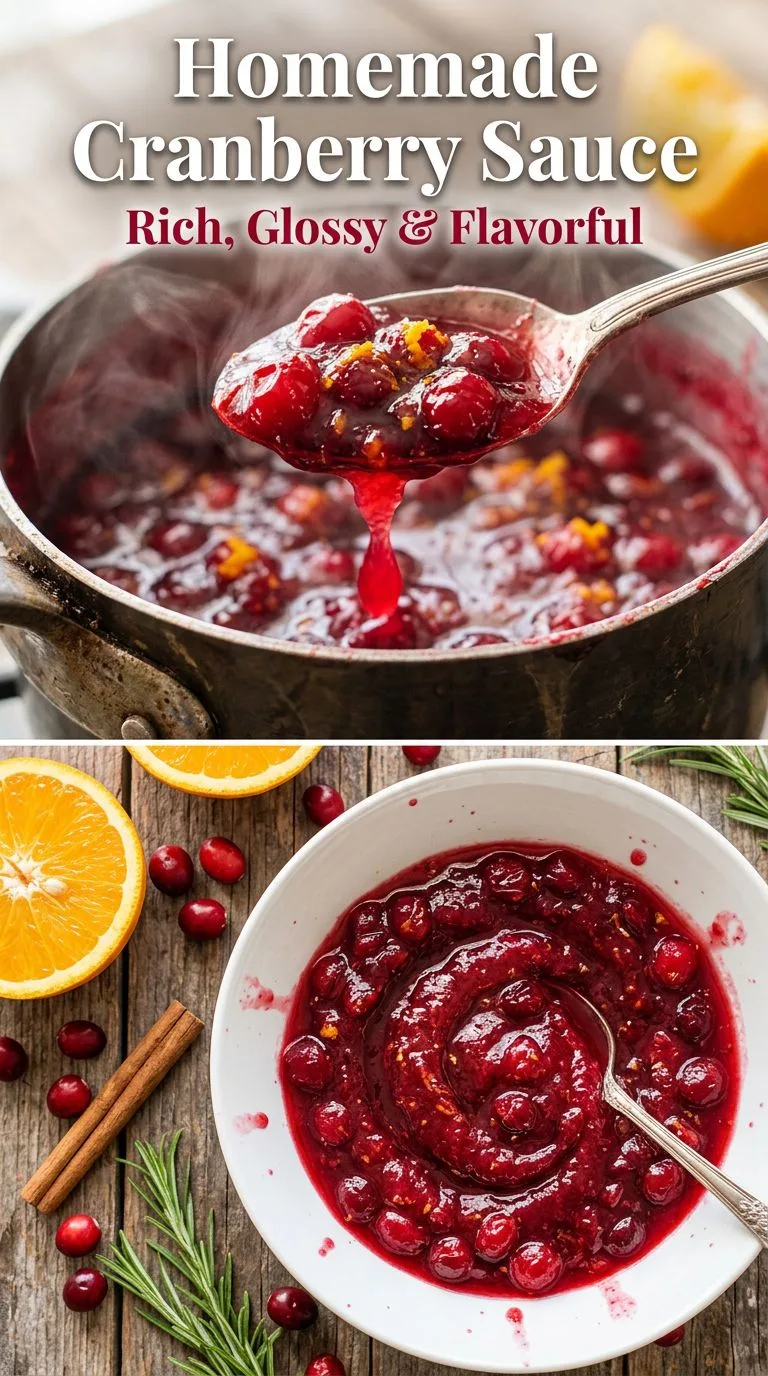
Making cranberry sauce from scratch is remarkably straightforward. I love how the cranberries transform from firm berries into a luscious sauce right before your eyes. Here’s how the process works:
Prepare the Cranberries: Start by rinsing your fresh cranberries under cool running water in a colander. I like to take a moment to sort through them, removing any stems and discarding any berries that are soft, shriveled, or damaged. This ensures your sauce has the best flavor and texture.
Create the Base: In a medium saucepan, combine the sugar, orange juice, water, orange zest, cinnamon stick, ground cinnamon, and salt. I find it helpful to use a saucepan with a heavy bottom to prevent scorching. Place it over medium heat and stir the mixture until the sugar completely dissolves. This creates a flavorful syrup that will cook the cranberries.
Cook the Cranberries: Once the sugar has dissolved, add all the cranberries to the saucepan. Bring the mixture to a gentle boil—you’ll hear the cranberries start to pop as they heat up, which is exactly what you want. This popping sound is the berries bursting and releasing their pectin, which naturally thickens the sauce.
Simmer and Thicken: Reduce the heat to medium-low and let the sauce simmer for 10 to 15 minutes. I recommend stirring occasionally to prevent sticking and to ensure even cooking. As the sauce simmers, you’ll notice it becoming thicker and more glossy. Most of the cranberries should burst during this time, creating that characteristic cranberry sauce texture.
Adjust Texture: If you prefer a smoother sauce, use the back of a wooden spoon to gently mash some of the remaining whole cranberries against the side of the pan. I like to leave some berries intact for visual appeal and texture, but this is entirely a matter of personal preference.
Cool and Thicken: Remove the saucepan from the heat and fish out the cinnamon stick with a spoon. Let the sauce cool in the pan—it will continue to thicken significantly as it cools due to the natural pectin in the cranberries. Don’t worry if it seems a bit thin while hot; it will reach the perfect consistency once cooled.
Chill and Serve: Transfer the cooled sauce to a serving bowl or airtight container and refrigerate until you’re ready to serve. I find that the flavors meld beautifully overnight, making this an ideal make-ahead dish.
Expert Tips for Best Results
After making countless batches of cranberry sauce over the years, I’ve learned a few tricks that ensure perfect results every time:
Don’t Overcook: I recommend watching the sauce carefully during the simmering phase. Overcooking can make the sauce too thick and give it a slightly bitter taste. Once most berries have burst and the sauce looks glossy, it’s ready to come off the heat.
Taste and Adjust: Everyone’s sweetness preference is different. I like to taste the sauce after it’s cooked but while still warm, then adjust the sugar if needed. Remember that the tartness will mellow slightly as the sauce cools and the flavors develop.
Use Fresh Citrus: The difference between fresh orange juice and bottled juice is noticeable in this recipe. I always recommend squeezing fresh oranges when possible. The same goes for the zest—fresh zest provides aromatic oils that dried zest simply can’t match.
Control the Texture: If you want a completely smooth sauce, you can transfer the cooked mixture to a blender or food processor and pulse until you reach your desired consistency. For a chunkier sauce, simply let more berries remain whole during cooking.
Make It Ahead: This is one of my favorite make-ahead dishes. I find that cranberry sauce tastes even better after sitting in the refrigerator for a day or two, as the flavors have time to meld. You can make it up to a week before serving.
Watch the Sugar: If you’re using particularly sweet orange juice or prefer a less sweet sauce, start with less sugar. You can always add more, but you can’t take it away. I recommend starting with 1/2 cup if you’re unsure, then adding more to taste.
Serving Suggestions
While homemade cranberry sauce is a Thanksgiving essential, I love finding creative ways to serve it throughout the holiday season and beyond. Here are my favorite serving suggestions:
Classic Thanksgiving Pairing: Of course, the most traditional way to serve this sauce is alongside roasted turkey, stuffing, and mashed potatoes. I like to serve it in a pretty bowl with a small spoon so guests can add as much as they like to their plates.
Turkey Sandwiches: Leftover turkey sandwiches are transformed when you add a generous spoonful of cranberry sauce. I recommend layering it with turkey, stuffing, and a bit of mayonnaise on soft bread for the ultimate day-after-Thanksgiving sandwich.
Cheese Boards: Cranberry sauce pairs beautifully with cheese, especially creamy varieties like brie, camembert, or goat cheese. I like to include a small bowl of cranberry sauce on holiday cheese boards alongside crackers and nuts.
Breakfast Applications: This sauce makes a wonderful topping for pancakes, waffles, or oatmeal. I also love spreading it on toast with cream cheese for a quick breakfast treat.
Yogurt and Parfaits: Swirl cranberry sauce into plain Greek yogurt for a festive breakfast or snack. Layer it with granola and yogurt for beautiful parfaits.
Roasted Meats: Don’t limit this sauce to turkey! I find it pairs wonderfully with roasted pork, ham, chicken, or duck. The sweet-tart flavor complements rich meats perfectly.
Salad Addition: Add a spoonful to fall salads for a burst of flavor and color. It works particularly well in apple cranberry pecan salad, where it complements the other ingredients beautifully.
Variations and Substitutions
One of the things I love about this recipe is how easily it adapts to different flavor preferences. Here are some variations I recommend trying:
Spiced Cranberry Sauce: Add 1/4 teaspoon of ground ginger and a pinch of ground cloves along with the cinnamon for a more complex spice profile. I find this variation particularly nice with ham.
Maple Cranberry Sauce: Replace half the sugar with pure maple syrup for a deeper, more complex sweetness. This creates a sauce with wonderful autumn flavor.
Cranberry-Apple Sauce: Add one peeled and diced apple (Granny Smith or Honeycrisp work well) along with the cranberries. The apple adds natural sweetness and creates a more complex texture.
Boozy Cranberry Sauce: For an adult version, add 2 tablespoons of Grand Marnier, bourbon, or port wine during the last few minutes of cooking. The alcohol cooks off, leaving behind wonderful depth of flavor.
Cranberry-Pear Sauce: Substitute one diced pear for some of the cranberries. I like using Bosc or Anjou pears, which hold their shape nicely during cooking.
Ginger-Orange Cranberry Sauce: Add 1 tablespoon of freshly grated ginger along with the orange zest for a spicy, warming variation that’s particularly nice during cold weather.
Reduced Sugar Version: If you’re watching sugar intake, you can reduce the sugar to 1/2 cup and add a bit of stevia or monk fruit sweetener to taste. The sauce will be more tart but still delicious.
Whole Berry Sauce: For a chunkier sauce with more whole berries, reduce the cooking time to 8-10 minutes and stir very gently to keep more berries intact.
Storage, Freezing, and Reheating
One of the best things about homemade cranberry sauce is how well it keeps, making it perfect for advance preparation. Here’s what I recommend for storage:
Refrigerator Storage: Transfer the cooled cranberry sauce to an airtight container or glass jar with a tight-fitting lid. I find that it keeps beautifully in the refrigerator for up to two weeks. In fact, I prefer to make it at least two days before serving to allow the flavors to fully develop. Always use a clean spoon when serving to prevent contamination.
Freezing Instructions: This sauce freezes exceptionally well for up to three months. I like to freeze it in portion-sized containers or freezer bags for easy thawing. Leave about an inch of headspace in containers, as the sauce will expand slightly when frozen. Label containers with the date so you can keep track of freshness.
Thawing: The best way to thaw frozen cranberry sauce is to transfer it to the refrigerator the night before you plan to serve it. It will thaw slowly and evenly, maintaining its texture perfectly. If you’re in a hurry, you can thaw it at room temperature for a few hours, stirring occasionally.
Reheating: While I prefer to serve cranberry sauce chilled or at room temperature, you can gently reheat it if desired. Place it in a small saucepan over low heat, stirring occasionally until warmed through. You may need to add a tablespoon or two of water or orange juice if it has thickened too much during storage.
Make-Ahead Tips: I recommend making this sauce 2-5 days before your holiday meal. This not only saves time on the busy day itself but also allows the flavors to meld beautifully. Simply store it in the refrigerator and bring it to room temperature about 30 minutes before serving, or serve it cold if you prefer.
Frequently Asked Questions
Can I use frozen cranberries instead of fresh?
Yes, frozen cranberries work perfectly in this recipe. I recommend using them straight from the freezer without thawing—just add them directly to the saucepan. The cooking time may increase by a minute or two, but the results will be just as delicious as with fresh berries.
Why is my cranberry sauce too runny?
Cranberry sauce thickens significantly as it cools due to the natural pectin in the berries. If your sauce seems thin while hot, don’t worry—it will likely reach the perfect consistency once refrigerated. If it’s still too thin after cooling, you can return it to the stove and simmer for a few more minutes to reduce the liquid further.
Can I reduce the sugar in this recipe?
Yes, you can adjust the sugar to your taste. I recommend starting with at least 1/2 cup, as cranberries are quite tart. You can always add more sugar to taste after cooking. Keep in mind that reducing sugar significantly will result in a much tarter sauce.
How far in advance can I make cranberry sauce?
I find that cranberry sauce can be made up to one week before serving. In fact, I prefer making it at least two days ahead to allow the flavors to develop fully. Store it in an airtight container in the refrigerator.
Can I double this recipe?
Absolutely! This recipe doubles easily. Just use a larger saucepan to accommodate the increased volume, and you may need to extend the cooking time by a few minutes to ensure all the berries burst and the sauce thickens properly.
What’s the difference between cranberry sauce and cranberry relish?
Cranberry sauce is cooked, which softens the berries and creates a thick, spreadable consistency. Cranberry relish is typically made with raw cranberries that are chopped or ground, resulting in a fresher, crunchier texture. Both are delicious but serve different purposes.
Can I make this sauce without orange juice?
Yes, you can substitute water, apple juice, or cranberry juice for the orange juice. However, I find that orange juice adds a wonderful brightness and complexity that really elevates the sauce. If you omit it, consider adding a bit of lemon juice for acidity.
Why do I need to add salt to a sweet sauce?
A small amount of salt enhances all the other flavors in the sauce and helps balance the sweetness. It doesn’t make the sauce taste salty—it simply makes all the flavors more vibrant and well-rounded. I never skip this ingredient.
Homemade Cranberry Sauce Recipe
A sweet and tangy homemade cranberry sauce made with fresh cranberries, orange juice, sugar, and a hint of citrus zest. This easy make-ahead Thanksgiving side dish adds bright flavor and beautiful color to holiday meals.
- Prep Time: 5 minutes
- Cook Time: 15 minutes
- Cooling Time: 1 hour
- Total Time: 1 hour 20 minutes
- Servings: 8 servings (about 2 cups)
- Difficulty: Easy
- Cuisine: American
- Course: Side Dish
Ingredients
- 12 oz fresh cranberries
- 3/4 cup granulated sugar
- 1/2 cup freshly squeezed orange juice
- 1/2 cup water
- 1 teaspoon finely grated orange zest
- 1 cinnamon stick
- 1/4 teaspoon ground cinnamon
- 1 pinch salt
Instructions
- Rinse the fresh cranberries thoroughly under cool running water and discard any damaged or soft berries.
- In a medium saucepan, combine the granulated sugar, freshly squeezed orange juice, water, orange zest, cinnamon stick, ground cinnamon, and salt.
- Place the saucepan over medium heat and stir until the sugar dissolves completely.
- Add the cranberries and bring the mixture to a gentle boil.
- Reduce the heat to medium-low and simmer for approximately 10–15 minutes, stirring occasionally, until most of the cranberries burst and the sauce begins to thicken.
- Gently mash a few cranberries with the back of a spoon if a smoother texture is preferred.
- Remove the saucepan from the heat and discard the cinnamon stick.
- Allow the cranberry sauce to cool at room temperature; it will thicken naturally as it cools.
- Transfer to a serving bowl or airtight container and refrigerate until ready to serve.
- Serve chilled or at room temperature alongside Thanksgiving turkey, stuffing, and holiday side dishes.
Recipe Notes
- The sauce will seem thin while hot but will thicken considerably as it cools due to the natural pectin in cranberries.
- For a sweeter sauce, increase sugar to 1 cup. For a more tart sauce, reduce to 1/2 cup.
- Fresh orange juice makes a noticeable difference in flavor, but bottled juice can be substituted if needed.
- Frozen cranberries can be used without thawing—add them directly to the saucepan.
- This sauce tastes even better after a day or two in the refrigerator as the flavors meld.
- Store in an airtight container in the refrigerator for up to 2 weeks or freeze for up to 3 months.
Estimated Nutrition (Per Serving)
Nutritional values are approximate and based on 8 servings.
- Calories: 95 kcal
- Carbohydrates: 24g
- Protein: 0g
- Fat: 0g
- Saturated Fat: 0g
- Fiber: 2g
- Sugar: 20g
- Sodium: 15mg
