
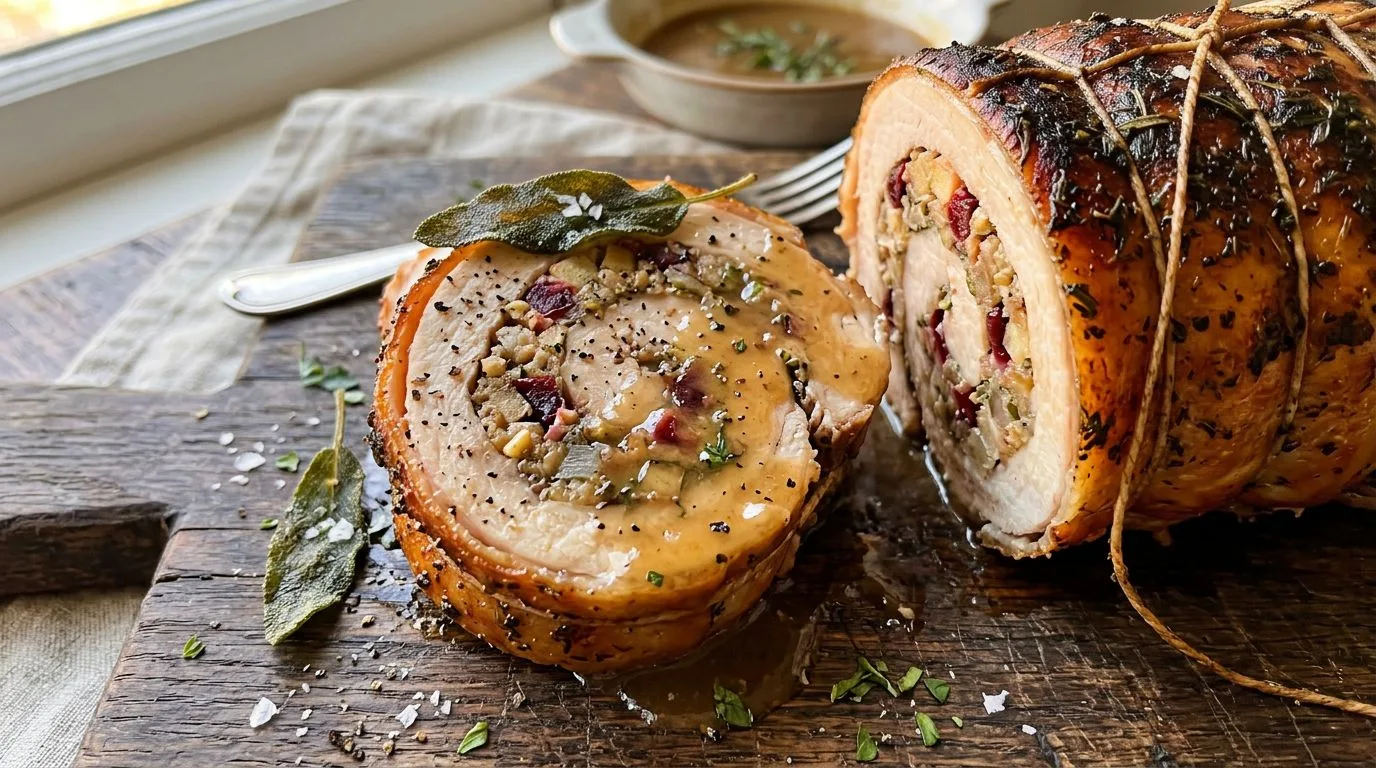
When I want to impress guests with something truly special for the holidays, I turn to this Cranberry Apple Turkey Roulade. This elegant dish transforms a simple boneless turkey breast into a stunning centerpiece that rivals any traditional roasted bird. The combination of tart cranberries, sweet apples, and aromatic sage creates a filling that’s both festive and flavorful, while the rolled presentation makes for beautiful spiral slices that look like they came from a gourmet restaurant.
What I love most about this recipe is how it solves one of the biggest challenges of cooking turkey: keeping the meat moist and flavorful throughout. By butterflying the breast and rolling it around a savory stuffing, every slice contains both tender turkey and delicious filling. The result is a dish that’s easier to carve than a whole turkey, cooks more quickly and evenly, and delivers incredible flavor in every bite. Whether you’re hosting Thanksgiving dinner or planning a special autumn meal, this turkey roulade is guaranteed to become a new favorite.
This recipe also offers practical advantages beyond its impressive appearance. A roulade cooks in about half the time of a whole turkey, freeing up your oven for side dishes. The uniform shape ensures even cooking, and the compact size makes it perfect for smaller gatherings or those who prefer white meat. Plus, the cranberry-apple stuffing stays perfectly moist inside the rolled turkey, eliminating the food safety concerns that sometimes come with traditional cavity stuffing.
Why You’ll Love This Cranberry Apple Turkey Roulade
This stuffed turkey breast recipe checks all the boxes for an impressive holiday main course. The presentation alone is worth the effort—those beautiful pinwheel slices reveal layers of golden turkey wrapped around jewel-toned cranberries and tender apple pieces. I find that guests are always amazed when they see how professional it looks on the serving platter.
The flavor profile is quintessentially autumnal. Fresh and dried cranberries provide tartness and texture, while diced apples add natural sweetness and moisture. The fresh sage and thyme bring that classic Thanksgiving aroma we all love, and the breadcrumb base holds everything together without becoming heavy or dry. Each component complements the mild turkey perfectly.
From a practical standpoint, this recipe is surprisingly manageable even for home cooks who’ve never attempted a roulade before. The butterflying technique might seem intimidating at first, but it’s quite straightforward, and most butchers will even do it for you if you ask. Once the turkey is prepared and the filling is made, the rolling and tying process takes just minutes. I recommend having your kitchen twine ready and working on a clean, spacious surface.
Another benefit I appreciate is the flexibility this dish offers. Unlike a whole turkey that must be cooked all at once, a roulade can be prepared ahead, refrigerated, and roasted when you’re ready. This makes it ideal for entertaining, as you can complete most of the work earlier in the day or even the night before.
Ingredients and Substitutions
The ingredient list for this turkey roulade is straightforward, with most items readily available at any grocery store during the fall and winter months. The star of the show is a boneless turkey breast weighing 2 to 3 pounds. I prefer to buy a whole boneless breast and butterfly it myself, but you can ask your butcher to do this for you. If you can only find a bone-in breast, you can carefully remove the bone with a sharp knife, though this requires a bit more skill.
For the stuffing, fresh cranberries are essential for that bright, tart flavor. They’re typically available from October through December in the produce section. If you’re making this recipe outside of cranberry season, you can use frozen cranberries—just thaw and drain them first. The dried cranberries add concentrated sweetness and a chewy texture that contrasts nicely with the fresh berries. You can substitute dried cherries or chopped dried apricots if you prefer.
I like to use a firm, slightly tart apple variety such as Granny Smith, Honeycrisp, or Braeburn. These apples hold their shape during cooking and provide a nice balance to the sweet dried fruit. Avoid very soft apples like Red Delicious, which can turn mushy. The seasoned breadcrumbs help bind the stuffing together; you can use plain breadcrumbs and add extra herbs if that’s what you have on hand, or substitute with crushed stuffing mix for even more flavor.
Fresh sage is really important here—it’s the herb most associated with turkey and stuffing, and its earthy, slightly peppery flavor is irreplaceable. Fresh thyme adds another layer of herbaceous aroma. If you must use dried herbs, reduce the quantities to about one-third of what’s called for, as dried herbs are more concentrated. The chicken broth moistens the stuffing; you can use turkey broth or even vegetable broth if you prefer.
For those with dietary restrictions, this recipe is naturally dairy-light, with just a small amount of butter in the stuffing. You can easily substitute olive oil or vegan butter if needed. The recipe is also naturally low in added sugar, with sweetness coming primarily from the fruit.
How to Make This Recipe
Making a turkey roulade involves several distinct steps, but none of them are particularly difficult. I find it helpful to work methodically through each stage, and the results are absolutely worth the effort.
Start by preparing your turkey breast. If it’s not already butterflied, place it on a cutting board with the smooth side up. Using a sharp knife, make a horizontal cut through the thickest part of the breast, cutting almost but not completely through to the other side. Open it like a book. If there are still thick spots, you can make additional shallow cuts to help it lay flat. Then, cover the turkey with plastic wrap and use a meat mallet or rolling pin to gently pound it to an even thickness of about three-quarters of an inch. This ensures even cooking and makes rolling easier.
Next, prepare the stuffing. Heat the butter in a large skillet over medium heat and add the diced onion and celery. I like to cook these aromatics until they’re soft and translucent, about 4 to 5 minutes, stirring occasionally. Add the minced garlic and cook for just another 30 seconds until fragrant—garlic can burn quickly, so watch it carefully. Then add the diced apple, chopped fresh cranberries, dried cranberries, sage, and thyme. Cook this mixture for 3 to 4 minutes, stirring frequently, until the fresh cranberries begin to pop and soften and the apples start to become tender.
Remove the skillet from the heat and stir in the breadcrumbs. Add the chicken broth gradually, stirring as you go, until the mixture is moist but not soggy. You want a consistency similar to traditional stuffing—it should hold together when pressed but not be wet or watery. Let this mixture cool for at least 10 minutes before using it; spreading hot filling on raw turkey isn’t safe or practical.
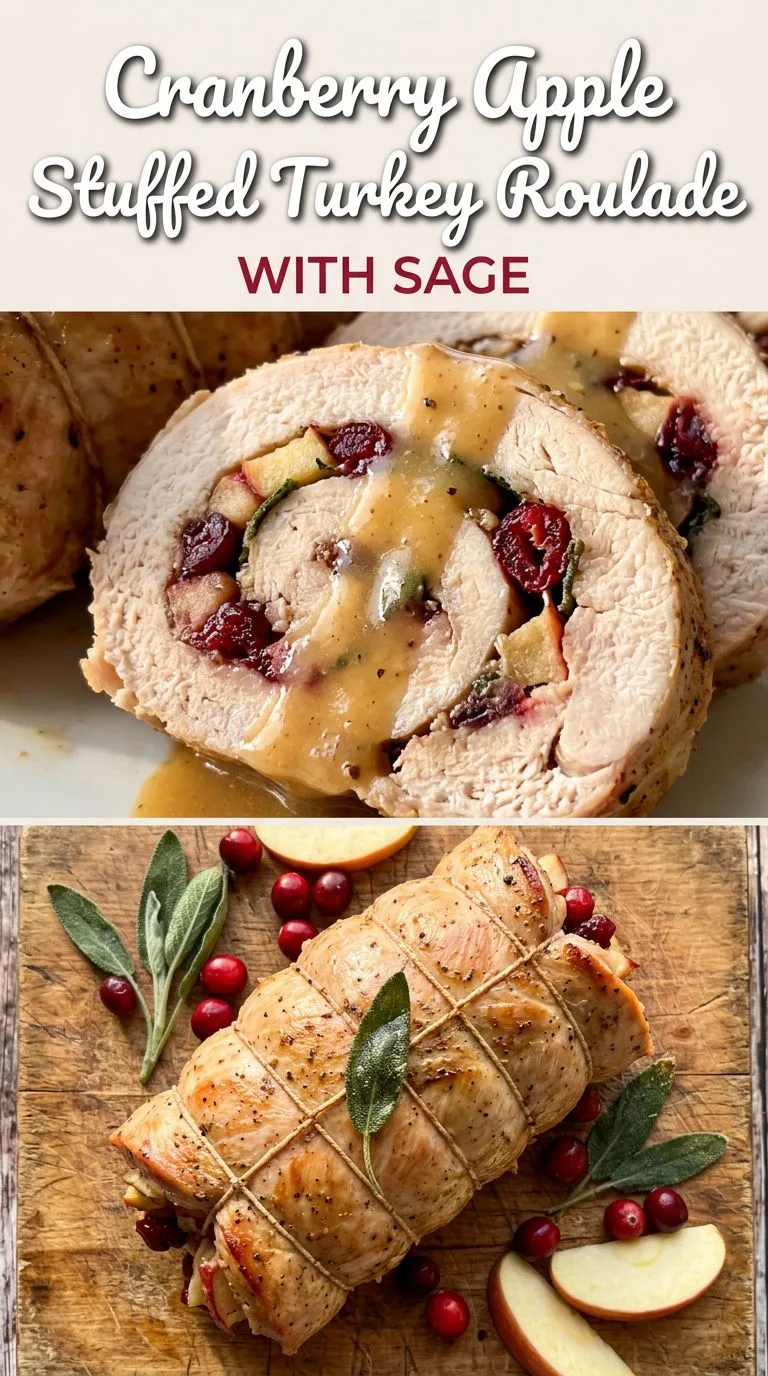
Now comes the fun part: assembling the roulade. Lay your butterflied turkey breast on a clean work surface with the cut side up. Season it generously with salt and black pepper. Spread the cooled cranberry-apple stuffing evenly over the turkey, leaving about a one-inch border around all the edges. This border is important—it prevents the stuffing from squeezing out when you roll and tie the meat.
Starting from one of the shorter ends, carefully roll the turkey into a tight log, keeping the filling inside as you go. Don’t worry if a little filling escapes; you can tuck it back in. Once rolled, use kitchen twine to tie the roulade at regular intervals—I usually make ties every 1.5 to 2 inches. Start in the middle and work your way toward the ends, tying each piece of twine snugly but not so tight that it cuts into the meat. Tuck the ends under if they’re uneven.
Place the roulade seam-side down in a roasting pan or on a rimmed baking sheet. Brush the outside with olive oil, which helps the skin brown beautifully and keeps the surface from drying out. Roast in your preheated 375°F oven for approximately 60 to 90 minutes. The exact time will depend on the thickness of your roulade and your oven. I always use a meat thermometer to check for doneness—the internal temperature should reach 165°F in both the turkey and the stuffing at the center of the roll.
Once it reaches temperature, remove the roulade from the oven and let it rest for 15 minutes before slicing. This resting period allows the juices to redistribute throughout the meat, ensuring every slice is moist and flavorful. After resting, carefully cut and remove the kitchen twine, then slice the roulade into thick rounds, about three-quarters to one inch thick. Each slice will reveal that gorgeous spiral pattern.
Expert Tips for Best Results
I’ve made this turkey roulade many times, and I’ve learned a few tricks that make the process smoother and the results even better. First, don’t skip the pounding step. Even if your butterflied turkey breast looks relatively flat, taking a few minutes to pound it to an even thickness makes a huge difference in how evenly it cooks and how easily it rolls.
When making the stuffing, be sure to let it cool completely before spreading it on the turkey. Hot stuffing on raw meat can create food safety issues and also makes the turkey harder to handle. I sometimes make the stuffing an hour or two ahead and refrigerate it, which makes assembly much easier.
For the rolling process, work slowly and deliberately. If you rush, the filling can spill out or the roll can end up uneven. I find it helpful to roll a little bit, then pause to adjust the filling and tighten the roll before continuing. Think of it like rolling a sleeping bag or yoga mat—steady, even pressure works better than trying to do it all at once.
When tying the roulade, use cotton kitchen twine, not synthetic string that might melt in the oven. Tie it snugly enough to hold the shape but not so tight that it cuts deeply into the meat. If you’re new to tying roasts, there are many helpful video tutorials online that demonstrate the technique.
Invest in a good instant-read thermometer if you don’t already have one. It’s the only reliable way to know when your turkey is perfectly cooked. Insert it into the thickest part of the roll, making sure it reaches the center where the stuffing is. Both the turkey and the stuffing need to reach 165°F for food safety.
If the top of your roulade is browning too quickly during roasting, tent it loosely with aluminum foil. This protects the surface while allowing the interior to continue cooking. I usually check around the 45-minute mark and add foil if needed.
Serving Suggestions
This Cranberry Apple Turkey Roulade is stunning enough to be the centerpiece of your holiday table. I like to arrange the slices slightly overlapping on a large serving platter, which shows off the beautiful spiral pattern. Garnish the platter with fresh sage leaves, additional fresh cranberries, and perhaps some thin apple slices for an extra-festive presentation.
For side dishes, I recommend pairing this turkey with traditional Thanksgiving favorites. A classic sausage stuffing makes an excellent accompaniment, even though the roulade already contains stuffing—you can never have too much at Thanksgiving! Creamy mashed potatoes, roasted Brussels sprouts, and glazed carrots all work beautifully alongside this dish.
Don’t forget the cranberry sauce. While the roulade contains cranberries, a side of homemade cranberry sauce provides that classic tart-sweet contrast that everyone expects with turkey. I also love serving this with a rich turkey gravy—you can make gravy using the pan drippings from the roulade, or prepare it separately using turkey stock.
For a lighter accompaniment, consider a crisp green salad with a tangy vinaigrette, or roasted green beans with almonds. The fresh, bright flavors help balance the richness of the turkey and stuffing. A basket of warm dinner rolls or homemade biscuits rounds out the meal perfectly.
Wine pairing is easy with this dish. I find that a medium-bodied Pinot Noir complements the cranberries and sage beautifully, while a Chardonnay or Viognier works well if you prefer white wine. For non-alcoholic options, sparkling apple cider or cranberry juice spritzers echo the flavors in the dish.
Variations and Substitutions
While this recipe is delicious as written, there are many ways to customize it to your taste or dietary needs. For a different fruit combination, try using pears instead of apples, or add some chopped dried apricots or figs to the stuffing. Pomegranate arils can replace some of the cranberries for a slightly different flavor profile.
Herb variations can change the character of the dish significantly. While sage is traditional, you could use fresh rosemary for a more robust, piney flavor, or add some fresh parsley for brightness. A teaspoon of orange zest in the stuffing adds a lovely citrus note that pairs wonderfully with cranberries.
For added richness, you can incorporate some chopped toasted pecans or walnuts into the stuffing. The nuts add texture and a subtle earthy flavor that complements the fruit. Just be mindful of any guests with nut allergies if you make this substitution.
If you want to make this recipe with a different protein, the same technique works beautifully with pork loin or even a large chicken breast. Pork pairs especially well with the apple-cranberry combination. You’ll need to adjust cooking times based on the size and type of meat you use, but the internal temperature target remains 165°F.
For a gluten-free version, simply substitute gluten-free breadcrumbs or use cooked wild rice in place of the breadcrumbs. The rice adds a wonderful nutty flavor and interesting texture to the stuffing.
You can also make this recipe more or less sweet depending on your preference. For a sweeter version, add a tablespoon of maple syrup or honey to the stuffing mixture. For a more savory profile, reduce the dried cranberries and add more herbs or some crumbled cooked sausage to the filling.
Storage, Freezing, and Reheating
Leftover turkey roulade stores beautifully, making it a great choice for meal prep or enjoying throughout the week. Once the roulade has cooled to room temperature, wrap it tightly in plastic wrap or aluminum foil, or store sliced portions in an airtight container. Properly stored, it will keep in the refrigerator for 3 to 4 days.
I find that leftover roulade makes excellent sandwiches. Layer slices on crusty bread with some cranberry sauce, lettuce, and a bit of mayonnaise for a delicious day-after-Thanksgiving sandwich. You can also dice the leftover turkey and stuffing to use in soups, salads, or casseroles.
For reheating, I recommend using the oven rather than the microwave when possible, as it helps maintain the texture better. Preheat your oven to 325°F, place the slices in a baking dish with a few tablespoons of chicken broth or water, cover with foil, and heat for about 15 to 20 minutes until warmed through. The added liquid prevents the turkey from drying out.
If you need to use the microwave, place slices on a microwave-safe plate, add a tablespoon of broth or water, cover with a damp paper towel, and heat in 30-second intervals until warm. The moisture helps keep the turkey from becoming rubbery.
This roulade can also be frozen, though I recommend freezing it before cooking for best results. Assemble the roulade completely, wrap it very tightly in plastic wrap and then aluminum foil, and freeze for up to 2 months. Thaw it overnight in the refrigerator before roasting as directed. You can also freeze cooked roulade for up to 2 months; thaw in the refrigerator and reheat gently in the oven.
Frequently Asked Questions
Can I prepare this roulade ahead of time?
Yes, this is one of the best features of this recipe. You can assemble the entire roulade up to 24 hours before roasting. Simply prepare it through the rolling and tying step, wrap it tightly in plastic wrap, and refrigerate. When you’re ready to cook, remove it from the refrigerator about 30 minutes before roasting to take the chill off, then proceed with brushing with oil and roasting as directed. You may need to add 10 to 15 minutes to the cooking time if the roulade is still quite cold.
What if I don’t have kitchen twine?
Kitchen twine is really the best option for securing a roulade, but if you don’t have any, you can use unwaxed dental floss in a pinch. Just make sure it’s unflavored! Another option is to use toothpicks to secure the seam, though this doesn’t hold the shape quite as well. Some cooks have success placing the rolled roulade seam-side down in a snug roasting pan, which helps hold it together without ties, though I still recommend at least a few ties for security.
How do I know when the roulade is done?
The only reliable way to know is by using a meat thermometer. Insert it into the thickest part of the roulade, making sure it reaches the center where the stuffing is. Both the turkey and the stuffing must reach an internal temperature of 165°F. Visual cues like golden-brown skin are helpful, but they don’t guarantee the interior is fully cooked. I always rely on temperature rather than time alone.
Can I use a turkey tenderloin instead of a breast?
Turkey tenderloins are much smaller and thinner than a whole breast, so they’re not ideal for this recipe. You would need several tenderloins to create enough surface area for rolling, and they’re difficult to butterfly properly. I recommend sticking with a boneless turkey breast for best results. If you can only find smaller pieces, you might consider making individual smaller roulades instead of one large one.
Why is my stuffing falling out?
This usually happens if the stuffing is too wet, if you’ve overfilled the turkey, or if the roll isn’t tied tightly enough. Make sure your stuffing is moist but not soggy—it should hold together when pressed. Leave that one-inch border around the edges of the turkey, and don’t pile the stuffing too thick in the center. When rolling, work slowly and tighten as you go, then secure with twine at regular intervals. A little stuffing escaping is normal and can be tucked back in, but if it’s excessive, these adjustments should help.
Can I make this with bone-in turkey breast?
While it’s possible to debone a turkey breast yourself, it requires some knife skills and patience. If you’re comfortable with butchering, you can certainly do it, but I recommend asking your butcher to debone it for you, or simply purchasing a boneless breast to begin with. The bone-in breast is more challenging to butterfly and roll evenly.
Cranberry Apple Stuffed Turkey Roulade with Sage
A beautiful turkey roulade filled with a savory mixture of cranberries, apples, and fresh sage. Rolled and roasted until golden, this festive dish is an impressive alternative to traditional Thanksgiving turkey that’s easier to carve and cooks more quickly than a whole bird.
Cook Time: 75 minutes
Resting Time: 15 minutes
Total Time: 2 hours
Servings: 6-8
Difficulty: Medium
Cuisine: American
Course: Dinner
Ingredients
- 1 boneless turkey breast (2–3 lb, butterflied)
- 1 cup fresh cranberries (chopped)
- 1 apple (finely diced)
- 1/2 cup dried cranberries
- 1/2 cup seasoned breadcrumbs
- 1 small onion (diced)
- 2 celery stalks (diced)
- 3 tbsp unsalted butter
- 2 garlic cloves (minced)
- 2 tbsp fresh sage (chopped)
- 1 tsp fresh thyme
- 1/2 cup chicken broth
- 1 tsp salt
- 1/2 tsp black pepper
- 2 tbsp olive oil
- Kitchen twine
Instructions
- Preheat the oven to 375°F (190°C). Butterfly the boneless turkey breast into an even rectangle and gently pound thicker sections to approximately 3/4 inch thickness using a meat mallet.
- Heat butter in a large skillet over medium heat and sauté diced onion and celery for 4–5 minutes until softened. Add minced garlic and cook for 30 seconds until fragrant.
- Stir in diced apple, chopped fresh cranberries, dried cranberries, sage, and thyme. Cook for 3–4 minutes, stirring frequently, until the fruit begins to soften and fresh cranberries start to pop.
- Remove from heat and stir in breadcrumbs. Add chicken broth gradually, stirring to create a moist but not watery stuffing. Allow the mixture to cool for at least 10 minutes.
- Season the butterflied turkey breast with salt and pepper. Spread the cooled cranberry apple filling evenly over the meat, leaving a 1-inch border around all edges.
- Starting from one short end, roll the turkey tightly into a log. Secure with kitchen twine at 1.5 to 2-inch intervals, starting in the middle and working toward the ends.
- Place the roulade seam-side down in a roasting pan. Brush the outside with olive oil.
- Roast for approximately 60–90 minutes, until the internal temperature reaches 165°F (74°C) in both the turkey and the stuffing at the center of the roll.
- Remove from oven and let rest for 15 minutes. Carefully remove the twine and slice into thick rounds, about 3/4 to 1 inch thick.
Recipe Notes
- Ask your butcher to butterfly the turkey breast if you’re not comfortable doing it yourself.
- Make sure the stuffing is completely cooled before spreading on the raw turkey.
- Use an instant-read thermometer to ensure the roulade reaches 165°F throughout.
- If the top browns too quickly, tent loosely with aluminum foil.
- The roulade can be assembled up to 24 hours ahead and refrigerated before roasting.
- Let the roulade rest before slicing to ensure juicy, tender meat.
Estimated Nutrition (Per Serving)
Based on 8 servings. Values are approximate.
- Calories: 285
- Carbohydrates: 18g
- Protein: 32g
- Fat: 9g
- Saturated Fat: 3g
- Fiber: 2g
- Sugar: 9g
- Sodium: 485mg
