
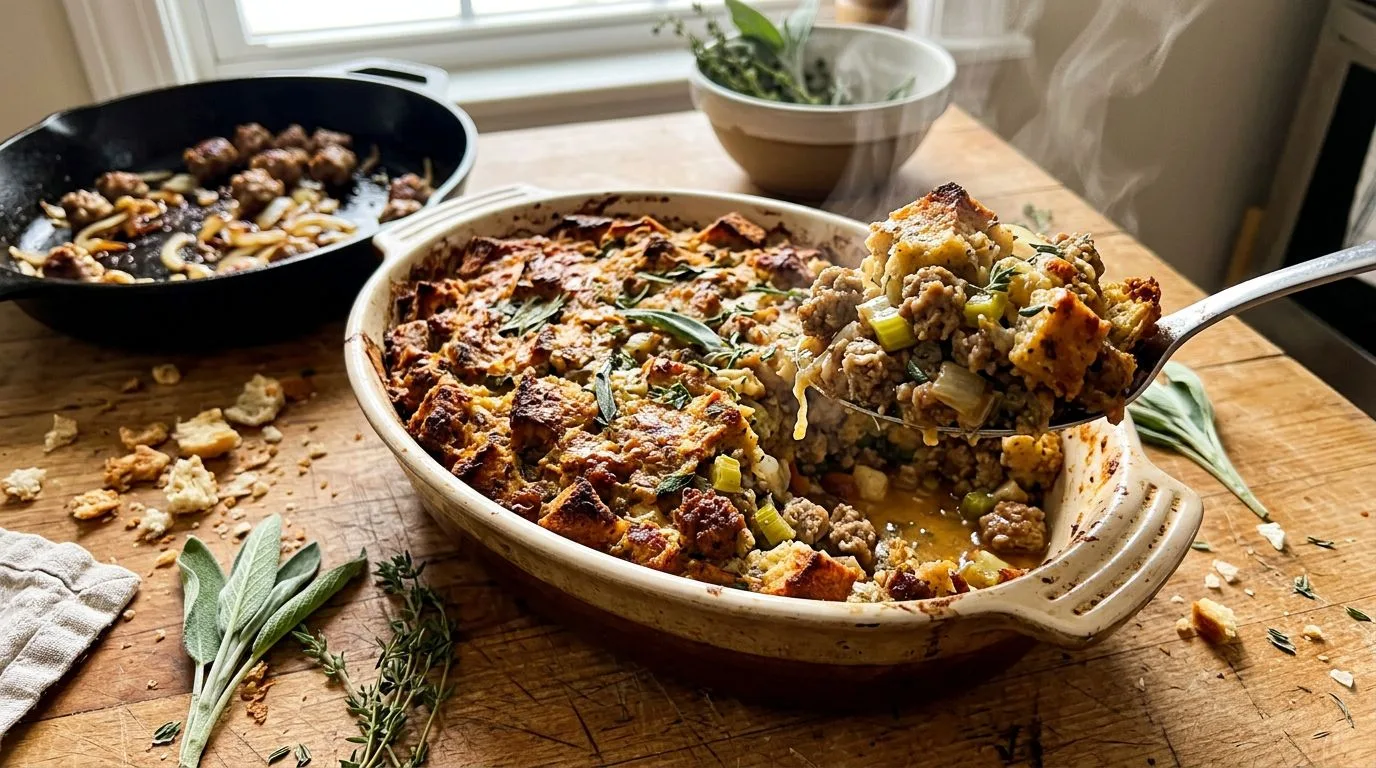
When it comes to Thanksgiving dinner, I believe that classic sausage stuffing deserves a place of honor right alongside the roasted turkey. There’s something incredibly comforting about the combination of savory breakfast sausage, toasted bread cubes, aromatic herbs, and buttery vegetables all baked together until golden and crispy on top. This traditional side dish brings warmth and flavor to any holiday table, and I find that it’s often the first dish to disappear from the serving platter.
What I love most about this recipe is how it balances rich, meaty flavors with the fresh brightness of herbs and the satisfying texture of perfectly toasted bread. The sausage adds a wonderful depth that plain bread stuffing simply can’t match, while the combination of sage, thyme, and rosemary creates that unmistakable holiday aroma that fills your kitchen. Whether you’re preparing a full Thanksgiving feast or simply want a comforting side dish for a Sunday dinner, this classic sausage stuffing delivers every single time.
I recommend making this stuffing in a baking dish rather than inside the turkey itself. Not only is it safer from a food safety perspective, but it also allows you to achieve that perfect golden-brown crust on top that everyone fights over. Plus, you can make it ahead of time and simply reheat it when you’re ready to serve, which is a lifesaver during the hectic holiday cooking rush.
Why You’ll Love This Classic Sausage Stuffing
This recipe has earned its place as a holiday staple for several excellent reasons. First, the flavor profile is absolutely outstanding. The mild pork breakfast sausage provides a savory, slightly seasoned base that complements rather than overwhelms the other ingredients. I find that using mild sausage allows the herbs to shine through while still adding that essential meaty richness.
The texture is another winning feature. By toasting the bread cubes first, you create a sturdy foundation that absorbs the flavorful broth and egg mixture without turning into mush. The result is stuffing that’s moist and tender on the inside with a beautifully crispy, golden top layer. It’s that textural contrast that makes each bite so satisfying.
I also appreciate how forgiving this recipe is. Unlike some finicky holiday dishes, stuffing is quite adaptable to your schedule. You can prepare components ahead of time, assemble it the night before, and bake it fresh on the day you need it. This flexibility makes holiday meal planning so much less stressful.
Finally, this stuffing pairs beautifully with so many dishes beyond turkey. I love serving it alongside roasted turkey, but it’s equally delicious with roasted chicken, pork chops, or even as a standalone vegetarian main course if you swap the sausage for mushrooms and use vegetable broth.
Ingredients and Substitutions
Let me walk you through the key ingredients that make this classic sausage stuffing so delicious, along with some practical substitution options if you need to adapt the recipe.
Breakfast Sausage: I use mild pork breakfast sausage because it provides great flavor without being too spicy. If you prefer more heat, feel free to use hot or spicy sausage instead. Italian sausage also works wonderfully, though it will give the stuffing a slightly different flavor profile with fennel and other Italian seasonings.
Day-Old Bread Cubes: The foundation of any great stuffing is the bread. I recommend using a sturdy white bread, French bread, or sourdough cut into 3/4-inch cubes. Day-old bread is ideal because it’s already somewhat dried out, which helps it absorb the liquid without becoming soggy. If your bread is fresh, simply toast it in the oven until it’s lightly dried but not browned.
Aromatics: Yellow onion and celery are the classic aromatic vegetables in traditional stuffing. They provide sweetness, crunch, and that familiar flavor we all associate with holiday meals. I don’t recommend substituting these, as they’re essential to the authentic taste.
Butter: Unsalted butter allows you to control the salt level in your stuffing. If you only have salted butter, simply reduce the added salt accordingly. For a dairy-free version, you can use olive oil or vegan butter.
Herbs: The combination of sage, thyme, and rosemary is traditional and creates that quintessential stuffing flavor. Fresh herbs can be substituted for dried—use about three times the amount of fresh herbs as you would dried. The fresh parsley adds a bright, fresh note that balances the richness.
Chicken Broth: Low-sodium chicken broth gives you control over seasoning. You can substitute turkey broth, vegetable broth, or even beef broth depending on what you have available. Just taste and adjust the salt accordingly.
Eggs: The beaten eggs help bind everything together and add richness. They’re essential for the proper texture, so I don’t recommend omitting them.
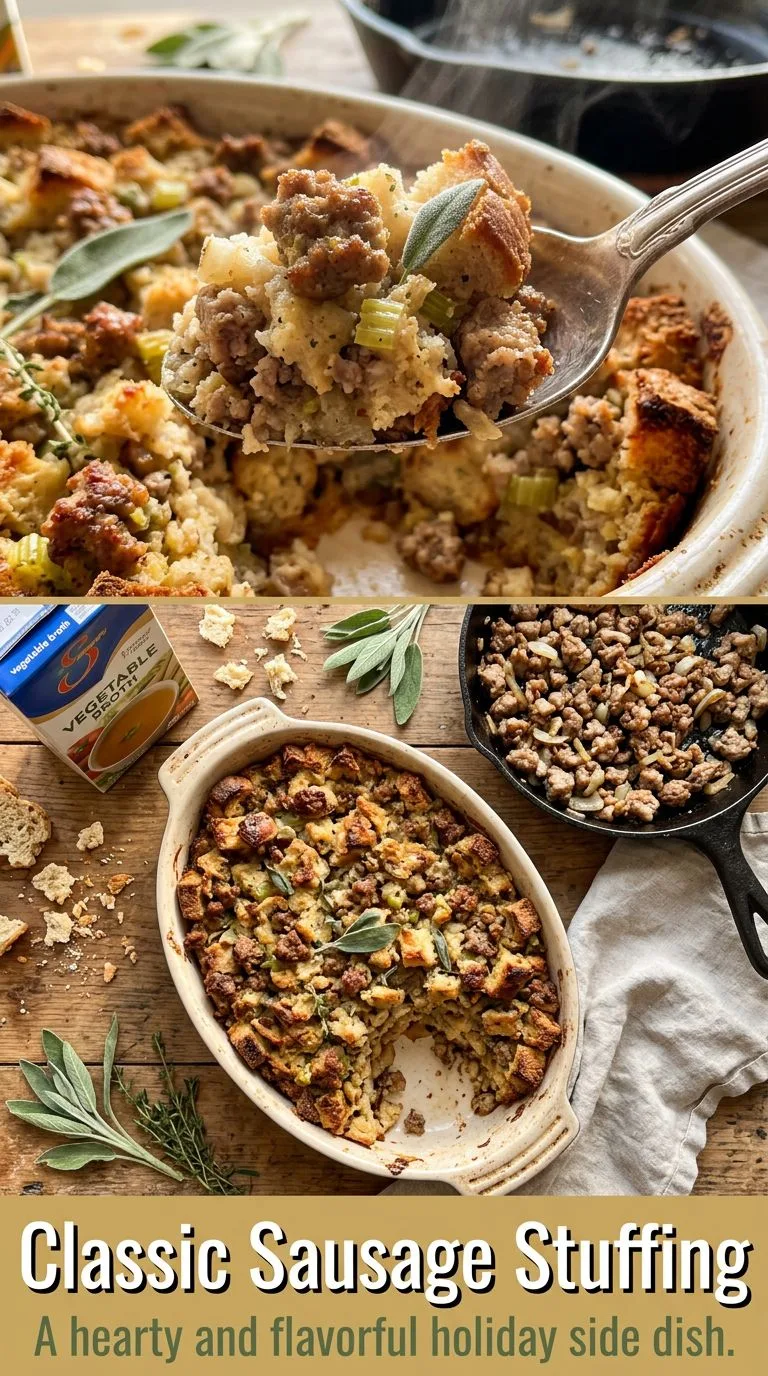
How to Make Classic Sausage Stuffing
Making this stuffing is straightforward, but I’ll share some insights to help you achieve the best results at each step.
Preparing the Bread: Start by preheating your oven to 350°F and greasing your 9×13-inch baking dish. If your bread cubes aren’t already dry, spread them on a baking sheet and toast them for 10-15 minutes. You want them dried out but not browned. This step is crucial because dry bread absorbs liquid much better than fresh bread, preventing a soggy final product.
Cooking the Sausage: In a large skillet over medium heat, cook the breakfast sausage, breaking it into small crumbles as it cooks. I like to use a wooden spoon or spatula to break it up into bite-sized pieces. Cook until it’s fully browned and no pink remains, which usually takes about 8-10 minutes. Transfer the cooked sausage to the bowl with your bread cubes.
Sautéing the Vegetables: Without cleaning the skillet (you want to keep all those flavorful browned bits), melt the butter over medium heat. Add the diced onion and celery, cooking for 5-7 minutes until they’re softened and the onion becomes translucent. This is where the magic happens—the vegetables pick up all the savory flavors left behind by the sausage.
Adding Aromatics and Herbs: Stir in the minced garlic along with the sage, thyme, rosemary, salt, and black pepper. Cook for just another minute until the garlic becomes fragrant. Be careful not to burn the garlic, as it can turn bitter quickly.
Combining Everything: Add the vegetable and herb mixture to the bowl with the bread and sausage, along with the chopped fresh parsley. Toss everything together gently but thoroughly. In a separate bowl, whisk together the chicken broth and beaten eggs, then pour this mixture gradually over the bread mixture. I recommend adding it in stages, tossing as you go, to ensure even distribution. You want the bread to be moistened throughout but not swimming in liquid.
Baking: Transfer the stuffing to your prepared baking dish, spreading it evenly. Cover with aluminum foil and bake for 25 minutes. Then remove the foil and continue baking for another 15-20 minutes until the top is golden brown and crispy. The internal temperature should reach 165°F for food safety.
Resting: Let the stuffing rest for 5-10 minutes before serving. This allows it to set up slightly, making it easier to serve and ensuring the flavors meld together beautifully.
Expert Tips for Best Results
After making this stuffing countless times, I’ve learned a few tricks that consistently produce the best results.
Don’t Skip the Toasting: Even if you’re using day-old bread, a quick toast in the oven ensures it’s dry enough to properly absorb the liquid. Wet or fresh bread will result in mushy stuffing, which nobody wants.
Control the Moisture Level: The key to perfect stuffing is getting the moisture just right. I recommend adding the broth mixture gradually and stopping when the bread is evenly moistened but not soaked. You should be able to squeeze a handful and have it hold together without liquid dripping out.
Use a Meat Thermometer: To ensure food safety, especially since this contains eggs and sausage, check that the center of the stuffing reaches 165°F before serving.
Create Extra Crispy Edges: If you love crispy stuffing (and who doesn’t?), spread the mixture in a slightly larger baking dish so it’s not as deep. This creates more surface area for that golden, crunchy top.
Make It Ahead: You can assemble the stuffing completely up to 24 hours in advance. Just cover it tightly with plastic wrap and refrigerate. When you’re ready to bake, let it sit at room temperature for about 30 minutes, then bake as directed. You may need to add 5-10 minutes to the covered baking time if it’s cold from the refrigerator.
Taste and Adjust: Before baking, I always taste a small piece of the moistened bread mixture to check the seasoning. Since it won’t be seasoned further after baking, this is your chance to add more salt, pepper, or herbs if needed.
Serving Suggestions
Classic sausage stuffing is incredibly versatile when it comes to serving options. My favorite way to serve it is as part of a traditional Thanksgiving spread, where it sits alongside turkey, mashed potatoes, cranberry sauce, and gravy. Speaking of gravy, I highly recommend spooning some turkey or chicken gravy over the stuffing just before serving—it adds moisture and even more flavor.
This stuffing also pairs beautifully with chicken dishes throughout the year. I love serving it with roasted chicken, grilled pork chops, or even alongside a simple green salad for a lighter meal. The savory, herb-forward flavors complement so many different proteins.
For a complete holiday meal, I recommend serving this stuffing with roasted Brussels sprouts, green bean casserole, sweet potato casserole, and dinner rolls. The variety of textures and flavors creates a memorable feast that everyone will enjoy.
If you have vegetarian guests, you can easily make a portion without sausage by setting aside some of the bread mixture before adding the cooked meat, then preparing it separately with vegetable broth.
Variations and Substitutions
While this classic recipe is delicious as written, there are several ways you can customize it to suit your preferences or dietary needs.
Apple and Sage Variation: Add 1-2 diced apples (Granny Smith or Honeycrisp work well) to the vegetable mixture. The sweetness of the apples pairs beautifully with the savory sausage and sage.
Cranberry Pecan Stuffing: Fold in 1/2 cup of dried cranberries and 1/2 cup of toasted chopped pecans before baking. This adds a festive touch and wonderful texture contrast.
Mushroom Addition: Sauté 8 ounces of sliced mushrooms along with the onions and celery for an earthy, umami-rich variation.
Cornbread Stuffing: Replace half of the bread cubes with cornbread cubes for a Southern-inspired twist. The slightly sweet cornbread complements the savory sausage beautifully.
Gluten-Free Option: Use your favorite gluten-free bread, cut into cubes and toasted. The rest of the recipe remains the same.
Spicy Version: Use hot Italian sausage instead of mild breakfast sausage, and add 1/2 teaspoon of red pepper flakes for extra heat.
Herb Variations: Feel free to experiment with different herb combinations. Marjoram, oregano, or even a touch of fennel seed can add interesting flavor dimensions.
Storage, Freezing, and Reheating
Proper storage ensures you can enjoy leftovers safely and deliciously for days after your holiday meal.
Refrigerator Storage: Allow the stuffing to cool completely, then transfer it to an airtight container or cover the baking dish tightly with plastic wrap or aluminum foil. It will keep in the refrigerator for 3-4 days. I find that stuffing actually tastes even better the next day as the flavors continue to meld.
Freezing: This stuffing freezes beautifully for up to 3 months. I recommend freezing it in portion-sized containers for easier reheating. You can freeze it either before or after baking. If freezing unbaked stuffing, assemble completely but don’t add the egg-broth mixture until you’re ready to bake. Thaw overnight in the refrigerator before baking as directed.
Reheating: To reheat refrigerated stuffing, place it in a baking dish, cover with foil, and warm in a 350°F oven for about 20 minutes or until heated through. For frozen stuffing, thaw completely in the refrigerator first, then reheat as above. You can also reheat individual portions in the microwave—add a tablespoon of broth or water to prevent drying out, cover, and heat in 1-minute intervals until hot.
Crisping Up Leftovers: If you want to restore that crispy top, remove the foil during the last 5-10 minutes of reheating. You can also broil it for 2-3 minutes at the end, watching carefully to prevent burning.
Frequently Asked Questions
Can I make this stuffing inside the turkey?
While this is called stuffing, I recommend baking it in a dish rather than inside the turkey. It’s safer from a food safety perspective, cooks more evenly, and allows you to achieve that crispy top. If you do choose to stuff the turkey, make sure the stuffing reaches 165°F in the center.
What’s the difference between stuffing and dressing?
The terms are often used interchangeably, but traditionally, stuffing is cooked inside the bird while dressing is baked separately in a dish. This recipe works as either, though I prefer making it as dressing.
Can I use fresh bread instead of day-old?
Yes, but you’ll need to toast it longer to dry it out completely. Fresh bread contains too much moisture and will result in soggy stuffing if used without toasting first.
How do I know when the stuffing is done?
The stuffing is done when the top is golden brown and crispy, and the internal temperature reaches 165°F. It should be moist but not wet, and the edges should be slightly crispy.
Can I make this dairy-free?
Absolutely. Replace the butter with olive oil or dairy-free butter, and use vegetable broth instead of chicken broth. The flavor will be slightly different but still delicious.
Why is my stuffing dry?
Dry stuffing usually means not enough liquid was added. Next time, add the broth mixture more generously, and consider adding an extra 1/4 to 1/2 cup of broth. You can also fix dry stuffing by drizzling additional warm broth over it before serving.
Can I use turkey sausage instead of pork?
Yes, turkey sausage works well as a leaner alternative. The flavor will be slightly milder, so you might want to increase the herbs slightly to compensate.
How far in advance can I prepare this?
You can assemble the stuffing completely up to 24 hours before baking. Keep it covered and refrigerated, then bake as directed, adding a few extra minutes if needed since it will be cold.
Classic Sausage Stuffing Recipe
A traditional sausage stuffing made with savory breakfast sausage, toasted bread cubes, onions, celery, fresh herbs, and buttery broth. This classic Thanksgiving side dish is flavorful, comforting, and perfect for holiday turkey dinners.
- Prep Time: 20 minutes
- Cook Time: 50 minutes
- Total Time: 1 hour 10 minutes
- Servings: 10-12 servings
- Difficulty: Easy
- Cuisine: American
- Course: Side Dish
Ingredients
- 1 lb mild pork breakfast sausage
- 12 cups day-old bread cubes
- 1 large yellow onion, diced
- 3 celery stalks, diced
- 1/2 cup unsalted butter
- 3 cloves garlic, minced
- 2 1/2 cups low-sodium chicken broth
- 2 large eggs, beaten
- 2 teaspoons dried sage
- 1 teaspoon dried thyme
- 1 teaspoon dried rosemary
- 1/4 cup chopped fresh parsley
- 1 teaspoon salt
- 1/2 teaspoon black pepper
Instructions
- Preheat the oven to 350°F and lightly grease a 9×13-inch baking dish.
- Spread the day-old bread cubes on a baking sheet and toast for 10–15 minutes if they are not already dry, then transfer them to a large mixing bowl.
- Cook the pork breakfast sausage in a large skillet over medium heat, breaking it into small crumbles, until fully browned and cooked through. Transfer to the bowl with the bread.
- Melt the butter in the same skillet and add the diced onion and celery. Cook for 5–7 minutes until softened.
- Stir in the minced garlic, sage, thyme, rosemary, salt, and black pepper, cooking for another minute.
- Add the vegetable mixture and chopped parsley to the bread and sausage. Toss gently to combine.
- Whisk together the chicken broth and beaten eggs in a separate bowl. Pour gradually over the bread mixture, tossing until evenly moistened without making it excessively soggy.
- Transfer to the prepared baking dish and cover with foil. Bake for 25 minutes.
- Remove the foil and continue baking for another 15–20 minutes, until the top is golden and the center reaches 165°F.
- Allow the stuffing to rest for 5–10 minutes before serving with roasted turkey and gravy.
Recipe Notes
- Use sturdy bread like French bread, sourdough, or white sandwich bread for best results.
- The stuffing should be moist but not soggy. Add broth gradually and stop when the bread is evenly moistened.
- This can be assembled up to 24 hours in advance and refrigerated before baking.
- For extra crispy top, broil for 2-3 minutes at the end of baking, watching carefully.
- Leftovers can be frozen for up to 3 months in airtight containers.
Nutrition Information (Per Serving, Estimated)
- Calories: 285
- Carbohydrates: 28g
- Protein: 11g
- Fat: 14g
- Saturated Fat: 6g
- Fiber: 2g
- Sugar: 3g
- Sodium: 620mg
Nutrition information is estimated and will vary based on exact ingredients and portion sizes.
