
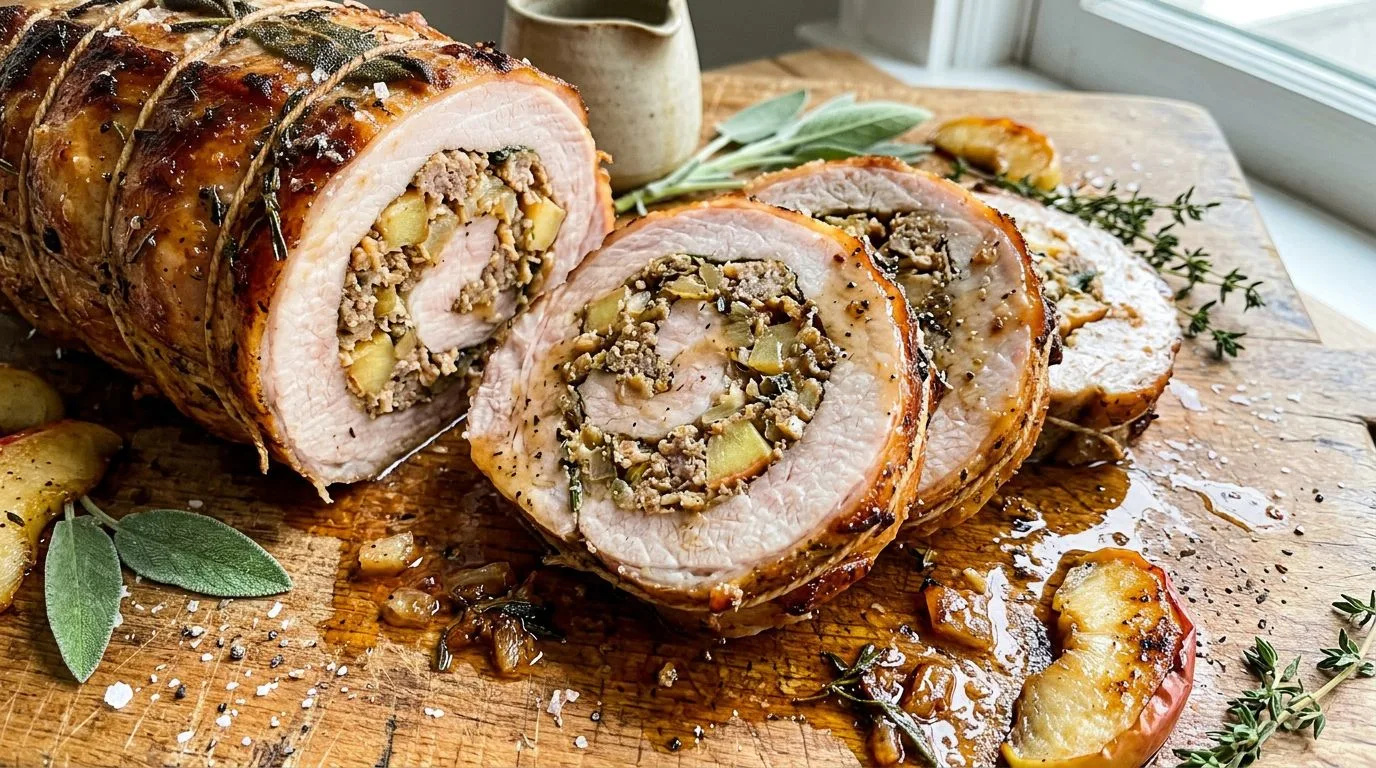
When I want to serve something truly impressive for a holiday dinner or special occasion, I turn to this Apple Sausage Stuffed Pork Loin. This show-stopping roast combines tender, juicy pork with a savory-sweet stuffing that features Italian sausage, crisp apples, dried cranberries, and aromatic fresh herbs. The result is a beautiful spiral of flavors that looks as stunning as it tastes.
What I love most about this recipe is how it transforms a simple pork loin into an elegant centerpiece worthy of Thanksgiving, Christmas, or any festive gathering. The combination of savory sausage with sweet apples and tart cranberries creates a perfect balance that complements the mild pork beautifully. Plus, butterflying and stuffing a pork loin is easier than you might think, and the impressive presentation will have your guests thinking you spent all day in the kitchen.
This stuffed pork loin roast delivers restaurant-quality results at home. The aromatic herbs, tender vegetables, and fruit-studded stuffing make every slice a complete meal in itself. Whether you’re planning a holiday feast or simply want to elevate your Sunday dinner, this recipe is guaranteed to impress.
Why You’ll Love This Apple Sausage Stuffed Pork Loin
This recipe checks all the boxes for an outstanding main course. First, it’s incredibly flavorful—the Italian sausage provides savory richness while the apples and cranberries add brightness and natural sweetness. The fresh sage and thyme bring earthy, aromatic notes that tie everything together beautifully.
I find that this dish is perfect for entertaining because you can prepare the stuffing ahead of time, and once the roast is in the oven, it requires minimal attention. The presentation is absolutely stunning when you slice into the rolled roast and reveal the beautiful spiral of stuffing inside. Your guests will be impressed by both the appearance and the incredible flavor.
Another reason I recommend this recipe is its versatility. While it’s elegant enough for holiday tables, it’s also straightforward enough for a weekend family dinner. The ingredients are accessible, and the technique, while impressive-looking, is actually quite manageable for home cooks of all skill levels.
Finally, this stuffed pork loin roast is a complete meal in one package. The stuffing contains vegetables, fruit, and herbs, so you only need simple sides to round out the dinner. I like to serve it with roasted vegetables or a fresh salad for a balanced, satisfying meal.
Ingredients and Substitutions
The foundation of this recipe is a boneless pork loin roast, which you’ll butterfly to create a flat surface for the stuffing. I recommend choosing a 3-4 pound roast for the best results. If your butcher offers butterflying services, take advantage of it—though doing it yourself is certainly doable with a sharp knife and a little patience.
For the stuffing, Italian sausage provides the savory base. I prefer using mild or sweet Italian sausage, but if you enjoy a bit of heat, hot Italian sausage works wonderfully. You can substitute with ground pork seasoned with Italian herbs if sausage isn’t available, though you’ll lose some of the complex flavor that sausage casings provide.
The apples are crucial for adding sweetness and texture. I like using firm, slightly tart varieties like Granny Smith, Honeycrisp, or Braeburn. These hold their shape during cooking and provide a nice contrast to the rich sausage. Avoid very soft apples like Red Delicious, as they’ll turn mushy.
Dried cranberries add tartness and a pop of color to the stuffing. If you don’t have cranberries, dried cherries or chopped dried apricots make excellent substitutes. The breadcrumbs help bind the stuffing together—plain or Italian-seasoned breadcrumbs both work well. For a gluten-free version, use gluten-free breadcrumbs or crushed gluten-free crackers.
Fresh herbs make a significant difference in this recipe. Sage and thyme are traditional pork seasonings that complement the apple and sausage beautifully. If fresh herbs aren’t available, you can use dried herbs, but reduce the quantity to about one-third (so roughly 2 teaspoons dried sage and 1 teaspoon dried thyme).
The chicken broth adds moisture to the stuffing and helps it hold together. You can substitute with vegetable broth or even apple cider for an extra layer of apple flavor. Kitchen twine is essential for securing the rolled roast—it’s inexpensive and available at most grocery stores or kitchen supply shops.
How to Make Apple Sausage Stuffed Pork Loin
The process begins with preparing your pork loin. If you’re butterflying it yourself, place the roast on a cutting board and use a sharp knife to cut horizontally through the center, stopping about an inch from the opposite edge. Open it like a book to create a flat rectangle. Use a meat mallet to gently pound any thicker sections so the meat is relatively even in thickness—this ensures even cooking.
Next, you’ll prepare the stuffing. Heat butter in a large skillet over medium heat and add the Italian sausage, breaking it into small crumbles as it cooks. Cook until the sausage is fully browned and cooked through, which typically takes about 6-8 minutes. The sausage should no longer be pink in the center.
Add the diced apples, chopped onion, diced celery, and minced garlic to the skillet with the cooked sausage. Cook this mixture for 5-6 minutes, stirring occasionally, until the vegetables soften and the apples begin to release their juices. The onions should become translucent and fragrant.
Stir in the dried cranberries, fresh sage, fresh thyme, and breadcrumbs. Add enough chicken broth to moisten the mixture—it should be moist but not soggy, similar to traditional sausage stuffing. Remove the skillet from heat and let the stuffing cool completely before using it. This cooling step is important because hot stuffing on raw meat can create food safety issues.
Once the stuffing has cooled, season the butterflied pork loin generously with kosher salt and black pepper on both sides. Spread the cooled stuffing evenly over the meat, leaving about a 1-inch border around all edges. This border helps prevent the stuffing from squeezing out when you roll the roast.
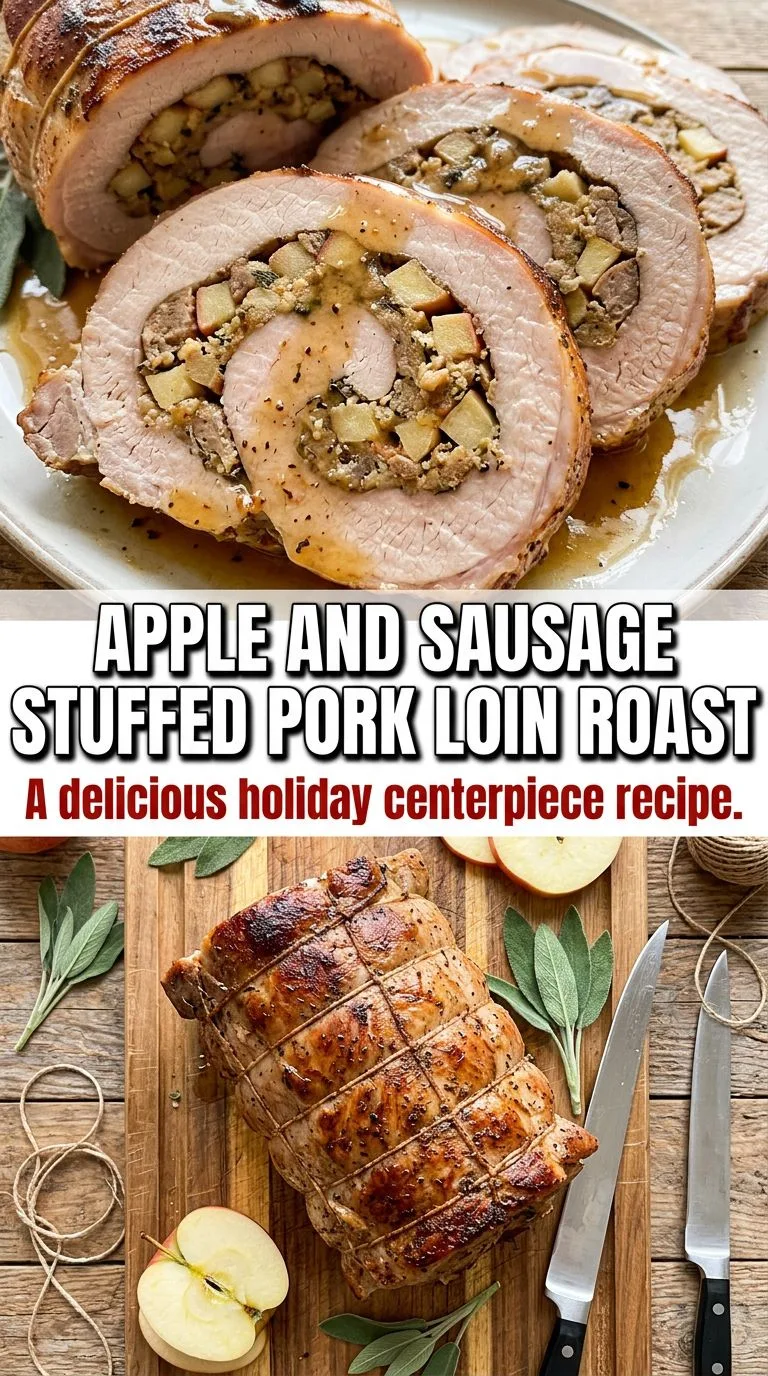
Starting from one long side, roll the pork tightly into a cylinder, keeping the stuffing tucked inside as you go. Use kitchen twine to tie the roast at 1-2 inch intervals, securing it tightly so it holds its shape during roasting. Rub the outside of the rolled roast with olive oil, which helps create a beautiful golden crust.
Place the tied roast in a roasting pan and roast at 375°F for approximately 60-90 minutes. The exact time will depend on the thickness of your roast and how tightly it’s rolled. I recommend using a meat thermometer to check the temperature in the very center of the stuffing—it should reach 165°F for food safety, as the stuffing contains sausage.
Once the roast reaches the proper temperature, remove it from the oven and let it rest for 15 minutes before slicing. This resting period allows the juices to redistribute throughout the meat, ensuring every slice is moist and flavorful. Remove the twine carefully, then slice the roast into thick rounds to showcase the beautiful stuffing spiral.
Expert Tips for Best Results
Temperature monitoring is crucial for this recipe. I always use an instant-read meat thermometer inserted into the center of the stuffing, not just the meat. Since the stuffing contains sausage, it must reach 165°F for food safety. The pork itself will be perfectly cooked at this temperature—tender, juicy, and slightly pink in the center.
When butterflying the pork loin, work slowly and carefully. Keep your knife parallel to the cutting board and use smooth, even strokes. If you’re nervous about this step, ask your butcher to butterfly the roast for you—most are happy to do this at no extra charge.
Don’t skip the cooling step for the stuffing. Placing hot stuffing inside raw meat can raise the meat’s temperature into the danger zone for bacterial growth. Let the stuffing cool to room temperature, or even refrigerate it briefly if you’re preparing it well in advance.
Tie the roast securely but not so tightly that you squeeze out the stuffing. The twine should hold the roast together firmly, but you shouldn’t see stuffing oozing out from the sides. If some stuffing does escape during roasting, don’t worry—it will create delicious crispy bits in the pan.
I find that letting the roast rest is just as important as cooking it properly. Those 15 minutes allow the meat fibers to relax and reabsorb juices. If you slice too early, you’ll lose precious moisture to the cutting board. Use this time to prepare your sides or make a quick pan sauce from the roasting juices.
For an extra layer of flavor, consider making a simple pan sauce. After removing the roast, place the roasting pan on the stovetop over medium heat. Add a splash of white wine or apple cider to deglaze the pan, scraping up the browned bits. Let it reduce slightly, then drizzle this flavorful sauce over the sliced pork.
Serving Suggestions
This Apple Sausage Stuffed Pork Loin is a complete main course that pairs beautifully with classic side dishes. I love serving it with roasted root vegetables like carrots, parsnips, and sweet potatoes. The natural sweetness of roasted vegetables complements the apple and cranberry in the stuffing perfectly.
For a lighter accompaniment, consider a fresh apple cranberry pecan salad that echoes the flavors in the stuffing while adding crisp, refreshing contrast to the rich roast. The combination is especially nice for holiday meals when you want to balance heavier dishes.
Mashed potatoes or creamy polenta make excellent bases for the roasting juices. I like to serve thick slices of the stuffed pork over a bed of mashed potatoes, then drizzle everything with the pan drippings. Green beans, Brussels sprouts, or roasted asparagus add color and freshness to the plate.
For holiday dinners, this roast fits perfectly into a traditional spread alongside cranberry sauce, dinner rolls, and your favorite vegetable sides. The presentation is elegant enough for the fanciest occasions, yet the flavors are comforting and familiar.
Don’t forget about the pan drippings—they’re liquid gold. Spoon them over the sliced pork or use them to moisten your side dishes. If you want to make a proper gravy, whisk a tablespoon of flour into the drippings over medium heat, then gradually add chicken broth until you reach your desired consistency.
Variations and Substitutions
This recipe is wonderfully adaptable to different tastes and dietary needs. For a different flavor profile, try using breakfast sausage instead of Italian sausage. The sage in breakfast sausage pairs beautifully with apples and creates a more traditional American flavor combination.
If you want to add more vegetables to the stuffing, diced mushrooms, chopped spinach, or shredded carrots all work well. Sauté them along with the onions and celery. Just be sure to cook off excess moisture so the stuffing doesn’t become soggy.
For a sweeter version, increase the dried cranberries and add a tablespoon of brown sugar or maple syrup to the stuffing. You could also use dried figs or dates for a more sophisticated sweetness. Chopped pecans or walnuts add wonderful texture and nutty flavor.
If you prefer a different fruit, pears work just as well as apples in this recipe. Choose firm pears like Bosc or Anjou. You could also use a combination of apples and pears for more complex fruit flavor.
For a gluten-free version, use gluten-free breadcrumbs or substitute with cooked wild rice or quinoa. The grains add interesting texture and help bind the stuffing together just as effectively as breadcrumbs.
If you’re cooking for a smaller group, you can use a smaller pork loin (around 2 pounds) and reduce the stuffing ingredients by about one-third. The cooking time will be shorter—start checking the temperature after 45 minutes.
Storage, Freezing, and Reheating
Leftover stuffed pork loin stores beautifully, making it perfect for meal prep or planned leftovers. Let the roast cool completely, then wrap it tightly in aluminum foil or plastic wrap. Store in the refrigerator for up to 4 days. I find that the flavors actually deepen and meld together after a day in the fridge.
To reheat, slice the pork into individual portions and place them in a baking dish. Add a splash of chicken broth or the reserved pan juices to keep the meat moist. Cover with foil and reheat in a 325°F oven for about 15-20 minutes, or until heated through. You can also reheat individual slices in the microwave, though the oven method yields better texture.
For freezing, I recommend slicing the cooled roast first, then wrapping individual portions or small groups of slices tightly in plastic wrap, followed by aluminum foil. Label with the date and freeze for up to 3 months. This method makes it easy to thaw only what you need.
To thaw frozen pork, transfer it to the refrigerator and let it thaw overnight. Reheat using the oven method described above. While you can freeze the uncooked stuffed roast, I find that the texture of the apples and vegetables suffers somewhat, so I prefer to freeze only cooked leftovers.
Leftover stuffed pork makes excellent sandwiches. Slice it thinly and serve on crusty bread with arugula, mustard, and a bit of cranberry sauce. You can also dice the leftovers and add them to salads, pasta dishes, or grain bowls for quick, protein-rich meals throughout the week.
Frequently Asked Questions
Can I prepare this stuffed pork loin ahead of time?
Yes, you can assemble the stuffed and tied roast up to 24 hours in advance. Keep it refrigerated until you’re ready to roast. Let it sit at room temperature for about 30 minutes before roasting to ensure even cooking. You can also prepare the stuffing a day ahead and refrigerate it separately, then stuff and roll the pork on the day you plan to cook it.
What if I don’t have kitchen twine?
Kitchen twine is really the best option for securing a stuffed roast, but in a pinch, you can use unwaxed dental floss. Avoid using regular string or thread, as these may not be food-safe. Some cooks have success using toothpicks to secure the roast, though this method isn’t as reliable for a large roast that needs to hold together during extended cooking.
How do I know when the pork is done?
The most reliable method is using an instant-read meat thermometer. Insert it into the very center of the stuffing (not just the meat) and look for a reading of 165°F. This ensures both the pork and the sausage stuffing are safely cooked. The pork will be slightly pink in the center at this temperature, which is perfectly safe and desirable for juicy, tender meat.
Can I use pork tenderloin instead of pork loin?
Pork tenderloin is too small and thin for this recipe. You need the larger, thicker boneless pork loin roast to create enough surface area for the stuffing when butterflied. Pork loin and pork tenderloin are different cuts—the loin is much larger and better suited for stuffing and roasting.
Why is my stuffing falling out?
This usually happens if the roast isn’t tied tightly enough or if there’s too much stuffing. Make sure to leave a border around the edges when spreading the stuffing, and don’t overfill. Tie the roast securely at regular intervals. Some stuffing may still escape during cooking, which is normal—just scrape it up and serve it alongside the sliced roast.
Can I cook this at a different temperature?
You can roast at 350°F for a slightly longer cooking time (about 90-110 minutes) or at 400°F for a shorter time (about 50-70 minutes). I prefer 375°F as a middle ground that allows the pork to cook through without drying out while giving the exterior time to develop a nice golden crust. Always use a thermometer to determine doneness rather than relying solely on time.
Apple Sausage Stuffed Pork Loin Recipe
A tender, juicy pork loin roast butterflied and filled with a savory-sweet stuffing of Italian sausage, crisp apples, dried cranberries, and fresh herbs. This impressive main course is perfect for holiday dinners and special occasions.
Prep Time: 30 minutes
Cook Time: 75 minutes
Resting Time: 15 minutes
Total Time: 2 hours
Servings: 8
Difficulty: Medium
Cuisine: American
Course: Dinner
Ingredients
- 1 boneless pork loin roast (3–4 lb, butterflied)
- 12 oz Italian sausage (casings removed)
- 2 apples (diced)
- 1 medium onion (finely chopped)
- 2 celery stalks (diced)
- 3 garlic cloves (minced)
- 1/2 cup breadcrumbs
- 1/2 cup dried cranberries
- 2 tbsp fresh sage (chopped)
- 1 tbsp fresh thyme (chopped)
- 3 tbsp unsalted butter
- 2 tbsp olive oil
- 1 tsp kosher salt
- 1/2 tsp black pepper
- 1/2 cup chicken broth
- Kitchen twine
Instructions
- Preheat the oven to 375°F (190°C). Butterfly the pork loin lengthwise into a flat rectangle and gently pound thicker sections to an even thickness using a meat mallet.
- Heat butter in a large skillet over medium heat. Add Italian sausage and cook until browned and fully cooked, breaking it into small pieces with a wooden spoon, about 6-8 minutes.
- Add diced apples, onion, celery, and minced garlic to the skillet. Cook for 5–6 minutes, stirring occasionally, until the vegetables and apples soften.
- Stir in dried cranberries, fresh sage, thyme, and breadcrumbs. Add enough chicken broth to create a moist stuffing that holds together. Remove from heat and cool completely.
- Season the flattened pork loin on both sides with kosher salt and black pepper. Spread the cooled apple sausage stuffing evenly over the meat, leaving a 1-inch uncovered border around the edges.
- Roll the pork tightly into a cylinder, starting from one long side. Secure with kitchen twine at 1-2 inch intervals. Rub the outside with olive oil.
- Place the tied roast in a roasting pan and roast for approximately 60–90 minutes, or until a meat thermometer inserted into the center of the stuffing reads 165°F (74°C).
- Remove from oven and let rest for 15 minutes before removing the twine.
- Slice into thick rounds and serve with the pan juices drizzled over the top.
Recipe Notes
- Make sure to check the temperature in the center of the stuffing, not just the meat, as the sausage must reach 165°F for food safety.
- If your butcher offers butterflying services, take advantage—it saves time and ensures even thickness.
- Let the stuffing cool completely before placing it on the raw pork to prevent food safety issues.
- Some stuffing may escape during roasting—this is normal and creates delicious crispy bits.
- Save the pan drippings to make a simple sauce or gravy.
- For easier slicing, use a sharp carving knife and cut with a gentle sawing motion.
Estimated Nutrition (Per Serving)
Calories: 485
Carbohydrates: 18g
Protein: 42g
Fat: 27g
Saturated Fat: 9g
Fiber: 2g
Sugar: 10g
Sodium: 680mg
Nutrition information is estimated and may vary based on specific ingredients used.
