
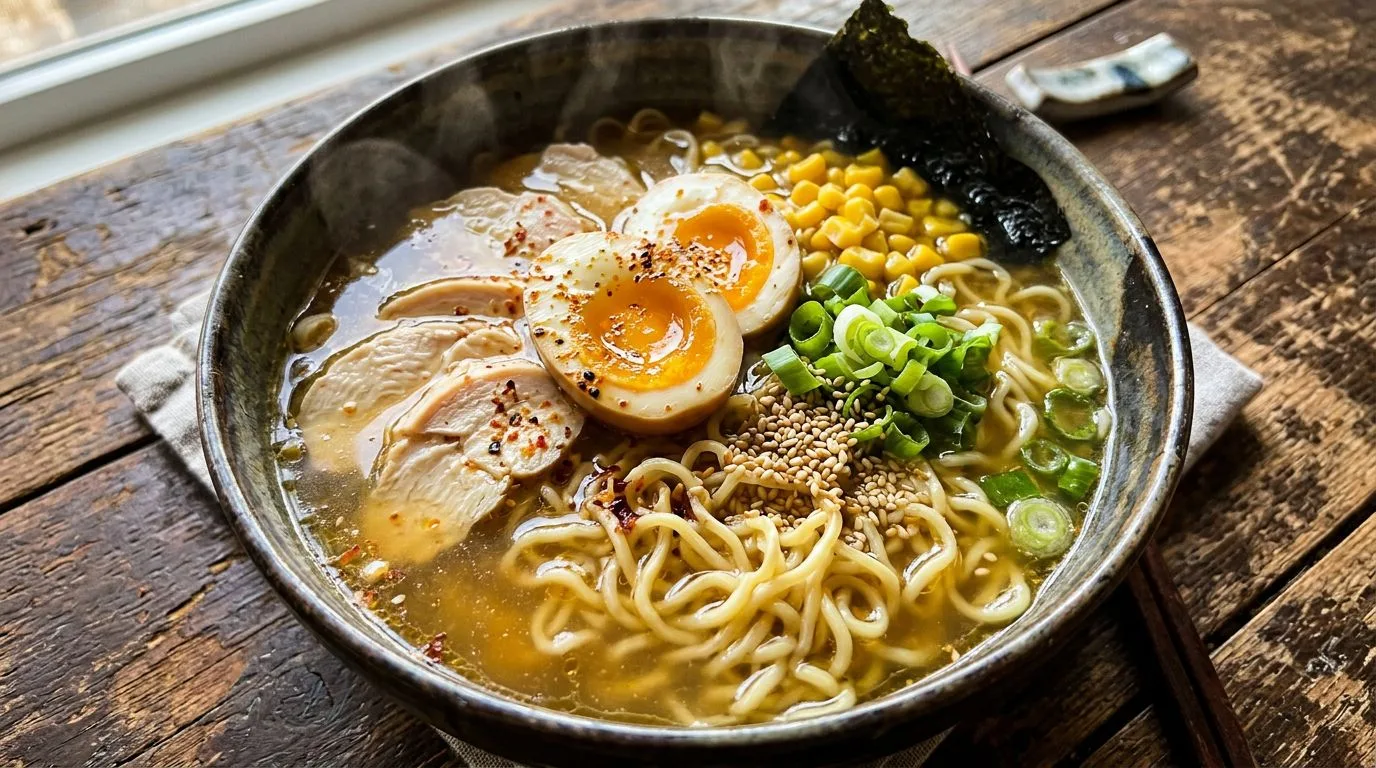
There’s something incredibly satisfying about a steaming bowl of chicken ramen soup on a chilly evening or when you’re craving something warm and nourishing. This homemade version brings together tender shredded chicken, springy ramen noodles, and a deeply savory broth infused with miso, ginger, and garlic. Unlike the instant packets many of us grew up with, this chicken ramen soup is a complete meal that’s surprisingly easy to make at home and tastes like it came straight from your favorite Japanese restaurant.
I love how versatile this recipe is—you can customize it with your favorite vegetables, adjust the spice level with chili oil, and top it with perfectly soft-boiled eggs that add richness to every spoonful. The combination of umami-rich miso paste and soy sauce creates a broth that’s complex and satisfying without being overly heavy. Whether you’re new to making ramen at home or looking for a reliable recipe that delivers authentic flavors, this chicken ramen soup will quickly become a go-to comfort meal in your kitchen.
Why You’ll Love This Chicken Ramen Soup
This homemade chicken ramen soup checks all the boxes for a weeknight dinner that feels special without requiring hours in the kitchen. I find that it strikes the perfect balance between being quick enough for busy evenings yet impressive enough to serve to guests. The broth develops deep, layered flavors in just about 20 minutes, thanks to the aromatic combination of fresh ginger, garlic, and white miso paste.
Unlike takeout ramen that can be heavy and overly salty, you have complete control over the sodium levels and ingredient quality when making this at home. The recipe is also incredibly forgiving—if you have leftover rotisserie chicken, it’s perfect for this dish. The soft-boiled eggs add a luxurious touch, and when you break the yolk, it enriches the broth even further. Plus, this soup is surprisingly nutritious, packed with protein from the chicken and eggs, vitamins from the spinach and carrots, and beneficial probiotics from the miso paste.
I recommend this recipe to anyone who wants restaurant-quality ramen without the complexity of making broth from scratch for hours. It’s comforting, customizable, and comes together in about 30 minutes from start to finish.
Ingredients and Substitutions
The beauty of this chicken ramen soup lies in its straightforward ingredient list that delivers maximum flavor. Here’s what you’ll need and how you can adapt it based on what’s in your pantry:
Cooked Chicken: I use shredded cooked chicken breast or thigh meat. Rotisserie chicken is my favorite shortcut—it’s already seasoned and saves significant time. You can also poach chicken breasts specifically for this recipe or use leftover grilled chicken. Dark meat will give you a richer flavor, while breast meat keeps it leaner.
Ramen Noodles: Fresh ramen noodles are ideal if you can find them in the refrigerated section of Asian grocery stores, but dried ramen noodles work perfectly well. You can use the noodles from instant ramen packets (just discard the seasoning packet) or purchase standalone ramen noodles. In a pinch, udon noodles or even spaghetti can substitute, though the texture will differ slightly.
Chicken Broth: A good-quality chicken broth or stock forms the foundation of your soup. I prefer low-sodium versions so I can control the salt level. Homemade chicken stock will elevate this dish even further, but store-bought works beautifully. For a richer broth, you can use half chicken broth and half bone broth.
White Miso Paste: This fermented soybean paste adds incredible umami depth and a subtle sweetness. White miso (also called shiro miso) is milder than red miso, making it perfect for this soup. If you only have red miso, use slightly less as it’s more intense. Yellow miso falls somewhere in between and works well too.
Aromatics: Fresh garlic and ginger are non-negotiable for authentic flavor. I always use fresh ginger rather than powdered—it makes a noticeable difference. The sesame oil adds a nutty richness that ties everything together.
Vegetables: Sliced mushrooms (shiitake, cremini, or button mushrooms all work), julienned carrots, and baby spinach add color, texture, and nutrients. You can substitute bok choy for spinach, add bean sprouts, or include corn kernels for sweetness. Bamboo shoots and nori seaweed are also traditional additions.
Toppings: Soft-boiled eggs are essential for authentic ramen—they add richness and visual appeal. Green onions provide a fresh, sharp contrast to the rich broth. The optional chili oil brings heat for those who like it spicy. You can also add sesame seeds, nori strips, or crispy fried shallots.
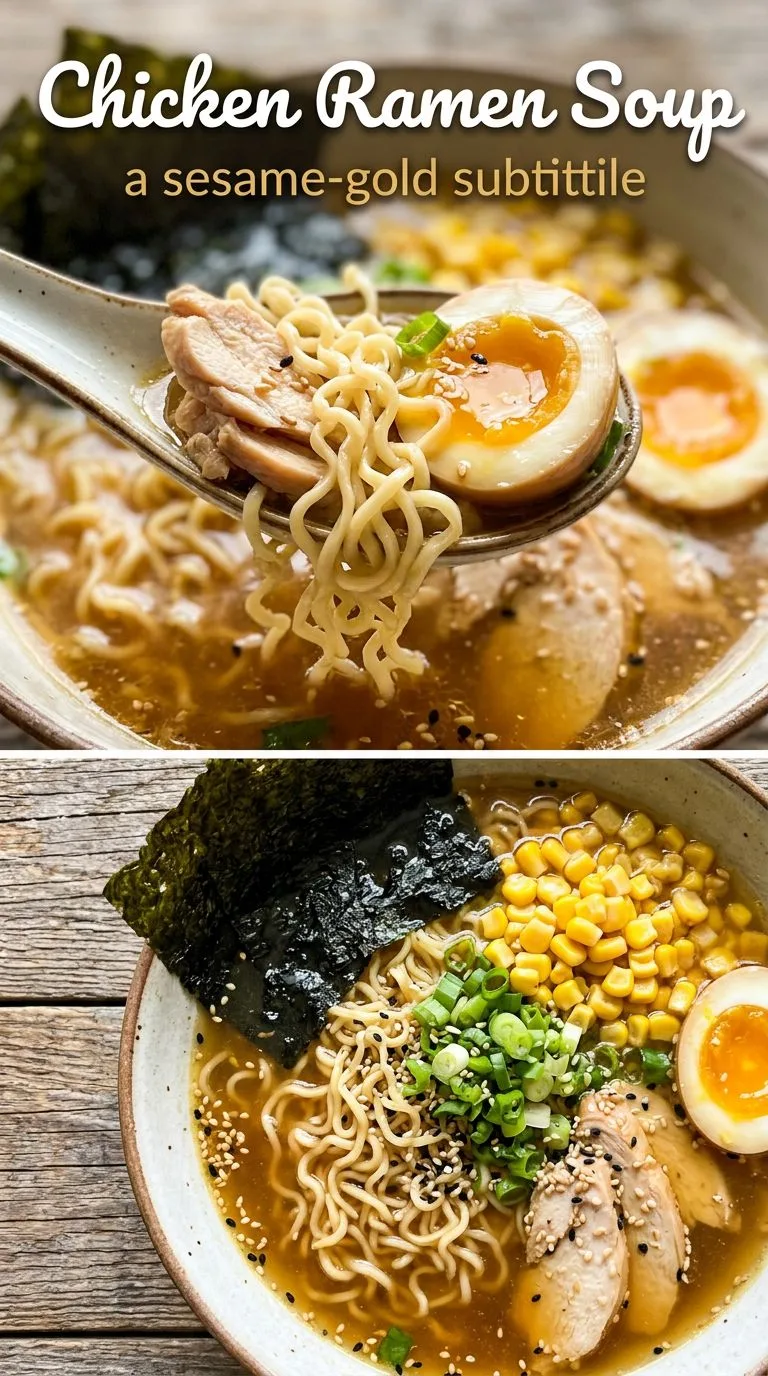
How to Make Chicken Ramen Soup
Making homemade chicken ramen soup is more straightforward than you might think. The key is building layers of flavor starting with the aromatics, then developing the broth, and finally assembling everything in the bowl. Here’s how I approach it:
Start with the Aromatics: Heat your sesame oil in a large soup pot over medium heat. Once it’s shimmering, add the minced garlic and grated ginger. Sauté for just 30 seconds—you want them fragrant but not browned, as burnt garlic can turn bitter. This step releases the essential oils and creates the flavor foundation for your entire soup.
Cook the Vegetables: Add your sliced mushrooms and julienned carrots to the pot. Cook them for 3-4 minutes, stirring occasionally, until the mushrooms release their moisture and the carrots begin to soften slightly. This step adds depth to the broth as the vegetables caramelize slightly and contribute their flavors.
Build the Broth: Pour in all 6 cups of chicken broth and bring everything to a gentle simmer. This is when you’ll stir in the soy sauce and white miso paste. I like to dissolve the miso paste in a small ladle of hot broth first before adding it to the pot—this ensures it distributes evenly without clumping. Let the broth simmer for 8-10 minutes to allow all the flavors to meld together.
Add the Chicken and Spinach: Stir in your shredded cooked chicken and let it heat through completely until it reaches 165°F (74°C). This usually takes just 2-3 minutes since the chicken is already cooked. Then add the baby spinach and cook for 1-2 minutes until it wilts. The spinach will reduce significantly in volume, adding color and nutrients without overwhelming the soup.
Cook the Noodles Separately: While your broth is simmering, cook the ramen noodles in a separate pot according to the package directions. I always cook noodles separately rather than directly in the broth because it prevents them from absorbing too much liquid and becoming mushy. It also keeps the broth from becoming starchy and cloudy. Drain the noodles well once they’re cooked.
Assemble the Bowls: Divide the cooked ramen noodles between your serving bowls. Ladle the hot broth, chicken, and vegetables over the noodles, making sure each bowl gets a good mix of everything. Top each bowl with a halved soft-boiled egg, sliced green onions, and a drizzle of chili oil if you like heat.
Expert Tips for Best Results
After making this chicken ramen soup many times, I’ve learned a few tricks that take it from good to exceptional:
Perfect Soft-Boiled Eggs: Bring a pot of water to a rolling boil, then gently lower room-temperature eggs into the water. Boil for exactly 6.5 minutes for a jammy yolk, then immediately transfer to an ice bath to stop the cooking. Peel them under running water for the easiest removal. You can make these ahead and store them in the refrigerator for up to 3 days.
Don’t Overcook the Noodles: Ramen noodles cook quickly, usually in just 3-4 minutes. Check them a minute before the package directions suggest—they should be tender but still have a slight chew. Remember they’ll continue to soften slightly in the hot broth.
Taste and Adjust: Before serving, taste your broth and adjust the seasoning. You might want more soy sauce for saltiness, a splash of rice vinegar for brightness, or additional miso for deeper umami. The broth should be well-seasoned but not overpowering.
Serve Immediately: Ramen is best enjoyed right after assembly. The noodles will continue to absorb broth as they sit, so if you’re meal prepping, store the components separately and assemble just before eating.
Use Fresh Ingredients: Fresh ginger and garlic make a significant difference compared to powdered versions. The same goes for using quality chicken broth—it’s the base of your soup, so it’s worth investing in a good one or making your own.
Control the Heat: Keep your broth at a gentle simmer rather than a rolling boil. Boiling can make the broth cloudy and cause the vegetables to become mushy. A gentle simmer extracts flavors while keeping everything tender but intact.
Serving Suggestions
This chicken ramen soup is a complete meal on its own, but I love pairing it with a few complementary sides to round out the experience. A simple cucumber salad dressed with rice vinegar, a pinch of sugar, and sesame seeds provides a cool, crisp contrast to the warm, savory soup. Edamame sprinkled with sea salt makes an excellent protein-rich appetizer that fits the Japanese theme perfectly.
For a more substantial meal, I recommend serving gyoza (Japanese dumplings) on the side—whether pan-fried or steamed, they’re the perfect accompaniment. You can also offer small plates of pickled vegetables like kimchi or pickled ginger to add tangy, probiotic-rich elements to the meal. If you’re looking for more comforting soup options, you might also enjoy this classic homemade chicken noodle soup or this warming ginger garlic chicken soup.
For beverages, green tea is traditional and helps cleanse the palate between bites. If you prefer something cold, Japanese beer or a crisp lager pairs wonderfully with the rich, umami flavors of the ramen. For non-alcoholic options, sparkling water with a squeeze of yuzu or lemon is refreshing.
Variations and Substitutions
One of the reasons I love this chicken ramen soup recipe is how adaptable it is to different preferences and dietary needs. Here are some variations I’ve tried successfully:
Spicy Miso Ramen: Add 1-2 tablespoons of gochugaru (Korean red pepper flakes) or a spoonful of chili paste to the broth for a spicy kick. You can also top with fresh sliced jalapeños or a generous drizzle of chili oil.
Vegetarian Version: Replace the chicken with crispy tofu cubes or marinated tempeh. Use vegetable broth instead of chicken broth, and add extra mushrooms and vegetables like bok choy, snap peas, or broccoli for substance.
Shoyu Ramen Style: Skip the miso paste and increase the soy sauce to 3-4 tablespoons for a clearer, soy-based broth. Add a splash of mirin for sweetness and depth.
Coconut Curry Ramen: Stir in 1 cup of coconut milk and 1-2 tablespoons of red curry paste for a Thai-inspired fusion. This creates a creamier, slightly sweet and spicy broth.
Protein Variations: Substitute the chicken with thinly sliced pork belly, shrimp, or even leftover turkey. Each protein brings its own character to the soup.
Low-Carb Option: Replace ramen noodles with spiralized zucchini noodles or shirataki noodles for a lower-carb version that’s still satisfying.
Extra Toppings: Get creative with toppings like corn kernels, bean sprouts, nori sheets, bamboo shoots, fish cake slices, or crispy fried garlic. Each addition brings new textures and flavors.
Storage, Freezing, and Reheating
Proper storage is important for maintaining the quality of your chicken ramen soup, though I recommend consuming it fresh when possible for the best texture.
Refrigerator Storage: Store the broth, chicken, and vegetables separately from the noodles in airtight containers in the refrigerator for up to 3 days. The noodles will absorb liquid and become mushy if stored in the broth, so keeping them separate is essential. Store soft-boiled eggs separately as well, either peeled in water or unpeeled in their shells.
Freezing: The broth with chicken and vegetables freezes well for up to 3 months in freezer-safe containers. I don’t recommend freezing cooked noodles as they become mushy and lose their texture when thawed. Soft-boiled eggs also don’t freeze well. When you’re ready to eat, thaw the broth overnight in the refrigerator, then reheat and cook fresh noodles.
Reheating: Reheat the broth in a pot on the stove over medium heat until it reaches a gentle simmer. If the broth has thickened, add a splash of additional chicken broth or water to thin it out. Cook fresh noodles or reheat refrigerated noodles by dunking them briefly in boiling water, then assemble your bowls with the hot broth. The eggs can be brought to room temperature or gently warmed in the hot broth.
Meal Prep Tips: If you’re meal prepping, portion out the broth, chicken, and vegetables into individual containers. Store uncooked noodles in your pantry and cook them fresh each time you want to eat. This method gives you the convenience of quick meals while maintaining the quality and texture of restaurant-style ramen.
Frequently Asked Questions
Can I use instant ramen noodles for this recipe?
Yes, you can absolutely use the noodles from instant ramen packets—just discard the seasoning packet since you’re making your own flavorful broth. Cook them according to the package directions and use them just like fresh ramen noodles.
What’s the difference between white miso and red miso?
White miso (shiro miso) is fermented for a shorter time, resulting in a milder, slightly sweet flavor that’s perfect for soups. Red miso is fermented longer, making it saltier and more intense. For this recipe, white miso is ideal, but you can use red miso if that’s what you have—just use a bit less.
Can I make this soup ahead of time?
You can prepare the broth with chicken and vegetables ahead of time and refrigerate it for up to 3 days. However, I recommend cooking the noodles fresh and assembling the bowls just before serving to maintain the best texture.
How do I get my soft-boiled eggs perfect every time?
The key is timing and temperature. Use room-temperature eggs, boil for exactly 6.5 minutes for a jammy yolk (or 7 minutes for a slightly firmer yolk), then immediately transfer to an ice bath to stop the cooking process. This method works consistently.
Is this soup spicy?
The base recipe is not spicy at all—it’s savory and umami-rich. The chili oil topping is optional, so you can control the heat level. Start with a small drizzle if you’re unsure, and add more to taste.
Can I make this gluten-free?
Yes, use gluten-free ramen noodles or rice noodles, tamari instead of soy sauce, and ensure your miso paste is gluten-free (most are, but check the label). This makes the soup completely gluten-free while maintaining all the flavor.
What can I use instead of miso paste?
While miso adds unique umami depth, you can substitute it with additional soy sauce and a small amount of tahini or peanut butter for body. The flavor will be different but still delicious. You could also use a small amount of fish sauce for umami.
Why do I need to cook the noodles separately?
Cooking noodles directly in the broth causes them to release starch, which makes the broth cloudy and thick. They also absorb too much liquid, leaving you with less broth and mushier noodles. Cooking them separately keeps your broth clear and your noodles perfectly textured.
Chicken Ramen Soup
A comforting Japanese-inspired ramen soup with tender chicken, springy noodles, savory miso broth, mushrooms, and vegetables, topped with soft-boiled eggs and green onions. This homemade version delivers restaurant-quality flavor in about 30 minutes.
Prep Time: 10 minutes
Cook Time: 20 minutes
Total Time: 30 minutes
Servings: 4
Difficulty: Easy
Cuisine: Japanese-inspired
Course: Dinner
Ingredients
- 2 cups cooked chicken, shredded
- 6 oz ramen noodles
- 6 cups chicken broth
- 2 tbsp soy sauce
- 1 tbsp white miso paste
- 1 tsp sesame oil
- 2 cloves garlic, minced
- 1 tbsp fresh ginger, grated
- 1 cup sliced mushrooms
- 1 cup baby spinach
- 2 soft-boiled eggs
- 2 green onions, sliced
- 1 carrot, julienned
- 1 tsp chili oil (optional)
Instructions
- Heat sesame oil in a large soup pot over medium heat. Add minced garlic and grated ginger, then sauté for 30 seconds until fragrant.
- Add sliced mushrooms and julienned carrot to the pot. Cook for 3-4 minutes, stirring occasionally, until the vegetables are slightly softened.
- Pour in the chicken broth and bring to a gentle simmer.
- Stir in soy sauce and white miso paste, mixing until the miso is completely dissolved.
- Let the broth simmer for 8-10 minutes to develop the flavors.
- Add the shredded cooked chicken and cook until heated through to 165°F (74°C), about 2-3 minutes.
- Stir in the baby spinach and cook for 1-2 minutes until wilted.
- Meanwhile, cook the ramen noodles separately in a pot of boiling water according to package directions. Drain well.
- Divide the cooked noodles between four serving bowls.
- Ladle the hot broth, chicken, and vegetables over the noodles in each bowl.
- Top each bowl with a halved soft-boiled egg, sliced green onions, and a drizzle of chili oil if desired.
- Serve immediately while hot.
Recipe Notes
- For perfect soft-boiled eggs, boil room-temperature eggs for 6.5 minutes, then transfer immediately to an ice bath. Peel under running water.
- Rotisserie chicken is a great time-saving option for the cooked chicken.
- Cook noodles separately to prevent the broth from becoming cloudy and starchy.
- Fresh ginger and garlic provide the best flavor—avoid using powdered substitutes.
- Adjust the soy sauce and miso to taste based on your preferred saltiness level.
- Store broth and noodles separately if meal prepping to maintain the best texture.
- You can substitute shiitake, cremini, or button mushrooms based on availability.
Estimated Nutrition (Per Serving)
Calories: 385
Carbohydrates: 38g
Protein: 32g
Fat: 11g
Saturated Fat: 2g
Fiber: 3g
Sugar: 4g
Sodium: 1240mg
Nutrition information is estimated based on standard ingredient measurements and may vary based on specific products used.
