
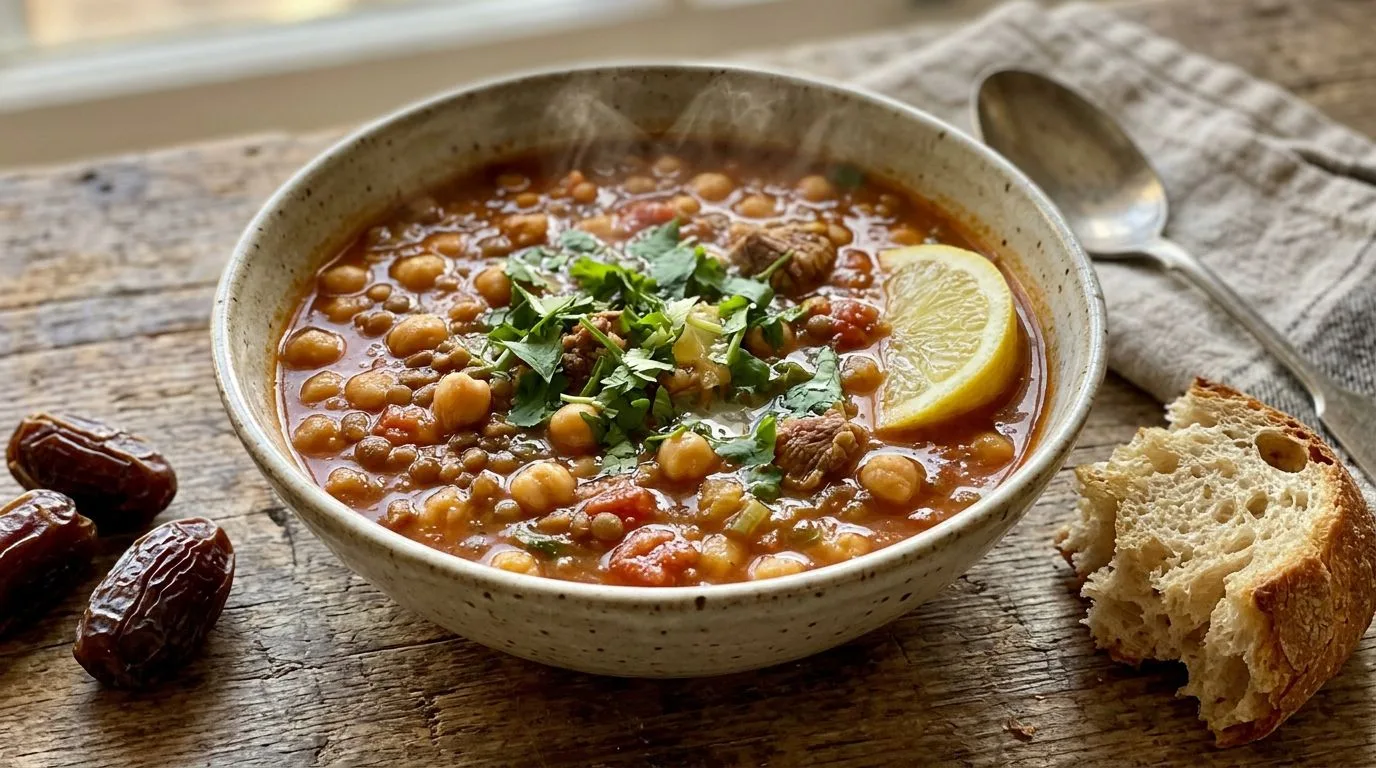
There’s something truly magical about a bowl of Moroccan chickpea soup, or harira as it’s traditionally called. This aromatic, nourishing soup has been a cornerstone of Moroccan cuisine for centuries, especially cherished during Ramadan when it’s served to break the fast. I love how this soup brings together tender chickpeas, earthy lentils, and fragrant spices in a tomato-based broth that’s both comforting and incredibly satisfying.
What makes harira so special is its perfect balance of textures and flavors. The chickpeas and lentils provide hearty protein and fiber, while the vermicelli noodles add a delicate, silky element. Fresh herbs like cilantro and parsley brighten every spoonful, and warm spices like ginger, turmeric, and cinnamon create layers of complexity that make this soup truly unforgettable. I find that this soup is substantial enough to serve as a complete meal, yet it never feels heavy or overly filling.
Whether you’re looking for a wholesome weeknight dinner or want to explore the rich flavors of Moroccan cuisine, this harira recipe delivers authentic taste with straightforward preparation. The best part? Most of the cooking is hands-off simmering time, making it perfect for busy home cooks who still want something special on the table.
Why You’ll Love This Moroccan Chickpea Soup
This harira recipe checks all the boxes for what I consider a perfect soup. First, it’s incredibly nutritious—packed with plant-based protein from chickpeas and lentils, fiber, and vitamins from fresh vegetables and herbs. It’s naturally vegan and can easily accommodate various dietary preferences without sacrificing flavor.
I love how this soup develops its flavor as it simmers. The longer cooking time allows the spices to bloom and meld with the tomatoes, creating a rich, complex base that tastes like it came from a professional kitchen. The addition of vermicelli noodles gives the soup a wonderful textural contrast, while the flour-water mixture (called “tedouira” in Morocco) adds a subtle thickness that makes each spoonful incredibly satisfying.
Another reason this soup is a winner? It actually tastes better the next day. The flavors continue to develop as the soup sits, making it perfect for meal prep. I recommend making a big batch on Sunday and enjoying it throughout the week. Plus, it freezes beautifully, so you can always have a taste of Morocco ready in your freezer.
This recipe is also wonderfully aromatic. As it simmers on your stove, your entire kitchen will fill with the warm, inviting scents of ginger, cinnamon, and fresh herbs. It’s the kind of soup that makes everyone ask, “What’s cooking?” the moment they walk through the door.
Ingredients and Substitutions
Let me walk you through the key ingredients that make this Moroccan chickpea soup so special, along with some practical substitutions if you need them.
Chickpeas: I always use dried chickpeas that have been soaked overnight for the best texture and authentic flavor. If you’re short on time, you can substitute two 15-ounce cans of chickpeas, drained and rinsed. Add them during the last 30 minutes of cooking since they’re already tender.
Lentils: Brown lentils work perfectly here because they hold their shape well during the long cooking time. Green lentils are an excellent substitute. I don’t recommend red lentils for this recipe as they break down too quickly and will turn mushy.
Tomatoes: Fresh, ripe tomatoes that are grated or blended give the soup its authentic flavor and body. If fresh tomatoes aren’t available, substitute with one 14.5-ounce can of crushed tomatoes or tomato puree.
Vermicelli noodles: These thin pasta strands are traditional in harira. You can substitute with angel hair pasta broken into small pieces, or use orzo or small soup pasta shapes.
Fresh herbs: Both cilantro and parsley are essential for authentic flavor. I find that using both creates the perfect herbal balance. If you absolutely must substitute, you can use all cilantro or all parsley, though the flavor will be slightly different.
Spices: The combination of ginger, turmeric, cinnamon, and black pepper creates harira’s signature warmth. These spices are really non-negotiable for authentic flavor, but you can adjust the amounts to your taste preference.
Flour mixture: This traditional thickening agent gives harira its characteristic silky texture. If you need a gluten-free version, substitute with cornstarch mixed with water in the same ratio.
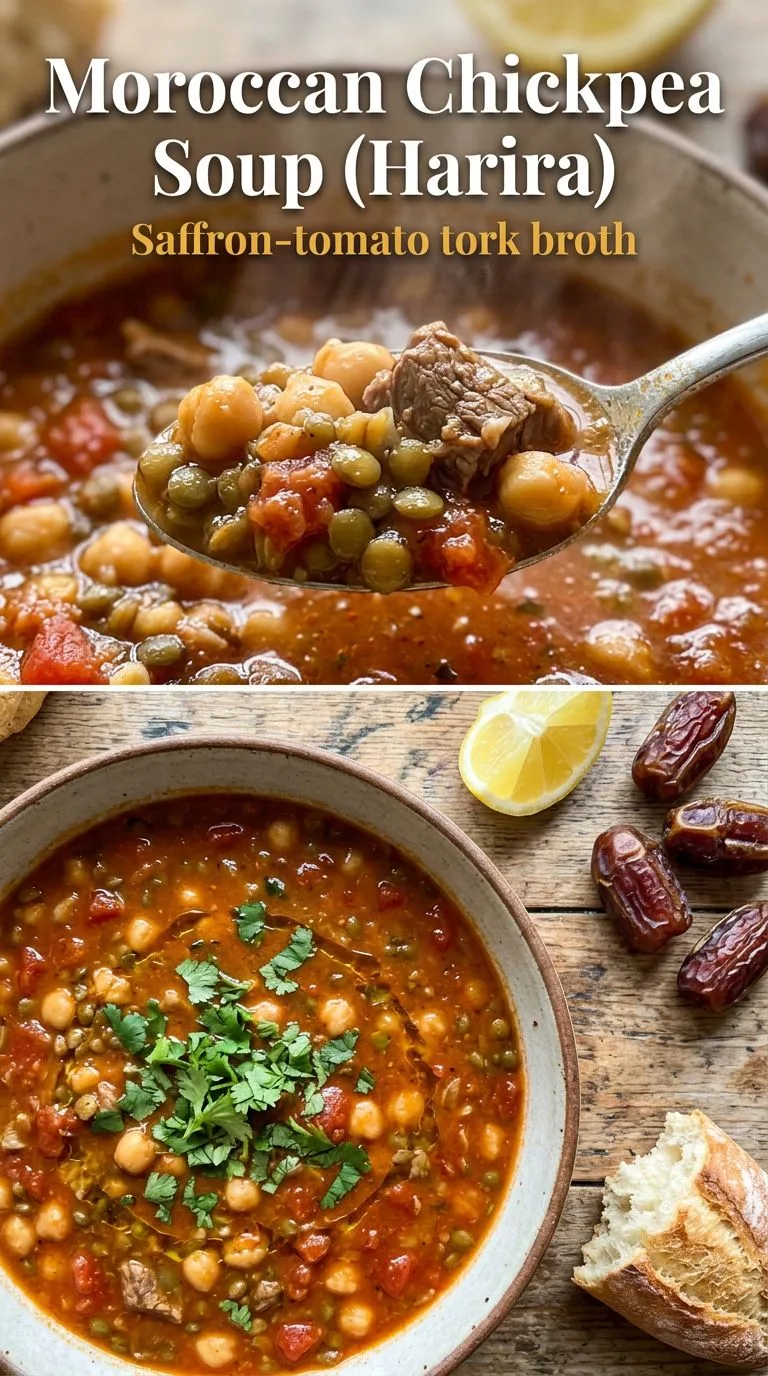
How to Make Moroccan Chickpea Soup
Making harira is a straightforward process that rewards you with incredible flavor. Here’s how I break down the preparation into manageable steps.
Prepare the chickpeas: After soaking your chickpeas overnight, drain and rinse them thoroughly. Place them in a large soup pot with 7 cups of water or vegetable broth. Bring to a boil, then reduce the heat to maintain a gentle simmer. Let the chickpeas cook for 45-60 minutes until they’re almost tender but still have a slight bite. This initial cooking ensures they’ll have the perfect texture in the finished soup.
Add the lentils: Once your chickpeas are nearly tender, add the rinsed brown lentils directly to the pot. They’ll cook alongside the chickpeas, and since lentils cook faster, adding them later ensures everything finishes at the same time.
Build the flavor base: While the legumes are simmering, heat olive oil in a separate skillet over medium heat. Add the finely chopped onion and celery, sautéing for about 5 minutes until they’re softened and fragrant. This step is crucial—I find that cooking the vegetables separately before adding them to the soup develops deeper, more complex flavors.
Toast the spices: Add the ground ginger, turmeric, cinnamon, black pepper, and salt to the skillet with the vegetables. Stir constantly for about 1 minute. This technique, called blooming the spices, releases their essential oils and intensifies their flavors dramatically.
Create the tomato base: Add your grated tomatoes and tomato paste to the skillet. Let this mixture simmer for about 5 minutes, stirring occasionally. The tomatoes will break down and combine with the spices to create a rich, aromatic sauce.
Combine everything: Transfer the entire tomato-spice mixture to your soup pot with the chickpeas and lentils. Add the chopped cilantro and parsley. Stir everything together and let it simmer for 20-30 minutes. During this time, the chickpeas and lentils will finish cooking and absorb all those wonderful flavors.
Add the noodles: Once your legumes are completely tender, add the broken vermicelli noodles. Cook for 5-7 minutes, stirring occasionally to prevent the noodles from sticking together.
Thicken the soup: In a small bowl, whisk together the flour and water until completely smooth with no lumps. Slowly pour this mixture into the simmering soup while stirring continuously. This prevents lumps from forming. Continue cooking for another 5-10 minutes until the soup thickens slightly and the raw flour taste cooks out.
Final adjustments: Taste your soup and adjust the seasoning as needed. I usually add a bit more salt at this stage, and sometimes a pinch more cinnamon if I want to emphasize that warm spice note.
Expert Tips for Best Results
After making this soup many times, I’ve learned a few tricks that make a real difference in the final result.
Don’t skip soaking the chickpeas: Overnight soaking reduces cooking time significantly and helps the chickpeas cook more evenly. If you forget to soak them, you can do a quick soak by boiling them for 2 minutes, then letting them sit covered for 1 hour before draining and proceeding with the recipe.
Stir the flour mixture well: The tedouira (flour-water mixture) is what gives harira its signature silky texture, but it can form lumps if not mixed properly. I recommend whisking it vigorously in a separate bowl until it’s completely smooth before adding it to the soup. Pour it in slowly while stirring constantly.
Adjust consistency to your preference: Traditional harira can range from brothy to quite thick. If your soup becomes too thick, simply add more water or broth. If it’s too thin, let it simmer uncovered for a few more minutes or add a bit more flour-water mixture.
Use fresh herbs generously: Don’t be shy with the cilantro and parsley. They’re not just garnishes—they’re integral to the soup’s flavor profile. I find that adding them during cooking (rather than just as a garnish) infuses the entire soup with their fresh, bright flavor.
Let it rest: If you have time, let the finished soup rest for 10-15 minutes before serving. This allows the flavors to settle and meld together even more beautifully.
The lemon is essential: Don’t skip the lemon wedges for serving. A squeeze of fresh lemon juice right before eating brightens all the flavors and adds a wonderful tangy contrast to the rich, spiced broth.
Serving Suggestions
Harira is traditionally served during Ramadan to break the fast, often alongside dates and sweet pastries. However, I love serving this Moroccan chickpea soup any time of year as a satisfying dinner.
For a complete Moroccan-inspired meal, I recommend serving the soup with crusty bread for dipping—a rustic sourdough or whole wheat bread works beautifully. You can also serve it with warm pita bread or Moroccan khobz if you can find it.
The soup is substantial enough to serve as a main course, but if you want to make it part of a larger spread, consider pairing it with a simple salad. A cucumber and tomato salad with olive oil and lemon dressing provides a refreshing contrast to the warm, spiced soup.
For garnishes beyond the essential lemon wedges, I like to offer additional fresh cilantro and parsley at the table. Some people also enjoy a drizzle of extra virgin olive oil on top, which adds richness and a beautiful sheen.
If you’re serving this for a dinner party, consider setting out small bowls of harissa (Moroccan chili paste) for guests who want to add some heat. The spicy kick complements the soup’s warm spices beautifully.
This soup also pairs wonderfully with other soups if you’re doing a soup-focused meal. Check out this creamy Tuscan white bean soup for another hearty legume-based option, or try this easy vegetable soup for a lighter accompaniment.
Variations and Substitutions
While traditional harira is delicious as written, there are several ways you can adapt this recipe to suit your preferences or dietary needs.
Protein additions: Traditional Moroccan harira often includes lamb or beef. If you’d like to add meat, brown 8 ounces of cubed lamb or beef at the beginning and simmer it with the chickpeas. The meat will become tender as it cooks alongside the legumes.
Gluten-free version: Replace the vermicelli noodles with rice noodles or simply omit them. Substitute the flour in the thickening mixture with cornstarch or arrowroot powder.
Extra vegetables: While not traditional, you can add diced carrots, bell peppers, or zucchini for additional nutrition and color. Add them when you add the tomato mixture so they have time to soften.
Spice level: For a spicier version, add a pinch of cayenne pepper or red pepper flakes with the other spices. You can also stir in some harissa paste at the end for authentic Moroccan heat.
Herb variations: If you’re not a fan of cilantro, you can use all parsley, though the flavor will be different. Fresh mint is sometimes added in small amounts for an extra layer of freshness.
Creamier texture: For an even silkier soup, you can blend 1-2 cups of the finished soup and stir it back in. This creates a partially pureed texture while still maintaining whole chickpeas and lentils for texture.
Storage, Freezing, and Reheating
One of the best things about this Moroccan chickpea soup is how well it stores, making it perfect for meal prep.
Refrigerator storage: Let the soup cool completely, then transfer it to airtight containers. It will keep in the refrigerator for up to 5 days. I find that the flavors actually improve after a day or two as the spices continue to meld. The soup will thicken as it sits, so you may need to add a splash of water or broth when reheating.
Freezing: This soup freezes beautifully for up to 3 months. I recommend freezing it in portion-sized containers for easy reheating. Let the soup cool completely before freezing. If possible, slightly undercook the vermicelli noodles if you know you’ll be freezing the soup, as they can become mushy when frozen and reheated. Alternatively, you can freeze the soup without the noodles and add freshly cooked noodles when you reheat it.
Reheating: Thaw frozen soup in the refrigerator overnight. Reheat gently on the stovetop over medium-low heat, stirring occasionally. Add water or broth as needed to reach your desired consistency. You can also reheat individual portions in the microwave—heat in 1-minute intervals, stirring between each, until heated through. Always reheat to a full simmer (at least 165°F) to ensure food safety.
Make-ahead tips: You can prepare the soup through the step of adding the tomato mixture and herbs, then refrigerate it overnight. The next day, bring it back to a simmer and add the noodles and thickening mixture. This actually enhances the flavor development.
Frequently Asked Questions
Can I use canned chickpeas instead of dried?
Yes, you can substitute two 15-ounce cans of chickpeas, drained and rinsed. Add them during the last 30 minutes of cooking since they’re already tender. The texture will be slightly different from using dried chickpeas, but the soup will still be delicious.
Why is my soup too thick?
Harira naturally thickens as it sits due to the flour mixture and the starches from the legumes and noodles. Simply add more water or vegetable broth until you reach your desired consistency. The soup should be hearty but still spoonable.
Can I make this in a slow cooker?
Absolutely! Add the soaked chickpeas, lentils, and broth to your slow cooker. Cook on low for 6-7 hours or high for 3-4 hours. About 30 minutes before serving, sauté the vegetables and spices as directed, then add them to the slow cooker along with the tomatoes, herbs, and noodles. Add the flour mixture during the last 15 minutes.
What if I don’t have vermicelli noodles?
You can substitute with angel hair pasta broken into 1-2 inch pieces, orzo, small shells, or any small soup pasta. Rice noodles work for a gluten-free version. You can also omit the noodles entirely for a lower-carb option.
How can I make this soup spicier?
Add cayenne pepper, red pepper flakes, or harissa paste to taste. Start with a small amount and adjust as you go. You can also serve harissa on the side so everyone can adjust their own spice level.
Is this soup supposed to be thick or brothy?
Traditional harira falls somewhere in between—it’s heartier than a broth-based soup but not as thick as a stew. The consistency should coat a spoon lightly. Adjust the thickness to your personal preference by adding more liquid or simmering longer.
Can I omit the flour thickening mixture?
Yes, though the texture will be different from traditional harira. The soup will be more brothy without it. If you prefer a thicker soup without flour, you can blend a portion of the soup and stir it back in, or simply simmer it longer to reduce the liquid.
Moroccan Chickpea Soup (Harira)
A traditional Moroccan harira soup made with tender chickpeas, lentils, tomatoes, celery, fresh herbs, and warm spices. This nourishing, aromatic soup is often enjoyed during Ramadan and makes a satisfying meal any time of year.
Prep Time: 15 minutes (plus overnight soaking)
Cook Time: 1 hour 30 minutes
Total Time: 1 hour 45 minutes (plus soaking)
Servings: 6
Difficulty: Medium
Cuisine: Moroccan
Course: Dinner
Ingredients
- 1 cup dried chickpeas (soaked overnight)
- 1/2 cup dried brown lentils
- 1/2 cup broken vermicelli noodles
- 1 lb ripe tomatoes (grated or blended)
- 1 medium onion (finely chopped)
- 2 celery stalks (finely chopped)
- 1/2 cup fresh cilantro (chopped)
- 1/2 cup fresh parsley (chopped)
- 2 tbsp tomato paste
- 2 tbsp olive oil
- 1 tsp ground ginger
- 1 tsp ground turmeric
- 1/2 tsp ground cinnamon
- 1/2 tsp black pepper
- 1 tsp salt
- 7 cups water or vegetable broth
- 2 tbsp all-purpose flour mixed with 1/2 cup water
- Lemon wedges for serving
Instructions
- Drain the soaked chickpeas and rinse them thoroughly under cold water.
- Place the chickpeas in a large soup pot with 7 cups of water or vegetable broth. Bring to a boil over high heat, then reduce heat to medium-low and simmer for 45-60 minutes until the chickpeas are almost tender.
- Add the rinsed brown lentils to the pot with the chickpeas and continue cooking.
- While the legumes cook, heat olive oil in a separate skillet over medium heat. Add the finely chopped onion and celery, and sauté for 5 minutes until softened.
- Stir in the ground ginger, turmeric, cinnamon, black pepper, and salt. Cook for 1 minute, stirring constantly, until the spices are fragrant.
- Add the grated tomatoes and tomato paste to the skillet. Simmer for 5 minutes, stirring occasionally, until the mixture thickens slightly.
- Transfer the entire tomato-spice mixture to the soup pot with the chickpeas and lentils.
- Add the chopped cilantro and parsley to the pot. Stir well to combine.
- Simmer the soup for 20-30 minutes until the chickpeas and lentils are completely tender.
- Add the broken vermicelli noodles and cook for 5-7 minutes, stirring occasionally to prevent sticking.
- In a small bowl, whisk together the flour and 1/2 cup water until completely smooth with no lumps.
- Slowly pour the flour mixture into the simmering soup while stirring continuously to prevent lumps from forming.
- Cook for another 5-10 minutes until the soup thickens slightly and the raw flour taste is gone.
- Taste and adjust seasoning with additional salt if needed.
- Serve hot with fresh lemon wedges on the side for squeezing over individual bowls.
Recipe Notes
- Soaking the chickpeas overnight is essential for proper cooking. If you forget, use the quick-soak method: boil for 2 minutes, cover, and let sit for 1 hour before draining.
- The soup will thicken as it sits. Add more water or broth when reheating to reach desired consistency.
- For a gluten-free version, substitute the vermicelli with rice noodles and use cornstarch instead of flour in the thickening mixture.
- The lemon juice is essential—it brightens all the flavors and should be added just before eating, not during cooking.
- This soup tastes even better the next day as the flavors continue to develop.
- If using canned chickpeas, use two 15-ounce cans and add them during the last 30 minutes of cooking.
Estimated Nutrition (Per Serving)
Calories: 285
Carbohydrates: 48g
Protein: 12g
Fat: 6g
Saturated Fat: 1g
Fiber: 11g
Sugar: 7g
Sodium: 520mg
Nutrition information is estimated and will vary based on specific ingredients used.
