
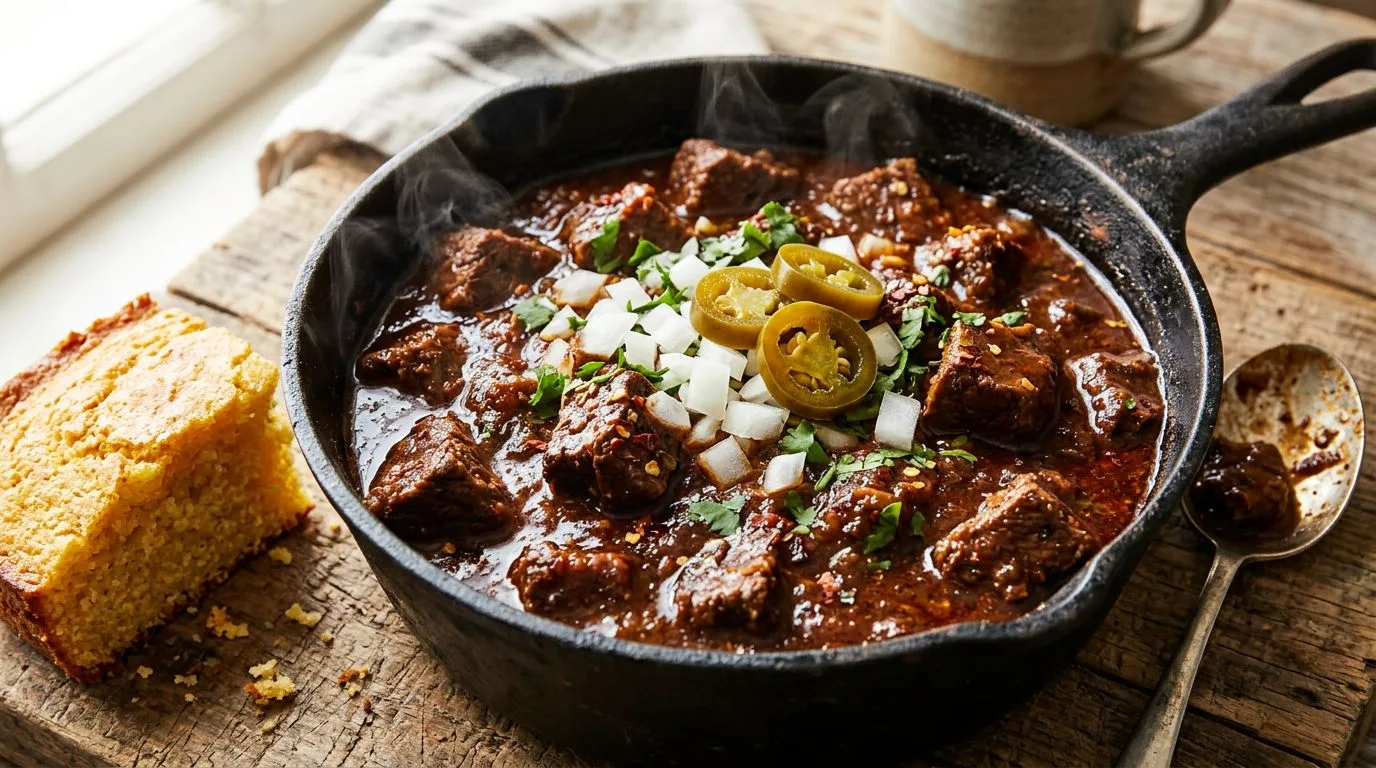
When it comes to authentic Texas chili, there’s one rule that stands above all others: no beans allowed. This Texas no bean chili is a celebration of tender beef, smoky dried chiles, and bold Southwestern spices that come together in a thick, rich bowl of pure comfort. Unlike the bean-heavy versions you might find elsewhere, this traditional Texas-style chili puts the spotlight squarely on the meat and the complex flavors of toasted dried chiles.
I love how this recipe honors the true spirit of Texas red chili—sometimes called chili con carne—where every spoonful delivers deep, earthy heat and melt-in-your-mouth beef. The secret lies in using whole dried ancho and guajillo chiles that you toast and blend into a smooth, flavorful base. Combined with cubed beef chuck that simmers low and slow until fork-tender, this chili develops layers of flavor that simply can’t be rushed. Whether you’re serving it at a game day gathering or enjoying a cozy weeknight dinner, this hearty, authentic-style chili never disappoints.
Why You’ll Love This Texas No Bean Chili
This recipe delivers everything you want in a bowl of authentic Texas chili. The beef chuck becomes incredibly tender after slow simmering, practically falling apart with each bite. I find that using whole dried chiles instead of chili powder creates a more complex, nuanced flavor that you just can’t replicate with pre-ground spices.
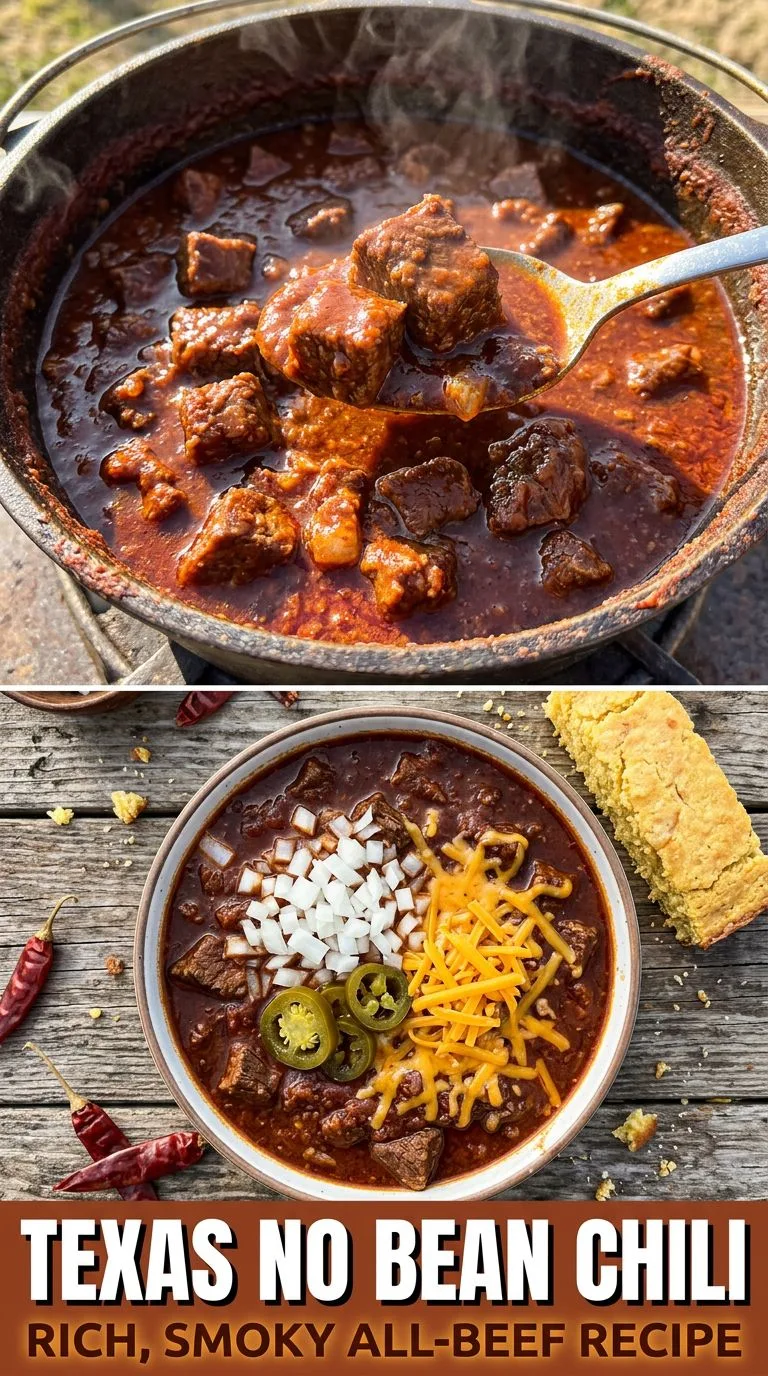
The texture is thick and hearty without being overly soupy, making it perfect for topping with shredded cheese, sour cream, or diced onions. I recommend this recipe for anyone who wants to experience real Texas-style chili—it’s bold, smoky, and packed with authentic Southwestern flavor. Plus, it’s surprisingly straightforward to make, even though it tastes like you spent all day in the kitchen.
Another reason I love this chili is its versatility. It works beautifully as a standalone meal, but it’s also fantastic served over rice, spooned onto hot dogs for chili dogs, or used as a topping for nachos or baked potatoes. The deep, rich flavor profile makes it a crowd-pleaser every single time.
Ingredients and Substitutions
The foundation of this Texas no bean chili starts with quality beef chuck roast, which has the perfect balance of meat and fat to stay tender during the long cooking process. I like to cut it into small cubes rather than using ground beef—this gives you those satisfying chunks of meat in every bite.
The dried ancho and guajillo chiles are what truly set this recipe apart. Ancho chiles bring a mild, slightly sweet heat with hints of dried fruit, while guajillo chiles add a bright, tangy flavor. If you can’t find guajillo chiles, you can substitute with additional ancho chiles or dried New Mexico chiles. I don’t recommend using only chili powder as a replacement, since the whole dried chiles create a much richer base.
For the aromatics, you’ll need a medium onion and fresh garlic cloves. Yellow or white onions work best here. The tomato paste adds depth and helps thicken the chili, while beef broth provides the liquid base. I recommend using low-sodium broth so you can control the salt level yourself.
The spice blend includes ground cumin, smoked paprika, dried oregano, salt, and black pepper. If you don’t have smoked paprika, regular paprika will work, though you’ll lose some of that smoky depth. The apple cider vinegar added at the end brightens all the flavors—don’t skip it! You could substitute with red wine vinegar in a pinch.
Vegetable oil is used for browning the beef, but you can use any neutral cooking oil with a high smoke point, such as canola or avocado oil.
How to Make This Recipe
Making authentic Texas no bean chili requires a few steps, but none of them are difficult. The process begins with preparing your dried chiles, which is easier than you might think. Start by removing the stems and seeds from the ancho and guajillo chiles. I find it helpful to use kitchen scissors for this task.
Toast the chiles in a dry skillet over medium heat for about 30 to 60 seconds per side. You’ll know they’re ready when they become fragrant—just be careful not to burn them, as this will make your chili bitter. Once toasted, soak them in hot water for 15 to 20 minutes until they’re soft and pliable.
While the chiles are soaking, you can prepare your beef. Cut the chuck roast into small, bite-sized cubes, removing any large pieces of excess fat. Heat the vegetable oil in a Dutch oven over medium-high heat and brown the beef in batches. I recommend not overcrowding the pan—this ensures you get a nice sear on the meat rather than steaming it. Each batch should take about 3 to 4 minutes per side.
After the chiles have softened, drain them and blend them with one cup of the beef broth until completely smooth. This chile puree is the flavor backbone of your chili, so blend it well to avoid any chunks.
In the same Dutch oven where you browned the beef, cook the diced onion until softened, about 4 minutes. Add the minced garlic and tomato paste, stirring constantly for about a minute until fragrant. Then pour in the chile puree, the remaining beef broth, and all your spices. Return the browned beef and any accumulated juices to the pot.
Bring everything to a simmer, then reduce the heat to low and cover the pot partially. Let it cook for 2 to 2½ hours, stirring occasionally. The beef should become fork-tender, and the chili will thicken considerably. If it gets too thick during cooking, you can add small amounts of water to reach your desired consistency.
In the final step, stir in the apple cider vinegar and let the chili simmer uncovered for a few more minutes until it reaches your preferred thickness. The vinegar adds a subtle brightness that balances the rich, deep flavors perfectly.
Expert Tips for Best Results
I’ve made this Texas no bean chili many times, and I’ve learned a few tricks that make a real difference. First, don’t rush the browning step. Taking the time to properly sear the beef in batches creates a flavorful fond on the bottom of the pot that adds incredible depth to the finished chili.
When toasting the dried chiles, watch them carefully. They can go from perfectly toasted to burnt in seconds, and burnt chiles will make your entire batch taste bitter. If you’re nervous about this step, you can skip the toasting and just soak the chiles, though you’ll miss out on some of that smoky complexity.
For the smoothest chile puree, I recommend using a high-powered blender rather than a food processor. If your puree seems too thick to blend properly, add a bit more of the soaking liquid. You can also strain the puree through a fine-mesh sieve if you want an ultra-smooth texture, though I usually skip this step.
During the long simmer, resist the urge to stir too frequently. Stirring every 20 to 30 minutes is plenty. This allows the flavors to develop and the beef to become tender without breaking apart too much.
The chili will thicken as it cools, so if you’re making it ahead, you might need to add a splash of broth or water when reheating. I find that the flavor actually improves after a day in the refrigerator, making this an excellent make-ahead meal.
Serving Suggestions
My favorite way to serve this Texas no bean chili is in deep bowls with a variety of toppings on the side. Classic options include shredded sharp cheddar cheese, sour cream, diced white onions, sliced jalapeños, and fresh cilantro. Cornbread or warm flour tortillas make excellent accompaniments for soaking up every last bit of the flavorful sauce.
For a heartier meal, I like to serve this chili over a bed of white rice or alongside crispy tortilla chips. It’s also fantastic as a topping for baked potatoes—just split a baked potato, load it with chili, and add your favorite toppings for a complete meal.
If you’re hosting a chili bar for a party or game day, set out bowls of different toppings and let everyone customize their own bowl. Crushed Fritos, diced avocado, lime wedges, and hot sauce are all popular additions. You might also enjoy pairing this chili with other hearty dishes like Texas Cowboy Stew for a Southwestern-themed dinner spread.
For a complete comfort food meal, consider serving this alongside Grandma’s Stovetop Beef Stew with Thick Gravy at a family gathering where you want to offer variety.
Variations and Substitutions
While this recipe is traditional Texas-style, there are several ways you can customize it to suit your preferences. If you prefer a spicier chili, add one or two dried arbol chiles to the chile blend, or stir in some cayenne pepper or hot sauce at the end.
For a different protein option, you can use cubed pork shoulder instead of beef chuck. The cooking time will be similar, and you’ll get equally tender results. Some people also like to use a combination of beef and pork for added complexity.
If you want to add more vegetables without straying too far from tradition, diced bell peppers can be added along with the onions. Some cooks also like to add a small amount of diced tomatoes, though purists might object.
For a thicker chili, you can add a tablespoon of masa harina (corn flour) during the last 30 minutes of cooking. This is a traditional Texas technique that adds body and a subtle corn flavor.
If you can’t find dried ancho or guajillo chiles, you can make a simplified version using 3 tablespoons of high-quality chili powder, though the flavor won’t be quite as complex. In this case, I recommend adding an extra teaspoon of cumin and a pinch of cocoa powder to add depth.
Storage, Freezing, and Reheating
This Texas no bean chili stores beautifully, making it perfect for meal prep or batch cooking. Once cooled to room temperature, transfer the chili to airtight containers and refrigerate for up to 4 days. I find that the flavors actually deepen and improve after a day or two in the refrigerator.
For freezing, portion the cooled chili into freezer-safe containers or heavy-duty freezer bags, leaving about an inch of headspace for expansion. It will keep well in the freezer for up to 3 months. I like to freeze it in individual portions for easy weeknight meals.
To reheat refrigerated chili, simply warm it in a pot over medium-low heat, stirring occasionally and adding a splash of beef broth or water if it seems too thick. You can also reheat individual portions in the microwave—just cover the bowl and heat in 1-minute intervals, stirring between each interval.
For frozen chili, I recommend thawing it overnight in the refrigerator before reheating. If you’re in a hurry, you can reheat it directly from frozen in a pot over low heat, stirring frequently and adding liquid as needed. This will take longer, but it works in a pinch.
Frequently Asked Questions
Can I make this in a slow cooker?
Yes, you can adapt this recipe for a slow cooker. Brown the beef and sauté the onions and garlic on the stovetop first, then transfer everything to your slow cooker along with the chile puree, broth, and spices. Cook on low for 6 to 8 hours or on high for 3 to 4 hours. Add the vinegar during the last 30 minutes of cooking.
Why is there no chili powder in this recipe?
Traditional Texas chili relies on whole dried chiles rather than chili powder for a more complex, authentic flavor. The process of toasting and blending whole chiles creates a fresher, more nuanced taste than pre-ground powder. That said, if you need to substitute, you can use about 3 tablespoons of high-quality chili powder in place of the dried chiles.
Can I use a different cut of beef?
Beef chuck roast is ideal because it has enough fat and connective tissue to stay moist and tender during the long cooking time. You could use beef brisket or short ribs as alternatives, though cooking times may vary slightly. I don’t recommend lean cuts like sirloin, as they tend to dry out during the extended simmer.
How can I make this chili less spicy?
Ancho and guajillo chiles are relatively mild, so this chili isn’t extremely spicy to begin with. If you’re sensitive to heat, you can use all ancho chiles instead of including guajillo, or reduce the number of chiles and add a bit more tomato paste and beef broth to compensate for the lost volume.
What’s the best way to thicken chili that’s too thin?
If your chili is too thin, simply simmer it uncovered for an additional 15 to 30 minutes to reduce the liquid. You can also stir in a tablespoon of masa harina or cornmeal mixed with a little water, which will thicken it while adding a subtle corn flavor. Another option is to mash some of the beef cubes against the side of the pot to release their starches.
Do I really need to use a Dutch oven?
A Dutch oven is ideal because it distributes heat evenly and retains it well, but you can use any heavy-bottomed pot with a tight-fitting lid. A large, deep skillet or a heavy stockpot will also work. The key is having something that can maintain a steady, low simmer for the extended cooking time.
Texas No Bean Chili
This Texas no bean chili is loaded with tender beef, smoky dried chiles, and bold Southwestern spices. Made without beans, this thick, authentic-style Texas chili delivers deep flavor in every bite.
Prep Time: 30 minutes
Cook Time: 2 hours 30 minutes
Total Time: 3 hours
Servings: 6
Difficulty: Medium
Cuisine: Tex-Mex / Southwestern
Course: Dinner
Ingredients
- 2 lbs beef chuck roast, cut into small cubes
- 3 dried ancho chiles
- 2 dried guajillo chiles
- 1 medium onion, diced
- 4 garlic cloves, minced
- 2 tbsp tomato paste
- 2 cups beef broth
- 1 tsp ground cumin
- 1 tsp smoked paprika
- 1 tsp dried oregano
- 1 tsp salt
- 1/2 tsp black pepper
- 2 tbsp vegetable oil
- 1 tbsp apple cider vinegar
Instructions
- Remove the stems and seeds from 3 dried ancho chiles and 2 dried guajillo chiles. Toast them briefly in a dry skillet for 30–60 seconds per side without burning.
- Soak the chiles in hot water for 15–20 minutes until softened. Blend with 1 cup of the measured beef broth until smooth.
- Heat 2 tbsp vegetable oil in a Dutch oven over medium-high heat. Brown 2 lbs cubed beef chuck in batches for 3–4 minutes per side. Transfer to a plate.
- Add the diced onion and cook for 4 minutes. Stir in 4 minced garlic cloves and 2 tbsp tomato paste, cooking for 1 minute.
- Add the chile puree, remaining 1 cup beef broth, 1 tsp cumin, 1 tsp smoked paprika, 1 tsp oregano, 1 tsp salt, and 1/2 tsp black pepper. Return the beef and accumulated juices.
- Bring to a simmer, cover partially, and cook on low for 2–2 1/2 hours, stirring occasionally, until the beef is fork-tender. Add small amounts of water if necessary.
- Stir in 1 tbsp apple cider vinegar, simmer uncovered until thick, and serve.
Recipe Notes
- The chili will thicken as it cools. Add a splash of broth when reheating if needed.
- For a spicier version, add 1–2 dried arbol chiles to the chile blend.
- This chili tastes even better the next day after the flavors have had time to meld.
- Serve with shredded cheese, sour cream, diced onions, and cornbread for a complete meal.
- If you can’t find guajillo chiles, substitute with additional ancho chiles or dried New Mexico chiles.
Nutrition Information (Per Serving – Estimated)
Calories: 385
Carbohydrates: 12g
Protein: 34g
Fat: 22g
Saturated Fat: 7g
Fiber: 3g
Sugar: 4g
Sodium: 680mg
Nutrition values are estimates only. Actual values may vary based on specific ingredients used and portion sizes.
