
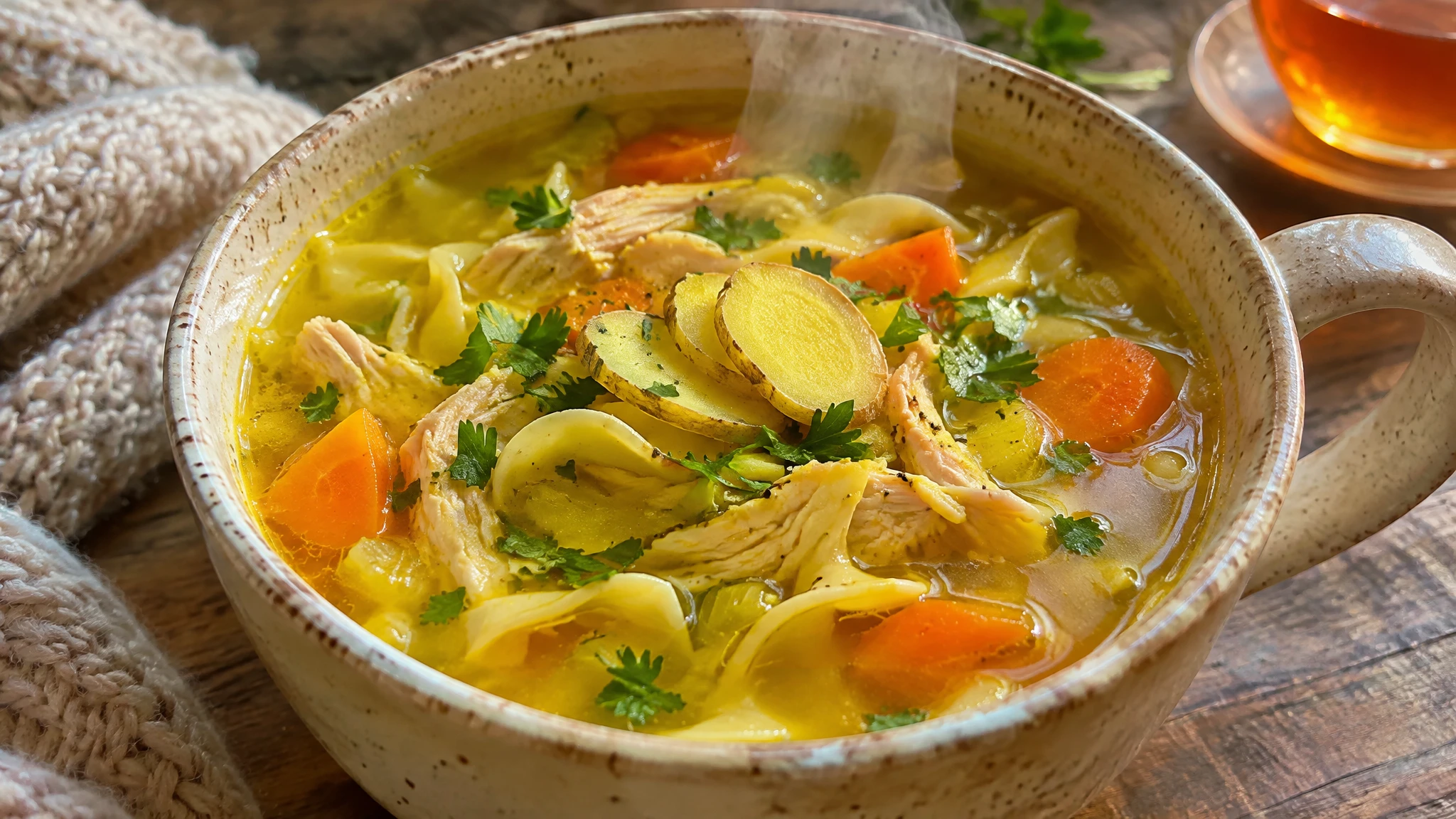
When you’re feeling under the weather or simply craving something warm and nourishing, nothing beats a steaming bowl of homemade chicken noodle soup. This feel-better chicken noodle soup takes the classic comfort food to the next level by incorporating anti-inflammatory turmeric and immune-boosting ginger. I love how these warming spices transform traditional chicken noodle soup into something that not only tastes incredible but also provides extra wellness benefits when you need them most.
What makes this recipe special is the perfect balance of familiar comfort and healing ingredients. The golden hue from turmeric, the gentle warmth from fresh ginger, and the bright finish from lemon juice create layers of flavor that make every spoonful satisfying. I find that this soup works beautifully whether you’re nursing a cold, recovering from a long day, or simply want a nutritious dinner that the whole family will enjoy. It comes together in under 40 minutes, making it accessible even when you’re not feeling your best.
Why You’ll Love This Feel-Better Chicken Noodle Soup
This isn’t just another chicken soup recipe—it’s a thoughtfully crafted bowl of comfort with real wellness benefits. The combination of turmeric and ginger provides natural anti-inflammatory properties that have been used for centuries in traditional medicine. I recommend this soup when you’re feeling run down because it delivers both nourishment and comfort in one simple dish.
The recipe is incredibly practical for busy households. You can use leftover rotisserie chicken or any cooked chicken you have on hand, which significantly cuts down on preparation time. The vegetables cook quickly, and the egg noodles become perfectly tender in just minutes. I love that this soup doesn’t require hours of simmering to develop deep flavor—the aromatic combination of garlic, ginger, and turmeric creates complexity in a fraction of the time.
Another reason this soup stands out is its versatility. While it’s perfect for sick days, it’s equally wonderful as a regular weeknight dinner. The bright, fresh flavors from lemon juice and parsley keep it from feeling heavy, and the turmeric gives it a beautiful golden color that makes it visually appealing. It’s the kind of recipe that becomes a household staple once you try it.
Ingredients and Substitutions
The ingredient list for this feel-better chicken noodle soup is straightforward and uses items you likely already have in your kitchen. The cooked shredded chicken forms the protein base—I often use leftover roasted chicken or store-bought rotissary chicken to save time. If you prefer, you can also poach chicken breasts directly in the broth, though this will add about 20 minutes to your cooking time.
The vegetables—carrots, celery, and onion—create the classic mirepoix base that gives chicken soup its familiar, comforting flavor. I like to slice the carrots and celery into uniform pieces so they cook evenly. The yellow onion adds sweetness and depth, but you can substitute white onion if that’s what you have available.
Fresh ginger and garlic are essential for this recipe’s healing properties and aromatic quality. I strongly recommend using fresh ginger rather than ground, as it provides a brighter, more vibrant flavor. The ground turmeric adds that distinctive golden color and earthy warmth. If you have fresh turmeric root, you can substitute about one tablespoon of grated fresh turmeric for the ground version.
For the noodles, traditional egg noodles work beautifully and cook quickly. If you need a gluten-free option, rice noodles or gluten-free pasta work well—just adjust the cooking time according to package directions. The chicken broth should be good quality, as it forms the foundation of your soup’s flavor. I prefer low-sodium broth so I can control the salt level myself.
The finishing touches—lemon juice and fresh parsley—are what elevate this soup from good to exceptional. The lemon juice adds brightness that balances the earthy turmeric, while the parsley provides freshness and color. If you don’t have parsley, fresh cilantro or dill make excellent alternatives.
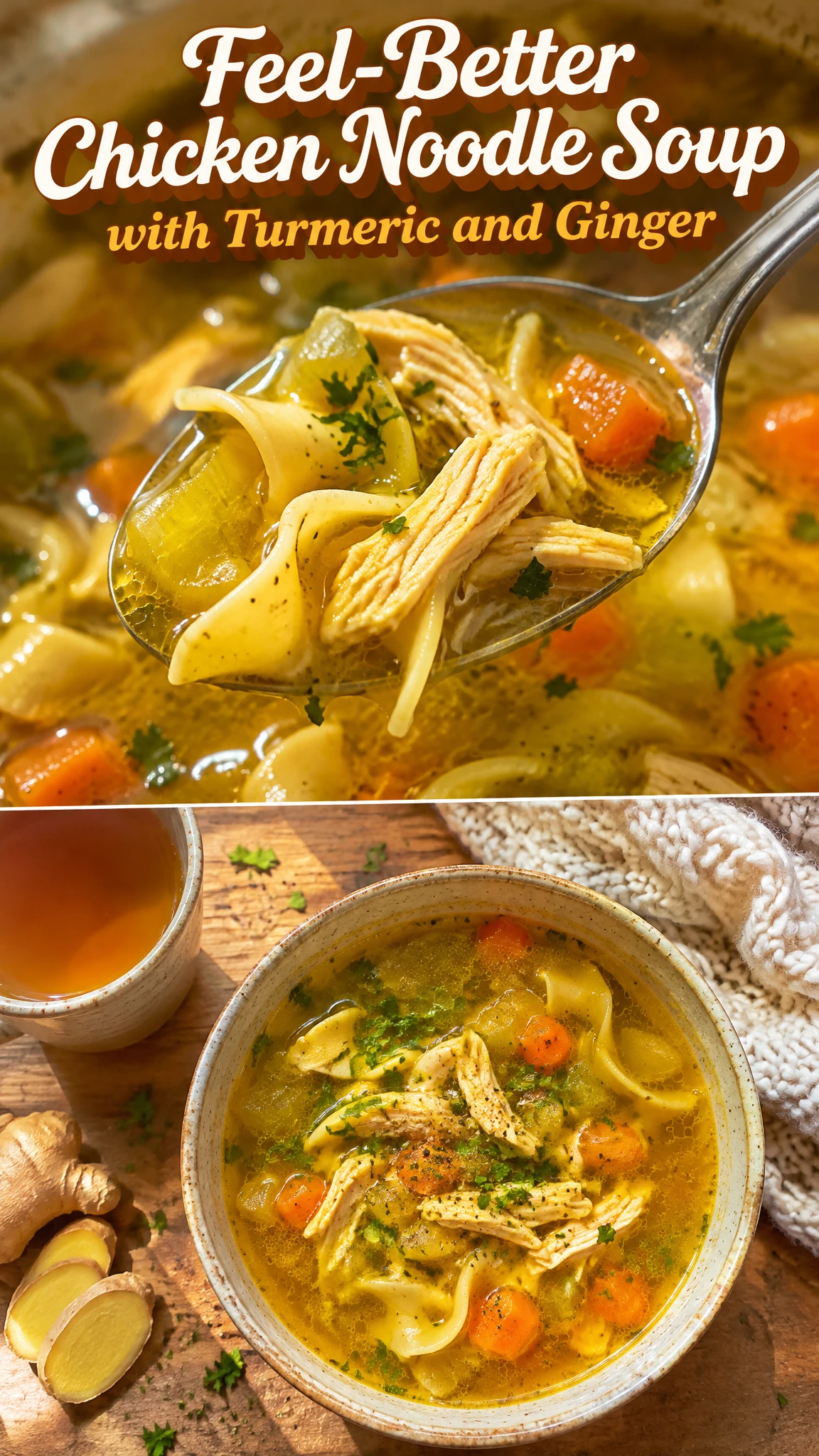
How to Make Feel-Better Chicken Noodle Soup
Making this soothing soup is remarkably straightforward, even when you’re not feeling your best. The process begins with preparing your ingredients—dicing the onion, slicing the carrots and celery, grating the ginger, mincing the garlic, and shredding your cooked chicken. I find that doing all this prep work first makes the actual cooking process smooth and stress-free.
Start by heating olive oil in a large pot over medium heat. Once the oil shimmers, add your diced onion, sliced carrots, and celery. Sauté these vegetables for about five minutes, stirring occasionally, until they begin to soften and the onion becomes translucent. This initial sautéing step builds flavor and creates an aromatic base for your soup.
Next comes the magic moment when you add the garlic, ginger, turmeric, and black pepper. Stir these aromatics into the vegetables and cook for just one minute. You’ll know it’s ready when the kitchen fills with an incredible fragrance. Be careful not to let the garlic burn—it should be fragrant but not browned.
Pour in the chicken broth and bring everything to a boil. Once boiling, reduce the heat and let the soup simmer for about 10 minutes. This allows the vegetables to soften further and the flavors to meld together. The broth will take on a beautiful golden color from the turmeric during this time.
Add the dry egg noodles directly to the simmering broth and cook for 6 to 8 minutes, or until the noodles reach your desired tenderness. I like mine just tender with a slight bite. Stir occasionally to prevent the noodles from sticking together or to the bottom of the pot.
Once the noodles are cooked, stir in your cooked shredded chicken and let it simmer for about three minutes to heat through completely. Remove the pot from the heat and stir in the lemon juice and chopped fresh parsley. Taste and adjust the seasoning if needed—you might want to add a pinch of salt depending on the saltiness of your broth.
Expert Tips for Best Results
To get the most out of this feel-better chicken noodle soup, I recommend using fresh ginger rather than ground. The flavor difference is significant, and fresh ginger provides that zingy, warming quality that makes this soup special. When grating ginger, use a microplane or fine grater for the best texture—you want tiny pieces that distribute evenly throughout the soup.
Don’t skip the step of sautéing the vegetables before adding the broth. This initial cooking develops deeper flavors and creates a more complex, satisfying soup. I find that taking just five minutes for this step makes a noticeable difference in the final result.
Be mindful of your noodle cooking time. Egg noodles can go from perfectly tender to mushy quickly, so start checking them at the six-minute mark. If you’re planning to store leftovers, consider slightly undercooking the noodles, as they’ll continue to soften as they sit in the hot broth.
The lemon juice added at the end is crucial—it brightens all the flavors and balances the earthy turmeric. I always add it off the heat to preserve its fresh, citrusy quality. Start with two tablespoons and add more if you prefer a brighter flavor.
If you’re making this soup specifically for someone who’s ill, you might want to increase the ginger slightly for extra immune support. You can also add a pinch of cayenne pepper for additional warmth and congestion relief, though this is optional and depends on personal preference.
Serving Suggestions
This feel-better chicken noodle soup is wonderfully satisfying on its own, but there are several ways to enhance the experience. I love serving it with crusty bread or warm dinner rolls for dipping—the combination of tender soup and crusty bread is pure comfort. Saltine crackers are another classic pairing that works beautifully.
For a more substantial meal, consider serving the soup alongside a simple green salad with a light vinaigrette. The fresh, crisp salad provides a nice contrast to the warm, soothing soup. A grilled cheese sandwich also makes an excellent companion, creating a nostalgic, comforting meal.
When serving, I like to garnish each bowl with an extra sprinkle of fresh parsley and a lemon wedge on the side. This allows everyone to adjust the brightness to their preference. A small drizzle of extra virgin olive oil on top adds richness and makes the presentation more appealing.
If you’re serving this to someone who’s under the weather, consider presenting it in their favorite mug or bowl with a cozy blanket nearby. The ritual of comfort food is just as important as the food itself. You might also want to have hot tea, honey, and extra lemon available to complete the feel-better experience.
Variations and Substitutions
This recipe is wonderfully adaptable to different dietary needs and preferences. For a gluten-free version, simply swap the egg noodles for rice noodles, gluten-free pasta, or even spiralized zucchini noodles added at the very end. If you’re following a low-carb diet, you can omit the noodles entirely and add extra vegetables like zucchini, mushrooms, or spinach.
To make this soup even more vegetable-forward, I recommend adding other nutritious ingredients. Baby spinach or kale can be stirred in during the last few minutes of cooking. Mushrooms add an earthy depth and can be sautéed with the initial vegetables. Peas or green beans also work well and add color and nutrition.
If you want to boost the protein content, you can add a soft-boiled egg to each serving or increase the amount of chicken. For a richer, more substantial soup, add a splash of coconut milk or heavy cream at the end—this creates a creamier texture that some people find especially comforting when they’re not feeling well.
The spice profile can be adjusted to your taste. If you love ginger, feel free to increase it to two tablespoons. For extra warmth and immune support, add a pinch of cayenne pepper or red pepper flakes. Fresh herbs like thyme or rosemary can be added during the simmering stage for additional flavor complexity.
For those who enjoy more citrus flavor, try adding some lemon zest along with the juice, or experiment with lime instead of lemon for a different bright note. You can also finish the soup with a drizzle of toasted sesame oil for an Asian-inspired twist that complements the ginger beautifully.
Storage, Freezing, and Reheating
This feel-better chicken noodle soup stores beautifully, making it perfect for meal prep or having on hand when you need it most. I recommend storing the soup in airtight containers in the refrigerator for up to four days. The flavors actually deepen and improve after a day, making leftovers especially delicious.
One important note about storage: the noodles will continue to absorb liquid as the soup sits. If you’re planning to make this ahead or want the best leftover experience, consider cooking and storing the noodles separately. When you’re ready to serve, simply reheat the soup and add the noodles to individual bowls. This keeps the noodles from becoming overly soft and ensures the soup maintains its proper consistency.
For freezing, this soup works well for up to three months. However, I strongly recommend freezing it without the noodles, as egg noodles don’t freeze and reheat well—they tend to become mushy. Freeze the soup base in portion-sized containers, then cook fresh noodles when you’re ready to serve. This approach gives you the convenience of frozen soup with the quality of freshly cooked noodles.
To reheat refrigerated soup, simply warm it gently on the stovetop over medium heat, stirring occasionally until heated through. You may need to add a splash of chicken broth or water to thin it out, as the noodles will have absorbed some liquid. For frozen soup, thaw it overnight in the refrigerator, then reheat on the stovetop. You can also reheat individual portions in the microwave, stirring every minute or so until hot.
If you’re making this soup for someone who’s sick, consider freezing it in single-serving portions. This makes it easy to defrost and heat just what’s needed without having to handle a large batch. Label your containers with the date and contents so you can easily identify them later.
Frequently Asked Questions
Can I use chicken thighs instead of chicken breast?
Absolutely! Chicken thighs actually work wonderfully in this soup. They tend to be more flavorful and stay moist even with extended cooking. Whether you use breast meat or thigh meat is entirely up to your preference—both work equally well in this recipe.
Can I make this soup in a slow cooker?
Yes, you can adapt this recipe for a slow cooker. Sauté the vegetables and aromatics on the stovetop first for best flavor, then transfer everything except the noodles and finishing ingredients to your slow cooker with the broth and chicken. Cook on low for 4-6 hours. Add the noodles during the last 30 minutes of cooking, then stir in the lemon juice and parsley before serving.
Is this soup spicy?
No, this soup is not spicy. The ginger provides warmth but not heat, and the turmeric is earthy rather than spicy. The overall flavor profile is comforting and soothing. If you want to add heat, you can include a pinch of cayenne pepper or red pepper flakes.
Can I use ground ginger instead of fresh?
While fresh ginger is preferred for its bright, vibrant flavor, you can substitute ground ginger in a pinch. Use about 1 teaspoon of ground ginger in place of the tablespoon of fresh. Keep in mind that the flavor will be slightly different—less bright and more concentrated.
What if I don’t have turmeric?
Turmeric is a key ingredient in this recipe for both flavor and color, but if you don’t have it, you can still make a delicious chicken noodle soup. The soup will be lighter in color and missing that distinctive earthy note, but it will still be comforting and flavorful. You might consider adding a bit more ginger to compensate for the missing warmth. If you’re interested in similar healing soups, you might enjoy this ginger garlic chicken soup recipe that also focuses on immune-boosting ingredients.
Can I add other vegetables?
Definitely! This soup is very flexible. Mushrooms, zucchini, green beans, peas, and leafy greens like spinach or kale all work beautifully. Add heartier vegetables like mushrooms with the carrots and celery, and stir in quick-cooking vegetables like spinach during the last few minutes of cooking.
How can I make this soup more filling?
To make the soup more substantial, you can increase the amount of chicken and noodles, add beans or lentils, or include additional vegetables. Some people like to add diced potatoes for extra heartiness. You can also serve it with substantial sides like crusty bread or a grilled cheese sandwich. For another satisfying chicken soup option, check out this crockpot chicken noodle soup that’s perfect for busy days.
Feel-Better Chicken Noodle Soup with Turmeric and Ginger
A comforting, healing chicken noodle soup infused with anti-inflammatory turmeric and immune-boosting ginger. This soothing homemade soup combines tender vegetables, egg noodles, and shredded chicken in a golden, aromatic broth finished with bright lemon juice and fresh parsley.
Prep Time: 15 minutes
Cook Time: 25 minutes
Total Time: 40 minutes
Servings: 6 servings
Difficulty: Easy
Cuisine: American
Course: Dinner
Ingredients
- 2 cups cooked shredded chicken
- 2 cups dry egg noodles
- 2 medium carrots, sliced
- 2 celery stalks, sliced
- 1 medium yellow onion, diced
- 3 garlic cloves, minced
- 1 tablespoon fresh ginger, grated
- 1 teaspoon ground turmeric
- 6 cups chicken broth
- 1 tablespoon olive oil
- 2 tablespoons lemon juice
- 1/4 teaspoon black pepper
- 2 tablespoons fresh parsley, chopped
Instructions
- Dice the onion, slice the carrots and celery, grate the ginger, mince the garlic, and shred the cooked chicken. Set all ingredients aside.
- Heat olive oil in a large pot over medium heat. Add the diced onion, sliced carrots, and sliced celery. Sauté for 5 minutes, stirring occasionally, until the vegetables begin to soften and the onion becomes translucent.
- Stir in the minced garlic, grated ginger, ground turmeric, and black pepper. Cook for 1 minute, stirring constantly, until the mixture becomes very aromatic.
- Pour in the chicken broth and bring the mixture to a boil over high heat. Once boiling, reduce the heat to medium-low and simmer for 10 minutes until the vegetables begin to soften.
- Add the dry egg noodles to the simmering soup. Cook for 6 to 8 minutes, stirring occasionally, until the noodles are tender but not mushy.
- Stir in the cooked shredded chicken and simmer for 3 minutes until the chicken is thoroughly heated through.
- Remove the pot from heat. Stir in the lemon juice and chopped fresh parsley. Taste and adjust seasoning if needed. Serve warm.
Recipe Notes
- Use rotisserie chicken or any leftover cooked chicken to save time.
- Fresh ginger provides the best flavor, but you can substitute 1 teaspoon ground ginger if needed.
- For gluten-free soup, use rice noodles or gluten-free pasta and adjust cooking time according to package directions.
- The noodles will continue to absorb liquid as the soup sits. Add extra broth when reheating if needed.
- For best leftover quality, consider storing the noodles separately and adding them to individual portions when serving.
- Adjust the amount of ginger and turmeric to your taste preferences—you can increase both for more pronounced flavor.
- The lemon juice is added at the end to preserve its bright, fresh flavor.
Nutrition Information (Per Serving, Estimated)
Calories: 245
Carbohydrates: 22g
Protein: 20g
Fat: 8g
Saturated Fat: 2g
Fiber: 2g
Sugar: 3g
Sodium: 680mg
Nutrition information is estimated and will vary based on specific ingredients used and portion sizes.
