
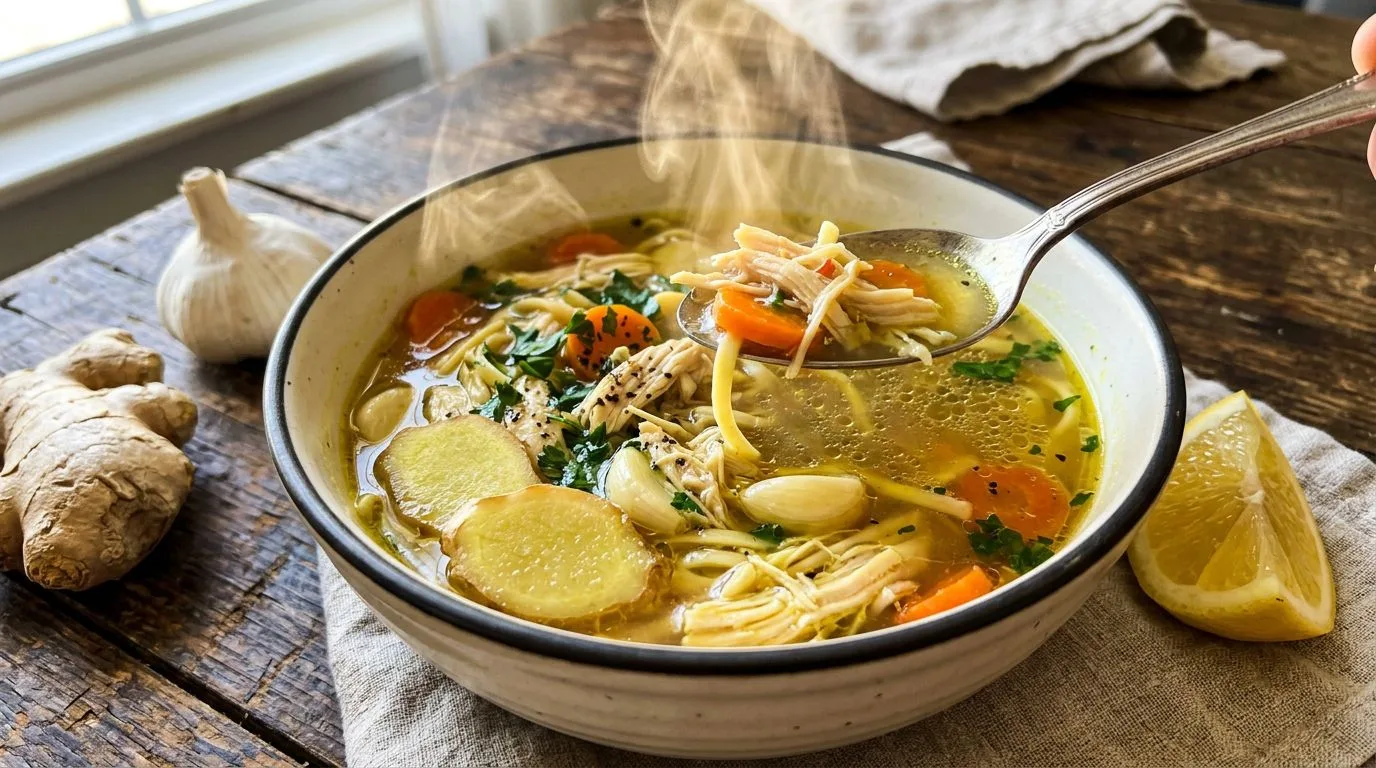
When I’m feeling under the weather or just craving something deeply nourishing, I turn to penicillin soup. This ginger garlic chicken soup is exactly what its name suggests—a healing, restorative bowl packed with immune-supporting ingredients like fresh ginger, garlic, turmeric, and tender chicken. The aromatic broth is warming and comforting, while the bright finish of lemon juice and fresh parsley adds a refreshing lift that makes every spoonful satisfying.
What makes this soup special is the generous amount of ginger and garlic that infuses the broth with bold, aromatic flavor. Unlike traditional chicken noodle soup, penicillin soup focuses on ingredients known for their wellness properties, creating a bowl that tastes as good as it makes you feel. I love how the turmeric adds an earthy depth and beautiful golden color, while the chicken thighs stay incredibly tender and flavorful throughout the cooking process.
This recipe comes together in about 40 minutes from start to finish, making it perfect for busy weeknights or whenever you need a comforting meal quickly. The combination of vegetables, protein, and aromatic spices creates a complete, satisfying dinner that the whole family will enjoy.
Why You’ll Love This Penicillin Soup
This ginger garlic chicken soup has become one of my go-to recipes for good reason. The flavor is incredibly aromatic and complex, thanks to the combination of fresh ginger, garlic, and turmeric that creates a warming, slightly spicy base. I find that the generous amount of these ingredients gives the soup a bold character that sets it apart from ordinary chicken soup.
The recipe is wonderfully straightforward and doesn’t require any special techniques or hard-to-find ingredients. Everything comes together in one pot, which means minimal cleanup—always a win in my book. I appreciate how the chicken thighs cook directly in the broth, infusing it with rich flavor while staying moist and tender.
This soup is also incredibly versatile. You can enjoy it as-is for a lighter meal, or serve it over rice or noodles for something more substantial. The leftovers actually taste even better the next day as the flavors continue to develop, making it perfect for meal prep. Plus, knowing that every ingredient serves a purpose—from the immune-supporting garlic to the anti-inflammatory turmeric—makes this soup feel like true nourishment.
Ingredients and Substitutions
The ingredient list for penicillin soup is simple but purposeful. I recommend using boneless skinless chicken thighs rather than chicken breasts because they stay much more tender and flavorful during the simmering process. If you only have chicken breasts on hand, they’ll work, but watch the cooking time carefully to avoid overcooking.
Fresh ginger is essential to this recipe—I don’t recommend substituting dried ginger here. The fresh ginger provides a bright, spicy warmth that defines the soup’s character. Similarly, I always use fresh garlic rather than pre-minced or powdered. Eight cloves might seem like a lot, but the garlic mellows as it cooks and creates a wonderful aromatic base.
For the vegetables, I use a classic mirepoix base of onion, carrots, and celery. These provide sweetness, texture, and depth to the broth. You can adjust the quantities slightly based on what you have available, but I find this ratio works perfectly. The turmeric adds both color and earthy flavor—if you don’t have ground turmeric, you could use about one tablespoon of freshly grated turmeric root instead.
I prefer low-sodium chicken broth because it allows me to control the salt level in the finished soup. If you’re using regular chicken broth, reduce or omit the added salt. Homemade chicken stock works beautifully here if you have it on hand. The lemon juice at the end is crucial—it brightens all the flavors and adds a fresh, tangy note that balances the richness of the broth.

How to Make Penicillin Soup
Making this ginger garlic chicken soup is a straightforward process that builds layers of flavor. I start by heating olive oil in a large pot or Dutch oven over medium heat. Once the oil is shimmering, I add the diced onion, sliced carrots, and sliced celery. I let these vegetables cook for 6 to 8 minutes, stirring occasionally, until they begin to soften and the onion becomes translucent. This step builds the aromatic foundation of the soup.
Next comes the flavor powerhouse: I add the minced garlic, freshly grated ginger, and ground turmeric to the pot. I stir constantly for about one minute—just until the mixture becomes incredibly fragrant. This brief cooking time is important because it releases the essential oils and flavors without burning the garlic or ginger.
Then I pour in the chicken broth and add the chicken thighs, bay leaf, salt, and black pepper. I bring everything to a gentle simmer, then reduce the heat and partially cover the pot. The soup should bubble gently but not boil vigorously. I let it cook for 20 to 25 minutes, until the vegetables are tender and the chicken reaches an internal temperature of 165°F (74°C).
Once the chicken is cooked through, I carefully transfer the thighs to a cutting board and use two forks to shred them into bite-sized pieces. I return the shredded chicken to the pot, remove and discard the bay leaf, and stir in the fresh lemon juice and chopped parsley. Finally, I taste the soup and adjust the seasoning with additional salt and pepper as needed before serving hot.
Expert Tips for Best Results
I’ve made this penicillin soup many times, and I’ve learned a few tricks that ensure perfect results every time. First, don’t rush the initial vegetable sauté. Allowing the onion, carrots, and celery to cook until they’re just beginning to soften creates a sweeter, more developed flavor base for the entire soup.
When adding the garlic and ginger, watch them carefully and stir constantly. These aromatics can burn quickly, which would create a bitter taste. One minute is truly all you need—as soon as you smell that wonderful fragrance, it’s time to add the broth.
I recommend using a meat thermometer to check the chicken for doneness rather than relying solely on cooking time. Chicken thighs should reach 165°F (74°C) in the thickest part. Overcooking will make them dry and stringy, while undercooking is a food safety concern.
For the best texture, shred the chicken while it’s still warm. It pulls apart much more easily than when it’s cooled. I like to shred it into fairly small, bite-sized pieces so every spoonful of soup has some chicken in it.
Don’t skip the lemon juice at the end—it’s what transforms this from a good soup to a great one. The acidity brightens all the other flavors and adds a fresh dimension that balances the richness. I always add it off the heat to preserve the bright, fresh lemon flavor.
Serving Suggestions
I love serving penicillin soup as a complete meal on its own, accompanied by crusty bread or warm dinner rolls for dipping. The soup is hearty enough to be satisfying without any additions, especially when you’re feeling under the weather and want something light but nourishing.
For a more substantial dinner, I sometimes serve the soup over cooked rice, quinoa, or egg noodles. The grains soak up the flavorful broth and make the meal even more filling. If you’re looking for other comforting soup options, you might also enjoy this slow cooker chicken and white bean soup, which offers a different but equally satisfying flavor profile.
For garnishes, I like to offer additional fresh parsley, lemon wedges, and freshly cracked black pepper at the table. Some people enjoy a sprinkle of red pepper flakes for extra heat, or a drizzle of good quality olive oil for richness. Fresh herbs like cilantro or dill also work beautifully if you want to change up the flavor.
This soup pairs wonderfully with a simple green salad dressed with a light vinaigrette. The fresh, crisp salad provides a nice textural contrast to the warm, comforting soup. If you’re in the mood for more chicken-based comfort food, this creamy chicken and corn chowder is another excellent choice for cozy dinners.
Variations and Substitutions
One of the things I appreciate about this recipe is how adaptable it is to different preferences and dietary needs. For a lower-carb version, you can add more vegetables like zucchini, spinach, or kale instead of serving it over grains. I sometimes stir in a few handfuls of baby spinach during the last few minutes of cooking for extra nutrients.
If you want to make this soup spicier, add a pinch of red pepper flakes when you sauté the garlic and ginger, or stir in some sriracha or hot sauce at the end. Fresh sliced jalapeños also work well if you prefer a fresher heat.
For a vegetarian version, you can substitute the chicken with firm tofu or chickpeas and use vegetable broth instead of chicken broth. The ginger, garlic, and turmeric still create a wonderfully flavorful and healing soup without the meat. You could also add mushrooms for an earthy, umami-rich element.
I’ve also made this with bone-in chicken thighs for even more flavor. Just increase the cooking time slightly and remove the bones before shredding the meat. The bones add extra richness to the broth, though they do make the recipe slightly more involved.
Some people like to add noodles or rice directly to the soup. If you’re doing this, add them during the last 10-15 minutes of cooking (for rice) or the last 8-10 minutes (for noodles), and you may need to add a bit more broth as they absorb liquid.
Storage, Freezing, and Reheating
Penicillin soup stores beautifully, which makes it perfect for meal prep or making ahead. I let the soup cool completely before transferring it to airtight containers. It will keep in the refrigerator for up to 4 days. I find that the flavors actually deepen and improve after a day or two, making leftovers even more delicious than the first serving.
This soup also freezes exceptionally well. I portion it into freezer-safe containers or heavy-duty freezer bags, leaving about an inch of headspace for expansion. Properly stored, the soup will maintain its quality in the freezer for up to 3 months. I like to freeze it in individual portions so I can thaw just what I need.
To reheat refrigerated soup, I simply warm it in a pot over medium heat, stirring occasionally, until it’s heated through. You may need to add a splash of broth or water if the soup has thickened during storage. For frozen soup, I recommend thawing it overnight in the refrigerator before reheating, though you can also reheat it directly from frozen over low heat—just allow extra time and stir frequently to prevent scorching.
If you’re reheating in the microwave, use a microwave-safe bowl and heat in 1-2 minute intervals, stirring between each interval, until the soup is steaming hot throughout. I always taste and adjust the seasoning after reheating, as flavors can mellow slightly during storage. A fresh squeeze of lemon juice can really brighten up reheated soup.
Frequently Asked Questions
Can I use chicken breasts instead of thighs?
Yes, you can substitute boneless skinless chicken breasts for the thighs. However, I recommend reducing the cooking time slightly and checking for doneness at around 15-18 minutes, as breasts cook faster and can become dry if overcooked. Thighs are more forgiving and stay moister, which is why I prefer them for this recipe.
Can I make this soup in a slow cooker?
Absolutely. Sauté the vegetables, garlic, ginger, and turmeric in a skillet first, then transfer everything to your slow cooker along with the broth, chicken, and seasonings. Cook on low for 4-6 hours or high for 2-3 hours. Shred the chicken, then stir in the lemon juice and parsley before serving.
How can I make the soup thicker?
If you prefer a thicker soup, you can mash some of the cooked vegetables against the side of the pot to release their starches, or add a slurry made from 2 tablespoons of cornstarch mixed with 2 tablespoons of cold water. You could also add cooked rice or small pasta, which will absorb some of the broth and create a heartier texture.
Is fresh ginger really necessary?
I strongly recommend using fresh ginger for this recipe. The fresh ginger provides a bright, spicy warmth that’s essential to the soup’s character. Ground dried ginger has a different, more concentrated flavor that doesn’t work as well here. Fresh ginger is widely available in most grocery stores and keeps well in the refrigerator or freezer.
Can I add other vegetables?
Yes, this soup is very flexible. I’ve successfully added diced potatoes, parsnips, zucchini, green beans, and leafy greens like spinach or kale. Just adjust the cooking time based on what you’re adding—heartier vegetables like potatoes should go in with the other vegetables at the beginning, while delicate greens can be stirred in during the last few minutes.
Why is it called penicillin soup?
The name “penicillin soup” comes from the soup’s reputation as a healing remedy, similar to how penicillin is used as medicine. The combination of garlic, ginger, and chicken broth has long been valued for its immune-supporting properties, making it a go-to recipe when you’re feeling under the weather or want something nourishing and restorative.
Penicillin Soup (Ginger Garlic Chicken Soup)
This warming penicillin soup combines tender chicken, fresh ginger, garlic, and turmeric in an aromatic broth with vegetables. Finished with bright lemon juice and fresh parsley, this healing soup is perfect for cold days or whenever you need comforting nourishment.
- Prep Time: 15 minutes
- Cook Time: 30 minutes
- Total Time: 45 minutes
- Servings: 6
- Difficulty: Easy
- Cuisine: American
- Course: Dinner
Ingredients
- 1 tablespoon olive oil
- 1 medium onion, diced
- 3 medium carrots, sliced
- 2 celery stalks, sliced
- 8 garlic cloves, minced
- 2 tablespoons freshly grated ginger
- 1 teaspoon ground turmeric
- 8 cups low-sodium chicken broth
- 1 1/2 lb boneless skinless chicken thighs
- 1 bay leaf
- 1/2 teaspoon salt, plus more to taste
- 1/4 teaspoon black pepper
- 2 tablespoons lemon juice
- 1/4 cup chopped fresh parsley
Instructions
- Heat the olive oil in a large pot or Dutch oven over medium heat. Add the diced onion, sliced carrots, and sliced celery. Cook for 6 to 8 minutes, stirring occasionally, until the vegetables begin to soften and the onion becomes translucent.
- Add the minced garlic, freshly grated ginger, and ground turmeric to the pot. Stir constantly for 1 minute until the mixture becomes very fragrant.
- Pour in the chicken broth. Add the chicken thighs, bay leaf, salt, and black pepper. Stir to combine.
- Bring the soup to a gentle simmer, then reduce the heat to maintain a gentle bubble. Partially cover the pot and cook for 20 to 25 minutes, until the vegetables are tender and the chicken reaches an internal temperature of 165°F (74°C).
- Carefully transfer the chicken thighs to a cutting board. Use two forks to shred the chicken into bite-sized pieces, then return the shredded chicken to the pot.
- Remove and discard the bay leaf. Stir in the lemon juice and chopped fresh parsley.
- Taste the soup and adjust the seasoning with additional salt and pepper as needed. Serve hot.
Recipe Notes
- For best results, use fresh ginger rather than ground dried ginger. The fresh ginger provides essential bright, spicy flavor.
- Chicken thighs stay more tender and flavorful than chicken breasts, but breasts can be substituted with reduced cooking time.
- Don’t skip the lemon juice at the end—it brightens all the flavors and is essential to the soup’s character.
- The soup thickens slightly as it sits. Add a splash of broth or water when reheating if needed.
- For a spicier version, add red pepper flakes with the garlic and ginger.
Nutrition Information (per serving, estimated)
- Calories: 245
- Carbohydrates: 12g
- Protein: 28g
- Fat: 9g
- Saturated Fat: 2g
- Fiber: 2g
- Sugar: 5g
- Sodium: 680mg
Nutrition information is estimated and will vary based on specific ingredients used.
