
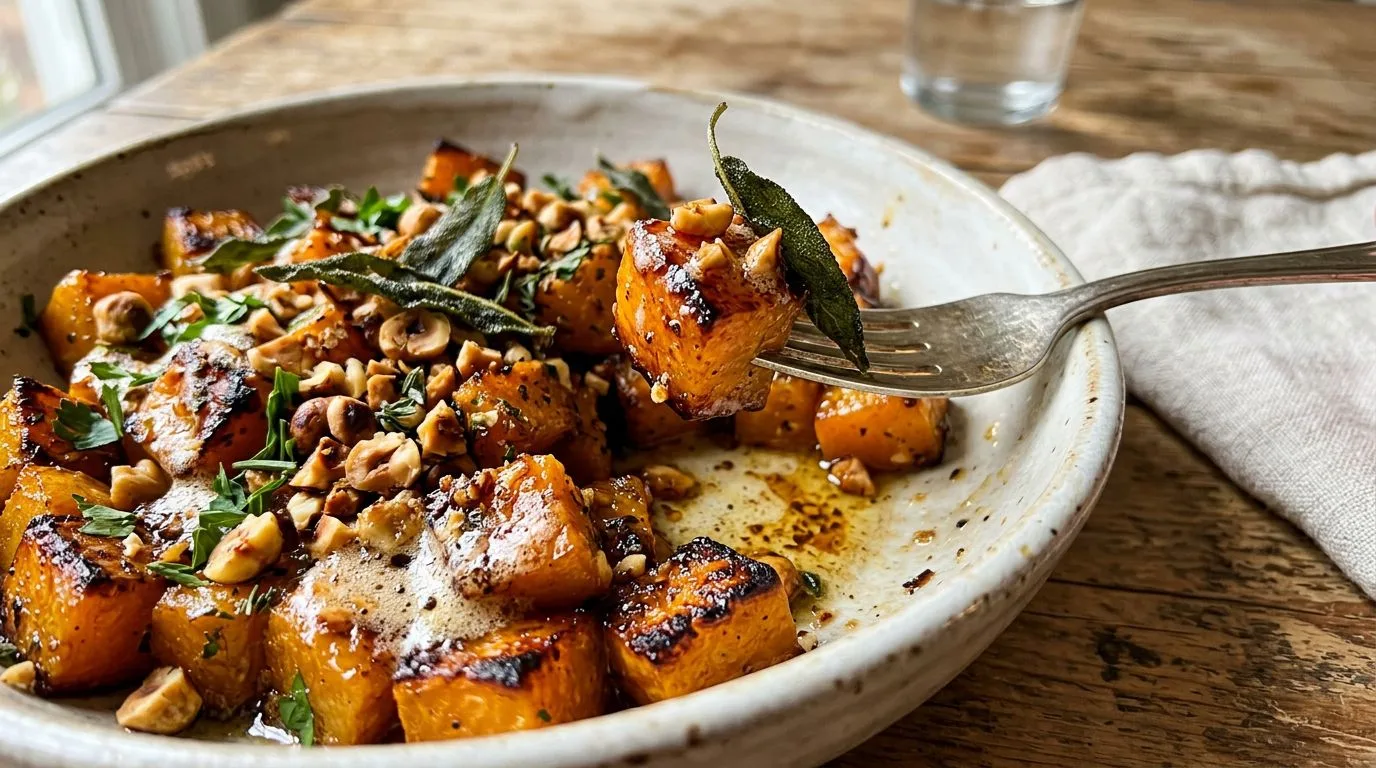
When fall arrives and butternut squash fills the farmers’ markets, I find myself reaching for this simple yet elegant side dish again and again. This butternut squash with brown butter hazelnuts combines just five ingredients to create something truly special—tender, caramelized squash cubes drizzled with nutty brown butter and topped with crunchy toasted hazelnuts. The maple syrup adds a subtle sweetness that complements the squash’s natural flavor, while fresh sage brings an earthy, aromatic note that ties everything together beautifully.
What I love most about this recipe is how it delivers restaurant-quality results with minimal effort. The squash roasts until golden and caramelized at the edges, developing deep, sweet flavors. Meanwhile, the brown butter—one of my favorite cooking techniques—transforms ordinary butter into something magical with its nutty, complex aroma. Combined with toasted hazelnuts and a hint of sage, this dish feels luxurious enough for Thanksgiving dinner yet simple enough for a weeknight meal.
Whether you’re planning your holiday menu or simply looking for a delicious way to enjoy seasonal produce, this five-ingredient butternut squash recipe is one you’ll return to throughout the fall and winter months. It’s proof that you don’t need a long ingredient list to create something memorable.
Why You’ll Love This Recipe
This butternut squash with brown butter hazelnuts has become one of my go-to side dishes for good reason. First, it requires only five simple ingredients—butternut squash, butter, hazelnuts, maple syrup, and fresh sage. There’s no complicated shopping list or hard-to-find specialty items, just quality ingredients that work together beautifully.
The preparation is remarkably straightforward. While the squash roasts in the oven, you have plenty of time to brown the butter and toast the hazelnuts. I appreciate recipes that don’t require constant attention, and this one fits that bill perfectly. The hands-on time is minimal, making it ideal when you’re juggling multiple dishes for a holiday meal.
The flavor combination is simply outstanding. Roasting brings out the squash’s natural sweetness and creates those delicious caramelized edges. The brown butter adds a rich, nutty depth that elevates the entire dish, while the hazelnuts provide a satisfying crunch. The maple syrup enhances the squash’s sweetness without making it cloying, and the sage adds an herbaceous note that keeps everything balanced.
This recipe is also incredibly versatile. It works beautifully as a Thanksgiving side dish alongside turkey and stuffing, but it’s equally at home on a simple weeknight dinner table. I’ve served it at elegant dinner parties and casual family meals, and it always receives compliments. The presentation is naturally beautiful—the golden squash cubes glistening with brown butter and studded with hazelnuts look as good as they taste.
Ingredients and Substitutions
Let me walk you through each ingredient and share some helpful substitution options that I’ve found work well.
Butternut Squash: You’ll need one medium butternut squash, about 2 pounds. Look for squash that feels heavy for its size with smooth, unblemished skin. The flesh should be firm and deep orange. If butternut squash isn’t available, I recommend using delicata squash or kabocha squash as alternatives. Both roast beautifully and have similar sweet, nutty flavors. You can also use pre-cut butternut squash cubes from the grocery store to save time, though they’re typically more expensive.
Unsalted Butter: I always use unsalted butter for brown butter because it allows you to control the salt level and prevents burning. The milk solids in butter are what brown and create that nutty flavor. If you only have salted butter, you can use it, but reduce or omit any additional salt in the recipe. For a dairy-free version, ghee works wonderfully and actually browns even more easily than butter.
Hazelnuts: Chopped hazelnuts add incredible texture and flavor to this dish. I prefer to buy whole hazelnuts and chop them myself for the freshest taste, but pre-chopped hazelnuts work fine too. If you can’t find hazelnuts or have a tree nut allergy, pecans or walnuts make excellent substitutes. They’ll provide a similar crunch and nutty flavor. For a nut-free version, try toasted pumpkin seeds (pepitas) instead.
Pure Maple Syrup: I recommend using pure maple syrup rather than pancake syrup for the best flavor. The real thing has a complex, nuanced sweetness that complements the squash perfectly. If you don’t have maple syrup, honey works as a substitute, though it will give a slightly different flavor profile. Brown sugar dissolved in a tiny bit of water can also work in a pinch.
Fresh Sage: Fresh sage is traditional with butternut squash and brown butter, and I find its earthy, slightly peppery flavor essential to this dish. If you don’t have fresh sage, you can use about 1/4 teaspoon of dried sage, though the flavor won’t be quite as bright. Fresh thyme or rosemary can also work as alternatives, though they’ll change the flavor profile somewhat.
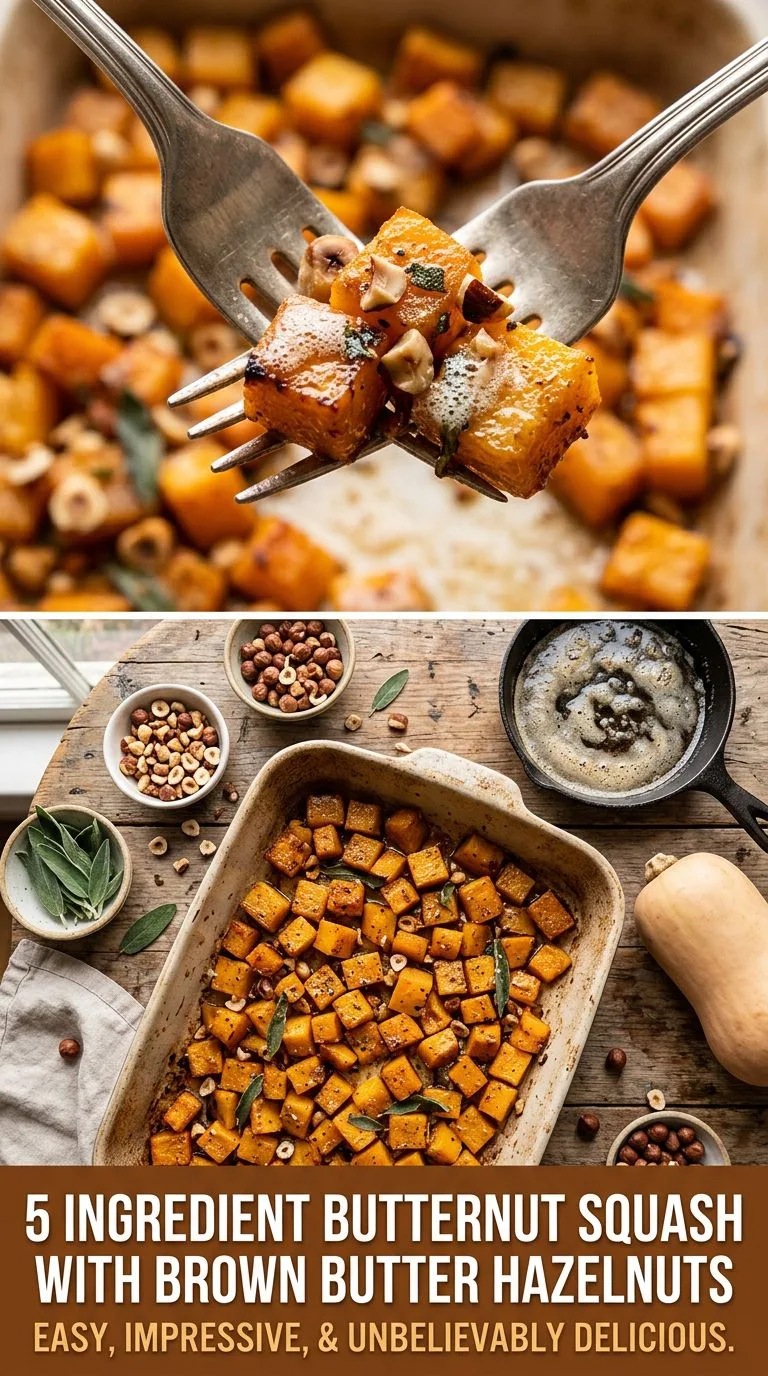
How to Make Butternut Squash with Brown Butter Hazelnuts
This recipe comes together in a few simple steps. I’ll walk you through the process so you can achieve perfect results every time.
Prepare the Squash: Start by preheating your oven to 425°F (220°C) and lining a baking sheet with parchment paper. This high temperature is key to getting those beautiful caramelized edges on the squash. Peeling and cutting butternut squash can be intimidating, but here’s my method: Cut off both ends of the squash, then stand it upright and carefully slice down the sides to remove the peel. Cut the squash in half lengthwise, scoop out the seeds, and then cut the flesh into evenly sized 1-inch cubes. Consistent sizing ensures even cooking.
Roast the Squash: Toss the squash cubes with the maple syrup in a large bowl until evenly coated. Spread them in a single layer on your prepared baking sheet, making sure they’re not crowded. Overcrowding causes steaming rather than roasting, which prevents caramelization. Roast for 25-30 minutes, turning the cubes halfway through cooking. You’ll know they’re done when they’re tender when pierced with a fork and have golden-brown caramelized edges.
Make the Brown Butter: While the squash roasts, prepare the brown butter. This is one of my favorite cooking techniques, and it’s easier than you might think. Melt the butter in a light-colored skillet over medium heat—the light color helps you see when the butter has browned properly. Cook for 3-5 minutes, swirling the pan occasionally. You’ll see the butter foam, then the foam will subside, and the milk solids will begin to turn golden brown. Watch carefully during this stage and use your nose—when you smell a nutty, almost toasted aroma, it’s ready. Immediately remove the pan from heat to prevent burning.
Combine and Serve: Add the chopped hazelnuts and fresh sage to the brown butter and stir gently. The residual heat will toast the hazelnuts slightly and release the sage’s aromatic oils. Transfer the roasted squash to a serving dish, drizzle the brown butter mixture over the top, and toss gently to coat. Serve warm with any remaining toasted hazelnuts sprinkled over the top for a beautiful presentation.
Expert Tips for Best Results
After making this recipe many times, I’ve learned a few tricks that ensure perfect results every time.
Cut Uniform Cubes: Taking the time to cut your squash into evenly sized pieces really matters. I aim for 1-inch cubes, and I try to keep them as consistent as possible. This ensures they all finish cooking at the same time, preventing some pieces from being mushy while others are still firm.
Don’t Skip the Parchment Paper: Lining your baking sheet with parchment paper prevents sticking and makes cleanup much easier. The maple syrup can caramelize onto the pan, and parchment prevents this from becoming a problem. If you don’t have parchment, a silicone baking mat works well too.
Watch Your Brown Butter Carefully: Brown butter can go from perfectly nutty to burnt in seconds. I recommend staying by the stove and watching it closely once the butter starts to foam. Use a light-colored pan so you can see the color change clearly. If you’re nervous about burning it, you can remove it from heat just before you think it’s ready—the residual heat will continue cooking it slightly.
Toast Hazelnuts for Extra Flavor: While the brown butter will toast the hazelnuts slightly, I sometimes like to toast them beforehand for even more flavor. Spread them on a baking sheet and toast in a 350°F oven for 8-10 minutes until fragrant. If your hazelnuts still have their skins, you can rub them in a clean kitchen towel while they’re still warm to remove most of the skins.
Serve Immediately: This dish is best served warm, right after tossing with the brown butter. The contrast between the hot squash and the nutty butter is part of what makes it so delicious. If you need to make it ahead, you can roast the squash in advance and reheat it before making the brown butter and tossing everything together.
Serving Suggestions
This butternut squash with brown butter hazelnuts is incredibly versatile and pairs beautifully with many different main dishes.
For holiday meals, I love serving this alongside roasted turkey or butternut squash and sage lasagna with ricotta for a vegetarian Thanksgiving option. It also works wonderfully with roasted chicken, pork tenderloin, or grilled salmon. The sweet and nutty flavors complement rich meats particularly well.
For a vegetarian meal, this dish can serve as the centerpiece. I like to pair it with a grain like quinoa or farro, along with a simple green salad. The combination creates a satisfying, well-rounded meal that’s both nutritious and delicious.
This recipe also works beautifully as part of a fall harvest bowl. Serve it over mixed greens with roasted chickpeas, dried cranberries, and a light vinaigrette for a hearty lunch or dinner. The textures and flavors create a restaurant-quality bowl that’s perfect for meal prep.
For a more casual presentation, I sometimes serve this family-style in a large shallow bowl, allowing guests to help themselves. The golden squash cubes with their glistening brown butter coating and scattered hazelnuts make a beautiful presentation that needs no additional garnish.
Variations and Substitutions
While I love this recipe as written, there are several ways to customize it to suit your preferences or dietary needs.
Add Dried Fruit: For extra sweetness and texture, try adding 1/4 cup of dried cranberries or chopped dried apricots during the last 5 minutes of roasting. The fruit will plump up slightly and add pops of tart sweetness throughout the dish.
Spice It Up: For a hint of warmth, add a pinch of cinnamon or nutmeg to the maple syrup before tossing with the squash. A tiny pinch of cayenne pepper in the brown butter adds a subtle heat that contrasts nicely with the sweetness.
Make It Vegan: Replace the butter with vegan butter or use extra virgin olive oil. While you won’t get the same brown butter flavor, the dish will still be delicious. You can add a splash of balsamic vinegar to the oil for extra depth.
Try Different Herbs: While sage is classic, fresh thyme or rosemary also work beautifully. I sometimes use a combination of sage and thyme for a more complex herbal note. Fresh parsley added at the end provides a bright, fresh contrast.
Add Cheese: For an extra indulgent version, crumble some goat cheese or feta over the finished dish. The tangy cheese provides a wonderful contrast to the sweet squash and rich brown butter. Shaved Parmesan also works beautifully.
Include Other Vegetables: This technique works well with other fall vegetables too. Try adding Brussels sprouts, carrots, or parsnips to the baking sheet along with the squash. Just make sure to cut everything into similar-sized pieces for even cooking.
Storage, Freezing, and Reheating
This dish is best enjoyed fresh, but I’ve successfully stored and reheated leftovers with good results.
Refrigerator Storage: Store leftover butternut squash in an airtight container in the refrigerator for up to 4 days. I recommend storing the squash and any remaining brown butter sauce separately if possible, as the squash can absorb the butter and become a bit soggy. The hazelnuts may lose some of their crunch during storage, so you might want to toast fresh ones when reheating.
Reheating: For best results, reheat the squash in a 350°F oven for 10-15 minutes until warmed through. This method helps restore some of the caramelization and prevents the squash from becoming mushy. You can also reheat in a skillet over medium heat, which works particularly well if you have leftover brown butter to add. Microwave reheating works in a pinch, but the texture won’t be quite as good.
Freezing: While I don’t typically freeze this dish because the texture of the squash changes somewhat, you can freeze the roasted squash (before adding the brown butter) for up to 3 months. Freeze the cubes in a single layer on a baking sheet, then transfer to a freezer bag. Thaw in the refrigerator overnight and reheat in the oven. Make fresh brown butter when you’re ready to serve.
Make-Ahead Tips: If you’re preparing this for a holiday meal, you can roast the squash up to 2 days in advance. Store it in the refrigerator, then reheat in a 350°F oven while you make the brown butter. This approach allows you to manage your time better when cooking multiple dishes. You can also chop the hazelnuts and sage ahead of time and store them separately in the refrigerator.
Frequently Asked Questions
Can I use pre-cut butternut squash?
Absolutely! Pre-cut butternut squash from the grocery store works perfectly and saves significant prep time. Just make sure the pieces are roughly 1-inch cubes. If they’re larger, you may need to cut them down or adjust the cooking time slightly.
How do I know when the brown butter is ready?
Brown butter is ready when it turns a golden amber color and smells nutty and toasted. The milk solids will settle to the bottom of the pan and turn brown. Watch it carefully and remove from heat as soon as you see this color change and smell that characteristic nutty aroma. If it starts to smell burnt or turns dark brown, it’s gone too far.
Can I make this dish ahead for Thanksgiving?
Yes, with some planning. Roast the squash up to 2 days ahead and refrigerate. When ready to serve, reheat the squash in a 350°F oven for about 10 minutes, then make fresh brown butter and toss everything together. This approach keeps the squash tender and the butter fresh-tasting.
What if I don’t have hazelnuts?
Pecans, walnuts, or almonds all make excellent substitutes. Each will provide a slightly different flavor, but all work beautifully with brown butter and squash. For a nut-free version, try toasted pumpkin seeds (pepitas).
Why is my squash mushy instead of caramelized?
This usually happens when the squash pieces are crowded on the baking sheet or the oven temperature is too low. Make sure to spread the squash in a single layer with space between pieces, and ensure your oven is fully preheated to 425°F. Overcrowding causes steaming rather than roasting.
Can I use a different type of squash?
Yes! Delicata squash, kabocha squash, or even sweet potatoes work well with this preparation method. You may need to adjust cooking times slightly depending on the density of the vegetable you choose. If you’re looking for other squash recipes, try this maple roasted butternut squash for a simpler variation.
Is this recipe gluten-free?
Yes, this recipe is naturally gluten-free as written. Just make sure your maple syrup is pure and doesn’t contain any additives. All the other ingredients are naturally gluten-free.
How can I tell if my butternut squash is ripe?
Look for squash with a deep tan color and a hard, unblemished skin. It should feel heavy for its size. Avoid squash with soft spots or green patches, which indicate it’s not fully ripe. The stem should be dry and corky.
5 Ingredient Butternut Squash with Brown Butter Hazelnuts
Tender butternut squash roasted until caramelized, then topped with nutty brown butter and toasted hazelnuts. This elegant five-ingredient fall side dish is perfect for Thanksgiving or any autumn meal. The combination of sweet maple-roasted squash, rich brown butter, and crunchy hazelnuts creates a restaurant-quality dish with minimal effort.
- Prep Time: 15 minutes
- Cook Time: 30 minutes
- Total Time: 45 minutes
- Servings: 6
- Difficulty: Easy
- Cuisine: American
- Course: Side Dish
Ingredients
- 1 medium butternut squash (about 2 lbs, peeled and cubed)
- 4 tablespoons unsalted butter
- 1/2 cup chopped hazelnuts
- 2 tablespoons pure maple syrup
- 1 teaspoon fresh sage (chopped)
Instructions
- Preheat oven to 425°F (220°C) and line a baking sheet with parchment paper.
- Peel butternut squash, remove seeds, and cut into evenly sized 1-inch cubes.
- Toss squash cubes with maple syrup in a large bowl until evenly coated.
- Spread squash in a single layer on the prepared baking sheet, ensuring pieces are not crowded.
- Roast for 25-30 minutes, turning halfway through, until tender and caramelized at the edges.
- Meanwhile, melt butter in a light-colored skillet over medium heat.
- Cook butter for 3-5 minutes, swirling occasionally, until it turns golden brown and develops a nutty aroma. Watch carefully to prevent burning.
- Immediately remove skillet from heat once the butter is browned.
- Add chopped hazelnuts and fresh sage to the brown butter and stir gently to combine.
- Transfer roasted squash to a serving dish.
- Drizzle the brown butter mixture over the squash and toss gently to coat.
- Serve warm with toasted hazelnuts sprinkled over the top.
Recipe Notes
- Use a light-colored skillet for browning butter so you can easily see when the milk solids turn golden brown.
- Cut squash into uniform 1-inch cubes for even cooking and caramelization.
- Don’t overcrowd the baking sheet—this prevents proper roasting and caramelization.
- Brown butter can go from perfect to burnt quickly, so watch it carefully and remove from heat immediately when ready.
- For easier prep, you can use pre-cut butternut squash cubes from the grocery store.
- To remove hazelnut skins, toast whole hazelnuts and rub them in a clean kitchen towel while warm.
- This dish is best served immediately while warm, but can be made ahead and reheated.
Estimated Nutrition (Per Serving)
- Calories: 185
- Carbohydrates: 20g
- Protein: 3g
- Fat: 12g
- Saturated Fat: 5g
- Fiber: 3g
- Sugar: 6g
- Sodium: 10mg
Nutrition information is estimated and may vary based on specific ingredients used.
