
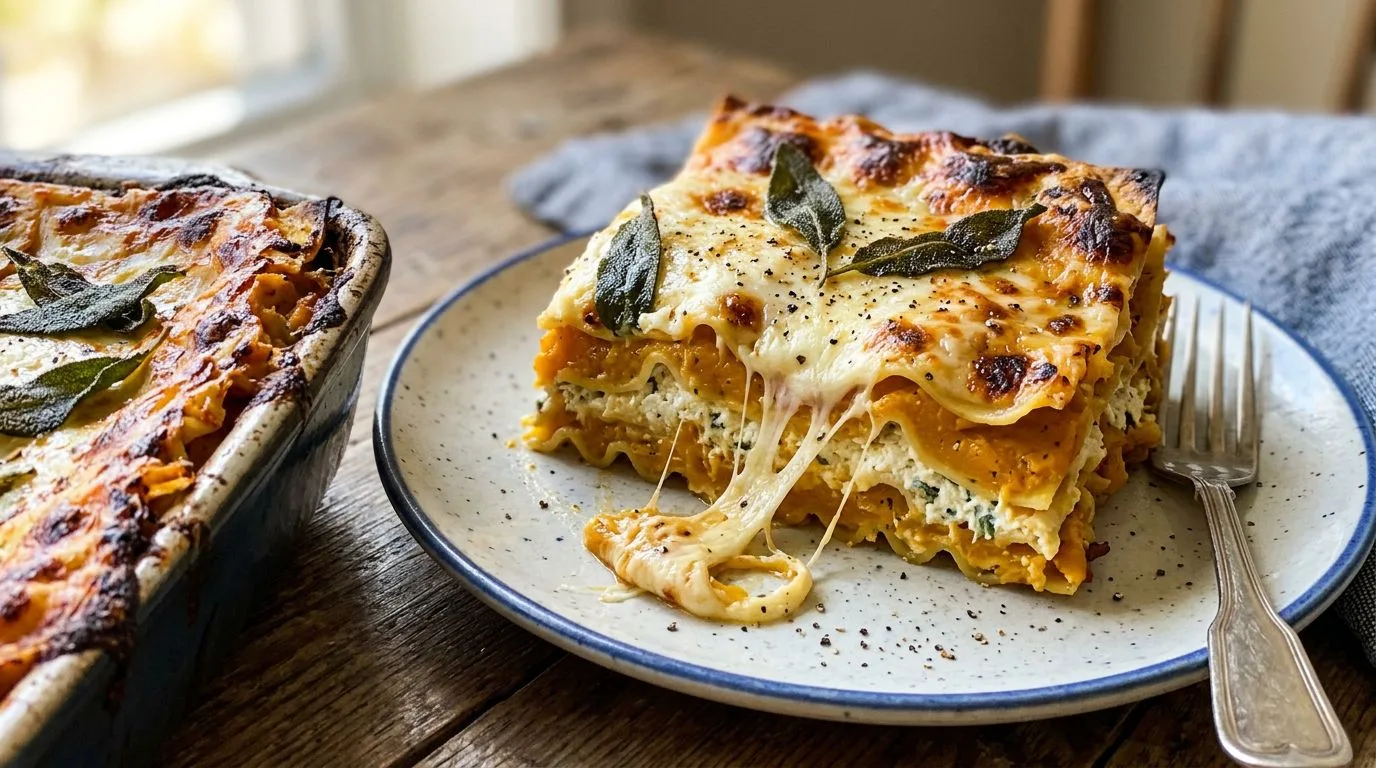
When fall arrives and butternut squash fills the farmers’ markets, I find myself craving comforting, layered dishes that celebrate the season’s best flavors. This Butternut Squash and Sage Lasagna combines tender roasted squash, creamy ricotta, and a fragrant sage cream sauce into one of the most satisfying vegetarian main dishes you’ll ever make. It’s become my go-to recipe for Thanksgiving dinner and autumn gatherings when I want something special that feels both elegant and deeply comforting.
Unlike traditional meat lasagnas, this version showcases the natural sweetness of butternut squash paired with earthy sage and nutmeg. The combination creates layers of flavor that are rich without being heavy. I love how the roasted squash becomes almost buttery in texture, melting into the creamy ricotta and mozzarella layers. Whether you’re serving vegetarian guests or simply want to try something different this holiday season, this lasagna delivers impressive results that will have everyone asking for seconds.
The beauty of this recipe is that much of the work can be done ahead of time. You can roast the squash, prepare the sauce, and even assemble the entire lasagna a day before baking. This makes it perfect for holiday entertaining when oven space and time are precious. The result is a golden, bubbling masterpiece that slices beautifully and tastes even better than it looks.
Why You’ll Love This Butternut Squash and Sage Lasagna
This vegetarian lasagna offers everything you want in a comfort food classic while celebrating the best flavors of autumn. The roasted butternut squash provides natural sweetness and a creamy texture that pairs beautifully with the savory sage cream sauce. I find that the combination of three cheeses—ricotta, mozzarella, and Parmesan—creates the perfect balance of creaminess and that irresistible golden, bubbly top layer.
The fresh sage is what truly elevates this dish from good to extraordinary. When cooked in butter with garlic, it releases an aromatic, earthy flavor that complements the squash perfectly. A hint of nutmeg in the cream sauce adds warmth and depth that makes this lasagna taste like a special occasion meal.
I also appreciate how substantial and satisfying this dish is, even without meat. The layers of vegetables, cheese, and pasta create a hearty main course that will please both vegetarians and meat-eaters alike. It’s elegant enough for holiday tables yet comforting enough for a cozy family dinner. Plus, it feeds a crowd beautifully and reheats wonderfully, making it ideal for meal prep or entertaining.
Ingredients and Substitutions
The ingredient list for this lasagna is straightforward, with each component playing an important role in building flavor and texture. Here’s what you’ll need and some helpful substitutions if needed.
Butternut squash is the star ingredient. You’ll need about 3 pounds, which yields roughly 6 cups of cubed squash once peeled and seeded. I recommend buying pre-cut butternut squash if you want to save time, though whole squash often has better flavor. If butternut squash isn’t available, you can substitute with other winter squash varieties like kabocha or acorn squash.
Lasagna noodles form the structure of the dish. Regular lasagna noodles work perfectly, but you can also use no-boil noodles if you prefer—just add a bit more liquid to the sauce. I like to cook regular noodles until just al dente so they don’t become mushy during baking.
Ricotta cheese provides creaminess and helps bind the layers together. Whole milk ricotta gives the best flavor and texture, but part-skim works too. If you can’t find ricotta, cottage cheese blended until smooth makes a decent substitute.
Mozzarella and Parmesan create that golden, melted cheese topping everyone loves. I recommend shredding your own mozzarella from a block rather than using pre-shredded, as it melts more smoothly. Freshly grated Parmesan also makes a noticeable difference in flavor.
Fresh sage is essential to this recipe’s signature flavor. Dried sage simply doesn’t provide the same aromatic quality. If you absolutely must substitute, use about one-third the amount of dried sage, but I strongly recommend seeking out fresh.
The cream sauce is made with butter, flour, and whole milk, creating a classic béchamel enriched with sage and nutmeg. You can use 2% milk if needed, though the sauce won’t be quite as rich. For a lighter version, you could reduce the butter slightly, but I find the full amount creates the best texture.
Baby spinach adds color, nutrition, and a subtle earthy flavor to the ricotta mixture. You can substitute with chopped frozen spinach (thawed and squeezed dry) or even omit it if you prefer, though I love the extra vegetable layer it provides.

How to Make Butternut Squash and Sage Lasagna
Making this lasagna involves several steps, but none are difficult. I like to break the process into stages: roasting the squash, making the sauce, preparing the cheese mixture, and then assembling and baking. Here’s how it all comes together.
Roast the butternut squash: Start by preheating your oven to 400°F. Toss the cubed butternut squash with olive oil, salt, and black pepper, then spread it in a single layer on a baking sheet. Roast for 25-30 minutes until the squash is tender and lightly caramelized at the edges. This roasting step concentrates the squash’s natural sweetness and ensures it won’t release excess moisture into the lasagna. Let the squash cool slightly while you prepare the other components.
Cook the noodles: Bring a large pot of salted water to a boil and cook the lasagna noodles according to package directions until just al dente. Drain them carefully and lay them flat on a clean kitchen towel or lightly oiled baking sheet to prevent sticking. Slightly undercooking the noodles is important since they’ll continue cooking in the oven.
Make the sage cream sauce: In a medium saucepan, melt the butter over medium heat. Add the minced garlic and chopped fresh sage, cooking for about one minute until fragrant. Be careful not to let the garlic brown. Stir in the flour and cook for another minute, stirring constantly to create a roux. Gradually whisk in the whole milk, continuing to whisk to prevent lumps. Bring the mixture to a gentle simmer and cook until it thickens into a smooth, creamy sauce that coats the back of a spoon. Season with nutmeg, salt, and pepper. The nutmeg adds a warm, subtle spice that complements both the sage and squash beautifully.
Prepare the ricotta mixture: In a mixing bowl, combine the ricotta cheese with the egg, half of the grated Parmesan, and the baby spinach. Mix until well combined. The egg helps bind the ricotta so it holds together when you slice the lasagna.
Assemble the lasagna: Reduce your oven temperature to 375°F. Spread a thin layer of the sage cream sauce over the bottom of a 9×13-inch baking dish—this prevents the noodles from sticking. Layer lasagna noodles over the sauce, followed by half of the roasted butternut squash, half of the ricotta-spinach mixture, more cream sauce, and a generous sprinkle of shredded mozzarella. Repeat these layers once more, then finish with a final layer of noodles, the remaining cream sauce, mozzarella, and the remaining Parmesan cheese on top.
Bake: Cover the baking dish tightly with aluminum foil and bake for 30 minutes. This covered baking time allows the lasagna to heat through and the flavors to meld. Remove the foil and bake for an additional 15-20 minutes until the cheese on top is bubbling and golden brown. The internal temperature should reach 165°F when measured with an instant-read thermometer.
Rest before serving: This is the hardest part—letting the lasagna rest for 15 minutes before cutting. I know it’s tempting to dig in immediately, but this resting time allows the layers to set so you get clean, beautiful slices instead of a saucy mess. The lasagna will still be plenty hot after resting.
Expert Tips for Best Results
After making this recipe many times, I’ve learned a few tricks that ensure perfect results every time. Here are my top tips for success.
Don’t skip roasting the squash. While it might be tempting to use raw squash to save time, roasting concentrates the flavor and removes excess moisture. Raw squash would make the lasagna watery and the texture wouldn’t be nearly as good.
Make sure your cream sauce is thick enough. The sauce should coat the back of a spoon and be similar in consistency to gravy. If it’s too thin, your lasagna will be soupy. If it’s too thick, it won’t spread easily between the layers. You can always adjust by simmering longer to thicken or adding a splash more milk to thin it out.
Use fresh sage, not dried. I can’t emphasize this enough. Fresh sage has a completely different flavor profile—aromatic, slightly peppery, and earthy in the best way. Dried sage can taste dusty and medicinal in comparison. If you have extra fresh sage, you can fry a few leaves in butter as a garnish for serving.
Layer strategically. I like to make sure each bite has a bit of everything, so I spread the squash and ricotta mixture evenly across each layer rather than piling it in the center. This ensures consistent flavor throughout the dish.
Let it rest. I mentioned this in the instructions, but it bears repeating. Those 15 minutes of resting time make the difference between a lasagna that holds its shape beautifully and one that falls apart on the plate. Use this time to make a salad or set the table.
Check for doneness. The lasagna is ready when the cheese is golden and bubbling around the edges and the center reaches 165°F. If the top is browning too quickly, tent it loosely with foil for the last few minutes of baking.
Serving Suggestions
This Butternut Squash and Sage Lasagna is substantial enough to serve as the main course, and I love pairing it with lighter sides that complement rather than compete with its rich, creamy flavors.
A simple arugula salad with lemon vinaigrette provides a peppery, acidic contrast that cuts through the richness of the cheese. I also like serving it with roasted Brussels sprouts or green beans for added vegetables. For a heartier meal, garlic bread or a crusty baguette is perfect for soaking up any extra sauce on the plate.
This lasagna shines on holiday tables, particularly at Thanksgiving. It makes an excellent vegetarian main dish that’s special enough for the occasion. I’ve served it alongside traditional turkey dinners, and it holds its own beautifully. The fall flavors of butternut squash and sage fit perfectly with the season’s other dishes.
For wine pairing, I recommend a medium-bodied white wine like Chardonnay or a light red like Pinot Noir. The wine should have enough body to stand up to the creamy cheese but not overpower the delicate squash and sage flavors. If you’re looking for more inspiration for fall pasta dishes, you might enjoy this creamy pumpkin pasta recipe that celebrates similar seasonal flavors.
Variations and Substitutions
While this recipe is delicious as written, there are several ways you can customize it to suit your preferences or dietary needs.
Add protein: If you want to make this heartier, you can add cooked Italian sausage (removed from casings and crumbled) or ground turkey between the layers. About 1 pound of cooked meat would work well without overwhelming the squash.
Make it vegan: Substitute the ricotta with a cashew-based ricotta or tofu ricotta. Use vegan mozzarella and Parmesan alternatives, and make the cream sauce with plant-based butter and unsweetened almond or oat milk. You’ll need to omit the egg or use a flax egg as a binder.
Try different squash: While butternut squash is my favorite for this recipe, you can experiment with other winter squash varieties. Delicata squash has a similar sweetness, or you could try a combination of squash types. For more ideas on preparing butternut squash, check out this maple roasted butternut squash recipe.
Add more vegetables: Sautéed mushrooms, caramelized onions, or roasted red peppers would all be delicious additions. Just make sure any vegetables you add are cooked first to remove excess moisture.
Change the herbs: While sage is traditional and wonderful here, you could experiment with fresh thyme or rosemary for a different flavor profile. Use these herbs more sparingly as they’re quite potent.
Make it gluten-free: Use gluten-free lasagna noodles and substitute the all-purpose flour in the sauce with a gluten-free flour blend or cornstarch. If using cornstarch, you’ll need about 2 tablespoons instead of 3 tablespoons of flour.
Storage, Freezing, and Reheating
One of the best things about lasagna is how well it keeps and reheats, making it perfect for meal prep or making ahead for entertaining.
Refrigerator storage: Once the lasagna has cooled to room temperature, cover it tightly with plastic wrap or aluminum foil and refrigerate for up to 4 days. I like to cut it into individual portions before storing, which makes reheating easier. Store the portions in airtight containers for the best results.
Freezing: This lasagna freezes beautifully, either before or after baking. To freeze unbaked lasagna, assemble it completely, cover tightly with plastic wrap and then aluminum foil, and freeze for up to 3 months. When ready to bake, you can either thaw it overnight in the refrigerator and bake as directed, or bake from frozen (add about 30-40 minutes to the covered baking time). To freeze baked lasagna, let it cool completely, cut into portions if desired, wrap tightly, and freeze for up to 3 months.
Reheating: For best results, I recommend reheating lasagna in the oven. Place refrigerated portions in an oven-safe dish, cover with foil, and heat at 350°F for about 20-25 minutes until heated through. You can also microwave individual portions for 2-3 minutes, though the texture won’t be quite as good. If reheating a whole lasagna, cover with foil and bake at 350°F for 30-40 minutes until the center is hot.
Make-ahead tips: You can prepare components of this lasagna up to 2 days ahead. Roast the squash, make the cream sauce, and prepare the ricotta mixture, then store them separately in the refrigerator. You can also assemble the entire lasagna up to 24 hours before baking—just cover it tightly and refrigerate. Let it sit at room temperature for 30 minutes before baking, or add 10-15 minutes to the covered baking time if baking straight from the refrigerator.
Frequently Asked Questions
Can I use no-boil lasagna noodles?
Yes, you can use no-boil noodles. Make sure your sauce is slightly thinner than usual (add an extra 1/2 cup of milk) to provide enough moisture for the noodles to cook properly. The baking time remains the same.
How do I know when the lasagna is done?
The lasagna is done when the cheese on top is golden and bubbling, the edges are slightly browned, and an instant-read thermometer inserted in the center reads 165°F. You should also see the sauce bubbling around the edges of the pan.
Can I make this dairy-free?
Yes, though the flavor and texture will be different. Use dairy-free butter, milk, and cheese alternatives. Cashew-based ricotta works particularly well as a substitute for the ricotta layer.
Why is my lasagna watery?
Watery lasagna usually results from not roasting the squash first, using too much sauce, or not letting it rest before cutting. Make sure to roast the squash to remove excess moisture, don’t oversauce the layers, and always let the lasagna rest for at least 15 minutes after baking.
Can I prepare this ahead for Thanksgiving?
Absolutely! This is one of my favorite make-ahead dishes for holidays. You can assemble it completely up to 24 hours before baking. Just cover tightly and refrigerate, then bake as directed (adding a few extra minutes if needed since it’s starting cold).
What can I do with leftover roasted butternut squash?
If you have extra roasted squash, it’s delicious in salads, grain bowls, or pureed into soup. You can also freeze it for up to 3 months and use it in future recipes.
Do I need to cover the lasagna while baking?
Yes, cover it with foil for the first 30 minutes to prevent the top from browning too quickly and to allow the lasagna to heat through evenly. Remove the foil for the last 15-20 minutes to achieve that golden, bubbly cheese topping.
Can I double this recipe?
Yes, you can easily double the recipe and make two lasagnas. This is great for feeding a large crowd or for making one to serve and one to freeze. Use two 9×13-inch baking dishes and bake them on separate oven racks, rotating them halfway through for even cooking.
Butternut Squash and Sage Lasagna with Ricotta
A comforting fall lasagna layered with tender butternut squash, creamy ricotta cheese, fresh sage, and a rich cheese sauce. This vegetarian main course is perfect for Thanksgiving and autumn dinners.
- Prep Time: 30 minutes
- Cook Time: 1 hour 15 minutes
- Resting Time: 15 minutes
- Total Time: 2 hours
- Servings: 8-10 servings
- Difficulty: Medium
- Cuisine: Italian-American
- Course: Main Course
Ingredients
- 12 lasagna noodles
- 3 lb butternut squash, peeled and cubed
- 15 oz ricotta cheese
- 2 cups shredded mozzarella cheese
- 1 cup grated Parmesan cheese
- 2 cups baby spinach
- 3 tbsp olive oil
- 4 tbsp unsalted butter
- 3 garlic cloves, minced
- 2 tbsp fresh sage, chopped
- 3 tbsp all-purpose flour
- 2 1/2 cups whole milk
- 1/4 tsp ground nutmeg
- 1 tsp salt
- 1/2 tsp black pepper
- 1 large egg
Instructions
- Preheat the oven to 400°F (200°C). Toss the cubed butternut squash with olive oil, salt, and black pepper. Spread on a baking sheet and roast for 25-30 minutes until tender and lightly caramelized. Remove from oven and set aside to cool slightly.
- Cook the lasagna noodles according to package instructions until just al dente. Drain and lay flat on a clean kitchen towel or lightly oiled surface to prevent sticking.
- Melt butter in a medium saucepan over medium heat. Add minced garlic and chopped fresh sage and cook for 1 minute until fragrant, stirring frequently.
- Stir in flour and cook for 1 minute, stirring constantly. Gradually whisk in whole milk and bring to a gentle simmer. Continue cooking, whisking occasionally, until the sauce thickens and coats the back of a spoon, about 5-7 minutes. Season with nutmeg, salt, and pepper. Remove from heat.
- In a separate bowl, mix ricotta cheese with the egg, half the Parmesan cheese (1/2 cup), and chopped baby spinach until well combined.
- Reduce the oven temperature to 375°F (190°C). Spread a thin layer of sage cream sauce over the bottom of a 9×13-inch baking dish.
- Layer lasagna noodles over the sauce, followed by half of the roasted butternut squash, half of the ricotta-spinach mixture, about 1 cup of cream sauce, and 3/4 cup of shredded mozzarella. Repeat the layers: noodles, remaining squash, remaining ricotta mixture, cream sauce, and mozzarella. Finish with a final layer of noodles, the remaining cream sauce, remaining mozzarella, and remaining Parmesan cheese.
- Cover the baking dish tightly with aluminum foil and bake for 30 minutes. Remove the foil and bake for another 15-20 minutes until the cheese is bubbling and golden brown and the center reaches 165°F (74°C) when tested with an instant-read thermometer.
- Remove from oven and let rest for 15 minutes before cutting into squares and serving. This resting time allows the layers to set for cleaner slices.
Recipe Notes
- For easier prep, you can use pre-cut butternut squash from the grocery store, though whole squash often has better flavor.
- Make sure to roast the squash until tender—this removes excess moisture and concentrates the flavor.
- Fresh sage is essential to this recipe. Dried sage doesn’t provide the same aromatic quality.
- The lasagna can be assembled up to 24 hours ahead. Cover tightly and refrigerate, then bake as directed (adding 5-10 minutes if baking from cold).
- Leftovers keep well in the refrigerator for up to 4 days and can be frozen for up to 3 months.
- For a lighter version, you can use 2% milk instead of whole milk, though the sauce won’t be quite as rich.
- If the top browns too quickly, tent loosely with foil during the final baking stage.
Nutrition Information (Per Serving, Estimated)
- Calories: 425
- Carbohydrates: 42g
- Protein: 20g
- Fat: 19g
- Saturated Fat: 10g
- Fiber: 4g
- Sugar: 7g
- Sodium: 580mg
Nutrition information is estimated based on standard ingredient measurements and may vary based on specific products used and serving sizes.
