
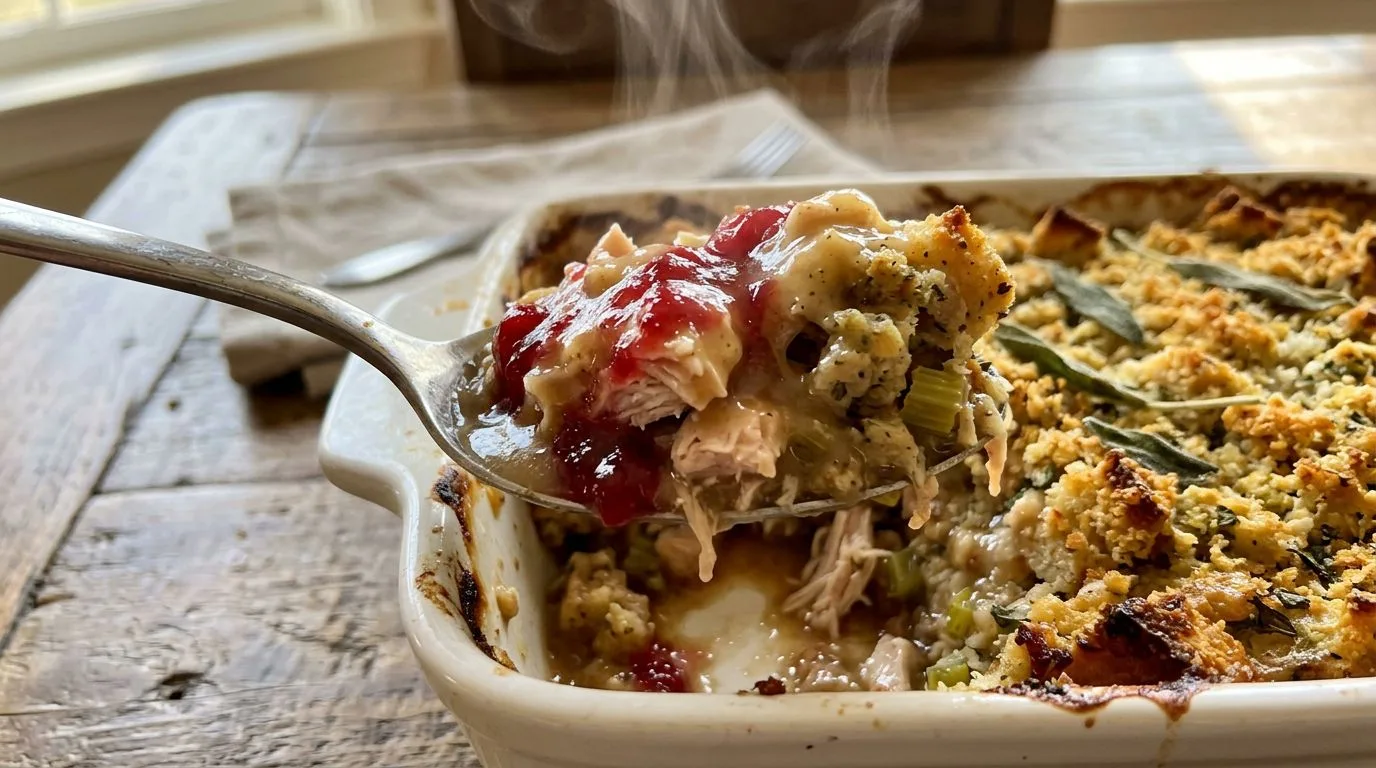
There’s something wonderfully satisfying about transforming Thanksgiving leftovers into a completely new meal, and this Turkey and Stuffing Casserole does exactly that. Instead of reheating individual components, I love layering all those beloved holiday flavors—tender turkey, savory stuffing, rich gravy, and tangy cranberry sauce—into one comforting baked dish that feels both familiar and fresh. It’s the perfect answer to that post-Thanksgiving question: what do we do with all this food?
This casserole brings together everything you loved about Thanksgiving dinner in an easy, family-friendly format. The stuffing forms a hearty base, the turkey adds protein and substance, the gravy keeps everything moist and flavorful, and those pockets of cranberry sauce provide bursts of sweet-tart contrast. I find that this dish actually tastes better than the original meal in some ways because all the flavors have time to meld together as it bakes.
Whether you’re feeding your family the day after Thanksgiving or looking for a cozy dinner option throughout the fall and winter months, this Turkey and Stuffing Casserole delivers comfort food at its finest. It’s also incredibly practical—you can assemble it ahead of time, customize it based on what leftovers you have, and serve it with minimal effort for maximum satisfaction.
Why You’ll Love This Turkey and Stuffing Casserole
This recipe solves the leftover dilemma in the most delicious way possible. Instead of eating the same reheated plate for days, you get a completely reimagined dish that feels special and intentional. I love how this casserole transforms what might feel like obligation eating into something everyone actually looks forward to.
The layered construction means every bite includes multiple flavors and textures. You get the moistness from the gravy-soaked stuffing, the heartiness of the turkey, the creaminess from the sour cream addition, and those delightful pockets of cranberry sauce that cut through the richness. The optional cheese topping adds a golden, bubbly finish that makes this feel like a proper casserole rather than just reheated leftovers.
From a practical standpoint, this recipe is incredibly forgiving and adaptable. You can adjust quantities based on what you have, swap ingredients based on your preferences, and even prepare it ahead of time. It’s also an excellent way to use up those side dishes that might otherwise go to waste—the green beans get incorporated right into the casserole, and you can easily add other vegetables you have on hand.
The make-ahead nature of this dish is another major advantage. You can assemble the entire casserole in the morning or even the night before, refrigerate it, and simply pop it in the oven when dinner time approaches. This makes it perfect for busy weekends or when you want a satisfying meal without spending hours in the kitchen.
Ingredients and Substitutions
The beauty of this Turkey and Stuffing Casserole lies in its flexibility. The core ingredients are likely already in your refrigerator if you’ve just celebrated Thanksgiving, but I’ll walk you through what you need and how you can adapt based on what you have available.
The leftover turkey forms the protein base of this casserole. I recommend using a mix of white and dark meat for the best flavor and moisture, but you can use whatever you have. If your turkey is particularly dry, don’t worry—the gravy and broth will add plenty of moisture during baking. You can also substitute rotisserie chicken or even leftover ham if you’re making this outside of Thanksgiving season.
Your prepared stuffing serves as both the base and the binding element of this casserole. Whether you made classic sausage stuffing or a simple herb version, it will work beautifully here. If your stuffing is on the drier side, you might want to add a bit more broth. Cornbread stuffing works wonderfully in this recipe as well, adding a slightly sweet note that complements the cranberry sauce.
The turkey gravy is essential for keeping this casserole moist and flavorful. Homemade leftover gravy is ideal, but jarred gravy works in a pinch. If you’re short on gravy, you can make a quick version by whisking together chicken broth with a bit of flour or cornstarch and seasoning it well. The addition of sour cream to the gravy mixture adds richness and a subtle tang that elevates the entire dish.
Cranberry sauce provides those essential pockets of sweet-tart flavor that balance the savory elements. I prefer using homemade cranberry sauce, but the canned jellied version works too—just break it up into small spoonfuls before adding it to the casserole. If you don’t have cranberry sauce, you could substitute with a tart fruit preserve like cherry or raspberry.
The green beans add color, nutrition, and texture. You can use leftover green bean casserole (just chop it up), plain steamed green beans, or even substitute with other vegetables like roasted Brussels sprouts, carrots, or peas. I find that having at least one vegetable component makes this feel like a complete meal.
The sautéed onion adds aromatic depth, while the dried sage reinforces those classic Thanksgiving flavors. If you have fresh herbs, you can use about a tablespoon of fresh sage instead. The cheddar cheese topping is optional but highly recommended—it creates a beautiful golden crust and adds another layer of flavor.
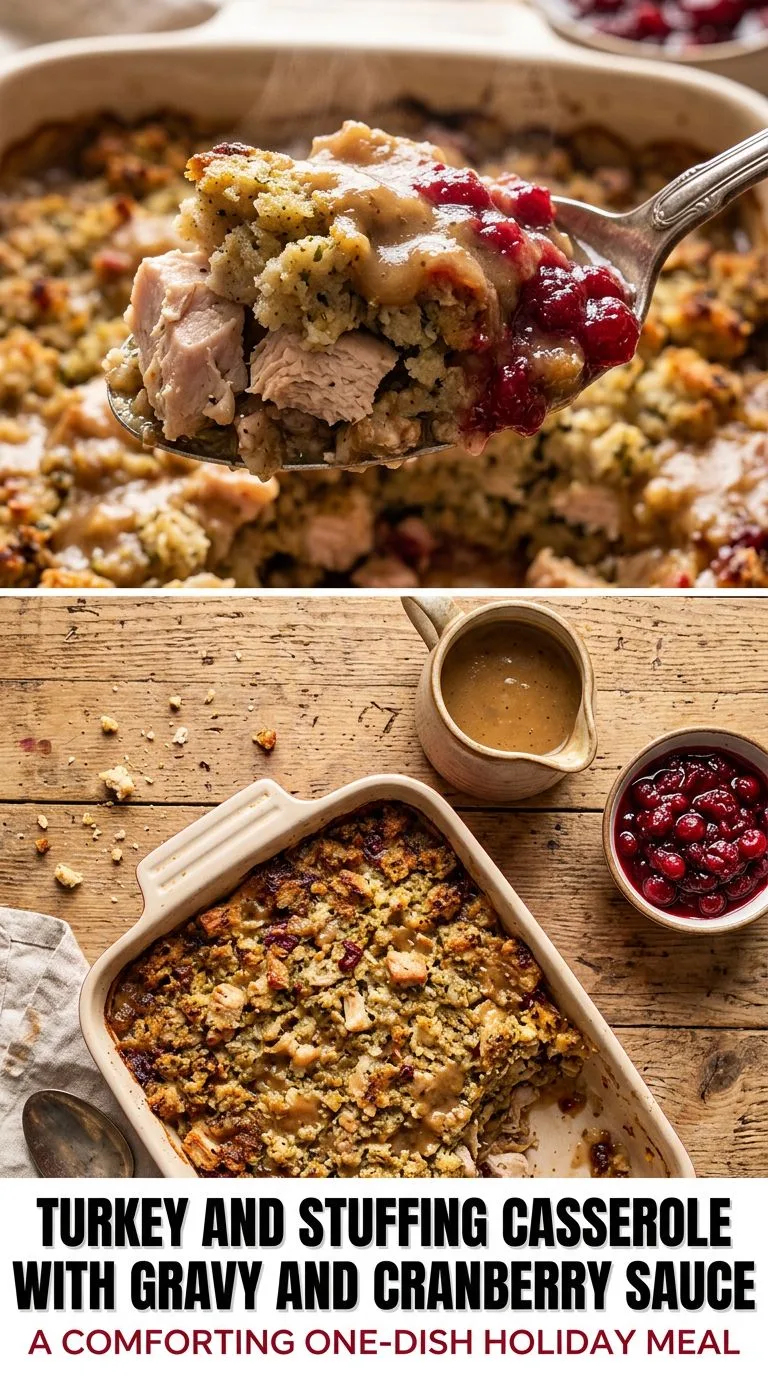
How to Make Turkey and Stuffing Casserole
This casserole comes together quickly, especially since you’re working with already-cooked ingredients. The key is layering everything properly so that the flavors distribute evenly and the casserole heats through uniformly.
Start by preheating your oven to 375°F and greasing your baking dish. I recommend using a 9×13-inch dish for this recipe, which provides the right depth for layering while ensuring everything cooks evenly. A light coating of butter or cooking spray prevents sticking and makes cleanup easier.
The first step involves building flavor through the sautéed onion mixture. Melting butter in a skillet and cooking the diced onion until softened creates a sweet, aromatic base. Adding the dried sage and black pepper at this stage allows the herbs to bloom in the butter, releasing their essential oils and intensifying their flavor. This simple step makes a significant difference in the overall taste of the casserole.
Next, you’ll combine the turkey, stuffing, green beans, and sautéed onion mixture in a large bowl. I like to use my hands for this step to ensure everything is evenly distributed without breaking down the stuffing too much. You want distinct pieces of stuffing rather than a homogeneous mush, as this creates better texture in the finished dish.
The gravy mixture is where the magic happens. Whisking together the prepared gravy, broth, and sour cream creates a luscious sauce that will keep everything moist during baking. The broth thins the gravy slightly so it can penetrate all the layers, while the sour cream adds richness and a subtle tang. Make sure this mixture is smooth before proceeding.
Layering is crucial for even distribution of flavors. Spread half the turkey and stuffing mixture in the prepared dish, then spoon half the gravy mixture over it. This ensures that the bottom layer gets plenty of moisture. Add the remaining turkey mixture, then pour the rest of the gravy over the top. The cranberry sauce goes on last—I like to drop small spoonfuls across the surface rather than spreading it evenly, creating pockets of sweet-tart flavor throughout the casserole.
If you’re using cheese, sprinkle it over the top just before baking. Covering the casserole with foil for the first 20 minutes allows it to heat through without the top browning too quickly. Removing the foil for the final 10-15 minutes creates that desirable golden, bubbly top while ensuring the center reaches a safe temperature of 165°F.
Expert Tips for Best Results
I’ve made this casserole many times, and I’ve learned a few tricks that ensure perfect results every time. First, don’t skip the resting time after baking. Letting the casserole sit for 5-10 minutes allows the gravy to thicken slightly and makes serving much neater. If you cut into it immediately, everything will be quite loose and runny.
If your leftover stuffing is particularly dry, add an extra 1/4 cup of broth to the mixture before assembling the casserole. Conversely, if your stuffing is very moist, you might want to reduce the added broth slightly. The goal is a casserole that’s moist but not soupy.
For the best texture, make sure your turkey is shredded or cut into bite-sized pieces rather than large chunks. Smaller pieces distribute more evenly throughout the casserole and are easier to serve. I find that using two forks to shred the turkey works perfectly.
Don’t overmix when combining the turkey, stuffing, and vegetables. You want everything incorporated, but you also want to maintain some texture and structure in the stuffing. Overmixing can turn it into a paste-like consistency that’s less appealing.
If you’re making this casserole ahead of time, assemble it completely but don’t add the cheese until just before baking. Cover it tightly with plastic wrap and refrigerate for up to 24 hours. When you’re ready to bake, let it sit at room temperature for about 20 minutes, then add the cheese and bake as directed. You may need to add 5-10 minutes to the covered baking time if the casserole is very cold.
For extra flavor, consider adding a layer of crispy fried onions on top during the last 5 minutes of baking. This adds a delightful crunch that contrasts beautifully with the soft, creamy interior.
Serving Suggestions
This Turkey and Stuffing Casserole is substantial enough to serve as a complete meal, but I like to round it out with a few simple sides. A crisp green salad with a tangy vinaigrette provides a fresh contrast to the rich, savory casserole. The acidity and crunch help balance each bite.
Roasted vegetables make an excellent accompaniment, especially if you’re serving this outside of the immediate post-Thanksgiving period. Roasted Brussels sprouts, carrots, or a medley of root vegetables add color and nutrition to the plate without competing with the casserole’s flavors.
I always serve extra cranberry sauce and gravy on the side. Some people love extra cranberry sauce with every bite, while others prefer more gravy. Having both available lets everyone customize their plate to their preferences.
For a lighter option, steamed green beans or broccoli work well. Since the casserole already contains green beans, adding more vegetables on the side might seem redundant, but I find that having a simply prepared vegetable provides a nice textural contrast.
If you’re serving this for a casual family dinner, consider offering dinner rolls or biscuits for soaking up any extra gravy. The combination of warm bread and this hearty casserole is incredibly comforting, especially on cold evenings.
For beverages, I recommend something that can cut through the richness—a crisp white wine, a light beer, or even sparkling water with lemon. The carbonation and acidity help cleanse the palate between bites.
Variations and Substitutions
One of the best things about this recipe is how easily it adapts to different preferences and what you have available. If you’re not a fan of green beans, substitute with any cooked vegetable you prefer. Peas, corn, diced carrots, or chopped broccoli all work beautifully. You could even use leftover sweet potato casserole, though I’d reduce the amount of added broth slightly since sweet potatoes are quite moist.
For a richer version, add a layer of cream cheese mixed with a bit of milk between the layers. This creates an almost lasagna-like effect and adds extra creaminess. You could also stir some cream cheese directly into the gravy mixture for added richness.
If you want to make this dish more substantial, add a layer of mashed potatoes. Spread half the turkey mixture, add a layer of mashed potatoes, then top with the remaining turkey mixture and gravy. This creates an even heartier casserole that’s perfect for feeding a crowd.
For a lighter version, reduce or omit the cheese and sour cream. You can replace the sour cream with Greek yogurt for added protein and a tangy flavor with less fat. Using low-sodium broth and gravy also helps if you’re watching your sodium intake.
To make this casserole more festive, add dried cranberries or chopped pecans to the turkey and stuffing mixture. The cranberries add extra bursts of sweetness, while the pecans provide crunch and a nutty flavor that complements the sage beautifully.
For a different flavor profile, try using different cheeses. Gruyère adds a sophisticated, nutty flavor, while Monterey Jack keeps things mild and creamy. A sharp white cheddar provides more pronounced cheese flavor than the standard yellow cheddar.
Storage, Freezing, and Reheating
This casserole stores beautifully, making it perfect for meal prep or enjoying leftovers throughout the week. Once cooled to room temperature, cover the baking dish tightly with plastic wrap or transfer individual portions to airtight containers. The casserole will keep in the refrigerator for up to 4 days.
To reheat refrigerated casserole, I recommend using the oven for best results. Cover the dish with foil and bake at 350°F for about 20-25 minutes, or until heated through. You can also reheat individual portions in the microwave—cover loosely and heat in 1-minute intervals, stirring between each interval, until hot throughout.
This casserole freezes exceptionally well, which makes it perfect for preparing ahead or preserving those Thanksgiving leftovers for later enjoyment. To freeze, assemble the casserole completely but don’t bake it. Wrap the dish tightly in plastic wrap, then cover with aluminum foil. Label with the date and freeze for up to 3 months.
When you’re ready to bake a frozen casserole, you have two options. For best results, thaw it overnight in the refrigerator, then let it sit at room temperature for 20 minutes before baking as directed. If you’re baking from frozen, cover tightly with foil and bake at 375°F for about 60-75 minutes, removing the foil for the last 15 minutes. Make sure the center reaches 165°F before serving.
You can also freeze baked casserole, though the texture may be slightly different upon reheating. Cool completely, wrap tightly, and freeze for up to 2 months. Thaw overnight in the refrigerator and reheat covered at 350°F until warmed through.
For best quality, I recommend adding the cheese topping after thawing and just before baking rather than freezing it with the cheese already on top. This ensures the cheese melts beautifully and doesn’t become grainy or separated.
Frequently Asked Questions
Can I make this casserole without leftover turkey?
Absolutely! You can use rotisserie chicken, cooked chicken breast, or even purchase pre-cooked turkey from the deli. Simply shred or dice about 3 cups of cooked poultry. You could also make this with leftover ham for a completely different but equally delicious variation.
What if I don’t have enough gravy?
If you’re short on gravy, you can stretch what you have by adding more broth and thickening it with a cornstarch slurry (1 tablespoon cornstarch mixed with 2 tablespoons cold water). You can also use jarred gravy or make a quick gravy using chicken broth, butter, and flour. The sour cream helps add body to the gravy mixture even if it’s a bit thin.
Can I use store-bought stuffing mix?
Yes, you can prepare a box of stuffing mix according to package directions and use it in this recipe. I recommend using a savory herb variety rather than cornbread stuffing, though cornbread works too. Just make sure the stuffing is fully prepared and cooled before assembling the casserole.
How do I know when the casserole is done?
The casserole is done when it’s bubbling around the edges, the top is golden (if using cheese), and the center reaches 165°F when tested with an instant-read thermometer. Since all the ingredients are already cooked, you’re really just heating everything through and allowing the flavors to meld.
Can I make individual portions?
Yes! This recipe works beautifully in individual ramekins or small baking dishes. Divide the mixture among 6-8 individual dishes, reduce the baking time to about 20-25 minutes total, and check for doneness. Individual portions are perfect for meal prep or for serving at a dinner party.
What’s the best way to prevent the casserole from drying out?
The key is ensuring you have enough moisture from the gravy and broth mixture. Don’t skimp on the liquid, and make sure to cover the casserole with foil for the first part of baking. If you’re reheating leftovers, add a splash of broth before reheating to restore moisture.
Can I add other Thanksgiving leftovers to this casserole?
Definitely! Mashed potatoes, sweet potato casserole, roasted vegetables, or even mac and cheese can be incorporated. Just be mindful of the overall moisture level—if you’re adding very moist ingredients, reduce the added broth slightly.
Turkey and Stuffing Casserole with Gravy and Cranberry Sauce
A cozy Thanksgiving leftover casserole layered with tender turkey, savory stuffing, rich gravy, and tangy cranberry sauce. This easy baked dish brings all your favorite holiday flavors together in one comforting meal that the whole family will love.
- Prep Time: 15 minutes
- Cook Time: 35 minutes
- Resting Time: 10 minutes
- Total Time: 1 hour
- Servings: 8 servings
- Difficulty: Easy
- Cuisine: American
- Course: Dinner
Ingredients
- 3 cups cooked leftover turkey, shredded
- 4 cups prepared Thanksgiving stuffing
- 2 cups prepared turkey gravy
- 1 cup cranberry sauce
- 1 cup cooked green beans
- 1/2 cup chicken or turkey broth
- 1/2 cup sour cream
- 1 small onion, diced
- 2 tablespoons unsalted butter
- 1 teaspoon dried sage
- 1/2 teaspoon black pepper
- 1 cup shredded cheddar cheese (optional)
Instructions
- Preheat the oven to 375°F (190°C) and lightly grease a 9×13-inch baking dish with butter or cooking spray.
- Melt butter in a small skillet over medium heat. Add diced onion and cook for 4–5 minutes until softened and translucent, then stir in dried sage and black pepper. Remove from heat.
- In a large mixing bowl, combine shredded leftover turkey, prepared stuffing, cooked green beans, and the sautéed onion mixture. Gently mix until evenly distributed.
- In a separate bowl, stir together the prepared turkey gravy, chicken or turkey broth, and sour cream until smooth and well combined.
- Spread half the turkey and stuffing mixture evenly across the bottom of the prepared baking dish. Spoon half the gravy mixture over the top, spreading gently to cover.
- Add the remaining turkey and stuffing mixture in an even layer, then pour the remaining gravy mixture over the top. Spoon small portions of cranberry sauce across the surface of the casserole, creating pockets of sweet and tangy flavor rather than spreading it evenly.
- If using, sprinkle shredded cheddar cheese evenly over the top of the casserole.
- Cover the baking dish loosely with aluminum foil and bake for 20 minutes. Remove the foil and continue baking for another 10–15 minutes until the casserole is bubbling around the edges and the center reaches 165°F (74°C) on an instant-read thermometer.
- Remove from the oven and let rest for 5–10 minutes before serving. Serve with additional cranberry sauce or gravy on the side if desired.
Recipe Notes
- If your stuffing is particularly dry, add an extra 1/4 cup of broth to ensure the casserole stays moist.
- This casserole can be assembled up to 24 hours ahead. Cover tightly and refrigerate, then bake as directed, adding 5-10 minutes to the covered baking time.
- For a crunchier topping, add French fried onions during the last 5 minutes of baking.
- Leftover casserole can be stored in an airtight container in the refrigerator for up to 4 days or frozen for up to 3 months.
- Feel free to add other Thanksgiving leftovers like mashed potatoes or roasted vegetables to customize the casserole.
Estimated Nutrition Per Serving
Based on 8 servings. Nutritional values are estimates and may vary based on specific ingredients used.
- Calories: 385 kcal
- Carbohydrates: 32g
- Protein: 24g
- Fat: 17g
- Saturated Fat: 8g
- Fiber: 3g
- Sugar: 8g
- Sodium: 890mg
