
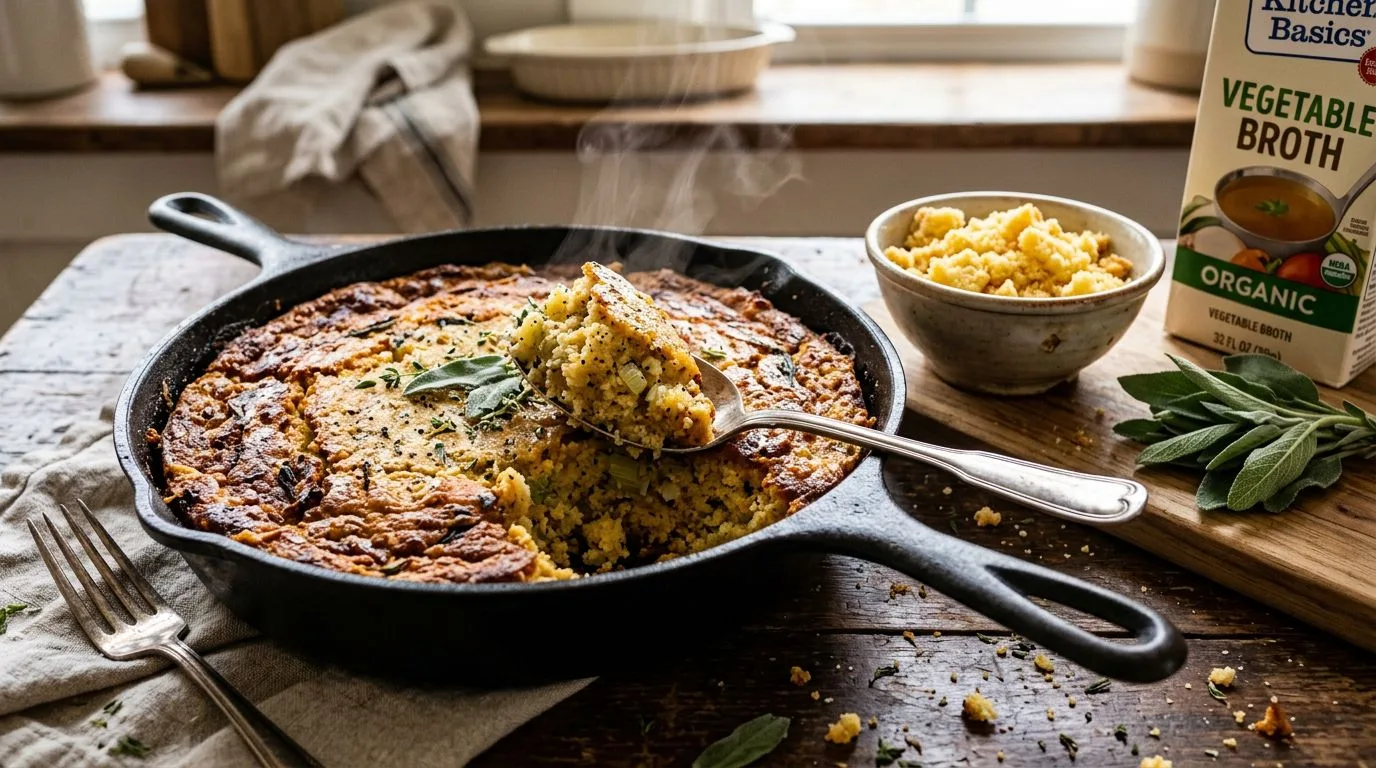
There’s something truly special about Southern cornbread dressing that makes it an absolute must-have at holiday tables across the South. Unlike traditional stuffing made with wheat bread, this classic side dish features crumbled cornbread as its foundation, creating a texture and flavor that’s uniquely comforting and satisfying. I love how the cornbread absorbs the savory chicken broth while maintaining just enough structure to hold together beautifully on the plate.
This recipe delivers everything you want in a perfect dressing: a moist, tender interior with golden, slightly crispy edges, aromatic vegetables, and herbs that complement rather than overpower. Whether you’re preparing your Thanksgiving feast or simply craving a taste of Southern comfort food, this cornbread dressing pairs beautifully with roasted turkey, gravy, and all your favorite holiday sides. I find that making this dish brings people together in a way few other recipes can—it’s the kind of food that turns a meal into a memory.
The beauty of this recipe lies in its simplicity and the way each ingredient plays an essential role. The combination of cornbread and white bread creates the ideal texture, while the trinity of onions, celery, and garlic provides an aromatic base that fills your kitchen with the most wonderful scent as it bakes.
Why You’ll Love This Southern Cornbread Dressing
This cornbread dressing recipe checks all the boxes for what makes a side dish truly memorable. First, it’s incredibly flavorful without being complicated—the herbs and seasonings are perfectly balanced to enhance rather than mask the natural sweetness of the cornbread. I love that this recipe achieves that ideal texture: moist throughout with those coveted crispy golden edges that everyone fights over at the dinner table.
Another reason this recipe stands out is its versatility. While it’s a traditional Thanksgiving staple, I find myself making it for Sunday dinners, potlucks, and any time I’m serving roasted poultry. It’s also wonderfully forgiving—if you prefer a slightly drier dressing, you can reduce the broth a bit, or if you like it extra moist, add a splash more. The recipe accommodates different preferences while still delivering authentic Southern flavor.
The make-ahead friendly nature of this dish is another huge advantage. You can prepare the cornbread a day or two in advance, and even assemble the entire dressing the night before baking. This means less stress on the big day and more time to spend with family and friends. Plus, it feeds a crowd generously, making it perfect for holiday gatherings.
Ingredients and Substitutions
The foundation of great Southern cornbread dressing starts with quality ingredients, and each one serves a specific purpose in creating the perfect texture and flavor.
Cornbread: Day-old cornbread is essential because it’s dry enough to absorb the broth without becoming mushy. I recommend using homemade cornbread for the best flavor, but store-bought works in a pinch. The cornbread should be slightly sweet but not cake-like—traditional Southern cornbread with minimal sugar works best.
White Bread: Adding white bread to the cornbread helps bind the dressing and creates a better texture. You can substitute with French bread or even biscuits if you prefer, though the texture will vary slightly.
Butter: Unsalted butter allows you to control the salt level in the dish. If using salted butter, reduce the added salt accordingly. For a richer flavor, you can use half butter and half rendered turkey or chicken fat.
Vegetables: Yellow onions provide sweetness, while celery adds crunch and a subtle vegetal flavor. I don’t recommend substituting these as they’re fundamental to the dish’s character. The garlic adds depth without overwhelming the other flavors.
Chicken Broth: Low-sodium broth is best so you can control seasoning. You can substitute turkey broth, vegetable broth, or even homemade stock. The amount of liquid is crucial—you want the mixture moist but not soupy.
Eggs: These act as a binder, helping the dressing hold together when served. There’s no good substitute for eggs in this recipe as they’re structurally important.
Herbs and Seasonings: Poultry seasoning is a blend typically containing sage, thyme, marjoram, and rosemary. Combined with additional sage and thyme, these herbs create that classic dressing flavor. Fresh herbs can be substituted—use about three times the amount of fresh herbs as dried.
Fresh Parsley: This adds a pop of color and fresh flavor. You can substitute with fresh sage or omit if necessary, though I love the brightness it brings to the dish.
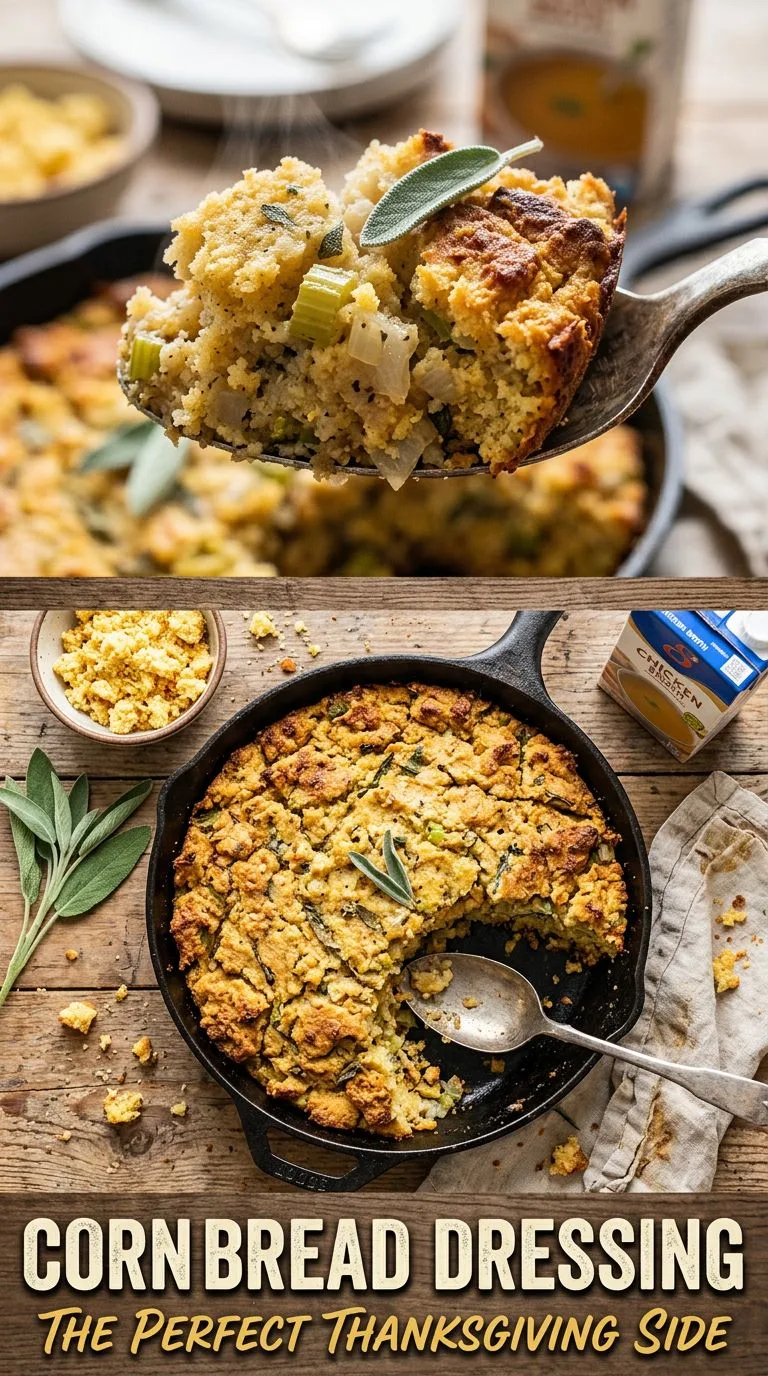
How to Make Southern Cornbread Dressing
Making cornbread dressing is straightforward, but attention to detail ensures the best results. The process involves preparing your bread base, creating a flavorful vegetable mixture, combining everything with the right amount of liquid, and baking to golden perfection.
Prepare Your Bread Base: Start by crumbling your day-old cornbread into a large mixing bowl. The pieces should be roughly bite-sized—not too fine, as you want some texture in the finished dish. Add the cubed white bread and toss everything together. If your bread isn’t quite dry enough, you can spread it on baking sheets and toast it lightly in a 250°F oven for 15-20 minutes.
Cook the Vegetables: Melting the butter over medium heat and cooking the onions and celery until tender is crucial for developing flavor. I like to cook them for the full 6-8 minutes until they’re soft and the onions are translucent. This step removes any raw bite and brings out their natural sweetness. Adding the garlic and dried herbs at the end prevents them from burning while allowing them to bloom and release their aromatic oils.
Combine Everything: Transferring the vegetable mixture to the bread and tossing gently ensures even distribution of flavors. The fresh parsley goes in at this stage. When you whisk together the broth and eggs, you’re creating a custard-like mixture that will bind everything together and keep the dressing moist.
Add Liquid Gradually: This is perhaps the most important step. Pour the broth mixture over the bread gradually, stirring gently as you go. You want every piece of bread moistened, but you don’t want it swimming in liquid. The mixture should look quite wet but not soupy—it will absorb more liquid as it bakes.
Bake Properly: Transferring to your prepared baking dish and spreading evenly without packing too tightly allows heat to circulate. Covering with foil for the first 30 minutes steams the dressing and keeps it moist, while removing the foil for the final 15-20 minutes allows the top to develop that beautiful golden color and slight crispness. The internal temperature should reach 165°F for food safety.
Expert Tips for Best Results
After making cornbread dressing countless times, I’ve learned several tricks that elevate this dish from good to absolutely exceptional.
Use Properly Aged Bread: Day-old or even two-day-old bread is ideal. If you’re in a hurry, you can dry out fresh cornbread by spreading it on baking sheets and placing it in a 250°F oven for 20-30 minutes. The bread should feel dry to the touch but not toasted.
Don’t Overmix: When combining the broth with the bread mixture, stir gently. Overmixing can make the dressing gummy and dense. You want to maintain some texture and air in the mixture.
Adjust Moisture to Preference: Southern dressing preferences vary—some like it quite moist, others prefer it drier. Start with the amount of broth listed, but reserve about 1/2 cup. If the mixture seems too dry after mixing, add the remaining broth gradually until you reach your preferred consistency.
Don’t Pack It Down: When transferring the mixture to your baking dish, spread it evenly but resist the urge to press it down firmly. A lighter hand results in a fluffier, more tender dressing.
Check for Doneness: The dressing is done when the top is golden brown, the edges are slightly crispy, and an instant-read thermometer inserted in the center reads 165°F. If the top is browning too quickly, tent it loosely with foil.
Let It Rest: Allowing the dressing to rest for 10 minutes after baking helps it set up and makes it easier to serve in neat portions.
Serving Suggestions
Southern cornbread dressing is incredibly versatile and pairs beautifully with a wide range of dishes. My favorite way to serve it is as part of a traditional Thanksgiving spread alongside roast turkey, rich gravy, cranberry sauce, and green bean casserole. The dressing soaks up gravy wonderfully, creating the perfect bite when combined with tender turkey.
Beyond Thanksgiving, this dressing complements any roasted poultry beautifully. I love serving it with roasted chicken, Cornish hens, or even pork chops. The savory, herb-forward flavors work particularly well with dishes that have pan drippings you can turn into gravy.
For a complete Southern comfort meal, serve the dressing with fried chicken, collard greens, and sweet potato casserole. The combination of textures and flavors represents the best of Southern cooking. I also recommend serving it with roasted vegetables like Brussels sprouts, carrots, or butternut squash for a lighter but still satisfying meal.
Don’t forget about the leftovers—cold cornbread dressing makes an excellent base for a turkey sandwich, or you can reheat it and top it with a fried egg for a hearty breakfast. Some people even enjoy it crumbled into soup for added texture and flavor.
Variations and Substitutions
While this classic recipe is delicious as written, there are several ways to customize it to suit your preferences or dietary needs.
Add Sausage: For a heartier dressing, brown 1 pound of breakfast sausage and add it to the vegetable mixture. This creates a more substantial side dish that can almost serve as a main course.
Include Giblets: Traditional Southern dressing often includes chopped cooked giblets (heart, gizzard, and liver from the turkey). Simmer them until tender, chop finely, and add to the mixture.
Add Pecans: Toasted chopped pecans add a wonderful crunch and nutty flavor. Fold in 1 cup of toasted pecans with the vegetables.
Use Different Herbs: While sage and thyme are traditional, you can experiment with rosemary, marjoram, or even a touch of tarragon for different flavor profiles.
Make It Gluten-Free: Use gluten-free cornbread and gluten-free bread to make this dish suitable for those avoiding gluten. The texture will be slightly different but still delicious.
Vegetarian Version: Substitute vegetable broth for chicken broth to make this dish vegetarian. You might want to add a bit of extra butter or olive oil for richness.
Add Vegetables: Some cooks like to add mushrooms, bell peppers, or even dried cranberries for extra flavor and texture. Sauté any additional vegetables with the onions and celery.
Spicy Version: Add diced jalapeños or a pinch of cayenne pepper for a kick of heat that complements the cornbread beautifully.
Storage, Freezing, and Reheating
Proper storage ensures your cornbread dressing stays delicious for days after making it, and it freezes beautifully for future meals.
Refrigerator Storage: Allow the dressing to cool completely, then cover tightly with plastic wrap or transfer to an airtight container. It will keep in the refrigerator for 3-4 days. I recommend storing it in the baking dish if possible, as this makes reheating easier.
Freezing: Cornbread dressing freezes exceptionally well. You can freeze it either before or after baking. To freeze unbaked dressing, assemble it completely in a freezer-safe baking dish, cover tightly with plastic wrap and then aluminum foil, and freeze for up to 3 months. To freeze baked dressing, let it cool completely, wrap tightly, and freeze for up to 3 months.
Reheating from Refrigerator: Preheat your oven to 350°F. If the dressing seems dry, drizzle a few tablespoons of chicken broth over the top. Cover with foil and bake for 20-25 minutes until heated through. Remove the foil for the last 5 minutes to crisp up the top.
Reheating from Frozen: For unbaked frozen dressing, thaw in the refrigerator overnight, then bake according to the original instructions. For baked frozen dressing, thaw overnight in the refrigerator, then reheat covered at 350°F for 30-35 minutes until heated through.
Microwave Reheating: For individual portions, place dressing in a microwave-safe dish, add a tablespoon of broth, cover, and microwave on 50% power in 1-minute intervals until heated through. This method works well for quick lunches but won’t maintain the crispy edges.
Frequently Asked Questions
What’s the difference between dressing and stuffing? Traditionally, stuffing is cooked inside the bird while dressing is baked separately in a dish. In the South, we almost always call it dressing regardless of how it’s cooked, and this recipe is designed to be baked in a dish rather than stuffed into poultry.
Can I make this ahead of time? Absolutely! You can prepare the cornbread 2-3 days in advance, and you can even assemble the entire dressing the night before baking. Keep it covered in the refrigerator and add about 10 minutes to the covered baking time if baking straight from the fridge.
Why is my dressing mushy? Mushy dressing usually results from using bread that’s too fresh or adding too much liquid. Make sure your cornbread is at least a day old and quite dry, and add the broth gradually, stopping when the mixture is moist but not soupy.
Why is my dressing dry? If your dressing turns out dry, you likely didn’t add enough liquid or overbaked it. Next time, add a bit more broth and check for doneness at the earlier end of the baking time range. You can also cover it with foil if it’s browning too quickly.
Can I cook this in a slow cooker? Yes, though the texture will be different—you won’t get those crispy edges. Prepare the dressing as directed, transfer to a greased slow cooker, and cook on low for 3-4 hours or high for 2-3 hours.
Do I have to use day-old cornbread? Day-old cornbread is strongly recommended because it’s dry enough to absorb the liquid without becoming mushy. Fresh cornbread contains too much moisture. If you must use fresh cornbread, dry it out in a low oven first.
Can I add oysters to this recipe? Yes! Oyster dressing is a Southern tradition. Drain 1 pint of oysters, chop them roughly, and fold them into the mixture before baking. Add some of the oyster liquor in place of some of the chicken broth for extra flavor.
How do I know when it’s done? The dressing is done when the top is golden brown, the edges are crispy, and an instant-read thermometer inserted in the center reads 165°F. The texture should be set but still moist inside.
Southern Cornbread Dressing
A classic Southern cornbread dressing made with crumbled homemade cornbread, savory onions, celery, chicken broth, and traditional herbs. This moist and flavorful Thanksgiving side dish is perfect alongside roasted turkey and homemade gravy.
Cook Time: 45 minutes
Resting Time: 10 minutes
Total Time: 1 hour 15 minutes
Servings: 12
Difficulty: Easy
Cuisine: Southern American
Course: Side Dish
Ingredients
- 8 cups crumbled day-old cornbread
- 4 slices day-old white bread, cubed
- 1/2 cup unsalted butter
- 1 large yellow onion, diced
- 3 celery stalks, diced
- 3 cloves garlic, minced
- 3 cups low-sodium chicken broth
- 3 large eggs, beaten
- 2 teaspoons poultry seasoning
- 1 teaspoon dried sage
- 1 teaspoon dried thyme
- 1 teaspoon salt
- 1/2 teaspoon black pepper
- 1/4 cup chopped fresh parsley
Instructions
- Preheat the oven to 350°F and generously grease a 9×13-inch baking dish.
- Crumble the day-old cornbread into a large mixing bowl and add the cubed white bread.
- Melt the butter in a large skillet over medium heat. Add the diced onion and celery and cook for 6–8 minutes until tender.
- Stir in the minced garlic, poultry seasoning, dried sage, dried thyme, salt, and black pepper. Cook for another minute until fragrant.
- Transfer the cooked vegetable mixture to the bowl with the cornbread and white bread. Add the chopped fresh parsley and toss gently.
- In a separate bowl, whisk the chicken broth and beaten eggs together.
- Gradually pour the broth mixture over the cornbread mixture, stirring gently until evenly moistened. The dressing should be moist but not watery.
- Transfer the mixture to the prepared baking dish and spread evenly without packing it down too tightly.
- Cover with foil and bake for 30 minutes. Remove the foil and continue baking for 15–20 minutes, until golden on top, lightly crisp around the edges, and the center reaches 165°F.
- Allow the cornbread dressing to rest for 10 minutes before serving with turkey and gravy.
Recipe Notes
- Day-old cornbread is essential for the proper texture. If using fresh cornbread, dry it out in a 250°F oven for 20-30 minutes first.
- The dressing should look quite moist before baking—it will firm up as it cooks and the eggs set.
- For a richer flavor, substitute some of the butter with rendered turkey or chicken fat.
- This recipe can be assembled the night before and refrigerated. Add 10 minutes to the covered baking time if baking straight from the refrigerator.
- Leftovers reheat beautifully. Add a splash of broth before reheating to maintain moisture.
Estimated Nutrition Per Serving
Calories: 285 kcal
Carbohydrates: 28g
Protein: 8g
Fat: 15g
Saturated Fat: 7g
Fiber: 2g
Sugar: 4g
Sodium: 620mg
Nutrition information is estimated and may vary based on specific ingredients used.
