
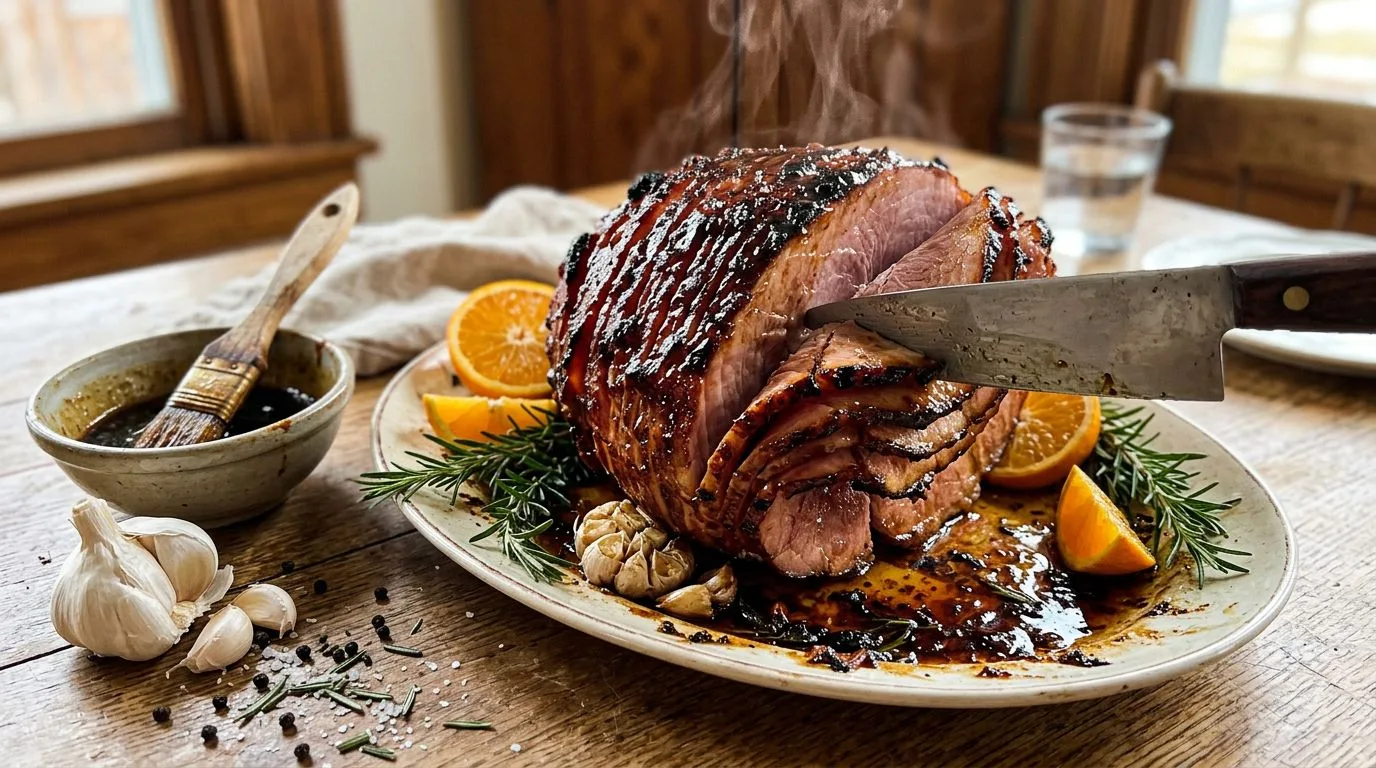
When it comes to holiday centerpieces, few dishes command attention quite like a beautifully glazed ham. This honey garlic glazed ham combines the natural sweetness of honey with the savory depth of garlic, creating a stunning main course that’s surprisingly simple to prepare. The glaze caramelizes beautifully in the oven, forming a glossy, flavorful coating that makes every slice irresistible.
I love serving this ham for Christmas dinner, Thanksgiving gatherings, and Easter celebrations. The combination of honey, brown sugar, and warm spices creates a glaze that’s both sweet and savory, while the garlic and Dijon mustard add complexity that keeps each bite interesting. Whether you’re feeding a crowd or planning for delicious leftovers, this recipe delivers impressive results without requiring advanced cooking skills.
The best part? Since you’re starting with a fully cooked ham, you’re really just warming it through and adding that spectacular glaze. This means less stress in the kitchen and more time to spend with your guests. The aroma alone will have everyone gathering in the kitchen long before dinner is ready.
Why You’ll Love This Honey Garlic Glazed Ham
This recipe has become my go-to for holiday entertaining, and for good reason. The glaze comes together in just minutes on the stovetop, using ingredients you likely already have in your pantry. Unlike some complicated glazes that require multiple steps or hard-to-find ingredients, this one is straightforward and foolproof.
The flavor profile is perfectly balanced. The honey and brown sugar provide sweetness, while the garlic, Dijon mustard, and apple cider vinegar add savory and tangy notes that prevent the glaze from being one-dimensional. The warm spices—cinnamon and cloves—give it that classic holiday aroma that fills your home with comfort and celebration.
I also appreciate how forgiving this recipe is. Whether you’re working with a 5-pound ham or a 7-pound ham, the timing adjusts easily, and the glaze quantity works beautifully for that range. The multiple basting sessions ensure every inch of the ham gets coated in that gorgeous, sticky glaze, creating a caramelized exterior that’s absolutely stunning when you bring it to the table.
Another reason I recommend this recipe is its versatility. While it’s perfect for major holidays, it’s also simple enough for a Sunday dinner or special family gathering. The leftovers are incredibly useful too—perfect for sandwiches, breakfast scrambles, or adding to soups and casseroles throughout the week.
Ingredients and Substitutions
Let me walk you through what you’ll need for this honey garlic glazed ham and some helpful substitutions if you need to adapt the recipe.
Fully Cooked Bone-In Ham: I recommend a 5-7 pound bone-in ham for this recipe. The bone adds flavor and helps the ham stay moist during reheating. Look for a spiral-sliced ham if you want easier serving, or a whole ham if you prefer to slice it yourself. You can use a boneless ham, but reduce the cooking time slightly as boneless hams heat through faster.
Honey: Use pure honey for the best flavor. I find that mild honey varieties work best, allowing the other flavors to shine through. If you only have a strongly flavored honey like buckwheat, you might want to reduce the quantity slightly and increase the brown sugar.
Brown Sugar: Packed brown sugar adds molasses notes and helps create that beautiful caramelization. Light or dark brown sugar both work—dark brown sugar will give you a slightly deeper, more molasses-forward flavor.
Garlic: Fresh minced garlic is essential here. I don’t recommend substituting garlic powder, as the fresh garlic provides a more complex, aromatic flavor that’s central to this recipe. Four cloves gives you noticeable garlic flavor without overwhelming the sweetness.
Dijon Mustard: This adds tanginess and helps balance the sweetness. Yellow mustard can work in a pinch, but Dijon provides a more sophisticated flavor. Whole grain mustard is another excellent option if you like a bit of texture.
Apple Cider Vinegar: The acidity brightens the glaze and cuts through the richness of the ham. White wine vinegar or even pineapple juice can substitute if needed.
Butter: Unsalted butter adds richness and helps the glaze adhere to the ham. You can use salted butter if that’s what you have, but you might want to taste the glaze before adding any additional salt.
Orange Juice: Fresh or store-bought orange juice adds a subtle citrus note that complements the honey beautifully. Pineapple juice is a classic alternative that works wonderfully with ham.
Warm Spices: Ground cinnamon and cloves provide that holiday warmth. If you don’t have cloves, you can use all cinnamon, or add a pinch of nutmeg or allspice instead.
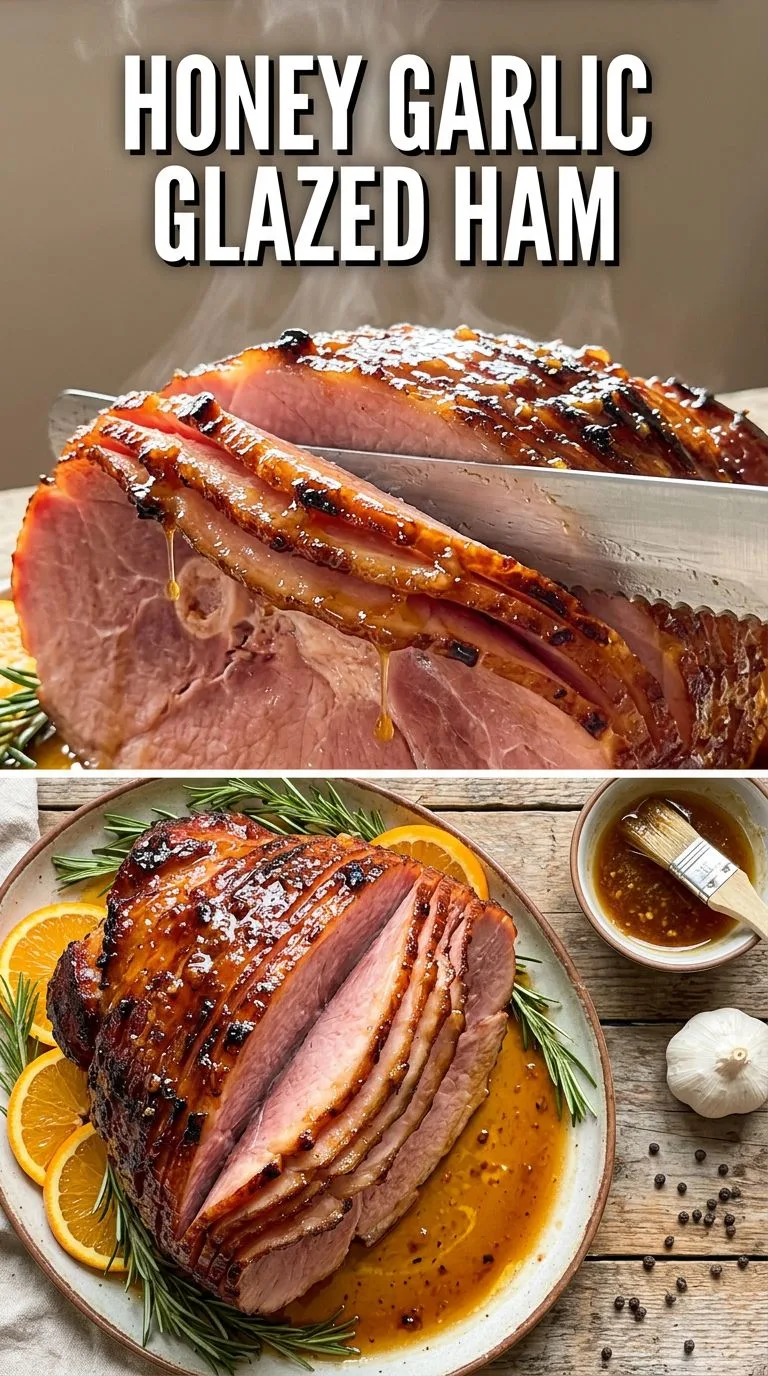
How to Make Honey Garlic Glazed Ham
Making this glazed ham is remarkably straightforward. The key is proper preparation and regular basting to build up those beautiful layers of glaze.
Prepare the Ham: Start by preheating your oven to 325°F and positioning a rack in the lower-middle position. Remove all packaging from your fully cooked ham and place it cut-side down in a large roasting pan. I like to add a small splash of water to the bottom of the pan—this prevents the drippings from burning and creates a bit of steam to keep the ham moist. Cover the ham tightly with aluminum foil.
Make the Glaze: While the ham begins warming, prepare your glaze. In a small saucepan over medium heat, combine the honey, brown sugar, minced garlic, Dijon mustard, apple cider vinegar, butter, orange juice, cinnamon, cloves, and black pepper. Stir continuously for 4-5 minutes until the sugar completely dissolves and the mixture becomes smooth and slightly thickened. The butter should be fully incorporated, and the glaze should have a pourable but slightly syrupy consistency. Set it aside until you’re ready to use it.
Initial Warming: Allow the ham to warm in the covered roasting pan according to the package directions. Generally, this means about 10-15 minutes per pound for a fully cooked ham. For a 6-pound ham, you’re looking at roughly 60-90 minutes of covered warming time. The goal during this phase is to heat the ham through gently without drying it out.
Glaze and Caramelize: This is where the magic happens. During the final 30 minutes of cooking, remove the foil and brush the ham generously with your honey garlic glaze. Make sure to get into any crevices if you’re using a spiral-sliced ham. Return the ham to the oven uncovered and continue roasting, brushing with additional glaze every 10 minutes. I typically do three rounds of glazing during this final 30 minutes. Each layer builds on the previous one, creating that gorgeous, glossy, caramelized exterior.
Check Temperature and Rest: Use a meat thermometer to check the internal temperature. For a fully cooked USDA-inspected ham, you’re heating to 140°F. Always follow your specific ham’s package instructions, as some may require heating to 165°F. Once the ham reaches the proper temperature and has that beautiful caramelized coating, remove it from the oven and let it rest for 10-15 minutes before slicing. This resting period allows the juices to redistribute throughout the meat.
Expert Tips for Best Results
After making this recipe many times, I’ve learned a few tricks that ensure perfect results every time.
Don’t Skip the Foil: Covering the ham during the initial warming phase is crucial. This traps moisture and prevents the exterior from drying out before the interior is properly warmed. Only remove the foil for the final glazing period.
Warm Your Glaze: If your glaze thickens too much while sitting, gently rewarm it on the stove or in the microwave before brushing it on the ham. A slightly warm glaze spreads more easily and adheres better to the ham’s surface.
Use a Basting Brush: A silicone basting brush works wonderfully for applying the glaze evenly. It can handle the heat and won’t shed bristles like some natural-fiber brushes might.
Score the Ham: If you’re working with an unsliced ham, consider scoring the surface in a diamond pattern before glazing. This creates more surface area for the glaze to cling to and makes for a more dramatic presentation. Just be careful not to cut too deeply—about 1/4 inch is perfect.
Watch for Burning: During the final glazing period, keep an eye on the ham. The sugars in the glaze can go from beautifully caramelized to burnt quickly. If you notice any spots getting too dark, tent that area with a small piece of foil.
Save the Drippings: The pan drippings combined with any leftover glaze make an incredible sauce. I like to strain them and serve the sauce on the side for anyone who wants extra.
Plan Your Timing: Remember that the ham needs to rest after cooking. Plan your timing so the ham comes out of the oven about 15 minutes before you want to serve it. This also gives you time to finish any last-minute side dishes.
Serving Suggestions
This honey garlic glazed ham is a showstopper on its own, but pairing it with the right sides elevates your entire meal. I love serving it with classic holiday accompaniments that complement the sweet and savory glaze.
For vegetables, honey roasted carrots are a natural pairing—the honey in both dishes creates a cohesive flavor profile. Green beans almondine, roasted Brussels sprouts, or a simple mixed green salad with a tangy vinaigrette all work beautifully to balance the richness of the ham.
Starchy sides are essential for soaking up that delicious glaze. Make-ahead crockpot mashed potatoes are my go-to because they free up oven space and can be prepared in advance. Scalloped potatoes, sweet potato casserole, or a simple rice pilaf also pair wonderfully.
I recommend including a bread basket with dinner rolls or biscuits—perfect for sopping up any extra glaze on the plate. A fruit-based side like cranberry sauce or a fresh fruit salad provides a refreshing contrast to the rich ham.
For a complete holiday spread, consider adding a few relishes or condiments to the table. Whole grain mustard, horseradish sauce, or even a simple apple chutney give guests options to customize their plates.
Variations and Substitutions
While this recipe is delicious as written, there are several ways to customize it to your preferences or dietary needs.
Pineapple Honey Glaze: Replace the orange juice with pineapple juice and add a few pineapple rings to the ham during the final glazing period. Secure them with toothpicks or whole cloves for a classic presentation.
Maple Garlic Glaze: Substitute pure maple syrup for half of the honey for a different sweetness profile with deeper, more complex notes.
Spicy Honey Garlic: Add 1/4 to 1/2 teaspoon of cayenne pepper or red pepper flakes to the glaze for a sweet-and-spicy version that has a nice kick.
Bourbon Glaze: Add 2-3 tablespoons of bourbon to the glaze mixture for a sophisticated, adult version with deeper caramel notes.
Herb-Enhanced: Stir in a teaspoon of fresh thyme or rosemary to the glaze for an herbal note that complements the garlic beautifully.
Lower Sugar Option: You can reduce the brown sugar to 1/4 cup if you prefer a less sweet glaze. The honey still provides plenty of sweetness and caramelization.
Boneless Ham: If using a boneless ham, reduce the total cooking time by about 20-25% and check the temperature earlier, as boneless hams heat through more quickly.
Storage, Freezing, and Reheating
Proper storage ensures you can enjoy this ham for days after your initial meal, and the leftovers are incredibly versatile.
Refrigerator Storage: Allow the ham to cool to room temperature, then wrap it tightly in aluminum foil or transfer sliced ham to an airtight container. Properly stored, the ham will keep in the refrigerator for 5-7 days. I like to store any remaining glaze separately in a sealed container—it will keep for about a week and can be reheated and used on the ham or other dishes.
Freezing: Ham freezes reasonably well, though the texture may become slightly drier after thawing. Slice the ham and wrap portions tightly in plastic wrap, then place in freezer bags with as much air removed as possible. Frozen ham will maintain quality for 1-2 months. I don’t recommend freezing the glaze separately—it’s better to make fresh glaze when you’re ready to use the frozen ham.
Thawing: Thaw frozen ham in the refrigerator overnight. Never thaw at room temperature, as this can promote bacterial growth.
Reheating: For best results, reheat ham slices in a covered dish in a 325°F oven with a splash of broth, water, or leftover glaze to keep them moist. Heat until warmed through, about 10-15 minutes depending on the quantity. You can also reheat individual portions in the microwave—place slices on a microwave-safe plate, cover with a damp paper towel, and heat in 30-second intervals until warm.
Using Leftovers: Leftover ham is incredibly versatile. I love using it in breakfast scrambles, omelets, or frittatas. It’s perfect for sandwiches, added to mac and cheese, stirred into soups, or diced and added to salads. The sweet glaze flavor works particularly well in breakfast dishes and pairs beautifully with eggs and cheese.
Frequently Asked Questions
Can I use a spiral-sliced ham?
Absolutely! Spiral-sliced hams work beautifully with this recipe. The pre-slicing actually allows the glaze to penetrate between the slices, creating more flavorful bites. Just be extra careful when basting to get the glaze into the crevices.
Do I need to score the ham?
If you’re using a spiral-sliced ham, scoring isn’t necessary. For a whole unsliced ham, scoring in a diamond pattern helps the glaze penetrate and creates a more attractive presentation, but it’s not required for the recipe to work.
Can I make the glaze ahead of time?
Yes! You can prepare the glaze up to 3 days in advance. Store it in an airtight container in the refrigerator and gently rewarm it on the stovetop or in the microwave before using. Stir well after reheating, as the ingredients may separate slightly during storage.
What if my glaze is too thick or too thin?
If the glaze is too thick, add a tablespoon of water, orange juice, or apple cider vinegar and stir until you reach the desired consistency. If it’s too thin, simmer it for a few more minutes to reduce and thicken, or add an extra tablespoon of brown sugar.
Can I use this glaze on other meats?
Definitely! This glaze works wonderfully on pork tenderloin, pork chops, chicken thighs, or even salmon. Adjust the cooking times according to the specific protein you’re using.
Why is my ham dry?
The most common cause of dry ham is overcooking or cooking at too high a temperature. Since you’re starting with a fully cooked ham, you’re only warming it through, not cooking it from raw. Keep it covered during most of the warming time and only uncover for the final glazing period. Also, make sure not to exceed the recommended internal temperature.
Can I double the glaze recipe?
Yes, if you’re working with a larger ham (8-10 pounds) or want extra glaze for serving, you can easily double all the glaze ingredients. Any leftover glaze can be stored and used on other dishes throughout the week.
What’s the best way to slice the ham?
For a bone-in ham, slice perpendicular to the bone, working your way around it. Use a sharp carving knife and make slices about 1/4 to 1/3 inch thick. If you’re working with a spiral-sliced ham, simply follow the pre-cut lines and separate the slices.
Honey Garlic Glazed Ham
A juicy and flavorful honey garlic glazed ham coated in a sweet and savory glaze made with honey, garlic, brown sugar, and warm spices. This impressive oven-baked ham is perfect for Thanksgiving, Christmas, and holiday family dinners.
- Prep Time: 15 minutes
- Cook Time: 90 minutes
- Resting Time: 15 minutes
- Total Time: 2 hours
- Servings: 10-12 servings
- Difficulty: Easy
- Cuisine: American
- Course: Main Course
Ingredients
- 1 fully cooked bone-in ham (5-7 lbs)
- 1/2 cup honey
- 1/3 cup packed brown sugar
- 4 cloves garlic, minced
- 2 tablespoons Dijon mustard
- 2 tablespoons apple cider vinegar
- 2 tablespoons unsalted butter
- 1/4 cup orange juice
- 1/2 teaspoon ground cinnamon
- 1/4 teaspoon ground cloves
- 1/4 teaspoon black pepper
Instructions
- Preheat the oven to 325°F and place an oven rack in the lower-middle position.
- Remove the packaging from the fully cooked ham and place it cut-side down in a large roasting pan. Add a small splash of water to the bottom of the pan if needed to prevent the drippings from burning.
- Cover the ham tightly with aluminum foil and place it in the oven.
- In a small saucepan over medium heat, combine the honey, brown sugar, minced garlic, Dijon mustard, apple cider vinegar, butter, orange juice, cinnamon, cloves, and black pepper.
- Cook the glaze for 4-5 minutes, stirring until the sugar dissolves and the mixture becomes smooth and slightly thickened.
- Warm the ham according to its package directions, generally about 10-15 minutes per pound for a fully cooked ham, until it approaches its recommended reheating temperature.
- During the final 30 minutes, remove the foil and brush the ham generously with the honey garlic glaze.
- Continue roasting uncovered, brushing with additional glaze every 10 minutes, until glossy and lightly caramelized.
- For a fully cooked USDA-inspected ham, heat to an internal temperature of 140°F; follow the package instructions when different, and heat other fully cooked hams to 165°F when required.
- Let the ham rest for 10-15 minutes, slice, and serve with the remaining warmed glaze.
Recipe Notes
- Cooking time will vary based on the size of your ham. Plan for approximately 10-15 minutes per pound for warming a fully cooked ham.
- If using a spiral-sliced ham, be sure to brush glaze between the slices for maximum flavor.
- Any leftover glaze can be stored in the refrigerator for up to one week and reheated for serving with leftover ham.
- For easier cleanup, line your roasting pan with aluminum foil before placing the ham inside.
- The ham can be prepared up to the glazing stage earlier in the day, then finished with glazing just before serving.
Nutrition Information (Per Serving, Estimated)
- Calories: 285
- Carbohydrates: 18g
- Protein: 28g
- Fat: 11g
- Saturated Fat: 4g
- Fiber: 0g
- Sugar: 17g
- Sodium: 1450mg
Nutrition information is estimated based on standard ingredient measurements and serving sizes. Actual values may vary depending on specific brands and preparation methods.
