
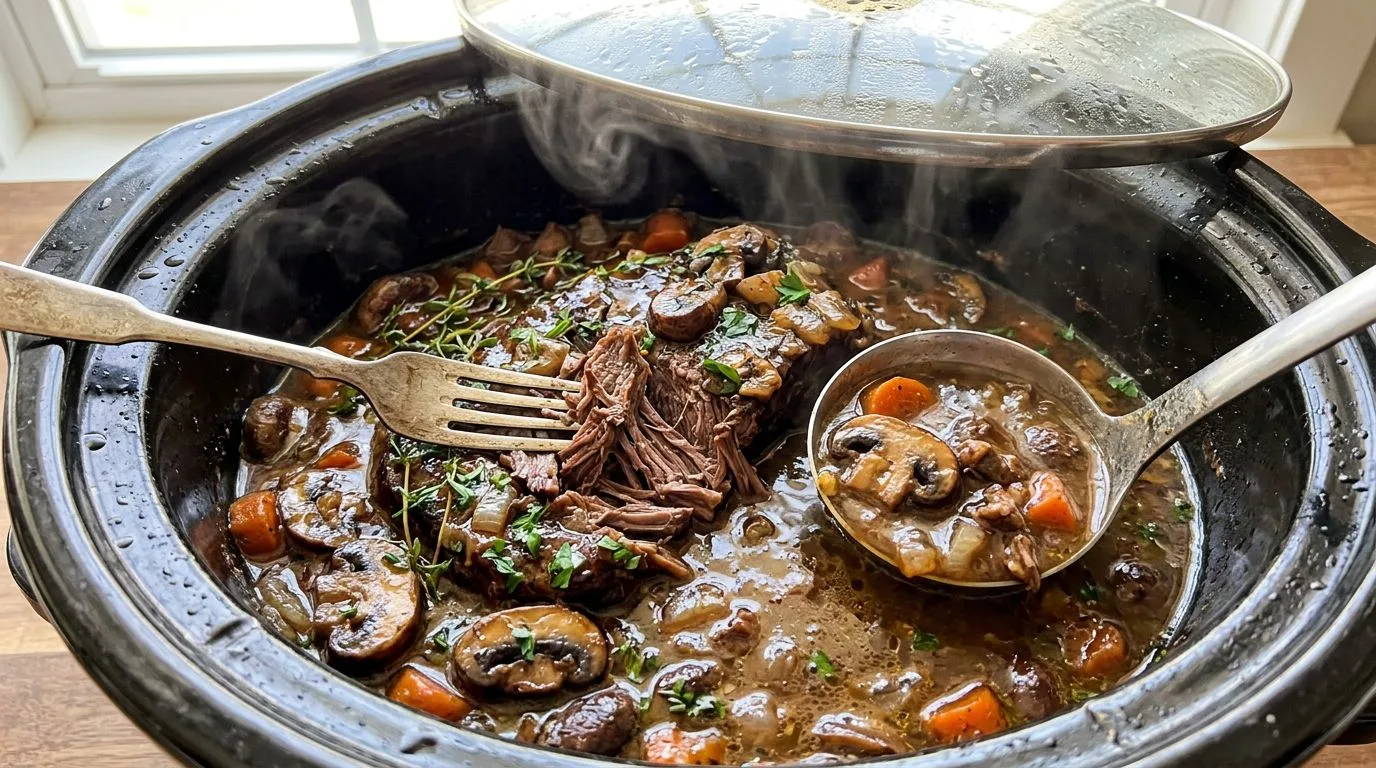
There’s something deeply satisfying about coming home to the aroma of a slow cooker beef pot roast that’s been simmering all day. This Slow Cooker Beef Pot Roast with Red Wine and Mushrooms transforms an affordable chuck roast into an incredibly tender, flavorful centerpiece that practically falls apart at the touch of a fork. The combination of earthy mushrooms, robust red wine, and aromatic herbs creates a rich, savory sauce that elevates this comfort food classic into something truly special.
I love how this recipe takes minimal hands-on effort yet delivers restaurant-quality results. The slow cooker does all the heavy lifting, gently breaking down the tough connective tissue in the chuck roast while infusing it with deep, complex flavors from the wine and vegetables. Whether you’re planning a cozy Sunday dinner or preparing for a holiday gathering, this pot roast delivers impressive results without keeping you tied to the kitchen. The mushrooms add an earthy richness that pairs beautifully with the wine-based gravy, making every bite absolutely memorable.
What I find most appealing about this dish is its versatility and forgiving nature. The slow cooker maintains consistent, gentle heat that prevents overcooking, and the recipe easily adapts to your schedule. You can start it in the morning and return to a complete meal, or prepare it on high heat for a faster dinner option. Either way, you’ll end up with melt-in-your-mouth beef surrounded by tender vegetables in a luscious, wine-enriched gravy.
Why You’ll Love This Slow Cooker Beef Pot Roast
This recipe checks all the boxes for a perfect comfort food dinner. The slow cooking method ensures the beef becomes incredibly tender while developing layers of flavor that you simply can’t achieve with faster cooking methods. I recommend this recipe for busy weeknights and special occasions alike because it requires minimal active cooking time yet produces impressive results.
The red wine adds sophisticated depth to the gravy, creating a sauce that’s rich enough to serve at holiday dinners but approachable enough for everyday meals. The mushrooms contribute an umami-packed earthiness that complements the beef beautifully, while the aromatics and herbs round out the flavor profile with fresh, savory notes.
Another reason I love this pot roast is how well it feeds a crowd. A 3-4 pound chuck roast easily serves 6-8 people, making it ideal for family gatherings or meal prep for the week ahead. The leftovers actually taste even better the next day as the flavors continue to meld, and the meat reheats beautifully without drying out.
Ingredients and Substitutions
The ingredient list for this Slow Cooker Beef Pot Roast is straightforward, featuring pantry staples and fresh vegetables that work together to create maximum flavor. Let me walk you through the key components and offer some helpful substitutions.
Beef Chuck Roast: This is the star of the show. Chuck roast is ideal for slow cooking because it contains enough marbling and connective tissue to become tender and flavorful during the long cooking process. I recommend choosing a roast between 3-4 pounds for best results. If you can’t find chuck roast, a boneless beef shoulder roast works similarly well.
Red Wine: Use a dry red wine that you’d enjoy drinking. I like to use Cabernet Sauvignon, Merlot, or Pinot Noir. The wine doesn’t need to be expensive, but avoid cooking wines that contain added salt. If you prefer not to use alcohol, substitute with additional beef broth plus a tablespoon of balsamic vinegar for acidity.
Mushrooms: Cremini mushrooms (also called baby bellas) offer wonderful flavor and texture. You can substitute with white button mushrooms, or for a more luxurious version, use a mix that includes shiitake or portobello mushrooms.
Vegetables: The classic combination of onions, carrots, and celery provides aromatic depth and sweetness. These vegetables are fairly standard, but you could add parsnips or turnips if you’d like additional root vegetables.
Herbs: Fresh rosemary and thyme are my preferred choices for their robust, earthy flavors that stand up well to long cooking times. If you only have dried herbs, use about one-third the amount (1 teaspoon each of dried rosemary and thyme).
Tomato Paste and Worcestershire Sauce: These ingredients add umami depth and help create a more complex, savory gravy. Don’t skip them—they make a noticeable difference in the final flavor.
How to Make Slow Cooker Beef Pot Roast with Red Wine and Mushrooms
The preparation process for this pot roast is remarkably simple, though I do recommend taking the time to sear the meat properly. This step creates a flavorful crust and adds depth to the finished dish.
Prepare and Sear the Beef: Start by patting the chuck roast completely dry with paper towels. This step is crucial for achieving a good sear. Season the roast generously on all sides with salt and black pepper. Heat olive oil in a large skillet over medium-high heat until it shimmers, then carefully place the roast in the pan. Sear for 3-4 minutes per side until you develop a deep brown crust. Don’t move the meat around—let it sit undisturbed to develop that beautiful caramelization.
Layer the Vegetables: Transfer the seared roast to your slow cooker. Arrange the sliced onions, minced garlic, mushrooms, carrot chunks, and chopped celery around the meat. I like to nestle the vegetables around the sides rather than piling them on top, which helps everything cook evenly.
Create the Braising Liquid: In a mixing bowl, whisk together the red wine, beef broth, tomato paste, Worcestershire sauce, fresh rosemary, and fresh thyme. Make sure the tomato paste is fully incorporated—it can be stubborn, so whisk thoroughly. Pour this mixture over the roast and vegetables, then tuck the bay leaves into the liquid.
Slow Cook: Cover the slow cooker with its lid and set it to your preferred cooking time. For the most tender results, I recommend cooking on LOW for 8-10 hours. If you’re shorter on time, cook on HIGH for 5-6 hours. Resist the temptation to lift the lid during cooking, as this releases heat and extends the cooking time.
Make the Gravy: Once the beef is fork-tender, carefully remove it along with the vegetables and keep them warm on a serving platter. Discard the bay leaves. Transfer the cooking liquid to a saucepan and bring it to a simmer. Mix the cornstarch with cold water to create a slurry, then whisk it into the simmering liquid. Continue cooking for 2-3 minutes until the gravy thickens to your desired consistency.
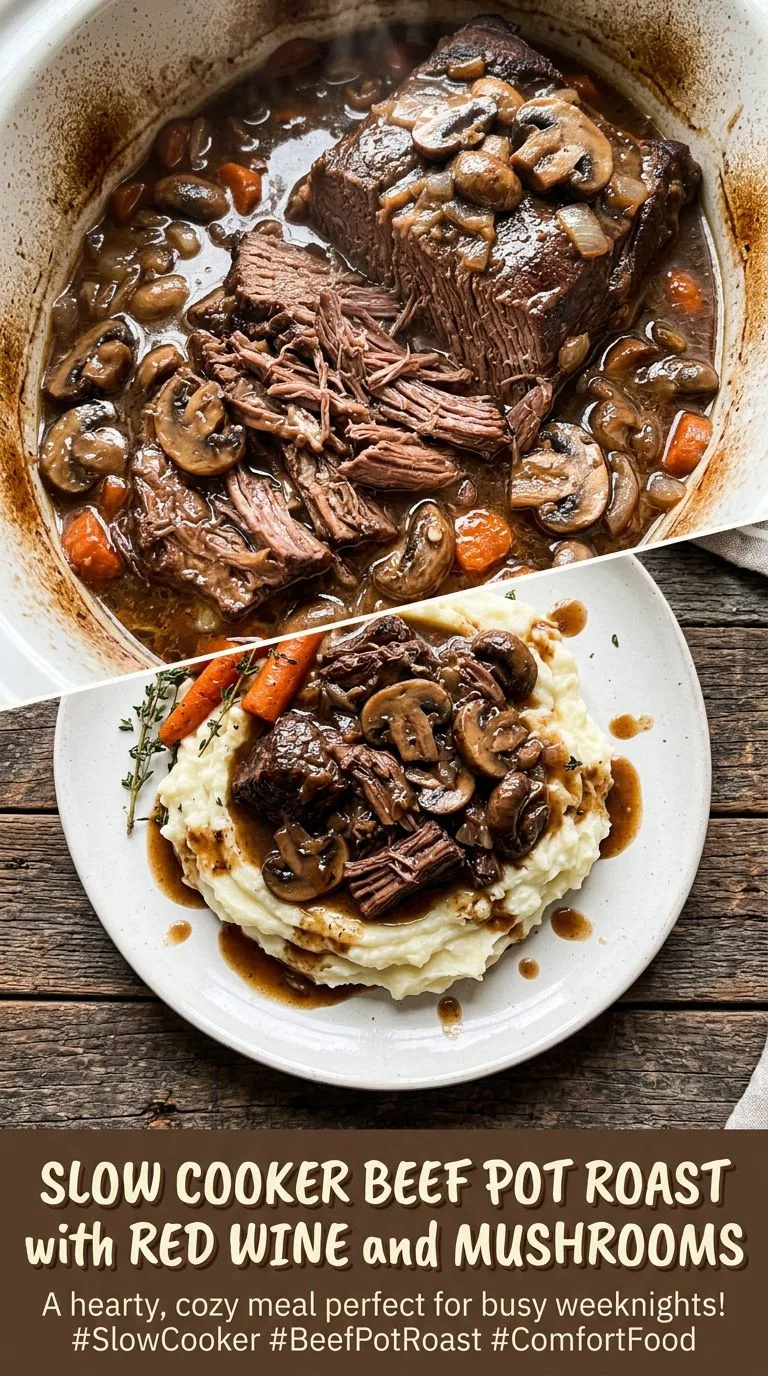
Serve: You can either slice the pot roast or shred it with two forks—it should be tender enough to pull apart easily. Serve the beef with the mushrooms and vegetables, generously spooning the red wine gravy over everything.
Expert Tips for Best Results
After making pot roast countless times, I’ve learned several techniques that consistently produce the best results. Here are my top tips for success.
Don’t Skip the Searing: While it’s tempting to skip this step and save time, searing the meat creates a flavorful crust through the Maillard reaction. This adds significant depth to the finished dish. The few extra minutes are absolutely worth it.
Choose the Right Size Roast: A 3-4 pound roast is ideal for most standard slow cookers. If your roast is significantly larger, you may need to adjust the cooking time or cut it into two pieces to ensure even cooking.
Keep the Lid Closed: Every time you lift the slow cooker lid, you release heat and moisture, which can add 15-20 minutes to your cooking time. Trust the process and resist peeking until the minimum cooking time has elapsed.
Test for Doneness: The roast is ready when it’s fork-tender and easily pulls apart. If you insert a fork and it slides in with little resistance, you’re good to go. If there’s still resistance, continue cooking for another 30-60 minutes.
Let the Meat Rest: After removing the roast from the slow cooker, let it rest for 5-10 minutes before slicing or shredding. This allows the juices to redistribute throughout the meat.
Adjust Gravy Consistency: If your gravy is too thin even after adding the cornstarch slurry, continue simmering it to reduce further. If it’s too thick, simply whisk in a bit more beef broth until you reach your preferred consistency.
Serving Suggestions
This Slow Cooker Beef Pot Roast is a complete meal on its own, but I love pairing it with complementary sides that soak up the delicious red wine gravy. My favorite way to serve this pot roast is over a bed of creamy mashed potatoes or buttery egg noodles. The starchy sides are perfect for capturing every drop of that rich, savory sauce.
For a lighter option, serve the pot roast alongside Garlic Parmesan Roasted Potatoes, which add a crispy contrast to the tender meat. Crusty bread is another excellent choice—perfect for mopping up the gravy. I also recommend serving a simple green salad or steamed green beans to balance the richness of the dish.
For holiday dinners, this pot roast makes an elegant alternative to traditional roasts. Serve it family-style on a large platter, garnished with fresh herbs, and let guests help themselves. The presentation is rustic yet impressive, and the aroma alone will have everyone gathering around the table.
Don’t forget about the cooking liquid—it’s far too flavorful to waste. If you have extra gravy, save it for drizzling over leftover sandwiches or mixing into mashed potatoes later in the week.
Variations and Substitutions
One of the things I appreciate most about this recipe is how easily it adapts to different preferences and dietary needs. Here are several variations worth trying.
Different Proteins: While chuck roast is traditional, you can use this same method with other cuts like beef brisket or short ribs. Pork shoulder also works beautifully with these flavors, though you may want to reduce the cooking time slightly.
Vegetable Variations: Feel free to add or substitute vegetables based on what you have available. Potatoes, parsnips, turnips, or pearl onions all work wonderfully. Add heartier vegetables like potatoes at the beginning, but save delicate vegetables like peas or green beans to stir in during the last 30 minutes of cooking.
Herb Adjustments: While I love the classic combination of rosemary and thyme, you can experiment with other herbs. Sage adds an earthy note, while oregano brings a slightly Mediterranean flavor. A sprig of fresh parsley added at the end brightens the whole dish.
Spice It Up: For a bit of heat, add a pinch of red pepper flakes or a diced jalapeño along with the other vegetables. The slow cooking will mellow the heat while infusing the dish with subtle warmth.
Make It Gluten-Free: This recipe is naturally gluten-free if you use cornstarch for thickening. Just double-check that your Worcestershire sauce is gluten-free, as some brands contain malt vinegar.
Storage, Freezing, and Reheating
This pot roast stores exceptionally well, making it perfect for meal prep or enjoying leftovers throughout the week. I find that the flavors actually improve after a day in the refrigerator as everything has time to meld together.
Refrigerator Storage: Allow the pot roast and gravy to cool to room temperature, then transfer to airtight containers. Store in the refrigerator for up to 4 days. I recommend storing the meat and gravy together to keep the beef moist.
Freezing Instructions: This pot roast freezes beautifully for up to 3 months. Let everything cool completely, then portion the meat, vegetables, and gravy into freezer-safe containers or heavy-duty freezer bags. Remove as much air as possible before sealing. Label with the date and contents. For easiest reheating, freeze in portion sizes that match your typical meal needs.
Reheating from Refrigerated: For best results, reheat the pot roast gently on the stovetop over medium-low heat, adding a splash of beef broth if needed to loosen the gravy. You can also reheat individual portions in the microwave, covered, stirring occasionally until heated through. Oven reheating works well too—place in a covered baking dish at 325°F for about 20-25 minutes.
Reheating from Frozen: Thaw overnight in the refrigerator for best results, then reheat using any of the methods above. If you’re in a hurry, you can reheat from frozen on the stovetop over low heat, stirring occasionally and adding extra liquid as needed. This will take longer but works in a pinch.
Frequently Asked Questions
Can I make this pot roast without wine?
Yes, absolutely. Replace the red wine with an equal amount of beef broth, and add 1-2 tablespoons of balsamic vinegar or red wine vinegar to provide the acidity that wine would normally contribute. The flavor will be slightly different but still delicious.
Why is my pot roast tough?
If your pot roast is tough, it likely needs more cooking time. Chuck roast requires long, slow cooking to break down the connective tissue. Continue cooking until the meat is fork-tender. It’s nearly impossible to overcook a pot roast in a slow cooker, so when in doubt, cook it longer.
Can I cook this on the stovetop or in the oven instead?
Yes, you can adapt this recipe for oven braising. After searing the meat, transfer everything to a Dutch oven, cover tightly, and cook at 300°F for 3-4 hours until tender. Check occasionally and add more liquid if needed.
Do I have to use fresh herbs?
Fresh herbs provide the best flavor, but dried herbs work in a pinch. Use about one-third the amount of dried herbs (1 teaspoon each of dried rosemary and thyme). Add them with the liquid ingredients.
Can I add potatoes to this recipe?
Definitely! Add 1-2 pounds of quartered potatoes along with the other vegetables at the beginning of cooking. They’ll become wonderfully tender and absorb the delicious flavors from the braising liquid.
What’s the best wine to use?
Use a dry red wine that you’d enjoy drinking. Cabernet Sauvignon, Merlot, Pinot Noir, or Zinfandel all work well. Avoid sweet wines or cooking wines with added salt.
How do I know when the pot roast is done?
The roast is done when it’s fork-tender and easily pulls apart. Insert a fork into the thickest part—if it slides in easily and the meat begins to fall apart, it’s ready. Internal temperature should reach at least 190-200°F for maximum tenderness.
Can I make this recipe ahead?
Yes, this is an excellent make-ahead dish. Prepare the entire recipe, let it cool, and refrigerate for up to 2 days. Reheat gently before serving. The flavors will be even better after resting. If you’re looking for another comforting slow cooker meal, try this Slow Cooker Beef Stew with Potatoes and Carrots for a similar hands-off dinner option.
Slow Cooker Beef Pot Roast with Red Wine and Mushrooms
A fork-tender beef pot roast slow cooked with red wine, mushrooms, onions, and savory herbs. The beef becomes incredibly flavorful in a rich, comforting sauce perfect for a cozy holiday dinner.
- Prep Time: 20 minutes
- Cook Time: 8 hours (on LOW)
- Total Time: 8 hours 20 minutes
- Servings: 6-8 servings
- Difficulty: Easy
- Cuisine: American
- Course: Dinner
Ingredients
- 1 beef chuck roast (3–4 lb)
- 2 tbsp olive oil
- 1 large onion, sliced
- 4 garlic cloves, minced
- 12 oz cremini mushrooms, sliced
- 3 carrots, cut into chunks
- 3 celery stalks, chopped
- 1 1/2 cups dry red wine
- 1 cup low-sodium beef broth
- 2 tbsp tomato paste
- 2 tbsp Worcestershire sauce
- 1 tbsp fresh rosemary
- 1 tbsp fresh thyme
- 2 bay leaves
- 1 1/2 tsp salt
- 1 tsp black pepper
- 2 tbsp cornstarch
- 2 tbsp cold water
Instructions
- Pat the beef chuck roast dry with paper towels and season generously on all sides with salt and black pepper.
- Heat olive oil in a large skillet over medium-high heat. Sear the roast for 3–4 minutes on each side until deeply browned on all sides.
- Transfer the seared beef to the slow cooker. Add sliced onion, minced garlic, sliced mushrooms, carrot chunks, and chopped celery around the meat.
- In a mixing bowl, whisk together red wine, beef broth, tomato paste, Worcestershire sauce, fresh rosemary, and fresh thyme until well combined.
- Pour the wine mixture over the roast and vegetables in the slow cooker. Add the bay leaves to the liquid.
- Cover the slow cooker with the lid and cook on LOW for 8–10 hours or on HIGH for 5–6 hours, until the beef becomes fork-tender and easily pulls apart. Avoid lifting the lid during cooking.
- Once done, carefully remove the beef and vegetables from the slow cooker and transfer to a serving platter. Keep warm. Discard the bay leaves.
- Transfer the cooking liquid to a medium saucepan and bring to a simmer over medium heat. In a small bowl, mix cornstarch with cold water to create a smooth slurry.
- Whisk the cornstarch slurry into the simmering liquid and cook for 2-3 minutes, stirring constantly, until the gravy thickens to your desired consistency.
- Slice or shred the beef with two forks. Serve the beef with the mushrooms, vegetables, and red wine gravy spooned over the top.
Recipe Notes
- For best results, choose a well-marbled chuck roast with good fat distribution throughout.
- Don’t skip the searing step—it adds significant flavor depth to the finished dish.
- If your slow cooker runs hot, check for doneness at the earlier end of the time range.
- The roast is done when it reaches an internal temperature of 190-200°F and is fork-tender.
- If you prefer a thicker gravy, use an additional tablespoon of cornstarch mixed with water.
- Leftover pot roast makes excellent sandwiches the next day.
- This recipe can be doubled for larger gatherings if your slow cooker is large enough.
Nutrition Information (Per Serving, Estimated)
- Calories: 485 kcal
- Carbohydrates: 14g
- Protein: 48g
- Fat: 22g
- Saturated Fat: 8g
- Fiber: 3g
- Sugar: 6g
- Sodium: 720mg
Nutrition information is estimated based on standard ingredients and serving sizes. Actual values may vary depending on specific products used and portion sizes.
