
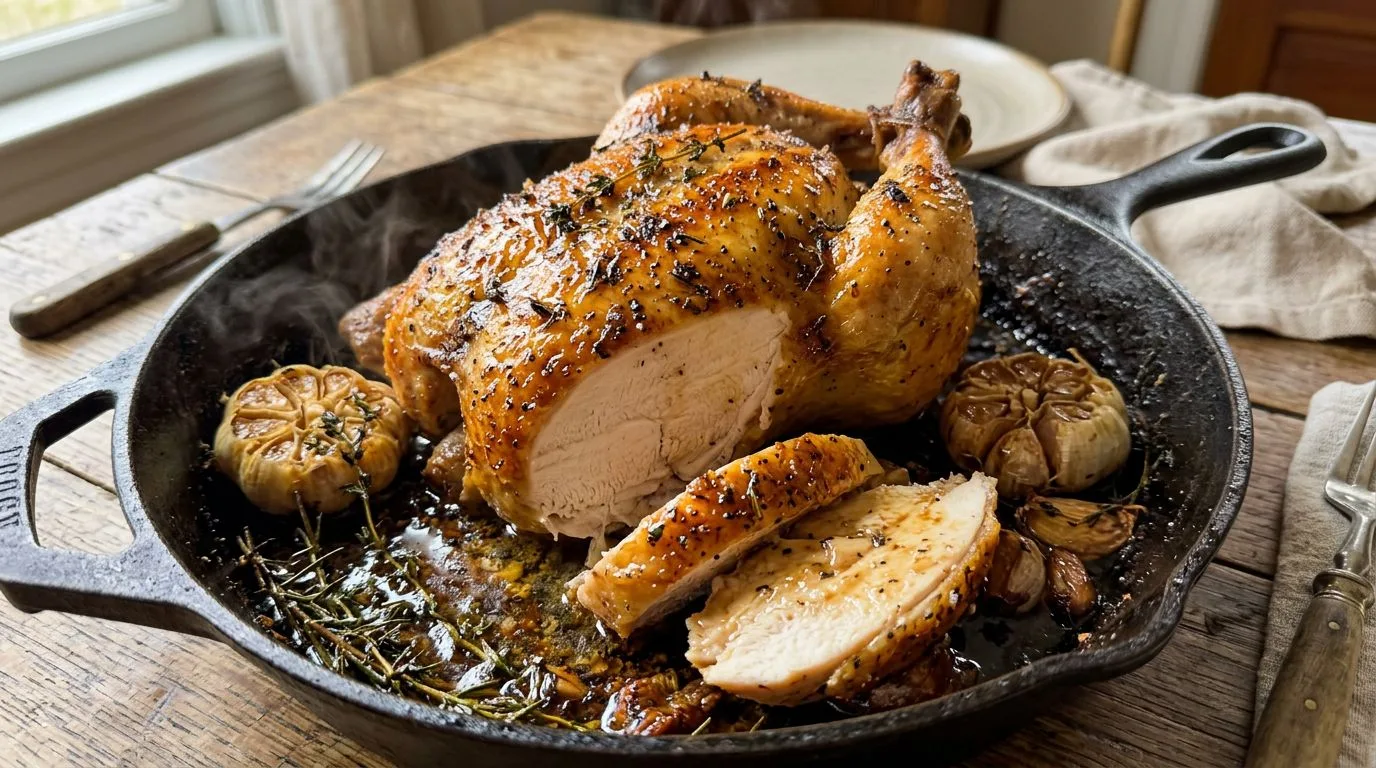
There’s something truly special about a perfectly roasted whole chicken. When you combine tender, juicy meat with golden, crispy skin and a rich honey butter glaze infused with garlic and fresh thyme, you create a centerpiece dish that’s both comforting and impressive. This Honey Butter Roasted Chicken delivers restaurant-quality results right in your home kitchen, and I love how the sweet honey balances beautifully with the savory herbs and aromatic garlic.
Whether you’re planning a Sunday family dinner, hosting a holiday gathering, or simply want to elevate your weeknight meal rotation, this recipe offers the perfect combination of elegance and ease. The honey butter creates a gorgeous caramelized coating while keeping the meat incredibly moist, and the fresh herbs add layers of flavor that make every bite memorable. I find that this recipe consistently impresses guests while remaining approachable enough for regular home cooking.
What I appreciate most about this dish is how the simple technique of placing herb butter under the skin transforms an ordinary roasted chicken into something extraordinary. The result is a beautifully bronzed bird with crispy skin, succulent meat, and pan juices that are absolutely divine spooned over each serving.
Why You’ll Love This Honey Butter Roasted Chicken
This recipe has become one of my go-to dishes for good reason. The honey butter glaze creates an irresistible sweet and savory flavor profile that appeals to both adults and children alike. Unlike plain roasted chicken, the honey caramelizes during cooking, forming a beautiful golden-brown crust that’s visually stunning and deliciously crispy.
I love how versatile this dish is for different occasions. It’s elegant enough for Thanksgiving or Christmas dinner, yet simple enough to prepare on a busy weeknight when you want something special. The active preparation time is minimal—most of the work happens in the oven while you attend to side dishes or simply relax.
The combination of fresh garlic and thyme creates an aromatic experience that fills your kitchen with the most wonderful fragrance. The herbs infuse both the meat and the pan juices, creating a natural sauce that requires no additional effort. I recommend serving this chicken alongside classic comfort sides like Southern cornbread dressing or green bean casserole for a complete, satisfying meal.
Another reason I appreciate this recipe is its reliability. The method produces consistent results every time, with meat that stays juicy and skin that crisps beautifully. The honey butter acts as both a flavor enhancer and a moisture barrier, ensuring your chicken doesn’t dry out during the roasting process.
Ingredients and Substitutions
Let me walk you through the key ingredients that make this Honey Butter Roasted Chicken so delicious, along with some practical substitutions if needed.
Whole Chicken: A 4-5 pound chicken is ideal for this recipe, serving approximately 4-6 people. I find this size roasts evenly and provides a good balance of white and dark meat. If you can only find a smaller or larger bird, simply adjust the cooking time accordingly—smaller chickens cook faster, while larger ones need additional time.
Unsalted Butter: Softened unsalted butter forms the base of our flavorful coating. I prefer unsalted because it allows better control over the seasoning. If you only have salted butter, reduce the added kosher salt by about half a teaspoon to avoid over-salting.
Honey: The honey provides sweetness and helps create that gorgeous caramelized exterior. I like using a mild honey such as clover or wildflower, but any variety works. If you prefer less sweetness, you can reduce the honey to 3 tablespoons, though the glaze won’t be quite as rich.
Fresh Garlic: Six cloves of minced garlic might seem generous, but the flavor mellows beautifully during roasting. Fresh garlic is essential here—I don’t recommend substituting garlic powder, as it won’t provide the same depth of flavor or aromatic quality.
Fresh Herbs: The combination of thyme, rosemary, and parsley creates a classic herb profile that complements poultry perfectly. Fresh herbs are strongly preferred, but if you must substitute dried herbs, use one-third the amount (about 2 teaspoons dried thyme, 1 teaspoon dried rosemary, and 1 teaspoon dried parsley).
Lemon and Onion: These aromatics placed inside the cavity infuse the chicken from within while adding moisture during cooking. You can substitute the lemon with an orange for a slightly sweeter flavor, or add additional herbs like sage or bay leaves to the cavity.
Chicken Broth: The broth in the roasting pan prevents drippings from burning and creates flavorful pan juices for serving. You can substitute with vegetable broth, white wine, or even water in a pinch, though broth provides the best flavor.
Spices: Kosher salt, black pepper, and paprika season the butter mixture and add color. The paprika contributes a subtle sweetness and helps achieve that beautiful golden-brown color. Smoked paprika can add an interesting depth if you enjoy smoky flavors.
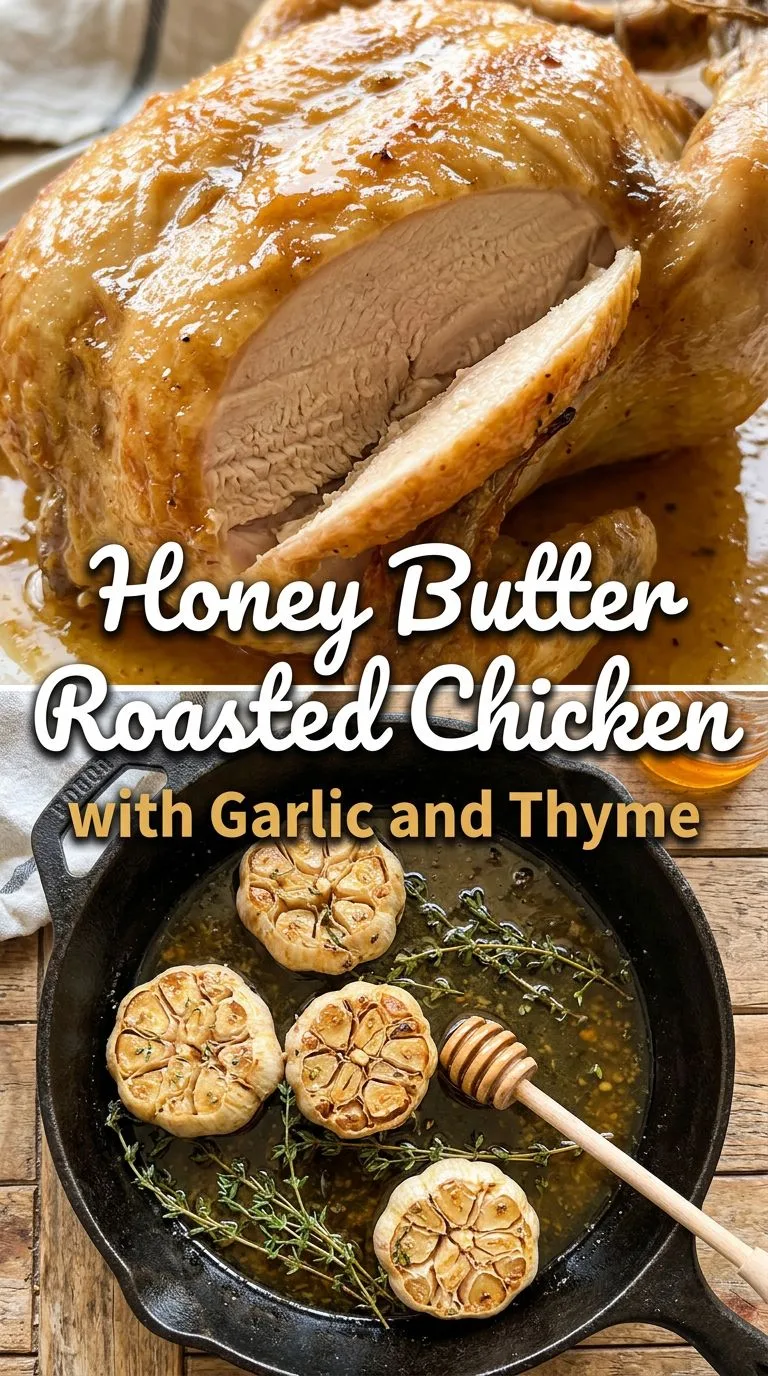
How to Make Honey Butter Roasted Chicken
The process of making this roasted chicken is straightforward, but a few key techniques ensure the best results. I’ll guide you through each step with helpful details.
Preparing the Chicken: Start by preheating your oven to 425°F. Remove any giblets from the chicken cavity and thoroughly pat the entire bird dry with paper towels. This step is crucial—dry skin crisps much better than wet skin. I like to let the chicken sit at room temperature for about 20-30 minutes before roasting, which helps it cook more evenly.
Making the Honey Butter Mixture: In a small bowl, combine the softened butter, honey, minced garlic, and all the fresh herbs. Mix in the kosher salt, black pepper, and paprika until everything is well incorporated. The mixture should be spreadable but not melted. If your butter is too firm, let it sit at room temperature a bit longer.
Applying the Butter Under the Skin: This technique is what sets this recipe apart. Gently slide your fingers between the skin and the meat, starting at the neck end and working toward the legs. Be careful not to tear the skin. Once you’ve created pockets over the breasts and thighs, spread about half of the honey butter mixture underneath the skin, distributing it as evenly as possible. This ensures the meat stays moist and flavorful.
Coating the Exterior: Rub the remaining honey butter mixture all over the outside of the chicken, making sure to coat it thoroughly. Don’t forget the legs and wings. The generous coating will create that beautiful caramelized crust.
Stuffing and Positioning: Place the lemon halves and onion quarters inside the cavity. These aromatics will steam from the inside, adding moisture and subtle flavor. Position the chicken breast-side up in a roasting pan, drizzle with olive oil, and pour the chicken broth into the bottom of the pan.
Roasting Process: Start roasting at the high temperature of 425°F for 15 minutes. This initial blast of heat helps crisp the skin. Then reduce the temperature to 350°F and continue roasting. A 4-pound chicken typically takes about 55-65 minutes additional time, while a 5-pound bird needs 70-80 minutes. The total cooking time is approximately 70-95 minutes depending on size.
Basting and Monitoring: Every 20-25 minutes, spoon the pan juices over the chicken. This keeps the surface moist and enhances the glaze. If the honey butter coating starts to brown too quickly, tent the chicken loosely with aluminum foil. I find this is sometimes necessary during the last 20-30 minutes of cooking.
Checking for Doneness: The chicken is done when an instant-read thermometer inserted into the thickest part of the thigh (without touching bone) reads 165°F. The breast should also register 165°F. The juices should run clear when you pierce the thigh.
Resting: This step is essential and non-negotiable. Let the chicken rest for 15 minutes before carving. This allows the juices to redistribute throughout the meat, ensuring every slice is moist and tender.
Expert Tips for Best Results
After making roasted chicken countless times, I’ve learned several techniques that consistently produce superior results.
Dry the Skin Thoroughly: I cannot emphasize this enough. Moisture is the enemy of crispy skin. After patting the chicken dry, I sometimes let it sit uncovered in the refrigerator for an hour or even overnight. This air-drying technique produces exceptionally crispy skin.
Room Temperature Matters: Taking the chicken out of the refrigerator 30-45 minutes before roasting helps it cook more evenly. Cold chicken placed directly in the oven tends to cook unevenly, with the exterior overcooking before the interior reaches temperature.
Use a Meat Thermometer: Guessing doneness by time alone is unreliable because oven temperatures vary and chicken sizes differ. An instant-read thermometer is the only way to ensure perfectly cooked meat that’s safe to eat but not overdone.
Don’t Skip the Resting Period: Cutting into the chicken immediately causes all those precious juices to run out onto the cutting board instead of staying in the meat. The 15-minute rest makes a dramatic difference in juiciness.
Save the Pan Juices: The liquid in the roasting pan is liquid gold. I like to pour it into a fat separator or skim off excess fat, then serve the flavorful juices alongside the carved chicken. You can also reduce the juices in a small saucepan for a more concentrated sauce.
Truss for Even Cooking: While not absolutely necessary, tying the legs together with kitchen twine helps the chicken cook more evenly and presents more attractively. It takes just a minute and makes a noticeable difference.
Position Matters: Always roast breast-side up. Some recipes suggest flipping the chicken, but I find this unnecessary and messy. The butter under the skin keeps the breast meat moist without flipping.
Serving Suggestions
This Honey Butter Roasted Chicken is incredibly versatile and pairs beautifully with a wide variety of side dishes. My favorite way to serve it is as the centerpiece of a traditional comfort food dinner.
For a classic pairing, serve this chicken with creamy mashed potatoes or roasted root vegetables. The honey-garlic pan juices are absolutely divine spooned over fluffy mashed potatoes. Roasted carrots, parsnips, or sweet potatoes complement the honey glaze beautifully and can even roast alongside the chicken during the last 45 minutes of cooking.
I love serving this with fresh green vegetables to balance the richness. Steamed green beans, roasted Brussels sprouts, or sautéed asparagus all work wonderfully. A simple green salad with a light vinaigrette provides a refreshing contrast to the rich, buttery chicken.
For holiday meals, this chicken pairs perfectly with traditional sides like stuffing, cranberry sauce, and dinner rolls. The honey butter glaze makes it special enough for Thanksgiving or Christmas, especially if you’re cooking for a smaller gathering where a whole turkey would be too much.
Don’t forget about the pan juices—they’re too good to waste. I like to serve them in a small pitcher or gravy boat so everyone can drizzle them over their chicken and sides. Some people even like to sop up the juices with crusty bread, which I completely understand.
For a lighter meal, serve sliced chicken over a bed of mixed greens with roasted vegetables, creating a warm chicken salad. The honey-garlic flavors work beautifully in this context as well.
Variations and Substitutions
While this recipe is delicious as written, there are several ways to customize it to your preferences or dietary needs.
Herb Variations: Feel free to experiment with different herb combinations. Sage and oregano create a more Italian-inspired flavor, while tarragon adds a French touch. Cilantro and lime (instead of lemon) create an interesting Latin-inspired variation.
Spice It Up: For those who enjoy heat, add a teaspoon of red pepper flakes or cayenne pepper to the butter mixture. A tablespoon of Dijon mustard mixed into the honey butter adds tangy complexity.
Maple Butter Chicken: Substitute pure maple syrup for the honey for a different but equally delicious sweetness. This variation is particularly wonderful in the fall.
Citrus Variations: Try orange or lime instead of lemon for different citrus notes. Orange pairs especially well with the honey, creating a sweeter, more aromatic dish.
Garlic Lovers: If you’re a serious garlic enthusiast, increase the garlic to 8-10 cloves. The flavor mellows during roasting, so even this amount won’t be overwhelming.
Butter Alternatives: For a dairy-free version, substitute the butter with coconut oil or a plant-based butter alternative. The texture and flavor will be slightly different but still delicious.
Different Poultry: This same technique works beautifully with Cornish game hens (reduce cooking time significantly) or even a turkey breast. Adjust cooking times based on the size and type of poultry.
Storage, Freezing, and Reheating
Proper storage ensures you can enjoy leftovers safely and deliciously for days after the initial meal.
Refrigerator Storage: Allow the chicken to cool completely before storing. Remove the meat from the bones and store in an airtight container in the refrigerator for up to 4 days. I like to store white meat and dark meat separately since they have different moisture levels. Store the pan juices separately in a sealed container—they’ll keep for 3-4 days and are wonderful for reheating the chicken or making soup.
Freezing Instructions: Cooked chicken freezes well for up to 3 months. I recommend shredding or slicing the meat before freezing for easier portioning and faster thawing. Place the chicken in freezer-safe containers or heavy-duty freezer bags, removing as much air as possible. Label with the date and contents. The pan juices can also be frozen separately in ice cube trays, then transferred to freezer bags for convenient portioning.
Thawing: Thaw frozen chicken in the refrigerator overnight. Never thaw at room temperature, as this can promote bacterial growth. For faster thawing, you can use the defrost setting on your microwave, though refrigerator thawing produces better texture.
Reheating Methods: For best results, reheat chicken in a 350°F oven. Place the meat in a baking dish, add a few tablespoons of the reserved pan juices or chicken broth to prevent drying, cover with foil, and heat for 15-20 minutes until warmed through. The microwave works in a pinch—heat in 30-second intervals with a damp paper towel over the chicken to retain moisture. Sliced chicken can be quickly reheated in a skillet over medium heat with a bit of butter or pan juices.
Using Leftovers: Leftover chicken is incredibly versatile. I love using it in chicken salad, quesadillas, pasta dishes, or soup. The honey-garlic flavor adds interest to sandwiches and wraps. Shredded chicken works beautifully in fried rice, chicken pot pie, or casseroles.
Frequently Asked Questions
Do I need to brine the chicken first? Brining isn’t necessary for this recipe. The honey butter mixture keeps the chicken moist and flavorful without the extra step of brining. However, if you enjoy brined chicken, you certainly can brine it for 4-8 hours before applying the honey butter.
Can I use chicken pieces instead of a whole chicken? Absolutely. This honey butter mixture works wonderfully on chicken breasts, thighs, or drumsticks. Reduce the cooking time significantly—bone-in pieces typically need 35-45 minutes at 375°F, while boneless breasts need only 25-30 minutes.
Why is my chicken skin not crispy? The most common cause is excess moisture on the skin before roasting. Make sure to thoroughly pat the chicken dry and consider air-drying it in the refrigerator. Also ensure your oven is fully preheated and avoid covering the chicken with foil unless the glaze is browning too quickly.
Can I prepare the honey butter mixture in advance? Yes, you can make the honey butter up to 2 days ahead and store it covered in the refrigerator. Let it come to room temperature before applying to the chicken so it spreads easily.
What if I don’t have fresh herbs? While fresh herbs provide the best flavor, you can substitute dried herbs using about one-third the amount. So use 2 teaspoons dried thyme, 1 teaspoon dried rosemary, and 1 teaspoon dried parsley.
How do I know when the chicken is done without a thermometer? While a thermometer is the most reliable method, you can pierce the thigh with a knife—if the juices run clear (not pink), the chicken is likely done. The legs should also wiggle easily in their sockets when fully cooked.
Can I stuff the chicken with traditional stuffing? I don’t recommend stuffing the cavity with bread stuffing, as it increases cooking time and can lead to food safety issues. The lemon and onion provide flavor without the risks. Cook stuffing separately in a baking dish.
My honey butter is burning—what should I do? If the glaze starts to darken too much, tent the chicken loosely with aluminum foil. The honey can caramelize quickly, especially in the high initial heat. Reducing the temperature to 350°F after the first 15 minutes helps prevent burning.
Honey Butter Roasted Chicken with Garlic and Thyme
A golden roasted chicken coated in rich honey butter and seasoned with fresh garlic and thyme. The skin turns beautifully crispy while the meat stays tender, juicy, and flavorful—perfect for Sunday dinners, holidays, or any special occasion.
- Prep Time: 15 minutes
- Cook Time: 75 minutes
- Resting Time: 15 minutes
- Total Time: 1 hour 45 minutes
- Servings: 4-6 servings
- Difficulty: Easy
- Cuisine: American
- Course: Dinner
Ingredients
- 1 whole chicken (4–5 lb)
- 1/2 cup unsalted butter (softened)
- 1/4 cup honey
- 6 garlic cloves (minced)
- 2 tbsp fresh thyme (chopped)
- 1 tbsp fresh rosemary (chopped)
- 1 tbsp fresh parsley (chopped)
- 1 lemon (halved)
- 1 onion (quartered)
- 2 tbsp olive oil
- 1 1/2 tsp kosher salt
- 1 tsp black pepper
- 1 tsp paprika
- 1 cup chicken broth
Instructions
- Preheat the oven to 425°F (220°C). Remove giblets from the chicken and pat the skin completely dry with paper towels.
- In a small bowl, combine softened butter, honey, minced garlic, chopped thyme, rosemary, parsley, kosher salt, black pepper, and paprika. Mix until well combined.
- Gently loosen the skin over the chicken breasts and thighs by sliding your fingers between the skin and meat. Spread approximately half of the honey garlic herb butter underneath the skin, distributing it evenly.
- Rub the remaining butter mixture all over the outside of the chicken, coating it thoroughly.
- Place the halved lemon and quartered onion inside the chicken cavity.
- Position the chicken breast-side up in a roasting pan. Drizzle with olive oil and pour chicken broth into the bottom of the pan.
- Roast at 425°F for 15 minutes, then reduce the heat to 350°F (175°C). Continue roasting for approximately 55–80 minutes, depending on chicken size.
- Every 20-25 minutes, spoon the pan juices over the chicken. If the honey glaze browns too quickly, cover loosely with aluminum foil.
- Remove the chicken from the oven when an instant-read thermometer inserted into the thickest parts of the breast and thigh reaches 165°F (74°C).
- Let the chicken rest for 15 minutes before carving. Serve with the warm garlic thyme pan juices spooned over the top.
Recipe Notes
- Cooking time varies based on chicken size. A 4-pound chicken typically takes 70-80 minutes total, while a 5-pound bird needs 85-95 minutes.
- Always use an instant-read thermometer to ensure the chicken reaches 165°F for food safety.
- Patting the chicken completely dry before applying the butter mixture is essential for crispy skin.
- For extra crispy skin, let the seasoned chicken air-dry uncovered in the refrigerator for 1-2 hours before roasting.
- Save the pan juices—they’re delicious served over the carved chicken or mashed potatoes.
- Fresh herbs provide significantly better flavor than dried, but you can substitute with 2 tsp dried thyme, 1 tsp dried rosemary, and 1 tsp dried parsley if needed.
Nutrition Information (Per Serving, Estimated)
Based on 6 servings. Values are approximate.
- Calories: 485
- Carbohydrates: 14g
- Protein: 38g
- Fat: 31g
- Saturated Fat: 13g
- Fiber: 0g
- Sugar: 12g
- Sodium: 680mg
