
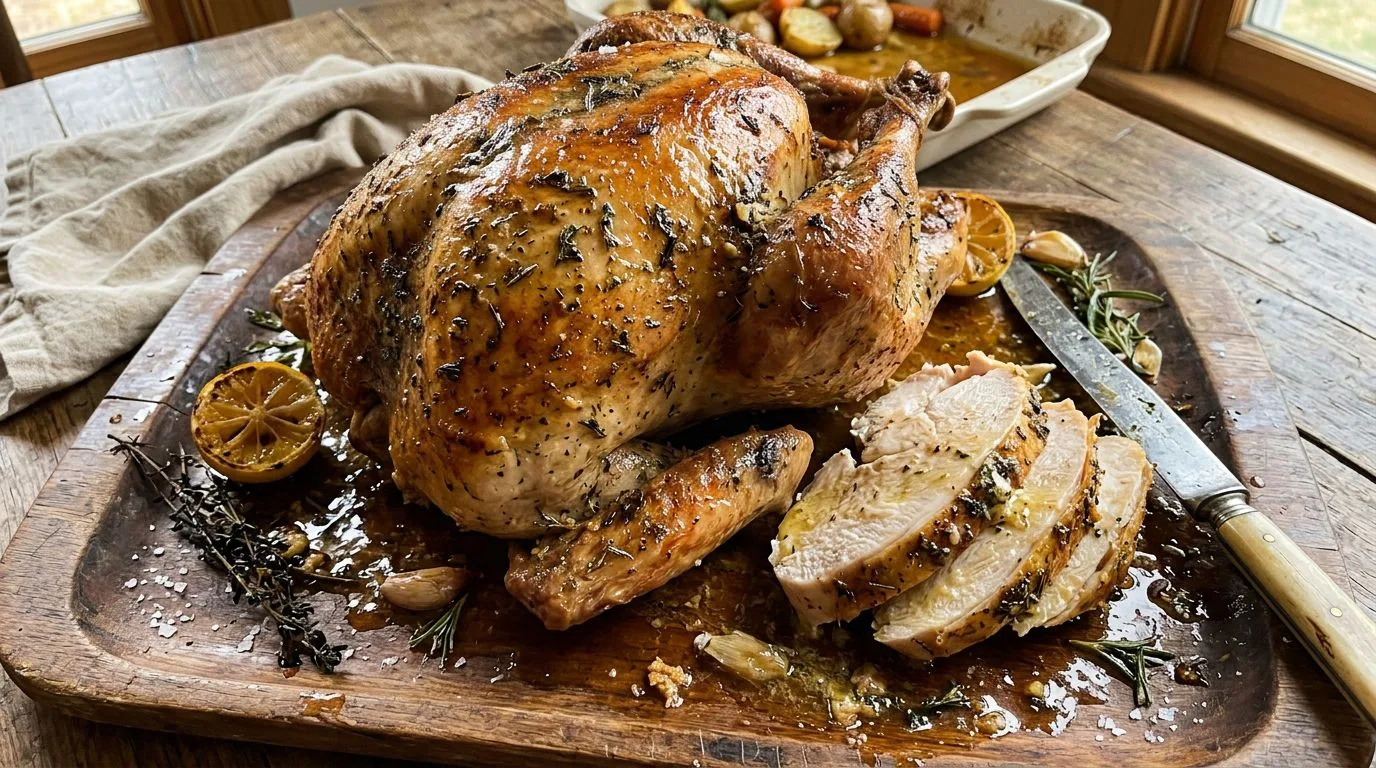
There’s something truly special about serving a perfectly roasted turkey on Thanksgiving, and I’ve found that dry brining is the secret to achieving incredibly juicy meat with beautifully crispy, golden skin. This Dry Brined Thanksgiving Turkey with Lemon Herb Butter combines the time-tested technique of dry brining with the aromatic flavors of fresh herbs, garlic, and bright lemon zest. The result is a show-stopping centerpiece that delivers on both flavor and texture.
Unlike wet brining, which requires submerging your turkey in gallons of saltwater, dry brining is remarkably simple and requires minimal refrigerator space. The salt mixture draws moisture from the turkey, which then dissolves the salt and gets reabsorbed into the meat, seasoning it deeply while also helping the skin dry out for that coveted crispy finish. When you add lemon herb butter under and over the skin, you create layers of flavor that permeate the entire bird during roasting.
I love how this method takes the guesswork out of Thanksgiving turkey preparation. With just a bit of advance planning and a straightforward roasting technique, you’ll have a turkey that’s moist, flavorful, and impressive enough to become your new holiday tradition.
Why You’ll Love This Dry Brined Thanksgiving Turkey
This recipe delivers everything you want in a holiday turkey without the hassle of complicated brining setups or constant basting. The dry brine method is incredibly forgiving and produces consistent results every time. I find that it’s much easier to manage than wet brining, especially when refrigerator space is at a premium during the holidays.
The lemon herb butter adds a sophisticated flavor profile that complements the turkey without overpowering it. Fresh rosemary, thyme, and sage bring traditional Thanksgiving aromatics, while the lemon zest adds a subtle brightness that cuts through the richness of the butter. The garlic rounds out the flavor with a savory depth that makes every bite memorable.
Another reason I recommend this recipe is the texture it produces. The uncovered refrigeration time allows the skin to dry completely, which is essential for achieving that crispy, crackling exterior everyone fights over. Meanwhile, the salt in the dry brine helps the meat retain moisture during cooking, so you get juicy breast and thigh meat that doesn’t dry out.
This turkey also creates wonderful pan drippings that are perfect for making gravy. The combination of turkey broth, rendered fat, and all those herb-infused juices creates a flavorful base that elevates your entire Thanksgiving meal.
Ingredients and Substitutions
The beauty of this recipe lies in its straightforward ingredient list. You’ll need a whole turkey weighing 12-14 pounds, which is the ideal size for most home ovens and feeds approximately 10-12 people with leftovers. If you’re cooking for a larger crowd, you can scale up the dry brine proportions accordingly.
For the dry brine, kosher salt is essential. I use Diamond Crystal kosher salt, which has larger, flakier crystals than table salt. If you’re using Morton’s kosher salt or another brand, you’ll need to reduce the amount by about 25-30% since it’s denser. The brown sugar adds a subtle sweetness that helps with browning, while black pepper provides a gentle heat that complements the herbs.
The lemon herb butter is where the magic happens. Unsalted butter gives you control over the salt level, and it must be softened to room temperature so you can easily spread it under the skin. Fresh herbs are non-negotiable here—dried herbs simply don’t provide the same vibrant flavor. If you can’t find fresh sage, you can increase the rosemary and thyme slightly, but I really recommend seeking out all three herbs for the best results.
Fresh lemons serve double duty: the zest goes into the butter for concentrated citrus flavor, while the sliced lemons go into the cavity to perfume the turkey from the inside. The onion adds aromatic depth, and the turkey or chicken broth keeps the bottom of the pan moist, preventing the drippings from burning while also creating steam that helps cook the turkey evenly.
If you need to make substitutions, you can use lime zest instead of lemon for a different citrus note, or swap the onion for a halved apple or orange for a sweeter aromatic profile. Just avoid substituting the fresh herbs with dried ones, as the flavor difference is significant.
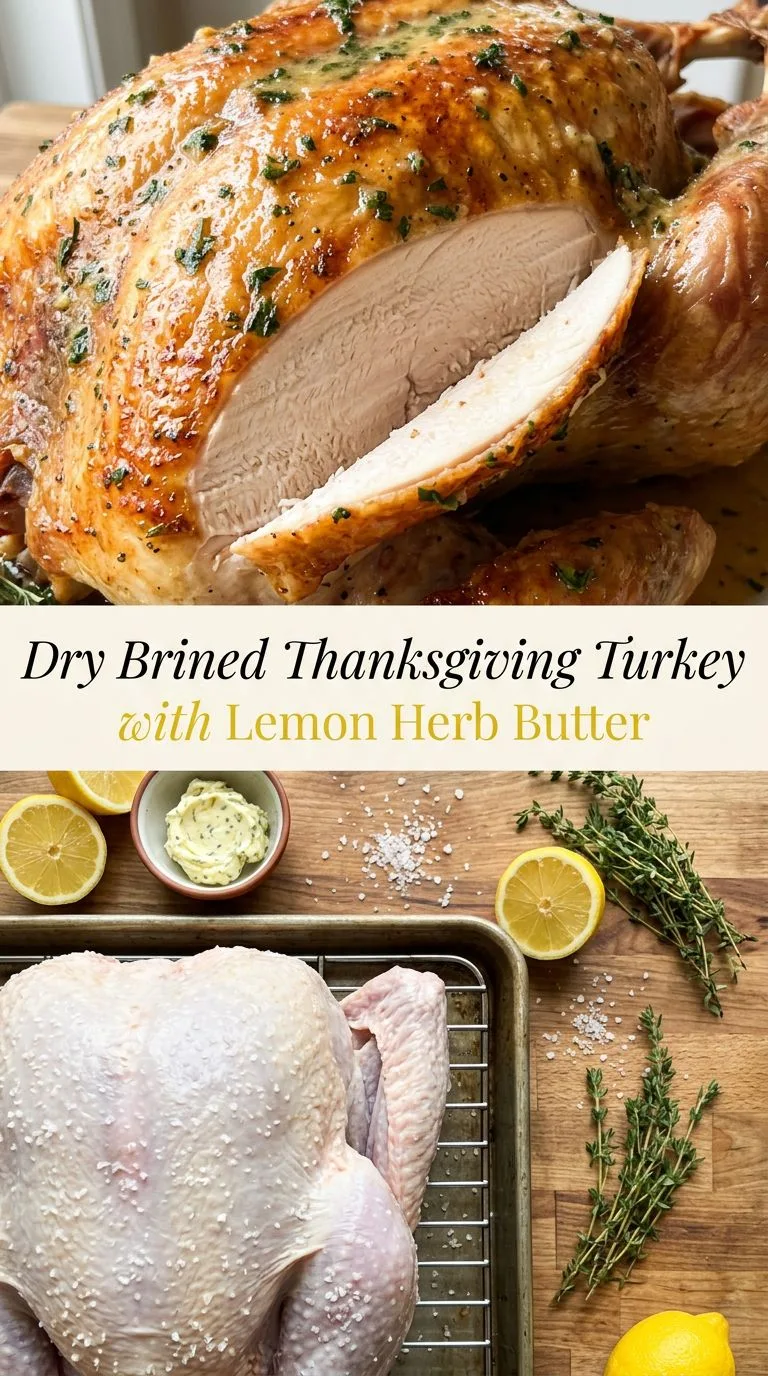
How to Make Dry Brined Thanksgiving Turkey
The process begins 24-48 hours before you plan to roast the turkey. Start by removing the giblets and neck from the cavity—these are usually tucked inside in a paper or plastic bag. Pat the turkey completely dry with paper towels, paying special attention to the cavity and any crevices. Moisture is the enemy of crispy skin, so take your time with this step.
Place the turkey on a wire rack set inside a large roasting pan. The rack allows air to circulate around the bird, which helps the skin dry evenly. Mix together the kosher salt, brown sugar, and black pepper in a small bowl. This is your dry brine mixture.
Now comes the important part: applying the dry brine. Sprinkle the mixture evenly over the entire surface of the turkey, including the legs, wings, and back. Don’t forget to gently loosen the skin over the breast meat and rub some of the mixture directly onto the meat underneath. This ensures the seasoning penetrates deeply into the breast, which is the part most prone to drying out.
Refrigerate the turkey uncovered for 24-48 hours. I prefer the full 48 hours when possible, as it gives the salt more time to work its magic and allows the skin to dry thoroughly. The turkey will look a bit dry and the skin may darken slightly—this is exactly what you want.
On roasting day, preheat your oven to 350°F. While it’s heating, prepare the lemon herb butter by mixing the softened butter with lemon zest, minced garlic, and chopped fresh rosemary, thyme, and sage. The butter should be soft enough to spread easily but not melted.
Carefully slide your fingers under the breast skin to loosen it from the meat, creating pockets on both sides. Spread about half of the lemon herb butter under the skin, massaging it gently from the outside to distribute it evenly. Spread the remaining butter over the outside of the turkey, covering as much of the skin as possible.
Stuff the cavity with the lemon slices and quartered onion—these aromatics will perfume the turkey from the inside. Pour the broth into the bottom of the roasting pan, being careful not to pour it over the turkey itself. The liquid creates steam and prevents the drippings from burning.
Roast the turkey for approximately 2½-3½hours, depending on its exact weight and your oven. I recommend checking the turkey after about 1½ hours. If the breast is browning too quickly, tent it loosely with aluminum foil to prevent over-browning while the rest of the bird finishes cooking.
The turkey is done when an instant-read thermometer inserted into the thickest part of the breast reads 165°F and the innermost part of the thigh also reaches 165°F. Don’t rely on pop-up timers—use a reliable meat thermometer for accuracy.
Once the turkey reaches temperature, transfer it to a cutting board and tent it loosely with foil. Let it rest for 25-30 minutes before carving. This resting period allows the juices to redistribute throughout the meat, ensuring every slice is moist and flavorful.
Expert Tips for Best Results
Timing is everything with dry brining. I recommend starting the process exactly 48 hours before you plan to serve dinner. This gives you a full two days for the brine to work and ensures the skin is completely dry for maximum crispiness.
When applying the lemon herb butter under the skin, work gently to avoid tearing the delicate membrane. If it does tear slightly, don’t worry—just continue spreading the butter as evenly as possible. The butter will still flavor the meat beautifully.
Room temperature matters. Take the turkey out of the refrigerator about 1 hour before roasting to take the chill off. A turkey that starts at room temperature will cook more evenly than one that goes straight from the refrigerator to the oven.
Invest in a good instant-read thermometer if you don’t already have one. It’s the single most important tool for ensuring your turkey is perfectly cooked. I like to check the temperature in multiple spots—both sides of the breast and both thighs—to make sure everything has reached the safe temperature.
Don’t skip the resting period. I know it’s tempting to carve the turkey immediately, especially when hungry guests are waiting, but those 25-30 minutes make a tremendous difference in juiciness. Use this time to finish your make-ahead turkey gravy and get your side dishes on the table.
If you notice the drippings in the pan are starting to get too dark during roasting, add a bit more broth to the pan. This prevents burning and ensures you have plenty of flavorful drippings for gravy.
Serving Suggestions
This Dry Brined Thanksgiving Turkey is the star of the show, but it shines even brighter when paired with classic holiday sides. I love serving it with traditional Southern cornbread dressing, which soaks up the turkey’s flavorful juices beautifully.
Creamy mashed potatoes are a must-have alongside this turkey. The rich, buttery potatoes complement the herb-infused meat perfectly. Don’t forget a generous ladle of gravy made from the pan drippings—it ties everything together.
For vegetables, I recommend roasted Brussels sprouts with bacon, honey-glazed carrots, or green bean casserole. The slight bitterness of Brussels sprouts and the sweetness of glazed carrots provide nice contrast to the savory turkey.
Cranberry sauce, whether homemade or from a can, is essential for that sweet-tart contrast that cuts through the richness of the turkey and butter. I also like to serve dinner rolls or biscuits for sopping up every last bit of gravy.
For a complete Thanksgiving spread, add a sweet potato casserole and a fresh salad with autumn greens, dried cranberries, and candied pecans. The variety of flavors and textures makes for a memorable feast.
Variations and Substitutions
While this recipe is perfect as written, there are several ways to customize it to your preferences. For a different herb profile, try using fresh tarragon and parsley instead of the rosemary and thyme. Tarragon has a subtle anise flavor that pairs beautifully with poultry.
If you prefer a spicier turkey, add cayenne pepper or red pepper flakes to the dry brine mixture. Just a pinch adds a gentle heat that doesn’t overpower the other flavors.
For an orange-herb variation, substitute orange zest for the lemon zest and use orange slices in the cavity. The sweeter citrus flavor creates a different but equally delicious profile.
You can also add maple syrup to the butter mixture for a sweet and savory combination. Use about 2 tablespoons of pure maple syrup mixed into the softened butter along with the herbs.
If you’re cooking a larger turkey (15-18 pounds), increase the dry brine proportions by about 50% and extend the roasting time accordingly. Always rely on internal temperature rather than time alone to determine doneness.
For a smaller gathering, this technique works beautifully with a turkey breast instead of a whole bird. Reduce the dry brine proportions and roasting time accordingly.
Storage, Freezing, and Reheating
Leftover turkey should be carved off the bone and stored in airtight containers within 2 hours of coming out of the oven. Properly stored in the refrigerator, the turkey will keep for 3-4 days.
I like to separate the white and dark meat when storing, as they reheat differently. Store the meat with some of the pan juices or gravy to keep it moist.
For freezing, wrap portions of carved turkey tightly in plastic wrap, then place in freezer bags with as much air removed as possible. Frozen turkey will maintain quality for 2-3 months. Label the bags with the date so you can keep track of freshness.
To reheat refrigerated turkey, place it in a baking dish with a bit of broth or gravy, cover with foil, and warm in a 325°F oven until heated through, about 20-30 minutes. This gentle reheating prevents the meat from drying out.
For frozen turkey, thaw it overnight in the refrigerator before reheating. You can also reheat individual portions in the microwave, though I find oven reheating produces better texture.
The turkey carcass makes excellent stock. Simmer it with vegetables, herbs, and water for several hours to create a rich broth that’s perfect for soups and risotto.
Frequently Asked Questions
Can I dry brine a frozen turkey?
You must completely thaw the turkey before dry brining. A frozen turkey won’t absorb the salt properly, and the ice crystals will prevent the skin from drying. Thaw your turkey in the refrigerator, allowing 24 hours for every 4-5 pounds of turkey, then begin the dry brining process.
Do I need to rinse off the dry brine before roasting?
No, you should not rinse the turkey after dry brining. The salt has been absorbed into the meat, and rinsing would wash away the seasoning on the surface and add unwanted moisture to the skin. Simply proceed with applying the lemon herb butter and roasting.
Can I use a pre-brined or enhanced turkey?
I strongly recommend against dry brining a turkey that’s already been injected with a salt solution (often labeled as “self-basting” or “enhanced”). These turkeys already contain significant salt, and adding more through dry brining will make the meat unpleasantly salty. If you have a pre-brined turkey, skip the dry brine step and just apply the lemon herb butter before roasting.
Why is my turkey skin not crispy?
Crispy skin requires dry skin before roasting. Make sure you’re refrigerating the turkey uncovered for the full 24-48 hours, and pat it thoroughly dry before applying the dry brine. Also ensure your oven temperature is accurate—an oven that runs cool won’t crisp the skin properly.
How do I know when the turkey is done?
The only reliable way to determine doneness is with an instant-read thermometer. The breast should reach 165°F and the innermost part of the thigh should also reach 165°F. Check multiple spots to ensure even cooking. The juices should run clear, not pink.
Can I stuff the turkey cavity with traditional stuffing?
For food safety reasons, I don’t recommend stuffing the cavity with bread-based dressing. It’s difficult to get the stuffing to reach a safe temperature without overcooking the turkey. Instead, use aromatics like lemon, onion, and herbs in the cavity, and bake your dressing separately in a casserole dish.
What if I don’t have fresh herbs?
Fresh herbs really make a difference in this recipe, but if you absolutely can’t find them, you can substitute with dried herbs using about one-third the amount. So instead of 2 tablespoons fresh rosemary, use 2 teaspoons dried. Keep in mind that the flavor won’t be quite as vibrant.
Can I make this recipe with a larger turkey?
Yes, this method works for turkeys up to about 20 pounds. For larger birds, increase the dry brine proportions proportionally (about 1 tablespoon of kosher salt per 4-5 pounds of turkey) and extend the roasting time. Always use a thermometer to check for doneness rather than relying on time alone.
Dry Brined Thanksgiving Turkey with Lemon Herb Butter
A perfectly juicy Thanksgiving turkey prepared with a simple dry brine and roasted with lemon herb butter. The seasoning penetrates the meat while the butter creates golden, crispy skin that’s absolutely irresistible.
- Prep Time: 30 minutes (plus 24-48 hours brining)
- Cook Time: 3 hours
- Resting Time: 30 minutes
- Total Time: 4 hours (plus brining time)
- Servings: 10-12
- Difficulty: Medium
- Cuisine: American
- Course: Dinner
Ingredients
- 1 whole turkey (12-14 lb)
- 3 tbsp kosher salt (adjust for salt brand and turkey weight)
- 1 tbsp brown sugar
- 1 tsp black pepper
- 1 cup unsalted butter (softened)
- 2 lemons (zested and sliced)
- 5 garlic cloves (minced)
- 2 tbsp fresh rosemary (chopped)
- 2 tbsp fresh thyme (chopped)
- 1 tbsp fresh sage (chopped)
- 1 onion (quartered)
- 2 cups turkey or chicken broth
Instructions
- Remove the giblets and neck from the turkey cavity. Pat the turkey completely dry inside and out with paper towels. Place on a wire rack set inside a large roasting pan.
- In a small bowl, combine the kosher salt, brown sugar, and black pepper. Adjust the salt quantity based on your turkey’s weight and the brand of salt you’re using. Rub the mixture evenly over the entire turkey, including underneath the breast skin by gently loosening it with your fingers.
- Refrigerate the turkey uncovered for 24-48 hours. This allows the dry brine to season the meat deeply and dries the skin for maximum crispiness. Do not add extra salt if using a pre-salted or enhanced turkey.
- On roasting day, preheat the oven to 350°F (175°C). In a medium bowl, combine the softened butter with lemon zest, minced garlic, chopped rosemary, thyme, and sage. Mix until well combined.
- Gently loosen the skin over the turkey breast and spread about half of the lemon herb butter underneath the skin. Spread the remaining butter over the outside of the turkey. Place the lemon slices and quartered onion inside the cavity. Pour the broth into the bottom of the roasting pan.
- Roast the turkey for approximately 2½-3½ hours, checking regularly. If the breast browns too quickly, tent it loosely with aluminum foil to prevent over-browning.
- Continue roasting until an instant-read thermometer inserted into the thickest part of the breast reads 165°F (74°C) and the innermost part of the thigh also reaches 165°F (74°C).
- Transfer the turkey to a cutting board and tent loosely with foil. Let rest for 25-30 minutes before carving and serving.
Recipe Notes
- Salt brands vary in density. If using Morton’s kosher salt, reduce the amount by 25-30%. Diamond Crystal kosher salt is less dense and requires the full 3 tablespoons.
- Never dry brine a turkey that’s already been injected with a salt solution (self-basting or enhanced turkeys).
- The turkey must be refrigerated uncovered to allow the skin to dry properly for crispy results.
- Room temperature butter is essential for easy spreading. Take it out of the refrigerator 1-2 hours before preparing the herb butter.
- Always use an instant-read thermometer to check for doneness. Check multiple spots to ensure even cooking.
- If pan drippings start to darken too much during roasting, add more broth to prevent burning.
- Save the turkey carcass for making homemade stock.
Nutrition Information (Per Serving, Estimated)
- Calories: 485
- Carbohydrates: 3g
- Protein: 52g
- Fat: 28g
- Saturated Fat: 12g
- Fiber: 0g
- Sugar: 1g
- Sodium: 890mg
Nutrition information is estimated based on standard ingredient measurements and may vary based on actual ingredients used, portion sizes, and individual preparation methods.
