
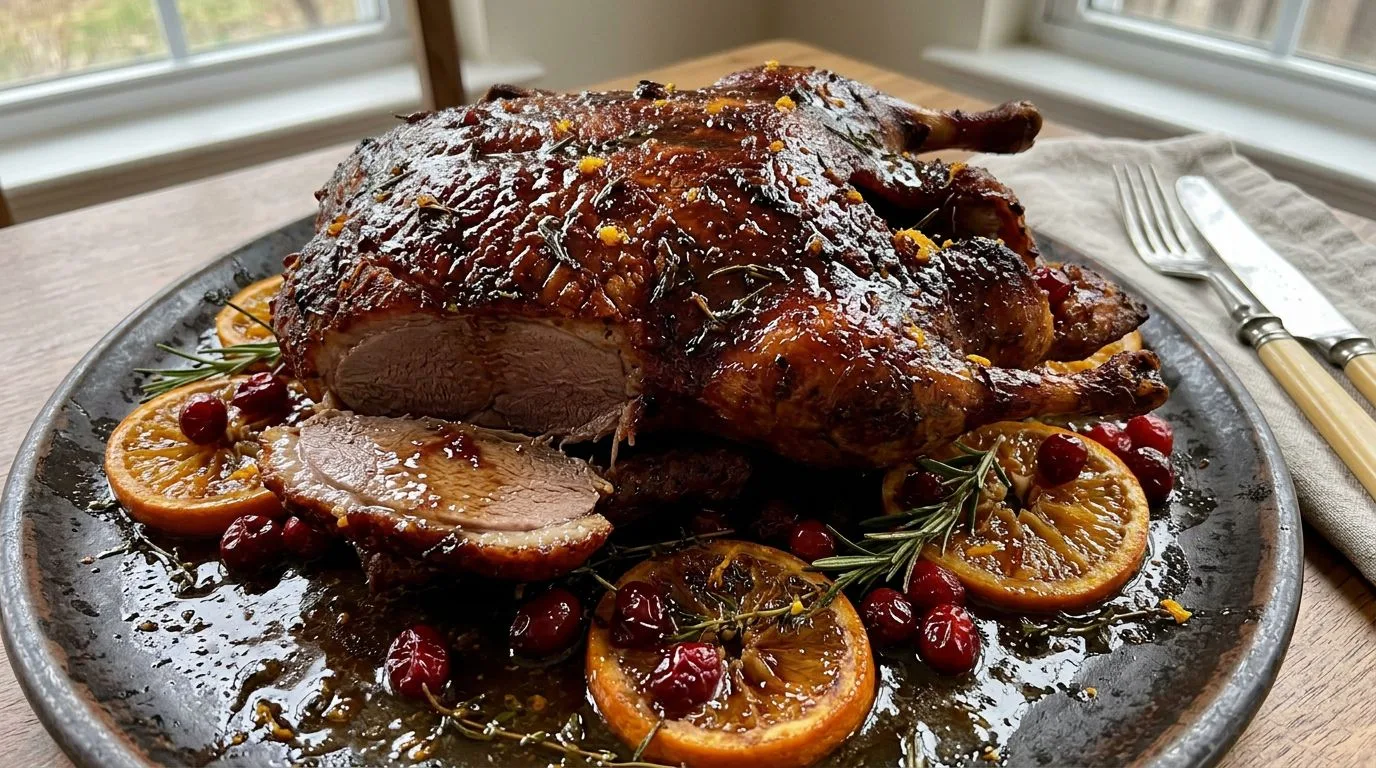
There’s something truly special about serving a whole roasted duck with perfectly crispy skin and a glossy, flavorful glaze. This Cranberry Orange Glazed Roast Duck combines the rich, succulent meat of duck with a sweet-tart glaze that balances beautifully with the natural fattiness of the bird. The combination of fresh cranberries and bright orange creates a stunning presentation and unforgettable flavor that makes this dish perfect for holiday gatherings, special celebrations, or any time you want to impress your dinner guests.
I love how this recipe transforms a whole duck into an elegant centerpiece that looks like it came from a fine dining restaurant. The key to success is patience—allowing the duck to roast slowly so the fat renders properly, then finishing at high heat to achieve that irresistibly crispy, golden skin. The cranberry orange glaze adds a beautiful shine and a burst of flavor that cuts through the richness of the duck meat perfectly.
While roasting a whole duck might seem intimidating if you’ve never done it before, I find that following a few simple techniques makes the process straightforward and rewarding. The result is a show-stopping dish with crispy skin, tender meat, and a gorgeous glaze that will have everyone asking for your recipe.
Why You’ll Love This Cranberry Orange Glazed Roast Duck
This recipe delivers restaurant-quality results at home with a stunning presentation that makes any meal feel like a special occasion. The contrast between the crispy, golden skin and the tender, flavorful meat underneath is absolutely divine. I recommend this dish for anyone looking to elevate their cooking repertoire beyond the usual chicken or turkey.
The cranberry orange glaze is what truly sets this recipe apart. The tartness of cranberries combined with the brightness of fresh orange juice and zest creates a complex flavor profile that complements the rich duck meat without overwhelming it. The addition of honey, brown sugar, and balsamic vinegar adds depth and a beautiful glossy finish that makes the duck look as impressive as it tastes.
Another reason I love this recipe is that much of the work is hands-off. Once you’ve prepared the duck and placed it in the oven, it roasts slowly while you prepare side dishes or spend time with guests. The active preparation time is minimal, making this an ideal choice for entertaining.
Ingredients and Substitutions
The ingredient list for this Cranberry Orange Glazed Roast Duck is straightforward, with each component playing an important role in the final dish. Let me walk you through what you’ll need and some possible substitutions.
The star of the show is a 5-6 pound whole duck. I find that this size serves 4-6 people comfortably. Look for a duck that’s been properly cleaned with the giblets removed. Fresh or frozen ducks work equally well—just make sure a frozen duck is completely thawed and patted very dry before roasting.
For the glaze, fresh or frozen cranberries both work beautifully. If cranberries aren’t available, you could substitute with fresh or frozen raspberries or blackberries, though the flavor profile will change slightly. The fresh orange juice and zest are essential for that bright citrus flavor—I recommend using freshly squeezed juice rather than store-bought for the best taste.
Honey and brown sugar provide sweetness and help create that glossy finish. You could use maple syrup in place of honey if preferred. The balsamic vinegar adds acidity and depth; red wine vinegar or apple cider vinegar could work as substitutes, though balsamic provides a richer flavor.
Dijon mustard helps emulsify the glaze and adds a subtle tang. Whole grain mustard could be used instead. The minced garlic, fresh thyme, and ground cinnamon round out the flavor profile with aromatic warmth. If you don’t have fresh thyme, dried thyme works in a pinch—use about 1 teaspoon.
The quartered orange placed inside the duck cavity infuses the meat with subtle citrus flavor from the inside out. The kosher salt and black pepper are essential for seasoning the skin and helping it crisp up beautifully.
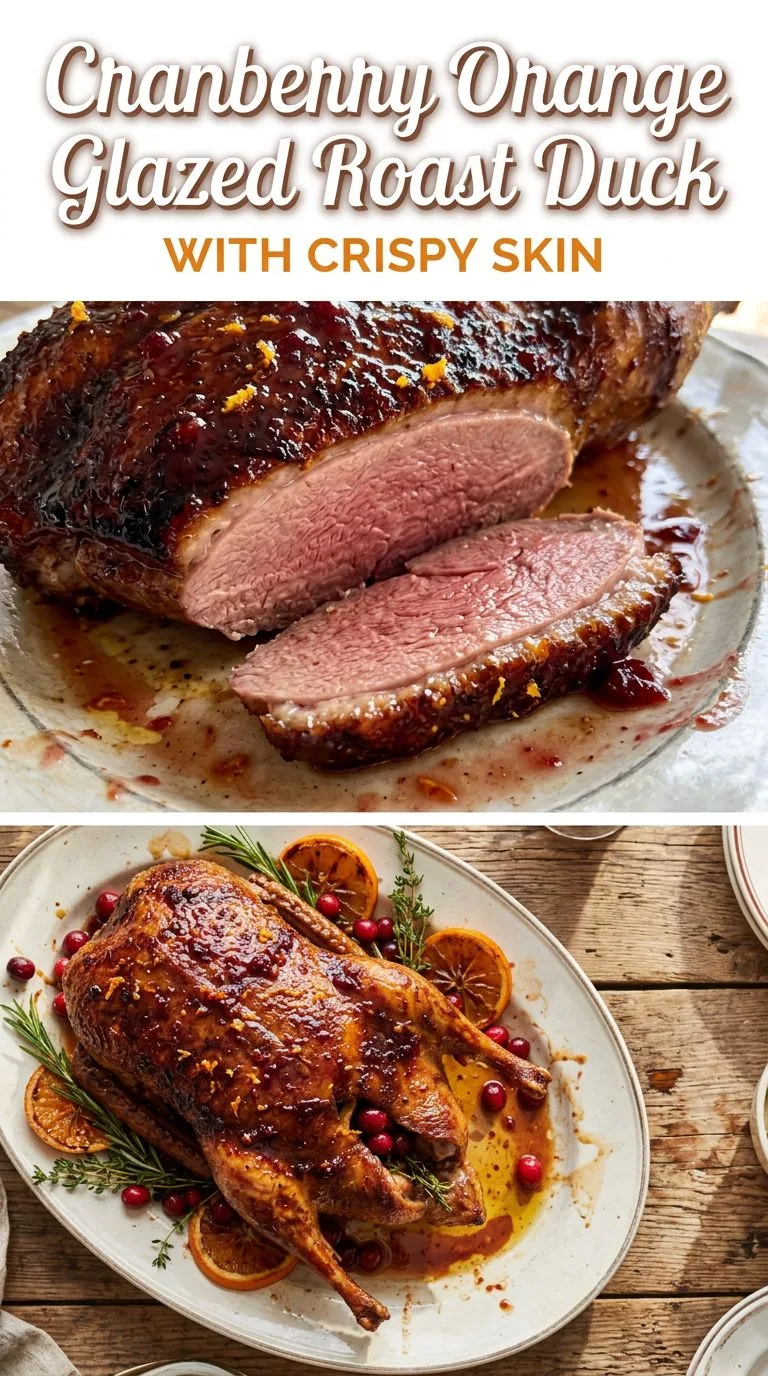
How to Make Cranberry Orange Glazed Roast Duck
Making this impressive roasted duck is more straightforward than you might think. The process breaks down into preparing the duck, making the glaze, and roasting to perfection.
Preparing the Duck
Start by preheating your oven to 325°F. Remove the giblets from the duck cavity if they’re still inside—these are often packaged in a small bag. The most important step at this stage is thoroughly drying the duck skin with paper towels. I cannot stress this enough: dry skin is essential for achieving that coveted crispy texture.
Next, take a sharp skewer or the tip of a sharp knife and carefully prick the duck skin all over, especially over the fattiest areas like the breast and thighs. Be careful to pierce only the skin and fat layer, not the meat underneath. This allows the abundant duck fat to render out during roasting, which is key to crispy skin and prevents the duck from being greasy.
Season the duck generously inside and out with kosher salt and black pepper. Stuff the cavity with the quartered orange and fresh thyme sprigs—these aromatics will perfume the meat from within as it roasts.
Making the Cranberry Orange Glaze
While the duck roasts, prepare the glaze. Combine the cranberries, orange juice, orange zest, honey, brown sugar, balsamic vinegar, Dijon mustard, minced garlic, and cinnamon in a medium saucepan. Bring the mixture to a simmer over medium heat, then reduce the heat slightly and let it cook for 10-15 minutes.
You’ll know the glaze is ready when the cranberries have burst open and the mixture has thickened to a syrupy consistency. I like to mash some of the cranberries with the back of a spoon to help thicken the glaze further. Set it aside until you’re ready to glaze the duck.
Roasting to Perfection
Place the prepared duck breast-side up on a roasting rack set over a deep roasting pan. The rack is important because it allows air to circulate around the duck and keeps it from sitting in rendered fat. Roast at 325°F for approximately 2½ to 3½ hours, depending on the size of your duck.
During roasting, you’ll need to carefully drain the accumulated fat from the pan every 45 minutes to an hour. Use a turkey baster or carefully pour it off into a heatproof container. Save this rendered duck fat—it’s liquid gold for cooking potatoes or vegetables.
About 30 minutes before you expect the duck to be done, increase the oven temperature to 400°F. This higher heat will crisp up the skin beautifully. Begin brushing the duck with the cranberry orange glaze, applying it generously all over the skin. Continue roasting, brushing with more glaze once or twice during the final 25-30 minutes. Watch carefully to ensure the glaze doesn’t burn.
The duck is done when an instant-read thermometer inserted into the thickest part of the breast and thigh reads 165°F. The skin should be deep golden brown and crispy.
Resting and Serving
This step is crucial: let the duck rest for 15-20 minutes before carving. This allows the juices to redistribute throughout the meat, ensuring every bite is moist and flavorful. Carve the duck and serve with the remaining warm cranberry orange glaze on the side.
Expert Tips for Best Results
I’ve learned several techniques over the years that make a significant difference in the final result. First, don’t skip the step of pricking the skin. This is absolutely essential for rendering the fat and achieving crispy skin. Be thorough but careful not to pierce the meat.
Drying the duck skin thoroughly before roasting is equally important. I sometimes let the duck sit uncovered in the refrigerator for a few hours or overnight after patting it dry—this air-drying further helps achieve crispier skin.
Use a roasting rack. Elevating the duck allows hot air to circulate all around it and prevents the bottom from becoming soggy in rendered fat. If you don’t have a roasting rack, you can create a makeshift one using a bed of roughly chopped vegetables like carrots, celery, and onions.
Don’t rush the roasting process. The low initial temperature allows the fat to render slowly without burning the skin. The final high-heat blast is what creates that gorgeous crispy exterior.
When applying the glaze, don’t start too early or it may burn. Wait until the final 25-30 minutes of roasting, and keep a close eye on it. If the glaze starts to darken too much, tent the duck loosely with foil.
Invest in a good instant-read thermometer. It takes the guesswork out of determining doneness and ensures your duck is cooked perfectly without being overdone.
Serving Suggestions
This Cranberry Orange Glazed Roast Duck makes a stunning centerpiece for holiday meals or special dinners. I love serving it with classic side dishes that complement the rich meat and fruity glaze.
For a complete holiday spread, pair the duck with Southern Sweet Potato Casserole and Apple Cranberry Pecan Salad. The sweetness of the sweet potatoes and the fresh, crisp salad balance the richness of the duck beautifully.
Other excellent accompaniments include roasted Brussels sprouts, wild rice pilaf, garlic mashed potatoes, or roasted root vegetables. I find that slightly bitter or earthy vegetables work particularly well with duck, as they cut through the richness.
For a French-inspired meal, serve the duck with sautéed green beans, roasted fingerling potatoes, and a simple arugula salad dressed with a light vinaigrette.
Don’t forget about bread for soaking up that delicious glaze—a crusty baguette or dinner rolls are perfect. And consider serving a full-bodied red wine like Pinot Noir or a fruit-forward Zinfandel, which pairs beautifully with both the duck and the cranberry orange flavors.
Variations and Substitutions
While this recipe is delicious as written, there are several ways you can adapt it to suit your preferences or what you have on hand.
For a different fruit profile, try substituting the cranberries with fresh or frozen cherries, which pair wonderfully with duck. You could also use pomegranate juice and seeds for a Middle Eastern twist, or try a combination of blackberries and raspberries for a different berry flavor.
If you prefer a more savory glaze, reduce the honey and brown sugar slightly and add a tablespoon of soy sauce or tamari along with fresh ginger. This creates an Asian-inspired flavor profile that’s equally delicious.
For an herbal variation, add fresh rosemary or sage to the glaze along with the thyme. These herbs complement duck beautifully and add aromatic complexity.
If you can’t find a whole duck or prefer smaller portions, this recipe works wonderfully with duck breasts. Reduce the cooking time significantly—duck breasts typically need only 15-20 minutes in a hot oven or pan-seared on the stovetop. Score the skin in a crosshatch pattern and cook skin-side down first to render the fat and crisp the skin.
For a spicier version, add a pinch of red pepper flakes or a dash of cayenne pepper to the glaze. The heat plays nicely against the sweet-tart cranberry orange flavors.
Storage, Freezing, and Reheating
Leftover roasted duck stores well and makes for delicious meals in the days following your feast. Let the duck cool completely, then store it in an airtight container in the refrigerator for up to 3-4 days.
Store any remaining glaze separately in a sealed container in the refrigerator for up to one week. The glaze can also be frozen for up to 3 months.
To reheat duck while maintaining some of that crispy skin texture, I recommend using the oven rather than the microwave. Preheat your oven to 350°F, place the duck pieces on a baking sheet, and heat for 10-15 minutes until warmed through. For extra crispy skin, you can finish under the broiler for 1-2 minutes, watching carefully to prevent burning.
While you can freeze cooked duck, I find that the texture of the skin suffers somewhat upon reheating. If you do choose to freeze it, wrap portions tightly in plastic wrap, then aluminum foil, and freeze for up to 2 months. Thaw overnight in the refrigerator before reheating.
Leftover duck is incredibly versatile. Shred the meat and use it in fried rice, add it to salads, make duck tacos, or use it in a hearty soup. The rich, flavorful meat adds depth to many dishes.
Frequently Asked Questions
Do I need to brine the duck before roasting?
Brining isn’t necessary for this recipe. The slow roasting method and the glaze provide plenty of flavor and moisture. However, if you prefer, you can brine the duck for 4-8 hours before roasting for extra juiciness.
Why is my duck skin not crispy?
The most common reasons for soggy skin are not drying the duck thoroughly before roasting, not pricking the skin to allow fat to render, or not using a roasting rack. Make sure to follow all these steps, and finish with the high-heat roasting at the end.
What should I do with all the rendered duck fat?
Duck fat is a prized cooking fat! Strain it through a fine-mesh sieve, let it cool, and store it in a jar in the refrigerator for up to 6 months or freeze it for up to a year. Use it to roast the most incredible crispy potatoes, sauté vegetables, or make confit.
Can I make the glaze ahead of time?
Absolutely! The cranberry orange glaze can be made up to 3 days in advance and stored in the refrigerator. Gently reheat it before brushing it on the duck.
How do I know when the duck is done?
The most reliable method is using an instant-read thermometer. The duck is done when the thickest part of the breast and thigh reaches 165°F. The skin should be deep golden brown and crispy, and the juices should run clear when pierced.
Can I stuff the duck with more than just orange and thyme?
You can add aromatics like onion, garlic, or additional herbs, but avoid traditional bread stuffing. The cavity doesn’t get hot enough to safely cook stuffing, and it can prevent the duck from cooking evenly.
Is duck difficult to carve?
Duck is actually easier to carve than turkey because it’s smaller. Use a sharp knife to remove the legs and thighs first, then slice the breast meat. There are many helpful video tutorials online if you’re new to carving poultry.
What’s the difference between duck and chicken in terms of cooking?
Duck has significantly more fat than chicken, which is why the pricking and slow roasting are important. Duck meat is also darker and richer in flavor, more similar to red meat than chicken. The cooking time is longer to allow proper fat rendering.
Cranberry Orange Glazed Roast Duck with Crispy Skin
A beautifully roasted duck with crispy golden skin and a glossy cranberry orange glaze. The rich duck meat pairs perfectly with sweet tart cranberries and fresh citrus flavors—an impressive centerpiece for holiday dinners and special occasions.
- Prep Time: 20 minutes
- Cook Time: 3 hours
- Resting Time: 20 minutes
- Total Time: 3 hours 40 minutes
- Servings: 4-6
- Difficulty: Medium
- Cuisine: American
- Course: Dinner
Ingredients
- 1 whole duck (5-6 lb)
- 1 cup fresh or frozen cranberries
- 1/2 cup fresh orange juice
- 2 tbsp orange zest
- 1/3 cup honey
- 1/4 cup brown sugar
- 2 tbsp balsamic vinegar
- 1 tbsp Dijon mustard
- 2 garlic cloves (minced)
- 1 orange (quartered)
- 3 sprigs fresh thyme
- 1 tbsp kosher salt
- 1 tsp black pepper
- 1/2 tsp ground cinnamon
Instructions
- Preheat the oven to 325°F (165°C). Remove the giblets from the duck and pat the skin completely dry with paper towels.
- Using a sharp skewer, carefully prick the duck skin in several places, particularly over fatty areas, without piercing the meat. This allows excess fat to render during roasting.
- Rub the duck with kosher salt and black pepper, then place quartered orange and thyme sprigs inside the cavity.
- Position the duck breast-side up on a roasting rack over a deep pan and roast for approximately 2½-3½ hours, carefully draining accumulated fat every 45-60 minutes as needed.
- Meanwhile, combine cranberries, orange juice, orange zest, honey, brown sugar, balsamic vinegar, Dijon mustard, minced garlic, and cinnamon in a saucepan.
- Simmer the glaze for 10-15 minutes until the cranberries burst and the mixture becomes thick and glossy. Set aside.
- During the final 25-30 minutes of roasting, increase the oven temperature to 400°F (200°C) and brush the duck generously with cranberry orange glaze, repeating once or twice while monitoring to prevent burning.
- Roast until the thickest parts of the breast and thighs reach 165°F (74°C) and the skin becomes golden and crisp.
- Rest for 15-20 minutes, carve, and serve with the remaining warm cranberry orange glaze.
Recipe Notes
- Save the rendered duck fat for cooking—it’s excellent for roasting potatoes or sautéing vegetables.
- For extra crispy skin, you can air-dry the duck uncovered in the refrigerator for several hours or overnight after patting it dry.
- Don’t apply the glaze too early or it may burn. Wait until the final 25-30 minutes of roasting.
- Use an instant-read thermometer to ensure the duck reaches 165°F in the thickest parts.
- If the glaze starts to darken too quickly, tent the duck loosely with aluminum foil.
- A 5-6 lb duck typically serves 4-6 people, as duck has more bone and fat than chicken.
Nutrition Information (Per Serving, Estimated)
- Calories: 520
- Carbohydrates: 28g
- Protein: 32g
- Fat: 30g
- Saturated Fat: 10g
- Fiber: 1g
- Sugar: 24g
- Sodium: 780mg
Nutrition information is estimated based on standard ingredient values and serving sizes. Actual nutritional content may vary based on specific ingredients used and portion sizes.
