
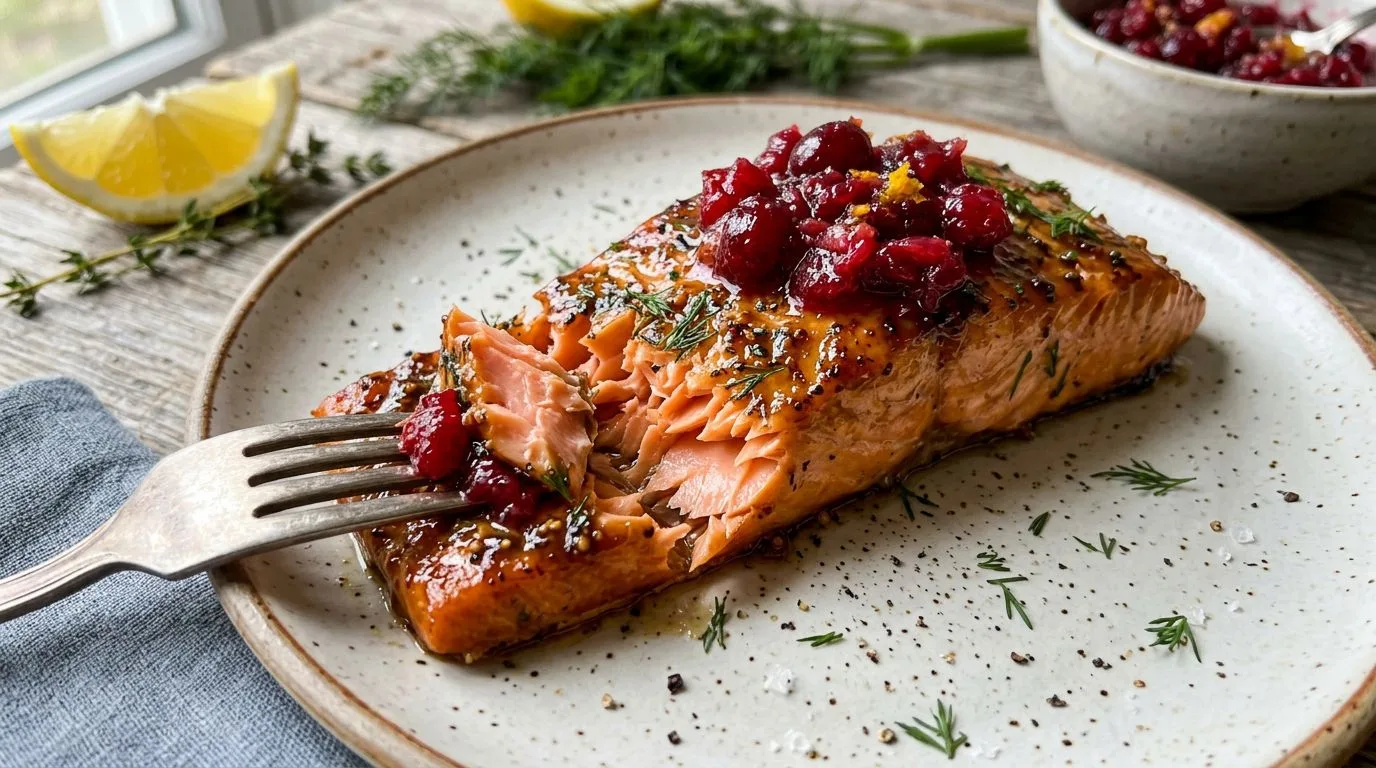
When I’m looking for an elegant yet approachable seafood dinner that feels special enough for the holidays but easy enough for a weeknight, this Maple Dijon Baked Salmon with Cranberry Relish is my go-to recipe. The combination of sweet maple syrup and tangy Dijon mustard creates a beautiful glaze that caramelizes slightly in the oven, while the fresh cranberry relish adds a bright, festive pop of color and flavor that transforms simple baked salmon into something truly memorable.
I love how this dish brings together classic fall and winter flavors in a way that feels both comforting and refined. The maple Dijon glaze strikes that perfect balance between sweet and savory, and the cranberry relish provides a tart contrast that cuts through the richness of the salmon beautifully. Whether you’re planning a Thanksgiving seafood alternative or simply want to elevate your dinner routine, this recipe delivers restaurant-quality results with minimal effort.
What makes this recipe particularly appealing is how quickly it comes together. While the salmon bakes, you’ll prepare a simple cranberry relish on the stovetop that’s worlds away from canned cranberry sauce. The result is a complete, impressive dish that looks like you spent hours in the kitchen but actually takes less than 30 minutes from start to finish.
Why You’ll Love This Maple Dijon Baked Salmon
This recipe checks all the boxes for what I consider a perfect weeknight-to-weekend dish. First, it’s remarkably simple—no complicated techniques or hard-to-find ingredients required. The maple Dijon glaze comes together in minutes with pantry staples, and the cranberry relish requires just a brief simmer on the stovetop.
I find that salmon is one of the most forgiving proteins to bake. It cooks quickly and evenly in the oven, and the natural oils in the fish keep it moist and tender. The glaze not only adds incredible flavor but also helps protect the salmon from drying out during baking. The smoked paprika in the seasoning adds a subtle depth that complements both the sweetness of the maple syrup and the brightness of the cranberries.
The cranberry relish is what truly sets this dish apart. Unlike traditional cranberry sauce that’s often cloyingly sweet, this version balances honey and orange juice with the natural tartness of fresh cranberries and the slight bite of red onion. Fresh parsley stirred in at the end adds a pop of color and herbaceous freshness that ties everything together beautifully.
This recipe is also incredibly versatile for different occasions. Serve it as an elegant Thanksgiving alternative for guests who prefer seafood, present it at a holiday dinner party, or simply make it on a Tuesday night when you want something special. It pairs wonderfully with maple roasted butternut squash for a cohesive fall-flavored meal.
Ingredients and Substitutions
The beauty of this recipe lies in its straightforward ingredient list. For the salmon, I recommend choosing fillets that are about 6 ounces each and roughly the same thickness so they cook evenly. Wild-caught salmon will have a more pronounced flavor, while farm-raised tends to be milder and fattier. Both work beautifully here.
The maple syrup should be pure maple syrup, not pancake syrup or maple-flavored syrup. The real thing has a complex, nuanced sweetness that artificial versions simply can’t replicate. If you need a substitute, honey can work in a pinch, though it will change the flavor profile slightly.
For the Dijon mustard, I prefer a good-quality smooth Dijon, but grainy Dijon mustard will add interesting texture if that’s what you have on hand. Yellow mustard is too mild and won’t provide the same tangy punch, so I don’t recommend that substitution.
Fresh cranberries are essential for the relish. Frozen cranberries can work if fresh aren’t available—just don’t thaw them before cooking. Dried cranberries won’t work for this recipe as they won’t break down into a relish-like consistency. The cranberry season typically runs from October through December, making this a perfect fall and winter recipe.
The orange juice adds brightness and helps the cranberries break down. Freshly squeezed is ideal, but store-bought works fine. In a pinch, you could substitute with a combination of lemon juice and a bit of water, though you’ll lose some of the citrus sweetness.
Red onion provides a mild sharpness that balances the sweetness. If you find raw onion too strong, you can use shallots instead for a more delicate flavor. White or yellow onion will work but may be slightly more pungent.
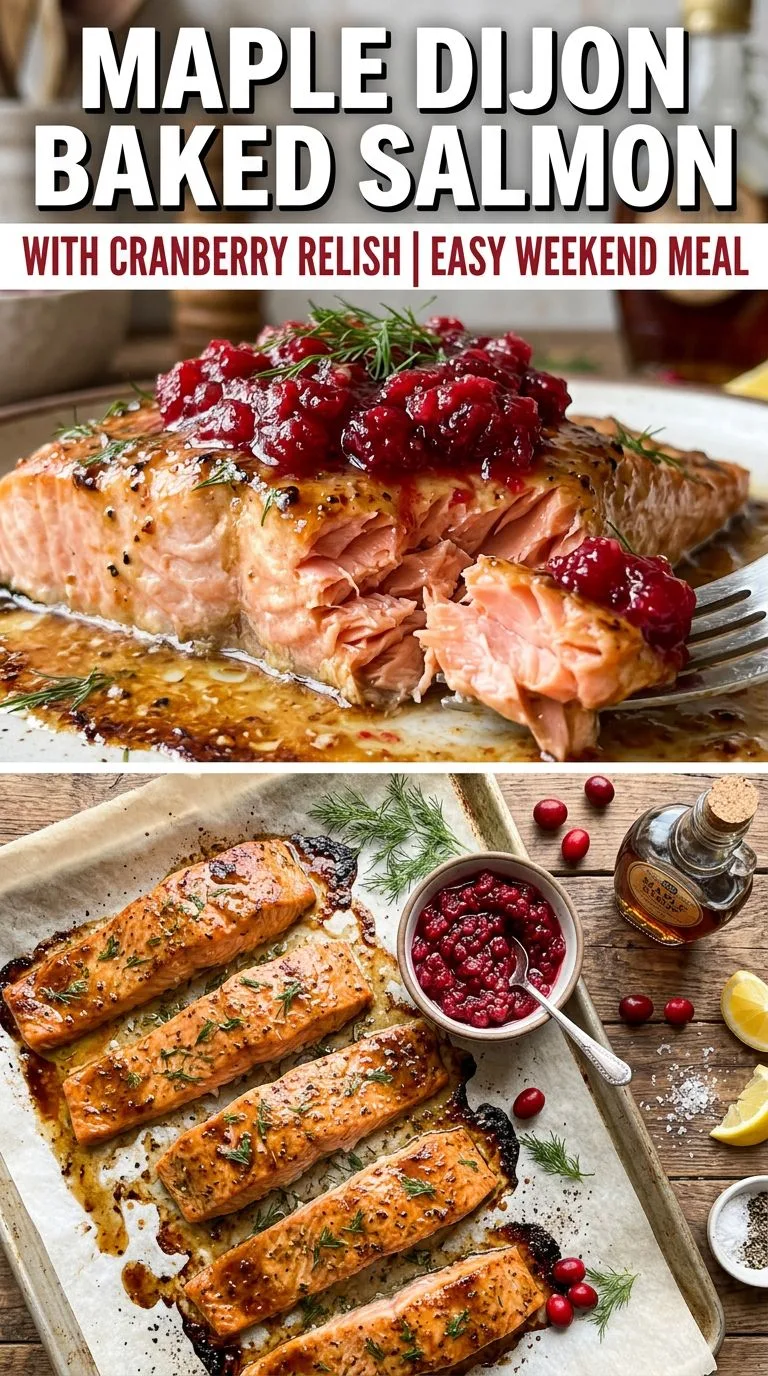
How to Make Maple Dijon Baked Salmon with Cranberry Relish
The preparation process for this recipe is wonderfully straightforward, making it accessible even for less experienced cooks. I recommend starting by preheating your oven to 400°F, which is the ideal temperature for baking salmon—hot enough to cook it through relatively quickly while allowing the glaze to caramelize slightly on top.
Begin by patting your salmon fillets completely dry with paper towels. This step is more important than many people realize. Excess moisture on the surface of the fish will prevent proper browning and can make the glaze slide off. Once dry, season the fillets evenly on both sides with salt, black pepper, and smoked paprika. The smoked paprika adds a subtle warmth and depth that complements the sweet-savory glaze beautifully.
While your oven preheats, whisk together the maple Dijon glaze. Combine the maple syrup, Dijon mustard, olive oil, minced garlic, and lemon juice in a small bowl. Whisk vigorously until the mixture is completely emulsified and smooth. The olive oil helps the glaze adhere to the salmon and adds richness, while the lemon juice provides brightness that keeps the dish from feeling too heavy.
Arrange your seasoned salmon fillets skin-side down on a parchment-lined baking sheet. If your fillets came with the skin removed, that’s fine—just place them directly on the parchment. Brush the tops generously with the maple Dijon mixture, making sure to coat the entire surface. Don’t be shy with the glaze; you want a good layer that will caramelize as it bakes.
The baking time will vary depending on the thickness of your fillets. As a general rule, salmon needs about 4-6 minutes per half-inch of thickness. For standard 6-ounce fillets that are about 1 to 1.5 inches thick, 12-18 minutes is typically perfect. I recommend checking for doneness at the 12-minute mark. The salmon is done when it flakes easily with a fork and reaches an internal temperature of 145°F in the thickest part.
While the salmon bakes, prepare the cranberry relish. Combine the fresh cranberries, orange juice, honey, and diced red onion in a small saucepan over medium heat. Bring the mixture to a gentle simmer, then reduce the heat slightly and cook for 8-10 minutes, stirring occasionally. You’ll hear the cranberries start to pop as they cook—this is exactly what you want. The relish is ready when most of the cranberries have burst and the mixture has thickened slightly. It will continue to thicken as it cools.
Remove the relish from the heat and let it cool for a few minutes before stirring in the fresh parsley. The residual heat will wilt the parsley slightly while still keeping its bright green color and fresh flavor.
Expert Tips for Best Results
I’ve made this recipe countless times, and I’ve learned a few tricks that consistently produce the best results. First, don’t overbake the salmon. It’s one of the most common mistakes with any salmon recipe. Salmon continues to cook slightly after you remove it from the oven due to residual heat, so I recommend pulling it out when it’s just barely done. The center should still be slightly translucent when you remove it from the oven; it will finish cooking as it rests.
For the most even cooking, try to select salmon fillets that are similar in thickness. If one end of a fillet is noticeably thinner, you can fold it under slightly before baking to create a more uniform thickness. Alternatively, you can tent the thinner portions with aluminum foil partway through baking to prevent them from overcooking.
Let the cranberry relish cool slightly before serving. It will be quite liquid when it first comes off the stove, but as it cools, the natural pectin in the cranberries will cause it to thicken to a perfect spooning consistency. If you prefer a chunkier relish, mash only some of the cranberries and leave others whole. For a smoother consistency, you can mash all the cranberries with the back of a spoon as they cook.
I find that using a pastry brush or silicone basting brush makes applying the maple Dijon glaze much easier and more even. If you don’t have a brush, a spoon works fine—just drizzle the glaze over the salmon and spread it gently with the back of the spoon.
If you want an extra glossy finish on your salmon, reserve a small amount of the maple Dijon glaze before baking and brush it on during the last 2-3 minutes of cooking. This creates a beautiful sheen and intensifies the flavor on the surface.
Serving Suggestions
This Maple Dijon Baked Salmon pairs beautifully with a variety of side dishes, making it adaptable to different occasions and preferences. For a complete fall-inspired meal, I love serving it alongside roasted vegetables like Brussels sprouts, carrots, or sweet potatoes. The caramelized edges of roasted vegetables complement the glazed salmon perfectly.
Creamy mashed potatoes or mashed cauliflower provide a wonderful textural contrast to the flaky salmon and chunky cranberry relish. The mild, buttery flavor of mashed potatoes doesn’t compete with the bold flavors of the dish but rather provides a comforting base that ties everything together.
For a lighter option, consider serving the salmon over a bed of mixed greens or alongside an apple cranberry pecan salad. The crisp, fresh greens provide a refreshing contrast to the rich salmon, and the additional cranberries in the salad create a cohesive flavor theme throughout the meal.
Wild rice or quinoa pilaf makes an excellent grain-based side that adds nutty flavor and interesting texture. I particularly like wild rice with this dish because its earthy flavor complements the sweetness of the maple glaze without overwhelming it.
For a holiday presentation, arrange the salmon on a large platter, spoon the cranberry relish over the top, and garnish with additional fresh parsley and perhaps some orange zest. The vibrant red of the cranberries against the golden-glazed salmon creates a stunning visual presentation that’s perfect for entertaining.
Variations and Substitutions
While this recipe is delicious as written, there are several ways you can adapt it to suit your preferences or dietary needs. If you’re not a fan of salmon, this maple Dijon glaze works beautifully on other fish as well. Try it with arctic char, steelhead trout, or even thick white fish fillets like halibut or cod. Adjust the cooking time based on the thickness and type of fish you choose.
For a spicier version, add a pinch of cayenne pepper to the glaze or include some red pepper flakes in the cranberry relish. The heat provides an interesting contrast to the sweetness and works surprisingly well with the other flavors.
You can make the cranberry relish more complex by adding warm spices like cinnamon, ginger, or a pinch of ground cloves. A tablespoon of balsamic vinegar stirred in at the end adds depth and complexity. Some people enjoy adding chopped pecans or walnuts to the relish for extra texture and richness.
If you want to make this recipe dairy-free, it already is! Just ensure your Dijon mustard doesn’t contain any dairy products (most don’t, but it’s worth checking the label). For a lower-sugar version, you can reduce the maple syrup to 2-3 tablespoons and increase the Dijon mustard slightly to maintain the right consistency for the glaze.
For meal prep purposes, you can prepare the components separately. The cranberry relish actually tastes better after sitting for a day, as the flavors meld together. The maple Dijon glaze can be made up to three days in advance and stored in the refrigerator. Just bring it to room temperature and give it a good whisk before using.
Storage, Freezing, and Reheating
Proper storage is key to enjoying any leftovers from this dish. I recommend storing the salmon and cranberry relish separately in airtight containers in the refrigerator. The cooked salmon will keep for up to 3 days, while the cranberry relish will last up to a week.
When it comes to reheating salmon, gentle is the key word. Salmon can become dry and overcooked very quickly when reheated, so I recommend using low heat. The best method is to reheat it in a 275°F oven for about 10-15 minutes, just until warmed through. You can also reheat it gently in a covered skillet over low heat with a splash of water or broth to create steam.
Alternatively, leftover salmon is delicious served cold or at room temperature. Flake it over a salad, use it in a grain bowl, or make salmon salad sandwiches. The maple Dijon flavors are still delicious when the salmon is served chilled.
The cranberry relish can be reheated gently on the stovetop or in the microwave, though it’s also perfectly fine served at room temperature or even chilled. In fact, I often prefer it slightly chilled as a condiment.
While you can technically freeze cooked salmon, I don’t generally recommend it as the texture changes significantly upon thawing and reheating. If you do choose to freeze it, wrap individual portions tightly in plastic wrap and then aluminum foil, and use within 2-3 months. Thaw overnight in the refrigerator before reheating.
The cranberry relish freezes beautifully and can be stored in the freezer for up to 3 months. Freeze it in a freezer-safe container or bag, leaving a bit of room for expansion. Thaw overnight in the refrigerator before serving.
Frequently Asked Questions
Can I use frozen salmon for this recipe?
Yes, you can use frozen salmon, but make sure to thaw it completely first. The best way to thaw salmon is to place it in the refrigerator overnight. Never thaw salmon at room temperature, as this can promote bacterial growth. Once thawed, pat it very dry before seasoning and glazing, as frozen fish tends to release more moisture.
Do I need to remove the skin from the salmon?
You don’t need to remove the skin before baking. In fact, leaving the skin on helps hold the fillet together during cooking and makes it easier to remove from the baking sheet. The skin also provides a barrier that helps keep the salmon moist. After baking, the skin should peel away easily if you prefer not to eat it, or you can serve the salmon skin-side down and let diners choose.
Can I make this recipe on the grill?
Absolutely! This recipe adapts well to grilling. Preheat your grill to medium-high heat (about 400°F) and oil the grates well. Place the glazed salmon skin-side down on the grill and cook for about 10-15 minutes, depending on thickness, without flipping. The skin will protect the flesh from direct heat. You can brush on additional glaze during the last few minutes of cooking.
What if I don’t have fresh cranberries?
Fresh cranberries are ideal, but frozen cranberries work well too—just don’t thaw them before cooking. Dried cranberries won’t work for this relish recipe as they won’t break down properly. If cranberries are completely unavailable, you could make a different fruit relish using fresh or frozen cherries, though the flavor profile will be quite different.
How do I know when the salmon is done?
The most reliable way is to use an instant-read thermometer. Insert it into the thickest part of the fillet—it should read 145°F. Visually, the salmon should be opaque throughout and flake easily with a fork. The center can still be slightly translucent when you remove it from the oven, as it will continue cooking from residual heat.
Can I double this recipe?
Yes, this recipe doubles easily. You may need to use two baking sheets to ensure the salmon fillets aren’t crowded, which would cause them to steam rather than bake properly. The cranberry relish doubles perfectly—just use a slightly larger saucepan to accommodate the increased volume.
Maple Dijon Baked Salmon with Cranberry Relish
A tender oven baked salmon fillet brushed with a sweet and tangy maple Dijon glaze and topped with fresh cranberry relish. This colorful seafood dish makes a delicious lighter holiday dinner that’s both elegant and easy to prepare.
Cook Time: 18 minutes
Total Time: 28 minutes
Servings: 4
Difficulty: Easy
Cuisine: American
Course: Dinner
Ingredients
- 4 salmon fillets (6 oz each)
- 1/4 cup pure maple syrup
- 3 tbsp Dijon mustard
- 2 tbsp olive oil
- 2 garlic cloves, minced
- 1 tbsp lemon juice
- 1 tsp smoked paprika
- 1/2 tsp salt
- 1/2 tsp black pepper
- 1 cup fresh cranberries
- 1/4 cup orange juice
- 2 tbsp honey
- 1/4 cup finely diced red onion
- 1 tbsp fresh parsley, chopped
Instructions
- Preheat the oven to 400°F (200°C) and line a baking sheet with parchment paper.
- Pat the salmon fillets dry with paper towels and season evenly on both sides with salt, black pepper, and smoked paprika.
- In a small bowl, whisk together maple syrup, Dijon mustard, olive oil, minced garlic, and lemon juice until well combined and smooth.
- Arrange the salmon fillets skin-side down on the prepared baking sheet. Brush the tops generously with the maple Dijon mixture, coating the entire surface.
- Bake for approximately 12-18 minutes, depending on the thickness of your fillets, until the salmon flakes easily with a fork and the thickest part reaches an internal temperature of 145°F (63°C).
- Meanwhile, prepare the cranberry relish by combining cranberries, orange juice, honey, and diced red onion in a small saucepan over medium heat.
- Bring to a simmer and cook for 8-10 minutes, stirring occasionally, until the cranberries burst and soften and the relish thickens slightly. Remove from heat and allow to cool briefly.
- Stir the fresh chopped parsley into the cranberry relish.
- Transfer the baked salmon to serving plates and spoon the warm cranberry relish over the top. Serve immediately with your choice of sides such as roasted vegetables, mashed potatoes, or wild rice.
Recipe Notes
- Don’t overbake the salmon—it continues cooking after removal from the oven. The center should be slightly translucent when you take it out.
- For even cooking, choose salmon fillets of similar thickness.
- The cranberry relish will thicken as it cools. It can be made up to 3 days in advance and stored in the refrigerator.
- If your salmon fillets have skin, leave it on during baking—it helps keep the fish moist and can be easily removed before serving.
- Reserve a small amount of glaze to brush on during the last 2-3 minutes of baking for extra shine and flavor.
- Fresh cranberries can be substituted with frozen (do not thaw), but dried cranberries will not work for this relish.
Nutrition Information (per serving, estimated)
Calories: 425
Carbohydrates: 28g
Protein: 35g
Fat: 19g
Saturated Fat: 3g
Fiber: 2g
Sugar: 22g
Sodium: 480mg
Nutrition information is estimated and will vary based on exact ingredients and portion sizes.
