
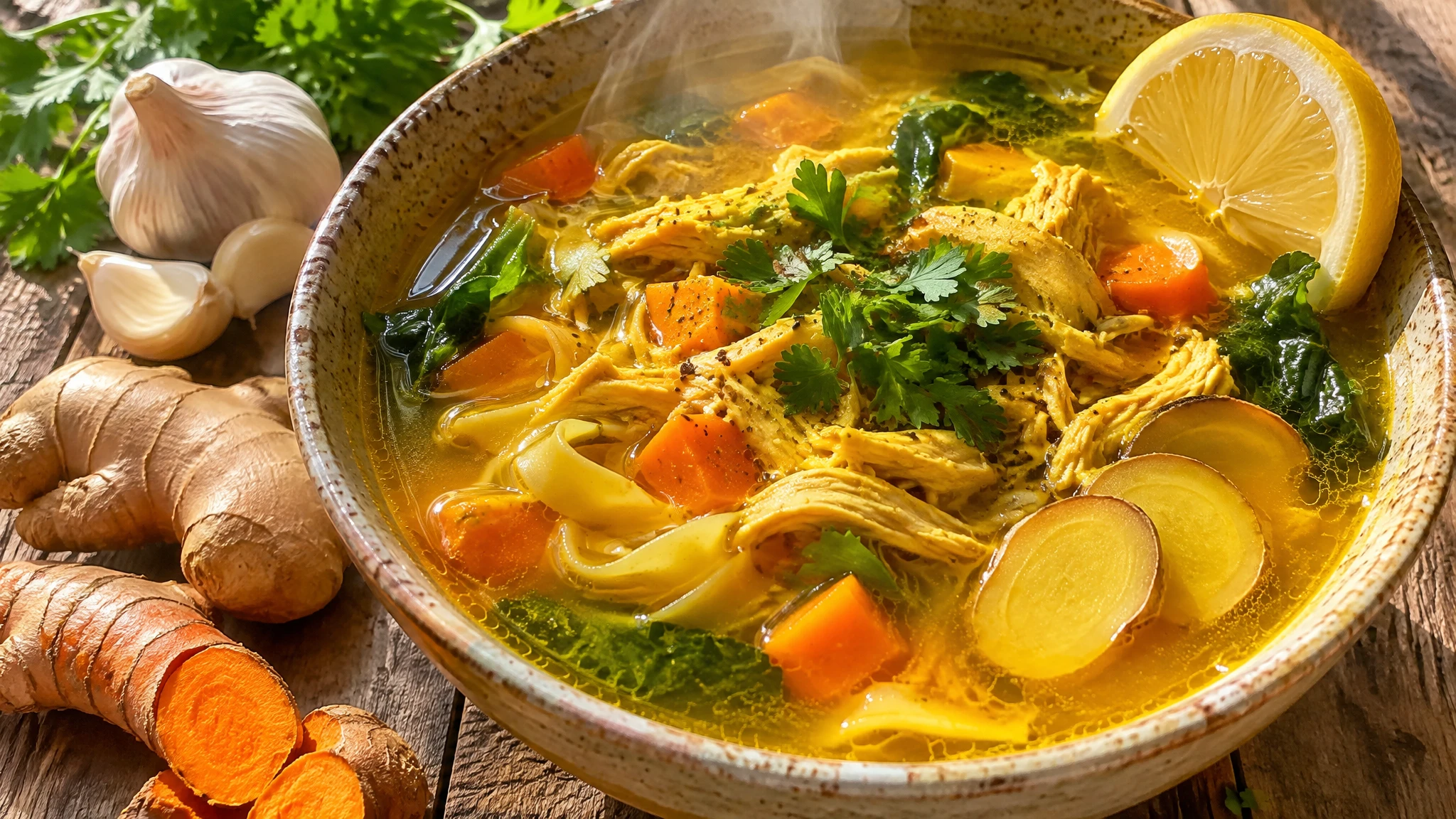
When I need a bowl of comfort that also supports my wellness, I turn to this immune-supporting chicken noodle soup with turmeric and ginger. This isn’t your ordinary chicken noodle soup—it’s a nourishing upgrade featuring anti-inflammatory turmeric, warming fresh ginger, and aromatic garlic that transform a classic comfort food into a powerhouse of flavor and nutrition. The golden broth is both beautiful and beneficial, while tender chicken, hearty vegetables, and egg noodles make it a complete, satisfying meal.
I love how this soup combines the familiar comfort of traditional chicken noodle soup with ingredients known for their immune-supporting properties. The earthy warmth of turmeric pairs beautifully with the bright, spicy notes of fresh ginger, while garlic adds depth and aromatic complexity. A finishing touch of lemon juice brightens everything up, and fresh parsley adds a pop of color and freshness. Whether you’re feeling under the weather or simply want a wholesome, delicious dinner, this turmeric ginger chicken noodle soup delivers on every level.
This recipe comes together in about 40 minutes from start to finish, making it perfect for busy weeknights when you want something nourishing without spending hours in the kitchen. The ingredients are straightforward and accessible, and the technique is simple enough for beginners while producing results that taste like you’ve been simmering soup all day.
Why You’ll Love This Turmeric Ginger Chicken Noodle Soup
This immune-supporting chicken noodle soup stands out for several compelling reasons. First, it’s genuinely nourishing—the combination of turmeric, ginger, and garlic provides natural compounds that have been valued for centuries in traditional wellness practices. Turmeric contains curcumin, which gives the soup its beautiful golden color, while fresh ginger adds a warming quality that’s especially comforting during cooler months.
I find that this soup strikes the perfect balance between being healthful and deeply satisfying. It’s not one of those “healthy” recipes that sacrifices flavor—the aromatic vegetables, tender chicken, and perfectly cooked egg noodles make it a meal everyone at the table will enjoy, whether they’re focused on wellness or simply want something delicious.
The recipe is also wonderfully practical. It uses one pot, which means minimal cleanup, and it comes together quickly enough for a weeknight dinner. I recommend making a double batch because this soup tastes even better the next day, and it freezes beautifully for future meals when you need something comforting in a hurry.
Another aspect I appreciate is how adaptable this soup is. While the recipe as written is perfectly balanced, you can easily adjust the ginger and garlic to suit your taste preferences, add more vegetables if you like, or swap the egg noodles for rice or another grain. It’s forgiving and flexible, which makes it ideal for home cooks of all experience levels.
Ingredients and Substitutions
Let me walk you through the key ingredients that make this soup special and offer some practical substitution options.
Chicken breast provides lean protein and becomes wonderfully tender when simmered in the broth. I use boneless, skinless chicken breast for convenience, but you can substitute boneless, skinless chicken thighs if you prefer darker meat with a bit more richness. Thighs are also slightly more forgiving if you accidentally overcook them.
Fresh ginger is essential to this recipe—it provides that characteristic warming, slightly spicy flavor that makes the soup so comforting. I always use fresh ginger rather than ground because it has a brighter, more vibrant flavor. If you absolutely must substitute, use about 1/2 teaspoon of ground ginger, though the flavor won’t be quite the same.
Ground turmeric gives the soup its beautiful golden color and earthy flavor. While fresh turmeric root can be used (about 1 tablespoon grated), ground turmeric is more accessible and works perfectly here. Just be aware that turmeric can stain, so handle it carefully.
Garlic adds aromatic depth and works synergistically with the ginger and turmeric. Fresh garlic is best—I don’t recommend substituting garlic powder in this recipe because the fresh cloves contribute so much to the overall flavor profile.
Chicken broth forms the foundation of the soup. I use good-quality store-bought chicken broth for convenience, but homemade broth will make this soup even more flavorful. You can also use low-sodium broth if you want more control over the salt level.
Egg noodles are traditional in chicken noodle soup and cook quickly. If you need a gluten-free option, use gluten-free pasta or rice noodles. You can also substitute small pasta shapes like ditalini or orzo, or even use rice if you prefer.
Vegetables—carrots, celery, and onion—form the classic aromatic base. These are pretty standard, but you can add other vegetables like parsnips, turnips, or even some leafy greens like spinach or kale added at the end.
Lemon juice brightens the entire soup with a touch of acidity that balances the earthy turmeric and rich broth. Fresh lemon juice is best, but bottled will work in a pinch.
Fresh parsley adds color and a fresh herbal note. You can substitute fresh cilantro if you prefer, or use a combination of both.

How to Make Turmeric Ginger Chicken Noodle Soup
This soup comes together in a straightforward process that builds layers of flavor. Here’s how I approach making it.
Start by preparing all your vegetables—slice the carrots and celery into even pieces so they cook uniformly, dice the onion, grate the fresh ginger, and mince the garlic. Having everything prepped before you start cooking makes the process smooth and enjoyable.
Heat the olive oil in a large soup pot or Dutch oven over medium heat. Once it’s shimmering, add the diced onion, sliced carrots, and celery. Sauté these aromatic vegetables for about 5 minutes, stirring occasionally, until they begin to soften and the onion becomes translucent. This step builds the flavor foundation of your soup.
Next, stir in the grated ginger, minced garlic, ground turmeric, and black pepper. Cook this mixture for just about 1 minute, stirring constantly. You’ll notice the kitchen fills with an amazing aroma—that’s when you know the spices are releasing their essential oils and flavors. Don’t skip this step or let the garlic burn; you want it fragrant but not browned.
Add the whole chicken breast and pour in the chicken broth. Bring the mixture to a gentle boil, then reduce the heat to maintain a simmer. Cover the pot and let it cook for 15 to 20 minutes. The chicken is done when it reaches an internal temperature of 165°F (74°C). I like to use an instant-read thermometer to check, but if you don’t have one, the chicken should be firm to the touch and no longer pink in the center.
Carefully remove the cooked chicken from the pot and place it on a cutting board. Using two forks, shred the chicken into bite-sized pieces. This is easier to do while the chicken is still warm. Return the shredded chicken to the pot.
Add the dry egg noodles to the simmering soup and cook for 6 to 8 minutes, or according to the package directions, until the noodles are tender. Stir occasionally to prevent them from sticking together.
Finally, stir in the fresh lemon juice and chopped parsley. Taste the soup and adjust the seasoning if needed—you might want to add a pinch of salt or an extra squeeze of lemon. Serve hot and enjoy the comforting, nourishing goodness.
Expert Tips for Best Results
I’ve made this soup many times, and these tips will help you achieve the best possible results.
Don’t overcook the chicken. Chicken breast can become dry if overcooked, so I recommend using a meat thermometer to ensure it reaches exactly 165°F. Remove it promptly when it’s done.
Grate ginger with the skin on. Fresh ginger is easier to grate when you leave the thin skin on—it comes off naturally as you grate, and you won’t waste any of the flavorful flesh trying to peel it first.
Add noodles just before serving if meal prepping. If you’re making this soup ahead, I recommend cooking and storing the noodles separately. Noodles absorb liquid as they sit, which can make your soup thick and starchy. Add freshly cooked noodles to individual bowls when serving.
Adjust the ginger and turmeric to taste. If you’re new to these flavors, start with the amounts listed and adjust in future batches. Some people love a strong ginger kick, while others prefer it more subtle.
Use a large enough pot. A 6-quart pot or larger gives you plenty of room to stir without splashing and ensures even cooking. Crowding ingredients in a small pot can lead to uneven results.
Let the soup rest briefly before serving. I find that letting the soup sit for 5 to 10 minutes after cooking allows the flavors to meld beautifully. It also cools slightly, making it safer and more comfortable to eat.
Brighten with acid at the end. The lemon juice added at the finish is crucial—it brightens all the flavors and balances the richness of the broth. Don’t skip this step.
Serving Suggestions
This turmeric ginger chicken noodle soup is a complete meal on its own, but I love pairing it with a few simple accompaniments to round out the experience.
Serve it with crusty bread or warm dinner rolls for dipping into the golden broth. A simple side salad with a light vinaigrette provides a fresh contrast to the warm, comforting soup. I also like to offer extra lemon wedges at the table so everyone can add a squeeze to their bowl if they like.
For a more substantial meal, consider serving this soup alongside a lemon chicken orzo soup for variety at a soup-focused gathering, or pair it with grilled cheese sandwiches for a classic comfort food combination that both kids and adults enjoy.
If you’re serving this when someone isn’t feeling well, I recommend keeping the accompaniments simple—perhaps just some saltine crackers or plain toast. The soup itself is nourishing and easy to digest.
Garnish individual bowls with extra fresh parsley, a crack of black pepper, or even a small drizzle of high-quality olive oil for added richness. Some people enjoy a sprinkle of red pepper flakes for a bit of heat, which complements the ginger nicely.
Variations and Substitutions
This recipe is wonderfully adaptable. Here are some variations I’ve enjoyed.
Make it with bone-in chicken. Using bone-in chicken pieces (like thighs or drumsticks) adds even more flavor to the broth. Just increase the simmering time to about 30 minutes and remove the bones before shredding the meat.
Add more vegetables. Stir in some baby spinach, kale, or bok choy during the last few minutes of cooking for added nutrition and color. Frozen peas or corn also work beautifully.
Try different noodles or grains. Swap the egg noodles for rice noodles, whole wheat pasta, or even cooked rice or quinoa for different textures and nutritional profiles.
Make it spicier. Add a pinch of cayenne pepper or red pepper flakes along with the other spices, or stir in some sriracha at the end for heat.
Use coconut milk for creaminess. Stir in 1/2 cup of coconut milk at the end for a creamy, slightly sweet variation that’s reminiscent of Thai-inspired soups. This pairs especially well with the turmeric and ginger.
Make it vegetarian. Replace the chicken with chickpeas or cubed firm tofu, and use vegetable broth instead of chicken broth. You’ll lose some of the traditional chicken soup character, but you’ll still have a delicious, warming bowl.
Add fresh herbs. Experiment with fresh cilantro, dill, or basil instead of parsley for different flavor profiles. Each brings its own unique character to the soup.
If you enjoy soups with bold, aromatic flavors, you might also like this penicillin soup with ginger and garlic, which shares similar immune-supporting ingredients.
Storage, Freezing, and Reheating
This soup stores beautifully, making it perfect for meal prep or batch cooking.
Refrigerator storage: Let the soup cool to room temperature, then transfer it to an airtight container. It will keep in the refrigerator for 4 to 5 days. As I mentioned earlier, the noodles will absorb liquid as the soup sits, so you may need to add a splash of broth or water when reheating.
Freezing: This soup freezes well, but I recommend freezing it without the noodles for best results. The broth, chicken, and vegetables freeze beautifully for up to 3 months. Cool the soup completely, then transfer to freezer-safe containers, leaving about an inch of headspace for expansion. When you’re ready to eat it, thaw overnight in the refrigerator, reheat, and add freshly cooked noodles.
Reheating: Reheat individual portions in the microwave for 2 to 3 minutes, stirring halfway through, or reheat the entire batch on the stovetop over medium heat until warmed through. If the soup has thickened, add a bit of chicken broth or water to reach your desired consistency. Taste and adjust seasoning after reheating, as flavors can mellow in storage.
I find that this soup actually tastes even better the next day after the flavors have had time to meld together. It’s one of those recipes I’m always happy to have waiting in the refrigerator for an easy lunch or dinner.
Frequently Asked Questions
Can I use ground ginger instead of fresh?
While fresh ginger provides the best flavor and is what I recommend, you can substitute about 1/2 teaspoon of ground ginger if necessary. The flavor will be less bright and vibrant, but it will still work.
Why is my soup not as golden as I expected?
The golden color comes from the turmeric. Make sure you’re using a full teaspoon and that your turmeric is relatively fresh—old turmeric loses both color and flavor. Also, the color will be more vibrant if you use a lighter-colored broth.
Can I make this in a slow cooker?
Yes! Add everything except the noodles, lemon juice, and parsley to your slow cooker. Cook on low for 6 to 7 hours or high for 3 to 4 hours. Remove and shred the chicken, return it to the pot, add the noodles, and cook on high for 15 to 20 minutes until tender. Stir in lemon juice and parsley before serving.
Is this soup actually good for immune support?
While I can’t make medical claims, turmeric, ginger, and garlic have been used traditionally for wellness purposes and contain compounds that have been studied for their potential benefits. This soup is certainly nourishing and provides good nutrition from the vegetables, lean protein, and aromatic ingredients.
Can I use chicken thighs instead of breast?
Absolutely! Boneless, skinless chicken thighs work wonderfully and add a bit more richness to the soup. They’re also more forgiving if slightly overcooked.
How can I make this soup more filling?
Add more noodles, include additional vegetables like potatoes or beans, or serve larger portions. You can also add a can of drained chickpeas or white beans for extra protein and fiber.
Will turmeric stain my pot or utensils?
Turmeric can stain, especially plastic utensils and containers. I recommend using stainless steel or enamel cookware and wooden or metal utensils. If you do get stains, a paste of baking soda and water usually removes them.
Can I add the lemon juice earlier in cooking?
I recommend adding it at the end because cooking lemon juice for too long can make it taste bitter and diminish its bright, fresh flavor. Adding it at the finish preserves that lovely citrus brightness.
Immune-Supporting Chicken Noodle Soup with Turmeric and Ginger
This nourishing chicken noodle soup features anti-inflammatory turmeric, warming fresh ginger, and aromatic garlic in a golden broth with tender chicken, vegetables, and egg noodles. It’s comforting, flavorful, and perfect for supporting wellness during cooler months or anytime you need a wholesome, satisfying meal.
- Prep Time: 15 minutes
- Cook Time: 30 minutes
- Total Time: 45 minutes
- Servings: 6
- Difficulty: Easy
- Cuisine: American
- Course: Dinner
Ingredients
- 1 lb boneless skinless chicken breast
- 2 cups dry egg noodles
- 2 medium carrots, sliced
- 2 celery stalks, sliced
- 1 tbsp fresh ginger, grated
- 3 garlic cloves, minced
- 1 tsp ground turmeric
- 6 cups chicken broth
- 1 medium yellow onion, diced
- 1 tbsp olive oil
- 1/4 tsp black pepper
- 1 tbsp lemon juice
- 2 tbsp fresh parsley, chopped
Instructions
- Slice the carrots and celery, dice the onion, grate the fresh ginger, and mince the garlic.
- Heat olive oil in a large soup pot over medium heat. Add onion, carrots, and celery and sauté for 5 minutes until softened.
- Stir in ginger, garlic, turmeric, and black pepper. Cook for 1 minute until fragrant, stirring constantly.
- Add the chicken breast and chicken broth. Bring to a gentle boil, then reduce heat and simmer covered for 15 to 20 minutes until the chicken reaches an internal temperature of 165°F (74°C).
- Remove the chicken from the pot, shred it with two forks, and return it to the pot.
- Add the egg noodles and cook for 6 to 8 minutes until tender, stirring occasionally.
- Stir in lemon juice and fresh parsley. Taste and adjust seasoning if needed. Serve hot.
Recipe Notes
- For meal prep, store the noodles separately and add them to individual portions when serving to prevent them from absorbing too much liquid.
- Fresh ginger provides the best flavor, but you can substitute 1/2 teaspoon ground ginger if necessary.
- Use an instant-read thermometer to ensure chicken is cooked to exactly 165°F for food safety without overcooking.
- The lemon juice added at the end brightens all the flavors—don’t skip this step.
- This soup freezes well for up to 3 months. For best results, freeze without the noodles and add freshly cooked noodles when reheating.
- Turmeric can stain, so use stainless steel or enamel cookware and avoid plastic utensils.
Nutrition Information (Per Serving, Estimated)
- Calories: 245
- Carbohydrates: 22g
- Protein: 22g
- Fat: 6g
- Saturated Fat: 1g
- Fiber: 2g
- Sugar: 3g
- Sodium: 780mg
Nutrition information is estimated based on standard ingredient values and may vary based on specific products used and portion sizes.
