
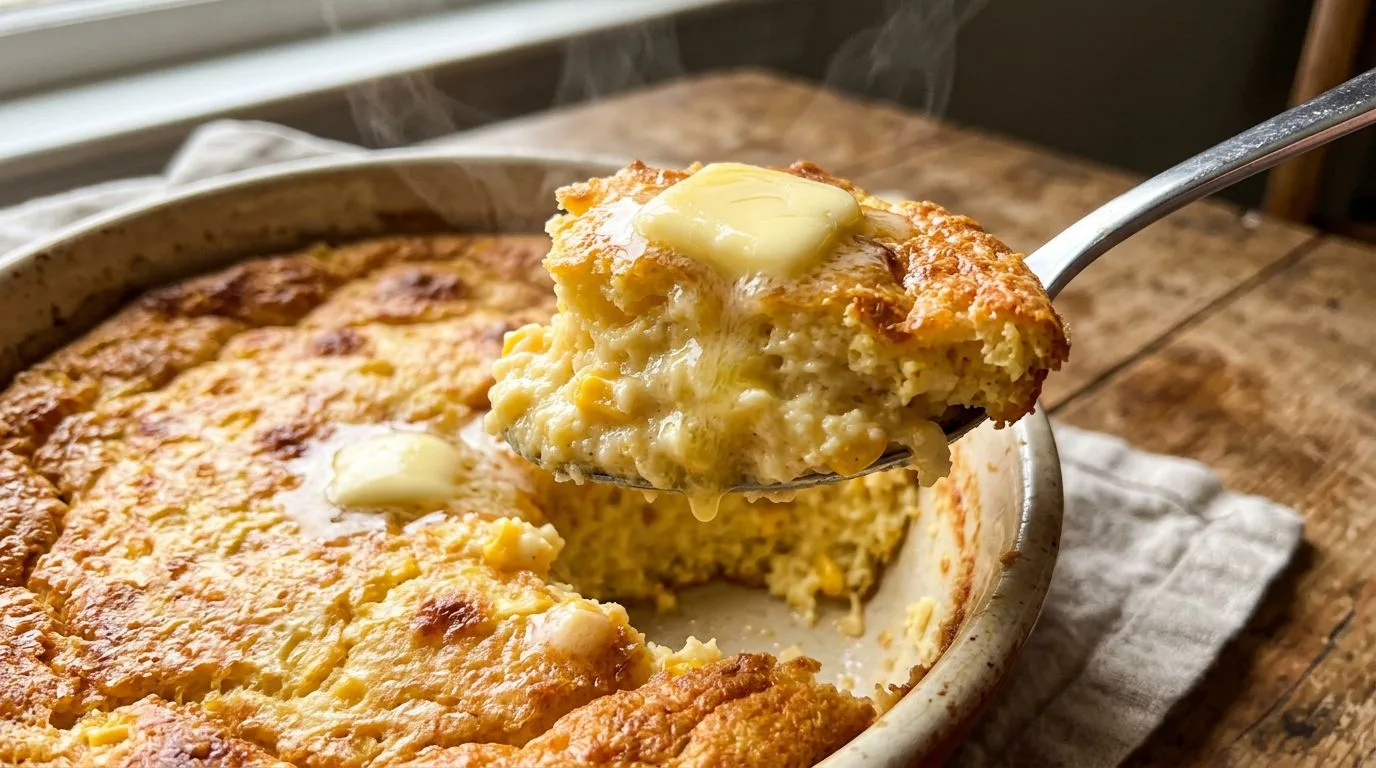
Southern spoon bread is one of those classic comfort dishes that deserves a place on every holiday table. This light, fluffy cornmeal side dish has a soft, custard-like texture that’s somewhere between cornbread and a soufflé. I love how it puffs up beautifully in the oven, creating a golden crown that’s absolutely irresistible when served warm with a pat of butter melting on top.
What makes spoon bread so special is its delicate, airy texture. Unlike traditional cornbread that you can slice and hold, this Southern favorite gets its name because you need a spoon to serve it. The combination of whipped egg whites folded into a creamy cornmeal base creates something truly magical—a side dish that’s elegant enough for Thanksgiving dinner yet simple enough for a weeknight meal. I find that once people try authentic spoon bread, they’re hooked on its rich, buttery flavor and cloud-like consistency.
This traditional recipe stays true to its Southern roots with simple, wholesome ingredients. The key is properly cooking the cornmeal in milk to create a smooth base, then incorporating beaten egg whites to achieve that signature fluffy rise. Whether you’re serving it alongside roasted turkey, glazed ham, or simply with a drizzle of honey, this old-fashioned spoon bread will quickly become a family favorite.
Why You’ll Love This Southern Spoon Bread
This classic Southern spoon bread recipe delivers everything you want in a comfort food side dish. The texture is incredibly light and fluffy, almost like a savory pudding or custard, with a subtle corn flavor that complements rather than overwhelms your main course. I recommend this recipe because it uses straightforward techniques that produce impressive results every time.
The beauty of spoon bread lies in its versatility. It pairs wonderfully with both casual weeknight dinners and special occasion meals. I’ve served it at Thanksgiving alongside Southern cornbread dressing and at simple Sunday suppers with roasted chicken. The rich, buttery flavor and soft texture make it a crowd-pleaser that appeals to all ages.
Another reason I love this recipe is that it comes together quickly with pantry staples. You don’t need any unusual ingredients or specialized equipment—just a saucepan, mixing bowls, and a baking dish. The most important step is whipping the egg whites to stiff peaks and folding them in gently, which creates that signature airy texture that makes spoon bread so special.
Ingredients and Substitutions
The ingredient list for traditional spoon bread is refreshingly simple. Yellow cornmeal forms the base, providing that classic corn flavor and golden color. I prefer yellow cornmeal for its richer taste, but white cornmeal works equally well if that’s what you have on hand. Just make sure to use regular cornmeal, not cornmeal mix, which contains added leavening and salt.
Whole milk creates the creamy, custard-like texture that defines spoon bread. The fat content in whole milk contributes to the rich mouthfeel and helps carry the butter flavor throughout the dish. If you only have 2% milk, you can use it, though the result will be slightly less rich. I don’t recommend using skim milk, as the dish will lack the proper texture and flavor.
The eggs play a dual role in this recipe. The yolks add richness and help bind the mixture, while the whites, when beaten to stiff peaks, provide the lift that makes spoon bread so wonderfully fluffy. Fresh eggs at room temperature whip up better than cold eggs, so I like to set them out about 30 minutes before starting.
Butter adds essential flavor and richness. I use unsalted butter so I can control the salt level precisely. The small amount of sugar balances the corn flavor without making the dish sweet—it’s just enough to round out the taste. Baking powder provides additional lift to complement the beaten egg whites, ensuring your spoon bread rises beautifully and maintains its structure.
How to Make Southern Spoon Bread
Making spoon bread requires attention to a few key techniques, but the process is straightforward. Start by preheating your oven to 350°F and generously greasing a 2-quart baking dish with butter. I find that proper greasing prevents sticking and helps create a slightly crispy edge that contrasts nicely with the soft interior.
The first critical step is cooking the cornmeal properly. Heat the milk in a saucepan until it’s steaming but not boiling—you’ll see wisps of steam rising from the surface. Gradually whisk in the cornmeal in a steady stream to prevent lumps from forming. Cook this mixture over medium-low heat for 5 to 7 minutes, stirring continuously. The mixture will thicken considerably and pull away from the sides of the pan slightly. This cooking step is essential because it softens the cornmeal and develops the proper texture.
Once the cornmeal mixture has thickened, remove it from the heat and immediately stir in the butter, sugar, salt, and baking powder. The residual heat will melt the butter and incorporate everything smoothly. Let this mixture cool for about 10 minutes—it should be warm but not hot when you add the egg yolks. If it’s too hot, it will cook the yolks and create an unpleasant texture.
Beat the egg yolks lightly in a small bowl, then stir them into the cooled cornmeal mixture until fully incorporated. In a separate, clean bowl, beat the egg whites until stiff peaks form. This means when you lift the beaters, the peaks stand straight up without drooping. This step is crucial for achieving the light, airy texture that defines spoon bread.
The final and most important step is folding the beaten egg whites into the cornmeal mixture. Use a rubber spatula and gently fold in about one-third of the whites first to lighten the mixture. Then add the remaining whites and fold gently, using a motion that cuts down through the center, sweeps across the bottom, and brings the mixture up and over. Work quickly but gently—you want to maintain as much air as possible without leaving large streaks of egg white.
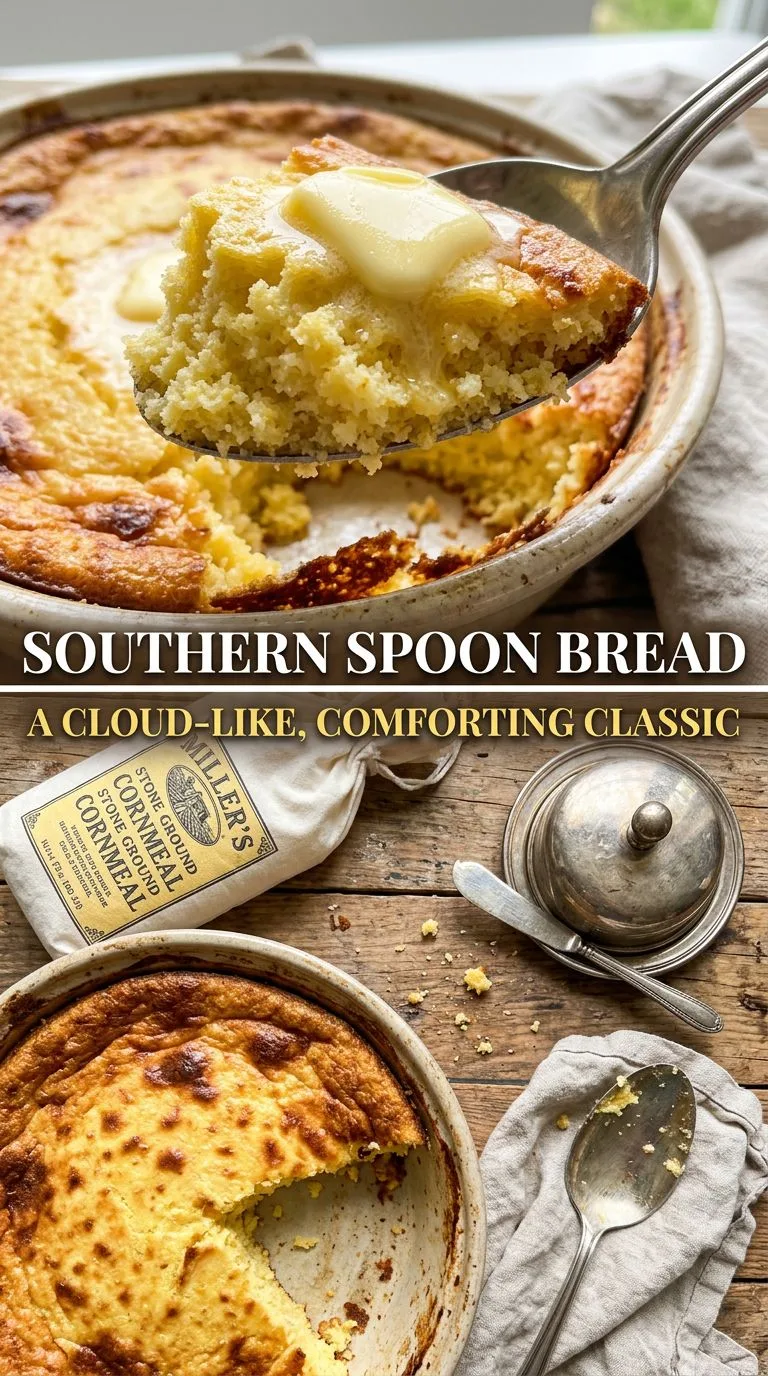
Pour the batter into your prepared baking dish and bake for 30 to 35 minutes. The spoon bread is done when it’s puffed up, golden brown on top, and a knife inserted near the center comes out mostly clean. It will jiggle slightly in the center, which is normal. Serve immediately while it’s hot and at its fluffiest—spoon bread deflates as it cools, which is perfectly normal.
Expert Tips for Best Results
Temperature control is everything when making spoon bread. I always bring my eggs to room temperature before starting, as cold eggs don’t whip up as well and can cool down the cornmeal mixture too much. Similarly, don’t let the cornmeal mixture get too hot before adding the egg yolks, or you’ll end up with scrambled eggs in your batter.
When whisking the cornmeal into the hot milk, add it gradually while whisking constantly. Dumping it all in at once almost guarantees lumps. I like to pour it in a thin, steady stream while whisking vigorously. If you do get a few small lumps, don’t worry—they’ll usually smooth out during the cooking process.
The key to maximum fluffiness is properly beaten egg whites. Make sure your bowl and beaters are completely clean and free of any grease, which can prevent the whites from whipping properly. Beat them until they form stiff, glossy peaks that hold their shape. Underbeaten whites won’t provide enough lift, while overbeaten whites become dry and grainy, making them difficult to fold in smoothly.
When folding in the egg whites, resist the urge to stir or mix vigorously. Gentle folding preserves the air bubbles that make spoon bread light and fluffy. It’s okay if you see a few small streaks of white—overmixing will deflate the batter and result in a dense, heavy texture.
Timing is crucial when serving spoon bread. It’s at its absolute best straight from the oven when it’s puffed up and steaming. As it cools, it will naturally deflate and become denser. This doesn’t mean it’s ruined—it’s still delicious—but for that impressive presentation and optimal texture, plan to serve it within 10 to 15 minutes of removing it from the oven.
Serving Suggestions
Southern spoon bread is incredibly versatile and pairs beautifully with a wide range of main dishes. I love serving it at Thanksgiving alongside roasted turkey, sweet potato casserole, and green beans. Its subtle corn flavor and creamy texture complement rich, savory dishes without competing for attention.
For everyday meals, spoon bread makes an excellent side for roasted or fried chicken, pork chops, or ham. The soft, custard-like texture provides a nice contrast to crispy or grilled meats. I also like to serve it with braised dishes like pot roast or short ribs, where it can soak up the delicious pan juices.
You can serve spoon bread plain, but I recommend offering butter at the table so guests can add a pat on top. The butter melts into the warm spoon bread, adding extra richness. Some people enjoy a drizzle of honey or maple syrup, which gives it a sweet-savory flavor profile that’s particularly good at breakfast or brunch.
For a more substantial dish, you can top spoon bread with sautéed greens, crumbled bacon, or shredded cheese. These additions transform it from a simple side dish into something more like a main course. I’ve also served it as a base for creamed chicken or turkey, similar to how you might use biscuits or toast points.
Variations and Substitutions
While traditional spoon bread is delicious as-is, there are several ways to customize it to your taste. For a cheesy version, fold in 1 cup of shredded sharp cheddar cheese along with the egg yolks. The cheese adds richness and a savory depth that pairs wonderfully with the corn flavor.
You can add fresh or frozen corn kernels to the batter for extra corn flavor and texture. Stir in about 1 cup of corn kernels after adding the egg yolks but before folding in the whites. This creates little pockets of sweet corn throughout the dish.
For a spicier version, add diced jalapeños, a pinch of cayenne pepper, or some chopped green chiles to the cornmeal mixture. These additions give the spoon bread a Southwestern flair that’s particularly good with grilled meats or barbecue.
If you want to make the dish slightly lighter, you can use 2% milk instead of whole milk, though the texture won’t be quite as rich and creamy. You can also reduce the butter to 2 tablespoons, but I find that 3 tablespoons provides the best flavor and texture.
Some cooks like to add fresh herbs like chopped chives, parsley, or thyme to the batter. About 2 tablespoons of fresh herbs adds a nice aromatic quality without overwhelming the corn flavor. This variation is particularly nice for spring and summer meals.
Storage, Freezing, and Reheating
Spoon bread is best enjoyed fresh from the oven, but you can store leftovers in an airtight container in the refrigerator for up to 3 days. The texture will become denser and more compact as it cools and sits, which is normal. It won’t regain its original fluffy, soufflé-like texture, but it’s still delicious.
To reheat refrigerated spoon bread, I recommend covering it with foil and warming it in a 325°F oven for about 15 to 20 minutes, or until heated through. You can also reheat individual portions in the microwave for 30 to 60 seconds, though the texture will be softer and less appealing than oven reheating.
While you can freeze spoon bread, I don’t generally recommend it because the texture changes significantly. The delicate structure doesn’t hold up well to freezing and thawing. If you do choose to freeze it, wrap it tightly in plastic wrap and then aluminum foil, and freeze for up to 2 months. Thaw overnight in the refrigerator before reheating.
If you’re making spoon bread for a holiday meal and want to save time, you can prepare the cornmeal mixture up to the point of adding the egg yolks a few hours ahead. Keep it covered at room temperature, then proceed with adding the yolks and folding in the beaten whites just before baking. This way, you get the fresh-baked texture without the last-minute rush.
Frequently Asked Questions
What’s the difference between spoon bread and cornbread?
Spoon bread has a soft, pudding-like texture created by beaten egg whites and a higher liquid-to-cornmeal ratio, while cornbread is firm enough to slice and hold its shape. Spoon bread must be served with a spoon, hence the name, whereas cornbread can be picked up and eaten by hand.
Why is my spoon bread dense instead of fluffy?
The most common reason is deflated egg whites. Make sure you beat the whites to stiff peaks and fold them in gently without overmixing. Also, ensure your cornmeal mixture isn’t too hot when you add the egg yolks, and serve the spoon bread immediately after baking for maximum fluffiness.
Can I make spoon bread ahead of time?
Spoon bread is best served immediately after baking when it’s at its fluffiest. However, you can prepare the cornmeal base ahead and keep it at room temperature for a few hours, then add the egg yolks and fold in the beaten whites just before baking.
Do I have to use whole milk?
Whole milk produces the richest, creamiest texture, but you can use 2% milk if needed. The result will be slightly less rich but still delicious. I don’t recommend skim milk, as the dish needs some fat content for proper texture and flavor.
Why did my spoon bread fall after baking?
Spoon bread naturally deflates as it cools—this is completely normal and doesn’t mean you did anything wrong. The beaten egg whites create a dramatic rise in the oven, but the structure relaxes as it cools. For the most impressive presentation, serve it straight from the oven.
Can I double this recipe?
Yes, you can double the recipe and bake it in a larger dish or two separate 2-quart dishes. If using a larger dish, you may need to increase the baking time by 5 to 10 minutes. The spoon bread is done when it’s puffed, golden, and a knife inserted near the center comes out mostly clean.
Southern Spoon Bread Recipe
This traditional Southern spoon bread is light, fluffy, and wonderfully buttery with a soft, custard-like texture. The combination of creamy cornmeal and whipped egg whites creates an airy side dish that’s perfect for holiday dinners or everyday meals.
- Prep Time: 15 minutes
- Cook Time: 35 minutes
- Total Time: 50 minutes
- Servings: 6-8 servings
- Difficulty: Medium
- Cuisine: Southern American
- Course: Side Dish
Ingredients
- 1 cup yellow cornmeal
- 2 cups whole milk
- 3 large eggs (separated)
- 3 tbsp butter
- 1 tsp baking powder
- 1/2 tsp salt
- 1 tbsp sugar
Instructions
- Preheat oven to 350°F (175°C). Grease a 2-quart baking dish generously with butter.
- Heat milk in a medium saucepan over medium heat until steaming but not boiling.
- Gradually whisk the cornmeal into the hot milk in a steady stream, whisking constantly to prevent lumps.
- Cook the cornmeal mixture over medium-low heat for 5 to 7 minutes, stirring continuously, until thickened and pulling away from the sides of the pan.
- Remove from heat and stir in the butter, sugar, salt, and baking powder until well combined. Allow the mixture to cool for about 10 minutes.
- In a small bowl, lightly beat the egg yolks, then stir them into the cooled cornmeal mixture until fully incorporated.
- In a separate clean bowl, beat the egg whites with an electric mixer until stiff peaks form.
- Gently fold about one-third of the beaten egg whites into the cornmeal mixture to lighten it.
- Add the remaining egg whites and fold gently using a rubber spatula, working quickly but carefully to maintain as much air as possible.
- Pour the batter into the prepared baking dish and smooth the top.
- Bake for 30 to 35 minutes, until puffed up, golden brown on top, and a knife inserted near the center comes out mostly clean.
- Serve immediately while warm and fluffy, spooning portions onto plates.
Recipe Notes
- Spoon bread is best served immediately after baking when it’s at its fluffiest. It will naturally deflate as it cools.
- Make sure the cornmeal mixture is warm but not hot before adding the egg yolks to prevent them from cooking.
- Beat the egg whites in a clean, grease-free bowl for best results.
- Fold the egg whites in gently—overmixing will deflate the batter and result in a dense texture.
- For a cheesy version, fold in 1 cup of shredded cheddar cheese along with the egg yolks.
- Leftover spoon bread can be refrigerated for up to 3 days and reheated in a 325°F oven.
Estimated Nutrition (Per Serving)
Based on 8 servings. Values are approximate.
- Calories: 165
- Carbohydrates: 17g
- Protein: 6g
- Fat: 8g
- Saturated Fat: 4g
- Fiber: 1g
- Sugar: 4g
- Sodium: 240mg
