
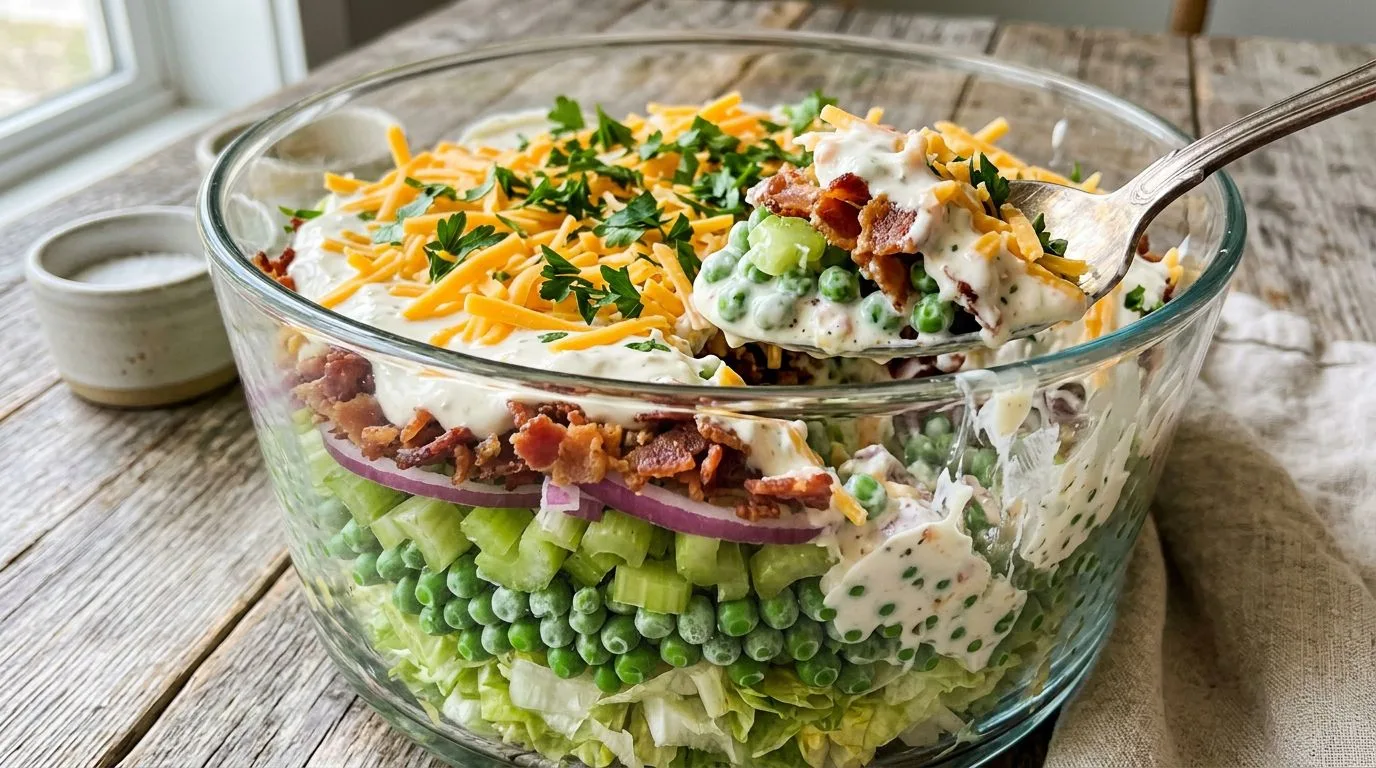
There’s something wonderfully nostalgic about a classic seven layer salad. This colorful, make-ahead dish has been gracing American potluck tables, holiday gatherings, and family reunions for decades, and for good reason. With its beautiful layers of crisp lettuce, sweet peas, tangy red onion, juicy tomatoes, sharp cheddar cheese, and crispy bacon all topped with a creamy dressing, it’s both visually stunning and absolutely delicious.
I love how this salad combines fresh, crunchy vegetables with rich, savory ingredients to create a dish that’s satisfying enough to stand on its own yet versatile enough to complement any main course. The best part? You can assemble it hours or even a day ahead, making it the ultimate stress-free side dish for busy hosts. When you present this salad in a clear glass bowl, those gorgeous layers create an impressive presentation that always draws compliments.
Whether you’re planning a Thanksgiving feast, preparing for a summer barbecue, or simply looking for a crowd-pleasing side dish that travels well, this seven layer salad delivers every time. It’s one of those recipes that proves simple ingredients, when layered thoughtfully, can create something truly special.
Why You’ll Love This Seven Layer Salad
This classic layered salad has earned its place as a beloved American side dish for several compelling reasons. First, it’s incredibly easy to prepare with no cooking required beyond the bacon. You simply layer the ingredients in a bowl, spread on the creamy dressing, and refrigerate. There’s no complicated technique or special equipment needed.
I find that the make-ahead nature of this salad is its greatest strength. Unlike many salads that wilt and become soggy when dressed in advance, this one actually benefits from chilling time. The dressing creates a seal over the vegetables, keeping everything fresh and crisp while the flavors meld together beautifully. You can prepare it the night before your event and simply pull it from the refrigerator when it’s time to serve.
The visual appeal cannot be overstated. When you serve this salad in a clear glass bowl or trifle dish, each colorful layer is on full display. It’s a conversation starter that looks like you spent hours on presentation, even though the assembly is straightforward. The combination of textures—crisp lettuce, tender peas, crunchy bacon, and creamy dressing—keeps every bite interesting.
This salad also feeds a crowd efficiently. A single batch easily serves 8-10 people, making it perfect for potlucks, church suppers, and family gatherings. It’s substantial enough that guests feel satisfied, yet it doesn’t compete with your main dishes. Plus, it’s budget-friendly, using everyday ingredients that won’t break the bank.
Ingredients and Substitutions
The beauty of this seven layer salad lies in its straightforward ingredient list. Each component plays a specific role in creating the perfect balance of flavors and textures.
Iceberg lettuce forms the crisp, refreshing base of this salad. I recommend iceberg specifically because it holds up exceptionally well under the weight of the other layers and maintains its crunch even after being dressed and refrigerated. While you could substitute romaine lettuce for a slightly different texture, iceberg’s sturdy leaves and mild flavor make it the traditional and best choice for this recipe.
Frozen peas add a pop of sweetness and bright green color. Make sure to thaw them completely and pat them dry before layering. You can use fresh peas if you prefer, though frozen peas are more convenient and available year-round. Some cooks like to blanch fresh peas briefly, but I find that thawed frozen peas have the perfect tender-crisp texture.
Red onion provides a sharp, tangy bite that cuts through the richness of the cheese and dressing. Slice it as thinly as possible for the best texture. If you find raw red onion too pungent, you can soak the slices in cold water for 10 minutes, then drain and pat dry. Yellow or white onion can substitute, though red onion adds beautiful color.
Cherry tomatoes contribute juicy bursts of acidity and vibrant red color. Halve them so they nestle nicely into the layer. Grape tomatoes work equally well, or you can use diced regular tomatoes if that’s what you have on hand. Just be sure to remove excess seeds and juice to prevent the salad from becoming watery.
Cheddar cheese adds sharp, savory richness. I like using sharp or extra-sharp cheddar for maximum flavor, but mild cheddar works if you prefer a gentler taste. Pre-shredded cheese is convenient, though freshly shredded cheese from a block melts into the dressing slightly better and has superior flavor.
Bacon provides that irresistible smoky, salty crunch. Cook it until crispy, then crumble it into bite-sized pieces. Turkey bacon can substitute for a lighter option, though traditional pork bacon delivers the most authentic flavor. For a vegetarian version, you could use crispy chickpeas or omit the bacon entirely and add extra cheese.
The creamy dressing is what makes this salad truly special. The combination of mayonnaise and sour cream creates a rich, tangy coating that seals the vegetables and keeps them fresh. The sugar balances the acidity from the sour cream and vinegar, while the apple cider vinegar adds brightness. You can substitute Greek yogurt for half the sour cream for a lighter version, or use all mayonnaise if you prefer.
How to Make This Recipe
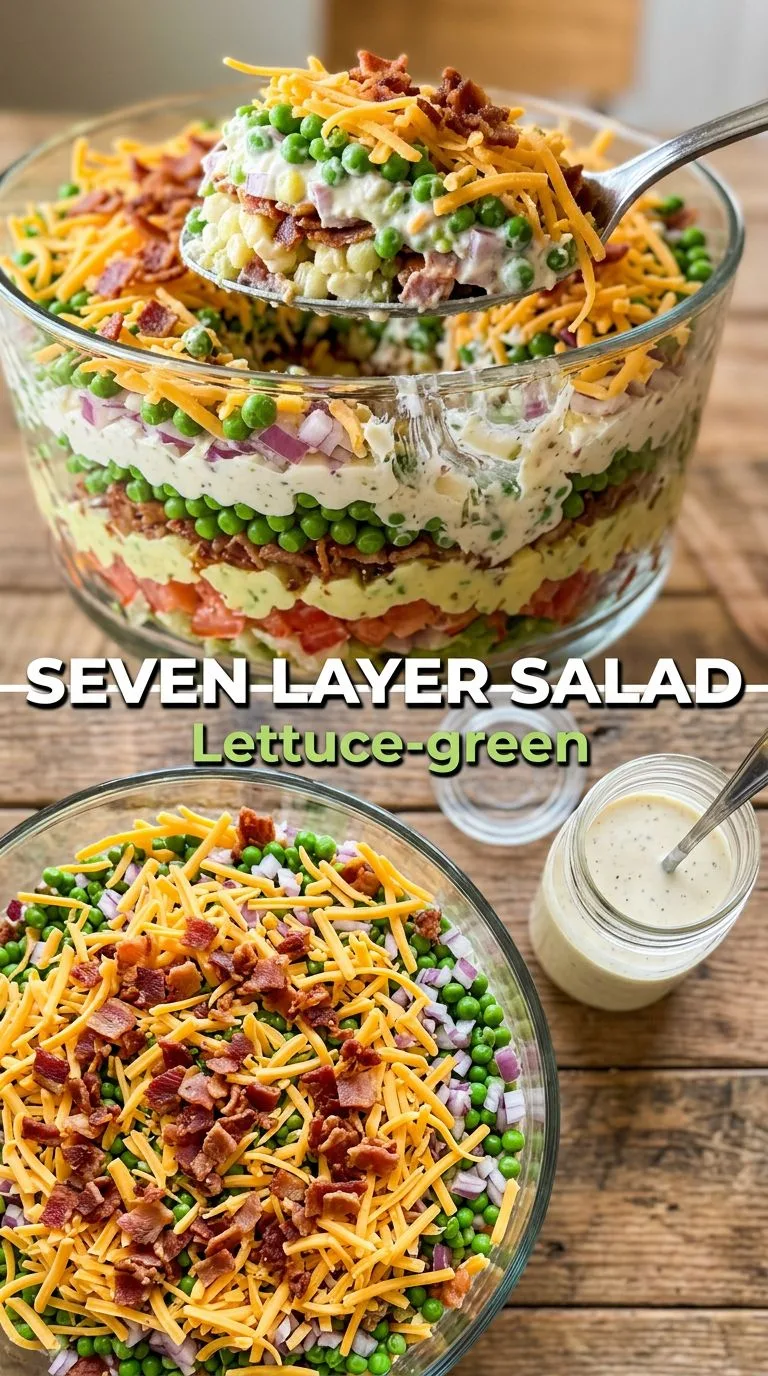
Making a perfect seven layer salad is all about proper preparation and thoughtful layering. Start by selecting a large, clear glass bowl—a trifle dish or straight-sided glass bowl works beautifully because it showcases those gorgeous layers.
Begin by washing and thoroughly drying your iceberg lettuce. This step is crucial because any excess water will make your salad soggy. I recommend using a salad spinner or patting the lettuce dry with clean kitchen towels. Chop the lettuce into bite-sized pieces, roughly 1-inch squares, and spread them evenly across the bottom of your bowl. This creates a sturdy foundation for the layers above.
Next, scatter the thawed and drained peas evenly over the lettuce. Make sure your peas are completely thawed and patted dry—any ice crystals or excess moisture will water down your salad. Spread them in an even layer so every serving gets some peas.
Layer the thinly sliced red onion over the peas. I like to separate the onion slices into rings for easier serving and better distribution. Don’t skip this layer even if you’re not typically an onion fan—the dressing mellows the sharpness considerably, and the onion adds important flavor complexity.
Arrange the halved cherry tomatoes over the onion layer, cut side down if possible. This prevents them from releasing too much juice into the salad. Distribute them evenly so each portion will have tomatoes.
Now comes the crucial step: preparing and applying the dressing. In a separate bowl, whisk together the mayonnaise, sour cream, sugar, apple cider vinegar, salt, and pepper until completely smooth. Taste and adjust the seasoning—you want a balance of creamy, tangy, and slightly sweet flavors.
Spread the dressing evenly over the vegetable layers, making sure to spread it all the way to the edges of the bowl. This creates a seal that keeps air away from the vegetables, which is what keeps them crisp and fresh. Use a spatula to smooth the dressing into an even layer.
Sprinkle the shredded cheddar cheese evenly over the dressing, followed by the crumbled bacon on top. These final layers add visual appeal and ensure every serving gets cheese and bacon.
Cover the bowl tightly with plastic wrap and refrigerate for at least 2 hours, though overnight is even better. This chilling time allows the flavors to meld and the dressing to work its magic. When you’re ready to serve, use a large spoon to scoop down through all the layers, ensuring each serving gets a bit of everything.
Expert Tips for Best Results
I’ve made this seven layer salad countless times, and I’ve learned several tricks that ensure perfect results every time. First, invest in a quality clear glass bowl. The visual presentation is half the appeal of this dish, and a beautiful bowl makes all the difference. A straight-sided trifle dish is ideal because it shows off the layers perfectly.
Dry your lettuce thoroughly. I cannot stress this enough—wet lettuce is the number one cause of soggy layered salad. After washing, spin it in a salad spinner, then spread it on clean kitchen towels and pat it completely dry. Take your time with this step.
Slice your onions paper-thin. A mandoline slicer makes this easy, but a sharp knife works too. Thin slices distribute better throughout the salad and are more pleasant to eat than thick chunks. If you’re sensitive to raw onion, soak the slices in ice water for 10 minutes, then drain and dry them thoroughly before adding to the salad.
Don’t skimp on the dressing layer. You want enough dressing to create a complete seal over the vegetables, reaching all the way to the edges of the bowl. This seal is what keeps the salad fresh and prevents the lettuce from wilting. However, you also don’t want so much dressing that the salad becomes soupy—aim for a generous but even layer.
Cook your bacon until it’s genuinely crispy. Chewy bacon doesn’t provide the textural contrast this salad needs. I like to bake bacon in the oven at 400°F for about 15-20 minutes—it comes out perfectly crispy and flat, making it easy to crumble.
Give the salad adequate chilling time. While you can serve it after 2 hours, overnight refrigeration produces the best results. The flavors meld together, and the slight wilting of the lettuce edges (while the interior stays crisp) creates a perfect texture.
When serving, use a large spoon and scoop straight down through all the layers. Don’t try to serve it like a traditional tossed salad—the layered presentation is part of the charm. Each serving should show distinct layers on the plate.
Serving Suggestions
This seven layer salad is incredibly versatile and pairs beautifully with a wide range of main dishes. I love serving it alongside grilled meats at summer barbecues—it complements burgers, hot dogs, grilled chicken, and steak perfectly. The cool, crisp salad provides a refreshing contrast to hot-off-the-grill proteins.
For holiday gatherings, this salad is a natural companion to traditional favorites. It pairs wonderfully with green bean casserole and roasted turkey at Thanksgiving, or alongside ham at Easter dinner. The creamy, savory flavors complement rich holiday main courses without overwhelming them.
I find this salad works equally well at casual potlucks and more formal dinner parties. For casual events, serve it directly from the glass bowl at a buffet table. For sit-down dinners, you can plate individual servings in the kitchen, making sure each portion shows off those beautiful layers.
Consider serving it with crusty bread or dinner rolls to soak up any extra dressing. It also pairs nicely with lighter fare like grilled fish or chicken breast when you want a more substantial side dish that adds richness to a simple main course.
For a complete meal, this salad can actually serve as a light lunch or dinner on its own. The combination of vegetables, cheese, and bacon provides a good balance of nutrients and flavors. Serve it with crackers or breadsticks on the side for a satisfying meal.
The salad also travels exceptionally well, making it perfect for picnics, tailgating, and covered-dish suppers. Just keep it chilled in a cooler until serving time. Its make-ahead nature means you can prepare it before leaving home and not worry about last-minute assembly.
Variations and Substitutions
While the classic seven layer salad is delicious as written, there are numerous ways to customize it to suit your preferences or dietary needs. For a lighter version, substitute Greek yogurt for the sour cream and use reduced-fat mayonnaise. The texture will be slightly less rich, but the flavor remains excellent.
You can vary the vegetables based on what’s in season or what you prefer. Some cooks add a layer of diced bell peppers for extra crunch and color—red, yellow, or orange peppers work beautifully. Sliced celery adds another crisp element, while shredded carrots contribute sweetness and vibrant color.
For a different cheese profile, try using a combination of cheddar and Monterey Jack, or substitute crumbled blue cheese for a more sophisticated flavor. Pepper jack adds a spicy kick, while Swiss cheese provides a milder, nuttier taste.
The protein component can be varied as well. Instead of bacon, try diced ham, crumbled cooked sausage, or chopped hard-boiled eggs. For a seafood twist, add a layer of cooked, chopped shrimp. Vegetarians can omit the bacon entirely or use crispy chickpeas or sunflower seeds for crunch.
Some regional variations include adding a layer of frozen corn (thawed and drained) or water chestnuts for extra crunch. A layer of shredded cabbage or broccoli florets can add nutritional value and interesting texture.
You can also play with the dressing. Add a tablespoon of Dijon mustard for tanginess, or include fresh herbs like dill or parsley. A dash of hot sauce or a sprinkle of cayenne pepper adds heat. For a sweeter version, increase the sugar slightly or add a tablespoon of honey.
For a more substantial salad, add a layer of cooked pasta—small shells or elbow macaroni work well. This transforms it into more of a pasta salad hybrid that can serve as a main course.
Storage, Freezing, and Reheating
One of the greatest advantages of seven layer salad is how well it stores, making it ideal for meal prep and advance preparation. When properly stored, this salad maintains its quality and freshness remarkably well.
To store leftovers, keep the salad covered tightly with plastic wrap or transfer it to an airtight container. It will stay fresh in the refrigerator for up to 3 days. The dressing seal helps preserve the vegetables, though you may notice the lettuce becomes slightly softer after the first day. I find the salad is at its absolute best within the first 24-48 hours.
When storing, make sure the dressing layer remains intact and covers the vegetables completely. If you’ve already served some of the salad and the dressing layer is broken, you might want to smooth it back over the exposed vegetables to maintain freshness.
I don’t recommend freezing this salad. The high water content in the lettuce, tomatoes, and other fresh vegetables means they’ll become mushy and unappetizing when thawed. The mayonnaise-based dressing also doesn’t freeze well—it can separate and become grainy. This is definitely a recipe best enjoyed fresh or refrigerated.
If you want to prep ahead but are concerned about storage time, you can prepare components separately. Wash and chop the lettuce up to a day ahead, storing it in a sealed container with paper towels to absorb moisture. Cook and crumble the bacon up to 3 days in advance. Mix the dressing and store it separately. Then assemble the salad the day before serving.
This salad doesn’t require reheating—it’s meant to be served cold. In fact, serving it chilled is essential to its appeal. Remove it from the refrigerator about 10 minutes before serving if you prefer it not ice-cold, but it’s generally best served straight from the fridge.
If you’re taking this salad to an event, transport it in a cooler with ice packs to keep it at a safe temperature. The USDA recommends keeping cold foods below 40°F, and this salad contains mayonnaise and other perishable ingredients that need to stay chilled.
Frequently Asked Questions
Can I make seven layer salad the night before?
Absolutely! In fact, I recommend making this salad the night before you plan to serve it. The overnight refrigeration allows the flavors to meld together beautifully, and the dressing creates a seal that actually keeps the vegetables crisp. Just make sure to cover it tightly with plastic wrap and refrigerate it until serving time. The salad will stay fresh and delicious for up to 24 hours, making it perfect for stress-free entertaining.
Why is my seven layer salad watery?
A watery salad usually results from excess moisture in the vegetables. The most common culprits are wet lettuce or tomatoes that release their juice. To prevent this, thoroughly dry your lettuce after washing—use a salad spinner and pat it with towels. Make sure your frozen peas are completely thawed and drained. When using tomatoes, consider removing some of the seeds and juice, and place them cut-side down in the salad. Also ensure your dressing is thick enough to create a proper seal over the vegetables.
Can I use a different type of lettuce?
While you can use other lettuces, iceberg is traditional for good reason. Its sturdy, crisp leaves hold up exceptionally well under the weight of the other layers and maintain their crunch even after being dressed and refrigerated. Romaine lettuce is the best substitute if you want to use something different—it’s also fairly crisp and sturdy. I don’t recommend delicate greens like spring mix or butter lettuce, as they’ll wilt quickly under the dressing.
How do I keep the bacon crispy?
Add the bacon as the final layer right before serving, or at least keep it as the top layer where it’s exposed to air rather than buried under dressing. The bacon will stay crispiest when it’s not in direct contact with moisture. If you’re making the salad well in advance, you can add the bacon layer but expect it to soften slightly—it will still taste delicious. For maximum crispiness, you could even reserve the bacon and sprinkle it on just before serving.
Can I make this salad in individual servings?
Yes! Individual servings in clear glass cups or mason jars make beautiful presentations for dinner parties. Layer the ingredients in the same order, starting with lettuce at the bottom. The individual portions are perfect for grab-and-go lunches too. Just remember that once the dressing is added, the salad should be consumed within a day or two for best quality.
Is seven layer salad gluten-free?
Yes, this recipe as written is naturally gluten-free. All the ingredients—lettuce, peas, onion, tomatoes, cheese, bacon, mayonnaise, sour cream, and seasonings—are gluten-free. However, always check your specific brands, especially for the mayonnaise and bacon, as some processed foods can contain hidden gluten or be subject to cross-contamination. If you’re serving someone with celiac disease, verify all ingredient labels.
What size bowl do I need?
I recommend using a large glass bowl with at least a 3-quart capacity, preferably 4 quarts. A trifle dish works beautifully because it has straight sides that show off the layers perfectly. The bowl should be wide enough to create distinct layers but deep enough to accommodate all seven layers comfortably. A bowl that’s too shallow will make it difficult to create neat layers, while one that’s too narrow will make the layers too thick.
Can I add other vegetables?
Absolutely! This recipe is quite flexible. Popular additions include diced bell peppers, shredded carrots, sliced celery, chopped broccoli, or corn kernels. Just maintain the layering principle and make sure any additions are dry and well-drained. You might also enjoy adding a layer of sliced hard-boiled eggs or water chestnuts for extra texture. Just remember that each addition changes the “seven layer” count, but the salad will still be delicious.
Seven Layer Salad Recipe
This classic seven layer salad features crisp iceberg lettuce, sweet peas, tangy red onion, juicy cherry tomatoes, sharp cheddar cheese, and crispy bacon, all topped with a creamy, tangy dressing. Perfect for potlucks, holiday gatherings, and family dinners, this make-ahead salad is as beautiful as it is delicious.
Chilling Time: 2 hours
Total Time: 2 hours 20 minutes
Servings: 8-10 servings
Difficulty: Easy
Cuisine: American
Course: Side Dish
Ingredients
- 1 head iceberg lettuce, washed, dried, and chopped into bite-sized pieces
- 1 cup frozen peas, thawed and drained
- 1 red onion, thinly sliced
- 1 cup cherry tomatoes, halved
- 1 cup shredded cheddar cheese
- 8 slices bacon, cooked crispy and crumbled
- 1 cup mayonnaise
- 1/2 cup sour cream
- 1 tablespoon sugar
- 1 tablespoon apple cider vinegar
- Salt and pepper to taste
Instructions
- Wash and thoroughly dry the iceberg lettuce using a salad spinner or clean kitchen towels. Chop into bite-sized pieces, about 1-inch squares.
- Arrange the chopped lettuce evenly in the bottom of a large clear glass bowl (at least 3-quart capacity), creating the first layer.
- Scatter the thawed and drained peas evenly over the lettuce layer.
- Layer the thinly sliced red onion over the peas, separating the slices into rings for better distribution.
- Arrange the halved cherry tomatoes over the onion layer, placing them cut-side down when possible.
- In a separate medium bowl, whisk together the mayonnaise, sour cream, sugar, apple cider vinegar, salt, and pepper until completely smooth and well combined. Taste and adjust seasoning as needed.
- Spread the dressing evenly over the vegetable layers, making sure to spread it all the way to the edges of the bowl to create a seal. Use a spatula to smooth it into an even layer.
- Sprinkle the shredded cheddar cheese evenly over the dressing layer.
- Top with the crumbled cooked bacon, distributing it evenly across the surface.
- Cover the bowl tightly with plastic wrap and refrigerate for at least 2 hours, or preferably overnight, to allow the flavors to meld.
- When ready to serve, use a large spoon to scoop straight down through all the layers, ensuring each serving includes all seven layers. Serve chilled.
Recipe Notes
- The key to keeping this salad crisp is thoroughly drying the lettuce and creating a complete seal with the dressing layer.
- This salad tastes best when made at least 2 hours ahead, but overnight refrigeration produces optimal results.
- Use a clear glass bowl or trifle dish to showcase the beautiful layers.
- Make sure frozen peas are completely thawed and drained to prevent excess moisture.
- For easier slicing, use a mandoline to create paper-thin onion slices.
- Cook bacon until genuinely crispy for the best texture contrast.
- The salad will stay fresh in the refrigerator for up to 3 days when tightly covered.
- For a lighter version, substitute Greek yogurt for the sour cream and use reduced-fat mayonnaise.
- This recipe easily doubles for larger gatherings—just use a bigger bowl.
Estimated Nutrition Per Serving
Based on 10 servings:
Calories: 285 kcal
Carbohydrates: 9g
Protein: 8g
Fat: 25g
Saturated Fat: 7g
Fiber: 2g
Sugar: 5g
Sodium: 420mg
Nutrition information is estimated and will vary based on specific ingredients used and serving sizes.
This classic seven layer salad is a testament to the power of simple, quality ingredients arranged thoughtfully. Whether you’re preparing it for a holiday feast, a summer potluck, or a casual family dinner, it’s sure to impress with its beautiful presentation and delicious combination of flavors and textures. The make-ahead convenience makes it a lifesaver for busy hosts, while the crowd-pleasing taste ensures empty bowls and recipe requests. Try pairing it with other classic sides like apple cranberry pecan salad for a complete spread that celebrates the best of American comfort food.
