
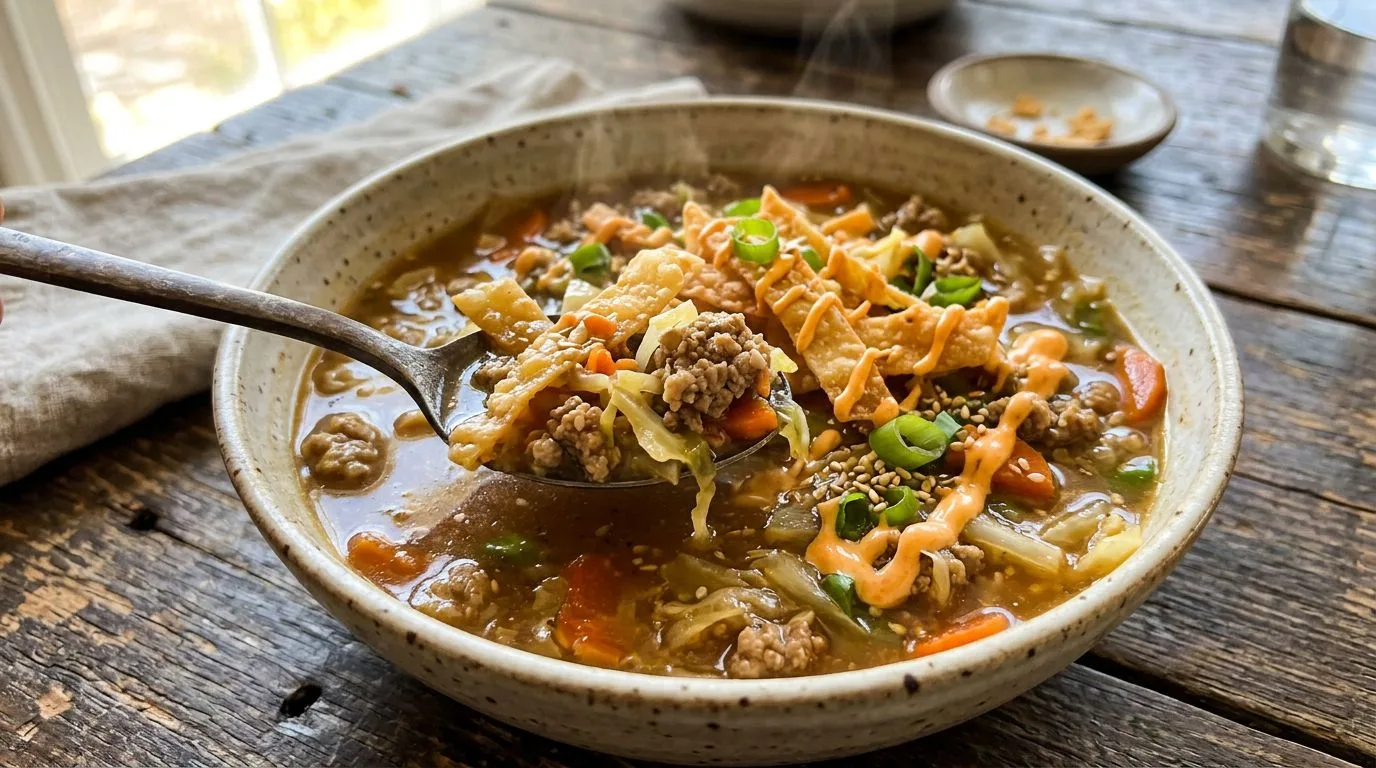
If you love the savory, satisfying flavors of egg rolls but want something lighter and easier to prepare, this egg roll soup is exactly what you need. I find that this soup captures all those classic Asian-inspired tastes—ginger, garlic, soy sauce, and sesame—in a comforting bowl that comes together in about 30 minutes. The combination of tender ground pork, crisp-tender cabbage, and sweet carrots in a flavorful broth makes this a weeknight dinner I turn to again and again.
What I love most about this recipe is how it delivers big flavor without the work of wrapping and frying individual egg rolls. You get that same delicious filling transformed into a nourishing soup that’s perfect for chilly evenings or when you’re craving something both healthy and deeply satisfying. The broth is light yet rich with umami, and every spoonful is packed with vegetables and protein.
This egg roll soup has become one of my go-to recipes when I want something quick, nutritious, and full of flavor. It’s a one-pot wonder that requires minimal prep and delivers maximum taste, making it ideal for busy families or anyone looking to simplify their dinner routine without sacrificing quality or flavor.
Why You’ll Love This Egg Roll Soup
This soup brings together everything I appreciate in a great weeknight meal. First, it’s incredibly easy to make—you simply brown the pork, sauté the aromatics, add the broth and vegetables, and let everything simmer together. There’s no complicated technique or hard-to-find ingredients involved.
I also love how healthy this soup is compared to traditional fried egg rolls. You’re getting plenty of vegetables, lean protein, and a flavorful broth without all the oil and calories from deep frying. The cabbage and carrots add fiber and nutrients, while the ground pork provides satisfying protein that keeps you full.
The flavor profile is another reason this recipe stands out. The combination of fresh ginger and garlic creates an aromatic base, while soy sauce and sesame oil add that distinctive Asian-inspired taste. A splash of rice vinegar at the end brightens everything up, and the optional sriracha lets you customize the heat level to your preference.
Finally, this is a wonderfully versatile recipe. You can easily adjust the vegetables, swap proteins, or modify the seasonings to suit your taste. It’s forgiving and adaptable, which makes it perfect for using up what you have in your refrigerator.
Ingredients and Substitutions
The beauty of this egg roll soup lies in its straightforward ingredient list. Let me walk you through what you’ll need and how you can customize it to your preferences.
Neutral cooking oil provides a base for browning the pork without adding competing flavors. I recommend vegetable oil, canola oil, or avocado oil. You could also use a light olive oil if that’s what you have on hand.
Ground pork is traditional in egg rolls and gives this soup its authentic flavor. I find that regular ground pork (not extra lean) works best because it has enough fat to stay moist and flavorful. If you prefer, you can substitute ground chicken, ground turkey, or even ground beef. For a lighter option, ground chicken breast works well, though you may want to add a touch more oil.
Onion, garlic, and ginger form the aromatic foundation of this soup. Fresh ginger is essential here—I don’t recommend substituting dried ginger as it won’t provide the same bright, fresh flavor. If you don’t have fresh ginger, ginger paste from a tube is a better alternative than ground ginger.
Low-sodium chicken broth creates the flavorful base. I prefer low-sodium so I can control the salt level, especially since soy sauce adds additional sodium. You can use vegetable broth for a different flavor profile, or even beef broth if that’s what you have available.
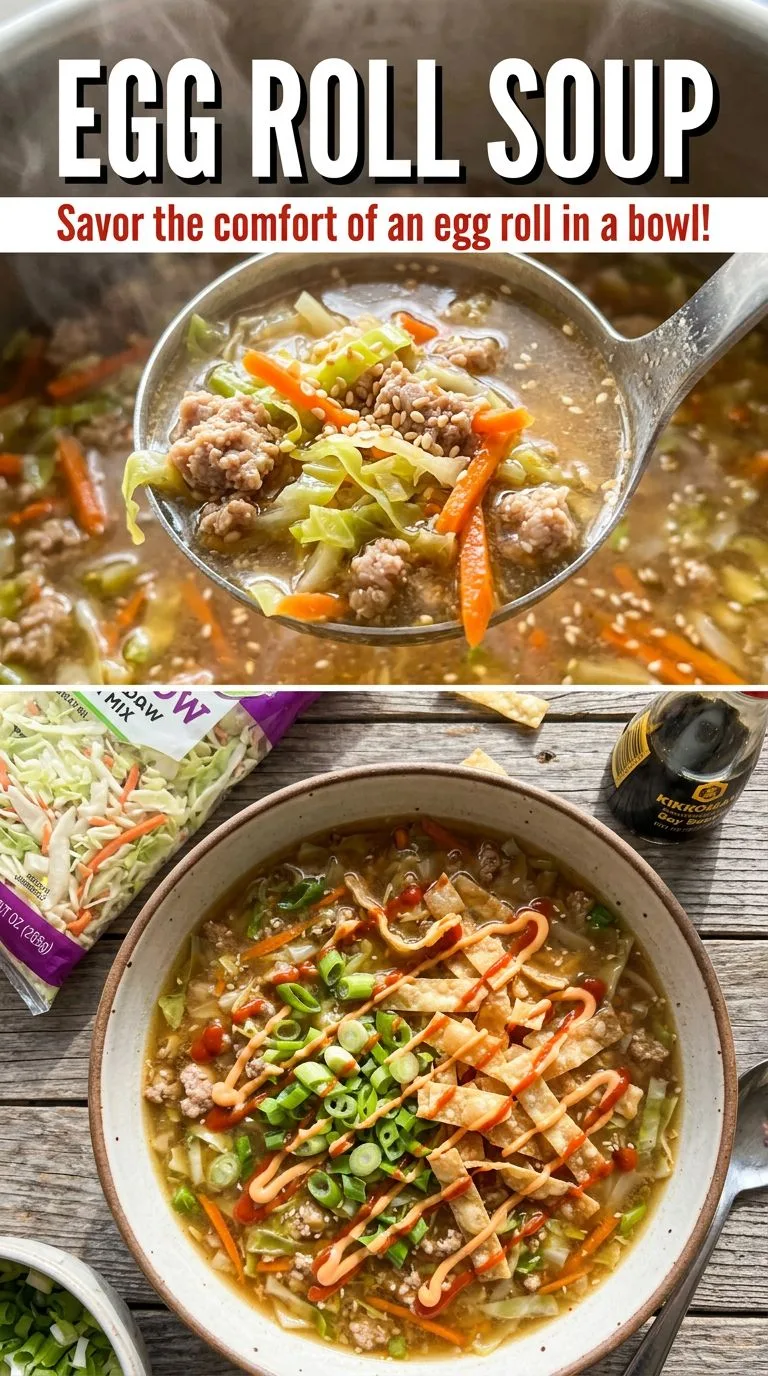
Shredded green cabbage is the star vegetable in this soup. I like to buy pre-shredded cabbage to save time, but you can certainly shred your own from a fresh head. Napa cabbage is a wonderful substitute that’s even more traditional in Asian cooking and has a slightly sweeter, more delicate flavor.
Shredded carrots add sweetness and color. Again, pre-shredded carrots are a time-saver, but freshly shredded carrots will have better texture and flavor if you have a few extra minutes.
Soy sauce provides that essential umami flavor. I recommend low-sodium soy sauce so you can adjust the saltiness to your taste. Tamari is a great gluten-free alternative, and coconut aminos work if you’re avoiding soy entirely, though they’re slightly sweeter.
Rice vinegar adds a subtle tang that brightens the entire soup. If you don’t have rice vinegar, you can substitute apple cider vinegar or white wine vinegar, though rice vinegar has the most authentic flavor.
Toasted sesame oil is added at the end to preserve its delicate, nutty flavor. This is not the same as regular sesame oil—toasted sesame oil is much more aromatic and flavorful. A little goes a long way, so don’t skip this ingredient if you can help it.
Green onions provide a fresh, mild onion flavor as a garnish. They add both flavor and visual appeal. You can substitute chives or even thinly sliced regular onions if needed.
Sriracha is optional but adds a nice kick of heat. You can also use chili garlic sauce, sambal oelek, or your favorite hot sauce.
How to Make Egg Roll Soup
Making this soup is straightforward and follows a logical progression that builds flavor at each step. Here’s how I approach it.
Start by heating your neutral oil in a large pot or Dutch oven over medium-high heat. Once the oil is shimmering, add the ground pork. I like to break it apart with a wooden spoon or spatula as it cooks, creating small crumbles rather than large chunks. Cook the pork for 6 to 8 minutes, stirring occasionally, until it’s browned and cooked through. You’ll know it’s ready when there’s no pink remaining and the meat has developed some nice caramelized bits. If your pork releases a lot of fat, you can drain the excess, though I usually find that regular ground pork doesn’t produce too much.
Next, add the diced onion directly to the pot with the pork. Cook for 4 to 5 minutes, stirring occasionally, until the onion softens and becomes translucent. This step builds a flavorful base and the onion will pick up some of those browned bits from the bottom of the pot.
Now it’s time for the aromatics. Add the minced garlic and freshly grated ginger to the pot. Stir constantly and cook for just 30 to 60 seconds. This brief cooking time is important—you want the garlic and ginger to become fragrant without burning, which would make them bitter. The smell at this stage is absolutely wonderful and signals that you’re building authentic Asian-inspired flavors.
Pour in the chicken broth, then add the shredded cabbage, shredded carrots, soy sauce, and black pepper. Stir everything together to combine. The cabbage will look like a lot at first, but don’t worry—it will wilt down significantly as it cooks.
Bring the soup to a gentle boil over medium-high heat, then reduce the heat to maintain a steady simmer. Let the soup cook for 10 to 15 minutes. I recommend checking the cabbage at the 10-minute mark to see if it’s reached your preferred tenderness. Some people like their cabbage with a bit of crunch, while others prefer it completely soft. Adjust the cooking time based on your preference.
Once the vegetables are cooked to your liking, remove the pot from the heat and stir in the rice vinegar and toasted sesame oil. These ingredients are added at the end to preserve their bright, fresh flavors. Taste the soup at this point and adjust the seasoning if needed—you might want to add a bit more soy sauce for saltiness or another splash of vinegar for brightness.
Ladle the soup into bowls and sprinkle with sliced green onions. If you like heat, add sriracha to taste. I usually put the sriracha bottle on the table so everyone can customize their own bowl.
Expert Tips for Best Results
Over time, I’ve learned a few tricks that make this egg roll soup even better. Here are my top recommendations.
First, don’t rush the browning of the pork. Taking the time to properly brown the meat creates deeper flavor through caramelization. Make sure your pot is hot enough and avoid stirring too frequently—let the pork sit for a minute or two between stirs so it can develop those flavorful brown bits.
When adding the garlic and ginger, have your broth measured and ready to go. These aromatics can burn quickly, so you want to be able to add the liquid promptly if needed. I like to prep all my ingredients before I start cooking so everything flows smoothly.
For the best texture, I recommend not overcooking the cabbage. It should be tender but still have a slight bite to it, similar to how it would be in an actual egg roll. Overcooked cabbage can become mushy and lose its appealing texture.
The toasted sesame oil is a finishing oil, not a cooking oil. Adding it at the end preserves its delicate nutty flavor. If you cook it, much of that distinctive taste will be lost.
If you find the soup needs more depth, a splash of fish sauce (just a teaspoon or so) can add wonderful umami complexity. This is optional but something I sometimes add when I want an extra layer of flavor.
Finally, taste and adjust the seasonings before serving. Every brand of soy sauce and broth has different sodium levels, so you may need to add more soy sauce, a pinch of salt, or an extra splash of vinegar to get the flavor balance just right.
Serving Suggestions
This egg roll soup is hearty enough to serve as a complete meal on its own, but I also enjoy pairing it with a few complementary sides and garnishes.
For a more substantial meal, I like to serve this soup with steamed white rice or brown rice on the side. You can add a scoop of rice directly to each bowl, which makes the soup even more filling and soaks up the delicious broth. Fried rice would also be a fun pairing if you want to go all-in on the Asian-inspired theme.
Crispy wonton strips make an excellent garnish that adds textural contrast to the soup. You can buy them pre-made or make your own by cutting wonton wrappers into strips and frying them until golden and crispy. They add a satisfying crunch that mimics the wrapper of a traditional egg roll.
A simple cucumber salad with rice vinegar dressing provides a cool, refreshing contrast to the warm, savory soup. The crisp cucumber and tangy dressing balance the richness of the pork beautifully.
For additional protein and richness, I sometimes add a soft-boiled or jammy egg to each bowl. The creamy yolk adds luxury and makes the soup feel even more special.
Spring rolls or fresh summer rolls make a nice appetizer before serving this soup, keeping with the Asian-inspired theme. You could also serve pot stickers or dumplings on the side.
Don’t forget about additional garnishes beyond green onions. Chopped fresh cilantro, a squeeze of lime juice, bean sprouts, or sliced jalapeños all make wonderful toppings that let everyone customize their bowl.
Variations and Substitutions
One of the things I appreciate most about this recipe is how adaptable it is. Here are some variations I’ve tried and enjoyed.
For a vegetarian version, omit the ground pork and add extra vegetables like mushrooms, bell peppers, or bok choy. Shiitake mushrooms are particularly good because they add a meaty texture and umami flavor. You’ll want to use vegetable broth instead of chicken broth, and consider adding a tablespoon of miso paste for additional depth.
To make this soup spicier, add red pepper flakes along with the garlic and ginger, or stir in chili garlic sauce with the soy sauce. Fresh sliced Thai chilies also add excellent heat if you can find them.
For a lower-carb version, this soup is already quite low in carbohydrates, but you can make it even lighter by increasing the cabbage and adding other low-carb vegetables like zucchini noodles or shirataki noodles.
If you want to add noodles, rice noodles, ramen noodles, or even spaghetti can turn this into a heartier noodle soup. Cook the noodles separately according to package directions, then add them to individual bowls before ladling in the soup. This prevents the noodles from soaking up too much broth if you have leftovers.
For a different protein, ground chicken, turkey, or beef all work well. You could also use Italian sausage (removed from casings) for a different flavor profile, or even shrimp added in the last few minutes of cooking.
Adding bok choy is a wonderful variation that makes the soup even more authentic. Add it during the last 5 minutes of cooking so it stays crisp-tender.
For more substance, you can add water chestnuts or bamboo shoots, both of which are traditional egg roll ingredients that add nice texture to the soup.
Storage, Freezing, and Reheating
This soup stores beautifully, making it perfect for meal prep or enjoying leftovers throughout the week.
To store leftovers, let the soup cool to room temperature, then transfer it to airtight containers. It will keep in the refrigerator for 4 to 5 days. I find that the flavors actually deepen and improve after a day in the fridge as the ingredients have time to meld together.
This soup freezes quite well. Let it cool completely, then portion it into freezer-safe containers or heavy-duty freezer bags. I like to freeze it in individual portions so I can thaw just what I need. It will keep in the freezer for up to 3 months. Leave a bit of headspace in your containers since the liquid will expand as it freezes.
To thaw frozen soup, transfer it to the refrigerator and let it thaw overnight. You can also thaw it more quickly by placing the sealed container in a bowl of cold water, changing the water every 30 minutes.
For reheating, I prefer to use the stovetop. Pour the soup into a pot and heat over medium heat, stirring occasionally, until it’s heated through. This usually takes about 5 to 7 minutes. You can also reheat individual portions in the microwave—heat on high in 1-minute intervals, stirring between each interval, until hot.
If the soup seems too thick after storing (the cabbage will continue to absorb liquid), simply add a splash of chicken broth or water when reheating to thin it to your desired consistency.
I recommend adding fresh green onions and a drizzle of sesame oil to reheated soup to refresh the flavors and make it taste just-made.
Frequently Asked Questions
Can I use pre-cooked pork for this soup?
Yes, you can use leftover cooked pork. Simply skip the browning step and add the cooked pork when you add the broth and vegetables. This is a great way to use up leftover pork roast or pork chops—just chop or shred them first.
Is this soup gluten-free?
This soup can easily be made gluten-free by using tamari instead of regular soy sauce and ensuring your chicken broth is certified gluten-free. All the other ingredients are naturally gluten-free.
Can I make this soup in a slow cooker?
Yes, though I recommend browning the pork and sautéing the aromatics in a skillet first for better flavor. Transfer everything to your slow cooker, add the remaining ingredients (except the vinegar and sesame oil), and cook on low for 4 to 6 hours or high for 2 to 3 hours. Stir in the vinegar and sesame oil just before serving.
Why is my soup too salty?
This usually happens when using regular soy sauce instead of low-sodium, or when your broth is already salted. Start with less soy sauce than the recipe calls for, taste the soup, and add more gradually until it reaches your preferred seasoning level.
Can I add other vegetables?
Absolutely! Bell peppers, mushrooms, bok choy, snap peas, bean sprouts, and water chestnuts all make excellent additions. Add heartier vegetables like mushrooms and bell peppers with the cabbage, and more delicate vegetables like bok choy and bean sprouts during the last few minutes of cooking.
How can I make this soup thicker?
If you prefer a thicker soup, you can make a slurry by mixing 1 tablespoon of cornstarch with 2 tablespoons of cold water. Stir this into the simmering soup and cook for another 2 to 3 minutes until it thickens slightly. Keep in mind that traditional egg roll soup is typically broth-based rather than thick.
Can I use ground beef instead of pork?
Yes, ground beef works well in this recipe. I recommend using 85/15 or 90/10 ground beef for the best balance of flavor and leanness. The soup will have a slightly different flavor profile but will still be delicious.
What’s the best way to shred cabbage quickly?
The fastest method is to buy pre-shredded coleslaw mix, which usually contains both cabbage and carrots. If you’re shredding your own, cut the cabbage into quarters, remove the core, then slice thinly with a sharp knife. A food processor with a slicing blade also works well for larger quantities.
Egg Roll Soup
This egg roll soup captures all the savory flavors of traditional egg rolls in a light, nourishing broth. Ground pork, crisp cabbage, sweet carrots, and aromatic ginger and garlic come together in a one-pot meal that’s ready in about 30 minutes. Perfect for busy weeknights when you want something healthy, satisfying, and full of Asian-inspired flavor.
- Prep Time: 10 minutes
- Cook Time: 25 minutes
- Total Time: 35 minutes
- Servings: 6
- Difficulty: Easy
- Cuisine: Asian-Inspired
- Course: Dinner
Ingredients
- 1 tablespoon neutral cooking oil
- 1 lb ground pork
- 1 medium onion, diced
- 4 garlic cloves, minced
- 1 tablespoon freshly grated ginger
- 6 cups low-sodium chicken broth
- 6 cups shredded green cabbage
- 1 cup shredded carrots
- 3 tablespoons low-sodium soy sauce
- 1 tablespoon rice vinegar
- 2 teaspoons toasted sesame oil
- 1/4 teaspoon black pepper
- 3 green onions, sliced
- Optional: sriracha to taste
Instructions
- Heat the neutral oil in a large pot over medium-high heat. Add the ground pork and cook for 6 to 8 minutes, breaking it apart with a wooden spoon, until browned and cooked through. Drain excess fat if necessary.
- Add the diced onion to the pot and cook for 4 to 5 minutes, stirring occasionally, until softened and translucent.
- Stir in the minced garlic and grated ginger. Cook for 30 to 60 seconds, stirring constantly, until fragrant.
- Add the chicken broth, shredded cabbage, shredded carrots, soy sauce, and black pepper. Stir to combine.
- Bring the soup to a gentle boil, then reduce the heat to maintain a steady simmer. Cook for 10 to 15 minutes, until the cabbage reaches your preferred tenderness.
- Remove from heat and stir in the rice vinegar and toasted sesame oil. Taste and adjust seasoning with additional soy sauce if needed.
- Ladle into bowls and garnish with sliced green onions. Add sriracha to taste if desired.
Recipe Notes
- For a spicier soup, add red pepper flakes with the garlic and ginger, or stir in chili garlic sauce to taste.
- Napa cabbage can be substituted for green cabbage for a more authentic Asian flavor and softer texture.
- If you prefer a thicker soup, mix 1 tablespoon cornstarch with 2 tablespoons cold water and stir into the simmering soup.
- This soup tastes even better the next day as the flavors have time to meld together.
- Add cooked rice noodles or ramen to individual bowls for a heartier meal.
- For a vegetarian version, substitute the pork with mushrooms and use vegetable broth.
Nutrition Information (Per Serving, Estimated)
- Calories: 245
- Carbohydrates: 11g
- Protein: 18g
- Fat: 15g
- Saturated Fat: 5g
- Fiber: 3g
- Sugar: 5g
- Sodium: 720mg
Nutrition information is estimated based on standard ingredient measurements and may vary based on specific products used and portion sizes.
This egg roll soup has everything I love about the classic appetizer—savory pork, crisp vegetables, and bold Asian-inspired seasonings—in a format that’s easier, healthier, and just as satisfying. Whether you’re looking for a quick weeknight dinner or a comforting bowl of soup that delivers on flavor, this recipe is one you’ll want to make again and again. If you’re looking for more hearty soup recipes, you might also enjoy this creamy Italian sausage and kale soup or this hearty hamburger vegetable soup for other satisfying one-pot meals.
