
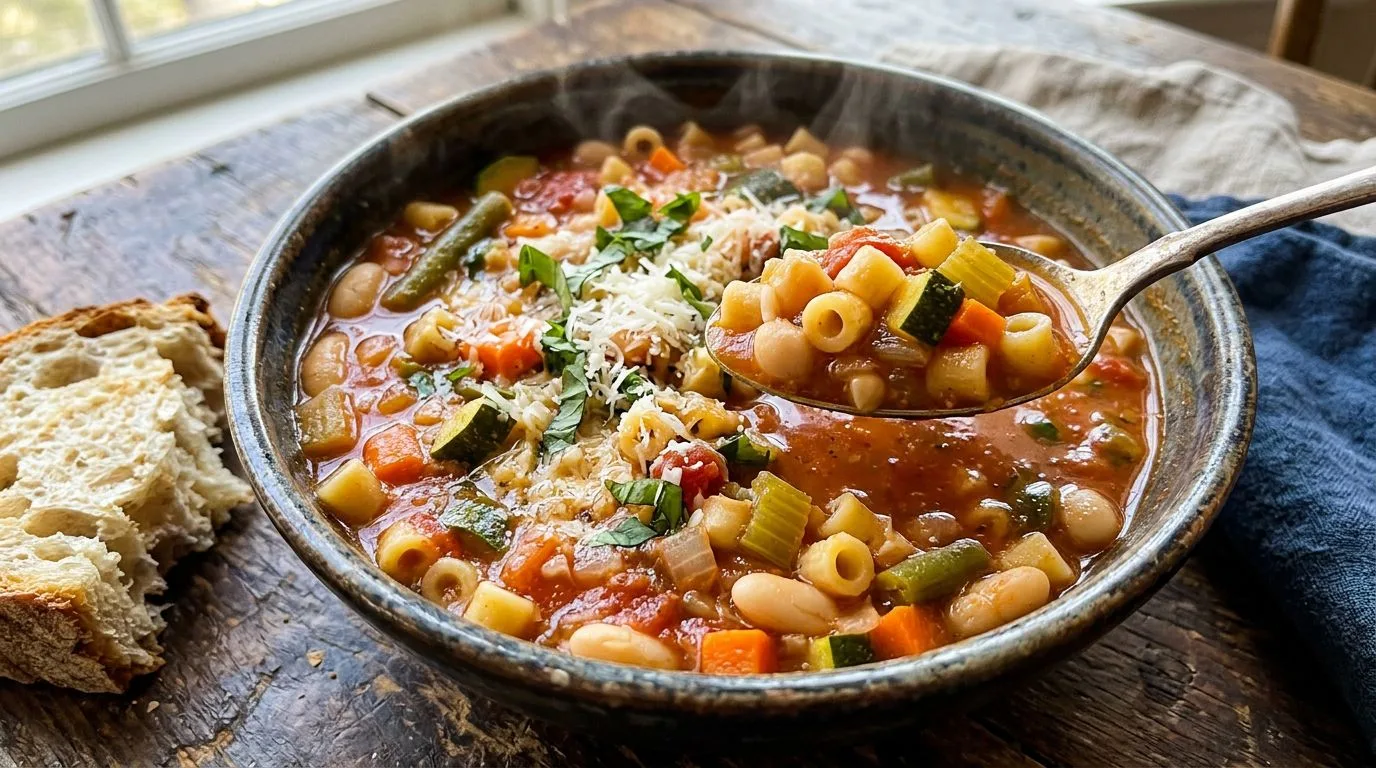
There’s something incredibly satisfying about a bowl of homemade minestrone soup. This classic Italian vegetable soup is one of those recipes I turn to again and again when I want something wholesome, flavorful, and deeply comforting. Packed with tender vegetables, hearty beans, small pasta, and aromatic Italian herbs, minestrone soup delivers everything you need in a single pot—nutrition, flavor, and that cozy feeling that only a good soup can provide.
What I love most about minestrone is its versatility and forgiving nature. It’s a soup that welcomes whatever fresh vegetables you have on hand, making it perfect for using up produce from your refrigerator. The combination of kidney beans and cannellini beans adds protein and substance, while the pasta makes it filling enough to serve as a complete meal. Whether you’re cooking for a weeknight dinner or preparing a batch to enjoy throughout the week, this minestrone soup recipe is a reliable, delicious choice that never disappoints.
I find that minestrone soup tastes even better the next day as the flavors meld together, making it an ideal make-ahead meal. Serve it with crusty bread and a sprinkle of Parmesan cheese, and you have a restaurant-quality dish that’s surprisingly simple to prepare at home.
Why You’ll Love This Minestrone Soup Recipe
This homemade minestrone soup checks all the boxes for what makes a great recipe. First, it’s incredibly nutritious—loaded with vegetables, beans, and spinach, it provides a generous serving of vitamins, minerals, fiber, and plant-based protein. I love that it’s a complete meal in a bowl, satisfying enough to keep you full without feeling heavy.
The recipe is also wonderfully flexible. While I’ve provided specific vegetables here, minestrone is traditionally a “clean out the pantry” soup, so you can easily adapt it based on what you have available. The cooking process is straightforward and doesn’t require any advanced techniques, making it accessible for cooks of all skill levels.
Another reason I recommend this recipe is its make-ahead friendliness. Minestrone soup stores beautifully in the refrigerator and freezes well, so you can prepare a large batch and enjoy it for days. The flavors actually deepen and improve after a day or two, which means less work and better taste—a winning combination in my book.
Finally, this soup is budget-friendly. Using pantry staples like canned beans and tomatoes, along with affordable fresh vegetables, you can create a generous pot of soup that feeds a crowd without breaking the bank. It’s comfort food that’s both economical and delicious.
Ingredients and Substitutions
Let me walk you through the ingredients that make this minestrone soup so flavorful and satisfying. Understanding what each component brings to the pot will help you make smart substitutions when needed.
Beans: I use both kidney beans and cannellini beans for variety in texture and appearance. The kidney beans hold their shape well and add a slightly firmer bite, while cannellini beans are creamier and help thicken the broth naturally. You can substitute with great northern beans, navy beans, or even chickpeas if that’s what you have on hand.
Vegetables: The classic minestrone vegetable trio of carrots, celery, and onion forms the aromatic base. Zucchini adds a tender texture and mild flavor, while fresh spinach provides color and nutrients at the end. I find that dicing the vegetables into similar-sized pieces ensures even cooking. You can substitute the zucchini with yellow squash, green beans, or diced potatoes.
Tomatoes: Canned diced tomatoes provide the tomato base for the soup. I prefer using good-quality canned tomatoes for consistent flavor year-round. If you have fresh tomatoes, you can use about 2 cups of diced fresh tomatoes instead.
Pasta: Small pasta shapes like ditalini work perfectly in minestrone because they’re easy to eat with a spoon and don’t overpower the vegetables. You can substitute with other small pasta shapes such as elbow macaroni, small shells, orzo, or even broken spaghetti. For a gluten-free version, use your favorite gluten-free small pasta.
Broth: Vegetable broth keeps this soup vegetarian, but you can use chicken broth if you prefer. I recommend using low-sodium broth so you can control the salt level yourself.
Herbs and Seasonings: The combination of dried oregano, basil, and thyme gives this soup its classic Italian flavor profile. Fresh herbs can be substituted—use about three times the amount of fresh herbs compared to dried. Garlic adds aromatic depth that I find essential to authentic minestrone flavor.
Olive Oil: A good-quality olive oil is my preferred cooking fat for this soup, adding subtle richness and authentic Italian character.
Parmesan Cheese: Freshly grated Parmesan for serving adds a salty, umami-rich finishing touch. For a vegan version, you can omit the cheese or use a plant-based alternative.
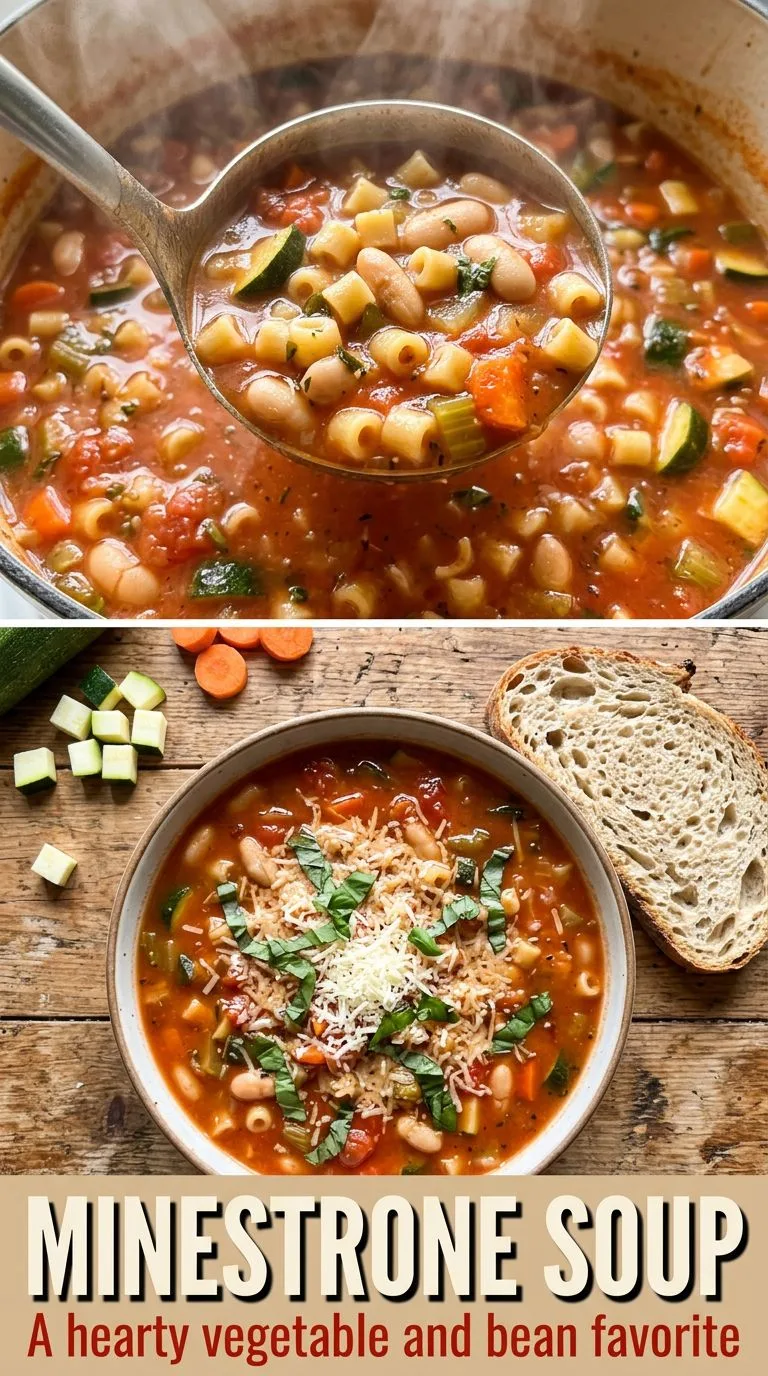
How to Make Minestrone Soup
Making minestrone soup is a straightforward process that builds flavor in layers. I’ll guide you through each step to ensure your soup turns out perfectly.
Step 1: Sauté the Aromatics
Heat the olive oil in a large Dutch oven or heavy-bottomed pot over medium heat. Add the chopped onion, diced carrots, and diced celery. Sauté these vegetables for 5–7 minutes, stirring occasionally, until they begin to soften and the onion becomes translucent. This step builds the flavor foundation for your soup. I like to let the vegetables develop a little color for added depth.
Step 2: Add Garlic and Herbs
Stir in the minced garlic, dried oregano, dried basil, and dried thyme. Cook for about 1 minute, stirring constantly, until the garlic becomes fragrant. Be careful not to let the garlic burn, as it can turn bitter. This brief cooking time releases the essential oils in the herbs and garlic, infusing the oil with flavor.
Step 3: Build the Soup Base
Add the diced zucchini, canned diced tomatoes (with their juices), drained kidney beans, drained cannellini beans, and vegetable broth to the pot. Stir everything together to combine. Bring the mixture to a boil over medium-high heat, then reduce the heat to maintain a gentle simmer. Let the soup simmer for 15–20 minutes, allowing the vegetables to soften and the flavors to meld together.
Step 4: Cook the Pasta
Add the small pasta to the simmering soup. Cook according to the package directions until the pasta reaches al dente texture, usually 8–10 minutes. I recommend stirring occasionally to prevent the pasta from sticking to the bottom of the pot. The pasta will absorb some of the broth and release starch, which helps thicken the soup slightly.
Step 5: Add Spinach and Season
Stir in the fresh spinach and cook for about 2 minutes until it wilts completely. Season the soup with salt and black pepper to taste. I find it’s best to add salt toward the end of cooking, especially if you’re using store-bought broth, which can already contain sodium.
Step 6: Serve
Ladle the hot soup into bowls and sprinkle generously with freshly grated Parmesan cheese. Serve immediately while hot, with crusty bread on the side if desired.
Expert Tips for Best Results
Over the years, I’ve learned a few tricks that make a noticeable difference in the final result. Here are my top tips for making the best minestrone soup:
Don’t Overcook the Vegetables: I recommend keeping a slight bite to your vegetables rather than cooking them to mush. They’ll continue to soften slightly as the soup sits, and the texture contrast makes the soup more interesting to eat.
Cook Pasta Separately for Meal Prep: If you’re making this soup for meal prep or leftovers, consider cooking the pasta separately and adding it to individual bowls when serving. Pasta continues to absorb liquid as it sits, which can make your soup too thick and starchy after a day or two. This simple adjustment keeps your reheated soup at the perfect consistency.
Layer Your Seasonings: I like to taste and adjust seasonings at multiple stages—after adding the broth, after the pasta cooks, and just before serving. This ensures balanced flavor throughout.
Use Quality Broth: The broth is a major flavor component, so using a good-quality vegetable or chicken broth makes a real difference. If you have homemade broth, even better.
Let It Rest: If time allows, let the finished soup rest for 10–15 minutes before serving. This brief resting period allows the flavors to settle and develop. As I mentioned earlier, minestrone tastes even better the next day.
Adjust Consistency: Minestrone can be as thick or as brothy as you prefer. If your soup becomes too thick, simply add more broth or water. If it’s too thin, let it simmer uncovered for a few extra minutes to reduce and concentrate the flavors.
Fresh Parmesan Makes a Difference: I always recommend using freshly grated Parmesan cheese rather than the pre-grated kind. The flavor and texture are noticeably better, and it melts beautifully into the hot soup.
Serving Suggestions
Minestrone soup is hearty enough to serve as a complete meal, but I love pairing it with a few complementary sides to round out the dining experience.
Crusty Bread: A warm baguette, ciabatta, or rustic Italian bread is my go-to accompaniment. The bread is perfect for soaking up the flavorful broth. I sometimes brush slices with olive oil and garlic, then toast them for homemade garlic bread.
Simple Green Salad: A crisp salad with mixed greens, cherry tomatoes, and a light vinaigrette provides a fresh contrast to the warm, hearty soup. I like to keep the salad simple so it doesn’t compete with the soup’s robust flavors.
Grilled Cheese Sandwich: For a more substantial meal, serve the soup alongside a classic grilled cheese sandwich. The combination is comforting and satisfying, especially on cold days.
Antipasto Platter: If you’re serving minestrone as part of an Italian-themed dinner, an antipasto platter with olives, marinated vegetables, cured meats, and cheese makes an excellent starter.
Wine Pairing: I find that a light Italian red wine like Chianti or a crisp white wine like Pinot Grigio pairs beautifully with minestrone soup.
For more Italian-inspired comfort food, you might also enjoy this Olive Garden Copycat Pasta e Fagioli Recipe, which offers similar hearty, satisfying flavors.
Variations and Substitutions
One of the best things about minestrone soup is its adaptability. Here are some variations I recommend trying:
Protein Additions: While this version is vegetarian, you can add cooked Italian sausage, diced chicken, or pancetta for extra protein and flavor. Brown the meat first, then proceed with the recipe as written.
Seasonal Vegetables: Adapt the vegetables based on what’s in season. In summer, add fresh green beans, corn, or bell peppers. In fall and winter, try adding diced butternut squash, kale, or cabbage.
Grain Substitutions: Instead of pasta, you can use rice, farro, or barley for a different texture and nutritional profile. Adjust cooking times accordingly—these grains typically take longer to cook than pasta.
Vegan Version: Simply omit the Parmesan cheese or use a plant-based alternative. The soup itself is already vegan-friendly when made with vegetable broth.
Spicy Minestrone: Add red pepper flakes or a diced jalapeño with the garlic for a spicy kick. I sometimes add a pinch of red pepper flakes to my bowl for extra heat.
Pesto Swirl: Stir a spoonful of basil pesto into each bowl just before serving for an extra layer of fresh, herbal flavor.
Low-Carb Version: Omit the pasta and add extra vegetables like cauliflower florets or additional zucchini to keep the soup low in carbohydrates.
If you enjoy vegetable-based soups, this Easy Vegetable Soup is another wonderful option that’s equally versatile and comforting.
Storage, Freezing, and Reheating
Minestrone soup is excellent for meal prep and stores beautifully. Here’s how I handle leftovers:
Refrigerator Storage: Allow the soup to cool to room temperature, then transfer it to airtight containers. Store in the refrigerator for up to 5 days. As I mentioned earlier, the flavors actually improve after a day or two, making leftovers particularly delicious.
Freezing: Minestrone freezes well for up to 3 months. I recommend freezing it without the pasta if possible, as pasta can become mushy when frozen and reheated. Simply add freshly cooked pasta when you reheat the soup. Freeze in portion-sized containers for easy individual servings.
Reheating: Reheat refrigerated soup on the stovetop over medium heat, stirring occasionally, until heated through. You may need to add a splash of broth or water to thin the soup, as it thickens considerably as it sits. For frozen soup, thaw overnight in the refrigerator, then reheat on the stovetop. You can also reheat individual portions in the microwave—heat in 1-minute intervals, stirring between each, until hot.
Pasta Considerations: If your soup contains pasta and has thickened significantly during storage, add additional broth when reheating to restore the desired consistency. The pasta will have absorbed quite a bit of liquid, so don’t be surprised if you need to add a cup or more of broth.
Frequently Asked Questions
Can I make minestrone soup in a slow cooker?
Yes, minestrone adapts well to slow cooker preparation. Add all ingredients except the pasta and spinach to your slow cooker. Cook on low for 6–8 hours or high for 3–4 hours. About 30 minutes before serving, add the pasta and spinach, allowing them to cook until tender.
Why is my minestrone soup too thick?
Minestrone naturally thickens as it sits because the pasta and beans absorb liquid. Simply add more vegetable broth or water when reheating until you reach your desired consistency. I usually keep extra broth on hand for this purpose.
Can I use dried beans instead of canned?
Absolutely. You’ll need about 1½ cups of cooked beans total (any combination of kidney and cannellini). Cook dried beans according to package directions before adding them to the soup. Using dried beans is more economical and allows you to control the sodium content.
Is minestrone soup healthy?
Yes, minestrone is very nutritious. It’s packed with vegetables, fiber-rich beans, and provides a good balance of carbohydrates, protein, and vitamins. It’s naturally low in fat and can easily be made vegan. The high fiber content makes it particularly satisfying and good for digestive health.
What’s the difference between minestrone and vegetable soup?
While both are vegetable-based soups, minestrone is specifically Italian and traditionally includes beans, pasta or rice, and a tomato-based broth seasoned with Italian herbs. It’s typically heartier and more substantial than a basic vegetable soup.
Can I make this soup without pasta?
Certainly. You can omit the pasta entirely for a lower-carb version, or substitute with rice, farro, or barley. Each grain will give the soup a different character, but all are delicious.
How can I make my minestrone soup more flavorful?
Use high-quality broth, don’t skimp on the garlic and herbs, and consider adding a Parmesan rind to the soup while it simmers (remove before serving). A splash of red wine vinegar or lemon juice at the end can also brighten the flavors. Fresh herbs instead of dried will provide more vibrant flavor as well.
Can I add meat to this recipe?
Yes, Italian sausage, ground beef, or diced chicken are all excellent additions. Brown the meat first in the pot before adding the vegetables, then proceed with the recipe as written.
Minestrone Soup Recipe
A hearty Italian vegetable soup packed with beans, pasta, tomatoes, zucchini, carrots, and fresh herbs. This wholesome, flavorful comfort food is perfect for any season and makes a complete, satisfying meal.
Cook Time: 35 minutes
Total Time: 50 minutes
Servings: 6 servings
Difficulty: Easy
Cuisine: Italian
Course: Dinner, Main Course
Ingredients
- 2 tablespoons olive oil
- 1 medium onion, chopped
- 2 carrots, diced
- 2 celery stalks, diced
- 3 cloves garlic, minced
- 1 teaspoon dried oregano
- 1 teaspoon dried basil
- ½ teaspoon dried thyme
- 1 zucchini, diced
- 1 can (14.5 oz) diced tomatoes
- 1 can (15 oz) kidney beans, drained and rinsed
- 1 can (15 oz) cannellini beans, drained and rinsed
- 6 cups vegetable broth
- 1 cup small pasta (ditalini or similar)
- 2 cups fresh spinach
- ½ teaspoon salt (or to taste)
- ¼ teaspoon black pepper (or to taste)
- Grated Parmesan cheese, for serving
Instructions
- Heat the olive oil in a large Dutch oven or heavy-bottomed pot over medium heat.
- Add the chopped onion, diced carrots, and diced celery. Sauté for 5–7 minutes, stirring occasionally, until the vegetables soften and the onion becomes translucent.
- Stir in the minced garlic, dried oregano, dried basil, and dried thyme. Cook for 1 minute, stirring constantly, until fragrant.
- Add the diced zucchini, canned diced tomatoes with their juices, drained kidney beans, drained cannellini beans, and vegetable broth. Stir to combine.
- Bring the mixture to a boil over medium-high heat, then reduce the heat to maintain a gentle simmer. Cook for 15–20 minutes until the vegetables begin to soften.
- Add the small pasta and cook according to package directions until al dente, usually 8–10 minutes. Stir occasionally to prevent sticking.
- Stir in the fresh spinach and cook for 2 minutes until wilted.
- Season with salt and black pepper to taste.
- Ladle the hot soup into bowls and sprinkle generously with freshly grated Parmesan cheese before serving.
Recipe Notes
- For meal prep, consider cooking the pasta separately and adding it to individual portions when serving. This prevents the pasta from absorbing too much liquid during storage.
- The soup thickens as it sits. Add extra broth or water when reheating to reach your desired consistency.
- Feel free to substitute vegetables based on what you have available. Green beans, bell peppers, or potatoes all work well.
- A Parmesan rind added during simmering (and removed before serving) adds wonderful depth of flavor.
- For a vegan version, omit the Parmesan cheese or use a plant-based alternative.
- This soup freezes well for up to 3 months. Freeze without pasta for best results.
Nutrition Information (per serving, estimated)
Calories: 285
Carbohydrates: 48g
Protein: 13g
Fat: 6g
Saturated Fat: 1g
Fiber: 10g
Sugar: 7g
Sodium: 780mg
Nutrition information is estimated based on standard ingredient values and does not include optional toppings or variations. Actual values may vary depending on specific ingredients and portion sizes used.
