
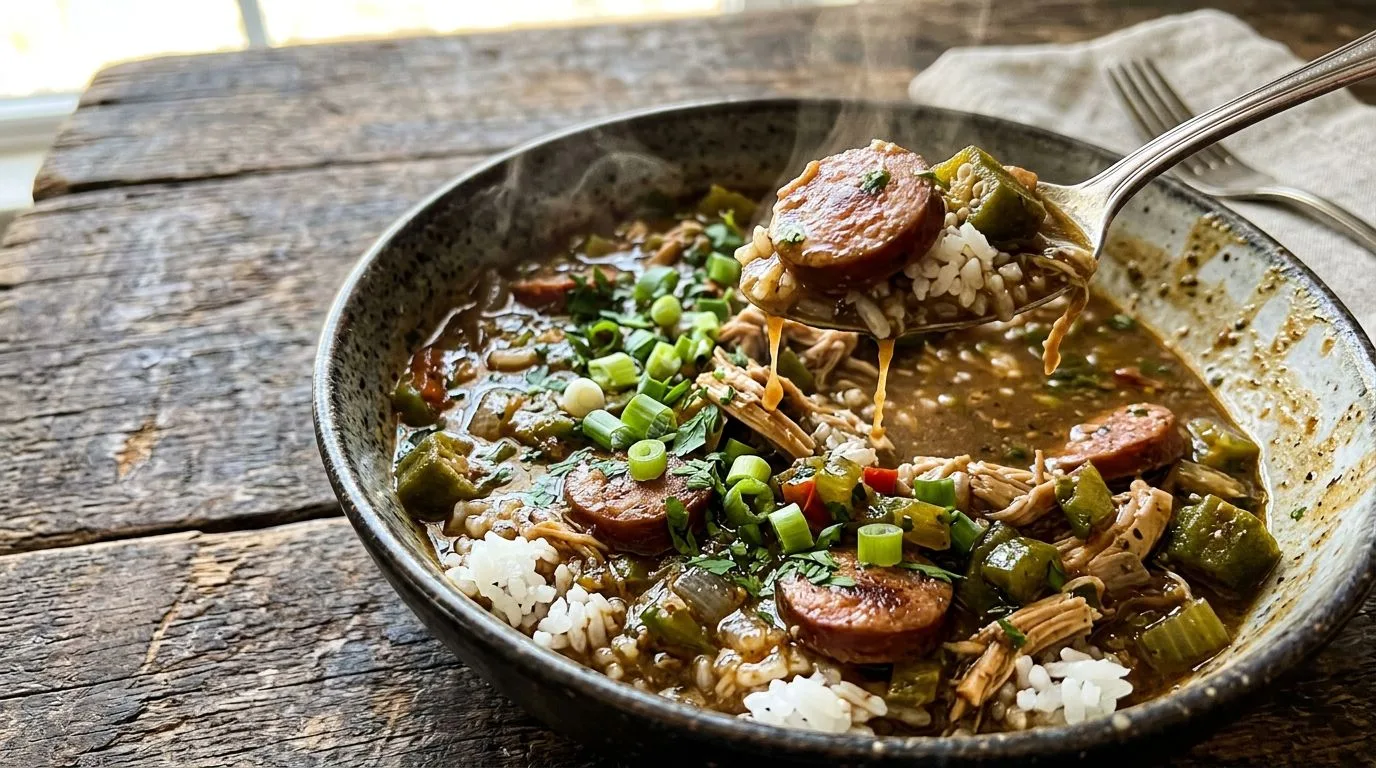
There’s something deeply satisfying about a steaming bowl of chicken and sausage gumbo that brings the flavors of Louisiana right into your kitchen. This rich, hearty dish combines tender chicken thighs with smoky andouille sausage in a deeply flavorful dark roux broth that’s been carefully developed over time. I love how the holy trinity of Cajun cooking—onions, bell peppers, and celery—creates a foundation of flavor that makes every spoonful memorable.
Making authentic gumbo at home might seem intimidating at first, but I find that once you understand the process of creating a proper dark roux, the rest comes together beautifully. The key is patience during that initial roux-making stage, where flour and oil transform into a rich, nutty base that gives gumbo its signature depth. This recipe delivers all the comfort and soul of traditional Louisiana cooking, perfect for feeding a crowd or enjoying as leftovers throughout the week.
Whether you’re new to Cajun cuisine or a longtime gumbo enthusiast, this chicken and sausage gumbo recipe will become a staple in your dinner rotation. The combination of spices, the smoky sausage, and the tender chicken creates layers of flavor that only get better as the gumbo simmers.
Why You’ll Love This Chicken and Sausage Gumbo
This gumbo recipe delivers authentic Louisiana flavor without requiring a trip to the bayou. I love how versatile it is—you can adjust the heat level to suit your family’s preferences, and it’s substantial enough to serve as a complete meal when ladled over rice. The dark roux provides a complex, almost chocolatey depth that you simply can’t achieve with shortcuts.
One of my favorite aspects of this dish is how it fills your home with incredible aromas as it simmers. The combination of smoky andouille sausage, aromatic vegetables, and Cajun spices creates an inviting fragrance that builds anticipation for dinner. Plus, gumbo is one of those dishes that actually tastes better the next day, making it perfect for meal prep or entertaining.
This recipe also offers great value for your grocery budget. Chicken thighs are economical and stay tender during the long simmer time, while a little andouille sausage goes a long way in adding that essential smoky flavor. You’ll end up with generous servings of a restaurant-quality dish at a fraction of the cost.
Ingredients and Substitutions
The foundation of great gumbo starts with quality ingredients, but I find there’s also room for flexibility based on what you have available. Let me walk you through the key components and some practical substitutions.
For the Roux: The combination of vegetable oil and all-purpose flour creates the essential dark roux. I recommend sticking with vegetable oil for its high smoke point and neutral flavor. Some cooks use bacon fat for extra richness, but vegetable oil is more traditional and reliable.
Protein: Boneless chicken thighs are my preferred choice because they stay moist and tender during the long cooking time. You can substitute chicken breasts if needed, though they may become slightly drier. The andouille sausage is crucial for authentic flavor—it’s a smoked pork sausage seasoned with garlic and Cajun spices. If you can’t find andouille, kielbasa or another smoked sausage can work in a pinch, though the flavor profile will be slightly different.
The Holy Trinity: Green bell pepper, celery, and onion form the aromatic base of Cajun cooking. I don’t recommend skipping any of these vegetables, as they each contribute essential flavor. Yellow or white onions work equally well.
Seasonings: Cajun seasoning is a blend that typically includes paprika, garlic powder, onion powder, cayenne, oregano, and thyme. You can make your own blend or use a quality store-bought version. The cayenne pepper adds heat—adjust the amount based on your spice tolerance. I like to start with less and add more at the end if needed.
Liquid Base: Chicken broth provides the savory foundation. Low-sodium broth gives you better control over the final seasoning. The diced tomatoes add acidity and body, though some traditional gumbo recipes omit them. I find they contribute a nice balance to the rich roux.

How to Make Chicken and Sausage Gumbo
Making gumbo is a labor of love, but the process is straightforward when you break it down into steps. The most important part is the roux, which requires your full attention.
Making the Dark Roux
Heat the vegetable oil in a heavy-bottomed Dutch oven over medium heat. A heavy pot distributes heat evenly and prevents scorching. Once the oil is hot, gradually whisk in the flour to form a smooth paste. This is where patience becomes essential. You’ll need to stir continuously for 20 to 30 minutes as the roux slowly darkens from blonde to peanut butter to a deep chocolate brown.
I recommend using a long-handled whisk and staying close to the stove during this process. The roux can go from perfect to burned in seconds, so constant stirring is crucial. You’re looking for a color similar to milk chocolate—dark enough to provide deep flavor but not so dark that it tastes bitter.
Building the Flavor Base
Once your roux reaches the perfect color, immediately add the diced onion, bell pepper, and celery. The vegetables will sizzle dramatically as they hit the hot roux, which is normal. Stir carefully for about 5 minutes until the vegetables soften. The moisture from the vegetables will also stop the roux from continuing to darken. Add the minced garlic and cook for just 30 seconds—garlic burns easily, so you don’t want it in there too long.
Adding Liquid and Seasonings
This next step requires care to avoid lumps. Gradually pour in the chicken broth while whisking constantly. Start with just a cup or so, whisking until smooth, then add the rest more quickly while continuing to whisk. The mixture will thin out and become smooth. Stir in the diced tomatoes with their juices, bay leaves, Cajun seasoning, dried thyme, smoked paprika, and cayenne pepper.
Simmering the Gumbo
Add the cubed chicken thighs and sliced andouille sausage to the pot. Bring everything to a gentle boil, then reduce the heat to maintain a steady simmer. Let the gumbo cook uncovered for 45 to 60 minutes, stirring occasionally. The chicken should become tender and reach an internal temperature of 165°F (74°C). During this time, the flavors will meld together and the gumbo will develop its characteristic richness.
Remove the bay leaves before serving and taste the gumbo. This is your opportunity to adjust the seasoning—add more salt, cayenne, or Cajun seasoning as needed.
Expert Tips for Best Results
After making countless pots of gumbo, I’ve learned several techniques that consistently produce the best results. First, don’t rush the roux. I know 30 minutes of constant stirring seems like a long time, but this step is what separates good gumbo from great gumbo. If you’re nervous about burning it, you can make the roux over slightly lower heat—it will just take a bit longer.
I recommend using a wooden spoon or whisk with a long handle to protect your hands from splatters. The roux gets extremely hot, and even small splashes can cause burns. Keep a damp towel nearby to wipe the sides of the pot if needed.
For the most flavorful results, I like to brown the andouille sausage in a separate skillet before adding it to the gumbo. This extra step caramelizes the sausage and adds another layer of depth. It’s optional but worthwhile if you have the time.
Temperature control matters throughout the cooking process. During the simmer, you want gentle bubbles breaking the surface, not a rolling boil. Too much heat can make the chicken tough and cause the liquid to reduce too quickly.
Finally, I find that gumbo benefits from resting. If possible, make it a few hours ahead or even the day before serving. The flavors continue to develop as it sits, and you can easily skim off any excess fat that rises to the surface after refrigeration.
Serving Suggestions
Traditionally, gumbo is served over a mound of fluffy white rice placed in the center of a wide, shallow bowl. The rice absorbs the flavorful broth and provides a neutral base that balances the rich, spicy gumbo. I like to use long-grain white rice, though jasmine rice also works beautifully.
Garnishing is important for both flavor and presentation. Fresh chopped green onions add a bright, sharp contrast to the rich gumbo, while fresh parsley contributes a subtle herbal note and vibrant color. I recommend having both on the table so diners can add as much as they like.
For a complete Louisiana-style meal, serve your gumbo with crusty French bread or cornbread on the side. The bread is perfect for soaking up every last drop of that delicious broth. A simple green salad with a tangy vinaigrette provides a refreshing contrast to the hearty gumbo.
If you’re looking for more comforting soup recipes, you might enjoy this creamy Italian sausage and kale soup or this classic Italian wedding soup.
I also like to set out hot sauce and file powder (ground sassafras leaves) at the table. File powder is a traditional Creole seasoning that adds earthy flavor and helps thicken the gumbo slightly. It should be added to individual servings, not to the pot, as it can become stringy if boiled.
Variations and Substitutions
While this recipe is delicious as written, gumbo is wonderfully adaptable to different tastes and dietary needs. For a seafood variation, you can add shrimp, crab, or oysters during the last 10 minutes of cooking. Just be careful not to overcook the seafood—it should be just cooked through.
If you prefer a spicier gumbo, increase the cayenne pepper or add diced jalapeños along with the holy trinity vegetables. For a milder version, reduce or omit the cayenne entirely and use a mild Cajun seasoning blend.
Some cooks like to add okra to their gumbo, which contributes a unique flavor and acts as a natural thickener. If you want to include okra, add about 2 cups of sliced fresh or frozen okra during the last 20 minutes of cooking. Be aware that okra can become slimy if overcooked, so timing matters.
For a different protein profile, you can use all sausage and no chicken, or substitute duck for the chicken for a more traditional Cajun approach. Turkey sausage can replace the andouille for a leaner option, though you’ll sacrifice some of that signature smoky flavor.
If you’re avoiding gluten, you can make the roux with rice flour or a gluten-free all-purpose blend. The technique remains the same, though the flavor will be slightly different. Some cooks also use a blonde roux and add file powder for thickening instead of cooking the roux to a dark color.
Storage, Freezing, and Reheating
One of the best things about gumbo is how well it keeps, making it ideal for meal prep and leftovers. I find that properly stored gumbo actually improves in flavor over the first few days as the seasonings continue to meld.
Refrigerator Storage: Allow the gumbo to cool to room temperature, then transfer it to airtight containers. It will keep in the refrigerator for up to 4 days. I recommend storing the rice separately from the gumbo, as rice can absorb too much liquid and become mushy during storage.
Freezing: Gumbo freezes exceptionally well for up to 3 months. Let it cool completely, then portion it into freezer-safe containers or heavy-duty freezer bags. Leave about an inch of headspace to allow for expansion. Again, freeze the gumbo without rice—cook fresh rice when you’re ready to serve. Label the containers with the date so you can track freshness.
Reheating: For refrigerated gumbo, reheat it gently on the stovetop over medium-low heat, stirring occasionally until heated through. You may need to add a splash of chicken broth or water if it has thickened too much. For frozen gumbo, I recommend thawing it overnight in the refrigerator before reheating, though you can also reheat it directly from frozen over low heat—just allow extra time and stir frequently to prevent scorching.
You can also reheat individual portions in the microwave. Use a microwave-safe bowl, cover it loosely, and heat in 1-minute intervals, stirring between each interval, until steaming hot throughout.
Frequently Asked Questions
What’s the difference between gumbo and jambalaya? While both are Louisiana classics, gumbo is a soup or stew served over rice, while jambalaya is a rice dish where the rice cooks in the pot with the other ingredients. Gumbo typically features a roux and has a thinner, more broth-like consistency.
Can I make gumbo in a slow cooker? You’ll still need to make the roux on the stovetop—there’s no way around that step. However, after building your flavor base, you can transfer everything to a slow cooker and cook on low for 6 to 8 hours or on high for 3 to 4 hours. The texture will be slightly different, but it’s a convenient option.
Why is my gumbo too thin? If your gumbo is thinner than you’d like, you can simmer it uncovered for an additional 15 to 30 minutes to reduce the liquid. Alternatively, you can add a slurry made from 2 tablespoons of flour mixed with 1/4 cup of cold water, stirring it in and simmering for 10 minutes to thicken.
Can I use chicken breasts instead of thighs? Yes, though I find that thighs stay more tender and flavorful during the long cooking time. If using breasts, consider cutting them into larger pieces and checking for doneness around the 40-minute mark to avoid overcooking.
What if I can’t find andouille sausage? Look for it in the specialty meat section of your grocery store. If unavailable, kielbasa or another smoked sausage can substitute, though the flavor will be less authentically Cajun. In a pinch, you can use regular smoked sausage and add extra Cajun seasoning.
Is gumbo supposed to be thick or thin? Gumbo consistency varies by region and personal preference. It should be thicker than soup but thinner than stew—somewhere between the two. It should coat the back of a spoon but still be easily ladled over rice.
Chicken and Sausage Gumbo
A rich Louisiana-style gumbo featuring tender chicken, smoky sausage, bell peppers, celery, and onions simmered in a deeply flavorful dark roux broth. Served over fluffy rice for a comforting, authentic Cajun meal.
- Prep Time: 20 minutes
- Cook Time: 1 hour 30 minutes
- Total Time: 1 hour 50 minutes
- Servings: 6
- Difficulty: Medium
- Cuisine: Cajun/Creole
- Course: Dinner
Ingredients
- 1 lb boneless chicken thighs, cubed
- 12 oz smoked andouille sausage, sliced
- 1/2 cup vegetable oil
- 1/2 cup all-purpose flour
- 1 green bell pepper, diced
- 2 celery stalks, diced
- 1 large onion, diced
- 4 cloves garlic, minced
- 6 cups chicken broth
- 1 can (14.5 oz) diced tomatoes
- 2 bay leaves
- 1 tbsp Cajun seasoning
- 1 tsp dried thyme
- 1/2 tsp smoked paprika
- 1/4 tsp cayenne pepper
- 2 cups cooked white rice
- 1/4 cup chopped green onions
- 2 tbsp fresh parsley, chopped
Instructions
- Heat vegetable oil in a heavy-bottomed Dutch oven over medium heat. Gradually whisk in flour to form a roux, stirring continuously for 20 to 30 minutes until the mixture turns a deep chocolate brown color. Watch carefully to prevent burning.
- Add diced onion, bell pepper, and celery to the roux, stirring carefully for 5 minutes until the vegetables soften.
- Add minced garlic and cook for 30 seconds, stirring constantly.
- Gradually pour in chicken broth while whisking continuously to prevent lumps from forming. Start with about 1 cup, whisk until smooth, then add the remaining broth.
- Stir in diced tomatoes with their juices, bay leaves, Cajun seasoning, dried thyme, smoked paprika, and cayenne pepper.
- Add cubed chicken thighs and sliced andouille sausage to the pot, stirring to combine.
- Bring the mixture to a gentle boil, then reduce heat to maintain a steady simmer. Cook uncovered for 45 to 60 minutes, stirring occasionally, until chicken is tender and reaches an internal temperature of 165°F (74°C).
- Remove and discard bay leaves. Taste and adjust seasoning with additional salt, cayenne, or Cajun seasoning as needed.
- Spoon cooked white rice into individual serving bowls and ladle hot gumbo over the rice.
- Garnish with chopped green onions and fresh parsley before serving.
Recipe Notes
- The roux is the foundation of this dish—don’t rush this step. Constant stirring is essential to prevent burning.
- For a spicier gumbo, increase the cayenne pepper to 1/2 teaspoon or more.
- Gumbo tastes even better the next day, so consider making it ahead.
- Store rice separately from gumbo to prevent it from becoming too soft.
- File powder can be offered at the table as a traditional garnish and thickener.
- If the gumbo becomes too thick during cooking, add additional chicken broth to reach desired consistency.
Nutrition Information (Per Serving, Estimated)
- Calories: 485
- Carbohydrates: 32g
- Protein: 28g
- Fat: 27g
- Saturated Fat: 6g
- Fiber: 3g
- Sugar: 5g
- Sodium: 1240mg
Nutrition information is estimated based on standard ingredient values and serving sizes. Actual nutritional content may vary based on specific brands and preparation methods.
