
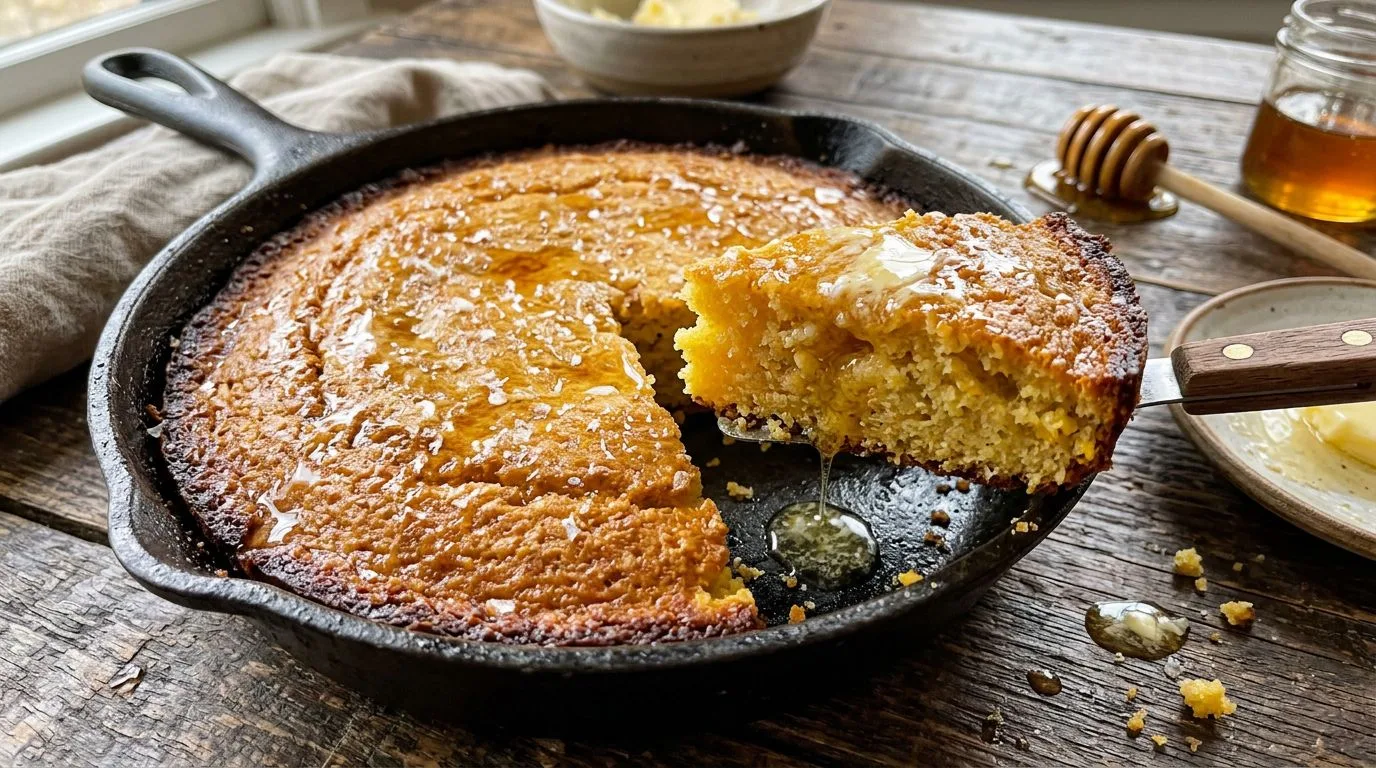
There’s something truly special about cornbread baked in a cast-iron skillet. The way the edges turn golden and crispy while the center stays moist and tender creates the perfect texture contrast that makes every bite irresistible. This honey butter skillet cornbread takes that classic Southern staple and elevates it with a touch of sweetness from honey and the rich flavor of butter. I love how the hot skillet creates that signature crust on the bottom and sides, giving you those crispy edges everyone fights over at the dinner table.
What makes this recipe stand out is the perfect balance of sweet and savory. The honey adds just enough sweetness without turning the cornbread into dessert, while the buttermilk keeps everything incredibly moist and adds a subtle tang that complements the corn flavor beautifully. Whether you’re serving this alongside a bowl of chili, as part of your Thanksgiving spread, or simply enjoying it warm with extra butter, this honey butter skillet cornbread delivers that comforting, homestyle taste that brings people together around the table.
Why You’ll Love This Honey Butter Skillet Cornbread
This recipe combines the best of traditional Southern cornbread with a touch of sweetness that makes it universally appealing. I find that the cast-iron skillet method is absolutely essential for achieving that perfect texture—the preheated skillet creates an immediate sizzle when the batter hits it, forming those coveted crispy edges that contrast beautifully with the soft, fluffy interior.
The honey butter finish takes this cornbread from good to absolutely irresistible. Brushing the warm cornbread with melted butter and drizzling it with honey creates a glossy, flavorful topping that seeps into the top layer, adding moisture and sweetness to every slice. I love how versatile this cornbread is—it works equally well as a side dish for savory meals or as a slightly sweet treat with your morning coffee.
Another reason this recipe is a winner is its simplicity. You don’t need any fancy equipment beyond a cast-iron skillet, and the ingredient list is straightforward with pantry staples you likely already have on hand. The batter comes together in minutes, and the oven does all the work. Even if you’re new to baking, this recipe is forgiving and delivers consistent, delicious results every time.
Ingredients and Substitutions
The foundation of great cornbread starts with quality cornmeal. I recommend using yellow cornmeal for its classic color and slightly sweet flavor, though white cornmeal works just as well if that’s what you prefer. The combination of cornmeal and all-purpose flour creates the ideal texture—not too dense, not too cake-like, but perfectly balanced with a tender crumb that still has that characteristic cornbread texture.
Buttermilk is a key ingredient that adds moisture and a subtle tang while also reacting with the baking soda to create lift and tenderness. If you don’t have buttermilk on hand, you can make a quick substitute by adding one tablespoon of white vinegar or lemon juice to one cup of regular milk and letting it sit for five minutes. The eggs provide structure and richness, while the melted butter adds flavor and helps create that moist texture we’re looking for.
The honey serves double duty in this recipe—it sweetens the batter and also gets drizzled on top for that signature honey butter finish. I like using a mild honey like clover or wildflower, but feel free to experiment with different varieties to add unique flavor notes. The baking powder and baking soda work together to give the cornbread its rise, while the salt balances all the flavors and enhances the natural sweetness of the corn.
For the skillet butter, I recommend using unsalted butter so you can control the salt level in your cornbread. The three tablespoons might seem like a lot, but this is what creates that incredible golden crust on the bottom and sides. Don’t skimp on this step—it’s what makes skillet cornbread truly special.
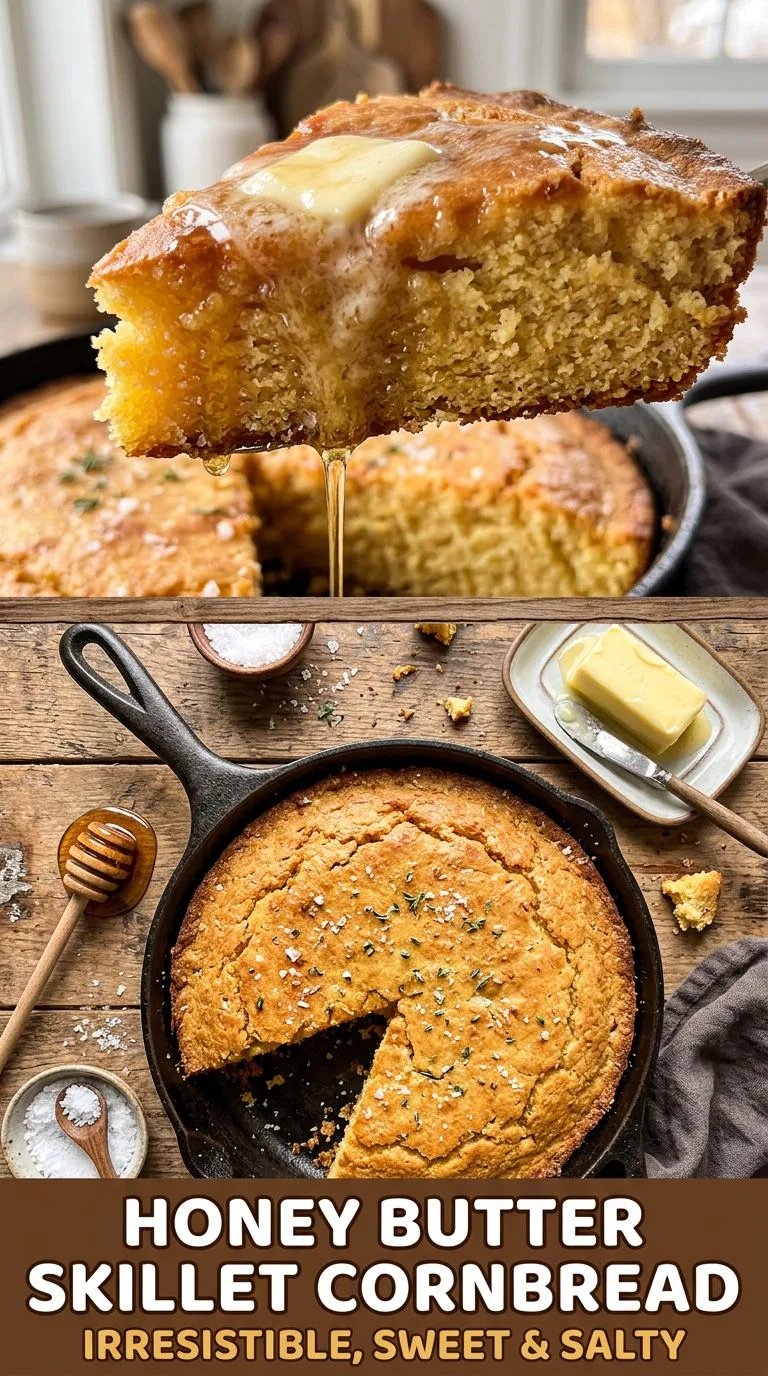
How to Make Honey Butter Skillet Cornbread
The secret to perfect skillet cornbread starts before you even mix the batter. Preheating your cast-iron skillet in the oven while it comes to temperature is crucial. This ensures the skillet is blazing hot when you add the butter and batter, creating that immediate sizzle that forms the crispy crust. I recommend using a 9-inch or 10-inch cast-iron skillet for best results.
While the oven and skillet are heating, prepare your batter by whisking together all the dry ingredients in a large bowl. Make sure the baking powder, baking soda, and salt are evenly distributed throughout the cornmeal and flour mixture—this ensures even rising and consistent flavor. In a separate bowl, whisk together the eggs, buttermilk, melted butter, and honey until well combined. The honey should be fully incorporated into the liquid mixture.
When you’re ready to combine the wet and dry ingredients, pour the liquid mixture into the dry ingredients and stir gently just until combined. This is important—overmixing will develop the gluten in the flour and create a tough, dense cornbread. A few small lumps are perfectly fine and will disappear during baking. The batter should be thick but pourable.
Carefully remove the hot skillet from the oven using oven mitts—it will be extremely hot. Add the three tablespoons of butter to the skillet and swirl it around to coat the bottom and sides completely. The butter should sizzle and foam immediately. Pour the batter into the center of the skillet and use a spatula to spread it evenly if needed. Return the skillet to the oven and bake for 20 to 25 minutes, until the top is golden brown and a toothpick inserted in the center comes out clean or with just a few moist crumbs.
As soon as the cornbread comes out of the oven, brush the top with melted butter and drizzle with the remaining honey. This creates that beautiful glossy finish and adds an extra layer of flavor. Let the cornbread cool in the skillet for about 5 minutes before slicing and serving. This brief resting period allows the structure to set while the cornbread is still warm and at its absolute best.
Expert Tips for Best Results
The temperature of your ingredients matters more than you might think. I recommend using room temperature eggs and buttermilk, as they incorporate more easily into the batter and create a more uniform texture. If your buttermilk is cold from the refrigerator, let it sit out for 15-20 minutes before using, or microwave it for just 10-15 seconds to take the chill off.
Don’t skip the step of preheating the skillet. This is what separates good skillet cornbread from truly exceptional cornbread. The hot skillet creates an immediate crust that locks in moisture and creates those crispy edges everyone loves. If you add the batter to a cold or lukewarm skillet, you’ll miss out on this crucial texture element.
Watch your baking time carefully, especially the first time you make this recipe. Ovens vary, and the thickness of your cast-iron skillet can affect cooking time. Start checking at 20 minutes—the cornbread is done when the top is golden brown, the edges have pulled slightly away from the sides of the skillet, and a toothpick inserted in the center comes out clean. The internal temperature should reach about 200°F if you’re using a thermometer.
For the most flavorful results, use real butter rather than margarine or oil substitutes. The butter contributes significantly to both the flavor and texture of the cornbread. Similarly, pure honey tastes noticeably better than honey-flavored corn syrup, so I recommend investing in good quality honey for this recipe.
Serving Suggestions
This honey butter skillet cornbread is incredibly versatile and pairs beautifully with so many dishes. I love serving it alongside hearty soups and stews—the slightly sweet flavor complements spicy chili perfectly, and it’s wonderful for soaking up the broth from a pot of beans. It’s also a natural choice for barbecue meals, where the honey butter finish balances smoky, savory flavors.
For holiday meals, this cornbread is a must-have on the table. It’s perfect for Thanksgiving alongside turkey and all the traditional sides, and it makes an excellent base for Southern cornbread dressing. The slightly sweet flavor works beautifully with savory dishes without overwhelming them. I also like to serve it with fried chicken, roasted vegetables, or as part of a Southern-style breakfast with eggs and bacon.
My favorite way to serve this cornbread is still warm from the skillet, cut into wedges with extra butter and honey on the side. There’s something wonderfully communal about bringing the whole skillet to the table and letting everyone serve themselves. If you’re looking for other comforting sides to round out your meal, consider pairing it with homemade dinner rolls for a bread basket that will impress any crowd.
Variations and Substitutions
While this recipe is delicious as written, there are several ways you can customize it to suit your preferences. For a more savory version, reduce the honey in the batter to two tablespoons and add shredded cheddar cheese, diced jalapeños, or crumbled bacon to the batter. The cheese creates pockets of melty goodness throughout the cornbread, while jalapeños add a spicy kick that’s perfect with chili.
If you prefer a less sweet cornbread, you can reduce or omit the honey in the batter entirely, though I still recommend the honey butter topping for flavor and moisture. For a dairy-free version, substitute the buttermilk with a plant-based milk mixed with vinegar, and use coconut oil or vegan butter in place of regular butter. The texture will be slightly different but still delicious.
You can also experiment with different mix-ins to add texture and flavor. Fresh or frozen corn kernels add bursts of sweetness and a nice textural contrast. Chopped fresh herbs like chives, rosemary, or thyme create a more savory profile that’s wonderful with roasted meats. For a Southwestern twist, add cumin, chili powder, and diced green chiles to the batter.
If you don’t have a cast-iron skillet, you can bake this cornbread in a greased 9-inch square baking pan or an 8-inch round cake pan. You won’t get the same crispy edges, but the cornbread will still be delicious. Preheat the pan if possible, or add the butter to the pan and let it melt in the oven for a few minutes before adding the batter.
Storage, Freezing, and Reheating
Leftover cornbread stores well at room temperature for up to two days when wrapped tightly in plastic wrap or stored in an airtight container. For longer storage, I recommend refrigerating it for up to five days. The cornbread may dry out slightly in the refrigerator, but you can restore moisture by warming it before serving.
To reheat individual slices, I like to wrap them in a damp paper towel and microwave for 15-20 seconds. This adds back some moisture and warms the cornbread quickly. For larger portions, wrap the cornbread in foil and warm it in a 300°F oven for about 10 minutes. You can also slice the cornbread and toast it in a skillet with a little butter for a crispy exterior.
This cornbread freezes beautifully for up to three months. Let it cool completely, then wrap it tightly in plastic wrap followed by aluminum foil, or place it in a freezer-safe container. You can freeze the whole round or cut it into individual portions for easier thawing. To thaw, leave it at room temperature for a few hours or overnight in the refrigerator, then reheat as desired.
For make-ahead purposes, you can prepare the dry ingredients and wet ingredients separately up to a day in advance, storing them in separate containers in the refrigerator. When you’re ready to bake, bring the wet ingredients to room temperature, combine everything, and proceed with the recipe. This is especially helpful when preparing for holiday meals when oven space and time are at a premium.
Frequently Asked Questions
Can I make this cornbread without buttermilk?
Yes, you can substitute regular milk mixed with one tablespoon of white vinegar or lemon juice. Let it sit for 5 minutes before using. You can also use plain yogurt thinned with a little milk, or sour cream for a similar tangy flavor and tender texture.
Why is my cornbread dry?
Dry cornbread usually results from overbaking or using too much cornmeal relative to the liquid ingredients. Make sure you’re measuring accurately and not packing the cornmeal into the measuring cup. Also, check your cornbread at the minimum baking time to avoid overbaking. The honey butter topping helps add moisture, so don’t skip that step.
Can I use a different type of pan?
While a cast-iron skillet gives the best results with crispy edges, you can use a 9-inch square baking pan or an 8-inch round cake pan. Grease the pan well and consider preheating it for a few minutes with the butter to approximate the skillet method. The baking time may vary slightly depending on the pan depth.
How do I know when the cornbread is done?
The cornbread is done when the top is golden brown, the edges have pulled slightly away from the sides of the pan, and a toothpick inserted in the center comes out clean or with just a few moist crumbs. The internal temperature should reach about 200°F.
Can I double this recipe?
Yes, you can double the recipe and bake it in a larger skillet or two separate skillets. If using a larger skillet, you may need to increase the baking time by 5-10 minutes. Keep an eye on it and test for doneness with a toothpick.
What’s the difference between cornbread and corn muffins?
The main difference is the baking method and sometimes the ratio of ingredients. This same batter can be used to make corn muffins—just divide it among greased muffin tins and reduce the baking time to about 15-18 minutes. Muffins will have more crispy edges relative to their size.
Honey Butter Skillet Cornbread
Golden skillet cornbread with a moist, tender crumb and crispy edges, finished with sweet honey butter for classic Southern flavor. This easy recipe delivers perfectly balanced sweetness and that signature cast-iron crust everyone loves.
Prep Time: 10 minutes
Cook Time: 25 minutes
Total Time: 35 minutes
Servings: 8 servings
Difficulty: Easy
Cuisine: Southern American
Course: Side Dish
Ingredients
- 1 cup yellow cornmeal
- 1 cup all-purpose flour
- 1 tablespoon baking powder
- 1/2 teaspoon baking soda
- 1/2 teaspoon salt
- 2 large eggs
- 1 cup buttermilk
- 1/4 cup melted butter
- 1/4 cup honey
- 3 tablespoons butter for skillet
- 2 tablespoons honey for topping
Instructions
- Preheat your oven to 400°F (200°C). Place a 9-inch or 10-inch cast-iron skillet in the oven to heat while you prepare the batter.
- In a large mixing bowl, whisk together the cornmeal, all-purpose flour, baking powder, baking soda, and salt until well combined.
- In a separate bowl, whisk together the eggs, buttermilk, 1/4 cup melted butter, and 1/4 cup honey until smooth and fully incorporated.
- Pour the wet ingredients into the dry ingredients and stir gently with a wooden spoon or spatula just until combined. Do not overmix—a few small lumps are fine. The batter should be thick but pourable.
- Carefully remove the hot skillet from the oven using oven mitts. Add the 3 tablespoons of butter to the skillet and swirl to coat the bottom and sides completely. The butter should sizzle immediately.
- Pour the cornbread batter into the center of the hot skillet and spread it evenly with a spatula if needed.
- Return the skillet to the oven and bake for 20-25 minutes, until the top is golden brown and a toothpick inserted in the center comes out clean or with just a few moist crumbs.
- Remove the cornbread from the oven and immediately brush the top with melted butter and drizzle with the remaining 2 tablespoons of honey.
- Let the cornbread cool in the skillet for about 5 minutes before slicing into wedges and serving warm.
Recipe Notes
- Preheating the cast-iron skillet is essential for achieving crispy edges and the signature crust on the bottom of the cornbread.
- Don’t overmix the batter—stir just until the dry ingredients are moistened to ensure tender cornbread.
- If you don’t have buttermilk, make a substitute by adding 1 tablespoon of white vinegar or lemon juice to 1 cup of regular milk and letting it sit for 5 minutes.
- The cornbread is best served warm from the skillet but can be stored at room temperature for up to 2 days or refrigerated for up to 5 days.
- For a more savory version, reduce the honey in the batter and add shredded cheese, jalapeños, or herbs.
- This cornbread freezes well for up to 3 months when wrapped tightly in plastic wrap and foil.
Nutrition Information (Per Serving, Estimated)
Calories: 285
Carbohydrates: 38g
Protein: 5g
Fat: 13g
Saturated Fat: 7g
Fiber: 2g
Sugar: 13g
Sodium: 380mg
Nutrition information is estimated based on standard ingredient values and may vary depending on specific products used.
