
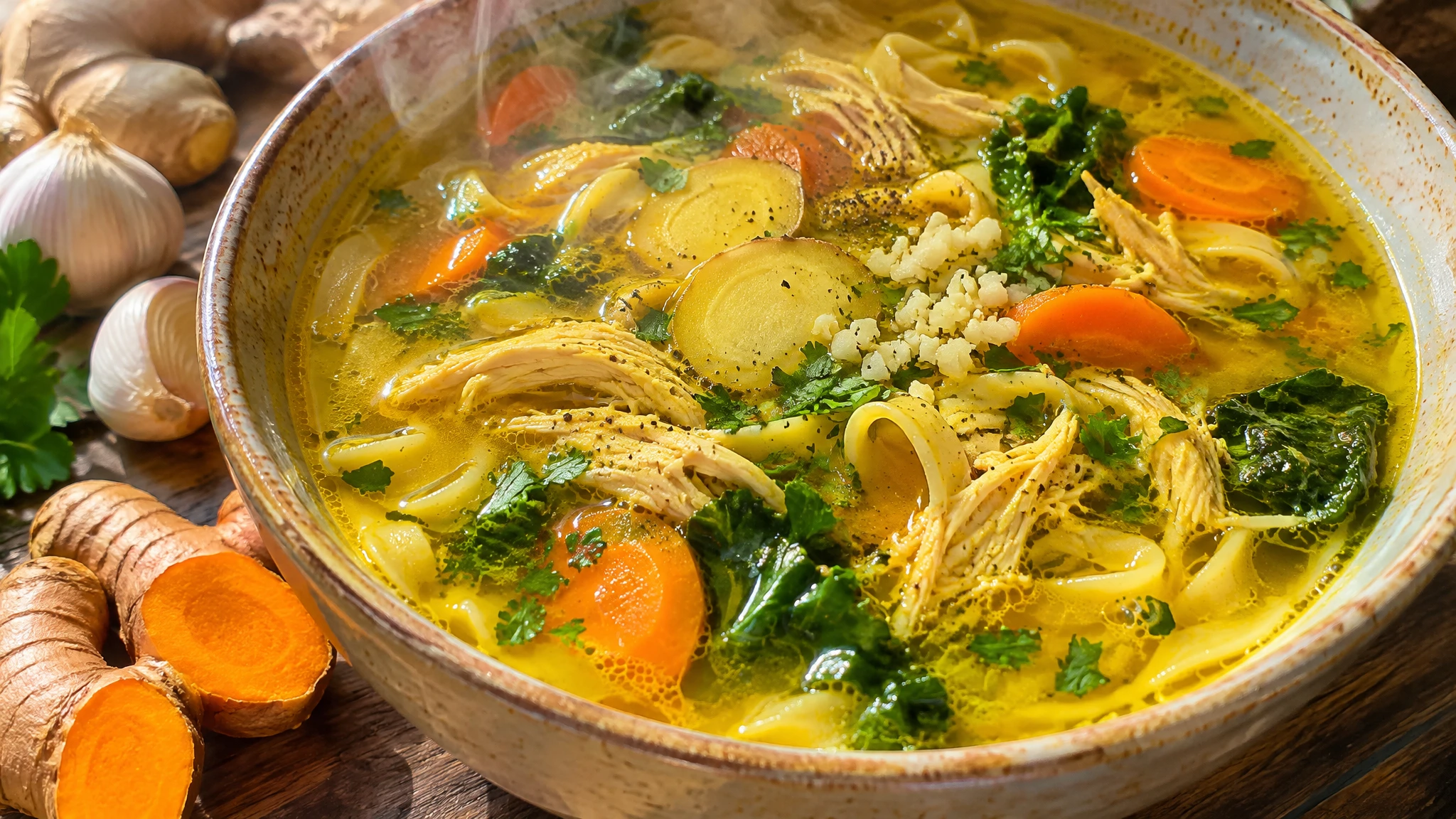
When I’m feeling under the weather or simply craving something warm and nourishing, nothing beats a bowl of healing chicken noodle soup. This isn’t your ordinary chicken soup—it’s elevated with the anti-inflammatory power of turmeric and the warming, soothing properties of fresh ginger. The aromatic broth, tender chicken, and perfectly cooked egg noodles come together to create a bowl of comfort that tastes as good as it makes you feel.
I love how this soup combines traditional chicken noodle soup elements with ingredients known for their wellness benefits. The golden turmeric gives the broth a beautiful color while offering its renowned anti-inflammatory properties, and the fresh ginger adds a gentle warmth that’s both comforting and invigorating. Whether you’re battling a cold, recovering from a long day, or simply want a nutritious dinner, this healing chicken noodle soup delivers on every level.
What makes this recipe special is how quickly it comes together while still developing deep, complex flavors. In under 45 minutes, you’ll have a pot of homemade soup that rivals anything you’d get from a restaurant, but with the added benefit of knowing exactly what’s going into your bowl.
Why You’ll Love This Healing Chicken Noodle Soup
This recipe has become one of my go-to comfort meals for several compelling reasons. First, it’s incredibly nourishing without being heavy. The combination of lean chicken breast, vegetables, and aromatic spices creates a balanced meal that satisfies without weighing you down.
I find that the turmeric and ginger not only add wonderful flavor but also bring genuine wellness benefits to the table. Turmeric contains curcumin, a compound with powerful anti-inflammatory effects, while fresh ginger has been used for centuries to soothe digestive issues and support immune function. Together, they transform ordinary chicken soup into something truly healing.
The recipe is also remarkably straightforward. You don’t need any special equipment or hard-to-find ingredients—just a large soup pot and fresh, wholesome ingredients. I recommend making a double batch because this soup tastes even better the next day, and it freezes beautifully for future meals.
Another reason I love this soup is its versatility. While the recipe is delicious as written, it’s also incredibly forgiving and adaptable to whatever you have on hand or your personal preferences. The base of chicken, vegetables, and aromatic spices creates a foundation that you can customize to suit your needs.
Ingredients and Substitutions
Let me walk you through the key ingredients that make this healing chicken noodle soup so special, along with some helpful substitution options.
Chicken Breast: I use boneless, skinless chicken breast for its lean protein and quick cooking time. You can substitute with chicken thighs for a richer flavor, though they’ll add more fat to the broth. For an even easier option, use a rotisserie chicken—just shred the meat and add it near the end of cooking.
Fresh Ginger: This is one ingredient I don’t recommend skipping. Fresh ginger provides a bright, warming flavor that ground ginger simply can’t replicate. Look for firm ginger root with smooth skin, and use a spoon to easily scrape off the peel before grating.
Turmeric: Ground turmeric gives the broth its beautiful golden color and anti-inflammatory benefits. If you have fresh turmeric root, you can use about 1 tablespoon of grated fresh turmeric in place of the ground version.
Egg Noodles: Traditional egg noodles are my favorite for chicken soup, but you can use any pasta shape you prefer. Gluten-free noodles work well too, though cooking times may vary. Rice noodles offer a lighter alternative.
Vegetables: Carrots, celery, and onion form the classic soup base. I like the sweetness carrots add and the aromatic quality of celery. You can add other vegetables like parsnips, zucchini, or spinach if desired.
Chicken Broth: Good-quality chicken broth is the foundation of this soup. I recommend using low-sodium broth so you can control the salt level. Homemade broth is wonderful if you have it, but store-bought works perfectly well.
Lemon Juice: Fresh lemon juice brightens all the flavors at the end. Don’t skip this step—it makes a noticeable difference in the final taste.
Fresh Parsley: This adds a fresh, herbaceous note and a pop of color. Cilantro can be substituted if you prefer, or use fresh dill for a different flavor profile.
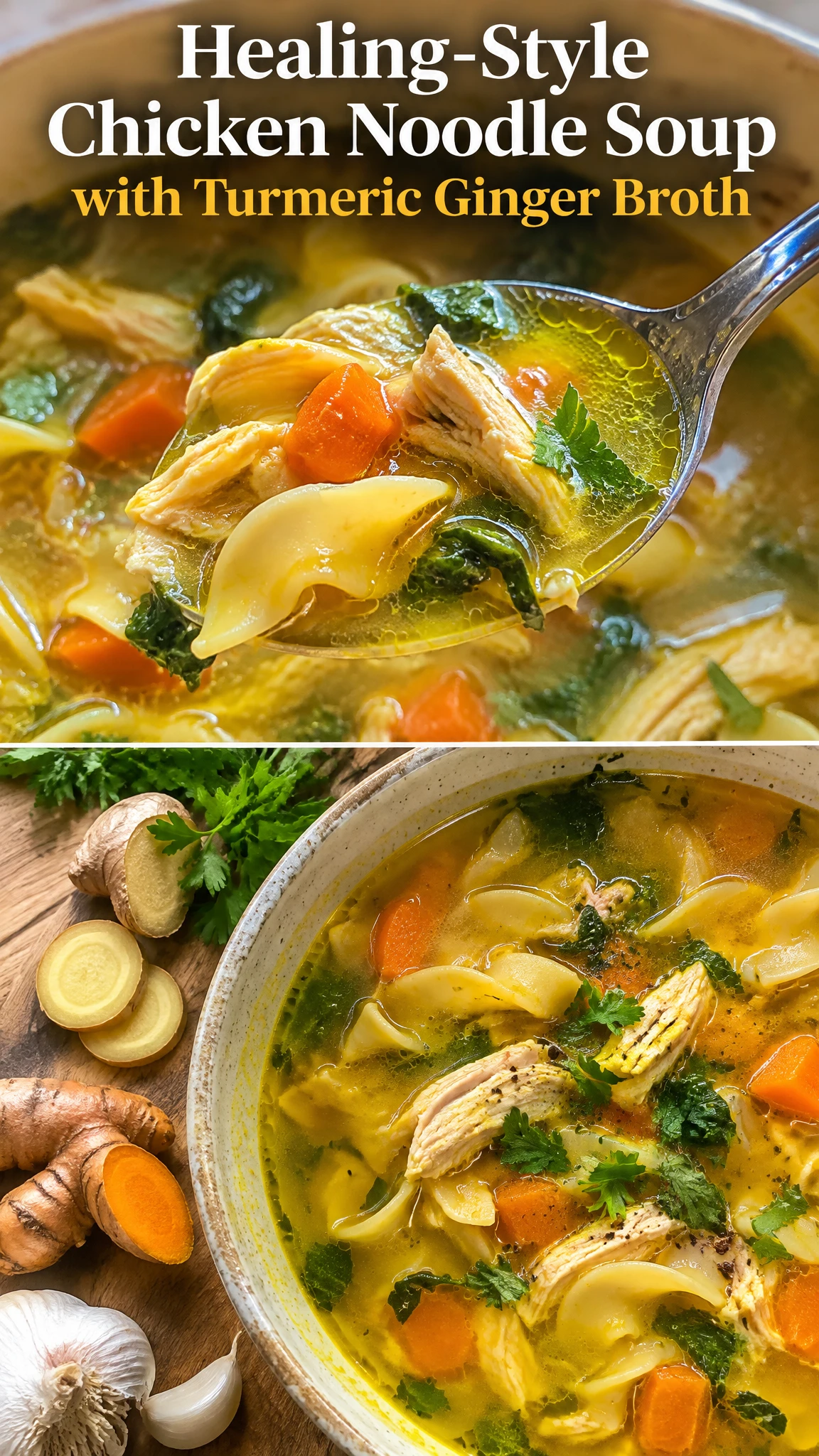
How to Make Healing Chicken Noodle Soup
Making this soup is a straightforward process that builds layers of flavor. I’ll guide you through each step to ensure perfect results.
Prepare Your Ingredients: Start by prepping all your vegetables. Slice the carrots and celery into even pieces so they cook uniformly. Dice the onion, grate the fresh ginger using a microplane or fine grater, and mince the garlic. Having everything ready before you start cooking makes the process smooth and enjoyable.
Sauté the Aromatics: Heat the olive oil in a large soup pot over medium heat. Add the diced onion, sliced carrots, and celery. I like to sauté these vegetables for about 5 minutes until they begin to soften. This step develops their natural sweetness and creates a flavorful base for the soup.
Add the Spices: Stir in the grated ginger, minced garlic, ground turmeric, and black pepper. Cook for just 1 minute, stirring constantly. This brief cooking time is enough to release the aromatic oils and bloom the turmeric without burning the garlic. You’ll know it’s ready when your kitchen smells absolutely amazing.
Simmer the Chicken: Add the whole chicken breast and pour in the chicken broth. Bring everything to a gentle boil, then reduce the heat to maintain a steady simmer. Cover the pot and let it cook for 18-22 minutes. The chicken is done when it reaches an internal temperature of 165°F (74°C). I recommend using a meat thermometer to ensure it’s perfectly cooked.
Shred and Return: Carefully remove the cooked chicken from the pot and place it on a cutting board. Use two forks to shred it into bite-sized pieces. Return the shredded chicken to the broth. This method ensures tender, evenly distributed chicken throughout the soup.
Cook the Noodles: Add the dry egg noodles directly to the soup and simmer uncovered for 6-8 minutes, or until the noodles are tender. I find that cooking the noodles in the broth allows them to absorb all those wonderful flavors.
Finish and Season: Stir in the fresh lemon juice and chopped parsley. Taste the soup and add salt as needed. The lemon juice brightens everything and balances the earthy turmeric beautifully.
Expert Tips for Best Results
After making this soup many times, I’ve learned a few tricks that ensure the best possible outcome every time.
Don’t Overcook the Chicken: Chicken breast can become dry if overcooked. I recommend checking the temperature at 18 minutes—if it’s reached 165°F, remove it immediately. The residual heat will continue cooking it slightly as it rests.
Adjust the Ginger to Your Taste: Fresh ginger can be quite potent. If you’re sensitive to spice or serving this to children, start with 1 tablespoon of grated ginger and add more if desired. You can always add more, but you can’t take it away.
Use Fresh Garlic: While I’m usually flexible about substitutions, fresh garlic makes a significant difference in this recipe. The minced garlic adds a pungent, aromatic quality that garlic powder simply can’t match.
Consider Cooking Noodles Separately: If you plan to store leftovers, you might want to cook the noodles separately and add them to individual bowls. This prevents them from absorbing too much liquid and becoming mushy during storage.
Bloom the Turmeric: Cooking the turmeric with the other aromatics helps release its flavor and makes the curcumin more bioavailable. The brief sauté in oil is an important step.
Taste Before Final Seasoning: Different brands of chicken broth contain varying amounts of sodium. Always taste your soup before adding the final salt to avoid over-seasoning.
Serving Suggestions
This healing chicken noodle soup is wonderfully satisfying on its own, but I love pairing it with complementary sides to create a complete meal.
My favorite way to serve this soup is with crusty bread or warm dinner rolls for dipping. The bread soaks up the flavorful broth beautifully. A simple side salad with a light vinaigrette provides a fresh contrast to the warm, comforting soup.
For a heartier meal, I recommend serving the soup alongside a grilled cheese sandwich. The combination is classic comfort food at its finest. You could also serve it with crackers, breadsticks, or garlic toast.
I like to set out additional garnishes so everyone can customize their bowl. Fresh lemon wedges, extra chopped parsley, red pepper flakes for heat, or a drizzle of good olive oil all make excellent toppings. Some people enjoy adding a handful of fresh spinach or kale to their individual bowls for extra greens.
This soup also works wonderfully as a starter course for a larger dinner. Serve it in smaller portions before a main course of roasted chicken or fish.
Variations and Substitutions
One of the things I love most about this recipe is how adaptable it is to different preferences and dietary needs.
Protein Variations: While chicken breast is traditional, you can use turkey breast, chicken thighs, or even leftover rotisserie chicken. For a vegetarian version, omit the chicken and use vegetable broth, adding chickpeas or white beans for protein.
Noodle Alternatives: Try rice noodles for a gluten-free option, or use quinoa, orzo, or small pasta shapes. You could also add rice or cauliflower rice instead of noodles for a lower-carb version.
Vegetable Additions: I sometimes add baby spinach, kale, or bok choy in the last few minutes of cooking. Mushrooms, bell peppers, or zucchini also work well. Sweet potato cubes add extra nutrition and a subtle sweetness.
Spice Adjustments: If you enjoy more heat, add red pepper flakes or a sliced jalapeño. For a different flavor profile, try adding a cinnamon stick or star anise while the broth simmers—just remember to remove them before serving.
Herb Variations: While parsley is classic, fresh cilantro, dill, or basil each bring their own unique character to the soup. You could also add fresh thyme or rosemary while the broth simmers.
Coconut Milk Addition: For a creamier, more golden-milk-inspired version, stir in 1/2 cup of coconut milk at the end. This creates a richer broth and complements the turmeric beautifully.
Storage, Freezing, and Reheating
This soup stores exceptionally well, making it perfect for meal prep or batch cooking.
Refrigerator Storage: Allow the soup to cool completely before transferring it to airtight containers. It will keep in the refrigerator for 4-5 days. I find that the flavors actually deepen and improve after a day or two. Note that the noodles will continue to absorb liquid, so you may need to add a bit of broth or water when reheating.
Freezing Instructions: This soup freezes well for up to 3 months. For best results, I recommend freezing the soup without the noodles, then cooking fresh noodles when you’re ready to serve. If you do freeze it with noodles, be aware that they may become softer after thawing. Use freezer-safe containers or heavy-duty freezer bags, leaving some space at the top for expansion.
Reheating: Thaw frozen soup overnight in the refrigerator. Reheat gently on the stovetop over medium-low heat, stirring occasionally. Add additional broth or water if the soup has thickened too much. You can also reheat individual portions in the microwave—heat in 1-minute intervals, stirring between each, until heated through.
Make-Ahead Tips: You can prepare the soup base (everything except the noodles) up to 2 days in advance. Store it in the refrigerator, then reheat and add the noodles when you’re ready to serve. This is especially helpful when you’re feeling under the weather and want minimal effort at mealtime.
Frequently Asked Questions
Can I use chicken thighs instead of chicken breast?
Absolutely! Chicken thighs will add more flavor and richness to the broth due to their higher fat content. They may take a few minutes longer to cook through, so check that they reach 165°F internal temperature.
How can I make this soup spicier?
Add red pepper flakes, cayenne pepper, or fresh sliced jalapeños along with the other aromatics. You can also drizzle hot sauce into individual bowls for customizable heat.
Why is my soup not as golden as expected?
The golden color comes from the turmeric. Make sure you’re using fresh, high-quality ground turmeric, and don’t skip the step of cooking it with the aromatics. Some turmeric brands are more vibrant than others.
Can I make this in a slow cooker?
Yes! Add everything except the noodles, lemon juice, and parsley to your slow cooker. Cook on low for 6-7 hours or high for 3-4 hours. Shred the chicken, return it to the pot, add the noodles, and cook on high for 15-20 minutes. Stir in lemon juice and parsley before serving.
Is this soup good for meal prep?
This soup is excellent for meal prep. I recommend storing the noodles separately if you’re planning to keep it for more than 2 days, as they’ll absorb liquid over time. The soup base keeps beautifully and the flavors improve with time.
Can I use ground ginger instead of fresh?
While fresh ginger is strongly recommended for the best flavor, you can substitute with 1-2 teaspoons of ground ginger if necessary. Add it with the turmeric. The flavor won’t be quite as bright and complex, but it will still be delicious.
What’s the best way to grate fresh ginger?
I find that a microplane grater works best for fresh ginger, creating a fine paste that distributes evenly throughout the soup. You can also use the small holes on a box grater. No need to peel young, thin-skinned ginger—just scrub it well.
Can I add more vegetables?
Definitely! This soup is very forgiving. Add vegetables like mushrooms, bell peppers, zucchini, or leafy greens. Just be mindful of cooking times—add harder vegetables with the carrots and celery, and tender greens near the end.
If you’re looking for more comforting soup recipes, you might also enjoy this penicillin soup with ginger and garlic, which offers similar healing properties. For a lighter option, try this refreshing lemon chicken orzo soup.
Healing-Style Chicken Noodle Soup with Turmeric Ginger Broth
A nourishing and aromatic chicken noodle soup featuring anti-inflammatory turmeric, fresh ginger, and tender chicken in a golden, healing broth. Perfect for cold days or when you need comfort in a bowl.
- Prep Time: 15 minutes
- Cook Time: 30 minutes
- Total Time: 45 minutes
- Servings: 6 servings
- Difficulty: Easy
- Cuisine: American
- Course: Dinner
Ingredients
- 1 lb boneless skinless chicken breast
- 2 cups dry egg noodles
- 2 medium carrots, sliced
- 2 celery stalks, sliced
- 1 medium yellow onion, diced
- 2 tbsp fresh ginger, grated
- 4 garlic cloves, minced
- 1 1/2 tsp ground turmeric
- 6 cups chicken broth
- 1 tbsp olive oil
- 2 tbsp lemon juice
- 1/4 cup fresh parsley, chopped
- 1/4 tsp black pepper
- 1/2 tsp salt
Instructions
- Slice the carrots and celery, dice the onion, grate the fresh ginger, and mince the garlic.
- Heat olive oil in a large soup pot over medium heat. Add the onion, carrots, and celery. Sauté for 5 minutes until slightly softened.
- Stir in grated ginger, minced garlic, ground turmeric, and black pepper. Cook for 1 minute until fragrant.
- Add chicken breast and chicken broth. Bring to a gentle boil, then reduce heat and simmer covered for 18-22 minutes until the chicken reaches an internal temperature of 165°F (74°C).
- Remove the chicken from the pot, shred it using two forks, and return it to the broth.
- Add dry egg noodles and simmer uncovered for 6-8 minutes until tender.
- Stir in lemon juice and fresh chopped parsley. Taste and add salt as needed.
- Serve warm as a comforting, aromatic chicken noodle soup.
Recipe Notes
- For best results, use fresh ginger rather than ground ginger for a brighter, more authentic flavor.
- If storing leftovers, consider cooking noodles separately to prevent them from absorbing too much liquid.
- The soup can be made ahead without the noodles and stored for up to 5 days in the refrigerator.
- Adjust the amount of ginger based on your heat preference—start with less if you’re sensitive to spice.
- Adding a pinch of black pepper when serving helps activate the curcumin in turmeric for better absorption.
Nutrition Information (Per Serving – Estimated)
- Calories: 245
- Carbohydrates: 22g
- Protein: 22g
- Fat: 6g
- Saturated Fat: 1g
- Fiber: 2g
- Sugar: 3g
- Sodium: 780mg
Nutrition information is estimated and may vary based on specific ingredients used.
