
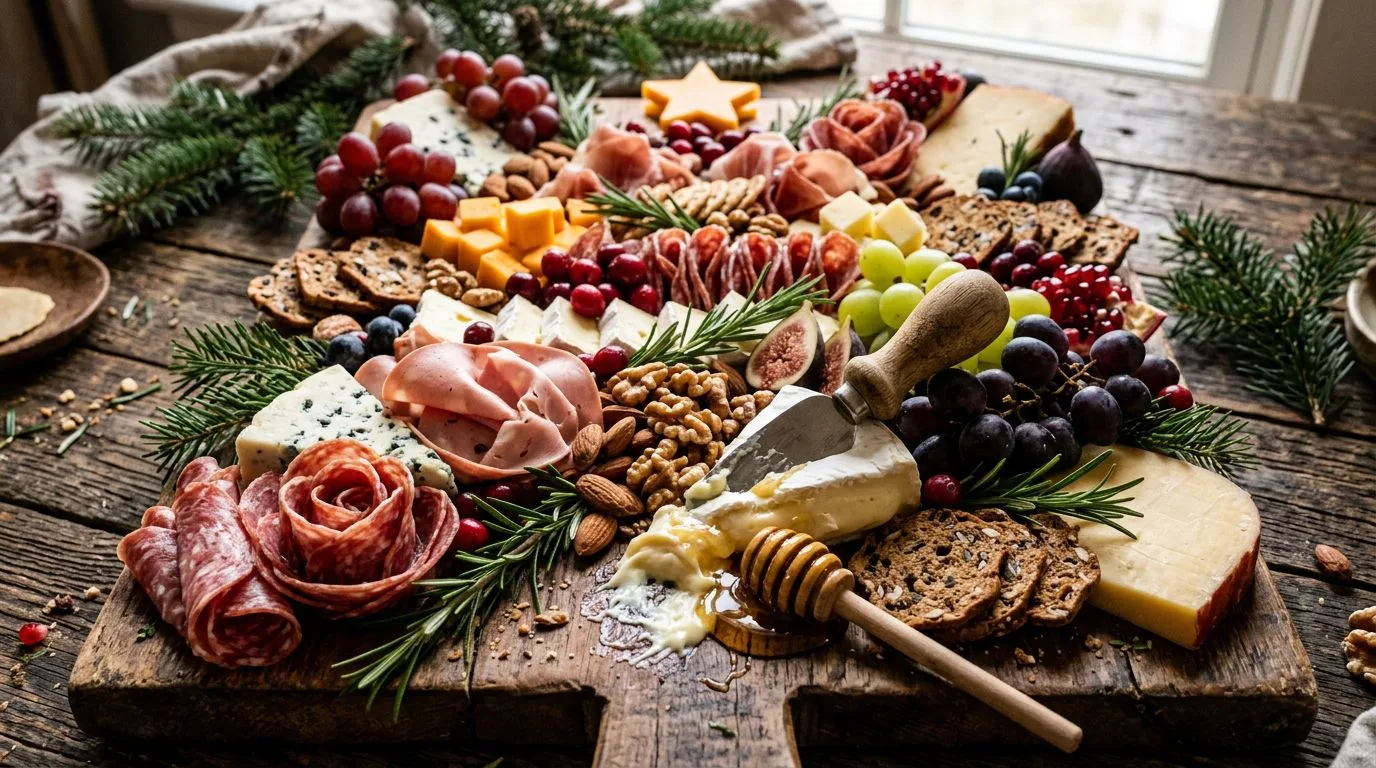
Creating a stunning Christmas charcuterie board is one of my favorite ways to entertain during the holiday season. There’s something magical about arranging beautiful cheeses, savory cured meats, fresh fruits, and festive garnishes on a large wooden board that instantly becomes the centerpiece of any holiday gathering. Whether you’re hosting a Christmas Eve party, a casual family get-together, or a New Year’s celebration, this Christmas Charcuterie Board Guide will help you create an impressive spread that looks professionally designed but requires no cooking at all.
I love how versatile and forgiving charcuterie boards are—you can customize them based on your guests’ preferences, dietary needs, and what’s available at your local grocery store or specialty market. The key is balancing flavors, textures, and colors while creating an abundant, festive presentation that invites guests to graze and mingle. This guide walks you through every step of building a Christmas-themed board that’s as delicious as it is beautiful, with tips for arrangement, pairing suggestions, and ideas for making your board truly memorable.
The best part about serving a charcuterie board during the holidays is that it can be prepared ahead of time, leaving you free to enjoy your guests instead of being stuck in the kitchen. I find that guests are always drawn to a well-arranged board, and it naturally encourages conversation and creates a relaxed, festive atmosphere that’s perfect for holiday entertaining.
Why You’ll Love This Christmas Charcuterie Board Guide
This Christmas charcuterie board is the ultimate crowd-pleaser for holiday entertaining. I recommend it for several compelling reasons that make it perfect for busy hosts who want to impress without spending hours in the kitchen.
No cooking required: Everything on this board is ready to eat, which means you can assemble it in about 20-30 minutes without turning on the stove or oven. This is especially valuable during the hectic holiday season when oven space is at a premium.
Visually stunning: The combination of red and green grapes, pomegranate seeds, fresh rosemary, and colorful fruits creates a naturally festive presentation that looks like it came from a professional caterer. Your guests will be impressed before they even take their first bite.
Feeds a crowd: This board easily serves 10-12 people as an appetizer or 6-8 as a light meal. I love how it allows guests to customize their own plates based on their preferences, accommodating different tastes and dietary restrictions.
Make-ahead friendly: You can prepare most components hours in advance and assemble the board up to an hour before guests arrive, then refrigerate it until serving time. This flexibility is invaluable when you’re juggling multiple dishes and entertaining responsibilities.
Conversation starter: A beautiful charcuterie board naturally draws people together and encourages mingling, making it perfect for parties where guests may not all know each other.
Ingredients and Substitutions
Building the perfect Christmas charcuterie board starts with selecting quality ingredients that offer a variety of flavors, textures, and visual appeal. Here’s what you’ll need and how you can customize based on availability and preferences.
Cheeses: I’ve chosen Brie, sharp cheddar, and Gouda because they offer different textures and flavor profiles—creamy, sharp, and nutty. The Brie provides a soft, mild option that pairs beautifully with fig jam, while the sharp cheddar adds a bold flavor, and Gouda offers a smooth, slightly sweet taste. You can substitute with blue cheese, aged white cheddar, manchego, or any combination of soft, semi-hard, and hard cheeses. I recommend choosing at least one crowd-pleasing mild cheese and one more adventurous option.
Cured meats: Salami, prosciutto, and summer sausage provide variety in both flavor and presentation. The salami can be folded into roses or quarters, prosciutto drapes beautifully, and summer sausage slices neatly. Feel free to substitute with sopressata, capicola, chorizo, or any quality cured meats you prefer. I like to include at least one spicy option and one milder choice.
Fresh fruits: Red and green grapes, strawberries, and thinly sliced apple add freshness, natural sweetness, and festive color. You can substitute with pears, figs, blackberries, or clementine segments. I find that keeping the apple slices thin and brushing them lightly with lemon juice prevents browning.
Dried fruits and nuts: Dried cranberries add a tart, chewy element and Christmas color, while pecans and candied walnuts provide crunch and richness. You can use almonds, pistachios, dried apricots, or dates as alternatives.
Crackers: An assorted box gives guests variety, but you can also use water crackers, crostini, breadsticks, or sliced baguette. I recommend including both plain and seeded options.
Spreads and condiments: Fig jam and honey complement the cheeses beautifully—fig jam pairs especially well with Brie and blue cheese, while honey is perfect with sharp cheddar and nuts. You can substitute with apricot preserves, whole grain mustard, or pepper jelly.
Garnishes: Fresh rosemary sprigs and pomegranate seeds add festive color and aroma. You can also use fresh thyme, cranberries, or small ornamental elements like cinnamon sticks.
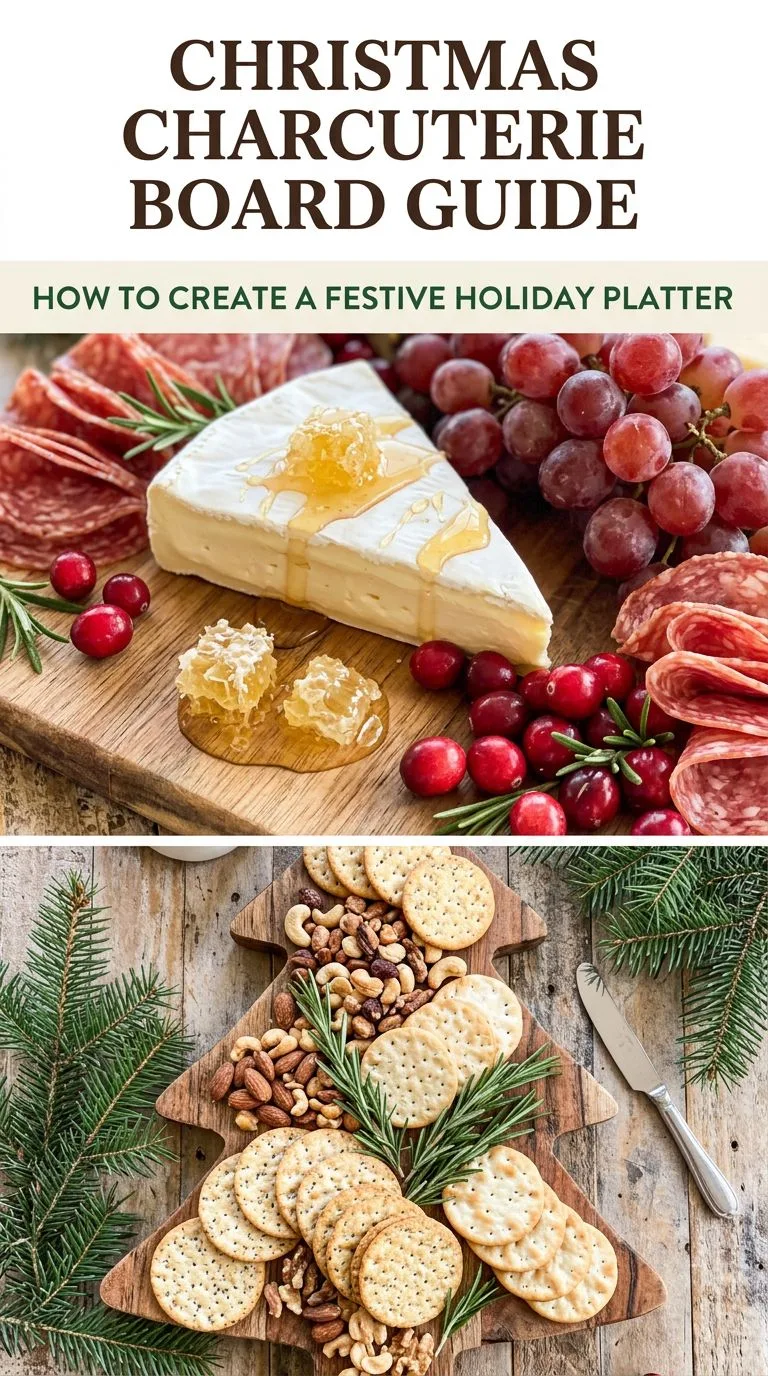
How to Make This Christmas Charcuterie Board
Assembling a beautiful charcuterie board is more art than science, but following a systematic approach ensures a balanced, attractive presentation. Here’s my step-by-step process for creating a stunning Christmas board.
Start with your foundation: Choose a large wooden charcuterie board, marble slab, or serving platter—I prefer boards that are at least 16-20 inches to provide ample space. Place small bowls on the board first for the fig jam and honey. This anchors your design and ensures these items don’t get lost among the other components.
Position the cheeses: Arrange the Brie, cheddar, and Gouda in different areas of the board, spacing them out rather than clustering them together. I like to place them in a triangular pattern to create visual balance. Leave the Brie whole or cut a small wedge to show the creamy interior. Cut the cheddar into slices or cubes, and slice the Gouda into triangles or rectangles.
Add the meats: This is where you can get creative with presentation. Fold salami slices into quarters or roll them into roses by overlapping several slices and rolling them tightly. Drape prosciutto in loose ribbons or fold it into ruffled shapes. Arrange sliced summer sausage in overlapping rows or fan shapes. Place meats near the cheeses they pair well with, creating natural flavor combinations.
Create color clusters: Place bunches of red and green grapes in open spaces around the board. I find that keeping grapes in small clusters rather than individual grapes creates more visual impact and makes them easier for guests to grab. The red and green colors immediately signal Christmas and create beautiful contrast.
Fill with fruits and nuts: Add strawberries (whole or halved), thinly sliced apple arranged in a fan or overlapping pattern, dried cranberries scattered in small piles, pecans, and candied walnuts throughout the board. I like to tuck these items into gaps and corners, creating abundance without overcrowding.
Arrange the crackers: Place assorted crackers in small rows, fan shapes, or standing upright in groups around the board. I recommend positioning them near cheeses and spreads for easy pairing. Don’t overcrowd—you can always refill crackers as needed.
Add festive garnishes: Tuck fresh rosemary sprigs into gaps around the board and sprinkle pomegranate seeds in empty spaces or over clusters of other items. These finishing touches add holiday fragrance and sparkle.
Final touches: Place small cheese knives near each cheese and small spoons beside the jam and honey bowls. Step back and assess the board, filling any obvious gaps with additional nuts, fruits, or garnishes.
Expert Tips for Best Results
Creating a professional-looking charcuterie board requires attention to detail and a few insider techniques. Here are my top tips for success.
Bring cheeses to room temperature: I always remove cheeses from the refrigerator 30-60 minutes before serving. Cold cheese has muted flavors, while room-temperature cheese releases its full aroma and taste. This simple step dramatically improves the eating experience.
Use odd numbers: When arranging items, groups of three or five look more natural and visually appealing than even numbers. This applies to cheese varieties, meat types, and fruit clusters.
Vary heights and textures: Create visual interest by using different heights—stand some crackers upright, pile nuts in small mounds, and let some items drape or cascade. Mix smooth cheeses with crumbly ones, soft fruits with crunchy nuts, and creamy spreads with crisp crackers.
Think about color distribution: Distribute red, green, and white elements throughout the board rather than clustering all the red items together. This creates a more balanced, festive appearance.
Don’t overcrowd: While abundance is appealing, leaving some negative space makes the board look more elegant and makes it easier for guests to access items. I aim for about 80% coverage, with small gaps between clusters.
Prepare apples last: Slice apples just before assembling the board and brush them lightly with lemon juice or place them in lemon water briefly to prevent browning. Pat them dry before arranging.
Label cheeses: If you’re serving guests who may not be familiar with different cheese varieties, consider small labels or cards identifying each cheese. This helps guests make informed choices and creates conversation.
Provide serving utensils: Make sure each cheese has its own knife to prevent flavor mixing, and provide small forks or toothpicks for meats and fruits.
Serving Suggestions
A Christmas charcuterie board is incredibly versatile and can be served in various settings throughout the holiday season. Here’s how I like to present and serve it for maximum impact.
As a party appetizer: This is the most common way I serve charcuterie boards during the holidays. Place the board on a central table or kitchen island where guests can easily access it from all sides. Pair it with wine, champagne, or festive cocktails. I find that this board works beautifully for cocktail parties, open houses, or pre-dinner appetizers.
For a casual dinner: Serve the charcuterie board as the main course for a relaxed Christmas Eve dinner or holiday lunch. Add a simple soup like tomato bisque or butternut squash, and you have a complete, satisfying meal that feels special but requires minimal effort.
With wine pairings: I recommend offering both red and white wine options. A medium-bodied red like Pinot Noir pairs beautifully with the cured meats and aged cheeses, while a crisp white like Sauvignon Blanc or Chardonnay complements the Brie and fresh fruits. Sparkling wine is always festive and pairs well with everything on the board.
For holiday movie nights: Scale down the quantities and create a smaller board for family movie nights during the holiday season. It’s a fun, special treat that feels festive without being overly formal.
Presentation ideas: Serve the board on a wooden cutting board for a rustic look, a marble slab for elegance, or even a large slate with chalk labels for a modern touch. I sometimes add small evergreen branches, cinnamon sticks, or battery-operated fairy lights around (not on) the board for extra holiday ambiance.
Accompaniments: While the board is complete on its own, you can offer additional items on the side like olives, pickles, roasted red peppers, or marinated artichokes for guests who want more variety.
Variations and Substitutions
One of the things I love most about charcuterie boards is how easily they can be customized. Here are some variations to suit different preferences and occasions.
Vegetarian version: Omit the cured meats and double up on cheeses, adding varieties like fresh mozzarella, goat cheese, or smoked cheddar. Include more vegetables like cherry tomatoes, cucumber slices, bell pepper strips, and marinated mushrooms. Add hummus or other dips for variety.
Budget-friendly option: Focus on fewer, less expensive cheeses like cheddar and mozzarella. Use deli meats instead of premium cured meats, and include more crackers, fruits, and nuts to create abundance. The presentation matters more than expensive ingredients.
Gluten-free board: Simply replace regular crackers with gluten-free crackers or rice crackers, and ensure all other components are naturally gluten-free (most cheeses and cured meats are, but always check labels).
Kid-friendly version: Include milder cheeses like mozzarella and mild cheddar, replace cured meats with deli turkey and ham, and add more sweet elements like chocolate chips, pretzel sticks, and additional fruits. Kids love assembling their own plates from a colorful board.
Luxury upgrade: Splurge on imported cheeses like aged Parmigiano-Reggiano, French Comté, or Spanish Manchego. Add premium cured meats like Iberico ham or truffle salami. Include fresh figs, marcona almonds, and artisanal crackers.
Regional variations: Create a French-inspired board with Camembert, Roquefort, pâté, and cornichons. Or go Italian with Parmigiano-Reggiano, Gorgonzola, prosciutto di Parma, and grissini breadsticks.
Storage, Freezing, and Reheating
Proper storage ensures your charcuterie board components stay fresh and safe to eat, though boards are best enjoyed immediately after assembly.
Advance preparation: You can prepare components up to 24 hours ahead. Keep cheeses wrapped separately in the refrigerator. Store cured meats in their original packaging or wrapped in parchment paper. Wash and dry fruits, and store them in airtight containers. Assemble the board up to 1 hour before serving, then cover loosely with plastic wrap and refrigerate until 30 minutes before guests arrive.
Storing leftovers: If you have leftover components, disassemble the board and store items separately. Wrap cheeses tightly in wax paper or cheese paper, then place in airtight containers or zip-top bags. Store cured meats in airtight containers. Refrigerate fruits in separate containers. Most items will keep for 3-5 days when properly stored. I recommend discarding any items that have been at room temperature for more than 2 hours.
Freezing: I don’t recommend freezing assembled charcuterie board components, as the texture of cheeses, fruits, and meats deteriorates significantly when frozen and thawed. Hard cheeses can be frozen if necessary (wrap tightly and freeze for up to 2 months), but they become crumbly and are best used for cooking rather than serving on a board.
Food safety: Keep the assembled board refrigerated until 30-60 minutes before serving. Don’t leave perishable items at room temperature for more than 2 hours (1 hour if the room temperature is above 90°F). If hosting a long party, consider setting out half the board initially and replenishing with fresh items from the refrigerator as needed.
Refreshing the board: During extended parties, refresh the board by removing depleted items, wiping the board clean, and adding fresh components. This keeps the presentation attractive and ensures food safety.
Frequently Asked Questions
How far in advance can I make a charcuterie board?
I recommend assembling the board no more than 1-2 hours before serving for optimal freshness and appearance. You can prepare all components up to 24 hours ahead and store them separately, then assemble just before your event. If you must assemble earlier, cover tightly with plastic wrap and refrigerate, but remove it 30 minutes before serving to bring cheeses to room temperature.
How much should I budget per person?
For a charcuterie board serving as an appetizer, I budget about $5-8 per person. For a board serving as the main course, budget $12-15 per person. Costs vary significantly based on cheese and meat quality, but you can create impressive boards at various price points by adjusting your ingredient selections.
What’s the best order to eat items from a charcuterie board?
I typically start with milder flavors and progress to stronger ones. Begin with fresh fruits and mild cheeses, move to cured meats and medium cheeses, and finish with strong cheeses and bold flavors. However, there’s no wrong way to enjoy a charcuterie board—encourage guests to explore and discover their own favorite combinations.
Can I make this dairy-free?
Yes, you can create a beautiful board using dairy-free nut-based cheeses, though the flavor and texture will differ from traditional cheese. Focus more heavily on the cured meats, fruits, nuts, and crackers, and include additional dips like hummus, olive tapenade, or dairy-free spreads to add variety.
How do I keep fruit from browning?
For apples and pears, slice them just before serving and brush lightly with lemon juice or submerge briefly in lemon water, then pat dry. Alternatively, use fruits that don’t brown, like grapes, berries, and citrus. If you must prepare apples ahead, store them in lemon water in the refrigerator and pat dry before arranging.
What size board do I need?
For this recipe serving 10-12 people, I recommend a board that’s at least 16-20 inches long. Larger is generally better, as it gives you more room to create an abundant, attractive presentation. If you don’t have a large enough board, use multiple smaller boards or platters arranged together.
Should I pre-slice all the cheese?
I like to pre-slice or cube some cheeses for convenience while leaving others whole or partially cut to show their interior. This gives guests options—some prefer to cut their own portions, while others appreciate ready-to-eat pieces. Always provide cheese knives for whole or partially cut cheeses.
How do I transport a charcuterie board to a party?
If possible, transport components separately in containers and assemble at your destination. If you must transport an assembled board, cover it tightly with plastic wrap, place it on a flat surface in your vehicle, and drive carefully. Keep it refrigerated or in a cooler until serving time.
This Christmas Charcuterie Board Guide makes holiday entertaining effortless and impressive. The combination of artisan cheeses, savory cured meats, fresh and dried fruits, crunchy nuts, and festive garnishes creates a stunning centerpiece that guests will love. Whether you’re hosting a large party or an intimate gathering, this versatile board adapts to your needs while delivering maximum visual impact with minimal effort. For more delicious holiday appetizers, try these Turkey Cream Cheese Pinwheels or these Classic Deviled Eggs to round out your holiday spread.
Christmas Charcuterie Board Guide
Create a stunning Christmas charcuterie board filled with artisan cheeses, cured meats, fresh fruits, nuts, and festive decorations. This beautiful holiday grazing board requires no cooking and serves as the perfect centerpiece for holiday entertaining.
Total Time: 25 minutes
Servings: 10-12
Difficulty: Easy
Cuisine: American
Course: Appetizer
Ingredients
- 8 oz Brie cheese
- 8 oz sharp cheddar cheese
- 8 oz Gouda cheese
- 6 oz salami
- 6 oz prosciutto
- 6 oz summer sausage
- 1 cup red grapes
- 1 cup green grapes
- ½ cup dried cranberries
- ½ cup pecans
- ½ cup candied walnuts
- 1 cup strawberries
- 1 apple, thinly sliced
- 1 box assorted crackers
- ½ cup fig jam
- ¼ cup honey
- 6 fresh rosemary sprigs
- 1 pomegranate, seeds for garnish
Instructions
- Choose a large wooden charcuterie board or serving platter (at least 16-20 inches). Place small bowls on the board for the fig jam and honey, positioning them in different areas to anchor your design.
- Arrange the Brie, sharp cheddar, and Gouda cheeses around the board in a triangular pattern, leaving ample space between them. Leave the Brie whole or cut a small wedge to show the interior. Slice or cube the cheddar and Gouda as desired.
- Fold salami slices into quarters or roll them into decorative roses. Drape prosciutto in loose ribbons or ruffled shapes. Arrange sliced summer sausage in overlapping rows or fan patterns. Place meats near complementary cheeses.
- Place bunches of red and green grapes in open spaces around the board, creating festive color contrast and visual clusters.
- Add strawberries (whole or halved), thinly sliced apple arranged in fans or overlapping patterns, dried cranberries in small piles, pecans, and candied walnuts throughout the board, filling gaps and creating abundance.
- Arrange assorted crackers in small rows, fan shapes, or standing upright in groups around the cheeses and spreads. Don’t overcrowd—you can refill as needed.
- Tuck fresh rosemary sprigs into gaps around the board and sprinkle pomegranate seeds in empty spaces or over other items for a Christmas-inspired presentation.
- Place small serving knives near each cheese and small spoons beside the jam and honey bowls.
- Keep the board refrigerated until 30-60 minutes before serving to allow cheeses to come to room temperature. Serve immediately and enjoy.
Recipe Notes
- Remove cheeses from refrigeration 30-60 minutes before serving for best flavor.
- Slice apples just before assembling and brush with lemon juice to prevent browning.
- You can prepare all components up to 24 hours ahead and store separately, then assemble 1-2 hours before serving.
- Customize the board based on your preferences—substitute any cheeses, meats, or fruits with your favorites.
- For food safety, don’t leave the assembled board at room temperature for more than 2 hours.
- Leftover components should be disassembled and stored separately in airtight containers in the refrigerator for 3-5 days.
- This board easily scales up or down—adjust quantities based on your guest count.
Nutrition Information (Estimated Per Serving)
Calories: 385
Carbohydrates: 28g
Protein: 16g
Fat: 24g
Saturated Fat: 10g
Fiber: 3g
Sugar: 16g
Sodium: 645mg
Nutrition information is estimated based on standard ingredient quantities and may vary based on specific products used. Values are approximate and provided for informational purposes only.
