
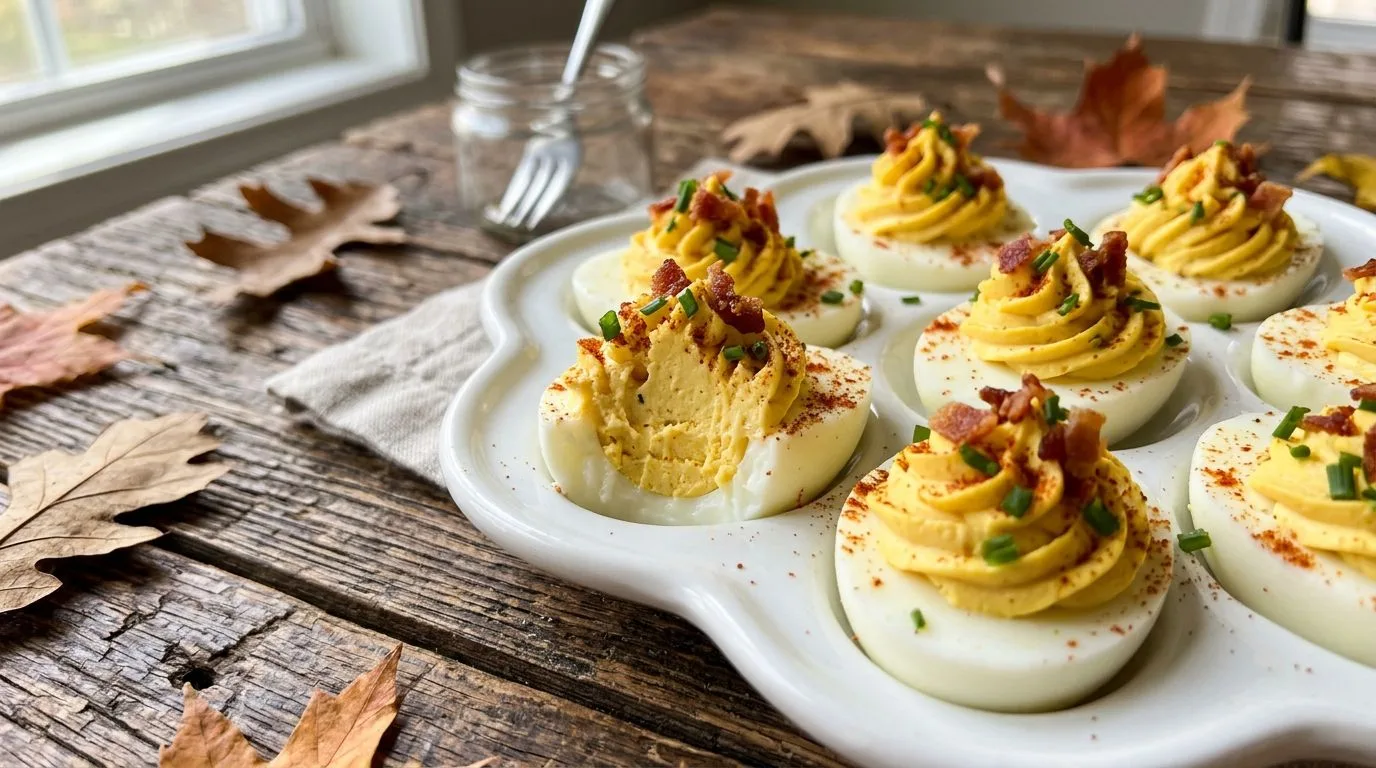
Classic deviled eggs are one of those timeless appetizers that never go out of style, especially during Thanksgiving and holiday gatherings. I love how these creamy, tangy bites combine simple ingredients into something truly special that guests always appreciate. With their smooth, seasoned yolk filling and that signature sprinkle of paprika on top, deviled eggs bring both elegance and comfort to any appetizer spread.
What makes this recipe particularly wonderful for Thanksgiving is that you can prepare everything ahead of time, leaving you free to focus on the main meal. I find that deviled eggs disappear quickly at parties—there’s something irresistible about that perfect balance of creamy mayonnaise, sharp mustard, and the subtle tang of apple cider vinegar. Whether you’re hosting a large family gathering or contributing to a potluck, these classic deviled eggs are always a crowd-pleaser that appeals to all ages.
Why You’ll Love This Classic Deviled Eggs Recipe
There are countless reasons why this recipe has earned its place as a Thanksgiving staple in American homes. First and foremost, deviled eggs are incredibly budget-friendly—you’re transforming a dozen eggs and pantry staples into an impressive appetizer that serves a crowd. I appreciate how this recipe delivers restaurant-quality results without requiring any special equipment or advanced cooking skills.
The make-ahead nature of deviled eggs is another major advantage, especially during the hectic holiday season. You can boil and peel the eggs a day in advance, and even prepare the filling several hours before your guests arrive. This flexibility means less stress on Thanksgiving Day when your oven and stovetop are already working overtime.
The flavor profile is perfectly balanced—not too tangy, not too rich, just creamy and satisfying with a pleasant mustard kick. The combination of Dijon and yellow mustard provides depth without overwhelming the delicate egg flavor. I love how the paprika adds a subtle smokiness and creates that classic deviled egg appearance that everyone recognizes and loves.
Ingredients and Substitutions
The beauty of classic deviled eggs lies in their simplicity. You’ll need just a handful of ingredients that you likely already have in your kitchen. Let me walk you through each component and offer some helpful substitution options.
Large eggs form the foundation of this recipe. I recommend using eggs that are at least a week old, as fresher eggs can be more difficult to peel. If you only have medium eggs available, you may need to adjust the filling quantities slightly, though the recipe will still work beautifully.
Mayonnaise creates that signature creamy texture. I prefer using full-fat mayonnaise for the richest flavor, but you can substitute with light mayonnaise or even Greek yogurt if you’re looking for a lighter option. Keep in mind that Greek yogurt will create a tangier, less rich filling.
Dijon mustard and yellow mustard work together to provide complexity and tang. If you don’t have Dijon on hand, you can use all yellow mustard, though the flavor will be slightly less sophisticated. Whole grain mustard also makes an interesting substitution that adds texture.
Apple cider vinegar brightens the filling and balances the richness. White vinegar or fresh lemon juice work equally well as substitutes. I find that apple cider vinegar adds a subtle sweetness that complements the other flavors nicely.
Paprika is traditional for garnish, providing both color and a hint of smokiness. You can use sweet paprika, smoked paprika, or even a pinch of cayenne pepper if you prefer a little heat. Smoked paprika is my personal favorite for adding an extra layer of flavor.
Fresh chives add a mild onion flavor and beautiful green color. Green onions, fresh parsley, or even dill make excellent substitutions. If you only have dried chives, use about one teaspoon instead of the tablespoon of fresh.

How to Make Classic Deviled Eggs
Making perfect deviled eggs starts with properly cooking the eggs. I’ve found that the method outlined in this recipe produces eggs that are easy to peel with perfectly cooked yolks—no green ring around the yolk, which can happen with overcooking.
Begin by placing your eggs in a single layer in a saucepan. Cover them with cold water by about an inch. This ensures even cooking from the start. Bring the water to a rolling boil over high heat, then immediately remove the pan from the heat source. Cover the pan with a tight-fitting lid and let the eggs stand for 10 to 12 minutes. This gentle cooking method prevents the rubbery texture that can result from boiling eggs too vigorously.
While the eggs are cooking, prepare an ice bath by filling a large bowl with ice and cold water. As soon as the standing time is complete, transfer the eggs immediately to the ice bath using a slotted spoon. This stops the cooking process and makes peeling much easier. Let the eggs cool completely in the ice bath for at least 10 minutes.
Peeling the eggs requires a gentle touch. I like to tap each egg all over to create fine cracks in the shell, then roll it gently on the counter. Start peeling from the wider end where the air pocket is located—this usually makes the process smoother. Rinse the peeled eggs under cold water to remove any remaining shell fragments.
Once peeled, slice each egg in half lengthwise. I recommend using a sharp knife wiped clean between cuts for the neatest presentation. Carefully remove the yolks and place them in a medium mixing bowl. Arrange the egg white halves on your serving platter.
Mash the yolks thoroughly with a fork until no large lumps remain. Add the mayonnaise, both mustards, apple cider vinegar, salt, and black pepper. Mix everything together until the filling is completely smooth and creamy. I find that a fork works well, but you can also use a hand mixer for an ultra-smooth consistency.
For filling the egg whites, you have two options. The easiest method is to simply spoon the filling into each egg white half using a teaspoon. For a more elegant presentation, transfer the filling to a piping bag fitted with a star tip and pipe it into the eggs. If you don’t have a piping bag, a plastic zip-top bag with one corner snipped off works perfectly.
Finish by sprinkling paprika over the filled eggs and garnishing with chopped fresh chives. Refrigerate the deviled eggs until you’re ready to serve them.
Expert Tips for Best Results
After making countless batches of deviled eggs over the years, I’ve learned several tricks that ensure perfect results every time. These tips will help you avoid common pitfalls and create deviled eggs that look and taste amazing.
Use older eggs for easier peeling. Eggs that are 7-10 days old peel much more easily than very fresh eggs. The pH of the egg white changes over time, making the membrane less likely to stick to the shell.
Don’t skip the ice bath. Plunging the eggs into ice water immediately after cooking is crucial for easy peeling and preventing that greenish ring around the yolk. The rapid temperature change creates steam between the egg white and the shell membrane.
Taste and adjust the filling. Before filling all your egg whites, taste the yolk mixture and adjust the seasonings if needed. Some people prefer more mustard, while others like a bit more vinegar. This is your chance to customize the flavor to your liking.
Keep the filling smooth. Make sure to mash the yolks thoroughly before adding the other ingredients. Any lumps in the yolks will remain in the final filling, affecting the texture.
Prevent sliding eggs. If your filled eggs tend to slide around on the serving platter, try slicing a tiny bit off the bottom of each egg white half to create a flat surface. This helps them sit steadily on the plate.
Pipe for presentation. While spooning the filling works fine, piping creates a more professional appearance that’s perfect for holiday gatherings. The ridged texture from a star tip also holds the paprika garnish nicely.
Serving Suggestions
Classic deviled eggs are incredibly versatile and fit beautifully into various serving scenarios. For Thanksgiving, I love arranging them on a large platter as part of the appetizer spread before the main meal. They pair wonderfully with other holiday favorites like buffalo chicken dip and baked brie with cranberries and pecans.
For presentation, consider using a deviled egg platter with individual indentations that keep each egg in place. If you don’t have a specialized platter, a bed of lettuce leaves on a regular serving plate works beautifully and prevents the eggs from sliding around. Fresh herbs scattered around the eggs add a festive touch.
Deviled eggs are best served chilled, so I recommend keeping them refrigerated until about 15 minutes before serving. This timing allows them to lose their extreme chill while still remaining food-safe and refreshing. If you’re serving them outdoors or at a buffet, place the platter over a larger dish filled with ice to keep them cool.
These eggs aren’t just for Thanksgiving—they’re perfect for Easter brunches, summer picnics, potlucks, game day gatherings, and any occasion where you need a reliable crowd-pleaser. I find they’re especially appreciated at events where people are mingling, as they’re easy to eat while standing and chatting.
Variations and Substitutions
While this classic recipe is delicious as written, deviled eggs are wonderfully adaptable to different flavor profiles and dietary needs. Here are some variations I enjoy making.
Southern-Style Deviled Eggs: Add a tablespoon of sweet pickle relish to the filling and garnish with a slice of pickle instead of chives. Some Southern cooks also add a pinch of sugar to balance the tang.
Bacon Deviled Eggs: Stir crumbled crispy bacon into the filling and top each egg with an additional bacon crumble. The smoky, salty flavor complements the creamy filling perfectly.
Spicy Deviled Eggs: Add hot sauce, sriracha, or finely minced jalapeños to the filling. Garnish with a thin slice of jalapeño instead of paprika for a visual cue that these have some heat.
Avocado Deviled Eggs: Replace half the mayonnaise with mashed avocado for a lighter, fresher flavor. These should be made closer to serving time as the avocado can brown.
Herb Garden Deviled Eggs: Mix in fresh dill, parsley, and tarragon along with the chives for a more herbaceous flavor profile that’s lovely in spring and summer.
Lighter Version: Substitute Greek yogurt for half or all of the mayonnaise to reduce calories and fat while adding protein. The texture will be slightly less rich but still delicious.
Storage, Freezing, and Reheating
Proper storage is important for both food safety and maintaining the best texture and flavor of your deviled eggs.
Refrigerator Storage: Store deviled eggs in an airtight container in the refrigerator for up to 2 days. I recommend placing them in a container with a lid rather than leaving them on an open platter, as this prevents them from absorbing other food odors and keeps them from drying out. For best results, place a slightly damp paper towel over the eggs before sealing the container—this maintains moisture without making them soggy.
Make-Ahead Tips: You can hard-boil and peel the eggs up to 2 days in advance. Store the peeled whole eggs in a container of cold water in the refrigerator, changing the water daily. The filling can be prepared up to 1 day ahead and stored separately in an airtight container. Fill the egg whites within a few hours of serving for the best appearance and texture.
Freezing: I don’t recommend freezing deviled eggs. The egg whites become rubbery and watery when frozen and thawed, and the filling separates and becomes grainy. Deviled eggs are best enjoyed fresh or within a couple of days of preparation.
Food Safety: Because deviled eggs contain mayonnaise and are a protein-rich food, they should not sit at room temperature for more than 2 hours (or 1 hour if the temperature is above 90°F). If you’re serving them at a party, keep them chilled on ice or return them to the refrigerator between servings.
Frequently Asked Questions
Why are my deviled eggs watery? Watery deviled eggs usually result from not draining the eggs well after boiling or from adding too much liquid to the filling. Make sure to pat the egg yolks dry before mashing them, and add the mayonnaise and vinegar gradually until you reach the desired consistency.
How do I prevent the yolks from turning green? The green ring around the yolk is caused by overcooking. Using the method in this recipe—bringing water to a boil, then removing from heat and letting eggs stand—prevents overcooking. The ice bath also helps by stopping the cooking process immediately.
Can I make deviled eggs without mayonnaise? Yes, you can substitute Greek yogurt, sour cream, or a combination of both for the mayonnaise. The flavor will be tangier and the texture slightly less rich, but they’ll still be delicious.
How far in advance can I make deviled eggs? You can make them up to 2 days ahead, though they’re best within 24 hours. For optimal freshness, prepare the components separately and assemble them on the day of serving.
What’s the best way to transport deviled eggs? Use a deviled egg carrier with individual compartments, or place them in a shallow container lined with paper towels to prevent sliding. Keep them in a cooler with ice packs if you’re traveling more than a short distance.
Can I use a food processor to make the filling? While you can, I find it’s easy to overprocess the filling, making it too thin. A fork or hand mixer gives you better control over the texture.
Why won’t my eggs peel easily? Very fresh eggs are notoriously difficult to peel. Using eggs that are at least a week old and plunging them into an ice bath immediately after cooking makes peeling much easier.
How many deviled eggs should I make per person? I typically plan for 2-3 deviled egg halves per person when serving them as part of an appetizer spread, or 4-6 halves per person if they’re the main appetizer.
Classic Deviled Eggs (Thanksgiving Appetizer)
Classic deviled eggs filled with creamy seasoned yolks, mayonnaise, and mustard, finished with a sprinkle of paprika. This timeless Thanksgiving appetizer is easy to make ahead and always a crowd favorite.
- Prep Time: 15 minutes
- Cook Time: 12 minutes
- Chilling Time: 30 minutes
- Total Time: 57 minutes
- Servings: 12 servings (24 deviled egg halves)
- Difficulty: Easy
- Cuisine: American
- Course: Appetizer
Ingredients
- 12 large eggs
- 1/2 cup mayonnaise
- 2 tsp Dijon mustard
- 1 tsp yellow mustard
- 1 tsp apple cider vinegar
- 1/4 tsp salt
- 1/4 tsp black pepper
- 1/2 tsp paprika (for garnish)
- 1 tbsp chopped fresh chives (for garnish)
Instructions
- Place eggs in a single layer in a saucepan and cover with cold water by about 1 inch.
- Bring water to a rolling boil over high heat.
- Once boiling, immediately remove the pan from heat, cover with a lid, and let stand for 10-12 minutes.
- While eggs are cooking, prepare an ice bath by filling a large bowl with ice and cold water.
- Transfer eggs immediately to the ice bath using a slotted spoon and let cool completely, about 10 minutes.
- Peel the eggs carefully, starting from the wider end. Rinse under cold water to remove any shell fragments.
- Slice each egg in half lengthwise using a sharp knife.
- Carefully remove the yolks and place them in a medium mixing bowl. Arrange the egg white halves on a serving platter.
- Mash the yolks thoroughly with a fork until no large lumps remain.
- Add mayonnaise, Dijon mustard, yellow mustard, apple cider vinegar, salt, and black pepper to the mashed yolks.
- Mix until the filling is completely smooth and creamy.
- Spoon or pipe the filling into each egg white half. For a more elegant presentation, use a piping bag fitted with a star tip.
- Sprinkle paprika evenly over the filled eggs.
- Garnish with chopped fresh chives.
- Refrigerate for at least 30 minutes before serving, or until ready to serve.
Recipe Notes
- For easier peeling, use eggs that are at least one week old rather than very fresh eggs.
- The ice bath is essential for easy peeling and preventing a green ring around the yolk.
- Taste the filling before piping and adjust seasonings to your preference.
- For a smoother filling, you can use a hand mixer instead of a fork.
- If eggs slide on the platter, trim a small slice from the bottom of each white half to create a flat base.
- Store leftover deviled eggs in an airtight container in the refrigerator for up to 2 days.
- These are best served chilled but can sit at room temperature for up to 2 hours.
Nutrition Information (Per Serving – 2 deviled egg halves)
Estimated values:
- Calories: 142
- Carbohydrates: 1g
- Protein: 6g
- Fat: 13g
- Saturated Fat: 3g
- Fiber: 0g
- Sugar: 1g
- Sodium: 178mg
