
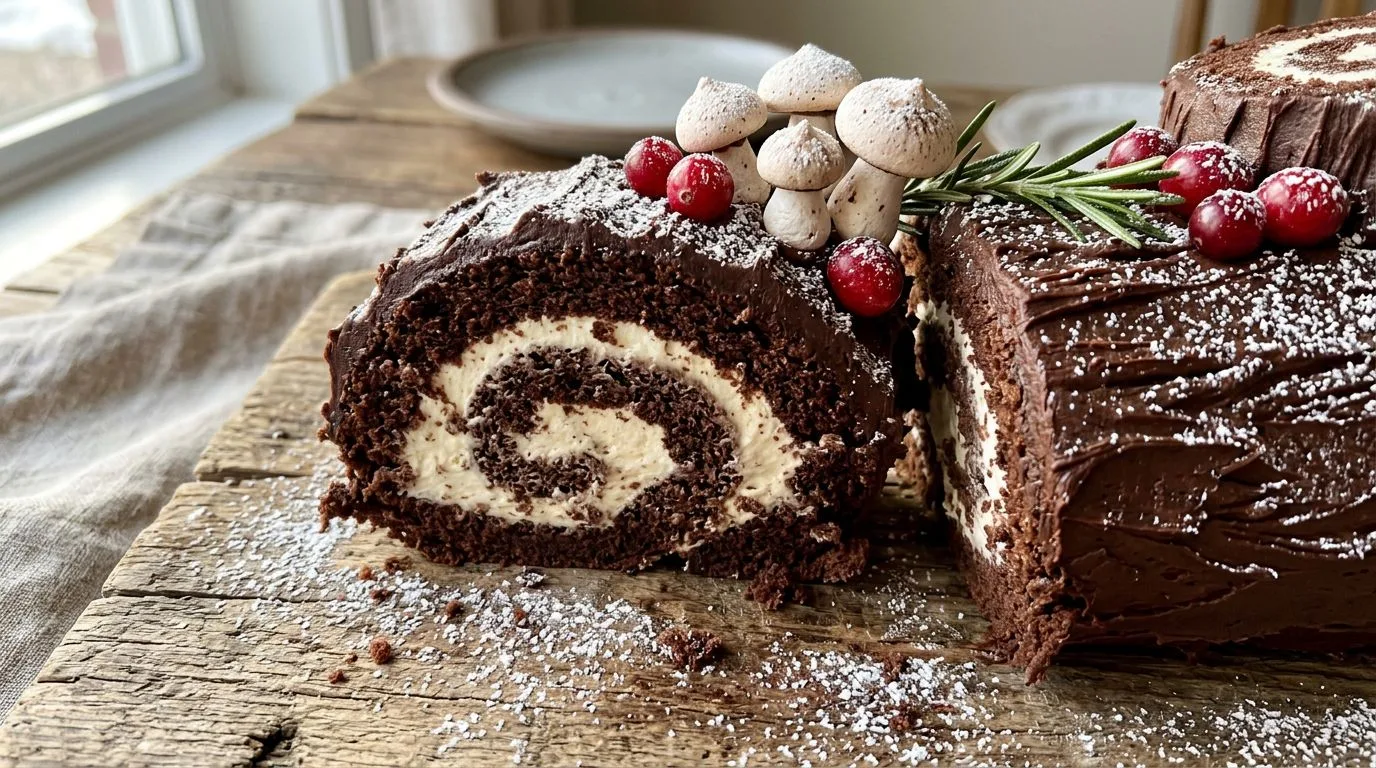
When the holiday season arrives, few desserts capture the magic and elegance of Christmas quite like a chocolate Yule log. This stunning French dessert, known as Bûche de Noël, transforms a tender chocolate sponge cake into an edible work of art that resembles a snow-dusted log fresh from the winter forest. I love how this dessert combines impressive presentation with approachable techniques—it’s far easier to make than it looks, and the result never fails to wow guests at holiday gatherings.
The tradition of the Yule log dates back centuries in European Christmas celebrations, and this chocolate version has become an American holiday favorite. With its soft chocolate sponge rolled around fluffy mascarpone cream and covered in rich chocolate ganache textured to look like tree bark, this dessert is as delicious as it is beautiful. I find that making a chocolate Yule log has become one of my favorite holiday baking traditions, and once you master the simple rolling technique, you’ll want to make it every year.
Whether you’re hosting Christmas dinner or bringing dessert to a holiday party, this chocolate Yule log will be the centerpiece everyone remembers. The combination of light sponge cake, creamy filling, and decadent chocolate ganache creates layers of flavor and texture that make every bite special.
Why You’ll Love This Chocolate Yule Log Recipe
This chocolate Yule log stands out among holiday desserts for several compelling reasons. First, the chocolate sponge cake is incredibly light and tender, with just the right amount of cocoa flavor to complement the sweet cream filling without being overwhelming. I love how the cake stays moist and soft even after rolling, thanks to the proper technique of rolling it while still warm.
The mascarpone cream filling adds a luxurious touch that elevates this dessert beyond a simple Swiss roll. The combination of whipped cream and mascarpone creates a filling that’s rich but not heavy, with a subtle tanginess that balances the sweetness perfectly. Unlike buttercream fillings that can be overly sweet, this cream filling lets the chocolate flavors shine through.
The chocolate ganache coating is another highlight—it’s silky smooth, deeply chocolatey, and creates that signature bark texture that makes the Yule log so visually striking. I recommend using good quality semisweet chocolate for the ganache, as it makes a noticeable difference in both flavor and texture. The ganache also helps seal in moisture, keeping the cake fresh for several days.
Perhaps best of all, this recipe can be made ahead of time. You can prepare the entire Yule log a day or two before serving, which takes pressure off your holiday schedule. The flavors actually develop and meld beautifully when the cake has time to rest in the refrigerator.
Ingredients and Substitutions
The success of this chocolate Yule log depends on using the right ingredients in the proper proportions. Let me walk you through each component and offer some helpful substitutions when needed.
The eggs are the foundation of the sponge cake, providing structure and lift. You’ll need to separate them carefully, as the egg whites are beaten to stiff peaks to create the cake’s airy texture. I find that room temperature eggs separate more easily and whip up better than cold ones. There’s no good substitute for eggs in this recipe, as they’re essential to the cake’s structure.
For the granulated sugar, you’ll use it in two parts—half beaten with the yolks and half gradually added to the whites. This dual approach creates the perfect texture. You can use superfine sugar if you prefer, which dissolves even more easily, but regular granulated sugar works perfectly well.
The combination of all-purpose flour and unsweetened cocoa powder creates the chocolate sponge. I recommend using Dutch-process cocoa for a deeper, more mellow chocolate flavor, though natural cocoa powder works too. Make sure to sift these dry ingredients together to prevent lumps and ensure even distribution throughout the batter.
The mascarpone cheese in the filling is what makes this Yule log special. If you can’t find mascarpone, you can substitute with full-fat cream cheese that’s been softened to room temperature, though the flavor will be slightly tangier. Some bakers use a combination of half mascarpone and half cream cheese for a middle ground.
For the ganache, semisweet chocolate provides the best balance of sweetness and chocolate intensity. You can use bittersweet chocolate if you prefer a less sweet coating, or milk chocolate for a sweeter, milder flavor. I like to chop the chocolate finely so it melts smoothly when the hot cream is poured over it.
The heavy whipping cream appears twice in this recipe—once for the filling and once for the ganache. Make sure you’re using cream with at least 36% fat content for proper whipping and ganache consistency. Half-and-half or light cream won’t work as substitutes here.
How to Make a Chocolate Yule Log
Making a chocolate Yule log involves several distinct steps, but none of them are particularly difficult. The key is working methodically and not rushing the process. Let me guide you through each stage.
Preparing the Sponge Cake
Start by preheating your oven to 350°F and lining a 10×15-inch jelly roll pan with parchment paper. I recommend letting the parchment extend slightly over the edges for easy removal later. The first step in making the batter is separating your eggs carefully—even a tiny bit of yolk in the whites can prevent them from whipping properly.
Beat the egg yolks with half the sugar until the mixture becomes thick, pale, and ribbony. This usually takes about 3-4 minutes with an electric mixer. The mixture should fall in thick ribbons when you lift the beaters. Mix in the vanilla extract at this stage.
In a separate, completely clean bowl, beat the egg whites until they become foamy. Gradually add the remaining sugar while continuing to beat, and keep going until stiff, glossy peaks form. This is crucial for the cake’s light texture—the whites should stand up straight when you lift the beaters.
Sift together the flour, cocoa powder, baking powder, and salt. Now comes the delicate part: folding everything together. Add about a third of the dry ingredients to the yolk mixture and gently fold, then add about a third of the beaten egg whites and fold again. Continue alternating until everything is combined, being careful not to deflate the egg whites. The batter should be light and airy.
Spread the batter evenly into your prepared pan, making sure to reach all the corners. Bake for 10-12 minutes—the cake is done when it springs back lightly when touched. Don’t overbake, or the cake will crack when you try to roll it.
Rolling the Cake
This is the step that intimidates many bakers, but it’s actually quite straightforward. While the cake is baking, lay out a clean kitchen towel and dust it generously with powdered sugar. As soon as the cake comes out of the oven, immediately turn it out onto the prepared towel. Carefully peel off the parchment paper.
Starting from one of the short ends, roll the cake up with the towel inside. The towel prevents the cake from sticking to itself and helps it “remember” its rolled shape. Let the rolled cake cool completely on a wire rack—this usually takes about 30-45 minutes.
Making the Filling and Assembling
While the cake cools, prepare your mascarpone cream filling. Whip the heavy cream with the powdered sugar until it forms stiff peaks. In a separate bowl, soften the mascarpone slightly by stirring it, then gently fold the whipped cream into the mascarpone until well combined. Be gentle to maintain the airy texture.
Once the cake is completely cool, carefully unroll it. The cake will want to stay slightly curved, which is fine. Spread the mascarpone cream filling evenly over the entire surface, leaving about a half-inch border around the edges. Now reroll the cake without the towel, using the filling to help seal the roll. Place the rolled cake seam-side down on your serving platter.
Creating the Ganache Coating
For the ganache, heat the 3/4 cup of heavy cream until it just begins to simmer—don’t let it boil. Place your chopped chocolate in a heatproof bowl and pour the hot cream over it. Let it sit for a minute, then stir gently until the chocolate is completely melted and the mixture is smooth and glossy.
Let the ganache cool until it reaches a spreadable consistency—it should be thick enough to coat the back of a spoon but still pourable. If it gets too thick, you can gently warm it for a few seconds. Pour the ganache over the rolled cake, using an offset spatula to spread it evenly over the top and sides.
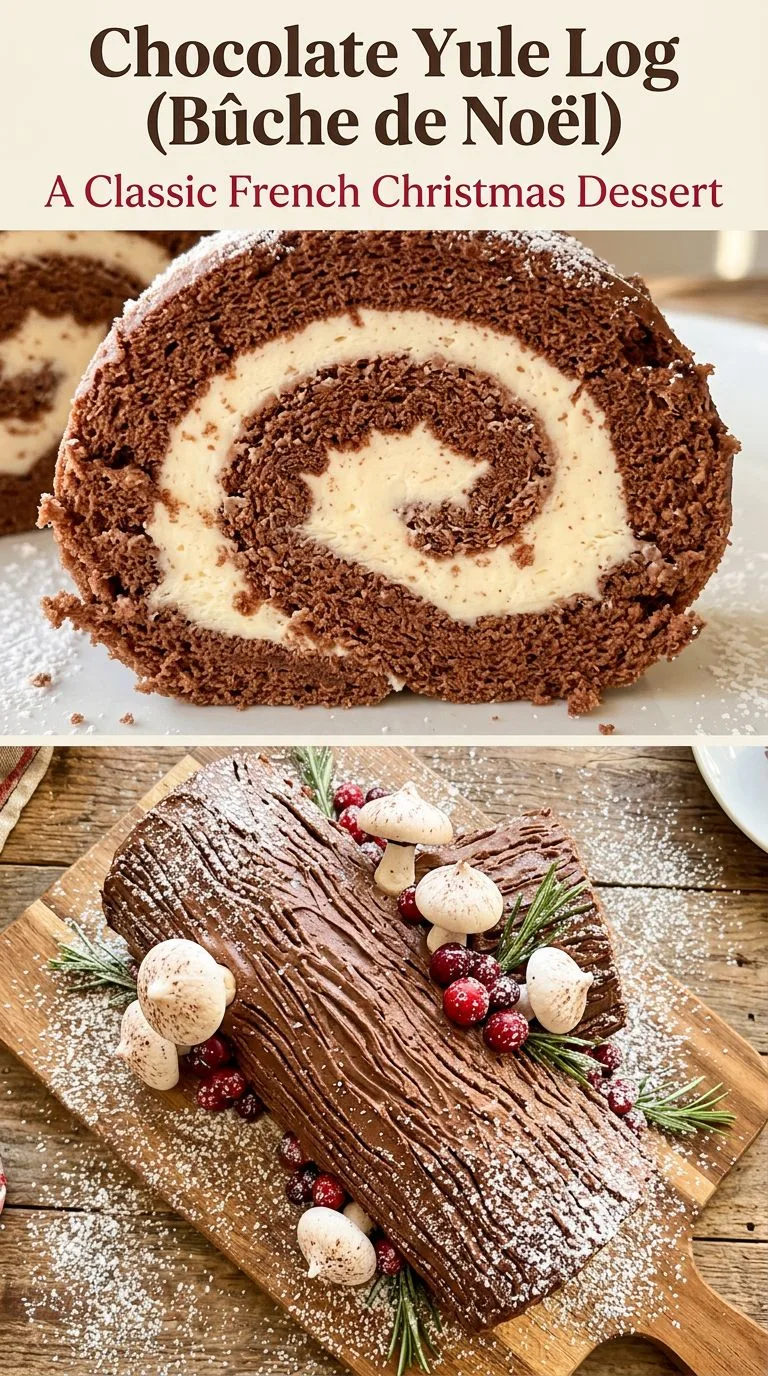
To create the bark texture, drag a fork lengthwise along the log in wavy lines. You can also use the fork to create circular patterns on the ends to mimic tree rings. I like to make the texture fairly pronounced so it really looks like bark.
Refrigerate the Yule log for at least 2 hours to let the ganache set completely. Just before serving, dust the top with powdered sugar to create a snowy effect.
Expert Tips for Best Results
After making many chocolate Yule logs over the years, I’ve learned several tricks that ensure success every time. First, make sure all your equipment is completely clean and grease-free when beating egg whites. Even a tiny bit of fat can prevent them from reaching stiff peaks.
When folding the dry ingredients and egg whites into the yolk mixture, use a large rubber spatula and a gentle hand. Cut down through the center of the mixture, sweep along the bottom of the bowl, and bring the spatula up along the side, turning the bowl as you go. This folding motion preserves the air bubbles that make the cake light.
Don’t skip the step of rolling the cake while it’s still warm. A warm cake is flexible and pliable, while a completely cooled cake is more likely to crack. The towel-rolling technique is essential for training the cake to hold its rolled shape.
I recommend using a serrated knife to trim the ends of the Yule log before serving. This creates clean, neat edges that show off the beautiful spiral inside. You can save these trimmed pieces and crumble them over the log as “moss” or “mushrooms” for extra decoration.
If you want to get really creative, you can cut a small diagonal slice from one end of the log before coating it with ganache, then attach this piece to the side of the log with ganache to create a “branch.” This adds to the realistic log appearance.
For the smoothest ganache, make sure your chocolate is finely chopped and your cream is hot enough to melt it completely. If you notice any unmelted pieces, you can gently warm the bowl over a pot of simmering water, stirring until smooth.
Serving Suggestions
A chocolate Yule log is a showstopper dessert that deserves an elegant presentation. I love serving it on a long wooden board or a white rectangular platter that mimics snow. Dust the platter with powdered sugar before placing the log on it for an extra wintry effect.
For garnishes, fresh rosemary sprigs make excellent “pine branches,” and fresh cranberries scattered around the base add festive color. You can also use meringue mushrooms, marzipan holly leaves, or sugared cranberries for a more elaborate presentation.
When it comes to accompaniments, this rich chocolate dessert pairs beautifully with lightly sweetened whipped cream or a scoop of vanilla ice cream. The cool, creamy contrast complements the dense chocolate perfectly. I also like serving it with fresh raspberries or a raspberry coulis for a tart counterpoint to the sweetness.
For beverages, consider pairing your chocolate Yule log with coffee, espresso, or hot chocolate for a cozy holiday experience. If you’re serving wine, a tawny port or a late-harvest dessert wine complements the chocolate beautifully.
This dessert serves 10-12 people generously, making it perfect for holiday gatherings. I recommend slicing it with a sharp serrated knife, wiping the blade clean between cuts for the neatest slices. Each slice should show off that beautiful spiral of chocolate cake and cream filling.
If you’re looking for other impressive chocolate desserts, you might enjoy this French silk pie with its silky chocolate filling, or these chocolate pecan pie brownies that combine two classic desserts.
Variations and Substitutions
While the classic chocolate Yule log is wonderful as written, there are several delicious variations you can try. For a mocha version, add 2 tablespoons of instant espresso powder to the cake batter and another tablespoon to the ganache. The coffee enhances the chocolate flavor beautifully.
You can also experiment with different fillings. A chocolate buttercream, chestnut cream, or even a coffee-flavored mascarpone filling would all be delicious. Some bakers like to add a thin layer of raspberry or cherry jam under the cream filling for a fruity surprise.
For a white chocolate Yule log, use white chocolate in the ganache instead of semisweet. You can tint it with a tiny bit of brown food coloring to maintain the bark appearance, or leave it white for a “birch log” effect.
If you want to make this dessert a bit lighter, you can use a simple whipped cream filling instead of the mascarpone cream. Just whip 2 cups of heavy cream with 1/4 cup of powdered sugar and 1 teaspoon of vanilla until stiff peaks form.
For those who need to avoid gluten, you can substitute the all-purpose flour with a gluten-free flour blend designed for baking. Make sure it contains xanthan gum for proper structure. The cake may be slightly more delicate, so roll it extra carefully.
Storage, Freezing, and Reheating
One of the great advantages of a chocolate Yule log is that it stores beautifully, making it perfect for advance preparation during the busy holiday season. Once assembled and decorated, cover the Yule log loosely with plastic wrap or place it in a cake carrier and refrigerate for up to 3 days. The flavors actually improve after a day as they meld together.
I recommend removing the Yule log from the refrigerator about 15-20 minutes before serving to take the chill off. This allows the flavors to come forward and makes the cake easier to slice. The ganache will still be firm enough to hold its shape but won’t be rock-hard.
For longer storage, chocolate Yule logs freeze exceptionally well. Wrap the completed, decorated log tightly in plastic wrap, then wrap again in aluminum foil. Freeze for up to 2 months. To thaw, transfer the wrapped log to the refrigerator and let it thaw overnight. Remove the wrapping and let it sit at room temperature for 15-20 minutes before serving.
You can also freeze the components separately if you prefer to assemble closer to serving time. The unfilled sponge cake can be rolled in the towel, wrapped tightly, and frozen for up to 2 months. The ganache can be made ahead and refrigerated for up to a week or frozen for up to 3 months. Just bring it to room temperature and stir well before using.
Leftover slices can be stored in an airtight container in the refrigerator for up to 4 days. I find that individual slices actually freeze quite well too—wrap them individually in plastic wrap and freeze for up to a month for a quick holiday treat.
Frequently Asked Questions
Why did my cake crack when I rolled it?
Cracking usually happens when the cake is overbaked or has cooled too much before rolling. Make sure to roll the cake while it’s still warm and pliable, and don’t bake it longer than 12 minutes. A few small cracks are normal and will be hidden by the ganache, but if the cake cracks severely, it was likely baked too long or rolled when too cool.
Can I make this Yule log ahead of time?
Absolutely! This is actually an ideal make-ahead dessert. You can prepare the entire Yule log up to 2 days in advance and keep it refrigerated. The flavors develop beautifully, and the texture remains perfect. Just add the final dusting of powdered sugar right before serving.
What’s the difference between a Yule log and a Swiss roll?
A Yule log (Bûche de Noël) is essentially a decorated Swiss roll cake designed to look like a wooden log. The main differences are the decoration—the bark-textured ganache coating and festive garnishes—and the traditional Christmas timing. The basic technique of rolling a sponge cake with filling is the same.
Can I use a different type of chocolate for the ganache?
Yes, you can use bittersweet, dark, or even milk chocolate depending on your preference. Bittersweet chocolate will give you a less sweet, more intense chocolate flavor, while milk chocolate will be sweeter and milder. I recommend sticking with chocolate that’s at least 50% cacao for the best texture and flavor balance.
How do I prevent my egg whites from deflating?
Make sure your bowl and beaters are completely clean and grease-free. Beat the whites until they form stiff, glossy peaks—they should stand straight up when you lift the beaters. When folding them into the batter, work gently but deliberately, and don’t overmix. It’s okay if you see a few white streaks; they’ll disappear during baking.
Can I make this without mascarpone?
Yes, you can substitute softened cream cheese for the mascarpone, though the flavor will be tangier. Another option is to use all whipped cream for the filling—just whip 2 cups of heavy cream with 1/4 cup of powdered sugar until stiff. The filling will be lighter but still delicious.
Why is my ganache too runny or too thick?
Ganache consistency depends on the ratio of chocolate to cream and the temperature. If it’s too runny, let it cool longer at room temperature, stirring occasionally. If it’s too thick, gently warm it in the microwave for 10-15 seconds or over a double boiler, stirring until it reaches the right consistency. The ganache should be thick enough to coat the back of a spoon but still spreadable.
Chocolate Yule Log (Bûche de Noël)
A festive chocolate sponge cake rolled with fluffy mascarpone cream filling and covered in rich chocolate ganache, decorated to resemble a traditional Christmas log. This stunning French dessert is easier to make than it looks and serves as the perfect centerpiece for your holiday table.
Cook Time: 12 minutes
Chilling Time: 2 hours
Total Time: 2 hours 42 minutes
Servings: 10-12 slices
Difficulty: Medium
Cuisine: French
Course: Dessert
Ingredients
For the Chocolate Sponge Cake:
- 6 large eggs, separated
- 3/4 cup granulated sugar, divided
- 1/2 cup all-purpose flour
- 1/4 cup unsweetened cocoa powder
- 1 teaspoon baking powder
- 1 teaspoon vanilla extract
- 1/4 teaspoon salt
- Powdered sugar for dusting towel
For the Mascarpone Cream Filling:
- 1 cup heavy whipping cream
- 1/4 cup powdered sugar
- 8 oz mascarpone cheese, at room temperature
For the Chocolate Ganache:
- 8 oz semisweet chocolate, finely chopped
- 3/4 cup heavy cream
For Decoration:
- Powdered sugar for dusting
Instructions
- Prepare the pan: Preheat oven to 350°F (175°C). Line a 10×15-inch jelly roll pan with parchment paper, letting it extend slightly over the edges.
- Make the cake batter: Beat egg yolks with half the granulated sugar (about 6 tablespoons) in a large bowl until thick, pale, and ribbony, about 3-4 minutes. Mix in vanilla extract.
- Beat the egg whites: In a separate clean bowl, beat egg whites until foamy. Gradually add the remaining sugar while beating, continuing until stiff, glossy peaks form.
- Combine dry ingredients: Sift together flour, cocoa powder, baking powder, and salt.
- Fold together: Gently fold about one-third of the dry ingredients into the yolk mixture, then fold in one-third of the beaten egg whites. Continue alternating, folding gently until just combined. Do not overmix.
- Bake: Spread batter evenly into the prepared pan, reaching all corners. Bake for 10-12 minutes, until the cake springs back when lightly touched.
- Roll the cake: While cake bakes, lay out a clean kitchen towel and dust generously with powdered sugar. Immediately turn the hot cake onto the prepared towel and carefully peel off the parchment paper. Starting from a short end, roll the cake up with the towel inside. Let cool completely on a wire rack, about 30-45 minutes.
- Make the filling: Whip heavy cream with powdered sugar until stiff peaks form. In a separate bowl, stir mascarpone to soften slightly, then gently fold in the whipped cream until well combined.
- Fill and reroll: Carefully unroll the cooled cake. Spread the mascarpone cream filling evenly over the surface, leaving a 1/2-inch border. Reroll the cake without the towel, using the filling to seal. Place seam-side down on your serving platter.
- Make the ganache: Heat 3/4 cup heavy cream until it just begins to simmer. Place chopped chocolate in a heatproof bowl and pour hot cream over it. Let sit for 1 minute, then stir gently until smooth and glossy. Let cool until spreadable but still pourable.
- Coat with ganache: Pour ganache over the rolled cake and spread evenly over the top and sides with an offset spatula. Use a fork to create bark-like texture by dragging it lengthwise in wavy lines. Create circular patterns on the ends to mimic tree rings.
- Chill and serve: Refrigerate for at least 2 hours until ganache is set. Just before serving, dust with powdered sugar for a snowy effect. Trim ends with a serrated knife for clean slices.
Recipe Notes
- Make sure all equipment for beating egg whites is completely clean and grease-free for best results.
- Don’t overbake the cake or it will crack when rolled. It should spring back lightly when touched but still be moist.
- Rolling the cake while still warm is crucial—a warm cake is flexible and less likely to crack.
- The Yule log can be made up to 2 days ahead and refrigerated. The flavors actually improve with time.
- For a mocha version, add 2 tablespoons instant espresso powder to the cake batter and 1 tablespoon to the ganache.
- If mascarpone is unavailable, substitute with softened cream cheese for a tangier filling.
- Save the trimmed ends and crumble them over the log as decoration, or use them to create “mushrooms.”
- Remove from refrigerator 15-20 minutes before serving for best flavor and easier slicing.
Nutrition Information (Per Serving, Estimated)
Serving Size: 1 slice (based on 12 servings)
Calories: 385
Carbohydrates: 32g
Protein: 6g
Fat: 27g
Saturated Fat: 16g
Fiber: 2g
Sugar: 24g
Sodium: 125mg
Nutrition information is estimated and may vary based on specific ingredients used.
