

There’s something truly special about homemade candied orange peel, especially when it’s made for gifting during the holiday season. I love how this elegant confection transforms simple orange peels into sparkling, jewel-like treats that look absolutely stunning in decorative gift boxes. The process of making Candied Orange Peel for Gifting is surprisingly straightforward, and the results are far superior to anything you can buy at the store. The tender, translucent peels coated in glistening sugar crystals make a thoughtful, handcrafted gift that shows you truly care.
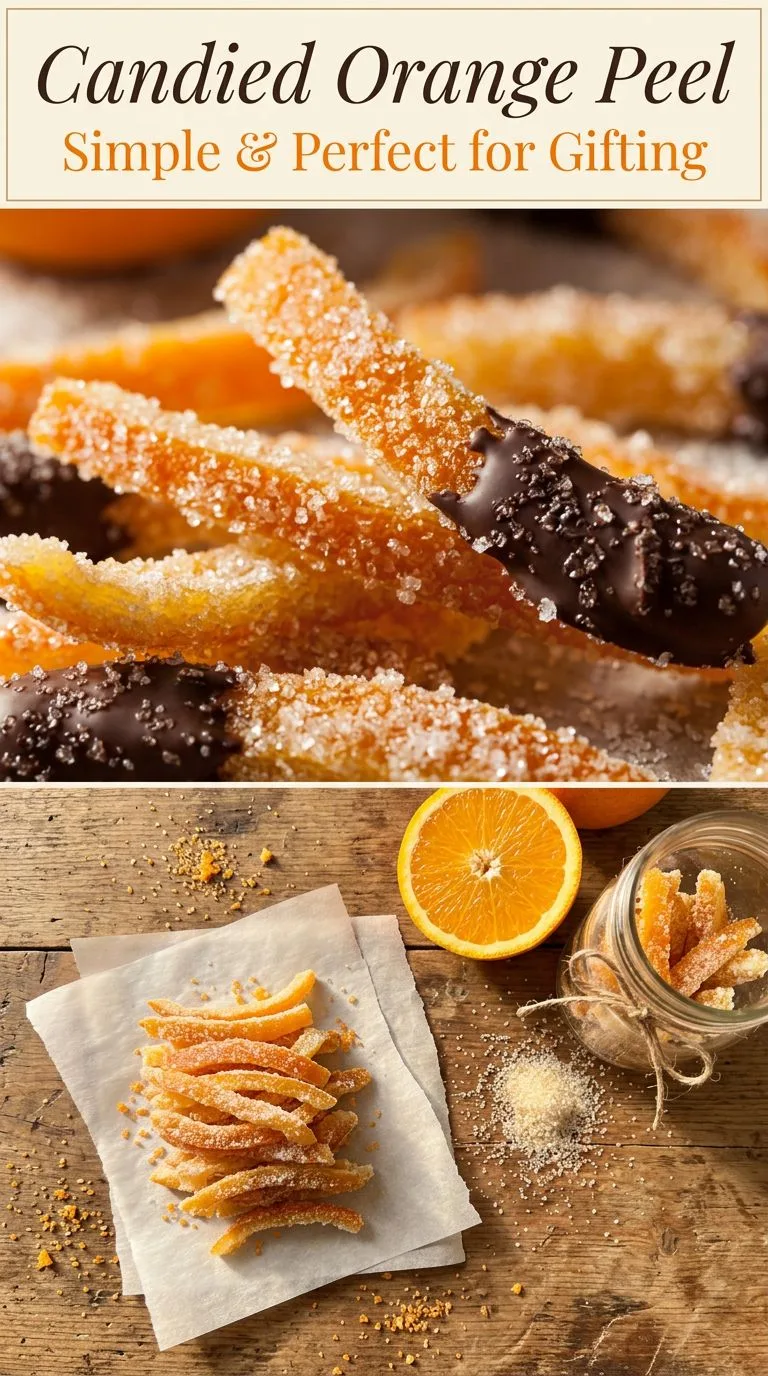
What I find most rewarding about this recipe is how it turns something that would normally be discarded into a sophisticated treat. The orange peels are blanched multiple times to remove bitterness, then slowly simmered in sugar syrup until they become tender and translucent. After drying and coating in sparkling sugar, they’re perfect on their own, or you can take them to the next level by dipping them in dark chocolate. I recommend making a large batch because these disappear quickly, and they’re ideal for filling multiple gift boxes during the Christmas season.
Whether you’re creating homemade gift baskets, looking for edible party favors, or simply want to impress guests with a homemade confection, candied orange peel is always a winner. The bright citrus flavor combined with the sweet sugar coating creates an addictive balance that’s both refreshing and indulgent.
Why You’ll Love This Candied Orange Peel for Gifting
This recipe has become one of my favorite holiday traditions for several compelling reasons. First, it’s incredibly economical—you’re creating a gourmet gift from something that would otherwise go to waste. The ingredient list is minimal, requiring just oranges, sugar, water, and optionally some vanilla and chocolate for extra flair.
I love how versatile these candied peels are. They make beautiful standalone gifts when packaged in clear cellophane bags tied with festive ribbons, but they also work wonderfully as part of larger gift baskets alongside other homemade treats like chocolate orange truffles. The presentation possibilities are endless, and they always look impressively professional.
Another reason I recommend this recipe is its shelf life. When properly dried and stored, candied orange peel keeps for weeks, making it perfect for advance holiday preparation. You can make several batches over a few weekends and have all your edible gifts ready well before the holiday rush. The recipe is also naturally gluten-free and can easily be made vegan by skipping the optional chocolate or using dairy-free chocolate.
The flavor is absolutely outstanding—bright, citrusy, and perfectly sweet without being cloying. The texture is tender yet slightly chewy, with a delightful sugar crunch on the outside. When dipped in dark chocolate, they rival any high-end confection you’d find in specialty shops.
Ingredients and Substitutions
The beauty of this recipe lies in its simplicity. Let me walk you through each ingredient and discuss the best options and possible substitutions.
Oranges: I always recommend using organic oranges when possible, since you’ll be eating the peel. Conventional oranges often have wax coatings and pesticide residues that are difficult to completely remove. Large navel oranges or Valencia oranges work beautifully. The thicker the peel, the better your final product will be. You can also use blood oranges for a stunning visual variation with their deep red color.
Granulated Sugar: Regular white granulated sugar is essential for both the syrup and the coating. I don’t recommend substituting with alternative sweeteners for this recipe, as the sugar’s crystalline structure is important for both the candying process and the final coating. The sugar syrup preserves the peels while making them tender and sweet.
Water: Simple tap water works perfectly fine. The water combines with sugar to create the syrup that transforms the peels.
Vanilla Extract (Optional): A teaspoon of vanilla extract added to the sugar syrup provides a subtle warmth and depth of flavor. You can substitute with almond extract for a different flavor profile, or omit it entirely for pure orange flavor.
Dark Chocolate (Optional): If you’re making chocolate-dipped candied orange peel, I recommend using good-quality dark chocolate with at least 60% cocoa content. The slight bitterness of dark chocolate perfectly complements the sweet orange. You can substitute with semi-sweet chocolate, milk chocolate, or even white chocolate depending on your preference. For a vegan version, use dairy-free chocolate chips.
You can also experiment with other citrus fruits using this same method. Grapefruit peel, lemon peel, and lime peel all work wonderfully, though you may want to adjust the blanching times based on the thickness and bitterness of different citrus varieties.
How to Make Candied Orange Peel for Gifting
The process of making candied orange peel requires patience but isn’t technically difficult. Here’s how I approach each step to ensure perfect results every time.
Preparing the Oranges: Start by thoroughly washing and scrubbing your oranges under warm water. I like to use a vegetable brush to remove any surface residue, wax, or dirt. This step is crucial since you’ll be eating the peel. Once clean, cut off the top and bottom of each orange, then score the peel vertically into quarters. Carefully remove the peel in large sections, trying to keep them intact. The key is to remove as much of the white pith as you’re comfortable with—some pith is fine and actually helps the peels hold their shape, but excessive pith can make them more bitter.
Cutting the Strips: Slice your orange peel sections into strips about ¼ inch wide. I find this width perfect for gifting—they’re substantial enough to handle but elegant and easy to eat. Try to keep the strips relatively uniform in size so they cook evenly.
Blanching Process: This is the most important step for removing bitterness. Place the strips in a saucepan, cover them completely with cold water, and bring to a boil. Once boiling, reduce to a simmer and cook for 5 minutes. Drain the peels completely and repeat this entire process two more times with fresh water each time. Yes, three separate blanching sessions are necessary. I know it seems repetitive, but this is what transforms bitter orange peel into something delicious. Each blanching removes more of the bitter compounds.
Making the Sugar Syrup: In a clean saucepan, combine 2 cups of granulated sugar with 2 cups of water. Stir over medium heat until the sugar completely dissolves. If you’re using vanilla extract, add it now. The syrup should be clear and smooth.
Simmering the Peels: Add your blanched orange peels to the sugar syrup and bring to a gentle simmer. This is where patience pays off. Let the peels simmer gently for 45 to 60 minutes, stirring occasionally. You’ll know they’re ready when they become translucent and tender, almost glass-like in appearance. The syrup will also thicken considerably. I recommend keeping the heat low to prevent scorching and to allow the peels to absorb the syrup gradually.
Drying the Peels: Using a fork, carefully remove the peels from the syrup and arrange them in a single layer on a wire cooling rack set over a baking sheet (to catch drips). Let them dry for several hours until they’re tacky to the touch but no longer wet. I usually let mine dry for 4-6 hours or even overnight. Don’t rush this step—proper drying is essential for the sugar coating to adhere properly.
Sugar Coating: Once the peels are properly dried, toss them in the additional ½ cup of granulated sugar until evenly coated. I like to do this in a shallow bowl, working in batches to ensure even coverage. The sugar will stick to the tacky surface and create that beautiful sparkly coating.
Optional Chocolate Dipping: If you want to make chocolate-dipped candied orange peel, melt your dark chocolate using a double boiler or microwave. Dip each peel halfway into the melted chocolate, allow excess to drip off, then place on parchment paper to set. The chocolate adds richness and makes them look even more elegant in gift boxes.
Expert Tips for Best Results
After making many batches of candied orange peel over the years, I’ve learned several tricks that ensure consistent success.
Don’t Skip the Blanching: I cannot stress this enough—all three blanching sessions are necessary. I’ve tried shortcuts, and the results are always too bitter. The triple blanching is what makes the difference between professional-quality candied peel and disappointing results.
Maintain Gentle Heat: When simmering the peels in sugar syrup, keep the heat low and steady. Aggressive boiling can break down the peels and make them mushy. A gentle simmer allows them to become tender while maintaining their structure.
Use a Wire Rack: Drying the peels on a wire rack rather than a flat surface allows air circulation on all sides, promoting even drying and preventing them from sticking.
Save the Syrup: Don’t discard the orange-infused sugar syrup left after candying! I love using it to sweeten tea, drizzle over pancakes, or add to cocktails. It’s absolutely delicious and captures all that wonderful orange essence.
Work in Batches: If you’re making large quantities for multiple gifts, work in batches rather than overcrowding your saucepan. This ensures even cooking and better results.
Test for Doneness: The peels are ready when they’re translucent and you can see light through them when held up. They should be tender but not falling apart.
Humidity Matters: If you live in a humid climate, the drying process may take longer. You can speed it up by placing the rack in a warm, dry spot or even in an oven set to the lowest temperature with the door slightly ajar.
Serving Suggestions
While Candied Orange Peel for Gifting is primarily designed as a standalone treat or gift item, there are numerous delicious ways to serve and enjoy it.
I love serving candied orange peel alongside coffee or espresso as an elegant after-dinner treat. The bright citrus flavor is a perfect palate cleanser and pairs beautifully with the rich, bitter notes of coffee. They’re also wonderful with tea, particularly black tea or Earl Grey.
For entertaining, arrange candied orange peels on a dessert platter alongside other petit fours, cranberry orange shortbread cookies, and chocolate truffles. The variety of textures and flavors creates an impressive spread that looks professionally catered.
I also recommend chopping candied orange peel and using it as a topping for ice cream, yogurt, or panna cotta. The chewy texture and intense orange flavor add wonderful complexity to creamy desserts. They’re also fantastic chopped and folded into brownie batter, cookie dough, or quick bread recipes.
For a truly special presentation, serve chocolate-dipped candied orange peel on a beautiful platter with fresh berries and nuts. The combination of flavors and textures is absolutely divine.
During the holidays, I like to package candied orange peels in clear cellophane bags tied with ribbon, or arrange them in small decorative tins or boxes. They make beautiful additions to dessert charcuterie boards and holiday cookie exchanges.
Variations and Substitutions
While the classic version is wonderful, there are several delicious variations you can try to customize your Candied Orange Peel for Gifting.
Spiced Candied Orange Peel: Add warming spices to the sugar syrup, such as cinnamon sticks, whole cloves, star anise, or cardamom pods. The spices infuse the peels with wonderful holiday flavors. Remove the whole spices before coating the peels in sugar.
Mixed Citrus Peel: Combine orange peel with grapefruit, lemon, and lime peels for a colorful assortment. Each citrus variety offers a different flavor profile and creates visual interest in gift boxes.
Chocolate Variations: Instead of dark chocolate, try dipping in white chocolate, milk chocolate, or even ruby chocolate for a unique pink color. You can also drizzle contrasting chocolate over dipped peels for an elegant striped effect.
Crystallized Ginger Addition: Add finely chopped crystallized ginger to the sugar coating for a spicy-sweet variation that’s particularly warming during winter months.
Flavored Sugar Coating: Mix the coating sugar with ground cinnamon, cardamom, or even a tiny pinch of cayenne pepper for added complexity.
Liqueur-Infused: For an adult version, add a tablespoon or two of Grand Marnier, Cointreau, or another orange liqueur to the sugar syrup. This creates a more sophisticated flavor profile perfect for gifting to adults.
Storage, Freezing, and Reheating
Proper storage is essential for maintaining the quality of your candied orange peel, especially if you’re making it in advance for holiday gifting.
Room Temperature Storage: Once the candied orange peels are completely dry and coated in sugar, store them in an airtight container at room temperature. I like to layer them between sheets of parchment paper to prevent sticking. Stored this way, they’ll keep for 2-3 weeks. Make sure they’re thoroughly dried before storing, as any remaining moisture can cause them to become sticky or develop mold.
Refrigerator Storage: For longer storage, you can refrigerate candied orange peels in an airtight container for up to 2 months. The cool temperature helps preserve them, though they may lose a bit of their sparkly sugar coating. You can re-toss them in fresh sugar before gifting if needed.
Freezing: Candied orange peels freeze beautifully for up to 6 months. Arrange them in a single layer on a baking sheet and freeze until solid, then transfer to freezer bags or containers. This prevents them from sticking together. Thaw at room temperature for about 30 minutes before serving or packaging for gifts.
Chocolate-Dipped Storage: If you’ve dipped your peels in chocolate, store them in a cool, dry place in an airtight container with parchment paper between layers. Avoid refrigerating chocolate-dipped peels if possible, as temperature changes can cause chocolate bloom (white streaks). However, if your kitchen is very warm, refrigeration is better than melted chocolate.
Gift Packaging Storage: Once packaged in gift boxes or bags, candied orange peels will stay fresh for about 2 weeks at room temperature. I recommend adding a small food-safe silica gel packet to gift containers if you’re making them well in advance, especially in humid climates.
No reheating is necessary for candied orange peel—they’re enjoyed at room temperature. If they become slightly sticky during storage, you can re-toss them in granulated sugar to refresh the coating.
Frequently Asked Questions
Can I use regular oranges instead of organic?
Yes, you can use conventional oranges, but I recommend scrubbing them very thoroughly with warm water and a vegetable brush to remove as much wax and pesticide residue as possible. Some people even use a mixture of water and vinegar to clean conventional citrus peels before candying.
Why is my candied orange peel bitter?
Bitterness usually means the peels weren’t blanched enough. Make sure you complete all three blanching sessions, each time starting with fresh cold water. If your oranges have particularly thick pith, you might even need a fourth blanching.
How do I know when the peels are done simmering?
The peels are ready when they become translucent and tender. You should be able to see light through them when held up, and they should be soft enough to easily bite through but not falling apart.
Can I make this recipe with other citrus fruits?
Absolutely! Grapefruit, lemon, lime, and even pomelo peels work wonderfully with this method. Keep in mind that thinner peels (like lemon and lime) may require less simmering time, while thicker peels (like pomelo) may need more.
Why won’t the sugar stick to my candied peels?
This usually happens when the peels are either too wet or too dry. They should be tacky to the touch—not dripping wet but not completely dried out either. If they’ve dried too much, you can very lightly brush them with a tiny bit of the reserved syrup before coating in sugar.
Can I reduce the sugar in this recipe?
Unfortunately, no. The sugar is essential for preserving the peels and creating the proper texture. Reducing the sugar will result in peels that spoil quickly and don’t have the characteristic candied texture.
How do I prevent the chocolate from getting streaky?
Make sure your candied peels are completely dry before dipping in chocolate. Any moisture will cause the chocolate to seize or become streaky. Also, properly temper your chocolate or use chocolate melting wafers designed for dipping.
Can I candy the whole peel without cutting it into strips?
While you can candy larger pieces of peel, I find that strips are easier to work with, dry more evenly, and are more practical for eating and gifting. Larger pieces take longer to simmer and dry.
Candied Orange Peel for Gifting
Transform fresh orange peels into elegant, sparkling candied treats perfect for holiday gift boxes. These tender, translucent peels are simmered in sugar syrup and coated with glistening sugar crystals. Optional dark chocolate dipping takes them to gourmet status.
Prep Time: 30 minutes
Cook Time: 1 hour 15 minutes
Drying Time: 4-6 hours
Total Time: 6 hours
Servings: About 60 pieces
Difficulty: Medium
Cuisine: American
Course: Dessert
Ingredients
- 4 large oranges (preferably organic, thoroughly washed)
- 2 cups granulated sugar
- 2 cups water
- ½ cup additional granulated sugar (for coating)
- 1 teaspoon vanilla extract (optional)
- 4 ounces dark chocolate (optional, for dipping)
Instructions
- Wash and thoroughly scrub the oranges to remove any surface residue.
- Cut off the tops and bottoms, then score the peel vertically into quarters and carefully remove the peel in sections.
- Slice the orange peels into thin strips approximately ¼ inch wide.
- Place the strips in a saucepan, cover with cold water, bring to a boil, and simmer for 5 minutes.
- Drain and repeat the blanching process two more times to reduce bitterness.
- In a clean saucepan, combine 2 cups sugar and 2 cups water, stirring over medium heat until dissolved.
- Add the blanched orange peels and simmer gently for 45–60 minutes until translucent and tender.
- Remove the peels with a fork and arrange them on a wire rack to dry for several hours until tacky but no longer wet.
- Toss the peels in additional granulated sugar until evenly coated.
- Allow to dry completely, then optionally dip halfway into melted dark chocolate.
- Store in airtight containers or decorative gift boxes once fully set.
Recipe Notes
- Don’t skip any of the three blanching sessions—they’re essential for removing bitterness.
- Save the leftover orange-infused sugar syrup for sweetening tea or cocktails.
- For best results, use organic oranges to avoid wax coatings and pesticide residues.
- The peels are ready when they’re translucent and you can see light through them.
- Drying time varies based on humidity; allow extra time in humid climates.
- Store between layers of parchment paper to prevent sticking.
- For gift-giving, package in clear cellophane bags or decorative tins.
Estimated Nutrition (Per Piece)
Based on approximately 60 pieces without chocolate
- Calories: 25
- Carbohydrates: 6g
- Protein: 0g
- Fat: 0g
- Saturated Fat: 0g
- Fiber: 0.5g
- Sugar: 5g
- Sodium: 0mg
Nutrition information is estimated and will vary based on exact ingredients and portion sizes.
