
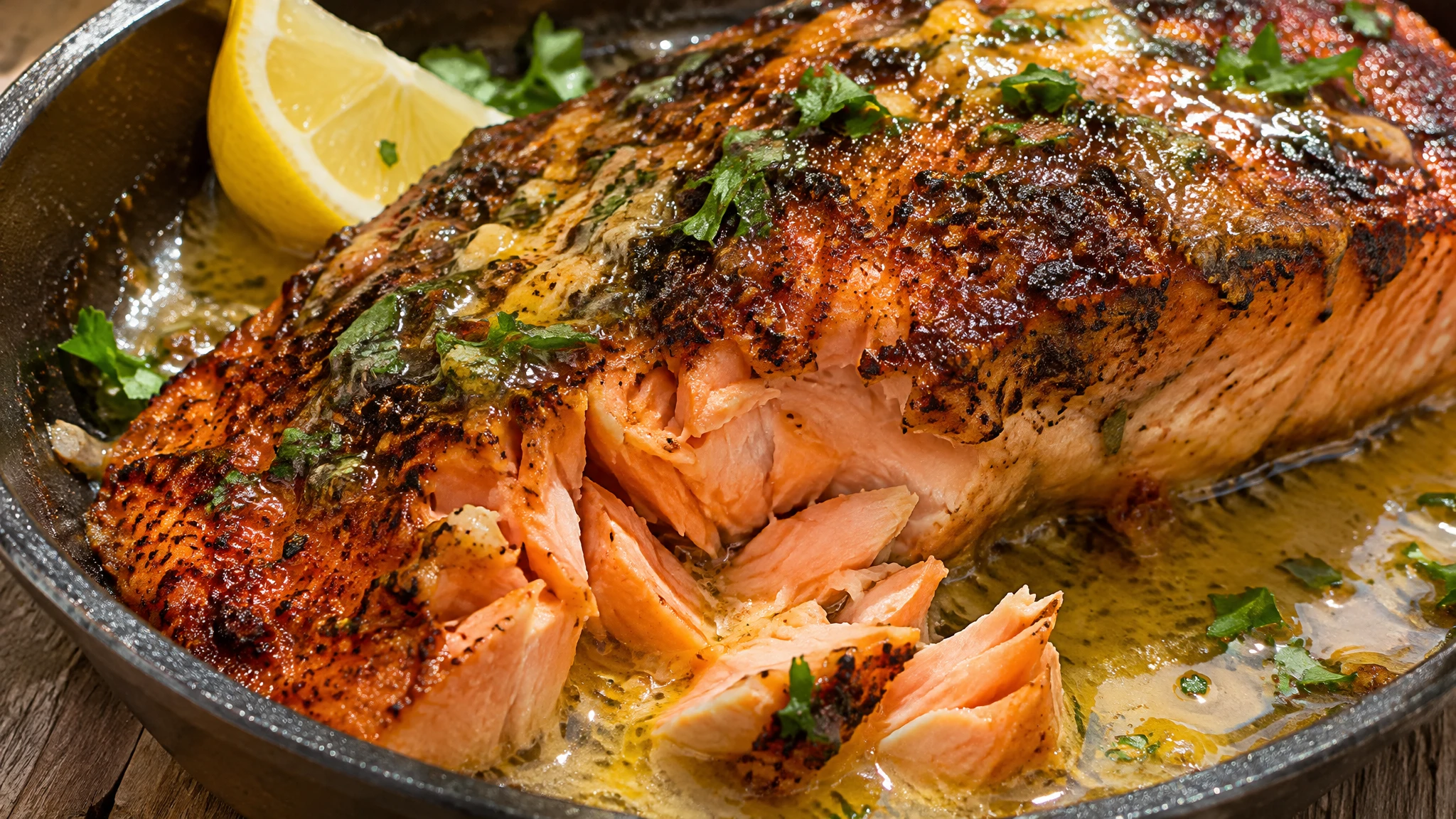
There’s something incredibly satisfying about a perfectly seared piece of salmon with a dark, spice-crusted exterior that delivers bold flavor in every bite. Blackened Cajun salmon combines the rich, buttery texture of salmon with the smoky heat of Cajun spices, creating a restaurant-quality dish you can make at home in under 20 minutes. I love how the intense seasoning creates a flavorful crust while the fish stays tender and flaky inside.
What makes this recipe truly special is the luscious lemon butter sauce that balances the heat from the spices with bright citrus notes and rich, velvety butter. The combination of bold Cajun flavors and tangy lemon creates a perfect harmony that elevates simple salmon fillets into something extraordinary. Whether you’re cooking for a weeknight dinner or entertaining guests, this blackened Cajun salmon delivers impressive results with minimal effort.
I find that using a heavy-bottomed skillet and getting it properly hot is the key to achieving that signature blackened crust without overcooking the salmon. The technique is straightforward, but the results taste like something you’d order at a high-end seafood restaurant.
Why You’ll Love This Blackened Cajun Salmon Recipe
This recipe checks all the boxes for a perfect weeknight dinner. It’s quick enough to prepare on busy evenings, yet impressive enough to serve when you want to wow your dinner guests. I love that the entire dish comes together in one skillet, which means less cleanup and more time to enjoy your meal.
The Cajun spice blend creates layers of flavor with smoky paprika, garlic, and just the right amount of heat from cayenne pepper. Unlike some spicy dishes that overwhelm your palate, this seasoning blend enhances the natural richness of the salmon without masking its delicate flavor. The lemon butter sauce adds a restaurant-quality finish that makes each bite feel indulgent.
Another reason I recommend this recipe is its versatility. You can easily adjust the spice level to suit your preferences, and the salmon pairs beautifully with countless side dishes. From roasted vegetables to creamy grits or simple rice, this blackened salmon fits into any meal plan. Plus, salmon is packed with omega-3 fatty acids and protein, making this a nutritious choice that doesn’t sacrifice flavor.
Ingredients and Substitutions
The ingredient list for this blackened Cajun salmon is refreshingly simple, with most items you likely already have in your pantry. Here’s what you’ll need and some helpful substitutions if you’re missing anything:
Salmon fillets: I recommend using fresh, skin-on salmon fillets for the best results, though skinless works perfectly fine too. Look for fillets that are about 6 ounces each and roughly the same thickness so they cook evenly. If you can only find a larger piece, you can cut it into portions yourself. Wild-caught salmon has a slightly firmer texture, while farm-raised tends to be fattier and more tender—both work beautifully in this recipe.
Cajun seasoning: Store-bought Cajun seasoning is convenient and delivers consistent results. If you prefer to make your own, combine paprika, garlic powder, onion powder, dried oregano, dried thyme, cayenne pepper, salt, and black pepper. I like using a quality brand that balances heat with savory notes.
Smoked paprika: This adds depth and a subtle smokiness to the spice crust. Regular paprika can substitute in a pinch, though you’ll lose some of that smoky complexity. Spanish smoked paprika (pimentón) is my favorite for this recipe.
Garlic powder and cayenne pepper: These enhance the Cajun seasoning blend. If you’re sensitive to heat, reduce the cayenne to 1/8 teaspoon or omit it entirely. For extra heat lovers, feel free to increase it slightly.
Olive oil: This helps the spices adhere to the salmon and prevents sticking. Avocado oil is an excellent substitute with a higher smoke point, which is beneficial for high-heat cooking.
Unsalted butter: I always use unsalted butter so I can control the salt level in the sauce. If you only have salted butter, reduce or omit any additional salt in the recipe.
Fresh lemon juice and zest: Freshly squeezed lemon juice makes a noticeable difference in the sauce’s brightness. Bottled lemon juice can work in a pinch, but the flavor won’t be quite as vibrant. The zest adds aromatic oils that enhance the citrus flavor.
Fresh parsley: This adds a pop of color and fresh flavor. Fresh cilantro or chives can substitute if you prefer, though parsley’s mild flavor complements the dish best.
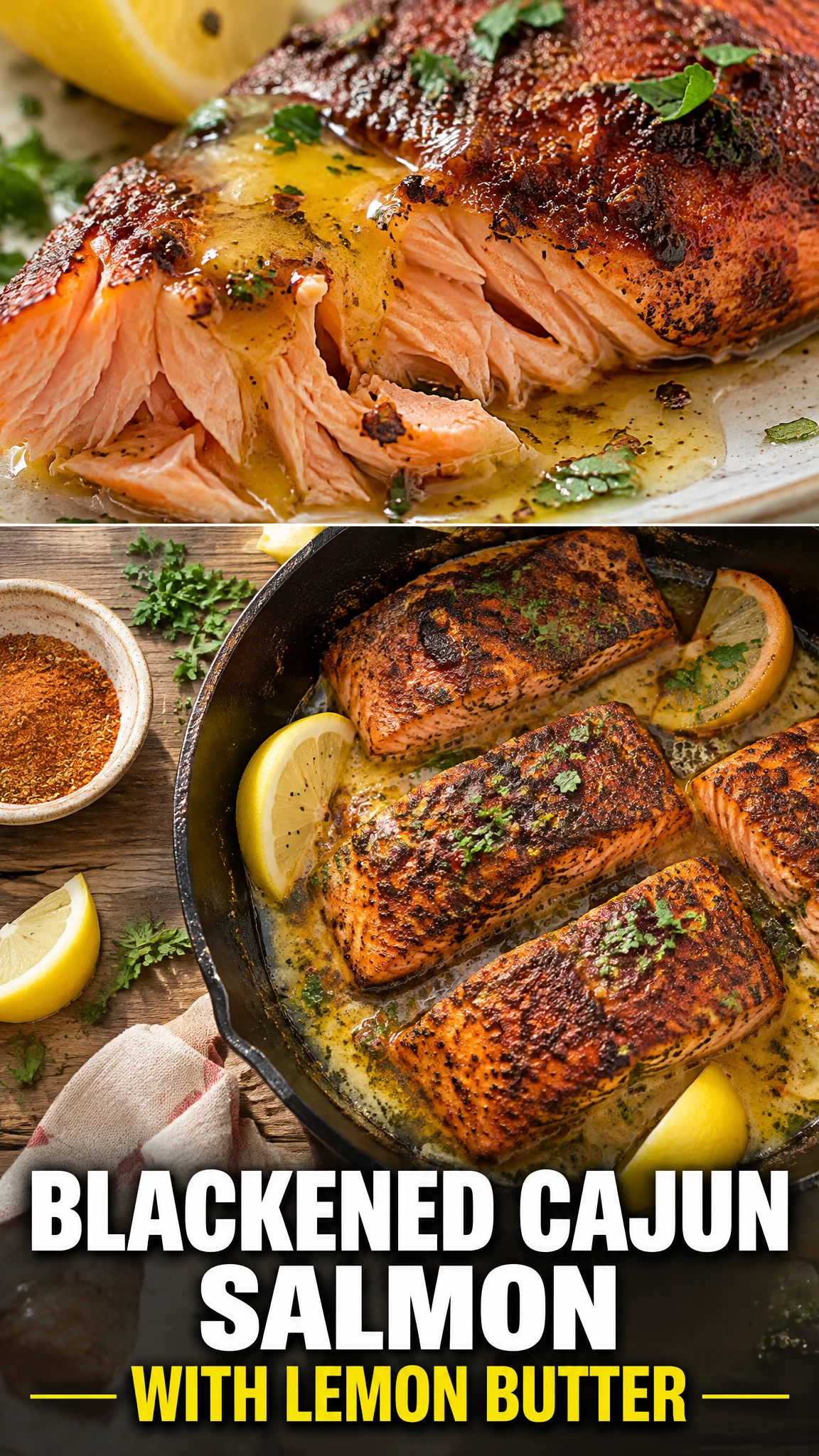
How to Make Blackened Cajun Salmon
Making this blackened Cajun salmon is straightforward, but a few key techniques ensure perfect results every time. Here’s how I approach each step:
Prepare the salmon: Start by patting your salmon fillets completely dry with paper towels. This step is crucial because any moisture on the surface will prevent the spices from adhering properly and interfere with getting a good sear. I can’t stress enough how important dry salmon is for achieving that signature blackened crust.
Mix and apply the spice blend: In a small bowl, combine the Cajun seasoning, smoked paprika, garlic powder, cayenne pepper, and black pepper. Mix thoroughly so the spices are evenly distributed. Rub this mixture generously over all sides of the salmon fillets, pressing gently so it adheres. Don’t be shy with the seasoning—you want a visible coating that will create that flavorful crust.
Heat your skillet properly: This is where many home cooks struggle with blackened dishes. You need a heavy-bottomed skillet (cast iron is ideal) heated over medium-high heat until it’s very hot. Add the olive oil and let it heat until it shimmers but doesn’t smoke. The high heat is what creates the blackened crust, so don’t be tempted to lower the temperature.
Sear the salmon: Place the salmon fillets in the hot skillet, flesh-side down if they’re skinless, or skin-side up if they have skin. This is important: don’t move them. Let them sear undisturbed for 3-4 minutes. You’ll see the edges start to turn opaque, and when you peek underneath, there should be a dark, caramelized crust. If the salmon sticks, it’s not ready to flip yet.
Flip and finish cooking: Using a thin spatula, carefully flip each fillet. Cook for another 3-5 minutes depending on thickness. I recommend using an instant-read thermometer to check for doneness—you’re looking for 145°F (63°C) in the thickest part. The salmon will continue cooking slightly after you remove it from heat, so I sometimes pull it at 140°F for a slightly more tender center. Transfer the cooked salmon to a plate.
Make the lemon butter sauce: Reduce the heat to medium-low and add the butter to the same skillet. As it melts, add the minced garlic and cook for just 30 seconds until fragrant—be careful not to burn it. Stir in the lemon juice and lemon zest, swirling the pan to combine everything into a smooth, emulsified sauce. This should take about a minute.
Finish and serve: Spoon the warm lemon butter sauce generously over the salmon fillets, garnish with freshly chopped parsley, and serve with lemon wedges on the side. The contrast between the spicy crust and the tangy, buttery sauce is absolutely delicious.
Expert Tips for Best Results
After making this recipe many times, I’ve learned a few tricks that make a real difference in the final result:
Don’t overcrowd the pan: If your skillet isn’t large enough to hold all four fillets with space between them, cook them in batches. Overcrowding lowers the pan temperature and causes steaming instead of searing, which prevents that blackened crust from forming.
Use a splatter screen: Blackening creates smoke and splatters. I recommend using a splatter screen to protect your stovetop while still allowing steam to escape. Make sure your kitchen is well-ventilated—turn on your exhaust fan or open a window.
Let the salmon come to room temperature: Taking the salmon out of the refrigerator 15-20 minutes before cooking helps it cook more evenly. Cold salmon straight from the fridge can overcook on the outside before the center is done.
Adjust cooking time for thickness: Thicker fillets need more time, while thinner pieces cook faster. A good rule of thumb is about 4-6 minutes per inch of thickness. I find that checking with a thermometer is the most reliable method.
Don’t skip the resting time: Let the salmon rest for 2-3 minutes after cooking. This allows the juices to redistribute throughout the fish, resulting in a more tender, flavorful bite.
Make extra spice blend: I like to double or triple the spice mixture and store the extra in an airtight container. It’s perfect for seasoning chicken, shrimp, or even roasted vegetables, and having it pre-mixed saves time on busy weeknights.
Serving Suggestions
This blackened Cajun salmon is incredibly versatile and pairs beautifully with a wide variety of sides. My favorite way to serve it is with creamy, cheesy grits and sautéed greens for a Southern-inspired meal that feels both comforting and elegant.
For a lighter option, I love serving this salmon over a bed of mixed greens with cherry tomatoes, cucumber, and a simple vinaigrette. The warm, spiced salmon contrasts beautifully with the cool, crisp salad. Rice pilaf, garlic mashed potatoes, or roasted sweet potatoes also make excellent accompaniments that soak up the delicious lemon butter sauce.
Vegetable sides that work particularly well include roasted asparagus, green beans almondine, Brussels sprouts, or a medley of roasted bell peppers and zucchini. If you’re looking for something with a bit of Southern flair, try pairing it with another flavorful salmon preparation for inspiration on side dishes, or consider serving it alongside corn on the cob or coleslaw for a casual summer dinner.
For a complete seafood feast, you could start with crispy shrimp cakes as an appetizer before serving this blackened salmon as the main course.
Don’t forget to offer extra lemon wedges at the table—some guests love an extra squeeze of fresh citrus over their salmon. A crisp white wine like Sauvignon Blanc or a light Pinot Grigio complements the rich fish and bright lemon flavors beautifully.
Variations and Substitutions
One of the things I love about this recipe is how easily it adapts to different preferences and dietary needs. Here are some variations I’ve tried with great success:
Different proteins: The blackening technique and lemon butter sauce work wonderfully with other fish and seafood. Try it with mahi-mahi, red snapper, catfish, or even large shrimp. Chicken breasts also take well to this treatment—just adjust the cooking time accordingly since chicken needs to reach 165°F.
Spice level adjustments: For a milder version, reduce or omit the cayenne pepper and use a mild Cajun seasoning blend. For extra heat, add more cayenne or include a pinch of red pepper flakes in the lemon butter sauce.
Herb variations: While parsley is classic, fresh cilantro adds a different dimension, and fresh dill pairs beautifully with salmon. Chopped fresh thyme or basil in the lemon butter sauce creates interesting flavor variations.
Sauce alternatives: If you prefer something different from lemon butter, try a creamy dill sauce, mango salsa, or avocado crema. A simple garlic aioli also complements the spiced crust nicely.
Cooking methods: While pan-searing creates the best crust, you can also grill this salmon over high heat or broil it in the oven. For oven preparation, sear the seasoned salmon in an oven-safe skillet for 2 minutes per side, then transfer to a 400°F oven for 5-7 minutes to finish cooking.
Low-carb and keto-friendly: This recipe is naturally low in carbohydrates and fits perfectly into keto meal plans. Serve it with cauliflower rice or zucchini noodles for a complete low-carb meal.
Storage, Freezing, and Reheating
Proper storage ensures you can enjoy leftovers without sacrificing quality. Here’s what I recommend:
Refrigerator storage: Store leftover blackened salmon in an airtight container in the refrigerator for up to 3 days. I like to store the lemon butter sauce separately if possible, as it reheats more evenly that way. Let the salmon cool to room temperature before refrigerating, but don’t leave it out for more than 2 hours.
Freezing: While cooked salmon can be frozen, I find the texture changes slightly upon thawing. If you do want to freeze it, wrap each fillet tightly in plastic wrap, then place in a freezer-safe bag or container. It will keep for up to 2 months. Thaw overnight in the refrigerator before reheating. I don’t recommend freezing the lemon butter sauce—it’s better to make it fresh when serving.
Reheating: The key to reheating salmon is using gentle heat to avoid drying it out. My preferred method is to reheat it in a 275°F oven for about 10-15 minutes until warmed through. You can also reheat it gently in a skillet over low heat with a splash of water or broth and a lid to create steam. Microwave reheating works in a pinch—use 50% power in 30-second intervals, checking frequently to avoid overcooking.
Using leftovers: Cold leftover blackened salmon is delicious flaked over salads, mixed into pasta, or used in salmon cakes. I also love it in grain bowls with quinoa, roasted vegetables, and a drizzle of tahini sauce.
Frequently Asked Questions
Can I use frozen salmon for this recipe?
Yes, but make sure to thaw it completely first. Thaw frozen salmon in the refrigerator overnight, then pat it very dry before seasoning. Frozen salmon often releases more moisture, so extra drying is essential for achieving a good crust.
What if I don’t have Cajun seasoning?
You can make your own by combining 1 tablespoon paprika, 1 teaspoon garlic powder, 1 teaspoon onion powder, 1/2 teaspoon dried oregano, 1/2 teaspoon dried thyme, 1/2 teaspoon black pepper, 1/4 teaspoon cayenne pepper, and 1/2 teaspoon salt. This makes about 2 tablespoons of seasoning.
How do I know when the salmon is done?
The most reliable method is using an instant-read thermometer—salmon is done at 145°F in the thickest part. Visually, the flesh should be opaque and flake easily with a fork. I prefer mine slightly underdone at 140°F for a more tender texture.
Why is my salmon sticking to the pan?
This usually happens when the pan isn’t hot enough or the salmon isn’t dry enough. Make sure your skillet is properly preheated and the salmon is patted completely dry. Also, don’t try to flip the salmon too early—it will release naturally when a proper crust has formed.
Can I make this recipe less spicy?
Absolutely. Reduce or omit the cayenne pepper, and look for a mild Cajun seasoning blend. You can also increase the lemon butter sauce to help balance any heat from the spices.
What’s the difference between blackened and grilled salmon?
Blackening is a cooking technique that uses a heavy coating of spices and very high heat to create a dark, flavorful crust. Grilling cooks the fish over open flames or heated grates. Blackened salmon has a more intense spice crust and is typically cooked in a skillet.
Can I remove the salmon skin before cooking?
Yes, this recipe works with both skin-on and skinless fillets. If using skin-on salmon, you can either sear it skin-side down first (for crispy skin) or remove it after cooking if you prefer.
Blackened Cajun Salmon with Lemon Butter
Flaky salmon fillets coated in bold Cajun spices, seared until beautifully blackened, and finished with a rich, tangy lemon butter sauce. This restaurant-quality dish comes together in under 20 minutes for an impressive weeknight dinner or special occasion meal.
Prep Time: 10 minutes
Cook Time: 10 minutes
Total Time: 20 minutes
Servings: 4
Difficulty: Easy
Cuisine: Cajun/American
Course: Dinner
Ingredients
- 4 salmon fillets (6 oz each)
- 2 tbsp Cajun seasoning
- 1 tsp smoked paprika
- 1/2 tsp garlic powder
- 1/4 tsp cayenne pepper
- 2 tbsp olive oil
- 4 tbsp unsalted butter
- 3 garlic cloves (minced)
- 2 tbsp fresh lemon juice
- 1 tsp lemon zest
- 1/4 tsp black pepper
- 2 tbsp fresh parsley (chopped)
- 1 lemon (cut into wedges)
Instructions
- Pat the salmon fillets dry using paper towels. In a small bowl, combine Cajun seasoning, smoked paprika, garlic powder, cayenne pepper, and black pepper.
- Rub the spice mixture evenly over all sides of the salmon fillets, pressing gently to help it adhere.
- Heat olive oil in a large heavy-bottomed skillet over medium-high heat until shimmering.
- Place the salmon in the skillet, flesh-side down if skinless, and sear for 3-4 minutes without moving it until a dark, flavorful crust forms.
- Flip carefully and cook for another 3-5 minutes, depending on thickness, until the salmon reaches 145°F (63°C) in the thickest part. Transfer to a plate.
- Reduce heat to medium-low. Add butter to the same skillet, followed by minced garlic, and cook for 30 seconds until fragrant.
- Stir in lemon juice and lemon zest. Swirl the pan for about 1 minute until the sauce is smooth and well combined.
- Spoon the lemon butter sauce over the salmon, garnish with chopped parsley, and serve with lemon wedges.
Recipe Notes
- For best results, use a cast iron skillet or heavy-bottomed stainless steel pan that can withstand high heat.
- Don’t move the salmon while it’s searing—this prevents the crust from forming properly.
- Adjust cayenne pepper to your heat preference. For mild, use 1/8 tsp or omit entirely.
- Salmon continues cooking after removal from heat, so slightly undercooking ensures a tender center.
- Make sure your kitchen is well-ventilated as blackening creates smoke.
- The lemon butter sauce can be doubled if you prefer extra sauce for serving over sides.
Nutrition Information (Per Serving – Estimated)
Calories: 385
Carbohydrates: 3g
Protein: 35g
Fat: 26g
Saturated Fat: 9g
Fiber: 1g
Sugar: 0g
Sodium: 580mg
Nutrition information is estimated based on standard ingredient values and may vary based on specific products used.
