
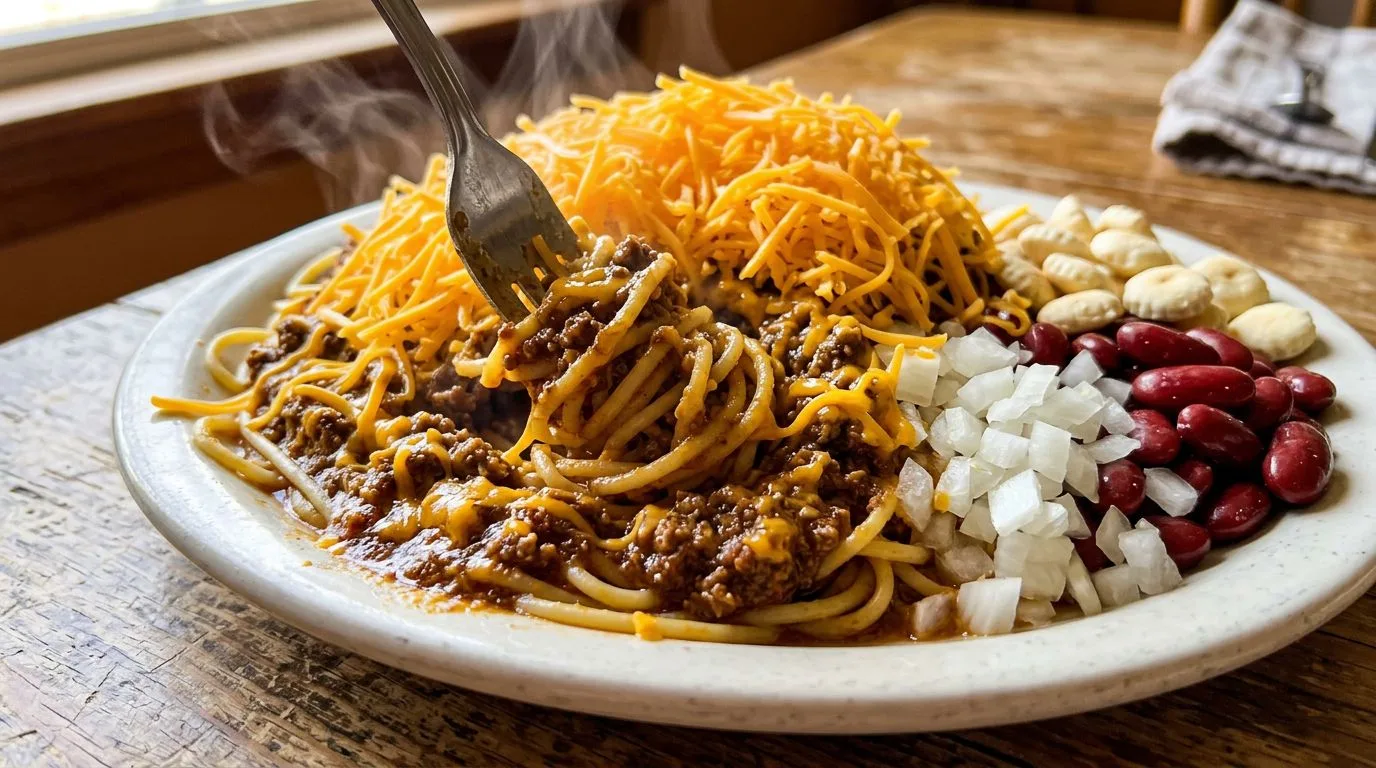
Cincinnati chili is one of those uniquely American dishes that sparks instant recognition and devotion among those who know it well. Unlike traditional Texas-style chili, this Ohio specialty features finely ground beef simmered in a richly spiced tomato sauce with warm cinnamon, aromatic cloves, and a hint of cocoa powder. What makes it truly distinctive is how it’s served—ladled over spaghetti and topped with a generous pile of shredded cheddar cheese. I love how this dish combines familiar comfort food elements in an unexpected way, creating something that’s both approachable and wonderfully unique.
The flavor profile of Cincinnati chili is what sets it apart from other chili recipes. The addition of sweet spices like cinnamon and cloves, combined with unsweetened cocoa powder, creates a complex, savory-sweet sauce that’s incredibly satisfying. I find that the long, slow simmer is essential for developing the deep, layered flavors that make this dish so memorable. Whether you’re already a fan of Cincinnati-style chili or you’re trying it for the first time, this recipe delivers an authentic taste of this beloved Midwestern classic.
Why You’ll Love This Cincinnati Chili
This Cincinnati chili recipe brings together everything I appreciate about comfort food—it’s hearty, flavorful, and surprisingly easy to prepare despite its complex taste. The combination of warm spices creates a sauce that’s unlike any other chili you’ve tried, with layers of flavor that develop beautifully during the long simmer. I love that this recipe uses straightforward ingredients you likely already have in your pantry, yet produces results that taste like they came from a beloved Cincinnati chili parlor.
The texture of this chili is another reason it’s so special. By cooking the ground beef directly in the liquid and breaking it into very fine crumbles, you create a sauce-like consistency that coats spaghetti perfectly. I recommend making a double batch because this chili freezes beautifully and tastes even better the next day. It’s also incredibly versatile—you can serve it the classic Cincinnati way over spaghetti, or use it as a topping for hot dogs, french fries, or even baked potatoes.
What I particularly appreciate about this recipe is how it brings people together. Cincinnati chili has a devoted following, and serving it to friends and family often sparks conversations about favorite ways to enjoy it, whether that’s “three-way” (spaghetti, chili, and cheese), “four-way” (add onions or beans), or “five-way” (add both). It’s a dish with its own vocabulary and traditions, making it fun to share with others.
Ingredients and Substitutions
The ingredient list for Cincinnati chili might look unusual at first glance, but each component plays an important role in creating the signature flavor. The ground beef forms the base of the dish, and I recommend using 80/20 ground beef for the best balance of flavor and texture. The beef is cooked directly in the liquid, which is an unconventional technique that results in the characteristically fine texture of authentic Cincinnati chili.
The spice blend is what truly defines this recipe. Chili powder provides the foundational chili flavor, while cumin adds earthiness. The cinnamon and cloves bring warmth and subtle sweetness that distinguish Cincinnati chili from other varieties. I find that the unsweetened cocoa powder adds depth without making the chili taste like chocolate—it simply enriches the overall flavor profile. The dried oregano contributes a Mediterranean note that complements the other spices beautifully.
For the liquid components, tomato sauce and tomato paste provide the tomato base, while beef broth adds savory depth and helps create the proper consistency. The apple cider vinegar, added at the end, brightens all the flavors and adds a subtle tang that balances the richness. If you need to make substitutions, you can use ground turkey or chicken instead of beef, though the flavor will be milder. Vegetable broth can replace beef broth if needed. I don’t recommend substituting the cinnamon or cloves, as these are essential to the authentic Cincinnati chili taste.
The spaghetti and shredded cheddar cheese are traditional accompaniments. I like to use regular spaghetti, though you can use thin spaghetti or even angel hair if you prefer. For the cheese, sharp cheddar works wonderfully and provides a nice contrast to the spiced chili. Pre-shredded cheese is convenient, but I find that freshly shredded cheese melts better and has superior flavor.

How to Make Cincinnati Chili
Making Cincinnati chili is a straightforward process that requires patience more than culinary skill. The technique differs from traditional chili-making because you start by adding raw ground beef directly to the liquid ingredients in the pot. This method might seem unusual, but it’s the secret to achieving the fine, sauce-like texture that characterizes authentic Cincinnati chili.
Begin by heating a large pot over medium-high heat. Add the ground beef, beef broth, tomato sauce, and tomato paste all at once. As the liquid heats, use a wooden spoon or potato masher to break the raw beef into very fine crumbles. I find that stirring continuously during the first few minutes helps separate the meat into the smallest possible pieces, which is essential for the proper texture.
Once the beef is broken up, add all the aromatics and spices: the finely diced onion, minced garlic, chili powder, cumin, cinnamon, cloves, cocoa powder, oregano, salt, and black pepper. Stir everything together thoroughly to ensure the spices are evenly distributed. Bring the mixture to a gentle simmer, continuing to stir frequently at first to prevent the beef from clumping together.
After the chili reaches a simmer, reduce the heat to low and let it cook uncovered for 1½ to 2 hours. This long, slow simmer is crucial for developing the deep, complex flavors that make Cincinnati chili special. I recommend stirring occasionally to prevent sticking and to check the consistency. The chili should thicken considerably as it cooks, with the liquid reducing and the flavors concentrating. Near the end of cooking, stir in the apple cider vinegar and taste for seasoning, adjusting salt and pepper as needed.
While the chili simmers, prepare the spaghetti according to package directions in a separate pot of well-salted water. Drain it thoroughly—you don’t want excess water diluting the chili. To serve, divide the spaghetti among bowls, ladle the hot chili generously over the pasta, and top with shredded cheddar cheese. The heat from the chili will begin melting the cheese, creating that classic Cincinnati chili presentation.
Expert Tips for Best Results
The key to exceptional Cincinnati chili lies in a few important techniques. First, don’t rush the simmering process. I know it’s tempting to increase the heat to speed things along, but the long, gentle simmer allows the spices to bloom fully and the flavors to meld together. If your chili seems too thick during cooking, you can add a bit more beef broth. Conversely, if it’s too thin near the end of cooking time, continue simmering uncovered until it reaches your desired consistency.
Breaking the beef into very fine crumbles is essential for authentic texture. I recommend using a potato masher in addition to a wooden spoon during the first 10-15 minutes of cooking. The finer you can break up the meat, the more sauce-like your chili will be. This is what allows it to coat the spaghetti properly rather than sitting on top in chunks.
Don’t skip the apple cider vinegar at the end. This small addition brightens all the flavors and adds a subtle acidity that balances the richness of the beef and the warmth of the spices. I always taste the chili before and after adding the vinegar, and the difference is remarkable. If you prefer a bit more tang, you can add up to 2 tablespoons of vinegar.
For the best presentation, make sure your spaghetti is well-drained and still hot when you serve it. Cold or room-temperature pasta won’t showcase the chili as well. I like to time the pasta cooking so it’s ready just as the chili finishes, ensuring everything is served at the optimal temperature. When topping with cheese, be generous—Cincinnati chili is known for its abundant cheese topping, and it’s a key part of the experience.
Serving Suggestions
Cincinnati chili has its own unique serving traditions that are worth exploring. The most classic presentation is the “three-way,” which consists of spaghetti, chili, and cheese—exactly what this recipe provides. However, you can also serve it “four-way” by adding either diced raw onions or kidney beans on top of the cheese. A “five-way” includes both onions and beans. I love offering these options when serving a crowd, letting everyone customize their bowl.
Beyond the traditional spaghetti presentation, Cincinnati chili is incredibly versatile. It makes an excellent topping for hot dogs (called “Coneys” in Cincinnati), where you pile the chili onto a hot dog in a bun and top it with mustard, onions, and cheese. I also enjoy serving it over french fries for a hearty appetizer or casual dinner. Some people love it over baked potatoes, and it even works well as a dip with tortilla chips.
For a complete meal, I recommend serving Cincinnati chili with simple sides that won’t compete with its bold flavors. A crisp green salad with a light vinaigrette provides a refreshing contrast. Oyster crackers are a traditional accompaniment in Cincinnati chili parlors, and they add a nice textural element. If you’re looking for another comforting side dish, Southern baked mac and cheese pairs wonderfully with the chili’s spiced flavors.
For beverages, I find that cold beer, iced tea, or lemonade work particularly well with Cincinnati chili. The richness and spice of the dish call for something refreshing to drink alongside it.
Variations and Substitutions
While Cincinnati chili has a traditional flavor profile, there’s room for customization based on your preferences and dietary needs. For a leaner version, you can use ground turkey or ground chicken instead of beef. Keep in mind that poultry will produce a milder flavor, so you might want to increase the spices slightly. Ground venison also works well if you enjoy game meats.
If you’re looking to add more vegetables, finely diced bell peppers or celery can be added along with the onions. Some people like to include a small amount of finely grated carrot for subtle sweetness. Just make sure to dice everything very finely to maintain the characteristic texture of the chili.
For heat lovers, Cincinnati chili is traditionally mild, but you can easily adjust the spice level. Add cayenne pepper, red pepper flakes, or diced jalapeños to increase the heat. I recommend starting with a small amount and adjusting to taste, as the warm spices can make the chili seem spicier than it actually is.
You can also experiment with the pasta base. While spaghetti is traditional, some people enjoy using other pasta shapes like penne or rotini. For a lower-carb option, serve the chili over zucchini noodles or spaghetti squash. If you’re interested in other creative pasta dishes, this chili spaghetti recipe offers another delicious take on combining chili with pasta.
For the cheese topping, while cheddar is traditional, you can use a Mexican cheese blend, Monterey Jack, or even pepper jack for added spice. Some people enjoy adding a dollop of sour cream or Greek yogurt on top for extra creaminess and tang.
Storage, Freezing, and Reheating
Cincinnati chili stores exceptionally well, making it perfect for meal prep or batch cooking. I always make extra because the flavors continue to develop and improve over the first few days. To store leftover chili, let it cool to room temperature, then transfer it to an airtight container and refrigerate for up to 4 days. Store the chili separately from the spaghetti and cheese for best results, as this allows you to reheat each component properly.
For freezing, Cincinnati chili is an excellent candidate. Let the chili cool completely, then portion it into freezer-safe containers or heavy-duty freezer bags. I like to freeze it in 2-cup portions, which is perfect for a quick dinner for two. Properly stored, the chili will maintain its quality in the freezer for up to 3 months. Label the containers with the date so you can keep track of freshness.
When you’re ready to use frozen chili, thaw it overnight in the refrigerator for best results. You can also defrost it in the microwave using the defrost setting, stirring occasionally to ensure even thawing. To reheat, warm the chili in a saucepan over medium-low heat, stirring occasionally and adding a splash of beef broth or water if it seems too thick. You can also reheat individual portions in the microwave, stirring every minute until heated through.
For the spaghetti, I recommend cooking it fresh when possible, as reheated pasta can become mushy. However, if you need to store cooked spaghetti, toss it with a small amount of olive oil to prevent sticking, then refrigerate in an airtight container for up to 3 days. Reheat by dipping briefly in boiling water or microwaving with a damp paper towel over the top to add moisture.
Frequently Asked Questions
What makes Cincinnati chili different from regular chili?
Cincinnati chili differs from traditional chili in several key ways. It features a unique spice blend that includes cinnamon, cloves, and cocoa powder, giving it a distinctive sweet-savory flavor profile. The texture is also different—the meat is broken into very fine crumbles and cooked in liquid to create a sauce-like consistency. Most notably, it’s traditionally served over spaghetti rather than eaten as a standalone stew, and it’s topped with shredded cheddar cheese rather than the typical chili toppings.
Can I make Cincinnati chili in a slow cooker?
Yes, you can adapt this recipe for a slow cooker. Brown the ground beef first in a skillet, breaking it into fine crumbles, then transfer it to the slow cooker with all the other ingredients except the vinegar. Cook on low for 6-8 hours or on high for 3-4 hours. Stir in the vinegar during the last 30 minutes of cooking. The stovetop method gives you more control over the texture, but the slow cooker version is very convenient.
Why is cocoa powder used in Cincinnati chili?
Unsweetened cocoa powder adds depth and richness to Cincinnati chili without making it taste like chocolate. It enhances the savory flavors and contributes to the complex, layered taste that makes this chili special. The amount used is small enough that you won’t detect a chocolate flavor, but you’ll notice a richer, more rounded overall taste.
What are the different “ways” to serve Cincinnati chili?
Cincinnati chili has traditional serving styles called “ways.” A two-way is chili over spaghetti. A three-way adds shredded cheese on top. A four-way adds either diced onions or kidney beans. A five-way includes spaghetti, chili, cheese, onions, and beans. These terms originated in Cincinnati chili parlors and are still used today.
Can I make this recipe spicier?
Absolutely. Traditional Cincinnati chili is relatively mild, but you can increase the heat by adding cayenne pepper, red pepper flakes, or hot sauce. Start with ¼ teaspoon of cayenne or ½ teaspoon of red pepper flakes and adjust to your preference. You can also use hot chili powder instead of regular chili powder.
Do I have to serve Cincinnati chili over spaghetti?
While spaghetti is the traditional base, Cincinnati chili is versatile. You can serve it over hot dogs (Coneys), french fries, baked potatoes, or even use it as a dip. Some people enjoy it as a standalone chili in a bowl. The spaghetti presentation is iconic, but the chili itself is delicious however you choose to serve it.
Cincinnati Chili Recipe
This Cincinnati chili features richly spiced ground beef in a savory tomato sauce with warm cinnamon and aromatic seasonings. Serve it over spaghetti with shredded cheddar cheese for a classic Cincinnati-style comfort meal that’s perfect for family dinners or casual gatherings.
- Prep Time: 15 minutes
- Cook Time: 2 hours
- Total Time: 2 hours 15 minutes
- Servings: 6
- Difficulty: Easy
- Cuisine: American
- Course: Dinner
Ingredients
- 2 lbs ground beef
- 1 medium onion, finely diced
- 4 garlic cloves, minced
- 1 can (15 oz) tomato sauce
- 2 tbsp tomato paste
- 3 cups beef broth
- 2 tbsp chili powder
- 1 tbsp ground cumin
- 1 tsp ground cinnamon
- ¼ tsp ground cloves
- 1 tsp unsweetened cocoa powder
- 1 tsp dried oregano
- 1 tsp salt
- ½ tsp black pepper
- 1 tbsp apple cider vinegar
- 12 oz spaghetti, cooked
- 2 cups shredded cheddar cheese
Instructions
- Heat a large pot over medium-high heat. Add the ground beef, beef broth, tomato sauce, and tomato paste. Stir and break the raw beef into very fine crumbles as the liquid heats.
- Add the finely diced onion, minced garlic, chili powder, cumin, cinnamon, ground cloves, cocoa powder, oregano, salt, and black pepper. Stir well to combine.
- Bring the mixture to a gentle simmer, stirring frequently at first to separate the beef into fine pieces.
- Reduce heat to low and simmer uncovered for 1½ to 2 hours, stirring occasionally, until the beef is fully cooked and the sauce has thickened considerably.
- Stir in the apple cider vinegar and adjust seasoning with additional salt and pepper if needed.
- Near the end of the chili cooking time, boil the spaghetti in a separate pot of salted water according to package instructions. Drain well.
- Divide the cooked spaghetti among serving bowls, ladle the hot chili generously over the pasta, and top with shredded cheddar cheese.
Recipe Notes
- Breaking the beef into very fine crumbles is essential for authentic Cincinnati chili texture. Use a potato masher along with a wooden spoon during the first 10-15 minutes of cooking.
- The long simmer time is important for developing the complex flavors. Don’t rush this step.
- If the chili becomes too thick during cooking, add additional beef broth ¼ cup at a time.
- The apple cider vinegar brightens the flavors significantly—don’t skip this ingredient.
- For traditional Cincinnati serving styles, offer diced raw onions and kidney beans as optional toppings.
- This chili tastes even better the next day as the flavors continue to develop.
Nutrition Information (Per Serving, Estimated)
- Calories: 580
- Carbohydrates: 48g
- Protein: 42g
- Fat: 23g
- Saturated Fat: 11g
- Fiber: 4g
- Sugar: 6g
- Sodium: 980mg
Nutrition information is estimated based on standard ingredient measurements and may vary based on specific products used and portion sizes.
