
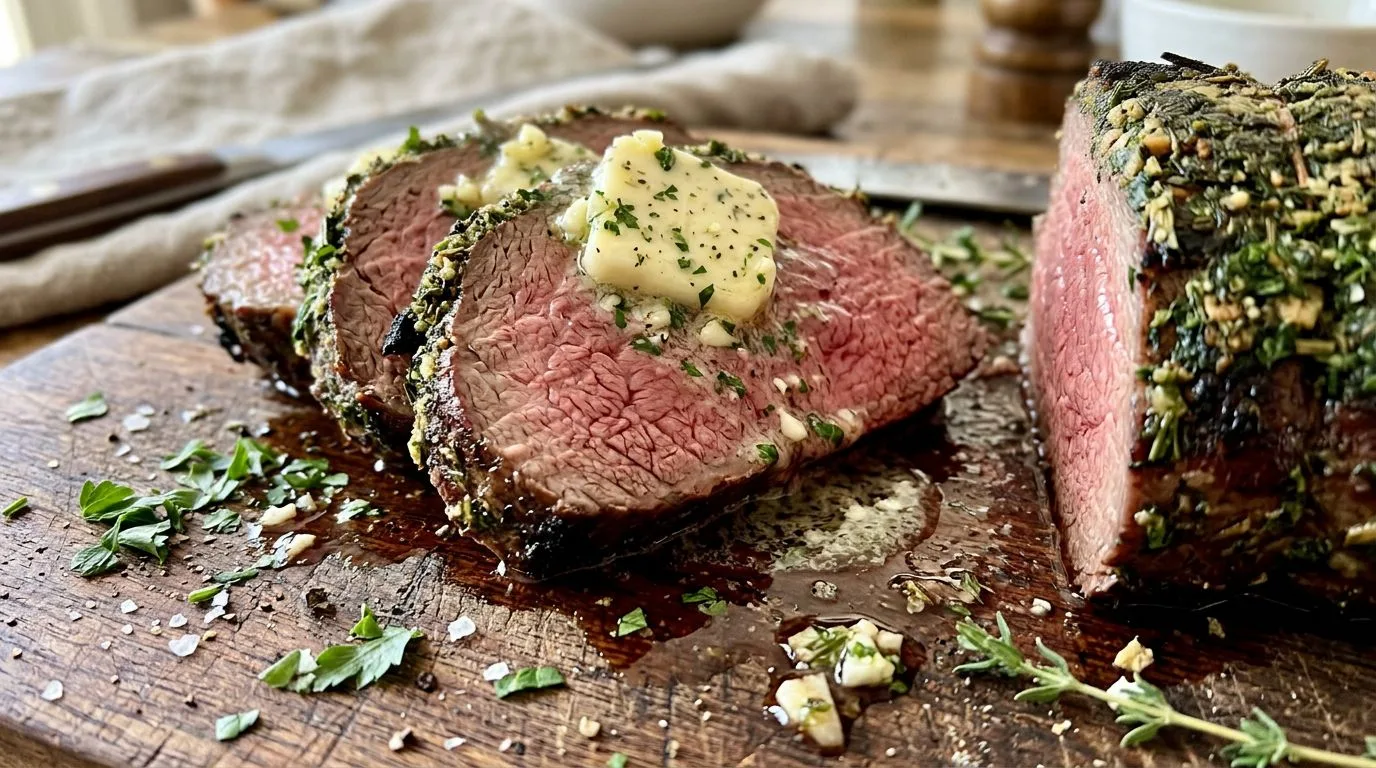
There’s something truly special about serving a perfectly cooked beef tenderloin at a holiday gathering or special celebration. I love how this Herb Crusted Beef Tenderloin with Garlic Butter transforms a premium cut of meat into an unforgettable centerpiece that looks as impressive as it tastes. The combination of fresh herbs, aromatic garlic, and rich butter creates a flavorful crust that complements the naturally tender, juicy beef beautifully.
What I find most appealing about this recipe is how surprisingly straightforward it is to prepare, despite its elegant presentation. The key is starting with quality beef tenderloin and treating it with respect—a quick sear to lock in the juices, a generous coating of herb butter, and careful attention to internal temperature. Whether you’re planning a Thanksgiving feast, Christmas dinner, or an intimate anniversary celebration, this roasted beef tenderloin delivers restaurant-quality results right from your home kitchen.
I recommend this recipe for anyone looking to impress their guests without spending hours in the kitchen. The active preparation time is minimal, and the oven does most of the work while you focus on side dishes and enjoying time with your loved ones.
Why You’ll Love This Herb Crusted Beef Tenderloin
This recipe checks all the boxes for a show-stopping main course. The beef tenderloin itself is one of the most tender cuts available, and when you add a fragrant herb crust with garlic butter, you elevate it to something truly memorable. I love that this dish looks incredibly sophisticated but doesn’t require advanced culinary skills—just attention to detail and a meat thermometer.
The herb butter mixture does double duty in this recipe. It creates a beautiful golden crust during roasting while infusing the meat with layers of flavor from fresh rosemary, thyme, and parsley. The garlic adds a savory depth that complements the beef without overpowering its natural taste. I find that the smoked paprika in the initial seasoning adds a subtle complexity that guests always notice but can’t quite identify.
Another reason I recommend this recipe is its versatility. While it’s perfect for major holidays like Thanksgiving and Christmas, it’s equally appropriate for Easter, New Year’s Eve, or any occasion that calls for something special. The leftovers—if you’re lucky enough to have any—make incredible sandwiches or can be sliced thin for elegant appetizers the next day.
Ingredients and Substitutions
The ingredient list for this Herb Crusted Beef Tenderloin is refreshingly straightforward, focusing on quality over quantity. Let me walk you through what you’ll need and some practical substitutions if necessary.
Beef Tenderloin: I recommend purchasing a center-cut tenderloin weighing 3-4 pounds, which typically serves 6-8 people generously. This cut is naturally tender and cooks evenly. If you can only find a whole tenderloin, ask your butcher to trim it and cut a center portion for you. The center-cut ensures uniform thickness for even cooking.
Fresh Herbs: Fresh rosemary, thyme, and parsley are essential for the best flavor. I strongly prefer fresh herbs over dried for this recipe because they create a more vibrant, aromatic crust. If you absolutely must substitute, use one-third the amount of dried herbs, but expect a less pronounced flavor.
Garlic: Six cloves of minced fresh garlic provide the aromatic backbone of the herb butter. I don’t recommend substituting garlic powder here—fresh garlic is crucial for the authentic flavor profile.
Butter and Olive Oil: The softened butter binds the herbs and creates richness, while olive oil is used for searing. You could substitute the olive oil with another high-heat oil like avocado oil, but I wouldn’t change the butter component.
Dijon Mustard: This adds a subtle tang and helps the herb mixture adhere to the meat. Whole grain mustard works as a substitute, though it will add texture to the crust.
Seasonings: Kosher salt, freshly ground black pepper, and smoked paprika form the base seasoning. Regular paprika can substitute for smoked, but you’ll lose that subtle smoky note I find so appealing.
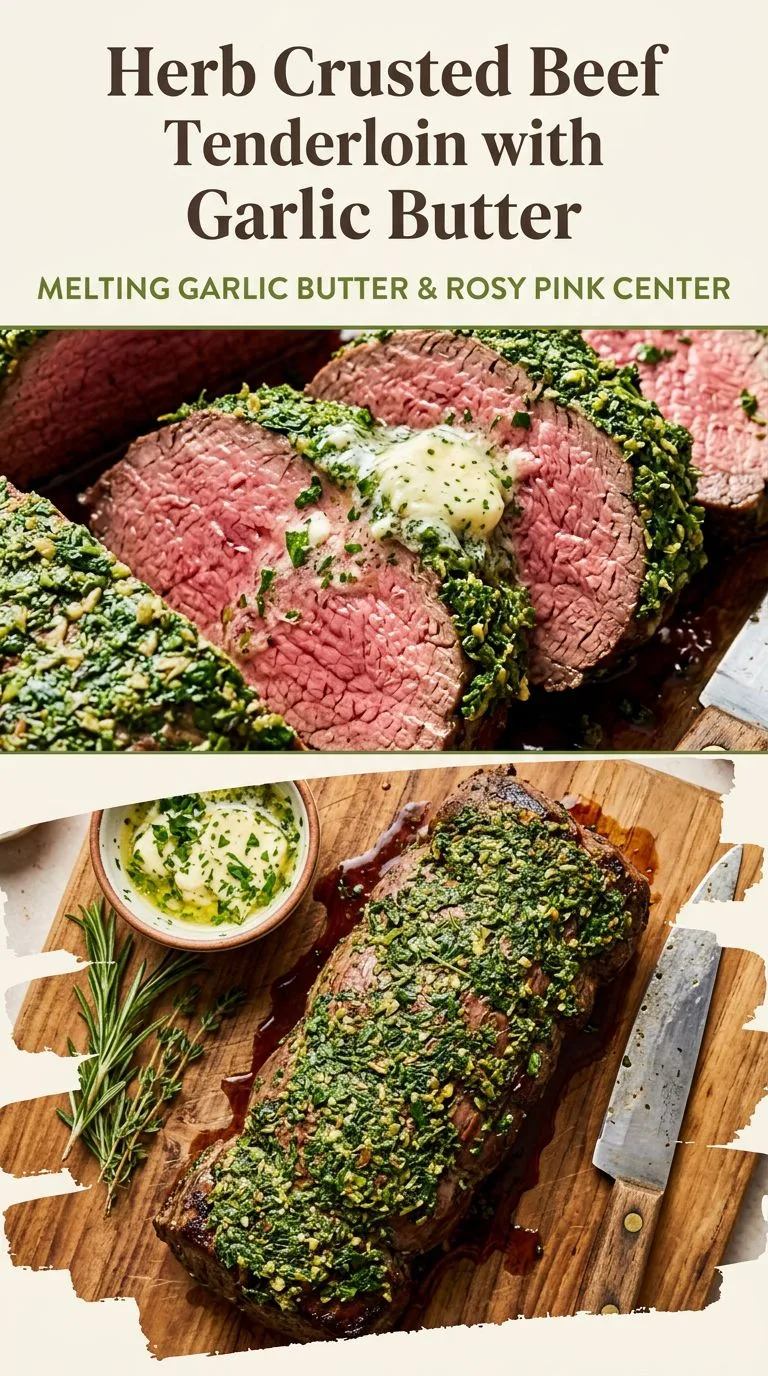
How to Make Herb Crusted Beef Tenderloin
Making this recipe involves several distinct steps, but none are complicated. I like to break the process down into preparation, searing, and roasting phases.
Preparing the Tenderloin
Start by preheating your oven to 425°F. This high temperature is essential for developing a beautiful crust while keeping the interior perfectly cooked. While the oven heats, examine your beef tenderloin and trim away any excess silver skin—that thin, silvery membrane that won’t break down during cooking. I use a sharp boning knife and slide it just under the silver skin, angling the blade slightly upward to remove it without taking too much meat.
Next, tie the roast with kitchen twine at 2-inch intervals. This step is important because it helps the tenderloin maintain an even cylindrical shape, which promotes uniform cooking. I find that even a naturally well-shaped tenderloin benefits from tying, especially at the thinner end.
Pat the beef completely dry with paper towels—this is crucial for achieving a good sear. Season all sides generously with kosher salt, freshly ground black pepper, and smoked paprika. Don’t be shy with the seasoning; beef tenderloin is a thick cut that can handle bold flavors.
Making the Herb Butter
In a small bowl, combine the softened butter, minced garlic, chopped rosemary, thyme, parsley, and Dijon mustard. Mix thoroughly until you have a fragrant, well-combined paste. I like to prepare this while the beef comes to room temperature, allowing the flavors to meld slightly.
Searing and Roasting
Heat the olive oil in a large oven-safe skillet over medium-high heat until it shimmers. Carefully place the seasoned tenderloin in the hot skillet and sear for 2-3 minutes per side, turning to brown all surfaces. This creates a flavorful crust and locks in juices. I recommend using tongs to turn the roast, being careful not to pierce the meat.
Once the tenderloin is beautifully browned on all sides, remove the skillet from the heat. Working quickly, spread the garlic herb butter mixture evenly over the top and sides of the beef. Use a spoon or spatula to coat it generously—this butter will melt and baste the meat as it roasts.
Transfer the skillet to your preheated oven. Roasting time varies based on thickness and your desired doneness, typically 20-40 minutes. I always use an instant-read thermometer inserted into the thickest part of the roast. For USDA-recommended safety, cook to an internal temperature of 145°F, which yields medium-rare to medium doneness after resting. If you prefer medium, aim for 135°F before resting, as the temperature will rise during the resting period.
Resting and Serving
Once the tenderloin reaches your target temperature, transfer it to a cutting board and tent loosely with aluminum foil. Let it rest for 10-15 minutes—this allows the juices to redistribute throughout the meat, ensuring every slice is moist and flavorful. I know it’s tempting to cut into it immediately, but patience here makes a significant difference.
After resting, brush the roast with the melted butter for extra richness and shine. Remove the kitchen twine, then slice the tenderloin into thick medallions, about 1 to 1.5 inches each. Arrange on a serving platter and drizzle with any accumulated pan juices for maximum flavor.
Expert Tips for Best Results
I’ve learned several tricks over the years that help ensure perfect results every time you make this Herb Crusted Beef Tenderloin.
Bring the Meat to Room Temperature: Remove the tenderloin from the refrigerator 30-45 minutes before cooking. This helps it cook more evenly throughout. I find that cold meat straight from the fridge can result in an overcooked exterior before the center reaches the desired temperature.
Invest in a Quality Meat Thermometer: This is non-negotiable for beef tenderloin. The difference between perfectly cooked and overdone can be just a few degrees. I recommend an instant-read digital thermometer for accuracy.
Don’t Skip the Searing: That initial sear in the hot skillet creates complex flavors through the Maillard reaction. It’s not just about appearance—it genuinely enhances the taste.
Use an Oven-Safe Skillet: A heavy cast-iron or stainless steel skillet works beautifully for this recipe. It goes from stovetop to oven seamlessly and retains heat well for even cooking.
Monitor Temperature Carefully: Start checking the internal temperature about 15 minutes into roasting, then every 5 minutes as it approaches your target. Beef tenderloin can go from perfect to overdone quickly.
Let It Rest: I cannot stress this enough. Resting allows the muscle fibers to relax and reabsorb juices. Cutting too early results in all those flavorful juices running onto the cutting board instead of staying in the meat.
Serving Suggestions
This elegant beef tenderloin pairs beautifully with a variety of classic side dishes. I love serving it with garlic parmesan roasted potatoes, which complement the herb crust perfectly while adding a satisfying starch component to the plate.
For vegetables, garlic parmesan roasted Brussels sprouts make an excellent choice, echoing the garlic notes in the beef while providing a slightly bitter contrast to the rich meat. Other vegetable options I recommend include roasted asparagus with lemon, honey-glazed carrots, or creamy spinach gratin.
A simple arugula salad with shaved Parmesan and a light vinaigrette provides a fresh, peppery contrast to the richness of the beef. I also like to offer a selection of sauces on the side—a classic horseradish cream, red wine reduction, or even a simple compound butter allows guests to customize their experience.
For a complete holiday meal, consider adding creamy mashed potatoes, Yorkshire puddings, or a wild mushroom risotto. The key is balancing rich, flavorful sides with lighter, fresher elements to create a well-rounded plate.
Variations and Substitutions
While this recipe is delicious as written, there are several ways to adapt it to your preferences or what you have available.
Herb Variations: Feel free to experiment with different herb combinations. Sage works beautifully in place of or alongside the thyme, especially for Thanksgiving. Oregano and basil create a more Mediterranean profile. I’ve also enjoyed adding fresh tarragon for a subtle anise note.
Spice Additions: A teaspoon of crushed red pepper flakes in the herb butter adds a gentle heat. Alternatively, try adding a tablespoon of cracked black peppercorns for a more pronounced pepper crust.
Mustard Options: Whole grain mustard, spicy brown mustard, or even horseradish mustard can replace the Dijon for different flavor profiles. Each brings its own character to the herb crust.
Bacon-Wrapped Version: For extra richness, wrap the seasoned tenderloin in bacon strips before applying the herb butter. The bacon adds smokiness and helps keep the meat moist, though it will change the texture of the crust slightly.
Wine Addition: After searing and before roasting, you can deglaze the pan with a half cup of red wine or beef broth. This creates additional pan juices for serving and adds depth to the overall flavor.
Storage, Freezing, and Reheating
Proper storage ensures you can enjoy any leftovers safely and deliciously.
Refrigerator Storage
Allow leftover beef tenderloin to cool to room temperature, then wrap tightly in plastic wrap or aluminum foil, or store in an airtight container. Properly stored, it will keep in the refrigerator for 3-4 days. I find that slicing only what you need and keeping the remaining roast whole helps maintain moisture.
Freezing Instructions
Beef tenderloin freezes reasonably well, though the texture may be slightly less tender after thawing. Wrap cooled, cooked tenderloin tightly in plastic wrap, then in aluminum foil, or use a vacuum sealer for best results. Freeze for up to 2-3 months. Label with the date so you can track freshness.
To thaw, transfer the wrapped tenderloin to the refrigerator and allow it to thaw slowly overnight. Never thaw at room temperature, as this can promote bacterial growth.
Reheating Tips
The challenge with reheating beef tenderloin is avoiding overcooking, which can make this tender cut tough and dry. I recommend reheating gently in a 250°F oven. Place slices in a baking dish with a tablespoon or two of beef broth, cover tightly with foil, and warm for 15-20 minutes until just heated through.
For individual slices, you can also reheat gently in a covered skillet over low heat with a small amount of butter or broth. Microwave reheating works in a pinch but can result in uneven heating and tougher texture—if you must use the microwave, use 50% power and heat in short intervals.
My favorite way to use leftover beef tenderloin is actually to serve it cold or at room temperature, thinly sliced for sandwiches or as part of an elegant appetizer platter.
Frequently Asked Questions
What internal temperature should beef tenderloin be cooked to?
For USDA-recommended safety, beef should reach an internal temperature of 145°F followed by a 3-minute rest. This typically results in medium doneness. For medium-rare, many people prefer 130-135°F before resting. I always recommend using a reliable meat thermometer and cooking to your personal preference while being aware of food safety guidelines.
Should I trim the silver skin from beef tenderloin?
Yes, I strongly recommend removing the silver skin before cooking. This thin, silvery membrane is tough and won’t break down during cooking, creating unpleasant chewy bits in your finished dish. It’s easily removed with a sharp knife by sliding the blade just underneath and cutting it away.
Why do you tie beef tenderloin with twine?
Tying the roast helps it maintain a uniform cylindrical shape, which promotes even cooking throughout. Without tying, the thinner tail end can overcook while the thicker center is still reaching temperature. I find this simple step makes a noticeable difference in the final result.
Can I prepare the herb butter ahead of time?
Absolutely! The herb butter can be made up to 2 days in advance and stored covered in the refrigerator. Just bring it to room temperature before spreading on the beef so it’s easy to work with. This is a great time-saver when preparing for a dinner party.
How do I know when the beef tenderloin is done?
The only reliable way to know is by using an instant-read meat thermometer inserted into the thickest part of the roast. Visual cues and timing are helpful guidelines, but thickness variations mean cooking times can vary significantly. I check the temperature starting about 15 minutes into roasting.
Can I use dried herbs instead of fresh?
While fresh herbs provide the best flavor and aroma, you can substitute dried herbs in a pinch. Use about one-third the amount of dried herbs as you would fresh. So for this recipe, you’d use approximately 2 teaspoons each of dried rosemary, thyme, and parsley. The flavor will be less vibrant but still pleasant.
What’s the best way to slice beef tenderloin?
After the roast has rested properly, use a sharp carving knife to cut across the grain into medallions about 1 to 1.5 inches thick. Cutting across the grain (perpendicular to the muscle fibers) ensures maximum tenderness. I like to remove the twine first, then slice with smooth, confident strokes rather than sawing back and forth.
Can I make this recipe without an oven-safe skillet?
Yes, though it requires an extra step. Sear the tenderloin in a regular skillet, then transfer it to a roasting pan or baking dish before applying the herb butter and roasting. You’ll lose some of the flavorful fond from the pan, but the recipe will still work well.
Herb Crusted Beef Tenderloin with Garlic Butter
A tender, juicy beef tenderloin coated with a flavorful herb crust and finished with rich garlic butter. This elegant oven-roasted centerpiece is perfect for Thanksgiving, Christmas, and special family dinners.
- Prep Time: 15 minutes
- Cook Time: 35 minutes
- Resting Time: 15 minutes
- Total Time: 1 hour 5 minutes
- Servings: 6-8
- Difficulty: Medium
- Cuisine: American
- Course: Main Course
Ingredients
- 1 center-cut beef tenderloin (3-4 lb)
- 4 tbsp unsalted butter (softened)
- 3 tbsp olive oil
- 6 garlic cloves (minced)
- 2 tbsp fresh rosemary (finely chopped)
- 2 tbsp fresh thyme (finely chopped)
- 2 tbsp fresh parsley (finely chopped)
- 1 tbsp Dijon mustard
- 1½ tsp kosher salt
- 1 tsp freshly ground black pepper
- 1 tsp smoked paprika
- 2 tbsp melted butter (for finishing)
Instructions
- Preheat the oven to 425°F (220°C). Trim excess silver skin from the beef tenderloin using a sharp knife. Tie the roast with kitchen twine at 2-inch intervals to create an even thickness for uniform cooking.
- Pat the beef completely dry with paper towels. Season all sides generously with kosher salt, freshly ground black pepper, and smoked paprika, pressing the seasonings into the meat.
- In a small bowl, mix together the softened butter, minced garlic, chopped rosemary, thyme, parsley, and Dijon mustard until well combined into a fragrant herb paste. Set aside.
- Heat the olive oil in a large oven-safe skillet (cast iron or stainless steel) over medium-high heat until shimmering. Carefully place the seasoned tenderloin in the hot skillet and sear for 2-3 minutes per side, turning to brown all surfaces evenly.
- Remove the skillet from the heat. Using a spoon or spatula, spread the garlic herb butter mixture evenly over the top and sides of the seared beef, coating it generously.
- Transfer the skillet to the preheated oven. Roast for approximately 20-40 minutes, depending on the thickness of your tenderloin and desired doneness. Use an instant-read thermometer inserted into the thickest part to check temperature. For USDA-recommended safety, cook to an internal temperature of 145°F (63°C) for medium doneness, or 130-135°F for medium-rare.
- Once the desired temperature is reached, transfer the tenderloin to a cutting board. Tent loosely with aluminum foil and let rest for 10-15 minutes. The internal temperature will rise slightly during resting.
- After resting, brush the roast with the melted butter for extra richness. Remove the kitchen twine and slice the tenderloin across the grain into thick medallions (about 1 to 1.5 inches). Arrange on a serving platter and drizzle with any accumulated pan juices before serving.
Recipe Notes
- Bring the beef tenderloin to room temperature 30-45 minutes before cooking for more even results.
- An instant-read meat thermometer is essential for perfect doneness. Start checking temperature at 15 minutes and monitor closely.
- The roast will continue cooking during the resting period, so remove it from the oven when it’s about 5°F below your target temperature.
- If your tenderloin has a thin tail end, you can fold it under and secure with twine to create more uniform thickness.
- Save the flavorful pan drippings to serve alongside the sliced beef or to make a quick pan sauce.
- For a complete meal, pair with roasted potatoes, Brussels sprouts, or your favorite holiday side dishes.
Nutrition Information (Per Serving, Estimated)
- Calories: 420
- Protein: 42g
- Fat: 26g
- Saturated Fat: 11g
- Carbohydrates: 2g
- Fiber: 0g
- Sugar: 0g
- Sodium: 520mg
Nutrition information is estimated based on standard ingredient values and serving sizes. Actual values may vary depending on specific ingredients and portion sizes used.
