
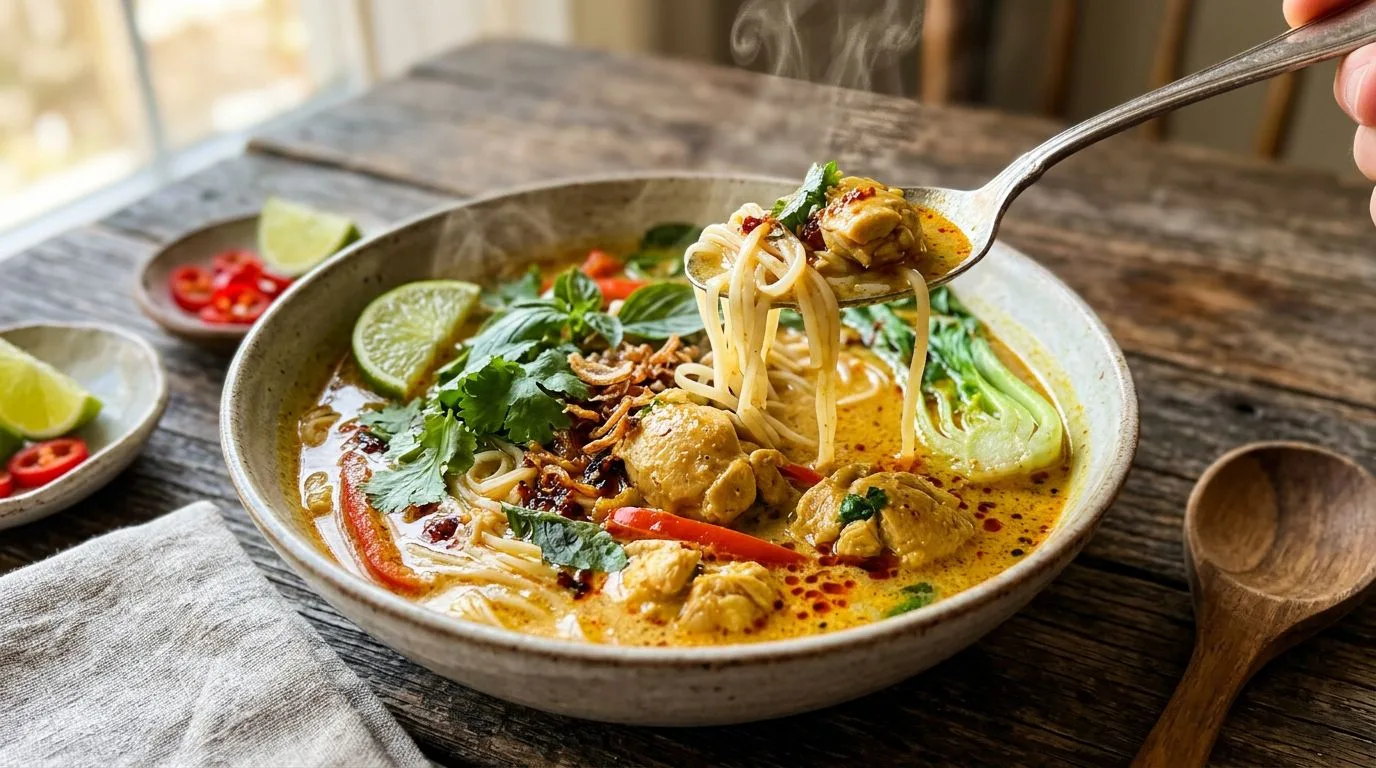
There’s something incredibly comforting about a bowl of Thai coconut curry chicken soup, especially when you’re craving bold flavors wrapped in creamy, aromatic warmth. This soup brings together tender chicken, rich coconut milk, and the vibrant heat of Thai red curry paste, all balanced with a bright squeeze of lime. I love how this recipe delivers restaurant-quality Thai flavors right in your own kitchen, and it comes together in under 30 minutes from start to finish.
What makes this Thai coconut curry chicken soup so special is the layering of flavors—fragrant ginger and garlic, earthy mushrooms, sweet bell peppers, and that signature coconut-curry combination that’s both creamy and complex. The fish sauce adds umami depth, while the lime juice at the end brightens everything up. I find that this soup strikes the perfect balance between comforting and exciting, making it ideal for weeknight dinners when you want something more interesting than the usual rotation.
Whether you’re a Thai food enthusiast or just looking to expand your soup repertoire, this coconut curry chicken soup delivers on flavor, texture, and satisfaction. It’s nourishing, warming, and packed with vegetables and protein, making it a complete meal in a bowl.
Why You’ll Love This Thai Coconut Curry Chicken Soup
This soup checks all the boxes for a winning dinner recipe. First, it’s incredibly quick—you can have a steaming bowl on the table in about 30 minutes, making it perfect for busy weeknights. I love that it doesn’t require any special equipment or advanced cooking techniques, yet the results taste like you spent hours in the kitchen.
The flavor profile is what really sets this soup apart. The Thai red curry paste provides a gentle, aromatic heat that’s warming rather than overwhelming. Combined with the creamy coconut milk, you get a luxurious texture that coats every ingredient. The addition of fresh lime juice at the end is crucial—it cuts through the richness and adds a bright, citrusy note that makes each spoonful incredibly balanced.
I also appreciate how customizable this recipe is. You can easily adjust the spice level by adding more or less curry paste, swap in different vegetables based on what you have on hand, or even make it heartier by serving it over rice or noodles. It’s also naturally gluten-free, and with a few simple swaps, can accommodate various dietary preferences.
Another reason I recommend this soup is that it’s a complete meal. You’re getting protein from the chicken, healthy fats from the coconut milk, and plenty of vegetables. The mushrooms add an earthy depth, the spinach provides a pop of color and nutrients, and the bell peppers contribute sweetness and crunch. It’s nourishing comfort food that doesn’t leave you feeling heavy.
Ingredients and Substitutions
Let me walk you through the key ingredients that make this Thai coconut curry chicken soup so flavorful, along with some practical substitutions if you need to adapt the recipe.
Thai red curry paste is the flavor foundation of this soup. I recommend using a quality store-bought paste like Thai Kitchen or Mae Ploy for the best results. If you prefer less heat, you can substitute yellow curry paste, which is milder and slightly sweeter. Green curry paste will work too, though it has a different flavor profile with more herbal notes.
Coconut milk should be full-fat and unsweetened for the richest, creamiest texture. I find that light coconut milk results in a thinner, less satisfying soup. If you’re looking to reduce calories, you could use half full-fat and half light coconut milk, but I wouldn’t recommend going entirely light.
Chicken breast is lean and cooks quickly when sliced thinly. You can absolutely substitute boneless, skinless chicken thighs, which will add more flavor and stay even more tender. If using thighs, the cooking time remains about the same. For a shortcut, rotisserie chicken works well—just add it at the end to warm through.
Fish sauce is essential for authentic Thai flavor, providing that savory, umami depth. If you don’t have fish sauce, you can substitute soy sauce or tamari, though the flavor will be slightly different. Start with 1 tablespoon and adjust to taste.
Vegetables in this recipe are quite flexible. The mushrooms add earthiness—cremini, shiitake, or button mushrooms all work well. The bell pepper provides sweetness and color; any color will work. Baby spinach wilts beautifully at the end, but you could use kale, bok choy, or Swiss chard instead. Just add heartier greens a bit earlier so they have time to soften.
Fresh ginger and garlic are aromatic powerhouses. While I always prefer fresh, you can use 1 teaspoon of ground ginger in place of fresh ginger if needed. Jarred minced garlic works in a pinch, though fresh tastes brighter.
The lime juice should be freshly squeezed for the best flavor. Bottled lime juice can work, but it lacks the bright, fresh quality that makes this soup sing. I like to serve extra lime wedges on the side so everyone can adjust the acidity to their preference.
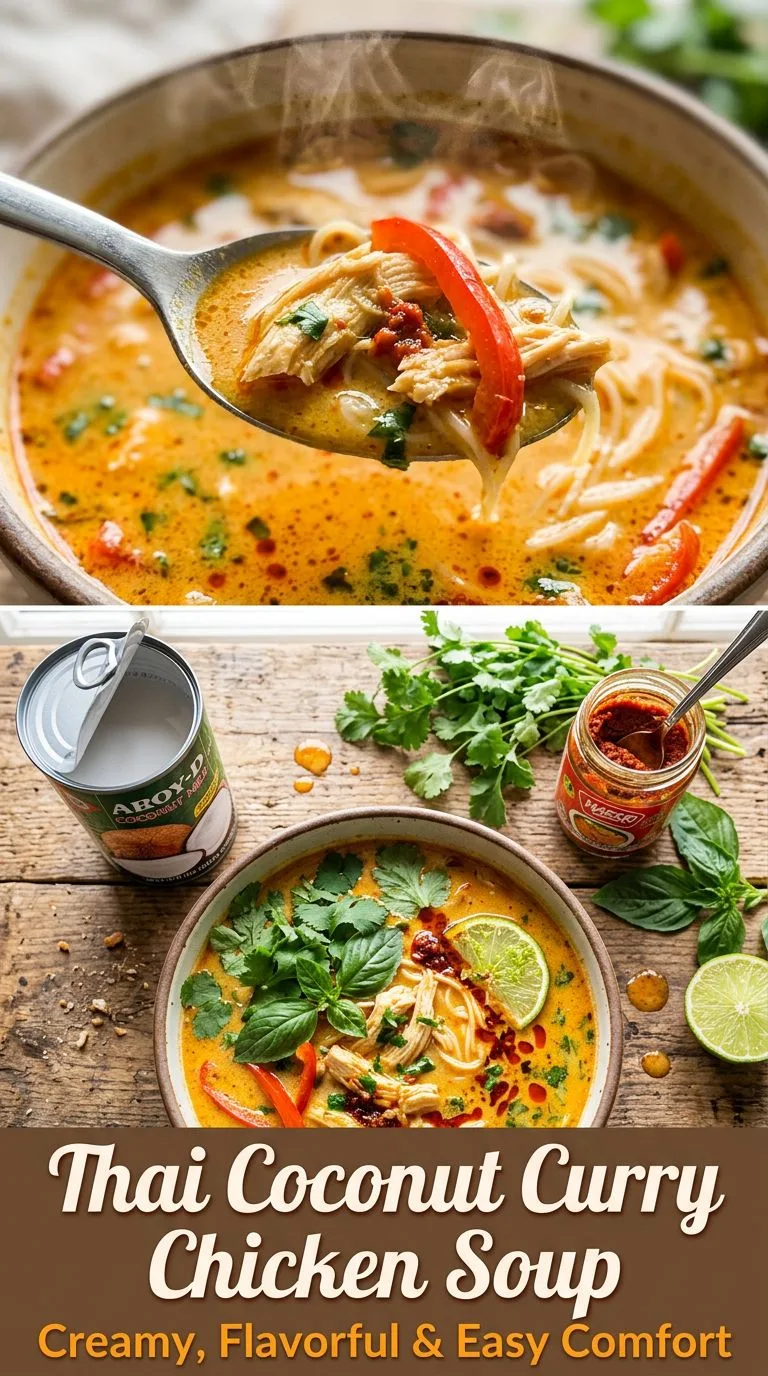
How to Make Thai Coconut Curry Chicken Soup
Making this soup is straightforward and follows a logical progression of building flavors. I’ll walk you through each step so you understand not just what to do, but why.
Start by heating your neutral oil in a large pot or Dutch oven over medium heat. I prefer using a wide, heavy-bottomed pot that gives you plenty of surface area for sautéing. Add the sliced onion and bell pepper, cooking them for 4-5 minutes until they begin to soften. This step builds the vegetable base and allows the natural sugars to start caramelizing slightly, adding depth to your soup.
Next, add the minced garlic and grated ginger. These aromatics are potent, so you only need to cook them for about 30 seconds—just until they become fragrant. Cooking them too long can make them bitter, so keep them moving in the pot.
Now comes the curry paste. Add it to the pot and cook it for about a minute, stirring constantly. This step is called “blooming” the spices, and it’s crucial for developing the full flavor of the curry paste. The heat activates the aromatic compounds and mellows any raw taste. You’ll notice the kitchen starts to smell amazing at this point.
Gradually stir in the chicken broth and coconut milk. I like to add them slowly while stirring to create a smooth, well-combined base without lumps of curry paste. Once everything is incorporated, add the sliced mushrooms, fish sauce, and brown sugar. The brown sugar balances the heat and saltiness, creating a more complex flavor profile.
Bring the soup to a gentle simmer and let it cook for about 5 minutes. This allows the mushrooms to soften and the flavors to meld together. Then add your thinly sliced chicken breast. The key here is to keep the soup at a gentle simmer, not a rolling boil, which can make the chicken tough. Cook for 5-8 minutes until the chicken reaches an internal temperature of 165°F (74°C). Slicing the chicken thinly ensures it cooks quickly and stays tender.
Once the chicken is cooked through, stir in the baby spinach. It will wilt in just 1-2 minutes, adding color and nutrients without overcooking. Remove the pot from the heat and stir in the fresh lime juice. I always add citrus off the heat to preserve its bright, fresh flavor.
Taste your soup at this point and adjust the seasoning. You might want more fish sauce for saltiness, more lime juice for brightness, or more curry paste for heat. This final adjustment is what makes the soup truly your own.
Expert Tips for Best Results
After making this soup many times, I’ve learned a few tricks that consistently improve the results. First, don’t skip slicing the chicken thinly. Thin slices cook quickly and evenly, ensuring tender chicken throughout. If your chicken pieces are thick, they’ll take longer to cook and might end up dry on the outside before the center is done.
I recommend using a good-quality Thai red curry paste. The flavor difference between brands is significant. Look for one with a short ingredient list that includes actual Thai chilies, lemongrass, and galangal. Store any leftover curry paste in the refrigerator—it keeps for months and is great for quick weeknight stir-fries.
When adding the coconut milk, give the can a good shake first. Sometimes the cream separates from the liquid, and shaking helps recombine it. If you open the can and find it very separated, just whisk it together before adding it to the pot.
For the best texture, maintain a gentle simmer rather than a hard boil. Boiling can cause the coconut milk to separate and the chicken to become tough. You want to see small bubbles breaking the surface, not a vigorous rolling boil.
The lime juice should always be added at the end, off the heat. Heat can make citrus taste bitter and dull, so adding it last preserves that bright, fresh quality that makes this soup so vibrant.
If you’re sensitive to spice, start with 1 tablespoon of curry paste and taste before adding more. You can always add heat, but you can’t take it away. Conversely, if you love spicy food, feel free to use 3 tablespoons or more.
Serving Suggestions
This Thai coconut curry chicken soup is delicious on its own, but there are several ways to make it even more satisfying. I love serving it over jasmine rice or rice noodles to make it more filling. The rice soaks up the flavorful broth, and the noodles add a wonderful textural element. If you’re going the noodle route, cook them separately according to package directions and add them to individual bowls before ladling the soup over top.
For toppings, fresh cilantro is essential—it adds a bright, herbal note that complements the curry beautifully. I also like to offer lime wedges on the side so everyone can add an extra squeeze if they want. Thinly sliced red chilies or a drizzle of sriracha are great for those who want extra heat.
Crushed peanuts or cashews add a wonderful crunch and nutty flavor. A small handful sprinkled on top just before serving provides textural contrast to the creamy soup. Bean sprouts are another traditional topping that adds freshness and crunch.
For a complete meal, I recommend serving this soup alongside spring rolls or Thai-style lettuce wraps. A simple cucumber salad with rice vinegar and a touch of sugar also pairs beautifully, providing a cool, crisp contrast to the warm, spicy soup.
If you’re looking for more comforting soup recipes, you might enjoy this creamy chicken enchilada soup, which offers a different flavor profile but similar comfort factor. For another spicy chicken option, this buffalo chicken chili delivers bold flavors in a hearty bowl.
Variations and Substitutions
One of the things I love most about this recipe is how adaptable it is. For a vegetarian version, omit the chicken and fish sauce. Add extra vegetables like broccoli, snap peas, or zucchini, and substitute vegetable broth for the chicken broth. Use soy sauce or tamari in place of fish sauce, and consider adding cubed tofu or chickpeas for protein.
If you want to make this soup more substantial, add cooked rice noodles, ramen noodles, or even zucchini noodles for a lower-carb option. Sweet potato cubes are another excellent addition—add them with the broth and let them simmer until tender before adding the chicken.
For a different protein, shrimp works beautifully in this soup. Add peeled, deveined shrimp in the last 3-4 minutes of cooking, just until they turn pink. You could also use a combination of chicken and shrimp for a more luxurious version.
To make this soup even more aromatic, add a stalk of lemongrass (bruised and cut into 2-inch pieces) when you add the broth. Remove it before serving. Kaffir lime leaves are another traditional Thai ingredient that adds incredible fragrance—add 2-3 leaves with the broth and remove before serving.
If you prefer a thicker soup, you can add a tablespoon of cornstarch mixed with 2 tablespoons of water during the last few minutes of cooking. Stir it in and let it simmer until the soup thickens slightly. Alternatively, blend a portion of the soup (without the chicken) and stir it back in for a creamier texture.
Storage, Freezing, and Reheating
This soup stores beautifully, making it perfect for meal prep. Let the soup cool completely before transferring it to airtight containers. It will keep in the refrigerator for up to 4 days. I find that the flavors actually deepen and meld together after a day in the fridge, making leftovers even more delicious.
When reheating, do so gently over medium-low heat on the stovetop, stirring occasionally. Avoid boiling, as this can cause the coconut milk to separate and the chicken to become tough. If the soup has thickened in the refrigerator, you can thin it with a splash of chicken broth or water. Add a fresh squeeze of lime juice after reheating to brighten the flavors.
For freezing, this soup does reasonably well, though the texture of the vegetables may soften slightly upon thawing. I recommend freezing the soup without the spinach, then adding fresh spinach when you reheat it. Let the soup cool completely, then transfer to freezer-safe containers, leaving about an inch of headspace for expansion. It will keep frozen for up to 3 months.
To thaw, transfer the soup to the refrigerator overnight. Reheat gently on the stovetop, adding the spinach and a fresh squeeze of lime juice just before serving. If you’re in a hurry, you can reheat from frozen over low heat, stirring frequently and adding a bit of broth if needed to prevent sticking.
If you’ve added rice or noodles to the soup, be aware that they will absorb liquid during storage and may become mushy. For best results, I recommend storing the soup and any rice or noodles separately, then combining them when you’re ready to serve.
Frequently Asked Questions
Can I use chicken thighs instead of chicken breast?
Absolutely! Boneless, skinless chicken thighs are an excellent substitute for chicken breast in this soup. They’re more forgiving and tend to stay juicier, even if slightly overcooked. The cooking time remains about the same—just ensure they reach an internal temperature of 165°F (74°C). You can also use a combination of breast and thigh meat for varied texture.
How spicy is this soup?
The spice level depends on the brand of curry paste you use and how much you add. With 2 tablespoons of most standard Thai red curry pastes, this soup has a moderate, warming heat that most people find pleasant rather than overwhelming. If you’re sensitive to spice, start with 1 tablespoon and add more to taste. You can always increase the heat, but you can’t reduce it once it’s added.
Can I make this soup dairy-free?
This soup is naturally dairy-free! Coconut milk is plant-based, and there are no other dairy ingredients in the recipe. Just make sure your curry paste doesn’t contain any dairy products (most don’t, but it’s worth checking the label if you have severe allergies).
What can I substitute for fish sauce?
If you don’t have fish sauce or need a vegetarian alternative, soy sauce or tamari are the best substitutes. Start with 1 tablespoon and adjust to taste. The flavor will be slightly different—fish sauce has a unique umami quality—but soy sauce will still provide the salty, savory depth the soup needs. For a closer match, you can use a combination of soy sauce and a tiny bit of miso paste.
Can I use light coconut milk?
You can, but the soup won’t be as rich and creamy. Light coconut milk has much less fat, which means less flavor and a thinner texture. If you’re watching calories, a better approach is to use half full-fat and half light coconut milk, or to use full-fat coconut milk but serve smaller portions with plenty of vegetables and rice to bulk up the meal.
How do I prevent the coconut milk from curdling?
The key is to maintain a gentle simmer rather than a rolling boil. High heat can cause the coconut milk to separate and look curdled. Keep your heat at medium or medium-low, and look for small bubbles rather than vigorous boiling. If your soup does separate slightly, don’t worry—it will still taste delicious, and a good stir usually brings it back together.
Can I add other vegetables?
Definitely! This soup is very flexible when it comes to vegetables. Broccoli florets, snap peas, bok choy, zucchini, carrots, and bamboo shoots all work well. Just consider the cooking time—harder vegetables like carrots should be added earlier with the broth, while quick-cooking vegetables like bok choy can be added near the end with the spinach.
Is this soup gluten-free?
The soup is naturally gluten-free as long as you use gluten-free curry paste and fish sauce. Most Thai curry pastes are gluten-free, but always check the label to be sure. Some fish sauces may contain gluten or be processed in facilities that handle gluten, so verify the brand if you have celiac disease or severe gluten sensitivity.
Thai Coconut Curry Chicken Soup
This Thai coconut curry chicken soup combines tender chicken, creamy coconut milk, and aromatic red curry paste with fresh vegetables and a bright lime finish. It’s a comforting, flavorful soup that comes together in about 30 minutes, perfect for weeknight dinners when you’re craving bold Thai flavors.
- Prep Time: 10 minutes
- Cook Time: 20 minutes
- Total Time: 30 minutes
- Servings: 4-6 servings
- Difficulty: Easy
- Cuisine: Thai-Inspired
- Course: Dinner, Soup
Ingredients
- 1 tablespoon neutral cooking oil
- 1 medium onion, thinly sliced
- 1 red bell pepper, thinly sliced
- 3 garlic cloves, minced
- 1 tablespoon freshly grated ginger
- 2 tablespoons Thai red curry paste (plus more to taste)
- 4 cups chicken broth
- 1 can (13.5 oz) unsweetened full-fat coconut milk
- 1 lb boneless skinless chicken breast, thinly sliced
- 8 oz cremini mushrooms, sliced
- 1 tablespoon fish sauce
- 2 teaspoons brown sugar
- 2 cups baby spinach
- 2 tablespoons lime juice
- 1/4 cup fresh cilantro, for garnish
- Lime wedges, for serving
Instructions
- Heat the neutral oil in a large pot or Dutch oven over medium heat. Add the thinly sliced onion and bell pepper. Cook for 4-5 minutes, stirring occasionally, until the vegetables begin to soften.
- Add the minced garlic and grated ginger to the pot. Stir constantly for about 30 seconds until fragrant.
- Add the Thai red curry paste and cook, stirring constantly, for 1 minute to bloom the spices and release their flavors.
- Gradually stir in the chicken broth and coconut milk, mixing until smooth and well combined. Add the sliced mushrooms, fish sauce, and brown sugar. Stir to combine.
- Bring the soup to a gentle simmer and cook for 5 minutes to allow the flavors to meld and the mushrooms to soften.
- Add the thinly sliced chicken breast to the soup. Maintain a gentle simmer and cook for 5-8 minutes, stirring occasionally, until the chicken is cooked through and reaches an internal temperature of 165°F (74°C).
- Stir in the baby spinach and cook for 1-2 minutes until wilted.
- Remove the pot from the heat and stir in the fresh lime juice. Taste and adjust seasoning as needed, adding more fish sauce for saltiness, lime juice for brightness, or curry paste for heat.
- Ladle the soup into bowls and garnish with fresh cilantro. Serve with lime wedges on the side.
Recipe Notes
- For a milder soup, start with 1 tablespoon of curry paste and add more to taste.
- Slicing the chicken thinly ensures it cooks quickly and stays tender.
- Always add the lime juice off the heat to preserve its bright, fresh flavor.
- This soup can be made ahead and stored in the refrigerator for up to 4 days.
- For a heartier meal, serve over jasmine rice or rice noodles.
- Chicken thighs can be substituted for chicken breast for a juicier result.
- Make sure to maintain a gentle simmer rather than a rolling boil to prevent the coconut milk from separating.
Nutrition Information (Per Serving, Estimated)
Based on 6 servings
- Calories: 285
- Carbohydrates: 12g
- Protein: 20g
- Fat: 18g
- Saturated Fat: 12g
- Fiber: 2g
- Sugar: 5g
- Sodium: 780mg
Nutrition information is estimated based on standard ingredient values and serving sizes. Actual nutritional content may vary based on specific brands used and portion sizes.
