
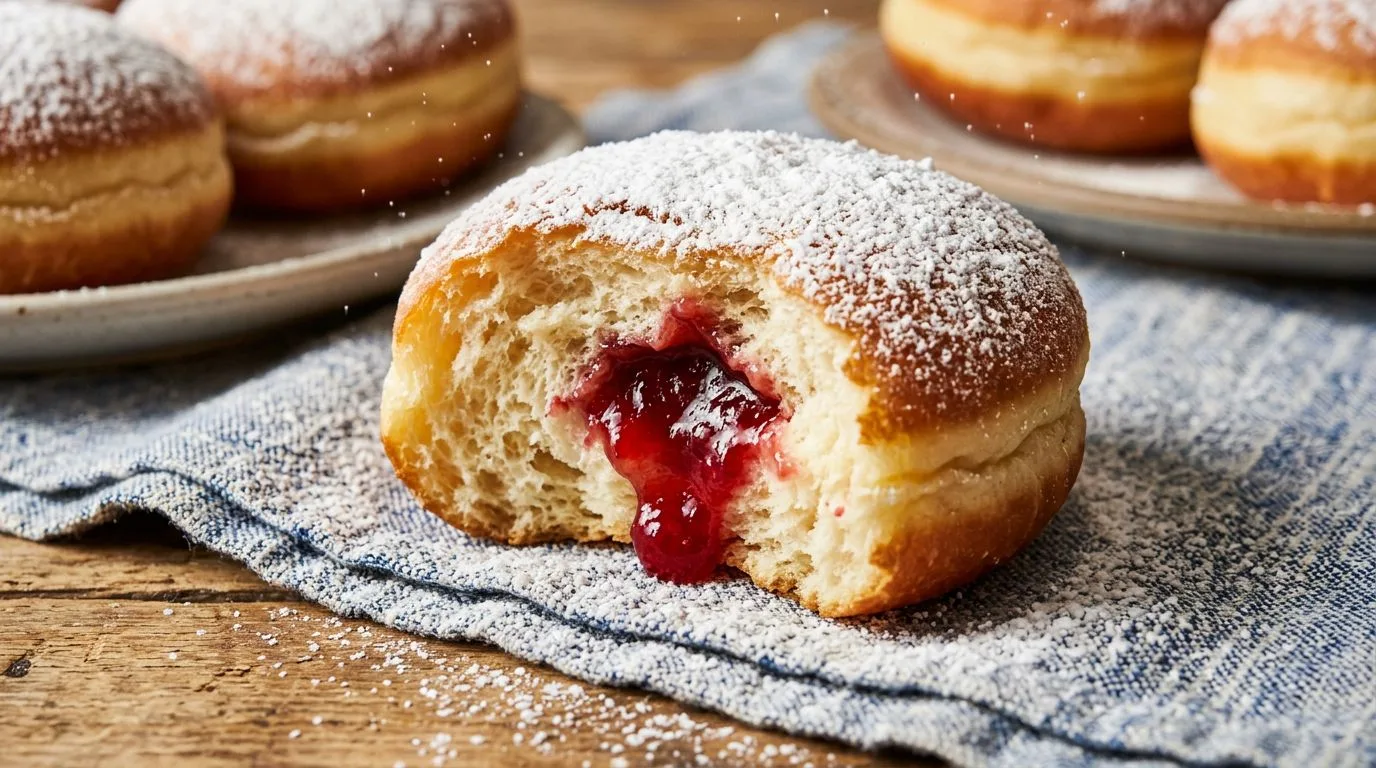
There’s something magical about celebrating Hanukkah with traditional foods, and Sufganiyot Hanukkah Jelly Donuts are one of the most beloved treats of the Festival of Lights. These golden, pillowy donuts are fried to perfection, filled with sweet jam, and dusted with a generous coating of powdered sugar. I love how these donuts combine a crispy exterior with an incredibly soft, fluffy interior and a burst of fruity sweetness in every bite.
Sufganiyot hold special significance during Hanukkah because they’re fried in oil, commemorating the miracle of the oil that burned for eight days in the ancient Temple. While you can find these donuts in bakeries during the holiday season, making them at home is a rewarding experience that fills your kitchen with the most wonderful aroma. I find that homemade sufganiyot are fresher, fluffier, and more satisfying than store-bought versions, and they’re surprisingly achievable even for home bakers.
Whether you’re celebrating Hanukkah or simply want to enjoy delicious homemade jelly donuts, this recipe delivers bakery-quality results. The dough is enriched with butter, eggs, and milk, creating a tender crumb that stays soft for hours. I recommend gathering your family or friends to help with the frying and filling—it makes the process more enjoyable and creates wonderful memories around this festive tradition.
Why You’ll Love This Sufganiyot Recipe
This traditional Sufganiyot Hanukkah Jelly Donuts recipe creates authentic, bakery-style donuts that are perfect for holiday celebrations. The enriched yeast dough produces incredibly soft, fluffy donuts with a delicate texture that melts in your mouth. I love how the sweet jam filling contrasts beautifully with the light, airy dough and the dusting of powdered sugar adds the perfect finishing touch.
These donuts are best enjoyed fresh, ideally within a few hours of frying, when they’re at their absolute peak. The recipe yields about 18-20 donuts, making it perfect for sharing with family and friends during Hanukkah gatherings. I find that the process of making sufganiyot is actually quite straightforward—the dough comes together easily, and while there’s rising time involved, the active work is minimal.
What makes this recipe special is its versatility. While strawberry and raspberry jam are traditional choices, you can experiment with different fillings to suit your preferences. The donuts also make a wonderful dessert for anyone who loves fried pastries, not just during Hanukkah but any time you’re craving something sweet and indulgent.
Ingredients and Substitutions
The foundation of great sufganiyot starts with quality ingredients. All-purpose flour creates the perfect structure for these donuts, giving them enough body to hold the jam filling while remaining tender. I recommend using fresh active dry yeast to ensure proper rising—check the expiration date before you begin.
Warm milk activates the yeast and adds richness to the dough. The milk should be around 105-110°F, warm to the touch but not hot, which would kill the yeast. Granulated sugar sweetens the dough and feeds the yeast, while the eggs provide structure and contribute to the golden color. Unsalted butter adds flavor and creates a softer, more tender crumb. I like to use softened butter so it incorporates easily into the dough.
Vanilla extract enhances the overall flavor, and a touch of salt balances the sweetness. For the filling, strawberry or raspberry jam are traditional choices, but you can use any smooth jam you prefer. I recommend avoiding preserves with large fruit chunks, as they can clog the piping tip. The powdered sugar for dusting should be sifted for the smoothest coating.
For the frying oil, use a neutral vegetable oil with a high smoke point, such as canola, sunflower, or peanut oil. I find that neutral oils allow the flavor of the donuts to shine through without adding any competing tastes. You’ll need enough oil to allow the donuts to float freely—about 2-3 inches deep in your pot.
If you need to make substitutions, you can use whole milk or even a dairy-free milk alternative, though the flavor will be slightly different. For a richer dough, some bakers replace one egg with an additional egg yolk. If you’re out of vanilla extract, you can add a small amount of lemon zest to the dough for a subtle citrus note that complements the jam filling beautifully.

How to Make Sufganiyot Hanukkah Jelly Donuts
Making sufganiyot is a multi-step process, but each step is straightforward. Start by activating the yeast in warm milk with a tablespoon of sugar. This blooming process takes 5-10 minutes and creates a foamy mixture that tells you the yeast is alive and ready to work. If your mixture doesn’t foam, your yeast may be expired or your milk may have been too hot or too cold—start over with fresh ingredients.
Once the yeast is foamy, add the remaining sugar, eggs, softened butter, vanilla extract, salt, and flour to the bowl. Mix everything together until a soft, slightly sticky dough forms. I recommend using a stand mixer with a dough hook if you have one, as it makes the kneading process much easier. Knead the dough for 8-10 minutes until it becomes smooth, elastic, and springs back when you poke it.
Transfer the kneaded dough to a lightly greased bowl, cover it with a clean kitchen towel or plastic wrap, and let it rise in a warm, draft-free spot. The dough should double in size, which typically takes 1 to 1½ hours. I like to place my bowl in a slightly warm oven (turned off) or near a sunny window. The rising time can vary depending on the temperature of your kitchen, so be patient.
Once the dough has doubled, turn it out onto a lightly floured surface and roll it to about ½-inch thickness. This thickness is important—too thin and your donuts will be dense; too thick and they won’t cook through properly. Use a round cutter (2½ to 3 inches in diameter) to cut out circles. You can re-roll the scraps once to cut additional donuts, though these may be slightly less tender.
Arrange the cut donuts on parchment-lined baking sheets, leaving space between them. Cover them loosely with a kitchen towel and let them rise again for 30-45 minutes until they’re puffy and nearly doubled. This second rise is crucial for achieving that light, airy texture that makes sufganiyot so special.
While the donuts are rising, heat your oil in a deep, heavy-bottomed pot to 350°F. Use a candy or deep-fry thermometer to monitor the temperature—this is essential for perfectly cooked donuts. If the oil is too hot, the donuts will brown too quickly on the outside while remaining raw inside. If it’s too cool, they’ll absorb too much oil and become greasy.
Carefully lower 2-3 donuts at a time into the hot oil, being careful not to crowd the pot. Fry for 1-2 minutes per side until they’re golden brown all over. I recommend using a slotted spoon or spider strainer to flip them and remove them from the oil. Transfer the fried donuts to a wire rack lined with paper towels to drain excess oil.
Let the donuts cool slightly—they should be warm but not hot when you fill them. Fill a piping bag fitted with a narrow round tip with your jam of choice. Insert the tip into the side of each donut and gently squeeze to fill it with jam. You’ll feel the donut become slightly heavier and fuller. Finally, dust the filled donuts generously with powdered sugar and serve them fresh.
Expert Tips for Best Results
Temperature control is the key to perfect sufganiyot. I always use a thermometer to monitor the oil temperature, adjusting the heat as needed to maintain 350°F. If you don’t have a thermometer, you can test the oil by dropping in a small piece of dough—it should sizzle immediately and rise to the surface, turning golden in about a minute.
Don’t skip the second rise after cutting the donuts. This step ensures they’re light and fluffy rather than dense. I find that properly risen donuts will look noticeably puffy and feel light when you gently touch them. They should jiggle slightly when you move the baking sheet.
When frying, work in small batches to maintain the oil temperature. Adding too many donuts at once will drop the temperature significantly, resulting in greasy, undercooked donuts. I typically fry 2-3 donuts at a time, depending on the size of my pot. Be patient and give each batch the time it needs.
For the filling, I recommend using a piping bag with a narrow tip rather than trying to cut the donuts open. This method keeps the donuts intact and creates a cleaner presentation. Insert the tip about halfway into the donut and fill until you feel slight resistance—overfilling can cause the jam to leak out.
If you’re making sufganiyot for a party, you can prepare the dough the night before. After the first rise, punch down the dough, cover it tightly, and refrigerate it overnight. The next day, let it come to room temperature for about 30 minutes before rolling and cutting. This cold fermentation actually develops more flavor in the dough.
Serving Suggestions
Sufganiyot Hanukkah Jelly Donuts are best served fresh and warm, ideally within a few hours of frying. I love serving them as the centerpiece dessert at Hanukkah celebrations, arranged on a beautiful platter with extra powdered sugar for dusting. They pair wonderfully with hot coffee, tea, or even hot chocolate for a truly indulgent treat.
For a festive presentation, you can arrange the donuts on a tiered serving stand or create a donut tower. Some people like to serve them alongside other Hanukkah treats like snowball cookies to offer variety. I find that having a mix of desserts makes holiday gatherings more memorable.
If you’re serving sufganiyot at a party, consider setting up a “donut bar” where guests can choose their own fillings and toppings. Offer different jam flavors, chocolate sauce, or even custard for filling, along with various toppings like colored sugar, sprinkles, or chocolate shavings. This interactive element makes the experience more fun, especially for children.
These donuts also make wonderful gifts. Package them in decorative boxes or bags tied with festive ribbons to share with neighbors, teachers, or friends. Just be sure to include a note mentioning they’re best enjoyed the same day for optimal freshness.
Variations and Substitutions
While traditional sufganiyot are filled with strawberry or raspberry jam, there are many delicious variations to explore. I love experimenting with different fillings like apricot preserves, blueberry jam, or even lemon curd for a tangy twist. Chocolate lovers can fill their donuts with Nutella or chocolate ganache for a decadent treat.
For a more sophisticated flavor, try filling the donuts with vanilla pastry cream or dulce de leche. Some bakers even create savory versions filled with cheese or vegetable mixtures, though these are less traditional. You can also leave some donuts unfilled and simply dust them with cinnamon sugar for a simpler variation, similar to apple cider donuts.
If you want to add extra flavor to the dough itself, consider incorporating citrus zest, ground cardamom, or a touch of cinnamon. These subtle additions complement the jam filling beautifully. For a richer dough, you can replace some of the milk with heavy cream or add an extra egg yolk.
For those with dietary restrictions, you can make dairy-free sufganiyot by using plant-based milk and vegan butter. The texture will be slightly different but still delicious. Some bakers have even experimented with baking sufganiyot instead of frying them, though they won’t have the same traditional texture and won’t honor the symbolic significance of the oil.
Storage, Freezing, and Reheating
Sufganiyot are best enjoyed fresh on the day they’re made, as fried donuts tend to lose their optimal texture over time. However, if you have leftovers, store them in an airtight container at room temperature for up to 2 days. I recommend placing parchment paper between layers to prevent them from sticking together. The powdered sugar coating may absorb into the donuts over time, so you might want to dust them with fresh sugar before serving.
While I don’t typically recommend freezing filled sufganiyot, you can freeze the unfilled fried donuts for up to 1 month. Let them cool completely, then place them in a single layer on a baking sheet and freeze until solid. Transfer the frozen donuts to a freezer bag, removing as much air as possible. When you’re ready to serve them, thaw at room temperature, then fill and dust with powdered sugar.
For the best results, you can also freeze the dough after the first rise. Shape it into a ball, wrap it tightly in plastic wrap, and place it in a freezer bag. Freeze for up to 1 month. To use, thaw the dough overnight in the refrigerator, then let it come to room temperature before rolling, cutting, and proceeding with the second rise.
If your sufganiyot have become slightly stale, you can refresh them briefly in a 300°F oven for 3-5 minutes. This won’t restore them to their original glory, but it will improve the texture slightly. Avoid microwaving, as this can make them tough and chewy.
Frequently Asked Questions
Can I bake sufganiyot instead of frying them?
While you can bake these donuts at 375°F for about 12-15 minutes, they won’t have the traditional texture or appearance of authentic sufganiyot. More importantly, frying in oil is symbolic of the Hanukkah miracle, so baked versions don’t carry the same cultural significance. I recommend sticking with frying for the best results and to honor the tradition.
Why are my donuts greasy?
Greasy donuts are usually the result of oil that’s too cool. When the temperature drops below 340°F, the donuts absorb more oil instead of forming a crispy exterior. I always use a thermometer and adjust the heat between batches to maintain 350°F. Also, make sure you’re not overcrowding the pot, which can lower the oil temperature significantly.
Can I make the dough ahead of time?
Yes! After the first rise, you can punch down the dough, cover it tightly, and refrigerate it for up to 24 hours. This cold fermentation actually develops more flavor. When you’re ready to continue, let the dough come to room temperature for about 30 minutes before rolling and cutting. The second rise may take slightly longer with cold dough.
What’s the best jam to use for filling?
Traditional sufganiyot are filled with strawberry or raspberry jam, but any smooth jam works well. I recommend avoiding preserves with large fruit chunks, as they can clog your piping tip. Seedless jams work best for a smooth filling. Some people also enjoy apricot, blueberry, or even chocolate hazelnut spread as alternative fillings.
How do I know when the donuts are fully cooked?
Properly cooked sufganiyot should be deep golden brown on both sides and sound hollow when tapped. If you’re unsure, you can sacrifice one donut by cutting it open to check—the interior should be fully cooked with no raw dough. Each side typically needs 1-2 minutes at 350°F. If they’re browning too quickly but seem undercooked inside, your oil is too hot.
Can I use instant yeast instead of active dry yeast?
Yes, you can substitute instant yeast for active dry yeast in equal amounts. The main difference is that instant yeast can be mixed directly into the dry ingredients without blooming it first. However, I still prefer to bloom it in the warm milk as the recipe directs, as this gives you confirmation that your yeast is active before you invest time in making the dough.
Sufganiyot (Hanukkah Jelly Donuts)
Traditional Hanukkah jelly donuts featuring soft, fluffy fried dough filled with sweet fruit jam and dusted with powdered sugar. These golden, pillowy sufganiyot are the perfect festive treat for celebrating the Festival of Lights.
- Prep Time: 30 minutes
- Rising Time: 2 hours
- Cook Time: 20 minutes
- Total Time: 2 hours 50 minutes
- Yield: 18-20 donuts
- Difficulty: Medium
- Cuisine: Jewish
- Course: Dessert
Ingredients
- 3½ cups all-purpose flour
- 2¼ tsp active dry yeast
- ¾ cup warm milk (105-110°F)
- ¼ cup granulated sugar
- 2 large eggs
- 4 tbsp unsalted butter, softened
- 1 tsp vanilla extract
- ½ tsp salt
- 1 cup strawberry or raspberry jam
- ½ cup powdered sugar (for dusting)
- 6 cups neutral vegetable oil (for frying)
Instructions
- In a large mixing bowl, combine warm milk, active dry yeast, and 1 tablespoon of the sugar. Let stand for 5-10 minutes until foamy and the yeast is activated.
- Add the remaining sugar, eggs, softened butter, vanilla extract, salt, and flour to the yeast mixture.
- Mix until a soft dough forms, then knead for 8-10 minutes until the dough is smooth, elastic, and springs back when poked. Use a stand mixer with a dough hook or knead by hand on a lightly floured surface.
- Transfer the dough to a lightly greased bowl, cover with a clean kitchen towel or plastic wrap, and let rise in a warm, draft-free place for 1 to 1½ hours until doubled in size.
- Once risen, turn the dough out onto a lightly floured surface and roll it to approximately ½-inch thickness.
- Cut into 2½ to 3-inch circles using a round cutter. Gather and re-roll scraps once to cut additional donuts.
- Arrange the cut donuts on parchment-lined baking sheets, leaving space between them. Cover loosely with a kitchen towel and let rise for another 30-45 minutes until puffy and nearly doubled.
- Heat vegetable oil in a deep, heavy-bottomed pot to 350°F (175°C). Use a candy or deep-fry thermometer to maintain the temperature throughout frying.
- Carefully fry the donuts in batches of 2-3 for approximately 1-2 minutes per side until golden brown and cooked through. Avoid overcrowding the pot.
- Transfer fried donuts to a wire rack lined with paper towels and let cool slightly until warm but not hot.
- Fill a piping bag fitted with a narrow round tip with strawberry or raspberry jam. Insert the tip into the side of each donut and gently squeeze to fill with jam.
- Dust the filled donuts generously with powdered sugar and serve fresh.
Recipe Notes
- Maintain oil temperature at 350°F for best results. Oil that’s too cool will produce greasy donuts; oil that’s too hot will brown the outside before cooking the inside.
- The dough can be made ahead and refrigerated after the first rise for up to 24 hours. Let it come to room temperature before rolling and cutting.
- Use smooth jam without large fruit chunks for easier piping. Seedless varieties work best.
- Sufganiyot are best enjoyed fresh on the day they’re made, ideally within a few hours of frying.
- Don’t skip the second rise after cutting—this ensures light, fluffy donuts rather than dense ones.
- You can experiment with different fillings such as chocolate spread, lemon curd, or vanilla pastry cream.
Nutrition Information (Per Donut, Estimated)
- Calories: 245
- Carbohydrates: 32g
- Protein: 4g
- Fat: 11g
- Saturated Fat: 3g
- Fiber: 1g
- Sugar: 12g
- Sodium: 95mg
Nutrition information is estimated based on standard ingredient measurements and may vary based on specific products used and portion sizes.
