
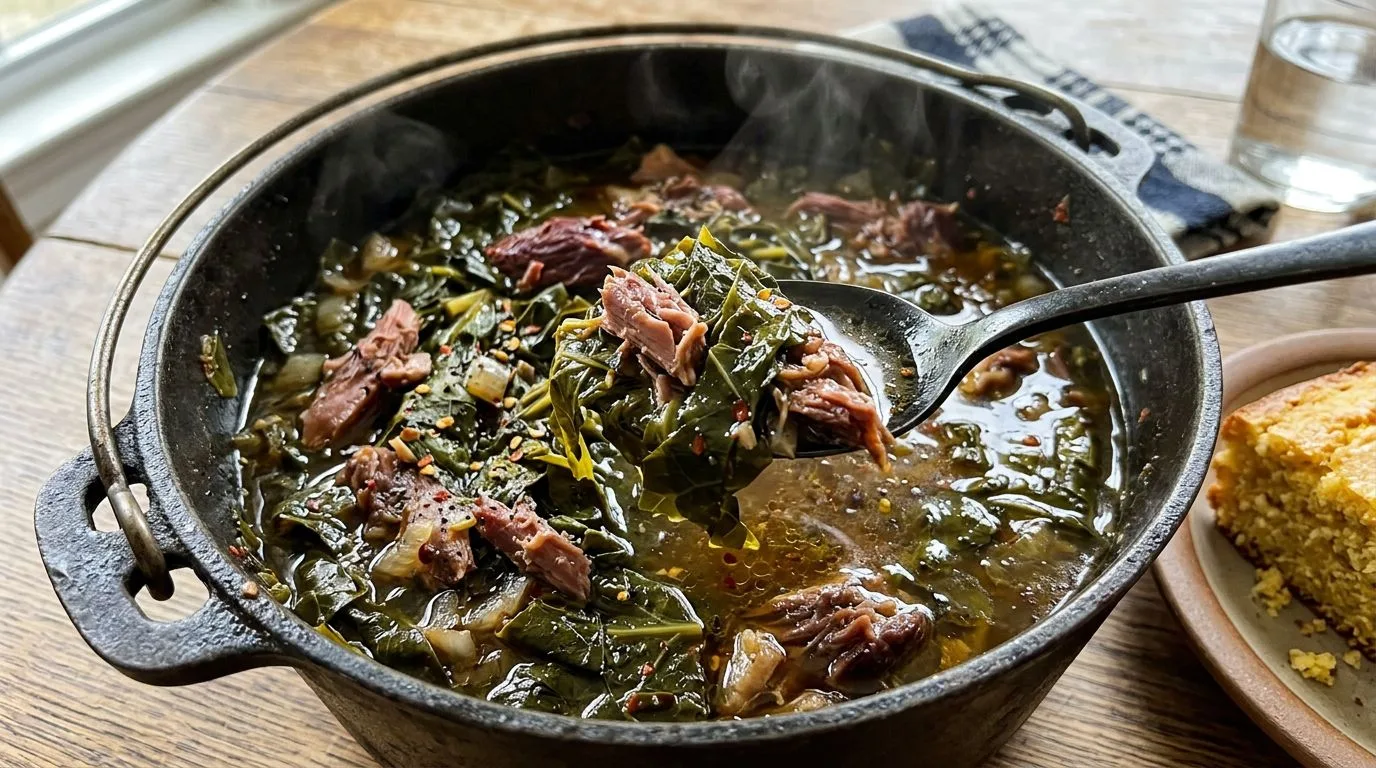
There’s something deeply comforting about a pot of Southern collard greens with smoked turkey simmering on the stove. The rich, smoky aroma fills the kitchen, and the tender, flavorful greens deliver that authentic soul food experience that makes any meal feel special. I love how this traditional Southern side dish transforms simple collard greens into something extraordinary through slow simmering with smoked turkey, creating layers of savory, slightly tangy flavor that perfectly complement any main course.
This recipe captures the essence of classic Southern cooking—patient, flavorful, and deeply satisfying. The smoked turkey leg infuses the cooking broth with incredible depth, while the apple cider vinegar adds that signature brightness that balances the richness. Whether you’re planning a Thanksgiving feast, Sunday dinner, or just craving authentic soul food, these collard greens deliver every time. I find that taking the time to simmer them properly makes all the difference, resulting in tender greens that aren’t bitter and a pot liquor so good you’ll want to soak it up with cornbread.
What I appreciate most about this recipe is how it honors tradition while remaining accessible to home cooks. You don’t need any special equipment or hard-to-find ingredients—just fresh collard greens, a smoked turkey leg, and patience. The result is a side dish that can easily become the star of your table.
Why You’ll Love This Recipe
This Southern collard greens recipe checks all the boxes for what makes a truly memorable side dish. First, the flavor is absolutely incredible—the smoked turkey provides a rich, meaty backbone without being overly heavy, while the slow simmering process allows the greens to absorb all those wonderful savory notes. I love that this recipe creates its own flavorful pot liquor, that delicious cooking broth that Southern cooks treasure.
The recipe is also surprisingly straightforward. While it does require some time on the stove, the actual hands-on work is minimal. You’re mostly letting the pot do its magic while you attend to other dishes or simply relax. This makes it perfect for holiday cooking when you need dishes that don’t demand constant attention.
Another reason I recommend this recipe is its versatility. These collard greens pair beautifully with everything from roast turkey for Thanksgiving to fried chicken, ham, or barbecue. They’re equally at home at a formal holiday table or a casual weeknight dinner. Plus, they actually taste even better the next day, making them ideal for meal prep or preparing ahead for gatherings.
Finally, this recipe is healthier than many traditional versions that rely heavily on pork fat. The smoked turkey provides plenty of flavor while keeping the dish lighter, and collard greens themselves are nutritional powerhouses packed with vitamins A, C, and K, plus fiber and calcium.
Ingredients and Substitutions
Let me walk you through what you’ll need for these delicious Southern collard greens and offer some helpful substitutions if needed.
Fresh Collard Greens: The star of the show! Look for vibrant, dark green leaves without yellowing or wilting. Two pounds might seem like a lot, but collard greens cook down significantly. If you can’t find fresh collards, you can use frozen, though I find fresh gives the best texture and flavor. Kale or mustard greens can substitute in a pinch, though they’ll change the traditional flavor profile.
Smoked Turkey Leg: This provides the essential smoky, meaty flavor that makes these greens so special. One large turkey leg is typically enough. If you’re using smoked turkey with brown sugar rub, it will add a subtle sweetness that complements the greens beautifully. You can substitute smoked turkey wings or necks, or even use ham hocks for a more traditional pork-based version.
Onion and Garlic: These aromatics build the flavor foundation. I like using a large yellow or white onion, diced, and fresh garlic cloves, minced. You can use onion powder and garlic powder in a pinch (about 1 teaspoon of each), but fresh really is better here.
Chicken Broth: This creates the cooking liquid and adds depth. Low-sodium broth gives you better control over the final seasoning. You can substitute vegetable broth or even water, though broth adds more flavor.
Apple Cider Vinegar: This is the secret ingredient that brightens the greens and cuts through the richness. Don’t skip it! White vinegar can substitute, but apple cider vinegar has a mellower, slightly fruity quality I prefer.
Sugar: Just a teaspoon balances the slight bitterness of the greens and the acidity of the vinegar. You can use honey or omit it entirely if you prefer.
Red Pepper Flakes and Black Pepper: These add gentle heat and depth. Adjust to your preference—I like the subtle warmth, but you can increase or decrease as desired.
Salt: Added to taste at the end. Since the smoked turkey and broth contain sodium, I recommend waiting until the end to adjust the salt level.
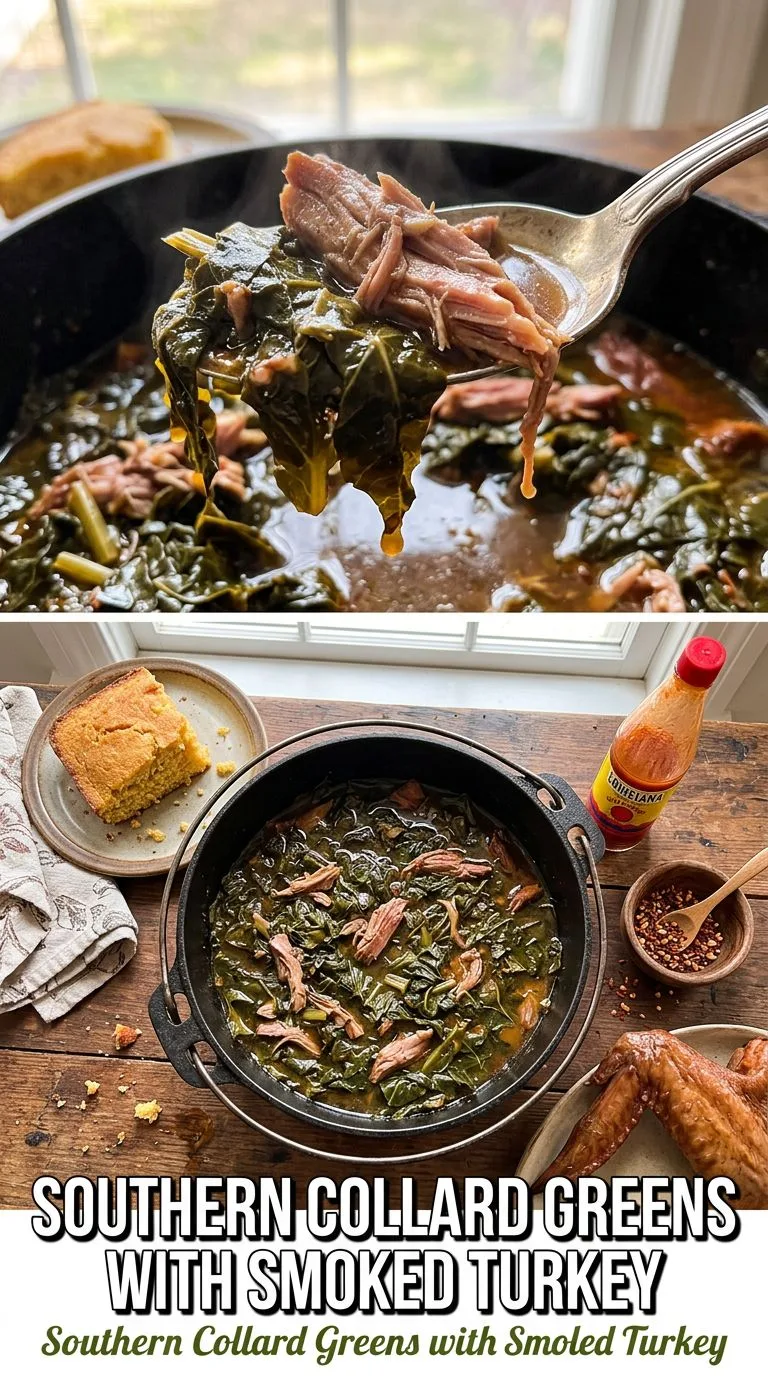
How to Make Southern Collard Greens with Smoked Turkey
Making these collard greens is a straightforward process that rewards patience. Here’s how I approach it for the best results.
Step 1: Prepare the Collard Greens
Start by washing your collard greens thoroughly. I fill my sink with cold water and swish the greens around, then drain and repeat until no grit remains. Collards can be sandy, so don’t rush this step. Next, remove the tough center stems by folding each leaf in half along the stem and cutting or tearing it away. Stack several leaves, roll them up, and slice into bite-sized ribbons or pieces. This makes them easier to eat and helps them cook evenly.
Step 2: Simmer the Smoked Turkey
Place your smoked turkey leg in a large pot or Dutch oven and add the chicken broth. Bring this to a simmer over medium-high heat, then reduce the heat to medium-low, cover, and let it cook for 45 to 60 minutes. This initial simmering extracts all that wonderful smoky flavor from the turkey and begins to tenderize the meat. The turkey should start to feel tender when pierced with a fork.
Step 3: Add Aromatics and Greens
Once the turkey has simmered, add your chopped onion and minced garlic to the pot. Then begin adding the collard greens. They’ll seem like too much at first, but just keep adding handfuls—they’ll wilt down quickly. Stir in the sugar, red pepper flakes, and black pepper. Cover the pot and return to a gentle simmer.
Step 4: Simmer Until Tender
Let the greens simmer gently for 45 to 60 minutes, stirring occasionally. You want them tender but not mushy. The cooking time can vary depending on the age and toughness of your greens. Taste a piece after 45 minutes—if it’s still tough or bitter, continue cooking. Properly cooked collard greens should be tender and have a deep, savory flavor.
Step 5: Shred the Turkey
Carefully remove the turkey leg from the pot using tongs. Let it cool slightly on a cutting board, then shred the meat from the bones, discarding the skin and bones. Return the shredded turkey meat to the pot and stir it through the greens.
Step 6: Finish and Season
Stir in the apple cider vinegar—this brightens everything beautifully. Taste the greens and the pot liquor, then adjust the salt as needed. Remember that the flavors will have concentrated during cooking, so add salt gradually.
Expert Tips for Best Results
After making countless pots of collard greens, I’ve learned a few tricks that consistently deliver the best results.
Don’t Rush the Cooking: The key to tender, flavorful collard greens is time. I know it’s tempting to crank up the heat, but a gentle simmer is essential. High heat can make the greens tough and bitter. Low and slow is the way to go.
Taste as You Go: Collard greens can vary in bitterness depending on when they were harvested and how fresh they are. Taste the greens after 45 minutes of cooking. If they’re still bitter, they need more time. The bitterness mellows significantly with proper cooking.
Save That Pot Liquor: The cooking liquid, called pot liquor or potlikker in the South, is liquid gold. It’s packed with nutrients and flavor. I love serving the greens with plenty of this broth and soaking it up with cornbread. Some people even drink it straight!
Use a Large Enough Pot: Two pounds of raw collard greens take up a lot of space before they wilt. Use at least a 6-quart pot or Dutch oven to give yourself room to work. The greens will cook down to about a quarter of their original volume.
Add Vinegar at the End: I always add the apple cider vinegar after the greens are fully cooked. Adding it too early can cause the greens to toughen and take longer to become tender.
Consider Overnight Refrigeration: Like many slow-cooked dishes, collard greens taste even better the next day. The flavors meld and deepen overnight. If you have time, make them a day ahead.
Serving Suggestions
Southern collard greens with smoked turkey are incredibly versatile and pair wonderfully with so many dishes. My favorite way to serve them is as part of a traditional Southern spread alongside cornbread, black-eyed peas, and mac and cheese. The combination is pure comfort food magic.
For holiday meals, these greens are a natural companion to roasted turkey, glazed ham, or prime rib. They add a savory, slightly tangy element that balances richer main courses beautifully. I always include them in my Thanksgiving menu—they’ve become a non-negotiable tradition.
These greens also shine alongside barbecue. Whether you’re serving pulled pork, ribs, or smoked chicken, the greens provide a flavorful, nutritious counterpoint to the sweet and smoky barbecue flavors. Add some coleslaw and baked beans, and you have a complete barbecue feast.
For a simpler meal, I love serving collard greens over creamy grits or alongside fried chicken. The pot liquor soaks into the grits wonderfully, creating an incredibly satisfying dish. And don’t forget the cornbread—it’s essential for soaking up that delicious cooking broth.
As for beverages, sweet tea is the classic Southern pairing, though I also enjoy these greens with a crisp beer or a glass of iced lemonade.
Variations and Substitutions
While this recipe is delicious as written, there are several ways you can customize it to suit your preferences or dietary needs.
Spicier Greens: If you like heat, increase the red pepper flakes to 1 teaspoon or add a diced jalapeño with the onions. Some cooks add a dash of hot sauce at the end for extra kick.
Traditional Pork Version: For a more traditional approach, substitute the smoked turkey leg with a ham hock or smoked pork neck bones. This will give you a richer, more porky flavor that’s classic in Southern cooking.
Vegetarian Collard Greens: Omit the smoked turkey and use vegetable broth instead of chicken broth. Add 1 tablespoon of liquid smoke to replicate that smoky flavor, and consider adding an extra tablespoon of olive oil for richness. You might also add some smoked paprika for depth.
Mixed Greens: Combine collard greens with mustard greens, turnip greens, or kale for a more complex flavor. Use about 1 pound of collards and 1 pound of mixed greens.
Bacon Addition: For extra richness, cook 4-6 slices of chopped bacon in the pot before adding the broth and turkey. Use the rendered bacon fat as part of your cooking base.
Sweeter Greens: Some Southern cooks prefer sweeter greens. Increase the sugar to 1 tablespoon, or add a splash of maple syrup at the end.
Storage, Freezing, and Reheating
One of the great things about collard greens is how well they store and reheat, often tasting even better as leftovers.
Refrigerator Storage: Let the greens cool to room temperature, then transfer them to an airtight container with plenty of the pot liquor. They’ll keep in the refrigerator for 4 to 5 days. I actually prefer them on day two or three when the flavors have had time to meld.
Freezing: Collard greens freeze beautifully. Let them cool completely, then portion them into freezer-safe containers or heavy-duty freezer bags, making sure to include plenty of the cooking liquid. Remove as much air as possible and freeze for up to 3 months. Label with the date so you remember when you made them.
Thawing: The best way to thaw frozen collard greens is to transfer them to the refrigerator overnight. For quicker thawing, you can use the defrost setting on your microwave, though I find refrigerator thawing preserves the texture better.
Reheating: To reheat refrigerated greens, simply warm them in a pot over medium-low heat, stirring occasionally, until heated through. Add a splash of water or broth if they seem dry. For frozen greens, you can reheat them directly from frozen in a pot over low heat, stirring occasionally and breaking up any frozen chunks as they thaw. Microwave reheating works too—heat in 1-minute intervals, stirring between each, until hot throughout.
Refreshing Leftovers: If your leftover greens taste a bit flat, I recommend adding a fresh splash of apple cider vinegar and a pinch of red pepper flakes when reheating. This brightens them right up.
Frequently Asked Questions
Why are my collard greens bitter?
Collard greens can be bitter if they’re not cooked long enough or if they’re older, tougher greens. The solution is to simmer them longer—sometimes up to 90 minutes—until the bitterness mellows. The small amount of sugar in this recipe also helps balance any bitterness. Make sure you’re removing the tough stems, as these can contribute to bitterness as well.
Can I use a slow cooker for this recipe?
Absolutely! After preparing the greens and browning the aromatics if desired, transfer everything to a slow cooker. Cook on low for 6-8 hours or on high for 3-4 hours. Remove the turkey leg, shred the meat, return it to the pot, and add the vinegar before serving.
Do I have to use smoked turkey?
While smoked turkey provides wonderful flavor, you can use regular turkey, chicken, or even make vegetarian greens. If using unsmoked meat, consider adding a teaspoon of liquid smoke or some smoked paprika to replicate that traditional smoky flavor.
How do I know when the collard greens are done?
Properly cooked collard greens should be tender enough to cut easily with a fork but not mushy or falling apart. Taste a piece—it should be tender, savory, and not bitter. If there’s still a tough, fibrous texture or lingering bitterness, continue cooking.
Can I make this recipe in an Instant Pot?
Yes! Use the sauté function to cook the aromatics briefly, then add all ingredients except the vinegar. Pressure cook on high for 25 minutes, then natural release for 10 minutes. Remove the turkey leg, shred the meat, return it to the pot, and stir in the vinegar.
What’s the white stuff on collard greens?
That white residue is a natural waxy coating that protects the leaves. It’s completely harmless and will wash off when you clean the greens. Just make sure to wash them thoroughly in cold water.
Should I remove all the stems?
Remove the thick center stem that runs down the middle of each leaf—it’s too tough and fibrous to enjoy. The smaller stems near the edges of the leaves are fine to leave on; they’ll become tender during cooking.
Why add vinegar to collard greens?
Vinegar is a traditional addition that serves multiple purposes. It brightens the flavor, cuts through the richness, helps balance any bitterness, and adds a pleasant tangy note that makes the greens more complex and interesting. It’s a signature element of Southern-style greens.
Southern Collard Greens with Smoked Turkey
Tender, flavorful Southern collard greens slow-simmered with smoked turkey, aromatics, and a touch of vinegar. This classic soul food side dish is perfect for holidays, Sunday dinners, or any time you’re craving authentic Southern comfort food.
- Prep Time: 20 minutes
- Cook Time: 1 hour 45 minutes
- Total Time: 2 hours 5 minutes
- Servings: 6-8 servings
- Difficulty: Easy
- Cuisine: Southern, Soul Food
- Course: Side Dish
Ingredients
- 2 lbs fresh collard greens
- 1 smoked turkey leg
- 1 large onion, diced
- 4 cloves garlic, minced
- 4 cups chicken broth
- 2 tbsp apple cider vinegar
- 1 tsp sugar
- 1/2 tsp red pepper flakes
- 1/2 tsp black pepper
- Salt to taste
Instructions
- Wash collard greens thoroughly in cold water, repeating until no grit remains. Remove and discard the tough center stems from each leaf. Stack leaves, roll them up, and chop into bite-sized pieces.
- Place the smoked turkey leg and chicken broth in a large pot or Dutch oven. Bring to a simmer over medium-high heat, then reduce heat to medium-low. Cover and simmer for 45-60 minutes until the turkey begins to soften and becomes tender.
- Add the diced onion, minced garlic, chopped collard greens, sugar, red pepper flakes, and black pepper to the pot. Stir to combine. The greens will seem voluminous but will wilt down quickly.
- Cover the pot and return to a gentle simmer. Cook for 45-60 minutes, stirring occasionally, until the collard greens are tender and flavorful. Taste a piece to check for tenderness—they should be soft without being mushy.
- Carefully remove the smoked turkey leg from the pot using tongs. Let it cool slightly, then shred the meat from the bones, discarding the skin and bones. Return the shredded turkey meat to the pot.
- Stir in the apple cider vinegar. Taste the greens and the pot liquor, then adjust salt as needed. Remember that the smoked turkey and broth already contain sodium, so add salt gradually.
- Serve the collard greens warm with plenty of the flavorful cooking broth (pot liquor). Pair with cornbread for the ultimate Southern experience.
Recipe Notes
- The cooking time for collard greens can vary depending on their age and toughness. Older greens may need up to 90 minutes to become fully tender.
- Don’t skip the apple cider vinegar—it’s added at the end to brighten the flavors and balance the richness. Adding it too early can toughen the greens.
- Save the pot liquor (cooking broth)! It’s incredibly flavorful and nutritious. Serve it with the greens and use cornbread to soak it up.
- These greens taste even better the next day as the flavors continue to develop. Consider making them a day ahead for the best flavor.
- For spicier greens, increase the red pepper flakes or add hot sauce to taste.
- If using frozen collard greens, you’ll need about 2 pounds. Thaw them first and reduce the initial cooking time slightly.
Estimated Nutrition Per Serving (based on 8 servings)
- Calories: 145
- Carbohydrates: 12g
- Protein: 14g
- Fat: 5g
- Saturated Fat: 1g
- Fiber: 4g
- Sugar: 3g
- Sodium: 520mg
Nutrition information is estimated and will vary based on specific ingredients used and portion sizes.
