
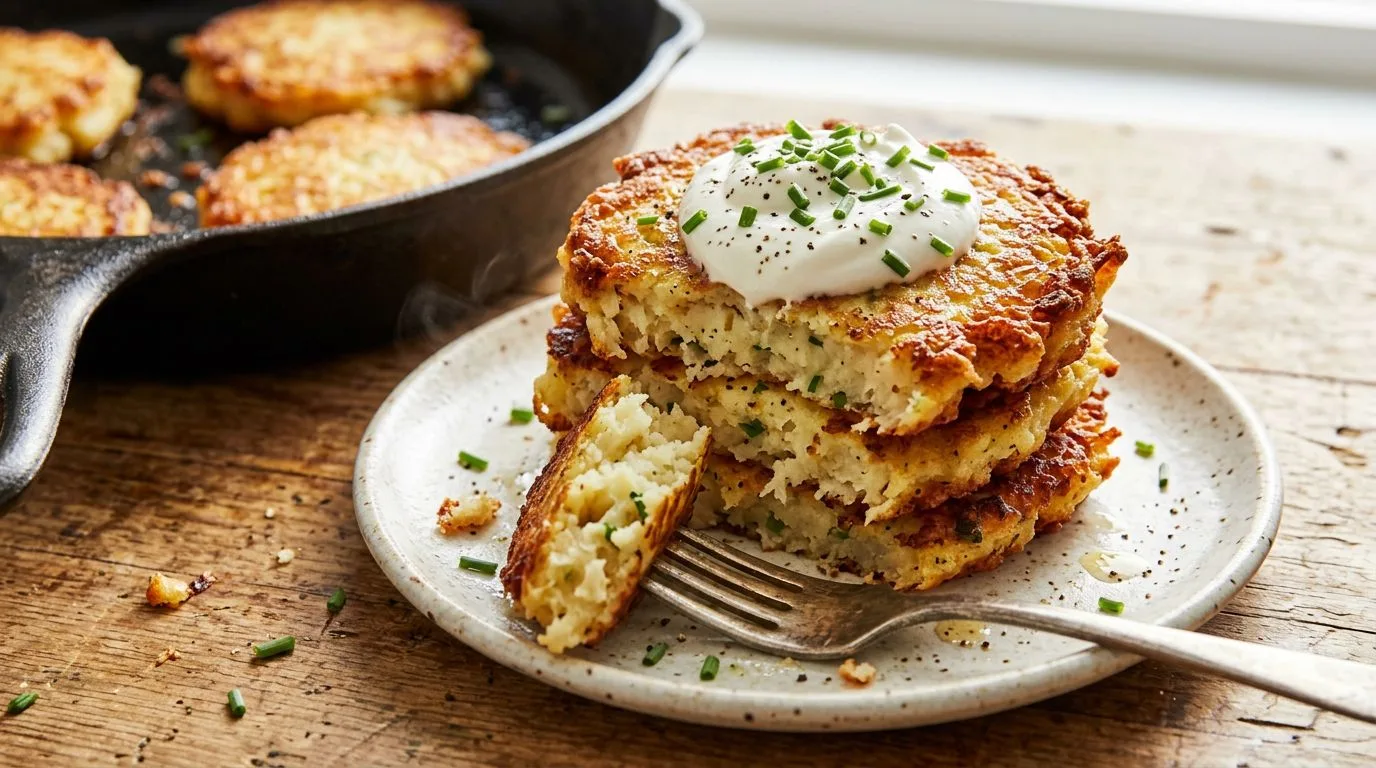
There’s something incredibly satisfying about transforming yesterday’s side dish into today’s star attraction. Leftover Mashed Potato Pancakes are the perfect example of how a little creativity can turn simple ingredients into something truly delicious. These crispy, golden patties feature creamy mashed potato centers with melted cheddar cheese, fresh herbs, and just the right amount of seasoning. They’re crispy on the outside, fluffy on the inside, and absolutely irresistible.
I love making these pancakes the day after a big holiday meal or Sunday dinner. They’re an excellent way to use up those extra mashed potatoes sitting in your refrigerator, and they come together in less than 30 minutes. Whether you serve them for breakfast with eggs, as a side dish for dinner, or even as a satisfying snack, these potato pancakes deliver comfort food at its finest. The combination of cheese, green onions, and garlic powder elevates simple leftovers into something special that your whole family will request again and again.
Why You’ll Love This Recipe
This recipe is a game-changer for anyone who hates wasting food. Instead of letting those leftover mashed potatoes languish in the back of your refrigerator, you can transform them into a completely new dish that tastes nothing like reheated leftovers. The crispy exterior provides a delightful textural contrast to the creamy interior, making every bite interesting and satisfying.
I find that these pancakes are incredibly versatile. They work beautifully as a breakfast side alongside eggs and bacon, as a lunch main course with a fresh salad, or as a dinner accompaniment to roasted meats or vegetables. Kids especially love them, and they’re a sneaky way to use up leftovers without anyone complaining. The recipe is also forgiving—you can adjust the seasonings to your taste and add different mix-ins based on what you have available.
Another reason I recommend this recipe is its simplicity. You don’t need any special equipment or hard-to-find ingredients. Everything comes together in one bowl, and the cooking process is straightforward. Even beginner cooks can achieve excellent results with crispy, evenly browned pancakes that look as good as they taste.
Ingredients and Substitutions
The beauty of this recipe lies in its flexibility. While the core ingredient is leftover mashed potatoes, you can adapt the other components based on your preferences and what’s in your pantry. Here’s what you need to know about each ingredient and possible substitutions.
Leftover Mashed Potatoes: The star of the show. Chilled mashed potatoes work best because they’re easier to shape and hold together better during frying. Whether your original mashed potatoes were made with butter, cream, sour cream, or milk doesn’t matter—they’ll all work beautifully. I recommend using mashed potatoes that are relatively thick rather than very loose and creamy, as they’ll form better patties.
Egg: Acts as a binder to hold everything together. For an egg-free version, you can try using a flax egg (1 tablespoon ground flaxseed mixed with 3 tablespoons water, left to gel for 5 minutes), though the texture may be slightly different.
All-Purpose Flour: Helps absorb excess moisture and gives structure to the pancakes. You can substitute with whole wheat flour for added nutrition, or use gluten-free all-purpose flour if needed. Some people prefer using breadcrumbs or panko instead, which creates an even crispier exterior.
Cheddar Cheese: Adds richness and a savory depth of flavor. Feel free to substitute with Monterey Jack, Gruyère, Parmesan, or any cheese you prefer. For a dairy-free version, omit the cheese or use a plant-based alternative.
Green Onions: Provide a mild onion flavor and fresh color. Regular yellow or white onions (finely diced) work as substitutes, though they have a stronger flavor. Chives are another excellent option.
Garlic Powder: Delivers savory depth without the moisture of fresh garlic. You can use fresh minced garlic if you prefer, but add it sparingly to avoid excess moisture in the mixture.
Fresh Parsley: Adds brightness and color. Dried parsley works in a pinch (use about 2 teaspoons), or substitute with other fresh herbs like dill, cilantro, or chives.
Vegetable Oil: My preferred frying oil because of its neutral flavor and high smoke point. Canola oil, avocado oil, or even butter can be used instead. For a richer flavor, I sometimes use a combination of butter and oil.
If you’re looking for more creative ways to use leftover potatoes, check out this Make-Ahead Crockpot Mashed Potatoes recipe for planning your next batch.
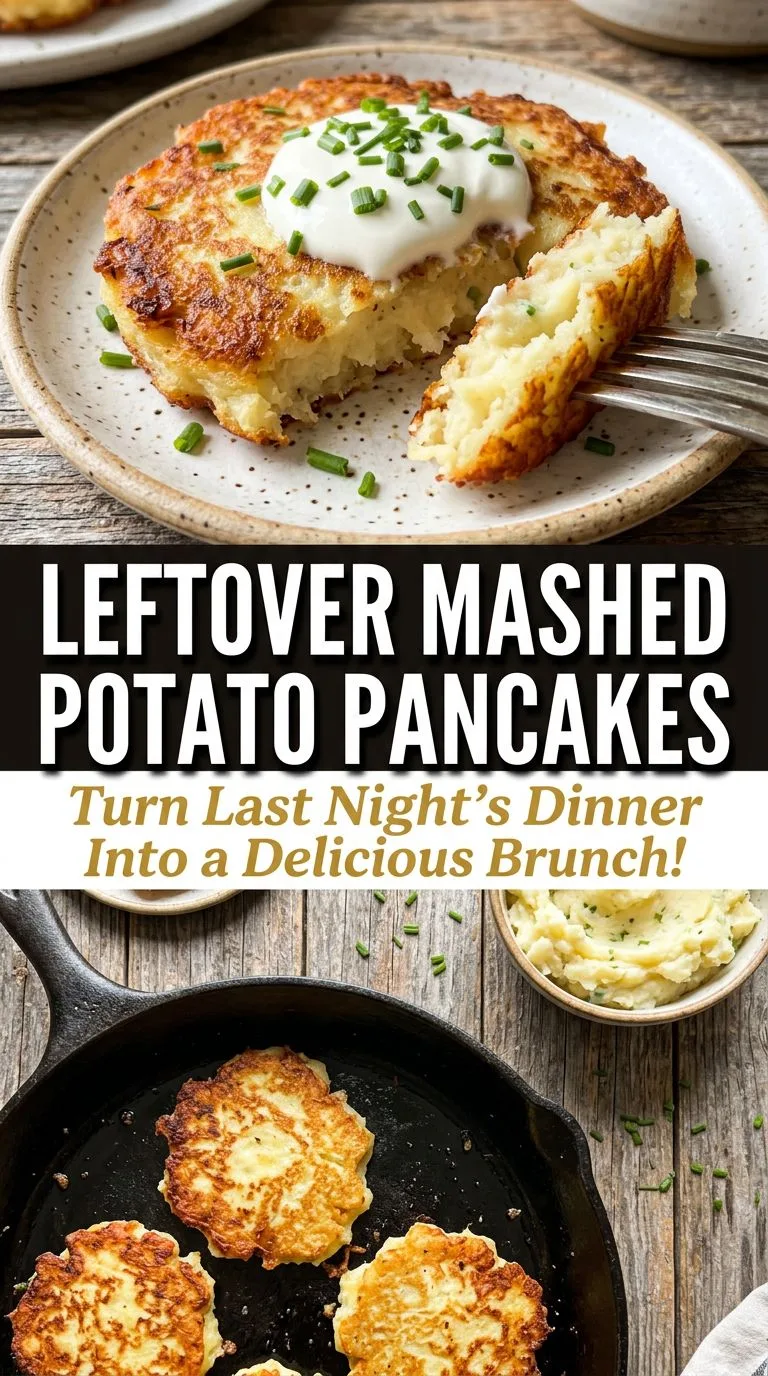
How to Make Leftover Mashed Potato Pancakes
Making these pancakes is remarkably straightforward. The key is ensuring your mashed potatoes are properly chilled, which makes them much easier to work with and helps the pancakes hold their shape during cooking.
Start by placing your chilled leftover mashed potatoes in a large mixing bowl. Cold potatoes are essential here—if they’re still warm, they’ll be too soft to shape properly. Add the egg, flour, shredded cheddar cheese, sliced green onions, garlic powder, black pepper, and chopped fresh parsley to the bowl.
Stir everything together until evenly combined. The mixture should be thick enough to hold its shape when formed into patties. If it feels too wet or sticky, add a tablespoon or two of additional flour until you reach the right consistency. I find that the exact amount of flour needed can vary depending on how creamy your original mashed potatoes were.
Divide the mixture into 10 to 12 equal portions. Using your hands, form each portion into a patty approximately half an inch thick. Try to make them uniform in size so they cook evenly. If the mixture sticks to your hands, lightly dampen your palms with water or oil.
Heat the vegetable oil in a large nonstick skillet over medium heat. You want enough oil to coat the bottom of the pan generously—about an eighth of an inch deep. The oil is ready when a small piece of the potato mixture sizzles immediately upon contact.
Carefully place the patties in the skillet, making sure not to overcrowd them. Depending on your pan size, you’ll likely need to work in batches. I recommend leaving at least an inch of space between each pancake to ensure even browning and to make flipping easier.
Fry the pancakes for 3 to 4 minutes on the first side without moving them. This allows a golden, crispy crust to form. When the edges look set and golden brown, carefully flip each pancake using a spatula. Cook for another 3 to 4 minutes on the second side until equally golden and crispy.
Transfer the finished pancakes to a paper towel-lined plate or wire rack to drain any excess oil. This step helps keep them crispy rather than greasy. Taste one and add a light sprinkle of salt if needed—the amount will depend on how well-seasoned your original mashed potatoes were.
Serve the pancakes warm with your favorite accompaniments. Sour cream, applesauce, ketchup, or even a dollop of Greek yogurt all make excellent dipping sauces.
Expert Tips for Best Results
After making these pancakes countless times, I’ve learned a few tricks that guarantee perfect results every time. Here are my top recommendations for achieving crispy, golden pancakes that hold together beautifully.
Use Chilled Potatoes: This cannot be overstated. Cold mashed potatoes are much easier to shape and less likely to fall apart during cooking. I recommend refrigerating your leftover mashed potatoes for at least 2 hours or overnight before making these pancakes.
Don’t Overmix: Stir the ingredients just until combined. Overmixing can make the potatoes gluey and affect the texture of your finished pancakes. A few gentle stirs are all you need.
Test Your Oil Temperature: If the oil is too hot, the outside will burn before the inside heats through. If it’s too cool, the pancakes will absorb excess oil and become greasy. Medium heat is ideal, and testing with a small piece of the mixture helps you gauge the temperature.
Don’t Flip Too Early: Patience is key. Let the pancakes develop a proper crust before attempting to flip them. If you try to flip too soon, they may stick to the pan or fall apart. When they’re ready, they’ll release easily from the pan.
Keep Them Warm: If you’re cooking in batches, keep the finished pancakes warm in a 200°F oven on a baking sheet. This ensures they’re all hot when you’re ready to serve.
Adjust Consistency as Needed: Every batch of mashed potatoes is different. Some are creamier, some are thicker. Don’t be afraid to add more flour if your mixture is too wet, or a splash of milk if it’s too dry and crumbly.
Serving Suggestions
These versatile pancakes pair beautifully with a wide variety of dishes and occasions. My favorite way to serve them is as part of a hearty breakfast spread alongside scrambled or fried eggs, crispy bacon or sausage, and fresh fruit. The savory, cheesy flavor complements traditional breakfast foods perfectly.
For lunch or dinner, I like to serve these pancakes as a side dish with roasted chicken, grilled steak, or pork chops. They’re also excellent alongside a simple green salad for a lighter meal. The crispy texture provides a nice contrast to tender proteins and fresh vegetables.
As for toppings and accompaniments, the possibilities are endless. Sour cream is classic and adds a cool, tangy contrast to the warm, crispy pancakes. Applesauce provides a sweet counterpoint that many people love. Greek yogurt mixed with fresh herbs makes a lighter, protein-rich topping. Some people enjoy them with ketchup, hot sauce, or even salsa for added flavor.
For a more indulgent presentation, top the pancakes with a dollop of sour cream, crumbled bacon, and sliced green onions. This loaded version turns them into a substantial main course that needs little else alongside it.
These pancakes also work wonderfully as an appetizer or party snack. Make them slightly smaller (about 2 inches in diameter) and serve them on a platter with various dipping sauces. They’re always a hit at gatherings and disappear quickly.
If you’re planning a potato-themed menu, consider pairing these with this delicious Twice Baked Potato Casserole for a complete comfort food feast.
Variations and Substitutions
One of the things I love most about this recipe is how easily it adapts to different flavor profiles and dietary needs. Here are some variations I’ve tried and enjoyed.
Loaded Potato Pancakes: Mix in crumbled cooked bacon, extra cheese, and a bit of sour cream to the batter for an even more indulgent version. Top with additional bacon and chives when serving.
Herb Garden Pancakes: Increase the fresh herbs by adding dill, chives, and thyme along with the parsley. This creates a more herbaceous, garden-fresh flavor that’s especially nice in spring and summer.
Spicy Southwest Pancakes: Add a diced jalapeño, a pinch of cumin, and substitute pepper jack cheese for the cheddar. Serve with salsa and guacamole for a Tex-Mex twist.
Italian-Style Pancakes: Use Parmesan cheese instead of cheddar, add Italian seasoning and minced sun-dried tomatoes, and serve with marinara sauce for dipping.
Gluten-Free Version: Replace the all-purpose flour with your favorite gluten-free flour blend or use almond flour for a lower-carb option. The texture will be slightly different but still delicious.
Vegan Pancakes: Use a flax egg instead of a regular egg, omit the cheese or use vegan cheese, and ensure your original mashed potatoes were made without dairy. These work surprisingly well and are just as crispy.
Sweet Potato Version: If you have leftover mashed sweet potatoes, they work beautifully in this recipe. The slightly sweet flavor pairs wonderfully with a sprinkle of cinnamon and a drizzle of maple syrup.
Storage, Freezing, and Reheating
These pancakes store remarkably well, making them perfect for meal prep or making ahead for busy weeknights. Here’s how to store and reheat them for best results.
Refrigerator Storage: Allow the cooked pancakes to cool completely, then store them in an airtight container with parchment paper between layers to prevent sticking. They’ll keep well in the refrigerator for 3 to 4 days. I find they maintain their texture better if you don’t stack them too high.
Freezing: These pancakes freeze beautifully. Place cooled pancakes in a single layer on a baking sheet and freeze until solid (about 2 hours). Then transfer them to a freezer-safe bag or container, separating layers with parchment paper. They’ll keep for up to 3 months in the freezer. This method prevents them from sticking together and allows you to remove just the number you need.
Reheating from Refrigerated: For the crispiest results, reheat refrigerated pancakes in a 375°F oven for 10 to 12 minutes, flipping halfway through. You can also reheat them in a skillet with a small amount of oil over medium heat for 2 to 3 minutes per side. The microwave works in a pinch but won’t maintain the crispy exterior.
Reheating from Frozen: You can reheat frozen pancakes directly without thawing. Bake at 375°F for 15 to 18 minutes, flipping once, until heated through and crispy. Alternatively, thaw them overnight in the refrigerator and reheat using the methods above.
Storing Uncooked Mixture: The unformed mixture can be stored in the refrigerator for up to 24 hours before cooking. This makes it easy to prep ahead and cook fresh pancakes when you’re ready to eat.
Frequently Asked Questions
Can I bake these instead of frying them?
Yes, you can bake these pancakes for a lighter version. Preheat your oven to 400°F and place the formed patties on a parchment-lined baking sheet. Brush both sides lightly with oil and bake for 15 minutes, then flip and bake for another 10 to 15 minutes until golden and crispy. They won’t be quite as crispy as fried versions, but they’re still delicious.
Why are my pancakes falling apart?
This usually happens when the mixture is too wet or the potatoes weren’t cold enough. Add more flour a tablespoon at a time until the mixture holds together when shaped. Also, make sure you’re letting a proper crust form before flipping—flipping too early can cause them to break apart.
Can I use instant mashed potatoes?
While fresh leftover mashed potatoes work best, you can use instant mashed potatoes in a pinch. Prepare them according to package directions but make them slightly thicker than usual, then chill completely before proceeding with the recipe.
How do I prevent the pancakes from absorbing too much oil?
Make sure your oil is at the right temperature (medium heat) before adding the pancakes. Oil that’s too cool will be absorbed into the food. Also, drain the finished pancakes on paper towels or a wire rack to remove excess oil.
Can I make these ahead for a party?
Absolutely. Cook the pancakes up to 2 days ahead, refrigerate them, and reheat in the oven just before serving. This makes entertaining much easier and ensures you’re not stuck in the kitchen while guests arrive.
What’s the best way to get uniform pancakes?
Use a measuring cup or ice cream scoop to portion out the mixture. A 1/4-cup measure works well for standard-sized pancakes. This ensures they’re all the same size and will cook evenly.
Can I add vegetables to these pancakes?
Yes! Finely diced bell peppers, corn kernels, or even spinach work well. Just make sure any vegetables you add are cooked and well-drained to avoid adding excess moisture to the mixture.
Leftover Mashed Potato Pancakes
Transform your leftover mashed potatoes into crispy, golden pancakes loaded with cheddar cheese, green onions, and fresh herbs. These savory patties are perfect for breakfast, lunch, or dinner and come together in less than 30 minutes.
- Prep Time: 15 minutes
- Cook Time: 12 minutes
- Total Time: 27 minutes
- Servings: 10-12 pancakes (4-6 servings)
- Difficulty: Easy
- Cuisine: American
- Course: Side Dish
Ingredients
- 3 cups leftover mashed potatoes (chilled)
- 1 large egg
- ½ cup all-purpose flour
- ¾ cup shredded cheddar cheese
- 2 green onions (finely sliced)
- ½ teaspoon garlic powder
- ¼ teaspoon black pepper
- 2 tablespoons fresh parsley (chopped)
- 3 tablespoons vegetable oil (for frying)
- Salt to taste
Instructions
- Place chilled leftover mashed potatoes in a large mixing bowl.
- Add the egg, flour, shredded cheddar cheese, sliced green onions, garlic powder, black pepper, and chopped parsley to the bowl.
- Stir until evenly combined, adding a little extra flour if the mixture is too soft to shape into patties.
- Divide the mixture into 10 to 12 portions and form each into a patty approximately ½ inch thick.
- Heat vegetable oil in a large nonstick skillet over medium heat until shimmering.
- Carefully arrange the patties in the skillet without overcrowding, working in batches if necessary.
- Fry for 3 to 4 minutes per side until golden brown, crispy, and heated through.
- Transfer cooked pancakes to a paper towel-lined plate or wire rack to drain excess oil.
- Sprinkle lightly with salt if needed and serve warm with sour cream, applesauce, or your favorite dipping sauce.
Recipe Notes
- Chilled mashed potatoes are essential for this recipe—they’re much easier to shape and hold together better during cooking.
- The amount of flour needed may vary depending on how creamy your original mashed potatoes were. Add more if the mixture is too wet to form patties.
- Don’t overcrowd the pan when frying. This ensures even browning and makes flipping easier.
- For a lighter version, brush the patties with oil and bake at 400°F for 25 to 30 minutes, flipping halfway through.
- These pancakes can be made ahead and reheated in the oven for easy entertaining.
- Customize the recipe by adding cooked bacon, different cheeses, or your favorite herbs.
Nutrition Information (Per Serving, Estimated)
Based on 6 servings (2 pancakes each)
- Calories: 215
- Carbohydrates: 24g
- Protein: 7g
- Fat: 10g
- Saturated Fat: 3g
- Fiber: 2g
- Sugar: 1g
- Sodium: 320mg
Nutrition information is estimated and will vary based on the ingredients and brands used. For the most accurate nutrition data, calculate using the specific products you choose.
